








Is cryptocurrency perpetual contract trading gambling or a financial derivative?
TechFlow Selected TechFlow Selected
Is cryptocurrency perpetual contract trading gambling or a financial derivative?
Perpetual contracts are financial derivatives, part of the same family as futures and options.
 Navigating Web3 tides with focused insights
Written by: Deng Xiaoyu, Zheng Hongde
If you've spent a few years in the crypto space, trading perpetual futures is probably nothing new. Known for high leverage, high risk, and potentially high returns, it has drawn global investor attention. However, in mainland China, such trading activities have been classified by certain judicial authorities as "gambling," linked to the criminal charge of "operating a gambling house," sparking widespread controversy. Meanwhile, globally, regulatory frameworks for cryptocurrency derivatives trading are evolving along diverse paths.
In defending exchange-related perpetual contract cases against gambling allegations, Manqin criminal defense lawyer Deng Xiaoyu compared the regulatory landscapes across major jurisdictions. In this article, we explore the true nature and underlying logic of perpetual contracts to unpack the controversy in mainland China—Are they financial innovation or online casinos? Let's dive in.
Is Derivatives Trading an “Online Casino”?
In mainland China, some court rulings classify cryptocurrency perpetual futures trading as "gambling." The rationale, previously detailed in the article "Why Does Leading Trades and Commission Rebates on Crypto Exchanges Suspected of Operating a Gambling House?", typically includes:
-
The price movements of cryptocurrencies are considered irregular, random, and unpredictable.
-
Exchanges amplify speculative risks through high leverage, making them inherently risky.
Furthermore, under current policies, "virtual currency perpetual futures trading" is deemed an illegal financial activity. Although defense attorneys often argue that perpetual contracts resemble traditional futures trading, courts maintain that key differences—such as no fixed settlement date, 7x24 trading hours, extremely high leverage, and absence of physical or cash settlement—make these platforms functionally equivalent to betting games like "betting big or small," thus constituting gambling. Therefore, operators may be charged with the crime of "operating a gambling house."
The policy reference here mainly points to the September 2021 notice issued by the People’s Bank of China and nine other departments titled "On Further Preventing and Responding to Risks Associated with Virtual Currency Trading and Speculation," which clearly states that virtual currency-related business activities—including derivative trading—are illegal financial activities. This provides a basis for judicial practice. But is it too hasty to label complex perpetual futures trading simply as a "casino"? Let’s examine several key issues:
1. Cryptocurrency Classification Remains Ambiguous
Mainland China has yet to establish a clear legal framework defining the nature of cryptocurrencies. Regulations such as the "Notice on Preventing Bitcoin Risks", the "Announcement on Preventing Risks of Token Issuance Financing", and the 2021 notice emphasize only that virtual currencies lack legal tender status and cannot circulate as money. However, whether they qualify as commodities, securities, or something else remains undefined—there is no formal classification system.
In contrast, international regulatory regimes are more nuanced. The U.S. Commodity Futures Trading Commission (CFTC) has long classified Bitcoin and Ethereum as "commodities," regulating their derivatives under futures laws. The European Union’s Markets in Crypto-Assets Regulation (MiCA) takes an even clearer stance, treating crypto assets and their derivatives as financial products. These well-defined rules create room for innovation, while China’s ambiguous stance may hinder industry development and diverge from global trends.
2. How Different Are Perpetual Contracts from Traditional Futures?
Perpetual contracts are unique derivatives in the crypto market, evolved from traditional futures. Functionally, they are highly similar: both allow investors to use leverage to speculate on asset prices and settle price differences upon closing or expiration. In essence, they’re just the "crypto version" of futures. Traditional futures let traders leverage bets on price direction; perpetual contracts do much the same, except they remove fixed expiration dates and enable 24/7 trading.
Does high leverage equal gambling? That argument doesn’t hold water. Leverage is common across financial markets. Perpetual contracts merely bring traditional futures mechanics into the crypto world—they’re not akin to blindly placing chips on a casino table. Labeling them as gambling tools overlooks their underlying financial logic.
3. Are Price Movements Truly Random?
Some claim that cryptocurrency price fluctuations are “irregular, random, and accidental,” using this as grounds for classifying trading as gambling. This view sharply contradicts global market analysis. In reality, major cryptocurrencies like Bitcoin are no longer isolated phenomena within niche crypto circles—they’re increasingly intertwined with global financial markets.
Last January, Nasdaq published an article titled "Understanding the Correlation Between Bitcoin and the Nasdaq-100 Index," noting a long-term correlation coefficient of 0.805 between Bitcoin and the Nasdaq-100. Federal Reserve rate hikes, institutional ETF purchases, and geopolitical shifts all influence Bitcoin’s price. Traders engaging in perpetual contracts rely on technical analysis, fundamental research, and risk management strategies—not mere guesswork. Describing price volatility as purely random fails to recognize the maturity and complexity of today’s crypto markets.
Global Regulatory Landscape: The Path to Legitimacy for Crypto Derivatives
While some regulators in mainland China view perpetual contracts as gambling, most other jurisdictions do not. This divergence isn’t just about legal definitions—it reflects fundamentally different views on the nature of digital assets.
Across the EU, the U.S., Hong Kong, Dubai, Singapore, and the UK, approaches vary, but there’s broad consensus: perpetual contracts are financial derivatives, not gambling mechanisms. Their legality hinges on compliance with regulations—not on leverage levels or price volatility.
European Union: A Compliance Passport for Financial Derivatives
The EU rolled out its Markets in Crypto-Assets Regulation (MiCA) in 2023, setting a clear tone: perpetual contracts are classified as "crypto-asset derivatives," treated the same as stock or bond derivatives, and fall under the Markets in Financial Instruments Directive (MiFID II). Want to operate? You need a MiCA license, sufficient capital, robust risk controls, and transparent operations.
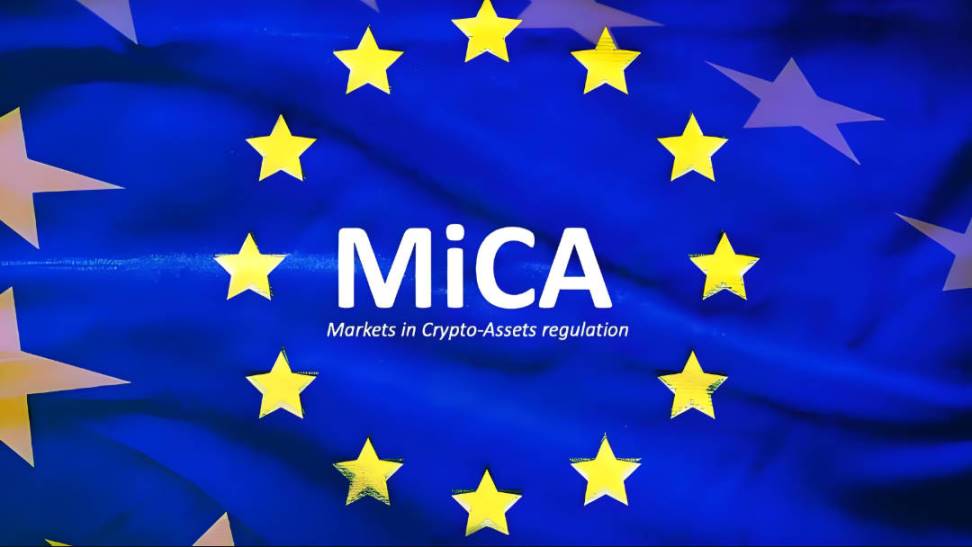

*Original text from MiCA
It states: "Certain crypto-assets, particularly those qualifying as financial instruments under Directive 2014/65/EU of the European Parliament and Council, fall within the scope of existing EU financial services legislation. Thus, a full set of EU rules already applies to issuers of such crypto-assets and firms conducting related activities."
MiCA explicitly clarifies that crypto assets and services meeting the definition of financial instruments under MiFID II are governed by Directive 2014/65/EU—the Markets in Financial Instruments Directive (MiFID II)—rather than MiCA itself. This means crypto derivatives deemed financial instruments are regulated identically to traditional derivatives.
Though complex at first glance, the message is clear: the EU does not treat perpetual contracts as gambling due to high leverage. Instead, it grants them recognition as legitimate financial instruments. This balanced approach encourages innovation while maintaining control—an exemplary model of regulatory equilibrium.
United States: Divided Oversight, Clear Roles
The U.S. stance on perpetual contracts is straightforward: they are derivatives, no different from futures or swaps. Bitcoin and Ethereum are classified as "commodities" by the CFTC, so their perpetual contracts fall under CFTC jurisdiction and are regulated under the Commodity Exchange Act (CEA). If a crypto asset qualifies as a "security," its derivatives come under SEC oversight.
Commodity Futures Trading Commission (CFTC): Regulates derivatives based on crypto assets classified as "commodities" (e.g., Bitcoin, Ethereum). Perpetual contracts on these assets are treated as commodity derivatives, functionally equivalent to traditional futures or options. They are typically categorized as "swaps" and must comply with the Commodity Exchange Act (CEA).
Securities and Exchange Commission (SEC): Oversees derivatives tied to crypto assets deemed "securities." Such products must adhere to the Securities Act and Securities Exchange Act.
In 2021, the CFTC fined BitMEX $100 million for offering high-leverage perpetual contracts to U.S. users without proper registration. A senior CFTC enforcement official stated in the case: "The registration requirements and core consumer protections Congress established for our traditional derivatives market apply equally in the growing digital asset market." This unequivocally affirms the financial nature of perpetual contracts—a position no one in the U.S. dares dispute.
Dubai: Balancing Innovation and Compliance
The Securities and Commodities Authority (SCA) regulates virtual assets under a securities-like framework.
The SCA forms the foundation of the UAE’s regulatory framework for investment-focused crypto activities. It defines virtual assets as digital representations of value used for investment purposes, excluding fiat currencies, securities, and other digital currencies.
The SCA has progressively refined its regulatory scope. In November 2020, it issued the "Virtual Asset Activities Regulation" at the federal level, covering services such as ICOs, exchanges, marketplaces, custody, and derivatives. Key requirements include:
(1) Virtual asset service providers must be registered locally in the UAE or within a financial free zone;
(2) Providers must obtain approval and licensing from the SCA.
Dubai Virtual Assets Regulatory Authority (VARA)
In 2023, Dubai’s Virtual Assets Regulatory Authority (VARA) released the "Virtual Assets and Related Activities Regulation," directly classifying perpetual contracts as "virtual asset derivatives," regulated similarly to forex and equity derivatives. Want to offer them? You’ll need a VARA exchange license, complete with mandatory risk disclosures and investor protection measures.
Perpetual contracts are categorized as virtual asset derivatives, analogous to traditional financial instruments like forex and stock derivatives.
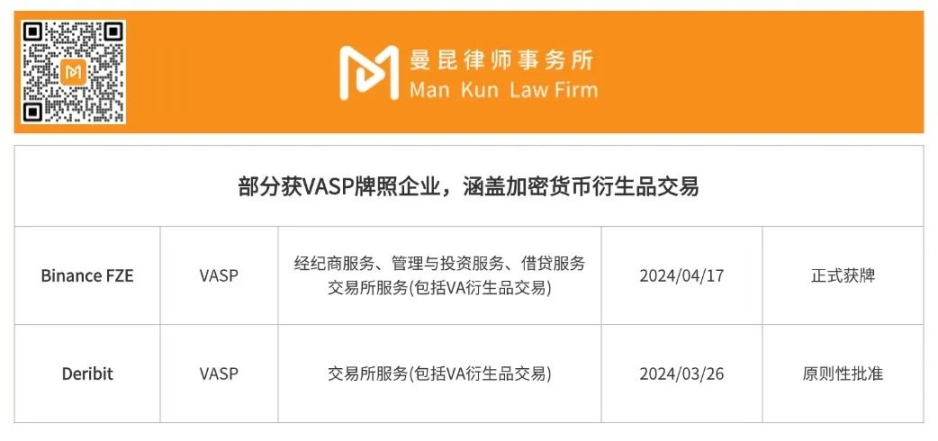
Exchanges must obtain a VASP license from VARA for exchange services, including VA derivatives.
For example, Deribit’s Dubai entity obtained a VARA trading services license last year, covering both spot and derivatives. Dubai’s model strikes a smart balance—welcoming innovation while preventing unregulated, wild-west-style growth.
Singapore: Strict准入 (Access Control)
Singapore embraces crypto innovation but enforces strict rules. The Monetary Authority of Singapore (MAS) categorizes tokens into utility, security, and payment types. Perpetual contracts are managed by "licensed exchanges," and margin trading in crypto derivatives is tightly regulated. To offer such services, entities must become MAS-approved financial exchanges operating crypto derivatives and apply for DPT (Digital Payment Token) licenses.
As per the MAS website, only four licensed exchanges currently exist: SGX Derivatives, Asia Pacific Exchange (APEX), ICE Futures, among others—all authorized to operate crypto derivatives. This stringent access control ensures market integrity and investor protection.
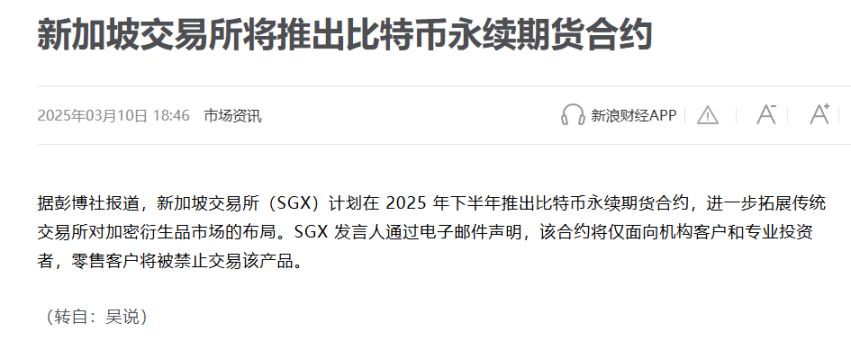
Interestingly, traditional exchanges in Singapore are now exploring crypto perpetual futures for institutional and accredited investors. What does this signal? That perpetual contracts are recognized as legitimate financial derivatives—not speculative toys. It also marks traditional finance accelerating into digital assets to meet rising institutional demand for crypto exposure.
United Kingdom: Retail Out, Professionals In
In the UK, the Financial Conduct Authority (FCA) has banned retail investors from accessing crypto derivatives—including perpetual contracts—since 2021. However, professional investors face no such restrictions. The FCA labels them "high-risk financial instruments" and requires exchanges to register and operate compliantly. Clearly, even in a tightly regulated environment like the UK, perpetual contracts are seen as financial derivatives. Their legality depends not on the instrument itself being "gambling," but on who is allowed to trade—professional vs. retail.

Hong Kong: Testing Waters with Caution
Hong Kong launched its "Licensing Regime for Virtual Asset Trading Platforms" in June 2023, followed by allowing retail investment in crypto—but derivatives remain under review. According to recent media reports, Leung Hon-ching, Head of Financial Services and FinTech at InvestHK, said although only spot trading is currently permitted, the government has begun studying regulatory frameworks for derivatives. COO of HashKey exchange has already signaled: once policy relaxes, they will apply for a license.
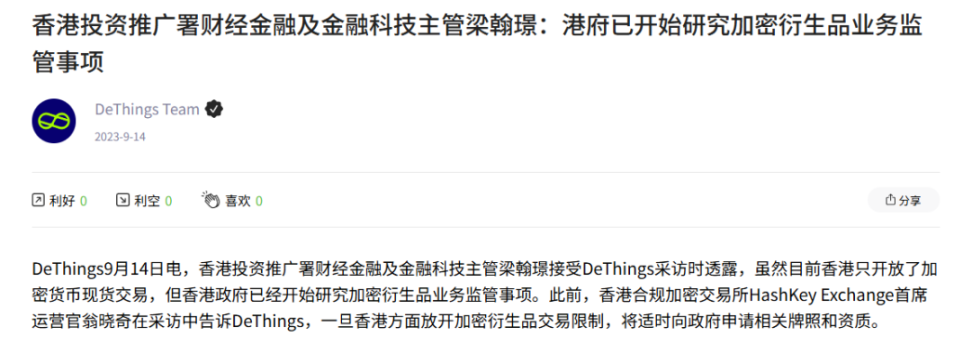
Hong Kong’s strategy is clever: stabilize spot markets first, then cautiously expand into derivatives—neither reckless nor outdated. The future of perpetual contracts in Hong Kong will likely follow the financial instrument model, not be labeled as "gambling."
Manqin Legal Summary
The global regulatory trend is clear and consistent: perpetual contracts are financial derivatives, part of the same family as futures and options. The EU issues them a "compliance passport"; the U.S. applies traditional derivatives rules; Hong Kong, Dubai, and Singapore encourage innovation while enforcing safeguards; the UK implements tiered access based on investor sophistication. Through licensing, risk warnings, and leverage limits, these jurisdictions manage the market effectively.
Mainland China stands apart. Some courts labeling perpetual contracts as "gambling" may overlook their financial essence. Claiming prices are "unpredictable" also contradicts global data—Bitcoin prices are now closely tied to the Nasdaq and Fed policy. Such blanket bans could stifle fintech innovation in China, appearing overly conservative compared to global progressive trends.
Manqin criminal lawyers write this piece to call for re-evaluation of perpetual contracts by referencing international practices and considering Hong Kong’s evolving policies. For instance, adopting the EU’s MiCA-style tiered regulation—treating perpetuals as financial instruments—or following the U.S. CFTC model by capping leverage and strengthening investor protection. Moreover, we aim to restore legitimacy to perpetual contracts. While operating unlicensed exchanges (offering perpetuals) under China’s strict regime is indeed problematic, such cases should be assessed as illegal business operations—not gambling. Conversely, if perpetual trading were truly gambling, tens of thousands of individual traders would face administrative penalties for participating in gambling—which would clearly undermine social governance.
Join TechFlow official community to stay tuned
Telegram:https://t.me/TechFlowDaily
X (Twitter):https://x.com/TechFlowPost
X (Twitter) EN:https://x.com/BlockFlow_News






