








From Skepticism to Launching a Coin: A Complete Timeline of Trump's Involvement in Crypto
TechFlow Selected TechFlow Selected
From Skepticism to Launching a Coin: A Complete Timeline of Trump's Involvement in Crypto
Donald Trump once dismissed Bitcoin as a "scam." Now, he's returning to the White House and taking steps to support cryptocurrencies.
 Navigating Web3 tides with focused insights
Author: Mat Di Salvo
Translation: TechFlow
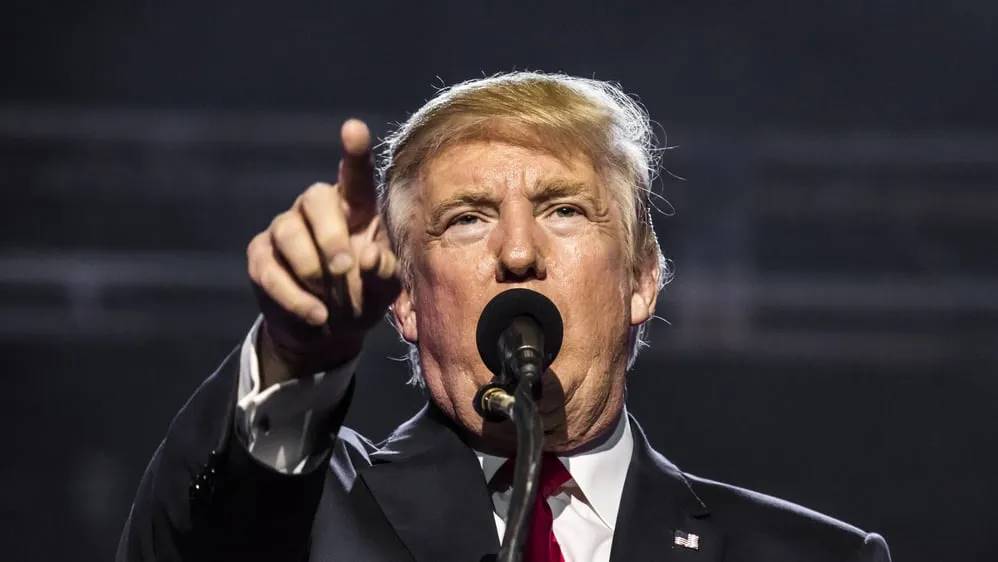
President Trump of the United States (Photo: Shutterstock)
At a Glance
-
Donald Trump has returned to the White House as the 47th President of the United States, running on a pro-cryptocurrency platform.
-
However, Trump hasn’t always held this position: he once called Bitcoin a "scam" and said he wasn't a fan.
-
Today, Trump has launched his own Solana-based meme coin, multiple NFT collections, and a DeFi project.
Pro-Bitcoin Donald Trump won the November election and was sworn in as the 47th U.S. president in January. But even before officially taking office, the commander-in-chief launched a meme coin.
Yes, you read that right. The TRUMP token, running on the Solana network, briefly reached a market cap of $14 billion. Although its valuation has since dropped to $2.9 billion, the move signals the new president’s growing enthusiasm for digital assets—a campaign promise aimed at supporting Bitcoin advocates and the rapidly expanding sector.
Prior to the heated November election, Trump positioned himself as a crypto-friendly candidate, receiving millions in cash and digital asset donations from Silicon Valley tech leaders. Ultimately, he won the presidency.
But it wasn’t always this way: President Trump was once a staunch critic of cryptocurrency. So how did we get here?
"I am not a fan of Bitcoin and other cryptocurrencies, which are not money, which is based on thin air. Their value is highly volatile and without foundation. Unregulated crypto assets can facilitate illegal behavior including drug dealing and many other crimes..." — Donald J. Trump (@realDonaldTrump), July 12, 2019
Trump’s most iconic early comments on cryptocurrency date back to 2019, when he publicly stated as president that he disliked Bitcoin.
"I am not a fan of Bitcoin and other cryptocurrencies, which are not money, which is based on thin air," he tweeted at the time, also criticizing Facebook’s plan to launch a digital currency.
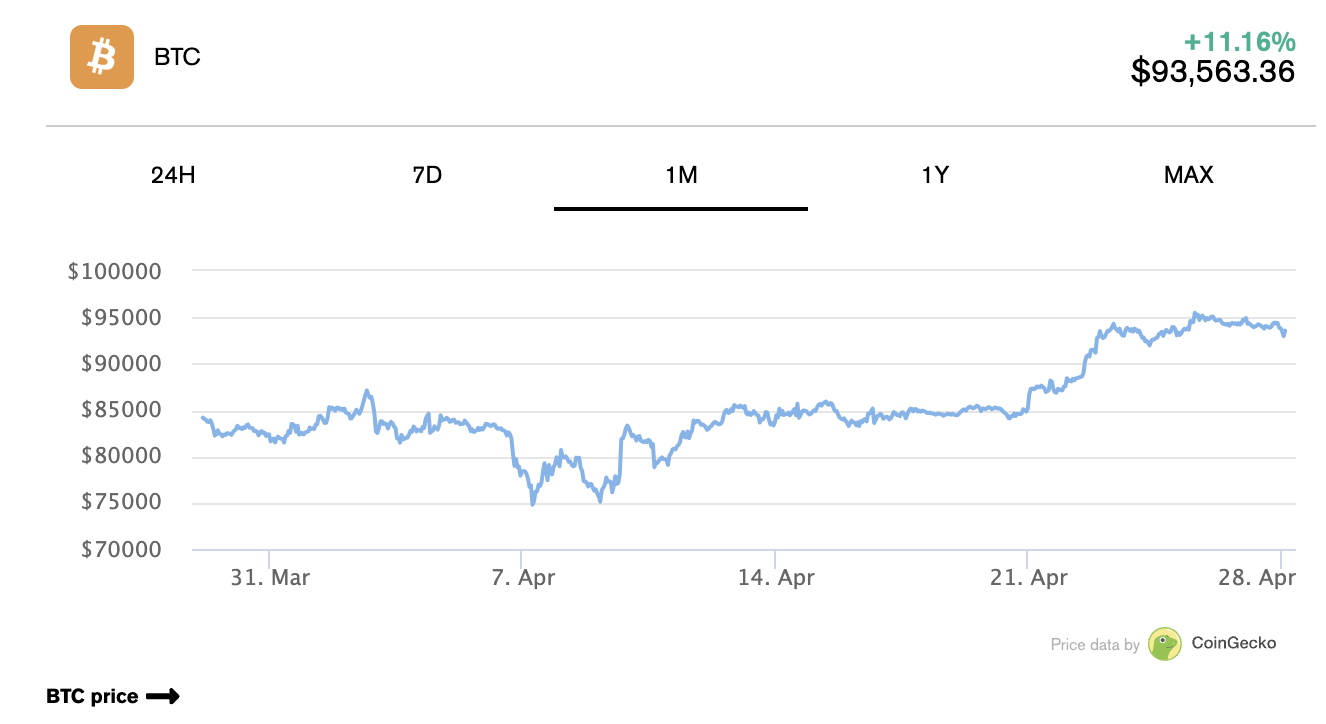
"In the United States, we only have one real currency, which is stronger than ever before, dependable and trusted," he added. "It is by far the dominant currency in the world, and it will always be. It is called the dollar!"
Trump reiterated his stance during the 2021 Bitcoin bull run, telling Fox Business: "Bitcoin seems like a scam." He again emphasized his desire for the dollar to remain the world’s top currency.
Entering the NFT World
It took him a long time to openly embrace leading cryptocurrencies, and this journey began with an unexpected crypto craze: NFT collectibles.
By the end of 2021, after leaving the White House, his wife Melania announced her Solana-based NFT collection. Solana Labs clarified it had no involvement with the launch on the blockchain. Despite his wife’s entry into the space, Trump continued to denounce crypto as “dangerous.”
"Excited about this new project combining my passion for art and commitment to helping our nation's children achieve their unique American Dream."
— MELANIA TRUMP (@MELANIATRUMP), December 16, 2021
Yet the following year, the commander-in-chief launched his own NFT collection. Minted on Ethereum’s scaling network Polygon, the digital trading card set was initially mocked, yet quickly sold out and earned millions.
Trump later said he launched the collection simply because he found the cards “kind of cute.” Since then, he has released more collections on Polygon and even minted a third series on Bitcoin via the Ordinals protocol. A fourth collection, launched in August 2024, became his largest NFT drop to date.
Trump has even claimed that the success of his NFT collections—and the large number of buyers using cryptocurrency instead of fiat—helped change his mind about Bitcoin and crypto.
According to blockchain analytics firm Arkham Intelligence, digital wallets linked to the president show he has earned millions in royalty income from NFTs and holds some of the largest unofficial Trump-themed meme coins, likely sent to his wallet without his knowledge or consent.
Trump Embraces Crypto
But last year, Trump truly ramped up his support for crypto. "I make money off it, and I enjoy it," Trump said in a March interview with CNBC’s Squawk Box. "Crazy new currencies—that’s what I call them."
Then, in May, while hosting NFT holders at his Mar-a-Lago resort, he told the crowd he was “very happy with crypto” and attacked Biden and Democrats for being “against it.” Many saw this event as a turning point in the crypto policy conversation.
In May, rumors circulated that Elon Musk—the world’s richest man and top donor to Trump’s campaign—was advising the presidential candidate on crypto strategy. (Musk denied these reports.) In July, the Republican Party released a draft platform explicitly mentioning cryptocurrency, a first for the industry.
After surviving a failed assassination attempt in July, the businessman and former reality TV star gained public backing from Musk and many other prominent figures in the digital asset space. Major crypto personalities such as the Winklevoss twins of Gemini and Kraken founder Jesse Powell donated substantial funds to Trump’s campaign.
Trump then selected Senator J.D. Vance as his running mate—a vice-presidential candidate seen at the time as crypto-friendly, who had disclosed holding between $100,000 and $250,000 worth of Bitcoin in 2021.
But Trump’s clearest signal of embracing crypto came during a speech at the 2024 Bitcoin Conference in Nashville, Tennessee. There, he promised the audience he would establish a “strategic Bitcoin reserve” for the nation and planned to make the U.S. the “global capital of cryptocurrency.”
Shortly afterward, the Trump family launched a decentralized finance (DeFi) project called World Liberty Financial, with Trump himself teasing the project across social media in the lead-up.
— Donald J. Trump (@realDonaldTrump), August 29, 2024
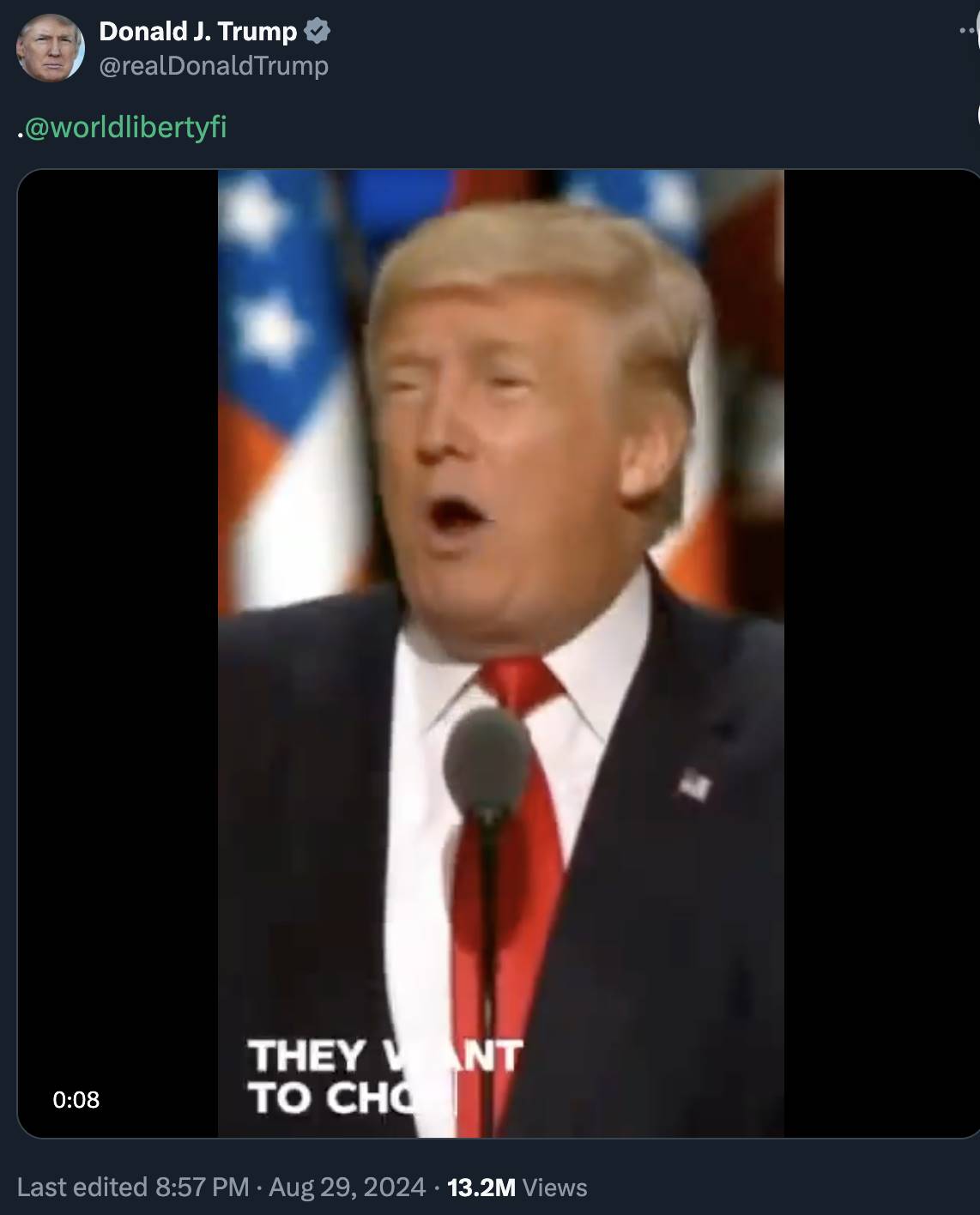
Trump’s son, Donald Jr., said the crypto platform would be egalitarian. "For too long, everyday Americans have been squeezed by big banks and financial elites. It’s time we stand together and take action," he tweeted (on X, formerly Twitter).
The day after a second assassination attempt, Trump launched the project during a live interview with Rug Radio (Decrypt’s sister company). World Liberty Financial aims to offer cryptocurrency lending services on the Ethereum network.
Compared to other crypto token launches, the project got off to a rocky start, selling only 4% of its allocated tokens at launch. However, sales surged ahead of Trump’s inauguration, with the remaining allocation selling out on January 20—the very day he returned to the White House.
Later, Decrypt reported that the World Liberty Financial project launched its own stablecoin. On-chain data shows the token is available on both the Ethereum and BNB Chain networks.
The Republican team also brought in more crypto figures. Bitcoin advocate Robert F. Kennedy Jr. suspended his campaign to support Trump and joined his transition team. He is now Secretary of Health and Human Services. Howard Lutnick, CEO of Cantor Fitzgerald and a known Bitcoin and Tether supporter, also joined Trump’s political team and now serves as Commerce Secretary.
Meanwhile, well-known Dogecoin enthusiast Elon Musk is leading the Department of Government Efficiency (DOGE), a budget-cutting and workforce-reduction initiative, though he says he will soon step aside.
Growing Crypto Ambitions
In September, Trump became the first sitting or former U.S. president known to use Bitcoin for a purchase: at PubKey, a popular crypto bar in New York City, the former president paid in cryptocurrency for a burger.
"This is the beginning of a new era," he said, referring to the digital asset industry. And it wasn’t just talk: on January 17, he launched a meme coin on Solana, which is now one of the most valuable meme coins in existence.
The launch of the TRUMP token drew widespread criticism from politicians and analysts, with some viewing it as a potential avenue for corruption. Yet despite a sharp price decline from its peak, it continues to see trading activity—including in April, when Trump revealed plans to host an exclusive dinner for top TRUMP token holders.
Still, President Trump isn’t stopping there.
Within his first three months in office, the Republican established a strategic Bitcoin reserve and became the first president to sign crypto-related legislation—ending the IRS’s so-called DeFi broker rule, which could have threatened the development of U.S.-based crypto applications.
Trump’s Securities and Exchange Commission (SEC) also dropped multiple lawsuits against crypto companies initiated under the previous administration, while his family continues—controversially—to advance their own crypto ventures: Donald Jr. and Eric Trump are launching American Bitcoin in partnership with mining firm Hut8, aiming to become the “world’s largest and most efficient Bitcoin miner.”
In March, Trump’s media company, Trump Media and Technology Group, signed a deal with Crypto.com to offer ETF products, with the Trump Media company itself planning to invest its own funds into these products.
Critics argue that the president’s digital asset ventures create conflicts of interest; meanwhile, Silicon Valley leaders praise him for supporting innovation. One thing is certain: President Trump appears fully committed to cryptocurrency, having moved past his earlier skepticism of the industry.
Join TechFlow official community to stay tuned
Telegram:https://t.me/TechFlowDaily
X (Twitter):https://x.com/TechFlowPost
X (Twitter) EN:https://x.com/BlockFlow_News
 Decrypt


