









Which City Will Be the Crypto Capital? A Look at the 2025 Crypto-Friendly Cities Index
TechFlow Selected TechFlow Selected
Which City Will Be the Crypto Capital? A Look at the 2025 Crypto-Friendly Cities Index
The next global financial center will be dominated by cryptocurrency.
 Navigating Web3 tides with focused insights
Author: Multipolitan
Translation: Felix, PANews
The world is currently undergoing a transformation of its global financial and technological centers. Wealth, talent, and innovation are actively migrating away from jurisdictions hostile to cryptocurrencies toward cities that openly embrace blockchain and digital assets. Identifying the most crypto-friendly cities is not only crucial but also insightful. The future of finance, innovation, and talent flows is being rewritten—and understanding this shift is essential for anyone aiming to stay ahead in a rapidly evolving environment.
The next global financial center will be dominated by cryptocurrency
The next global financial hub won’t just accept cryptocurrency—it will thrive on it. Here’s why the most successful future cities are making big bets on blockchain and digital assets:
1. Regulatory arbitrage: A new game of financial power
Enterprises, investors, and crypto pioneers are flocking to jurisdictions offering clear, consistent, and crypto-friendly regulatory environments. For example, Binance is strategically relocating operations, while Coinbase is considering exiting the U.S. due to regulatory friction. Regulatory clarity isn't merely beneficial—it's critical.
2. Following the money and talent
Crypto-friendly cities like Dubai, Singapore, and Zug (Switzerland) are rapidly becoming magnets attracting wealth, innovation, and talent. In contrast, cities with hostile regulations risk losing their competitive edge and facing brain drain.
3. Cryptocurrency: A parallel financial revolution
Proactive adoption of cryptocurrency enables governments to unlock new investment, tax revenue, and economic growth. Those resisting or over-regulating face not only capital flight but also severe talent outflow. Cryptocurrency is more than an asset class—it’s an economic catalyst.
4. Digital nomads and a multipolar future
Crypto wealth transcends borders, and holders increasingly embrace a “multipolar lifestyle”—strategically distributing residences and assets across crypto-supportive jurisdictions. Stability, low taxation, and innovation-focused policies are no longer just attractive features; they’re prerequisites for cities seeking to attract sovereign individuals shaping the future economy.
5. First-mover advantage: Crypto’s winner-takes-all dynamic
Cities embracing cryptocurrency early gain significant economic advantages. El Salvador leapt from obscurity to become a global Bitcoin hub, while Dubai’s fintech-friendly policies have made it a major player in global finance. In crypto, early adopters don’t just lead—they dominate.
The global financial landscape is shifting. Cities that quickly embrace cryptocurrency aren’t just boosting their influence—they’re cementing their status as future financial capitals.
Where is crypto wealth flowing?
Crypto-friendly hubs: Dubai, Singapore, Zug (Switzerland), Lisbon, Miami, Puerto Rico, Hong Kong (which has recently shifted back toward crypto-friendliness).
Jurisdictions losing crypto talent: Certain parts of the United States (due to regulatory hostility), China (where bans have driven talent abroad), and parts of the European Union (where some countries lack clear regulatory paths).
How do we identify crypto-friendly cities?
Most crypto-friendly city indices focus solely on tax incentives, but the reality is far more complex. While tax policy matters, regulation, legal clarity, and real-world adoption are equally important in determining how truly crypto-friendly a city really is.
The 2025 Crypto Cities Index goes beyond surface-level metrics. Its methodology uses multi-indicator analysis to provide a comprehensive picture. First, 27 cities were pre-selected based on five national-level criteria to ensure alignment with thriving crypto ecosystems. Key considerations include:
-
Clear legal status for cryptocurrency: Stable and predictable regulatory frameworks.
-
Strong economic growth: Cities with robust macroeconomic conditions that support business development. High-growth cities offer better commercial opportunities, investor confidence, and resilient financial infrastructure conducive to crypto businesses.
-
High-income hubs: Centers of wealth where both retail and institutional participants drive cryptocurrency adoption.
-
Quality of life: Cities ranking highly in national and urban happiness indices, ensuring long-term sustainability of crypto adoption. A city must not only be business-friendly but livable. Healthcare, safety, and cost of living influence decisions made by crypto entrepreneurs, digital nomads, and investors.
-
More than a regulatory safe haven: The best crypto cities aren’t just regulatory havens—they’re places where talent wants to live and grow.
By combining these factors, we created the first-ever Crypto Cities Index—a snapshot of where digital finance truly thrives and cryptocurrency becomes deeply integrated.
After identifying 27 cities, we evaluated their “crypto integration” using five key indicators:
-
Regulatory environment: National regulations assessed through local tax policies, licensing frameworks, and incentive programs. Scored on a three-point scale based on comparative analysis.
-
Tax regime: Evaluated using the highest potential capital gains tax rate, accounting for varying legislative conditions. Scores range from 1 to 3, based on comparison with the sample average.
-
Wealth and lifestyle: Measured via GDP per capita and housing prices—indicators representing investment potential and quality of life respectively. Scores derived by comparing data against averages, using a weighted average with greater weight given to city-level housing price data.
-
Digital infrastructure: Assessed through internet speed and smart city rankings to measure connectivity and technological readiness. This score reflects how well each city’s infrastructure supports crypto activities, categorizing them as high, medium, or low.
-
Crypto infrastructure: Analyzed presence of cryptocurrency ATMs and retail adoption rates to reflect cultural penetration of crypto within each city. Cities with high concentrations of such assets receive top scores, highlighting leadership in crypto integration.
Each indicator contributes to the total score, with crypto culture weighted double to emphasize its importance. Final scores are normalized on a 180-point scale to determine rankings, focusing on cities that combine legal, economic, and infrastructural strengths to attract crypto enthusiasts and investors.
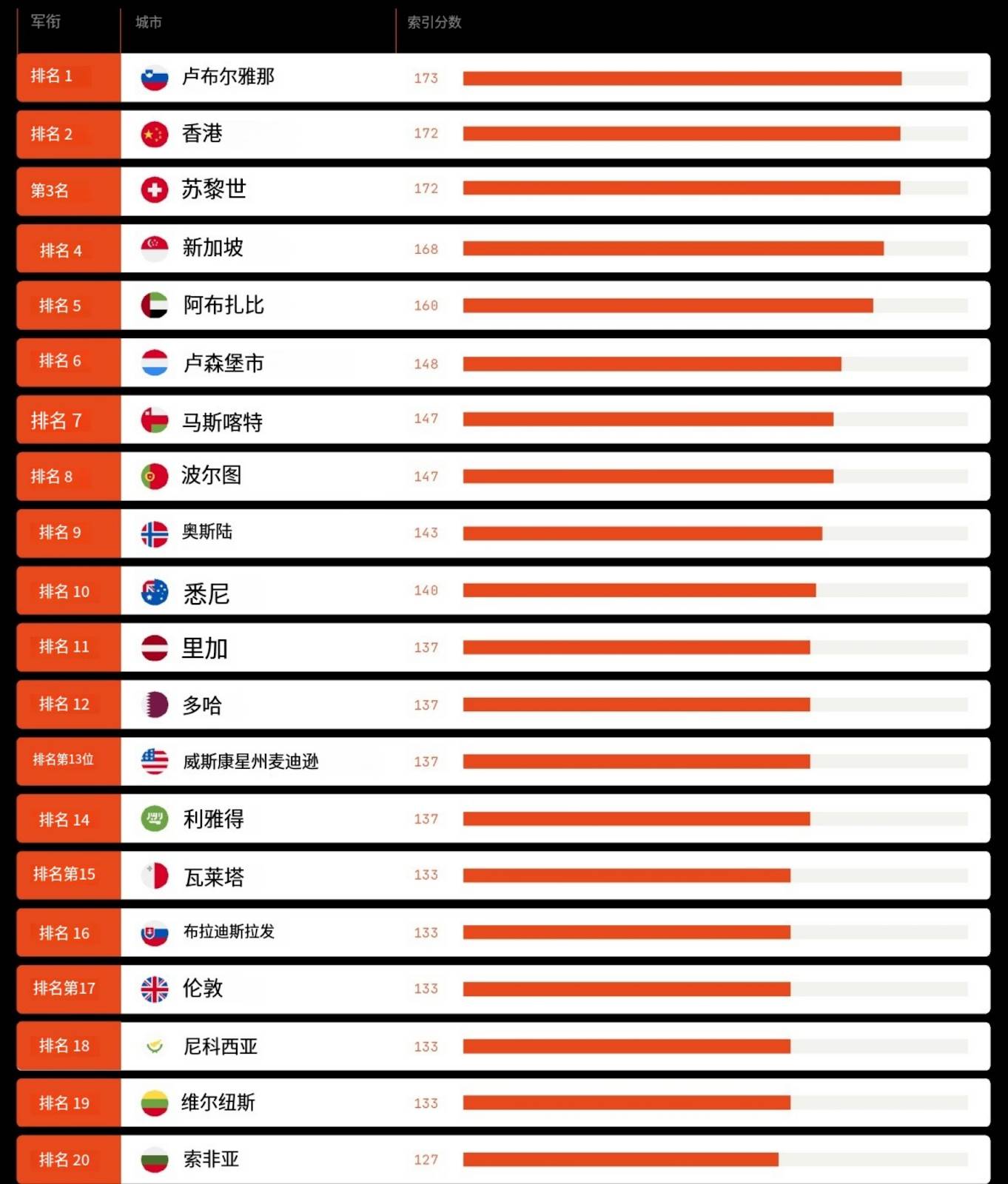
Multipolitan 2025 Crypto-Friendly Cities Index
The new financial centers of the future
The global financial landscape is no longer dominated solely by traditional hubs like New York or London. The rise of crypto-friendly cities is reshaping this order.
Crypto-friendly cities: Abu Dhabi, Ljubljana, Luxembourg City, Muscat, Nicosia, Lisbon, Riga, Singapore, Zurich—each offering clear legal frameworks and attractive tax regimes.
Top smart cities: Zurich, Oslo, Singapore, London, Abu Dhabi—ranking highly in IMD’s 2024 Smart City Index, proving that crypto-friendly cities also lead in technology and infrastructure.
Crypto ATM and merchant leaders: Sydney leads with 330 crypto ATMs and retail points, followed by Hong Kong (201 units) and Ljubljana (155 units)—cities that have embedded real-world crypto usage into daily life.
Beyond physical infrastructure, speed and connectivity form the backbone of the digital economy—and connectivity drives crypto adoption. Abu Dhabi, Doha, and Oslo lead in internet speeds at 398 Mbps, 265 Mbps, and 205 Mbps respectively, enabling high-frequency trading, digital finance, and seamless blockchain transactions.
Mapping the most crypto-friendly cities aligns perfectly with the borderless ethos of the industry. As people and capital seek favorable jurisdictions, demand for advisory services helping high-net-worth individuals relocate, launch businesses, and manage assets will continue to grow.
Where is crypto wealth concentrated?
Tracking mere ownership numbers is no longer sufficient. Equally important is understanding who holds substantial crypto wealth. There’s a stark difference between a country with millions holding small amounts versus one dominated by a few crypto giants. Multipolitan’s Crypto Wealth Concentration Index combines crypto ownership rates and transaction volumes (adjusted for inequality using the Gini coefficient) to deliver insightful analysis.
Cryptocurrency has evolved from a speculative novelty into a global financial phenomenon. As digital assets gain mainstream acceptance, one critical question remains: Where exactly is crypto wealth concentrated? To understand the emerging financial landscape, Multipolitan developed the 2025 Crypto Wealth Concentration Index, revealing not only adoption levels but also the actual concentration of crypto wealth worldwide.
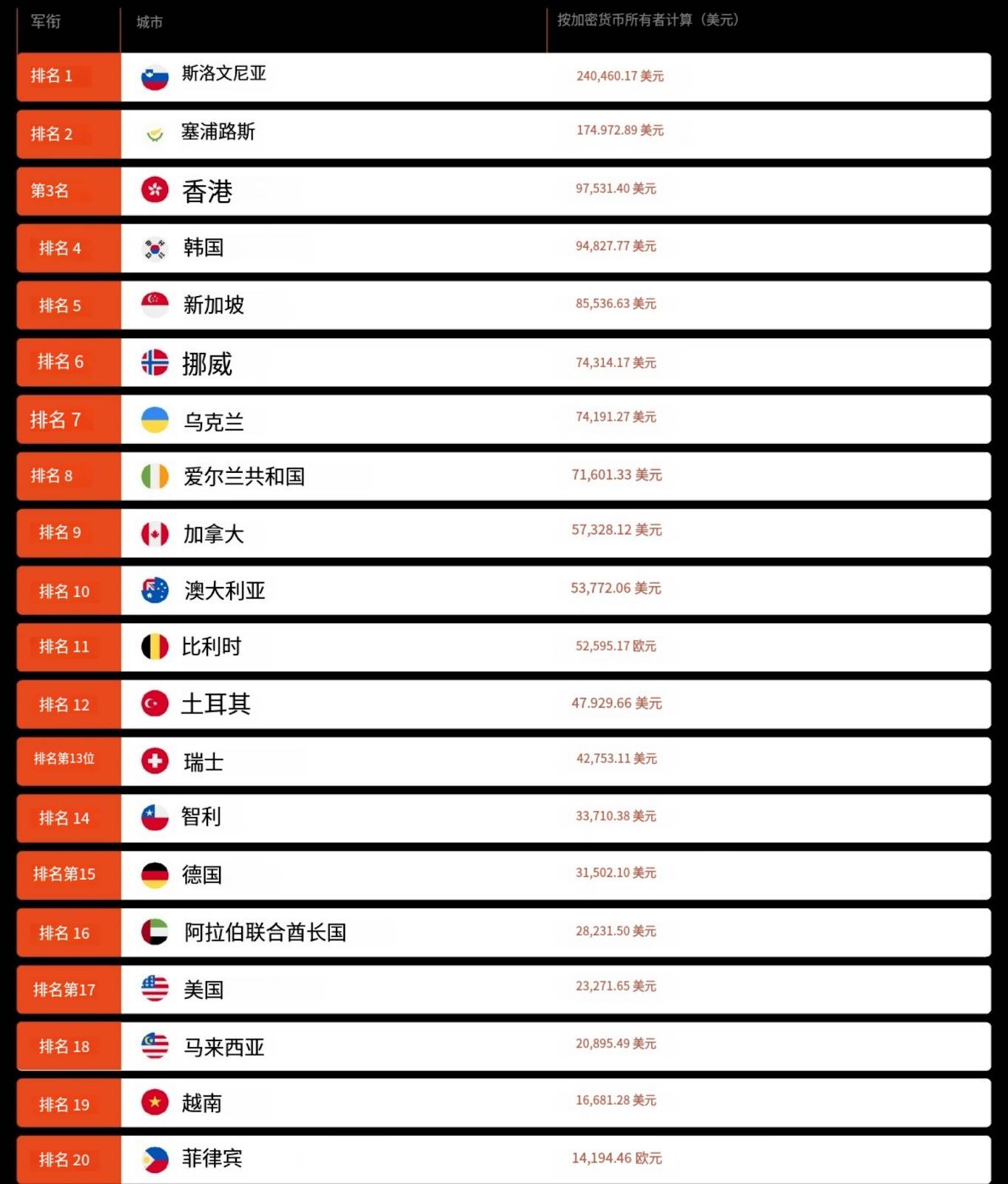
Multipolitan 2025 Crypto Wealth Concentration Index
Global leaders in cryptocurrency
UAE—Leader in global adoption. With 25.3% of its population holding cryptocurrency, the UAE leads by a wide margin, thanks to proactive government policies and clear regulations that have turned cities like Dubai into thriving crypto hubs.
India—Digital giant. India boasts 118.9 million crypto holders—the largest crypto community globally. Despite regulatory hurdles, strong retail participation underscores India’s growing influence.
United States—Still dominant in capital flows. Home to some of the world’s largest exchanges and institutional investors, the U.S. dominates trading volume at $2.07 trillion. Such massive activity solidifies America’s role as a central node in global crypto finance.
Slovenia, Cyprus, and Hong Kong—Small nations, big impact. Slovenia records the highest per capita crypto transaction value at $240,000 per person, indicating highly active users and concentrated wealth. Cyprus follows at $174,000 per capita, and Hong Kong at $77,000—making these regions hotspots for concentrated crypto wealth.
The future is borderless—and evolving
Crypto wealth no longer belongs exclusively to traditional financial centers like New York, London, or Singapore. It is borderless, fluid, and finds new homes where innovation meets clarity. Cities and nations embracing these dynamics will lay the foundation for the next era of finance. The future’s financial capitals will be those of the crypto age.
This index is more than data—it’s a strategic tool guiding decisions on relocation, business expansion, and asset management. Understanding where crypto wealth resides today will shape tomorrow’s global financial map. Today’s question isn’t who is adopting crypto—but who will control its vast wealth in the future. The race for the ultimate crypto capital is heating up.
Join TechFlow official community to stay tuned
Telegram:https://t.me/TechFlowDaily
X (Twitter):https://x.com/TechFlowPost
X (Twitter) EN:https://x.com/BlockFlow_News
 @MultipolitanSG











