2025's Three Major Crypto Themes: A More Efficient Market, Globalized Stablecoins, and Gaining from Politics
TechFlow Selected TechFlow Selected
2025's Three Major Crypto Themes: A More Efficient Market, Globalized Stablecoins, and Gaining from Politics
New Bitcoin buyers are reluctant to purchase Ethereum or altcoins, Ethereum's uncertainty has reached an all-time high, and market participants are becoming increasingly sophisticated.
 Navigating Web3 tides with focused insights
Author: tunez (evm/acc)
Translation: TechFlow
This year’s crypto narrative revolves around three core themes:
-
Markets are rapidly becoming efficient
-
Stablecoins are going global fast
-
Trump is playing 4D chess (or checkers)
Let’s break down each of these.
1. Markets are rapidly becoming efficient
1a – Bitcoin and “Web3” are different things
Historically, Bitcoin and other crypto markets were connected through capital flows. When Bitcoin rose, profits flowed into Ethereum, then into the rest of the market. Today, Bitcoin has real institutional inflows. These institutions buy Bitcoin primarily for its unique properties—sovereignty, permissionlessness, and limited supply—compared to more controlled currencies worldwide. The drivers behind this Bitcoin bull run aren’t focused on the rest of the market.
Many assume this capital would also flow into Ethereum due to its similarities with Bitcoin. But so far, that hasn't happened. While Ethereum is decentralized, its key differentiator is smart contracts. This means Ethereum's intrinsic value lies in its usage, not just technical attributes. Institutions may buy Ethereum (and Solana, etc.), but not because it’s as decentralized as Bitcoin—they buy it because it's being used, much like growth stocks.
1b – Ethereum’s brand is weakening
Ethereum’s disappointing price performance has dampened morale across the entire crypto space, regardless of your stance on Ethereum. It has also dragged broader prices down (again, capital flow effects).
You can cite many reasons for its underperformance, but the most significant is arguably Solana’s rise. Before Solana succeeded, it was easier to focus on Ethereum’s future rather than its present.
Standards have been raised dramatically. The market is tired of waiting. Solana overtaking Ethereum is now a very real possibility worth considering by everyone.
1c – The average IQ of market participants has reached an all-time high
As prices remain depressed, the market has become increasingly difficult, wiping out more and more participants who eventually exit. Those who remain do so for strong reasons.
On-chain data is now widely accessible. You can easily check TPS (transactions per second), fees, and application revenue for any chain. Many market participants do this routinely.
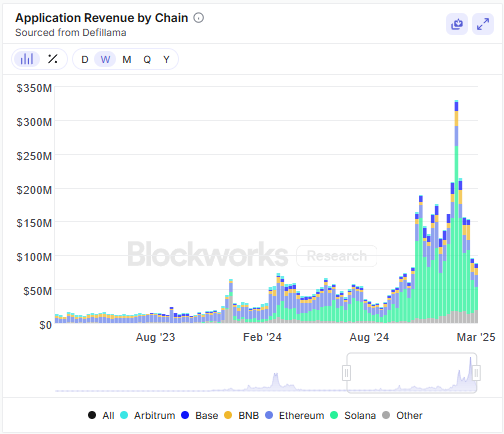
Source: Blockworks
Beyond that, market participants now dig deep into on-chain activity. The new standard is clear: you must either create a novel experience or offer a better one—otherwise, you’re labeled a scam or a waste of resources. No amount of storytelling can override this reality.
When you combine these dynamics—Bitcoin decoupling, Ethereum weakness, and overall market intelligence—you see that empty narratives are no longer tolerated. This can be deeply confusing for those without genuine conviction in the underlying technology being built. As prices fall, it becomes easier than ever to claim the entire industry is a scam and believe everyone is secretly colluding (especially those “evil” VCs).
Stablecoins are rapidly going global
Some quick data:
-
Stablecoin usage hit an all-time high in 2025
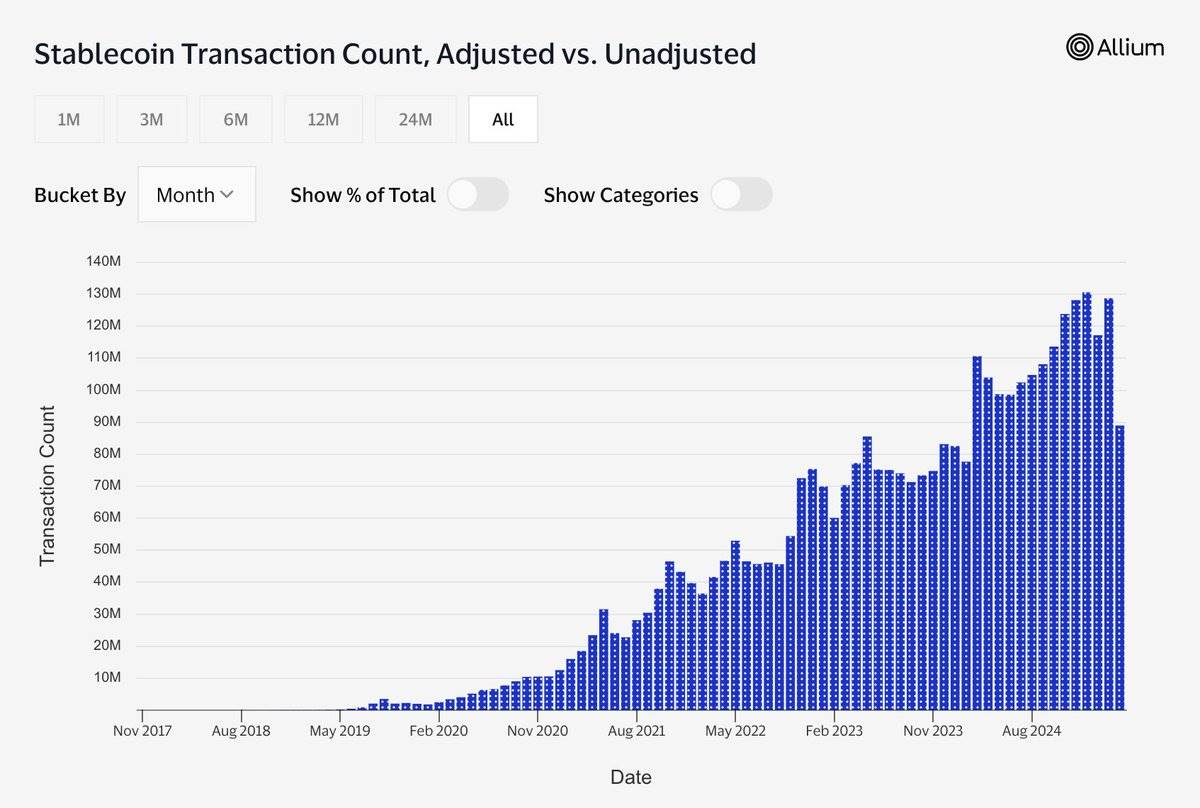
Source: https://visaonchainanalytics.com/transactions
-
Over the past 6 months, stablecoins averaged $20 billion in daily transaction volume.
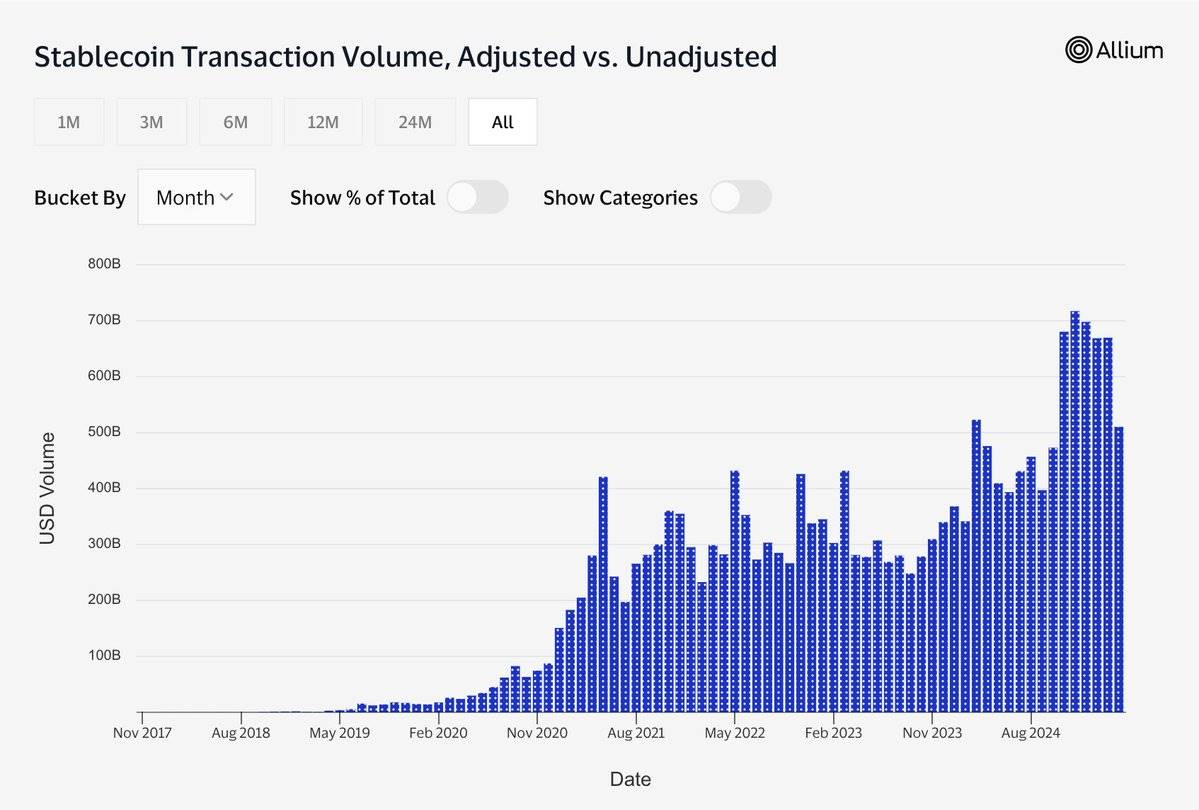
Source: https://visaonchainanalytics.com/transactions
-
Since early 2024, the total stablecoin supply has increased by $100 billion.
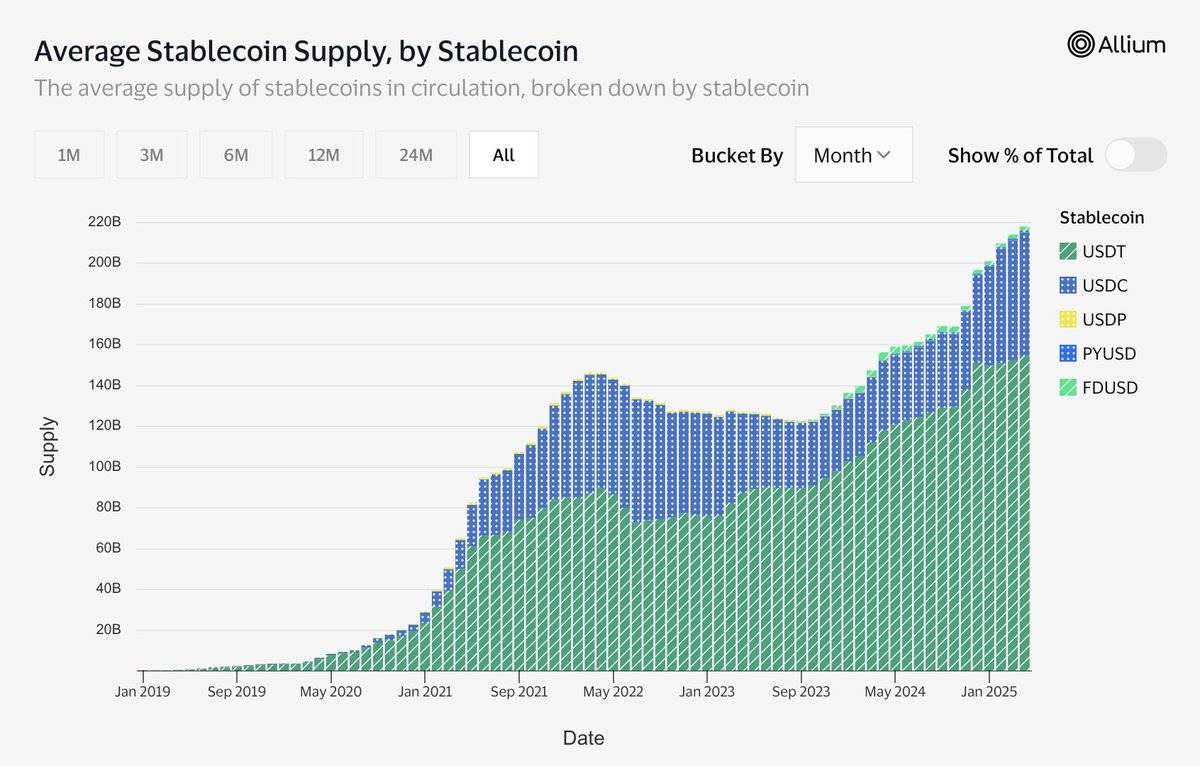
Source: https://visaonchainanalytics.com/supply
I won’t call stablecoins the “killer app” of crypto. Instead, I see them as crypto’s first sustainable on-chain onboarding mechanism.
Traditional crypto onboarding has been driven by speculation. Prices rise, people chase returns. There are valid arguments about sustainability, but this model largely drove the industry’s growth into the trillions.
There’s a difference (and trade-off) between entering crypto via speculation versus via stablecoins.
Speculation tends to lead people deeper into the ecosystem. Through speculation, you chase altcoins on centralized exchanges, and two years later somehow end up buying NFTs on a testnet of a chain that hasn’t even launched. You go down this path because you keep chasing yields in stranger places.
With stablecoins, you directly use on-chain stablecoins to transfer value. The downside here is there’s little incentive to go beyond this mechanism in search of further gains, since you never chased yield to begin with. That’s why, despite recent rapid adoption of stablecoins, it hasn’t translated into broad speculative behavior across crypto markets.
Don’t get me wrong—stablecoin adoption represents a sustainably growing on-chain economy. At some point, the stablecoin world and the speculative world will converge. But rather than lowering standards to cater to gamblers (speculators), we need to raise the bar and offer compelling, rational use cases for regular users. This is especially good because, as Theme 1 describes, markets are becoming more efficient.
Trump is playing “4D chess” (or checkers)
A Trump administration is good news for crypto, as it could mean (hopefully) reasonable regulation. That would attract capital, builders, and users into the space.
At the same time, a Trump administration is bad news for crypto because his economic policies are both extreme and unpredictable. This creates uncertainty, reduces risk appetite, and hurts everyone’s coins. Is Trump really playing 4D chess? Nobody knows.
The best way to understand Trump and the market is to imagine him hosting the “Red Light, Green Light” game from *Squid Game*.

You’ll see this dynamic play out this week. Trump announced he wouldn’t take a hard line against China, and Bitcoin surged 10%. While reassuring, you never know what the next headline will bring.
Summary
-
New Bitcoin buyers aren’t rushing into Ethereum or altcoins, Ethereum’s uncertainty is at an all-time high, and market participants are getting smarter. Together, these forces are making markets more efficient, putting downward pressure on prices almost everywhere in the short term.
-
Stablecoin adoption and onboarding will only grow. The on-chain economy is expanding, the industry has intrinsic value, and users demand high-quality use cases.
-
Crypto will uniquely benefit from this administration, but risk assets will suffer until Trump eases up.
In conclusion, the common thread behind these three macro crypto trends is short-term pain for long-term gain. It’s easy to feel like things are falling apart, but I believe the opposite is true. 2025 is the healing year crypto needs—only then can we finally be ready for the main stage.
Join TechFlow official community to stay tuned
Telegram:https://t.me/TechFlowDaily
X (Twitter):https://x.com/TechFlowPost
X (Twitter) EN:https://x.com/BlockFlow_News
 @cryptunez