








The Complete Guide to Stable Returns: Four Risk Tiers for Stablecoin Yield Strategies
TechFlow Selected TechFlow Selected
The Complete Guide to Stable Returns: Four Risk Tiers for Stablecoin Yield Strategies
From Low Risk to High Returns: A Comprehensive Landscape of Stablecoin Yield Strategies
 Navigating Web3 tides with focused insights
By: Stacy Muur
Translated by: Chopper, Foresight News
In the crypto market, a steady, disciplined investment approach can sometimes feel out of place. During bull runs, even 10x returns may seem underwhelming. Yet this profit-chasing mindset carries significant hidden risks.
Historically, countless investors have lost everything chasing short-term windfalls. For example, Pump.fun’s March 2026 data shows that among 1.37 million trading wallets, only ~4% earned more than $500 in profit.
This blind pursuit of outsized returns isn’t limited to meme coins. The stablecoin yield space is similarly plagued by speculative herd behavior. Some projects aggressively promote unsustainable, ultra-high APYs—most eventually collapse, leaving users with debt or frozen funds.
Ultra-high yields are inherently unsustainable.
Capital Is Shifting Toward Stable Returns
While retail investors chase 100x returns at high risk, institutional capital is moving in the opposite direction. Stablecoin circulation and tokenized U.S. Treasury assets have both hit record highs:
- Canada’s $160 billion sovereign wealth fund AIMCo invested $219 million into Strategy RWA, a real-world asset (RWA) protocol
- Bullish acquired Equiniti for $4.2 billion to build tokenized securities infrastructure
- Revolut opened access to Maple Finance’s syrupUSDC and SkyEcosystem’s USDS yield products for over 50 million retail users
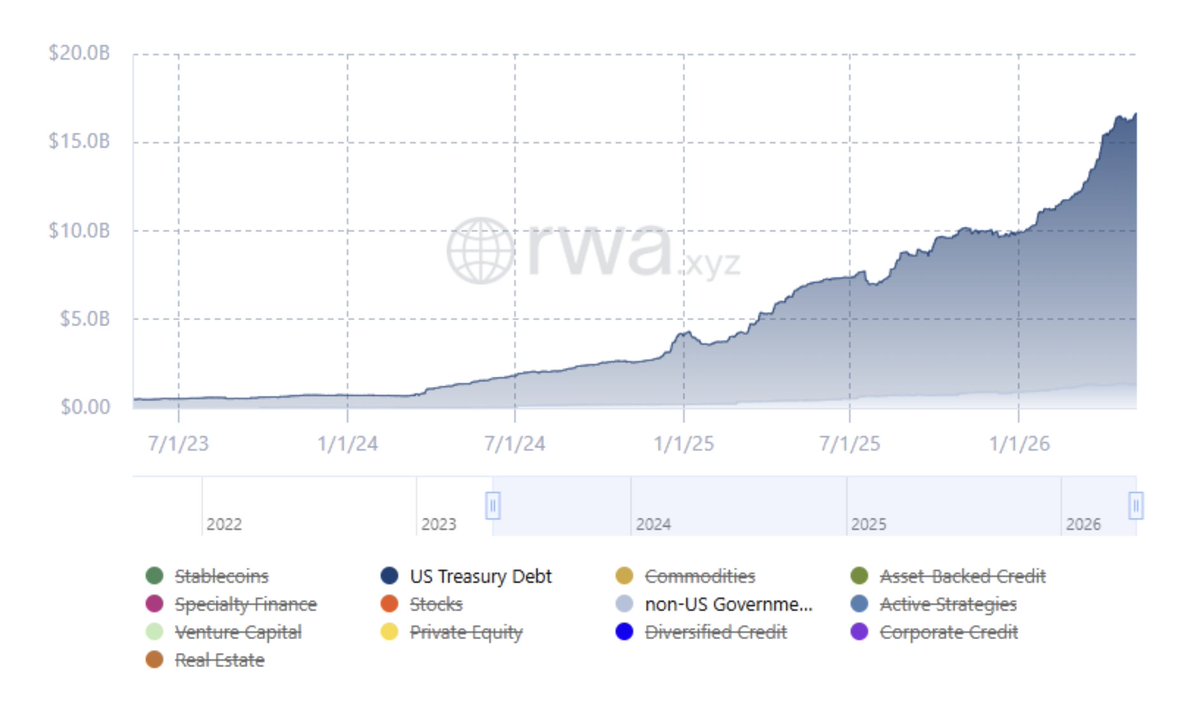
Quiet,稳健 yield strategies have already emerged as winners in this cycle—but they rarely grab headlines on crypto Twitter, lacking the viral “100x” narratives.
Today, the infrastructure for “stable yield” is vastly improved. Five years ago, the only “safe” option was Coinbase’s paltry 0.05% APY on USDC. Now, the market offers mature, diversified yield products across multiple risk tiers—with reasonable returns and controllable risk.
Below, we break down the current channels available to retail investors for deploying stablecoin capital.
Risk Tier Classification
Very Low Risk
Funds are entrusted to centralized entities—ideal for newcomers not yet comfortable with self-custody on-chain. Simplest to use.
- Coinbase (USDC): up to 3.5% APY; using Morpho protocol internally raises APY close to 10%
- Binance (USDC / USDT): up to 5.68% APY on USDC, up to 5.18% APY on USDT
- Kraken (USDC / USDT): up to 4% APY
Low Risk (3%–6% APY)
All products in this tier hold tokenized U.S. short-term Treasuries as underlying assets—backed by sovereign debt, among the safest instruments in traditional finance. Risks stem primarily from operational and regulatory factors—not credit risk.
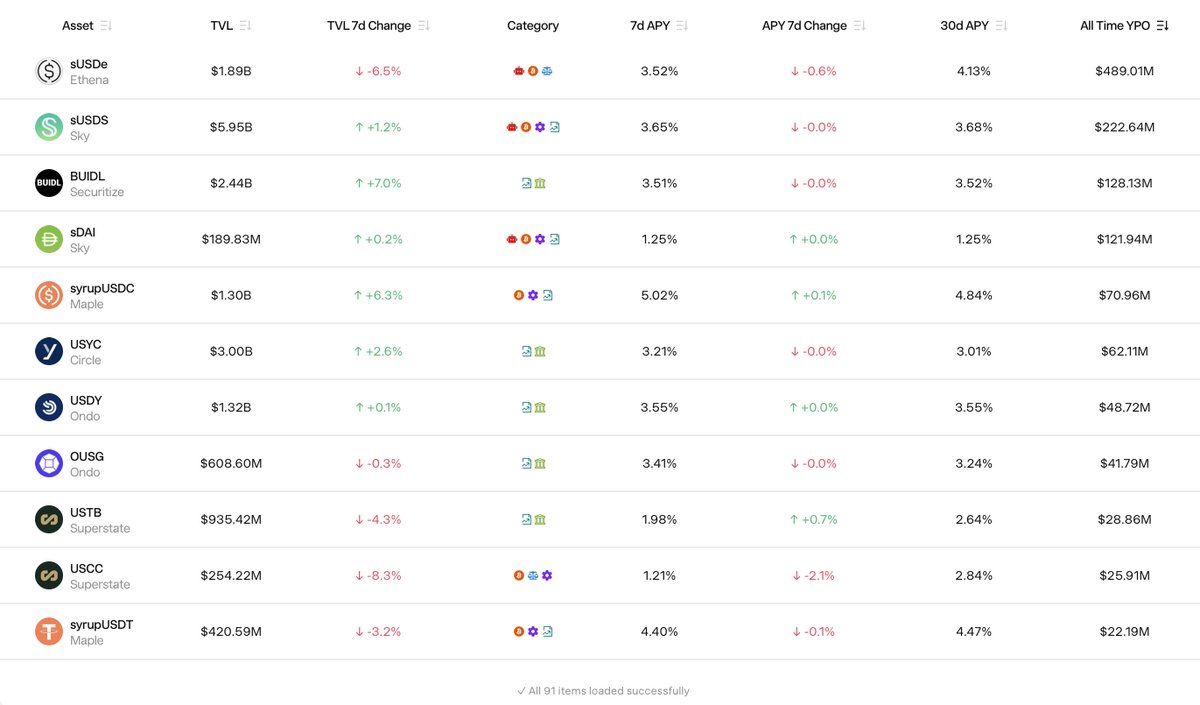
- Securitize (sBUIDL): $2.44B TVL, 30-day APY 3.52%. A blockchain wrapper for BlackRock’s BUIDL Fund, managed directly by BlackRock—the strongest institutional backing in the tokenized Treasuries space.
- Ondo Finance (USDY): $1.32B TVL, 30-day APY 3.55%, available only to non-U.S. residents. The most accessible channel for non-U.S. retail investors to gain exposure to U.S. Treasuries—no institutional minimums or complex whitelists; monthly third-party attestations published publicly.
- Circle (USYC): $3.0B TVL, 30-day APY 3.11%, available only to non-U.S. residents. Requires Circle KYC and wallet whitelisting. Built on the same compliant infrastructure as USDC—higher entry barriers but industry-leading custody security.
Medium Risk (4%–7% APY)
Beyond underlying asset risk, these products add protocol-level risk. They expose users not only to Treasury or centralized custody risk, but also to DeFi lending volatility, governance changes, and smart contract vulnerabilities.
- Maple Finance (syrupUSDC): $1.3B TVL, 30-day APY 4.81%. Users lend USDC to well-collateralized institutional borrowers; yield comes from borrower interest payments. Carries counterparty and credit risk—less secure than pure Treasury-backed products.
- Sky Ecosystem (sUSDS): $6.03B TVL, 30-day APY 3.70%. The longest-running yield product on this list—has weathered multiple extreme market events, including the March 2020 “Black Thursday” crash, the 2022 bear market, and the USDC depeg incident.
- Aave (sGHO): $265M TVL, 30-day APY 5.70%. Aave’s lending protocol enjoys strong reputation; GHO’s savings logic is straightforward—but performance remains subject to DeFi mechanics, community governance, and incentive design, warranting medium-risk classification.
- Ethena Labs (sUSDe): $1.9B TVL, 30-day APY 4.12%. Yield derives from a delta-neutral strategy combining crypto collateral and perpetual futures short hedging. One of the most important innovations in the stablecoin space—but its risk profile differs fundamentally from Treasury-backed alternatives.
- USDai Official (sUSDai): $260M TVL, 30-day APY 6.83%. Asset composition blends U.S. Treasuries with AI/GPU lending exposures—offering differentiated yield sources. Its main weakness lies in its nascent legal architecture and credit framework, which remain unproven.
Higher Risk (8%–15% APY)
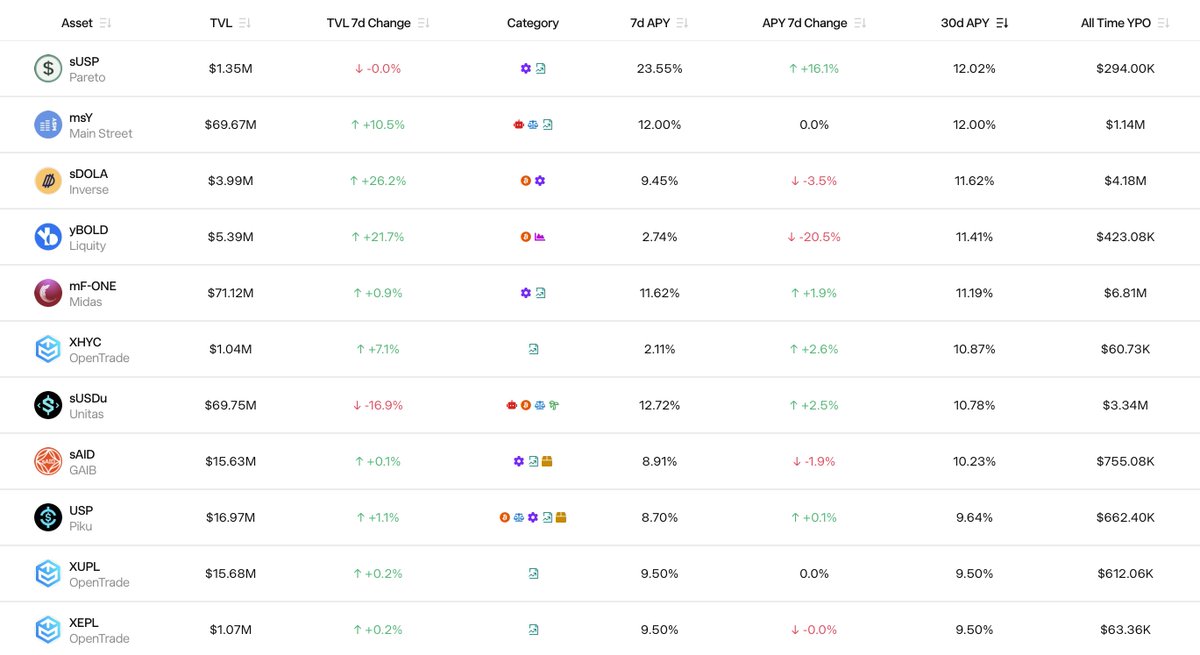
These yields are genuinely attractive—but come at the cost of project track record and stability. Most are smaller protocols, newer mechanisms, or shorter-lived in live markets. Suitable for small allocations—but inappropriate for core stablecoin holdings.
- MidasRWA (mF-ONE): $71.12M TVL, 30-day APY ~11.61%. Highest-yielding product on this list, backed by real private credit strategies with sound logic. Compared to top-tier projects, it has a smaller team and newer ecosystem architecture—carrying additional project-specific risk.
- Unitas Labs (sUSDu): $69M TVL, 30-day APY ~10.59%. Generates yield via a market-neutral basket strategy—similar in concept to Ethena, but newer and less battle-tested.
- infiniFi (siUSD): $76M TVL, 30-day APY ~8.26%. A yield product built around infiniFi’s native stablecoin. Architecture is simple and transparent—but all collateral resides within a single protocol, effectively betting on long-term protocol safety.
How to Use This Reference Guide Effectively
Risk tiering isn’t about ranking yields—it’s about helping you understand how much *additional* risk each extra percentage point of return entails.
- Very Low Risk: Instant liquidity, no lockups
- Low Risk: Best starting point for most stablecoin yield allocations
- Medium Risk: Allocate only after fully understanding the protocol’s mechanics and accepting its inherent risks
- Higher Risk: Suitable for small, opportunistic allocations seeking short-term upside
My stablecoin allocation philosophy? Rather than gambling on meme coins or unproven high-risk projects for overnight riches, I prefer patience—and aligning with institutional capital’s shift toward durable, stable yield strategies. Over time, steady progress delivers lasting value.
Join TechFlow official community to stay tuned
Telegram:https://t.me/TechFlowDaily
X (Twitter):https://x.com/TechFlowPost
X (Twitter) EN:https://x.com/BlockFlow_News
 @stacy_muur


