Local Frenzy or Full Recovery? Data Analysis of Solana Chain Meme Whale Movements and Market Divergence
TechFlow Selected TechFlow Selected
Local Frenzy or Full Recovery? Data Analysis of Solana Chain Meme Whale Movements and Market Divergence
Is this small surge in the latest MEME market cycle a sign of the return of a full-blown MEME bull run, or just a temporary re-entry by speculative capital amid an otherwise dull market?
 Navigating Web3 tides with focused insights
Author: Frank, PANews
The MEME market seems to be heating up again. Since mid-March, Fartcoin has rebounded from its lows, rising approximately 349% over about one month, with its total market cap peaking near $985 million. At the same time, the actions of large on-chain whale wallets have drawn attention—some whales spent millions of dollars investing in meme coins like Fartcoin and RFC, rapidly driving up their market valuations.
Behind these unusual movements, on April 11, the number of active addresses on Solana surpassed 5.1 million once again, approaching the peak levels seen in January.
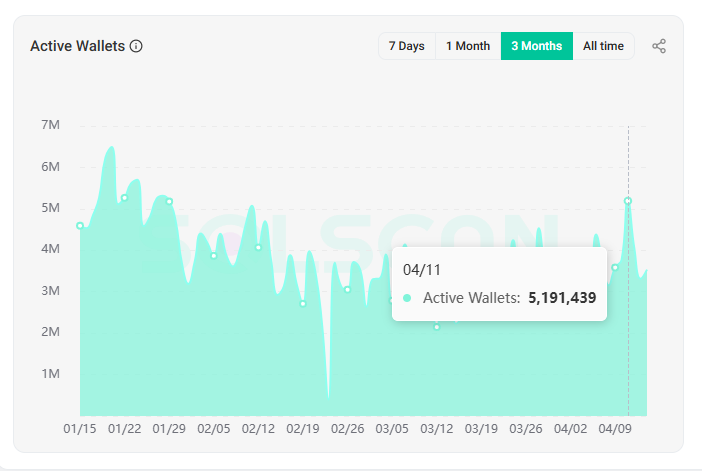
Is this small surge in meme activity a sign of a returning bull market, or merely a temporary return of speculative capital amid an otherwise dull market? PANews analyzed several large wallet addresses associated with recently high-performing meme tokens in search of clues.
Fartcoin Breakdown: Whales Entered Mid-March at an Average Cost of ~$0.62
First, after observing multiple previously high-market-cap tokens, PANews found that this round of meme enthusiasm is not widespread but rather concentrated in a few specific tokens. Most prior billion-dollar meme coins (such as Trump, BONK, WIF, POPCAT) remain in decline or bottoming consolidation phases. Among the tokens tracked by PANews, aside from Fartcoin, the others are either newly launched within the past 1–2 months or had remained relatively inactive since launch. The tokens observed include: RFC, Fartcoin, ALCH, GOHOME, DARK, House, FAT.

Tokens were selected based on having a market cap between $10 million and $100 million, and experiencing significant price increases or rebounds within the last 1 to 3 months. Among them, RFC has seen the strongest performance recently, surging up to 54x over the past month.
The leader of this cycle is Fartcoin. After hitting a low on March 10, it began a new upward trend, briefly reaching a market cap of $948 million and reclaiming its position as a leading meme coin.
Analyzing the timing of major purchases reveals that large investors started collectively entering positions from mid-March onward, with inflows continuing to rise through April 10.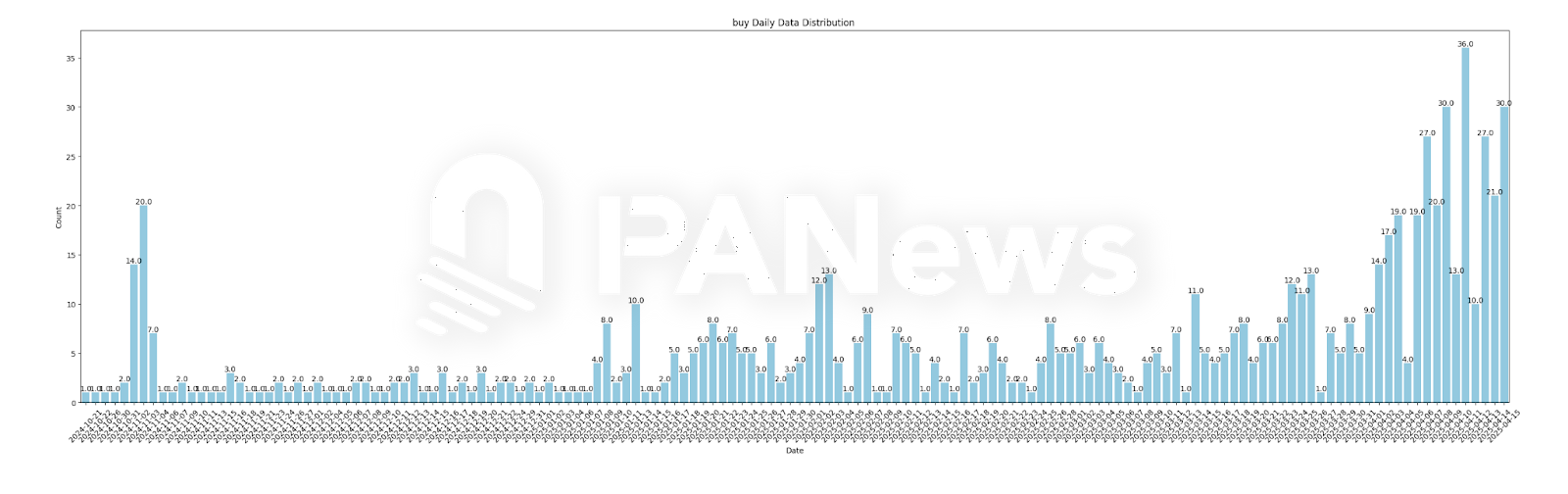
Distribution of Fartcoin Whale Entry Timing
In terms of cost basis, the initial purchase prices for the top 1,000 large holders were primarily concentrated in two ranges: $0.2–$0.6 and $0.6–$0.9. Considering Fartcoin’s price chart, only a small proportion of current large holders are still underwater above $1. Overall analysis indicates that most of today’s top holders began accumulating after the price bottomed around March 12.
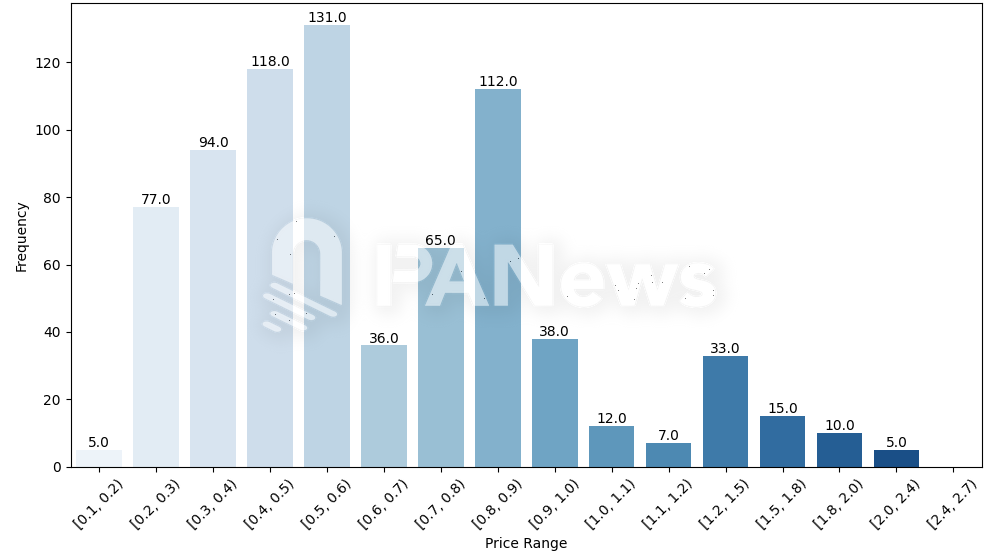
Distribution of Fartcoin Whale Holding Costs
Overall calculations show that the average initial holding cost for Fartcoin whales was approximately $0.62. With the current price at $0.844, these new large holders enjoy an average profit margin of about 36%.
23% of Addresses Hold Multiple Tokens; DARK and RFC Follow Similar Scripts
Overall, comparing the top 1,000 holders across these tokens revealed that 23% of whale addresses hold at least two of the analyzed tokens. Among them, DARK is the most commonly held token despite being the newest, with 116 whales holding it repeatedly.
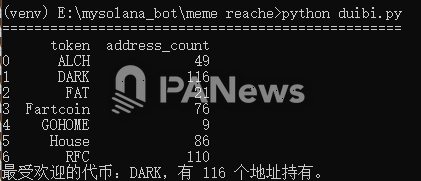
RFC follows closely behind, appearing repeatedly 110 times among whale portfolios. Although Fartcoin has attracted strong recent market attention and holds the highest market cap among the analyzed tokens, it only appears concurrently in 76 cases. According to PANews' analysis, this may be because Fartcoin's market cap has already risen significantly, prompting many early whales to exit or rotate into other positions. Without access to historical whale data at specific points in time, we cannot yet reach a definitive conclusion.
However, analyzing RFC and DARK suggests both tokens followed remarkably similar patterns.
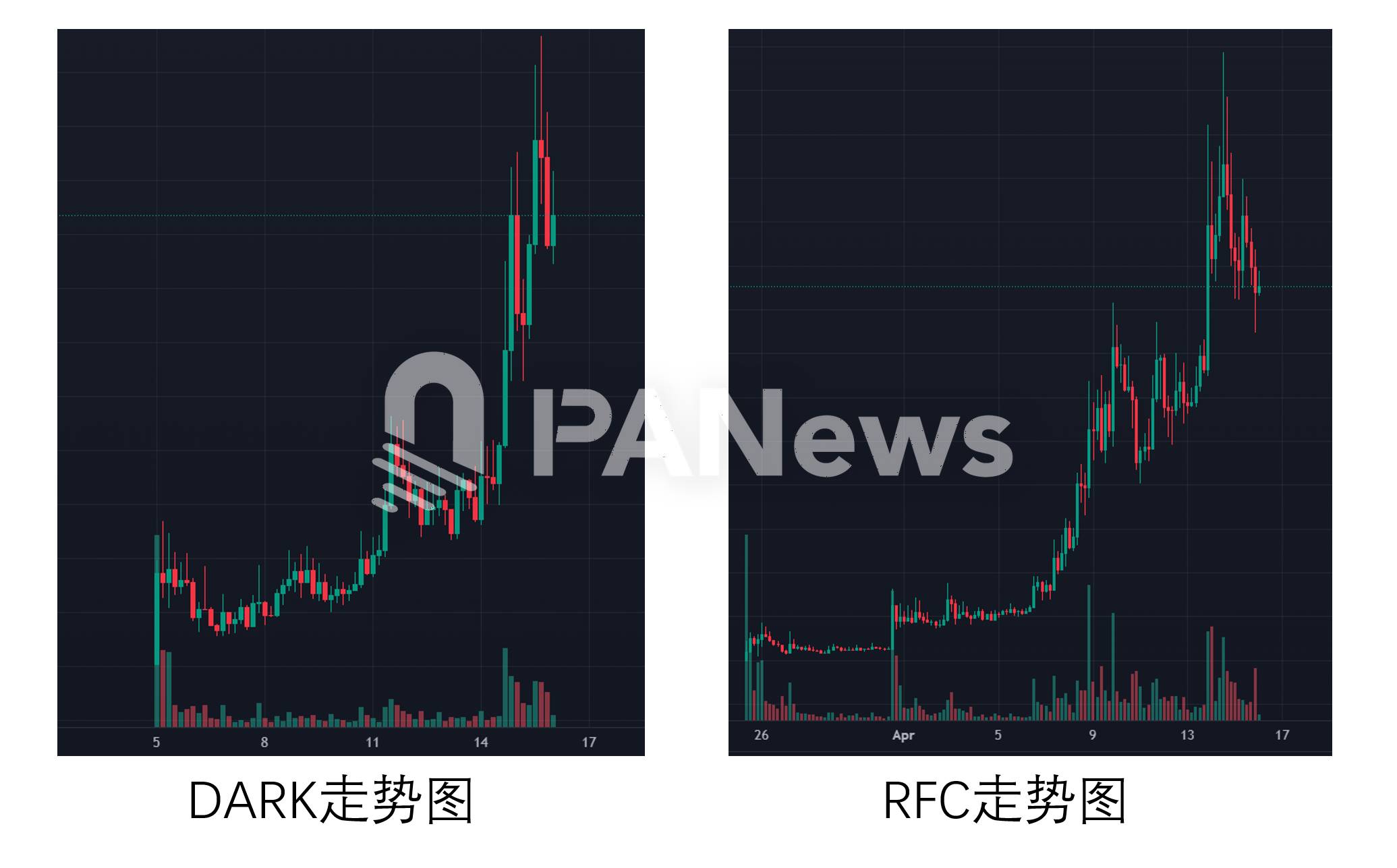
Firstly, their price charts—aside from differing launch dates—show nearly identical movement patterns, including pullback formations.
Moreover, the number of repeated holdings for both tokens is quite close, each exceeding 110. In deeper analysis, PANews identified 75 addresses simultaneously holding both DARK and RFC—the most common multi-token combination among whales. The second most common pairing is Fartcoin and House, jointly held by 35 addresses.
Further examination of when these dual-holding addresses first bought into RFC and DARK shows that most whales initially purchased these two tokens on April 13 and April 14, respectively.
From the price charts, April 13 marked the explosive rally of RFC, which surged 65% that day with a volatility amplitude of 107%. On April 14, DARK experienced a similar surge, climbing 80% with a staggering 218% amplitude. These back-to-back sharp rallies strongly suggest coordinated rotation or "pump switching" by dominant players.
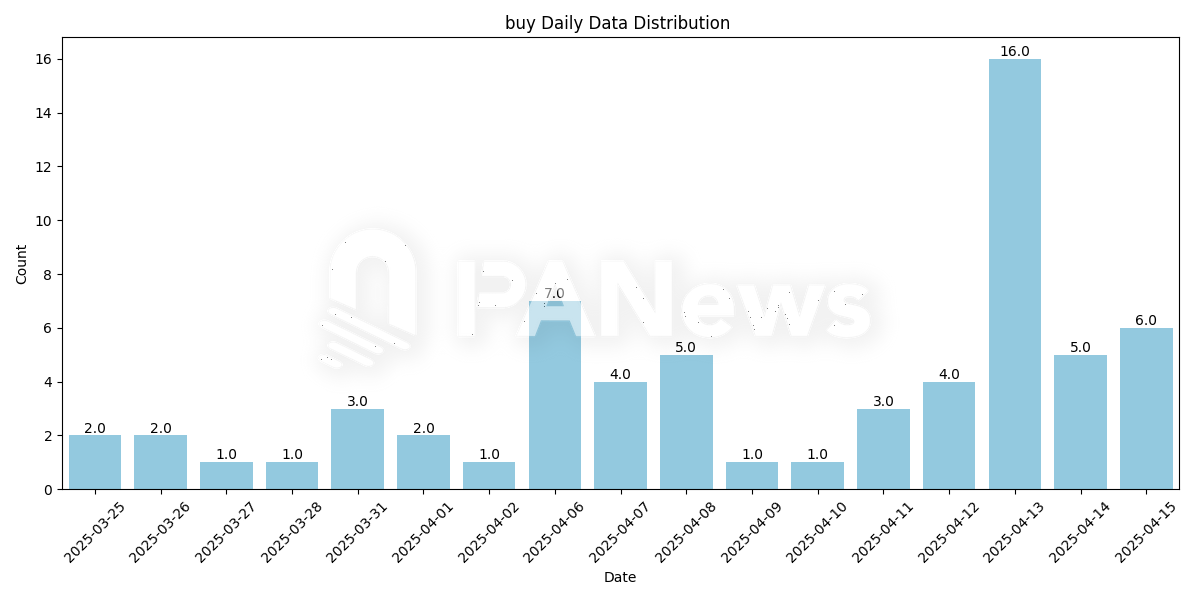
Distribution of Initial Purchase Dates for RFC Whales
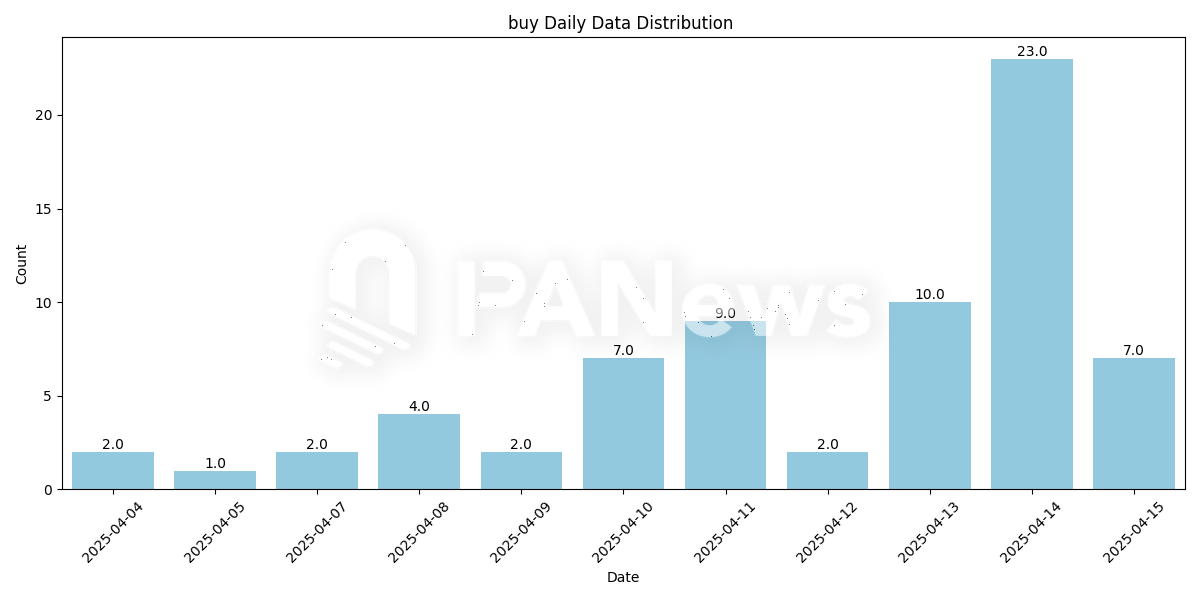
Distribution of Initial Purchase Dates for DARK Whales
It should be noted, however, that RFC reached a maximum market cap of $138 million, while DARK peaked at just $23 million. This suggests that the group of whales involved may not represent absolute dominance in the market—or alternatively, that the operators’ expectations for these two tokens differ significantly. Therefore, it would be unreasonable to expect DARK to replicate RFC’s scale.
Additionally, combinations such as Fartcoin/House and DARK/House also appear frequently in whale portfolios.
“Artificial Bulls” Favor Meme Culture and AI Themes
Across the dataset, these overlapping whale addresses collectively hold approximately $100 million in these seven tokens (excluding holdings from major exchanges such as Gate, Bitget, and Raydium), representing 8.47% of the total market cap of these tokens.
As of early April 16, most of these tokens had undergone notable corrections. FAT corrected by 72.51% from its peak, House dropped 50%, and the average correction across the board was around 37.12%. Only ALCH saw a relatively mild pullback. Notably, ALCH stands out as the only token among the group with actual utility, tied to artificial intelligence applications. However, its resilience may simply reflect favorable positioning within the current market rotation cycle, having not yet entered the distribution phase.
Beneath this wave of meme-driven rallies, signs of artificially engineered bull markets appear evident. KOL @MasonCanoe pointed out on Twitter that the whale addresses behind RFC’s surge are linked to those previously involved in market-making activities for TRUMP, VIRTUAL, LIBRA, and other tokens. These addresses are also connected to several early accumulators in RFC. Based on this, @MasonCanoe argues that RFC’s rise was no accident—it likely signals a deliberate strategic buildup by well-capitalized actors.
Data clearly indicates that Solana-based meme coins are regaining market attention, driven largely by a handful of whale investors. However, since this momentum hasn’t benefited all meme tokens equally, tracking real-time movements of these key players becomes essential for predicting future trends. Moreover, examining thematic categories reveals that cat-, dog-, and frog-themed tokens failed to gain traction during this rally. Instead, AI-related and meme culture-themed tokens stood out prominently.
In summary, the recent meme surge on Solana is far from broad-based; it is highly concentrated in a select few tokens, with Fartcoin leading the charge and attracting numerous new whales starting in mid-March. More notably, substantial overlap exists among large holders of RFC and DARK—two tokens exhibiting nearly identical price trajectories—with most major purchases occurring just before their respective explosive rallies on April 13 and 14. This strongly implies coordinated operations or strategic fund rotation. This rally does not appear to be purely organic market sentiment but bears clear hallmarks of an “artificial bull market.” Whether this orchestrated activity can catalyze broader, sustained capital inflows remains to be seen.
Join TechFlow official community to stay tuned
Telegram:https://t.me/TechFlowDaily
X (Twitter):https://x.com/TechFlowPost
X (Twitter) EN:https://x.com/BlockFlow_News
 PANews