Hong Kong Web3 Conference: Main Venue Sees Sharp Drop in Attendance, RWA Remains Hot Topic, Gathering of Chinese Crypto Titans Steals the Spotlight
TechFlow Selected TechFlow Selected
Hong Kong Web3 Conference: Main Venue Sees Sharp Drop in Attendance, RWA Remains Hot Topic, Gathering of Chinese Crypto Titans Steals the Spotlight
Another year of carnival, yet the conference has already deteriorated.
 Navigating Web3 tides with focused insights
Article: Tuoluo Finance
Another year, another carnival—except the conference has clearly changed.
From April 6 to April 9, the "2025 Hong Kong Web3 Carnival," co-hosted by Wanxiang Blockchain Labs and HashKey Group, took place at the Hong Kong Convention and Exhibition Centre. Since its inaugural declaration in 2022, this marks the third edition of the event. According to official press releases, the four-day industry gathering brought together nearly 400 leading experts, scholars, and industry leaders from global fields including technology, finance, security, and entertainment. With strong government backing and elevated status, the exhibition space also expanded by 50% compared to last year. Yet on-site observations paint a different picture—aside from a slight uptick on the third day, overall attendance appeared lackluster.
Multiple attendees reported that foot traffic was nearly halved compared to previous years. Exhibitor booths numbered fewer than 100, down significantly from over 150 last year, and dwarfed by the more than 300 booths at Singapore’s Token2049. Some even speculated that elderly locals were invited merely to inflate crowd numbers, earning the event the mocking nickname “the coldest conference ever.” Why so cold? The reasons are multifaceted. First, the event coincided with an ongoing tariff war and weak market performance, highlighting bearish sentiment and dampening enthusiasm. Second, the earlier Consensus Conference in February captured early momentum; on X (formerly Twitter), many KOLs who attended Consensus did not make the trip to Hong Kong. Side events, typically vibrant, further dispersed attention away from the main venue. Third, broader industry issues persist—lack of new narratives, minimal innovation, and participant focus on price speculation rather than technological advancement have turned conferences into little more than social gatherings for retail users.
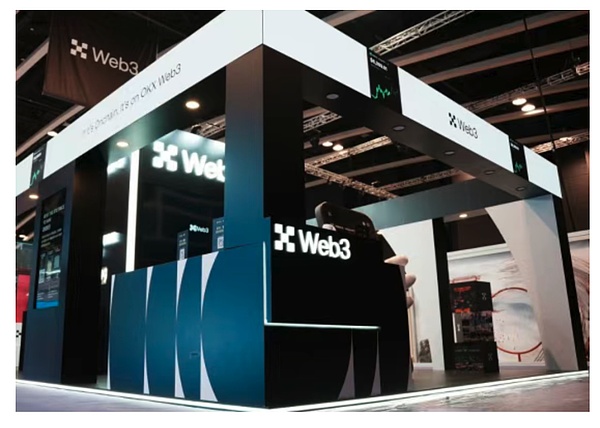
Booths reflect power, and booth traffic reflects concentrated attention. This year, OKX unquestionably hosted the largest and most popular booth—exchanges remain dominant sponsors, drawing massive crowds and serving as primary drivers of foot traffic. Close behind was GMGN, a meme coin darling among Chinese-speaking communities. As for trending themes, PayFi remained a central focus, with traditional financial players making notable strides. At panel discussions, institutions like HSBC and ZAbank actively discussed Web3 payments. On the exhibition floor, the Shanghai Data Exchange and Boshi Fund also had booths—the former focusing on RWA (Real World Assets), the latter closely tied to digital currency funds, possibly inspired by Hexun Fund (Hong Kong)'s launch of the "Hexun Hong Kong Dollar Digital Currency Fund."
Interestingly, beyond PayFi and memes, previously hot concepts seemed dormant in the main hall. DePIN drew virtually no interest, leaving only a single AI-integrated robotic dog flipping around the venue. Solana and Sui, which enjoyed high visibility at Consensus, were underrepresented here—possibly due to低迷 token prices. Both held independent offsite events, suggesting their priorities lie elsewhere. TON, after a wave of founder-related controversies, no longer claims it's on the verge of breakout success. It returned from a standalone forum last year to a standard exhibition zone. Though it occupied its own block, foot traffic was far from frenzied. This aligns with real-world developments—rumors persist of multiple GameFi projects abandoning TON, indicating that Web3's attempt to break into mainstream Web2 adoption remains harder than expected. Bitcoin’s ecosystem fared even worse—BTCFi showed no progress, and the Bitcoin ecosystem appears increasingly dismissed as a "pseudoproblem" by the market.
In terms of participants, KOLs dominated attendance. One netizen joked, “The Hong Kong conference is now a KOL job market.” In contrast, VCs have stepped back. Compared to their strong presence during the last bull run and their absence at the Hong Kong Consensus, this retreat underscores rapid shifts in the industry chain, evoking a sense of faded glory.
While the main hall felt empty, surrounding side events saw strong turnout. Among over 100 side events, beyond genuine technical forums and hackathons, yachts, nightclubs, and parties kept people entertained. Binance, OKX, and Bitget pulled out all the stops to attract visitors. Amid clinking glasses and endless toasts came WeChat friend requests—how many entered the night chasing connections, get-rich-quick dreams, or insider tips remains unknown. As usual, Chinese speakers formed the core demographic, with overseas participation showing a further decline this year.
Throughout the entire event, the most talked-about moment was the gathering of prominent Chinese Web3 figures.
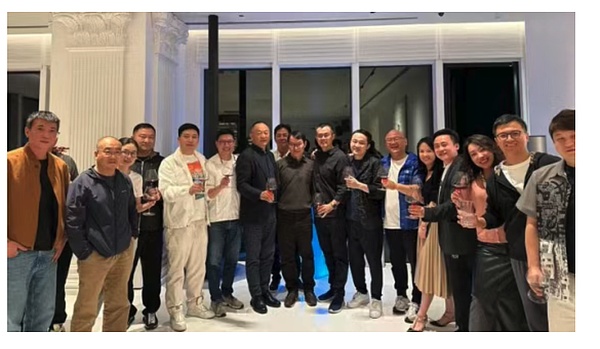
At the BUIDL 2025 event, OGs like CZ, Justin Sun, and Li Lin reunited—a rare sight of “laughing off old grudges.” Recall that just months ago, Sun publicly accused Li Lin of hiding due diligence documents, sparking a heated online feud over a rumored $30 million financial shortfall at Huobi. Yet two months later, photos of them sharing a ceremonial drink went viral, epitomizing their love-hate dynamic. CZ and Justin Sun, founders of Binance and TRON respectively, maintain a delicate balance of competition and cooperation. Just days prior, Sun criticized First Digital Trust (FDT) for insolvency and failure to redeem client funds. Though unrelated to Binance, rumors of favoring whales over retail investors once again placed CZ and He Yi under public scrutiny. Regardless, their warm banter and embraces at the dinner table sparked widespread amazement. Beyond these three, other veterans like Shen Bo, Cai Wensheng, and Brother Feng also made appearances. Their collective return raises endless speculation about what’s next.
In stark contrast to these celebrated Chinese figures, Vitalik Buterin, representing the Western camp, faced a very different reception. Amid Ethereum’s plunge below $1,500 and prolonged price stagnation, Buterin received little but criticism. A surreal scene unfolded: onstage, Vitalik confidently pitched Ethereum as the “world computer,” while the audience silently wondered when ETH would ever rebound. The tension between tech idealists and price-focused speculators simmered beneath the surface, ready to erupt. Offstage, critiques continued. Notably, several industry insiders on X observed that when CZ and Vitalik appeared together, CZ drew far greater popularity. Crowd movements follow liquidity—and indirectly, faith. Compared to Vitalik, the currently more “influencer-like” CZ clearly holds stronger mass appeal. After all, in on-site price predictions, $800 had become an accepted number for ETH, while BNB still carried pump potential.
Overall, from 2023’s cautious optimism to 2024’s packed halls, and now to today’s quiet corridors, Hong Kong has witnessed BTC’s journey from $17K to $100K and back down to $82K—through bull, bear, and everything in between. The conference perfectly mirrors the current state of the industry. Lack of innovation, absence of real applications—these issues seem willfully ignored. A bear market is taking shape: exchanges scramble for new users, projects struggle to survive, retail holders cling to altcoins, and VC funding dries up. Yet bear markets have advantages—less noise, lower costs, ideal conditions for product refinement and allowing quality projects to rise. Meanwhile, new asset flows and capital movements remain crucial. Traditional and crypto worlds are converging, regulations evolving—both opportunity and challenge. But returning to the event itself, gossip-filled airwaves and networking frenzy remain the norm. Mysteries around Justin Sun’s girlfriend, viral “egg literature”—crowds buzz with varied agendas, reflecting misalignments across the industry.
Turning to Hong Kong: despite various setbacks, its Web3 ecosystem has taken initial shape. From a policy standpoint, whether through RWA pilots or stablecoin regulation, Hong Kong ranks among the world’s most open jurisdictions for Web3. At the event, Financial Secretary Paul Chan stated that the Financial Services and Treasury Bureau and HKMA are developing a regulatory framework for stablecoin issuers. A second policy statement on virtual assets will be released this year. To date, the government has allocated HK$50 million to support Cyberport in building the Web3 ecosystem, attracting numerous Web3 firms to set up in Hong Kong.
According to Deputy Secretary of Financial Services Chan Ho-lim, as of last September, Hong Kong hosted over 1,100 fintech companies, growing annually by more than 15%, spanning digital banking, virtual insurance, and virtual asset education platforms—including 8 licensed digital banks, 4 licensed virtual insurers, and 10 licensed virtual asset education platforms.
Policies continue rolling out. On April 7, the SFC officially issued a circular permitting spot virtual asset ETFs to participate in on-chain staking under a prudent regulatory framework. Simultaneously, restrictions on virtual asset trading platforms were relaxed, allowing licensed platforms to offer staking services to clients.
Though Hong Kong’s gateway effect remains limited today, in the long term, for traditional institutions seeking entry into Web3, a city combining compliance with openness remains the ideal ground. With that in mind, observers might want to show a bit more patience toward Hong Kong.
Tuoluo Finance also includes excerpts from several attendees’ posts on X, offering a glimpse into how industry participants view the current cycle. (Edited for brevity; full texts available on X.)
AB Kuai.Dong@_FORAB
1. This was probably the coldest Hong Kong conference I’ve attended. Exhibitors widely complained about difficulty securing sponsors; media professionals noted a sharp drop in project advertising.
2. Many peers who left major exchanges this year are now considering returning. While salaries are fixed and roles feel mechanical, at least there’s steady pay and prestige from being associated with big brands—further proving the adage: in bull markets, people want to hustle; in bear markets, they want jobs.
3. Projects that launched tokens years ago are now thinking about what to build during this bear market so they can re-launch in the next cycle. Meanwhile, those who just launched tokens are deeply stressed—feeling like everything they do is wrong.
4. VCs this year show clear polarization. Earlier investments were overvalued and are now getting severely corrected by the market. But many new projects now appear extremely cheap.
5. At an event where both CZ and Vitalik appeared, CZ surprisingly drew more fans. As everyone rushed to take photos with CZ, he joked, “Go take pictures with Vitalik too.”
6. Last year there was debate over whether Ethereum had problems. This year, consensus seems complete—whether at Vitalik’s talks or in private conversations, criticism and questioning are everywhere.
7. I asked several market makers and institutions—the majority expect ETH to fall below $800, betting on panic selling from cyclical loan and ICO-era holders. That said, in June 2022, everyone thought the same thing—only for ETH to briefly touch $880.
8. Far fewer white Western foreigners attended this year—even at technical events, their presence dropped. Two years ago, people were FOMO on the “Hong Kong story” and traveled long distances to attend. That fervor is gone.
9. I met quite a few “airdrop farmers” this time. Some genuinely improved their family’s financial situation through farming. Despite witch hunts eliminating some bot farms during last year’s and this year’s token launches, a group still got rich.
10. While opinions on Hong Kong’s regulatory progress remain mixed, it has become an intriguing crypto hub. Beneath the surface, many projects unable to return elsewhere come from Singapore, while Chinese retail traders come from mainland China—creating fascinating friction and collisions.
11. Some top Chinese-language influencers are expanding beyond crypto into streetwear, medical aesthetics, and even Hong Kong-listed companies, gradually forming large-scale industrial networks—increasingly resembling Western brokerage and investment firms.
DeFi Teddy@DeFiTeddy2020
Narrative-only VC coins can no longer sustain high valuations; meme coins will persist but their红利is fading; projects must return to fundamentals and PMF (product-market fit); RWA is slowly rising; AI x Crypto is searching for PMF and may explode one day; future projects will exit via IPO or TGE.
-
VCs: Can’t invest anymore. Few new deals. Mostly managing exits and secondary markets. Barely looking at AI.
-
Founders: Old paths don’t work. Frantically pivoting. Top concern: Runway.
-
Research KOLs: Market doesn’t want content. Don’t know what else to hype.
ZTZZ ฿@ZTZZBTC
KOLs: This generation of KOLs is far inferior to those of 2017–2018. Looking back, the depth of content, drive to innovate, and long-term vision of 17–18 KOLs were top-tier even by internet standards.
Founders: True gold emerges in fire. Interesting projects and teams are starting to appear in this bear market. But the next big trend isn’t clear yet. With many VCs having lost everything, everyone’s investing cautiously. If you’re a new founder, don’t stop thinking or working. Most people entering crypto now have elite academic backgrounds—the common traits are obvious. The era of grassroots heroes is fading. Some projects still exist—but are already dead inside. Too many founders are desperately seeking exit strategies.
The on-chain exchange赛道truly has potential to leapfrog incumbents. It won’t be some BOT bot. We don’t yet know its final form, but when it arrives, it will explode like a supernova, challenging the dominance of centralized exchanges.
cryptoHowe.hl | 0xU@0xcryptoHowe
Conference quality and atmosphere didn’t reach one-fifth of last year’s. Last year’s venue had many new project teams—even meme projects had booths. This year, almost all were major infra or service providers. It’s obvious—people don’t have money anymore. A lot of newcomers attended; few veterans showed up. KOL density was extremely high. Project teams and VCs were scarce.
Dog-killing tools remain hot. Recently spoke with several new entrants—functions and UIs are nearly identical. Even major institutions, adopting a “better to bet wrong than miss out” mindset, are building such tools themselves—indicating belief that memes could still explode. However, timing for tool products is poor, differentiation hard. Success depends on early ecosystem capture, mid-to-late stage marketing, and team connections. Meme sector ROI: casino > tools > ponzi.
RWA and AI are the most discussed topics. RWA surprised me—I expected more talk about meme AI alphas. Overall, RWA is hard to falsify, but its essence has little to do with crypto. Think of it as traditional capital seeking compliant, faster, simpler fundraising avenues. Business model is B2B and B2G—retail investors have almost no way to participate.
I surveyed expectations—most think post-June, but personally, June feels too soon. H2 seems more likely. Stay patient.
Join TechFlow official community to stay tuned
Telegram:https://t.me/TechFlowDaily
X (Twitter):https://x.com/TechFlowPost
X (Twitter) EN:https://x.com/BlockFlow_News