








Drop the Illusion: The Clone Season Won't Return—A Guide for Navigating the Next Cycle
TechFlow Selected TechFlow Selected
Drop the Illusion: The Clone Season Won't Return—A Guide for Navigating the Next Cycle
The glory days of the "copycat season" are gone, with narrative exhaustion, value collapse, and liquidity crises making a broad bull market a distant dream.
 Navigating Web3 tides with focused insights
Author: Luke, Mars Finance
In 2025, the crypto market resembles a quiet morning after a grand feast—altcoins, once the tokens that ignited countless investors' dreams of wealth, are quietly losing their former luster. The ICO frenzy of 2017 and the DeFi and NFT mania of 2021 saw altcoins deliver legendary hundredfold gains, writing the glorious chapter of "Altcoin Season." However, today’s market looks entirely different. With narratives exhausted, value collapsing, and liquidity crises, the bull run for altcoins has definitively ended. Will Altcoin Season return? The answer may well be no. So in the next cycle, how can one position themselves to capture potential localized rallies?
The Shattered Illusion of Altcoin Season: From Frenzy to Cold Reality
Altcoins were once the brightest stars in the crypto universe. In 2017, the ICO boom swept the globe, with countless projects raising funds through token sales, while investors rushed in like gold miners chasing the “next Bitcoin.” Tokens like Ethereum and EOS surged overnight, often increasing in market cap by tens of times. By 2021, DeFi and NFTs emerged as new frontiers—DeFi tokens such as Uniswap and Aave posted astonishing gains, while Axie Infinity’s AXS token rocketed from $1 to $160. At its peak, the total market cap of altcoins surpassed $1 trillion. It was an era of feverish speculation, where retail investors reveled in dreams of “100x returns,” and Altcoin Season seemed endless.
Yet by 2025, the altcoin market is eerily quiet. The Altcoin Season Index has hit a new low of 16, indicating that overall altcoin performance has plummeted to rock bottom. Market analysts suggest that, following end-phase acceleration logic, the coming quarter could be critical for altcoins to find their floor. The former euphoria has evaporated, investor confidence in altcoins has nearly collapsed, and even top-tier altcoins like Ethereum have not been spared. The dream of Altcoin Season is shattering against the cold reality.
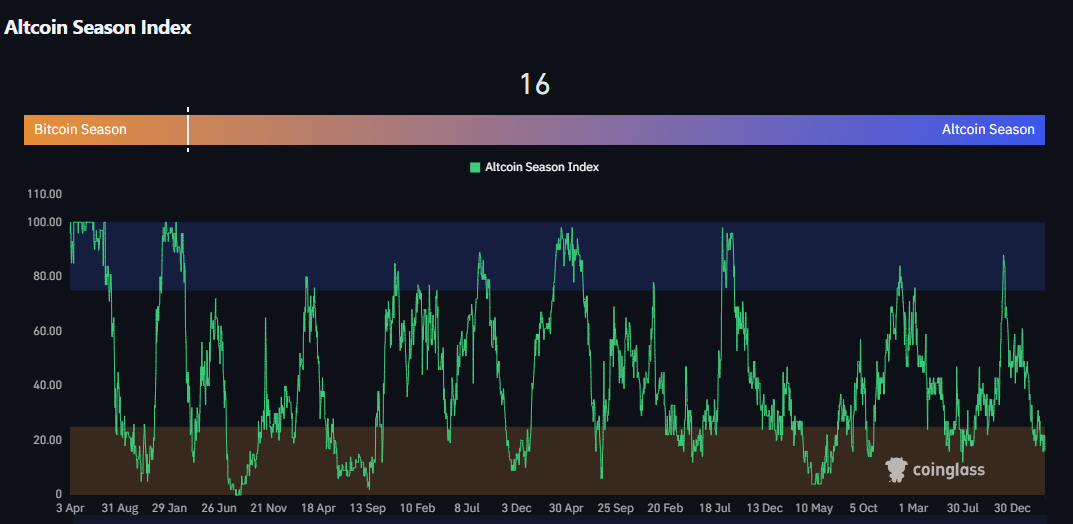
Why is Altcoin Season unsustainable? The answer lies in the fundamental flaws of most altcoins. Many lack intrinsic value and contribute minimally to society compared to Web2 companies of similar market cap. For example, certain meme coins boast multi-billion dollar valuations despite having virtually zero technological utility, whereas SaaS companies of comparable size typically generate stable revenue and serve real user bases. Over a decade since blockchain’s inception, few altcoins have achieved meaningful real-world adoption. Metaverse projects like Decentraland were once hailed as revolutionary, yet their virtual worlds attract minimal users and fail to create sustainable value. As value erodes, altcoins bear the brunt during bear markets, prompting investors to shift toward Bitcoin and a handful of leading projects—leaving altcoins with ever-dwindling room to survive.
Narrative Exhaustion and Shrinking Growth: From Mass Hype to a Stagnant Market
Altcoin Seasons thrive on fresh narratives and incoming capital. In 2017, the “blockchain revolution” narrative fueled the global ICO craze; in 2021, terms like DeFi and NFT sparked market excitement, drawing in retail investors en masse and flooding the space with capital that inflated token prices. But by 2025, altcoins have lost their narrative magic, and the flood of money has dried up.
First, narrative exhaustion has stripped altcoins of their appeal. The DeFi boom has long cooled, with many projects losing credibility due to unsustainable yields and frequent hacks (such as cross-chain bridge exploits). The NFT market has similarly deflated—trading volume, which once reached billions of dollars in 2021, has plunged to near-zero levels. Once high-flying NFT tokens like AXS now trade below $5. New narratives such as metaverse and AI tokens have been attempted but fail to gain broad consensus or ignite a full-scale bull market. More critically, blockchain technology still lacks a true killer application. Without the promise of “disrupting traditional systems,” altcoins struggle to attract new participants.
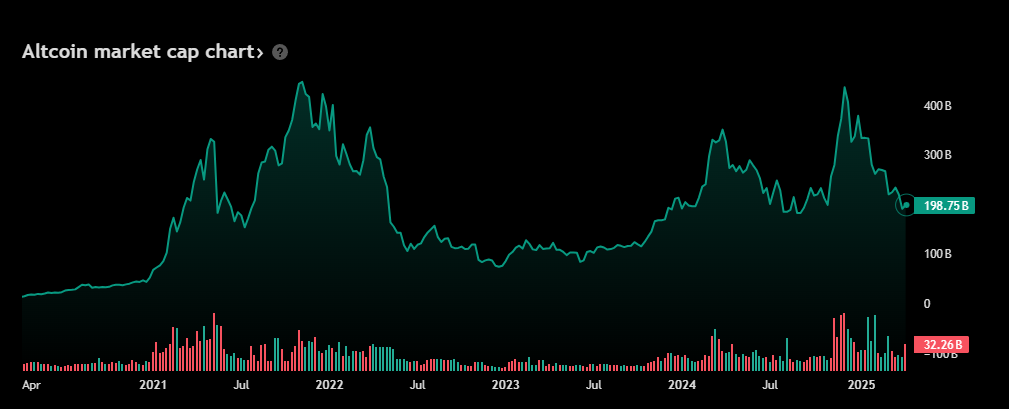
Second, the market has shifted from “growth-driven” to “zero-sum.” Early crypto markets resembled uncharted land—few projects, concentrated capital, and surging retail interest made it easy to inflate market caps. Today, however, the number of crypto projects has exploded into the tens of thousands, fragmenting both total market value and investor attention. Deteriorating global economic conditions worsen the situation: high interest rates suppress risk asset valuations, geopolitical tensions rise, and investors increasingly favor cash or gold over speculative assets. As a result, demand for altcoin speculation has sharply declined. Without fresh inflows, the engine of Altcoin Season has stalled.
Abandoning Decentralization's Core Principle: Bitcoin Reigns Supreme
The original ethos of blockchain is decentralization, yet many altcoin projects deviate from this ideal. Some public chains sacrifice decentralization for performance, while centralized exchange tokens rely more on platform policies than community consensus. This divergence makes altcoin consensus fleeting and investor trust fragile. The 2022 collapse of LUNA/UST—a centrally designed algorithmic stablecoin that imploded overnight—wiped out hundreds of billions in investor value. Such incidents are common among smaller altcoins and severely damage market confidence.
In contrast, Bitcoin—the origin of blockchain—remains unmatched due to its high degree of decentralization (no single point of control, globally distributed miners). By 2025, Bitcoin’s market dominance has approached 60% (based on historical trends). BitMEX founder Arthur Hayes stated on social media: “Shitcoins are getting in our strike zone, but I think #bitcoin dominance keeps zooming towards 70%.” Institutional investors also favor Bitcoin, viewing it as “digital gold” and a preferred safe-haven asset. If Bitcoin’s dominance surges to 70%, altcoins will face even tighter survival constraints, making a revival of Altcoin Season extremely unlikely.
Liquidity Crisis and Declining Public Chains: Survival Under the Shadow of Ghost Towns
Another fatal flaw plaguing altcoins is fragmented liquidity. By 2025, liquidity is concentrated in a few major chains like Ethereum, Solana, and BNB Chain, while smaller chains suffer sharp declines in trading volume and developer activity. For instance, EOS had a TVL of several billion dollars in 2018 but now sits below $100 million—nearly a “ghost chain.” The decline stems from weak ecosystem appeal, inability to attract DApp developers, slow progress in cross-chain integration, and Layer 2 solutions diverting traffic from mainnets. Going forward, over 90% of public chains may become “ghost towns,” leaving altcoins in an increasingly hostile environment.
More dangerously, illiquid altcoins should never be blindly bought at lows. A common saying in the market goes: “Down 90%, it can still drop another 90%.” Take LUNA: it fell from a 2022 peak of $120 to $0.0001—a loss exceeding 99.9%. Similar fates are widespread among small-cap altcoins. Investors who recklessly attempt to catch the falling knife risk total ruin. Liquidity crisis acts as an invisible chain, locking altcoins deep in the abyss.
Faint Glimmers of Local Breakouts Amid Darkness
A full-scale return of Altcoin Season may be history, but that doesn’t mean altcoins have no chance in the next cycle. Even in a broadly depressed market, certain sectors and projects may stand out through unique narratives, real-world applications, or strong community support—emerging as bright spots in localized rallies. Below are three types of altcoins that could maintain high market caps in the next cycle, worth watching closely.
1. Strong-Narrative New Projects: Ignition Points for Market Momentum
Altcoin surges often hinge on breakout narratives capable of attracting new capital and users, reigniting market enthusiasm. The 2021 NFT and metaverse waves exemplify this: Axie Infinity drew millions with its “play-to-earn” model, sending its AXS token from $1 to $160; metaverse platforms like Decentraland captured headlines with the idea of “virtual real estate.”
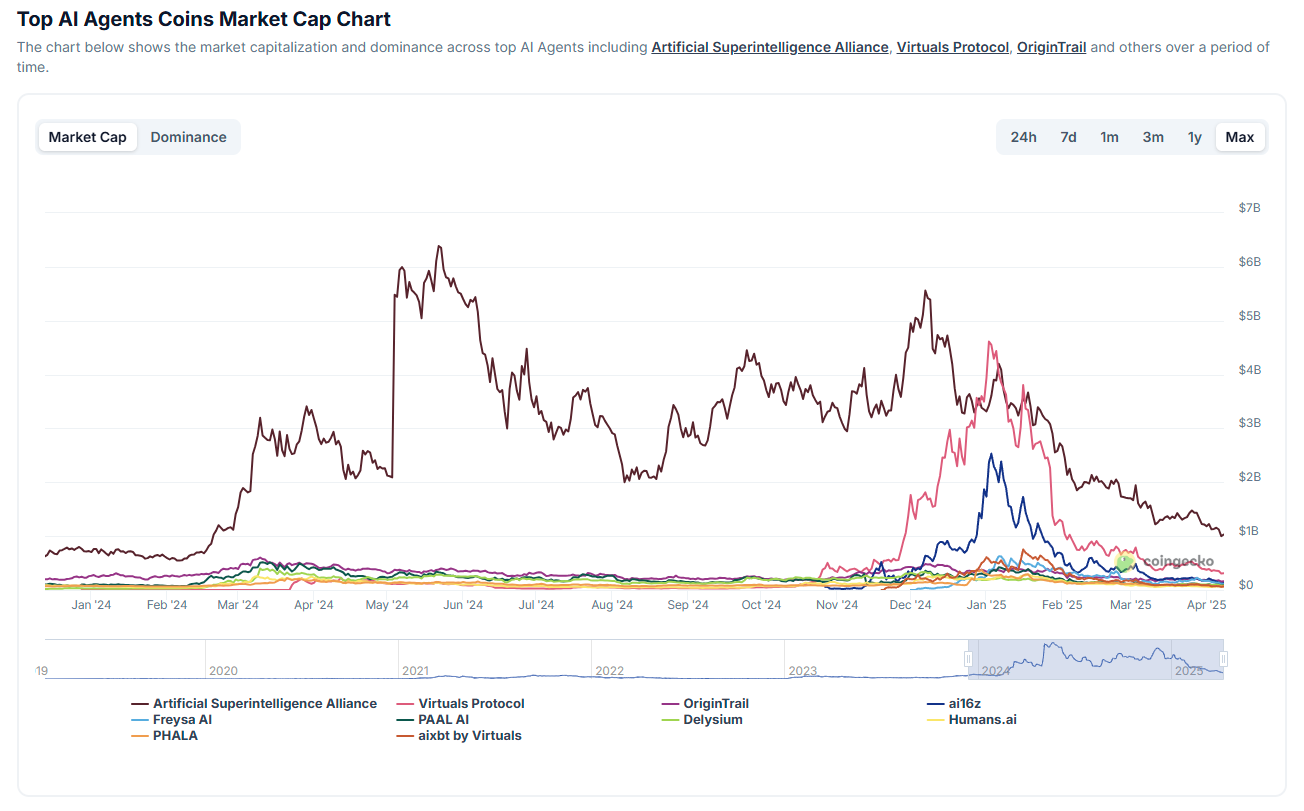
In the current cycle, AI Agent tokens and meme coins show similar potential. AI Agent tokens (e.g., AI16Z, Fetch.AI) benefit from the AI hype wave and draw significant attention; meme coins spread virally via social media, aligning with the logic of “attention economics.” Still, most such tokens eventually go to zero. The lesson? When powerful new narratives emerge, they can act as catalysts in the next cycle, driving capital inflows—but remember to exit early.
2. Real-Use Case Projects: The Stable Foundation of DeFi, RWA, and Stablecoins
After speculative fervor fades, projects with actual utility and revenue will become the backbone of the altcoin market. DeFi remains central—Uniswap and Aave, with consistent trading volume and fee income, continue to attract users and capital. RWA (Real World Assets) tokens bridge blockchain and traditional finance by tokenizing real-world assets like real estate and bonds. Projects like Ondo Finance are already gaining traction. The stablecoin sector holds immense potential too: demand for USDT and USDC payments continues to grow. A proposed 2025 stablecoin regulation requiring full backing by USD or U.S. Treasuries would further cement dollar dominance and expand the stablecoin ecosystem. Circle (issuer of USDC) could become a new hotspot due to regulatory tailwinds. These sectors, backed by real demand and revenue streams, are poised for steady growth in the next cycle.
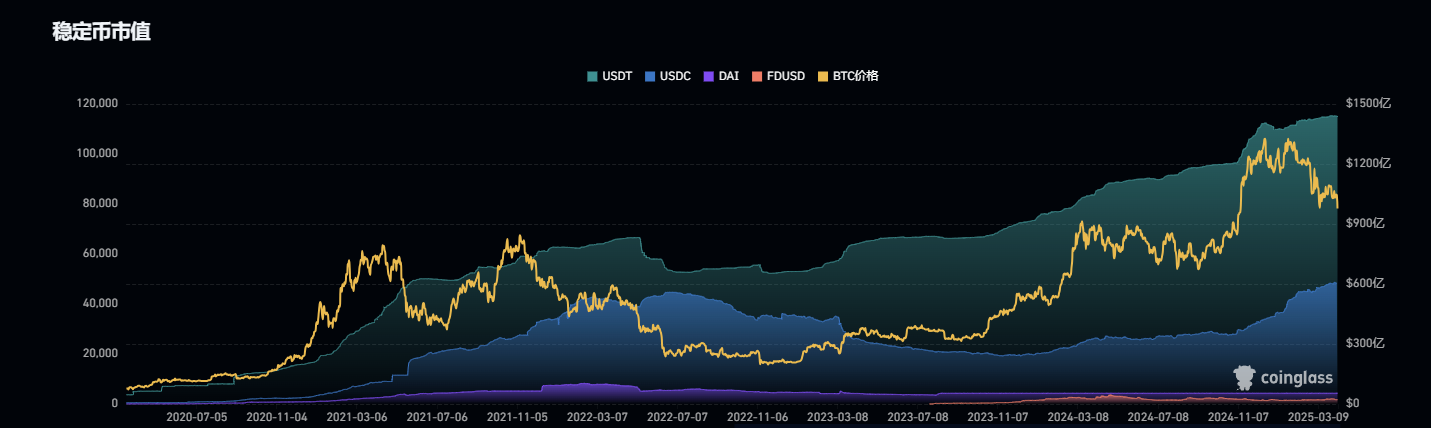
3. Community-Driven or Grassroots Projects: Traffic Engines Powered by Communities
Projects with strong communities or grassroots outreach often maintain high market caps even in downturns. XRP built a massive user base through large-scale promotions in South Korea and beyond, keeping its market cap consistently high. Pi Network leveraged social virality to attract tens of millions of users to mine its token, forming strong community consensus. Cardano (ADA) established broad grassroots support through educational initiatives in Africa. While these projects may not lead in technical innovation, their robust community engines and user acquisition capabilities give them a chance to attract capital and shine in localized rallies during the next cycle.
Next-Cycle Strategy Guide
The glory days of Altcoin Season may be behind us, but opportunities still exist in the next cycle.
Source: @CryptoPainter_X
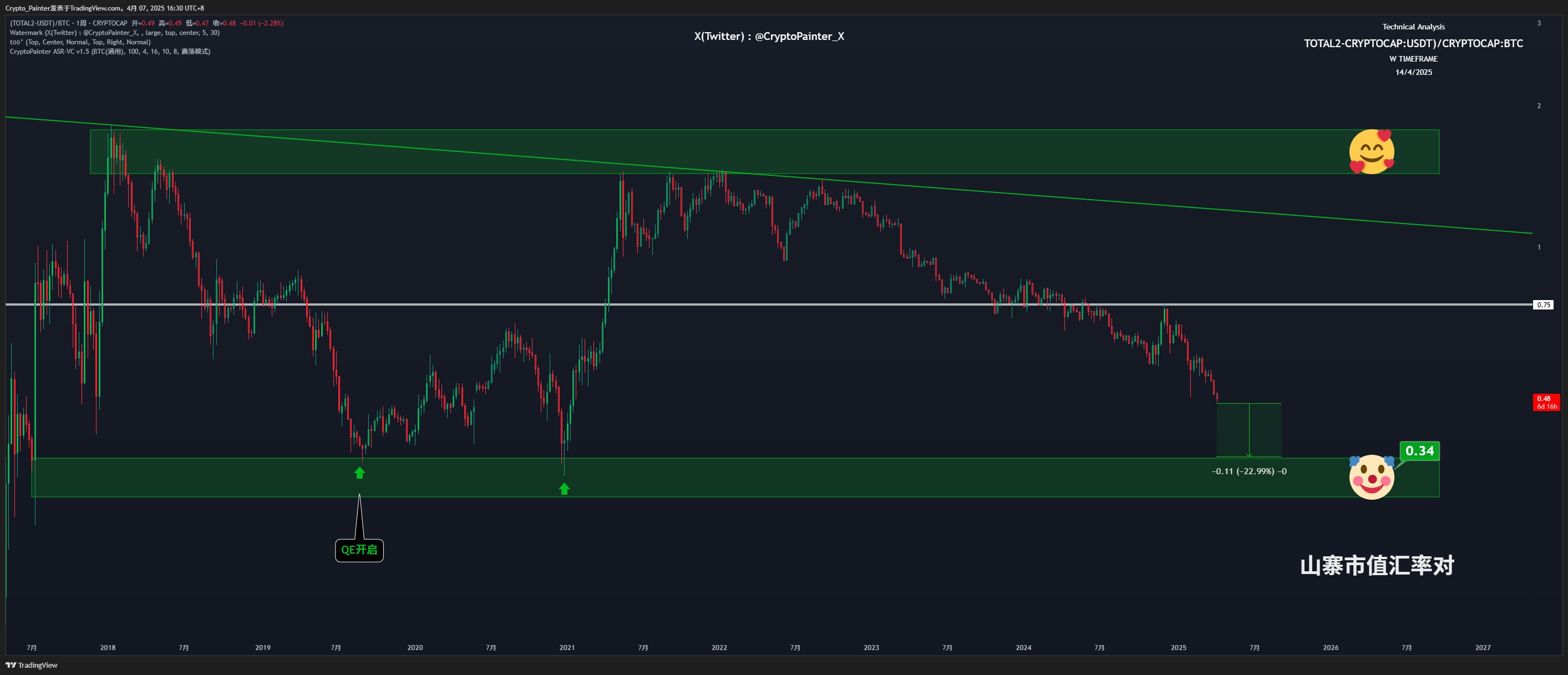
Even though the altcoin market cap ratio against BTC remains in a downtrend, with only 23% left before hitting the lower range boundary, the coming quarter may be a crucial window for bottom formation. Veteran traders, through long-term observation, have developed a strategy to catch faint glimmers in the altcoin space—investors may want to try it:
Step One: Assess the Macro Environment, Read the Winds
Altcoin rebounds depend heavily on macro conditions. The first priority is monitoring global liquidity and the U.S. dollar trend: if the dollar enters a weakening phase and global liquidity expands, risk assets may rebound, offering localized altcoin opportunities. Conversely, a strong dollar and tight liquidity will intensify pressure on altcoins. In 2025, the global economy remains affected by high interest rates and geopolitical risks—investors must closely track Federal Reserve policy shifts.
Step Two: Pick Carefully, Identify Potential Stars
Selecting the right projects is key. Focus on new projects that have existed for about a year and have begun to stabilize—avoid newly launched, high-risk tokens. Don’t be misled by a token’s USD price; instead, examine its performance against BTC. During this late-stage decline in altcoin/BTC ratios, screen for resilient or stable performers—these projects tend to be more durable and could emerge as dark horses in the next cycle.
Step Three: Dig Into Sectors, Find Star Fields
Picking individual projects is just the beginning. Next, analyze the potential of their underlying sectors. Altcoin surges often ride broader sector narratives—such as AI, RWA, or stablecoins. Identify areas where multiple promising projects converge and assess whether they could become star sectors in the next bull run. Key factors include liquidity sensitivity and real demand: AI tokens might surge on technological breakthroughs, RWA tokens gain stability through real-asset tokenization, and stablecoins could become focal points due to regulatory tailwinds (like the 2025 stablecoin bill).
Step Four: Build Steadily, Patiently Accumulate Positions
Once a sector is selected, adopt a phased accumulation strategy. Gradually build spot positions in your target sector over six months, allocating up to 60% of your total capital. Use fixed-time dollar-cost averaging or buy in tranches when prices break key support levels—e.g., invest 10% per tranche. Given altcoins’ high volatility, patience is essential. After building positions, wait calmly for market recovery.
Step Five: Dynamically Optimize, Roll Adjustments
The altcoin market evolves rapidly—reassess sector and project performance every quarter. Continuously screen for new entrants, analyze trends, and adjust allocations until reaching your target portfolio balance. Rolling adjustments help investors adapt to market shifts and avoid missing emerging opportunities.
Step Six: Wait for Bloom, Lock Profits and Exit
Cyclical movements in altcoins require time—learn to befriend time. When the altcoin market cap ratio against BTC returns to higher ranges, it may signal a bull market. At that point, gradually liquidate positions over one quarter to lock in profits. While Altcoin Season may not return, the faint glow of localized rallies is still worth pursuing.
Conclusion: The Survival Code for Altcoins
The golden age of Altcoin Season is over. Narrative exhaustion, value collapse, and liquidity crises make a broad-based bull market a distant dream. Bitcoin’s market dominance could soar to 70%, dominating a stagnant, zero-sum game. Investors should prioritize leading smart contract platforms like Ethereum and Solana, focus on the stablecoin sector, and cautiously engage with narrative-driven plays like AI and meme coins. Never attempt to catch falling knives in illiquid altcoins—dropping 90% may only be the beginning. In the next cycle, the faint light of altcoins lies within real-use cases and strong-narrative sectors. Only rational, disciplined strategies will allow survival—and perhaps prosperity—in the winter.
Join TechFlow official community to stay tuned
Telegram:https://t.me/TechFlowDaily
X (Twitter):https://x.com/TechFlowPost
X (Twitter) EN:https://x.com/BlockFlow_News


