How to Get Rich in an Age of Populism?
TechFlow Selected TechFlow Selected
How to Get Rich in an Age of Populism?
Hoarding gold for stability, holding Bitcoin for appreciation.
 Navigating Web3 tides with focused insights
Author: Tulip King, Analyst at Messari
Translation: Luffy, Foresight News
Alpha First:
-
Maximize your human capital: secure a high-paying job and work hard. Today, your career is the best hedge against inflation.
-
Shift assets from traditional finance to uncorrelated alternative assets. The stock market may remain flat or decline for decades.
-
Hoard gold for stability and hold bitcoin for growth. In an era of deglobalization and financial repression, both will outperform the market.
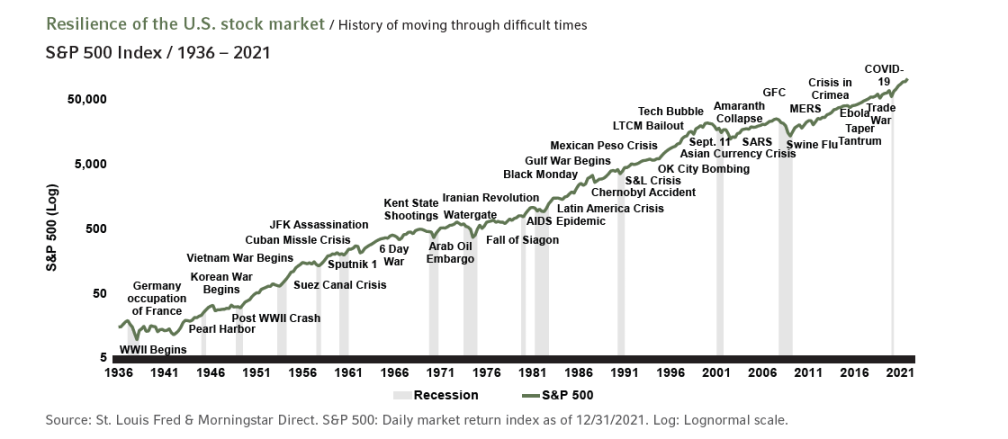
The legendary bull market has ended
We have just emerged from the longest bull market in history, spanning from the ruins of World War II to Donald Trump’s victory in 2024. This epic bull run rewarded generations of passive investors, conditioning them to believe that “nothing bad ever happens” and that “markets only go up.” Unfortunately, those days are over, and many are about to suffer heavy losses. The structural tailwinds that fueled this decades-long boom aren’t just stalling—they’re sharply reversing. A populist revolution has arrived, one that will make labor great again at the expense of capital.
Populists Are in Charge
The globalist neoconservative political agenda led by the presidencies of Clinton → Bush → Obama → Biden has officially come to an end. Trump killed it, and its remnants won’t be revived.
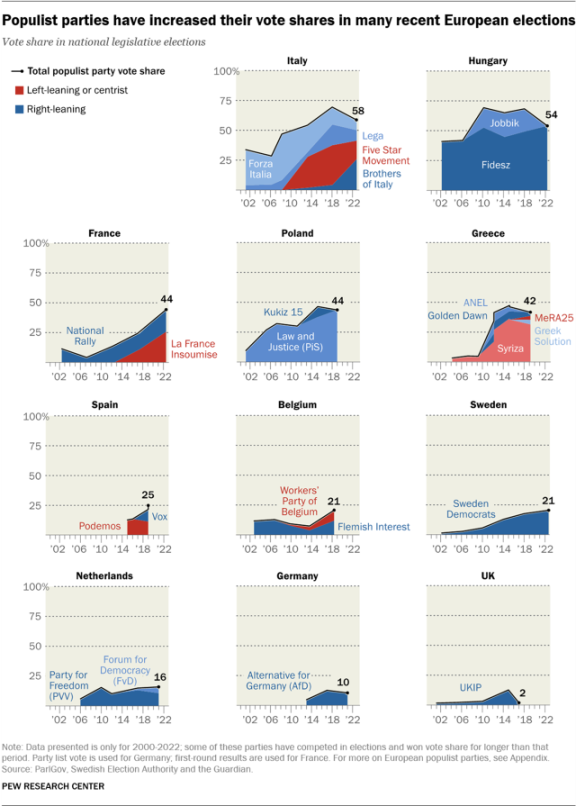
By the way, the shift toward populism isn't happening only in the U.S.
A new populist political agenda has taken root in America. Trump now controls the Republican Party with a dominance he didn’t have in 2016. Meanwhile, the Democratic Party is undergoing the same kind of internal conflict the Republicans just resolved—and you can expect the populist wing to eventually defeat the globalist faction.
Populist politics is fundamentally different from globalist politics. You need to update your understanding of what each party stands for. There will still be differences between Republicans and Democrats, but they will increasingly converge on a core populist agenda:
-
Prioritizing blue-collar jobs. Both parties are now competing over who loves factory workers more. The era of "just learn to code" is over.
-
Reindustrialization. Everyone wants factories, supply chains, and critical industries back on American soil.
-
Tariffs. Expect the next president—Republican or Democrat—to continue using tariffs as a central tool of foreign policy.
-
Free trade has become politically toxic.
-
Nationalism. The distinction between "citizen vs non-citizen" is making a fierce comeback. Both parties will continue restricting immigration and deporting undocumented immigrants. The difference will be in scope and pace, not direction.
The elite consensus that shaped policy from Reagan through Obama promised prosperity through free trade, open capital flows, and globalization under U.S. leadership. For financiers and tech moguls, this delivered spectacular results. But for large swaths of America—especially the industrial heartland—it brought hollowed-out communities, stagnant wages, and fentanyl epidemics. Populism isn’t accidental; it was entirely predictable.
The Value of Labor
Two powerful forces are converging to drive wages sharply higher:
Reindustrialization is spiking demand for labor. Even with automation, bringing factories and supply chains home creates massive demand for workers. Every new semiconductor plant or electric vehicle battery factory requires engineers, technicians, construction workers, and logistics staff. The CHIPS Act and the Inflation Reduction Act alone unlock hundreds of billions in domestic manufacturing opportunities.
Immigration restrictions are simultaneously shrinking labor supply. Whether through border control, deportations, or reduced visa approvals, the inflow of new workers is being constrained. Republicans want to deport all undocumented immigrants; Democrats are at least conceding to deporting those with criminal records. Either way, the trend is clear: fewer workers entering the labor pool.
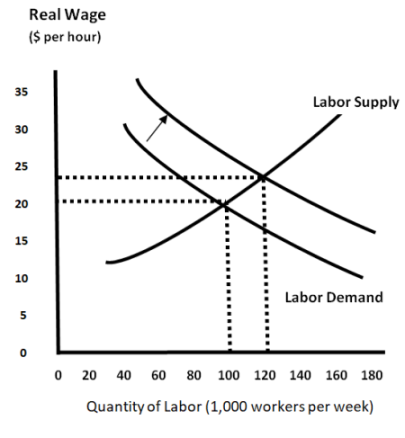
Let's revisit basic economics: supply and demand curves
This is Economics 101: when labor demand rises and supply shrinks, wages must increase. This isn’t temporary—it’s a structural shift likely to last decades. For the first time in years, you’ll see wages grow faster than both inflation and returns on financial assets.
This holds true even in an inflationary environment. I expect inflation to range between 3%–9% over the next decade due to deglobalization, tariffs, and labor shortages. But if your wages rise 5% faster than inflation annually, rising prices won’t keep you up at night. While asset owners watch their portfolios stagnate, your real wealth will grow.
This means: it’s time to fully focus on your career. Work relentlessly, build valuable skills—especially in domestic production and physical infrastructure. Your human capital (your ability to earn) is appreciating. This is a generational opportunity to accumulate wealth through income rather than asset appreciation.
Wall Street Is Losing Power
During the era of U.S.-led globalism, Wall Street was the most influential interest group. Its interests were seen as synonymous with national interests. Free capital flows, deregulation, and bailouts when needed—all were granted to Wall Street. It seemed every Treasury Secretary came straight from Goldman Sachs.
Now, as deglobalization advances, Wall Street is rapidly losing favor politically and publicly. Financial elites haven’t yet realized this, but they no longer have the allies or power they enjoyed five to ten years ago. They’re like dinosaurs looking up at the strange bright light in the sky, unaware their time is ending.
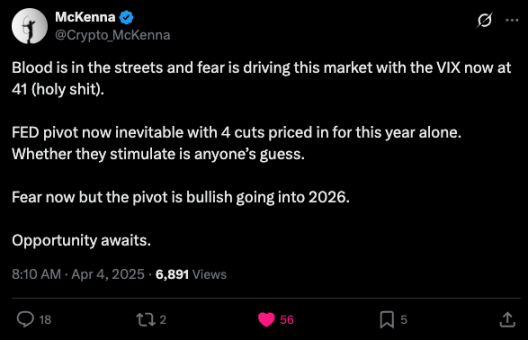
This belief (that the Fed’s pivot to rate cuts is inevitable) is wrong—the Fed won’t pivot
Because Wall Street hasn’t grasped its diminished status, it still expects the Federal Reserve to rescue it when trouble hits. They assume the so-called “Fed put” (the implicit promise by central banks to cut rates and save markets) remains valid. But it doesn’t.
Since 2021, every politician has learned a key lesson: if you’re an elected leader and inflation is raging domestically, you lose re-election. That’s it. This has completely reversed the political incentives around monetary policy. Savvy politicians now pressure the Fed to maintain high rates because cutting rates risks reigniting inflation—which costs them their jobs.
Even if markets crash, current political priorities favor fighting inflation over saving asset prices. Let Wall Street cry—but in a populist climate, their tears don’t win votes. In fact, many voters will cheer Wall Street’s pain. This reality hasn’t yet been priced into financial markets.
The Downturn for Financial Assets
It’s time to stop pretending that the stock market and the real economy are the same thing. While financial assets and equities fall, your wages and quality of life can still improve. For people under 30, this is actually ideal—you’ll finally get a chance to buy homes and stocks at reasonable prices with rising wages.
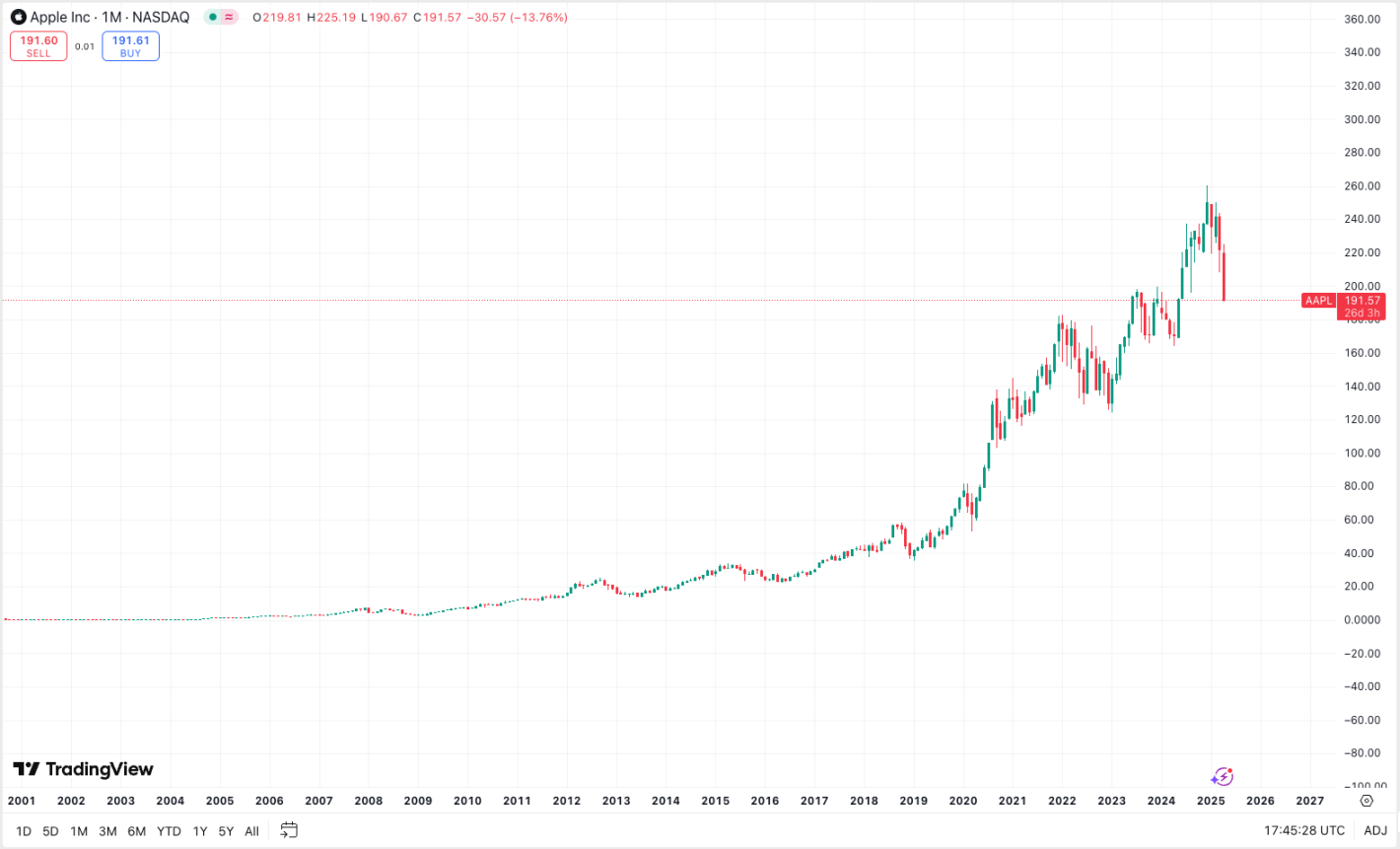
You may never see Apple’s stock reach a new all-time high again
Take Apple as an example. In Q4 2024, Apple had a P/E ratio of around 40 and a gross margin of about 46%. So if Apple generated roughly $100 in revenue per share, it earned $46 in profit per share, with a stock price around $1,960.
Now suppose Apple must bring production and labor back to the U.S. Domestic production is less efficient, compressing margins. Gross margins fall to 20%, and in a high-rate environment, the market no longer rewards such aggressive valuations—so the P/E drops to 25 (still above historical averages). Assume that over the next decade, Apple, being an excellent company, manages to double its revenue. By 2035, it generates $200 in revenue per share, but only $40 in profit per share, with a stock price of $1,000.
This is how financial assets enter a long-term bear market (over 10 years) while companies still earn profits and raise employee pay. Even with business growth and wage increases, stock prices could actually fall 50% in real terms.
This isn’t theoretical—it’s exactly what happened in Japan after 1989. That year, the Nikkei hit nearly 40,000 before crashing. Thirty-six years later, it still hasn’t fully recovered. If you bought Japanese stocks at the peak and held for a generation, you’d still be underwater in real terms. This is what happens when a financialized economy built on loose money and globalization must adapt to a new reality.
U.S. financial assets are highly vulnerable to a “lost decade”—or even two. The passive investment strategies that worked for Baby Boomers may deliver dismal returns for the next generation. For index fund devotees, this will be nightmare territory.
So, Who Loses?
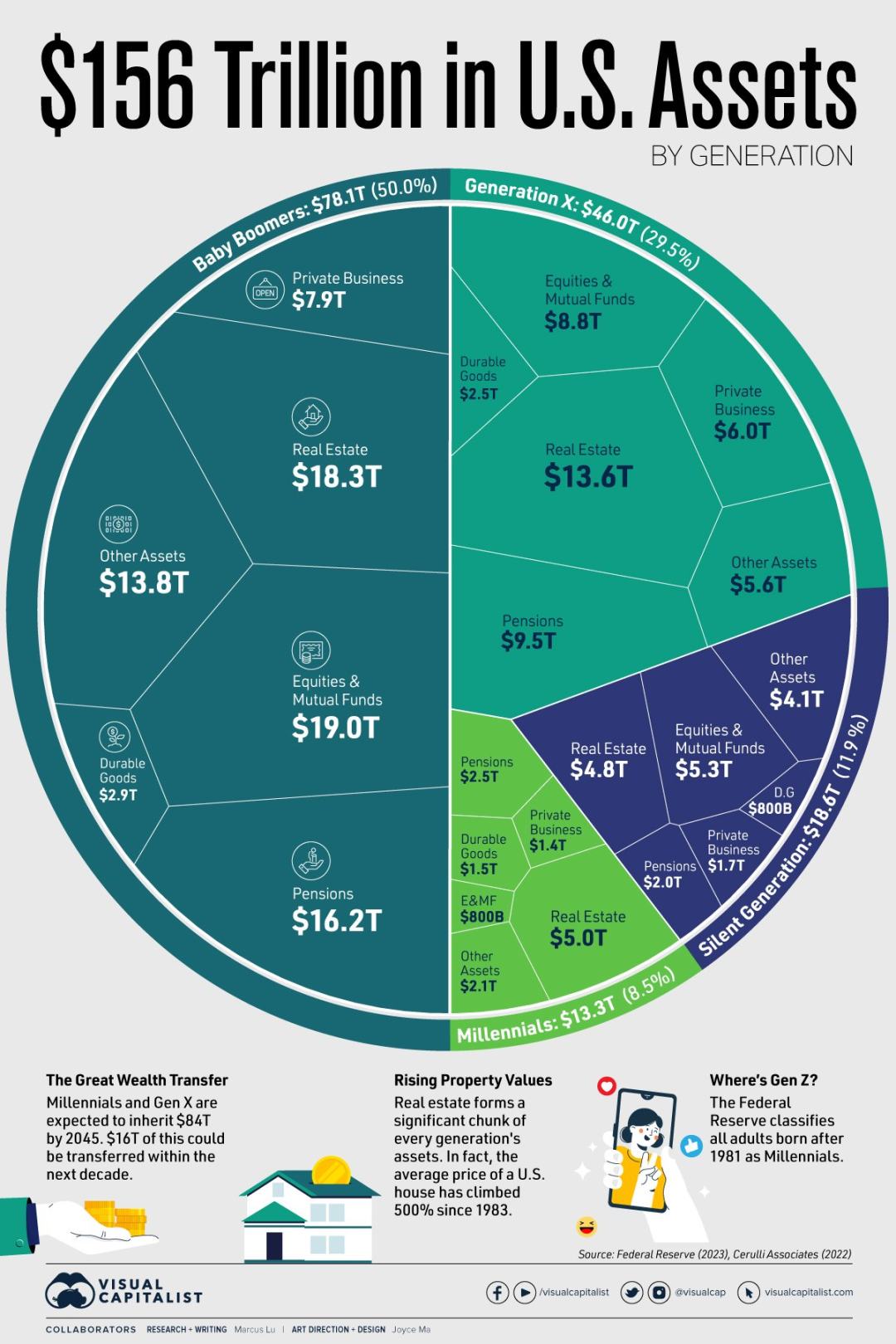
A useful reference showing how much Baby Boomers benefited from the globalist political agenda
You might now be wondering who gets hurt in this new political-economic landscape. Two main groups stand out:
-
Large corporations with high profit margins. Companies that thrived under globalization—outsourcing production, optimizing global supply chains, paying ultra-low wages—now face painful adjustments. Onshoring means higher costs, labor scarcity means higher wages, and tariffs mean pricier inputs. All of this squeezes their once-sky-high profit margins. They’ll still make money, but less of it—and investors will assign lower valuations to these diminished earnings.
-
Older Baby Boomers who are too old to benefit from rising wages. The real victims are retirees and near-retirees who are asset-rich but income-poor. After decades of policies favoring their interests, the Boomer advantage is ending. They’ve left the workforce, so wage growth doesn’t help them. Their retirement accounts are heavily invested in stocks and bonds, which may stagnate or decline for years. Meanwhile, inflation erodes their fixed incomes. It’s a triple whammy: falling assets, rising costs, and no ability to earn more.
This isn’t just an economic issue—it’s a matter of intergenerational fairness. Baby Boomers enjoyed the fruits of post-WWII prosperity, bought homes cheaply, watched their stocks rise 10% annually for decades, then pulled up the ladder. Now, as they try to cash out, they’ll find fewer buyers. The massive intergenerational wealth transfer many expected may not be as generous as imagined.
So, Who Wins?
In this new paradigm, the winners are clear:
-
Workers, especially blue-collar laborers. Electricians, plumbers, welders, mechanics, construction workers—anyone who builds or repairs physical things stands to gain enormously. These jobs can’t be outsourced, are vital for reindustrialization, and face shrinking labor competition. For these workers, the era of wage stagnation is over. They’ll command high pay and regain social respect.
-
Young people entering the workforce. If you’re in your twenties, this shift works in your favor. Over your career, you’ll earn higher wages. After asset prices fall, you’ll eventually buy homes and stocks at more reasonable valuations. You have decades of earning ahead to benefit from a pro-labor environment. This is far better than entering the job market in 2010, when wages were stagnant but assets were already expensive.
-
Those holding uncorrelated assets like bitcoin and gold. As financial repression intensifies and traditional assets struggle, off-system alternatives become increasingly attractive. For thousands of years, gold has served as the classic inflation hedge and safe haven. Central banks worldwide are already buying gold at record pace. Bitcoin, as digital gold, offers a similar role—with even greater upside potential. Both thrive in environments of financial instability, currency devaluation, and geopolitical tension.
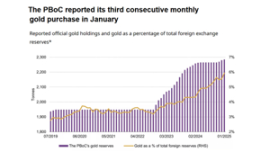
Central banks are buying gold in bulk
About bitcoin: let’s be clear—it was created precisely for moments like this, when trust in traditional financial institutions wavers and governments resort to desperate measures to manage debt. When everything else is depreciating, bitcoin’s fixed supply becomes extremely attractive. I expect bitcoin to eventually reach $1 million—but you’ll need patience. This isn’t a get-rich-quick scheme.
The New Economic Order
We are witnessing a historic turning point: the end of neoliberal globalism and the rise of populist nationalism. This isn’t a minor policy tweak—it’s a fundamental reshuffling of economic winners and losers.
For decades, capital dominated labor, financial assets outperformed wages, and Wall Street called the shots in Washington. That era is over. We’re entering a period where labor regains influence, wages grow faster than asset returns, and economic policy prioritizes workers over investors.
This transition won’t be smooth. Markets will experience sharp declines, and inflation will persist longer than most expect. Geopolitical tensions will escalate as nations prioritize self-interest over global cooperation.
Yet within this turmoil lie opportunities. Focus on acquiring skills that command high wages in the new economy. Shift from overvalued financial assets to uncorrelated alternatives. Prepare for a world where wealth accumulation comes primarily from paychecks—not portfolios.
The populist revolution doesn’t just change politics—it rewires the economic rules. Those who recognize this shift early and position themselves accordingly will thrive. Those clinging to old strategies will struggle. This isn’t the end of prosperity—it’s the redistribution of prosperity.
Join TechFlow official community to stay tuned
Telegram:https://t.me/TechFlowDaily
X (Twitter):https://x.com/TechFlowPost
X (Twitter) EN:https://x.com/BlockFlow_News
 Messari