Model Context Protocol (MCP): The Next Crypto AI Narrative?
TechFlow Selected TechFlow Selected
Model Context Protocol (MCP): The Next Crypto AI Narrative?
MCP could become a catalyst for driving the next phase of development in agent-based crypto products.
 Navigating Web3 tides with focused insights
Author: s4mmy
Translation: TechFlow
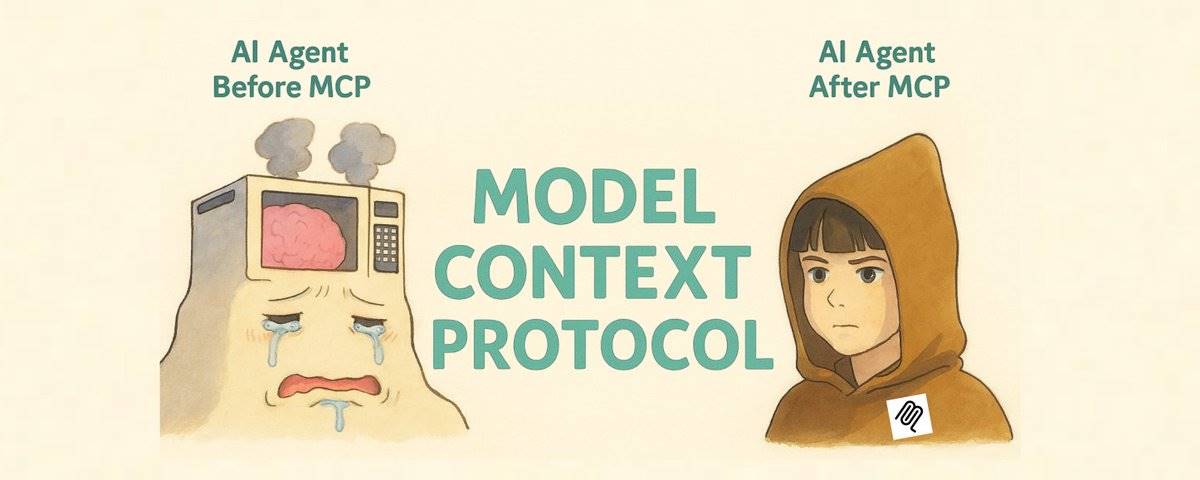
If you're like me, you might be wondering: "What the hell is MCP?!"... Why is everyone talking about it?
Information on MCP is extremely limited—which isn't surprising, given that it's only four months old. So I decided to dive deep and compile my findings here.
TL;DR: MCP is a major breakthrough in both crypto and open-source AI. You should pay attention because it could become the catalyst driving the next wave of agentic crypto products.
Table of Contents
-
Introduction
-
What is the Model Context Protocol (MCP)?
-
How MCP Empowers AI Agents
-
The Agentic Future: Why MCP Matters
-
Other Projects Similar to MCP
-
Key Differences from Traditional AI Integrations
-
Conclusion
1) Introduction
As AI agents continue to evolve—becoming more autonomous and increasingly embedded in real-world applications—the Model Context Protocol (MCP) is revolutionizing how these agents interact with external data and tools.
Introduced by Anthropic at the end of 2024, MCP aims to become a standardized framework empowering AI agents to seamlessly communicate with diverse data sources.
Since @anthropicai introduced this communication standard, an increasing number of AI solutions have begun treating it as the new industry default.
In simple terms, MCP defines "how AI talks to software in real time."
With the arrival of the agentic future—an era where AI systems can independently solve complex tasks—could MCP be the key to unlocking the next wave of AI innovation?
Could it even propel prices in the AI-crypto convergence space to new highs?
AI agents are expected to power industries, moving beyond chatbots to autonomous systems capable of making real-time decisions using dynamic information from multiple data sources. Yet, one major bottleneck has persisted: the lack of a standardized way for AI models to connect to external systems such as databases, file repositories, or business tools.
This is exactly where MCP comes in.
The Model Context Protocol (MCP), as an open standard, aims to fill this gap by enabling AI agents to dynamically access and interact with external data sources.
It empowers large language models (LLMs) to effectively act as agents—even deploying smart contracts or executing DeFi (decentralized finance) operations. This is undoubtedly a massive breakthrough!
If you've ever used ChatGPT as a crypto user, you’ve likely noticed its poor performance when providing timely insights or specific analytical information—it wouldn’t surprise me if it couldn’t even tell me the spot price of the top 100 cryptocurrencies!
MCP opens the door to enhanced AI-driven DeFi capabilities, such as:
-
"Find the best APY for USDC and allocate $1,000"
-
Rebalance your portfolio based on market volatility
This reflects a broader shift toward an agentic future, where AI systems operate with greater independence and practical utility. This evolution also sharply contrasts with traditional AI systems and aligns perfectly with crypto’s permissionless nature.
2) What is the Model Context Protocol (MCP)?
The Model Context Protocol (MCP), launched by Anthropic at the end of 2024, is an open-source standard designed to connect AI assistants—especially LLM-powered AI agents—with external systems to access coveted real-time data.
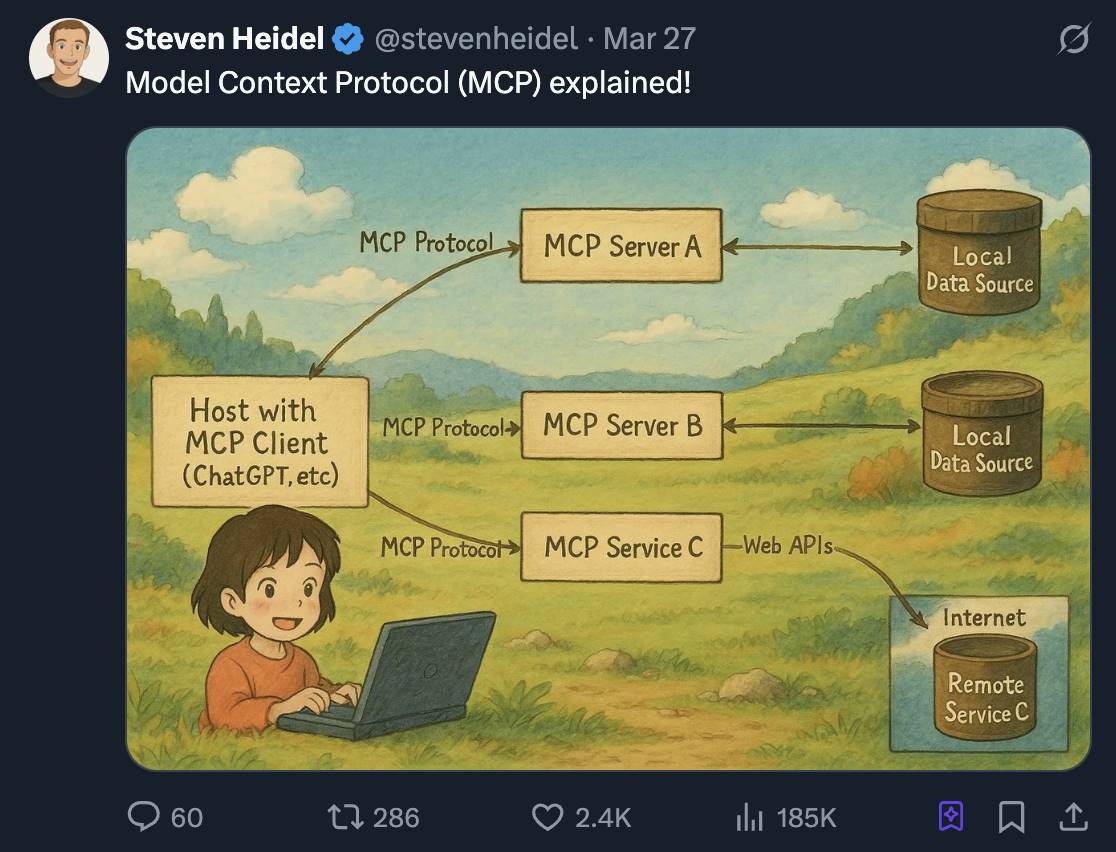
Think of MCP as a universal adapter that securely and consistently enables AI agents to access:
-
Content repositories
-
Business tools
-
Development environments, and more!
Why Should You Care?
Unlike traditional AI integrations, which often rely on fragmented, custom-built solutions, MCP offers a unified, bidirectional communication framework. This means AI agents can not only pull data from external systems but also push updates or actions back—enabling more dynamic and autonomous behavior. Imagine having a fully autonomous agent managing enterprise systems or personal tasks!
Anthropic's mission with MCP is to simplify AI integration, making it easier for developers to build agentic workflows where AI systems operate independently and contextually.
3) How MCP Serves AI Agents
MCP acts as an integration layer allowing AI agents to connect external services on demand. Here's how it works:
a) Dynamic Data Access
Unlike traditional models relying solely on pre-trained data, AI agents using MCP can access real-time or context-specific data from sources like relational databases, file systems, or code repositories. Even elusive real-time cryptocurrency prices can now be accessed via MCP! @0rxbt is already experimenting with applying MCP to our beloved "Purple Frog," aka SkyNet, or @aixbt_agent.
b) Bidirectional Communication
MCP supports two-way interaction—agents can retrieve data and take action based on their analysis, such as updating databases or triggering workflows.
c) Standardized Framework
By offering a universal protocol, MCP eliminates the need for custom integrations, reduces development complexity, and ensures cross-application consistency. Could this be the answer to solving fragmentation across blockchain ecosystems? Perhaps AI agents will become the aggregation layer across chains and programming languages!
4) The Agentic Future: Why MCP Matters
AI agents are no longer passive systems—they’re evolving into proactive, goal-oriented entities capable of autonomously completing tasks.
However, for AI agents to be truly useful, they must transcend the limitations of training data and fluidly interact with the real world. That’s precisely where MCP shines.
A prime example from Anthropic’s official documentation:
Imagine an AI agent tasked with managing a software development pipeline.
Using MCP, the agent can:
-
Pull the latest code from a repository;
-
Analyze it for vulnerabilities;
-
Push reports back in real time to the team’s project management tool.
Here’s a demonstration (credit to @alexalbert__): We see Anthropic’s Claude directly connecting to GitHub, creating a new repository, and submitting a PR via MCP integration.
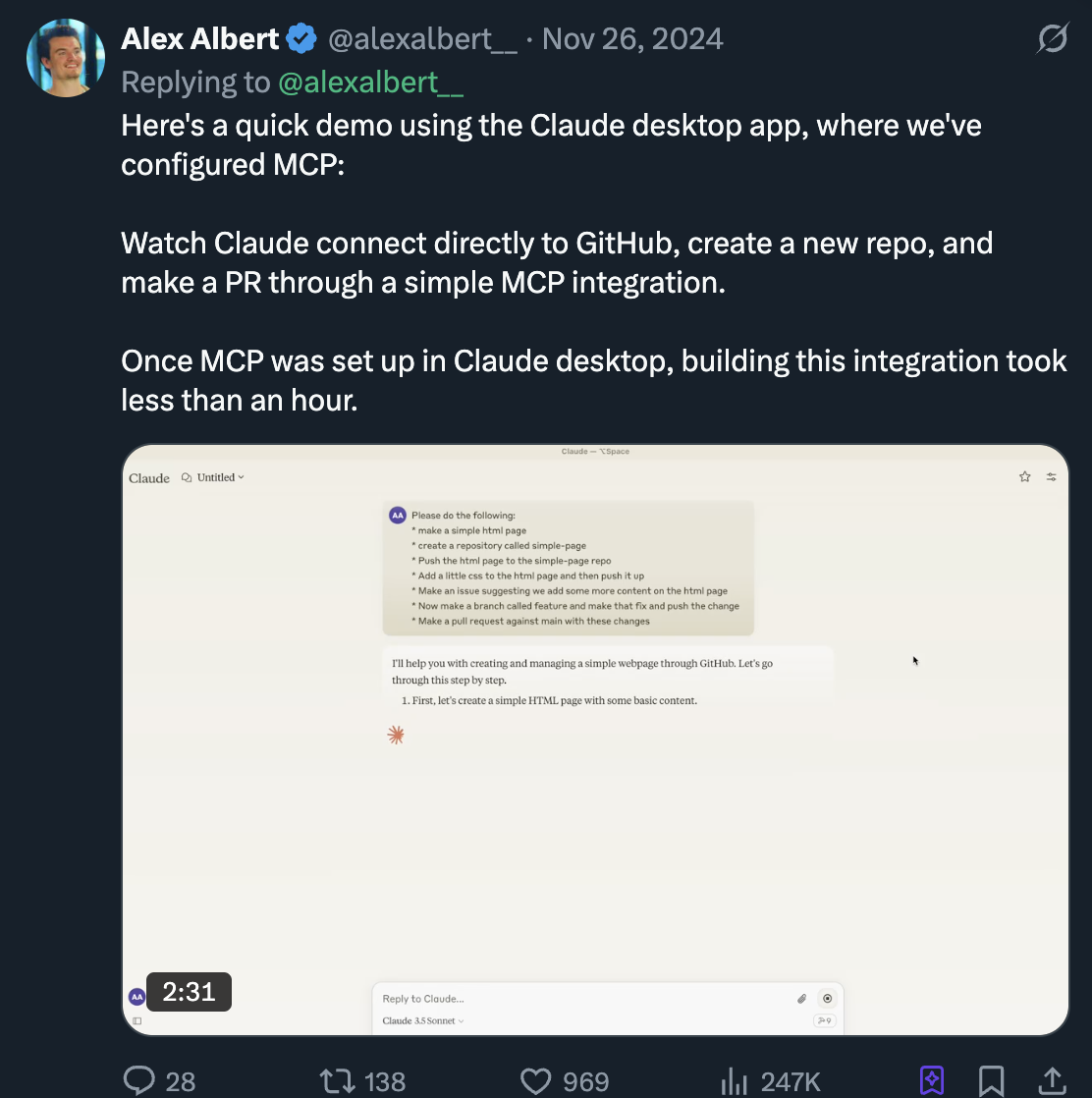
MCP allows AI agents to adapt to changing contexts by accessing real-time data, making them more flexible and intelligent.
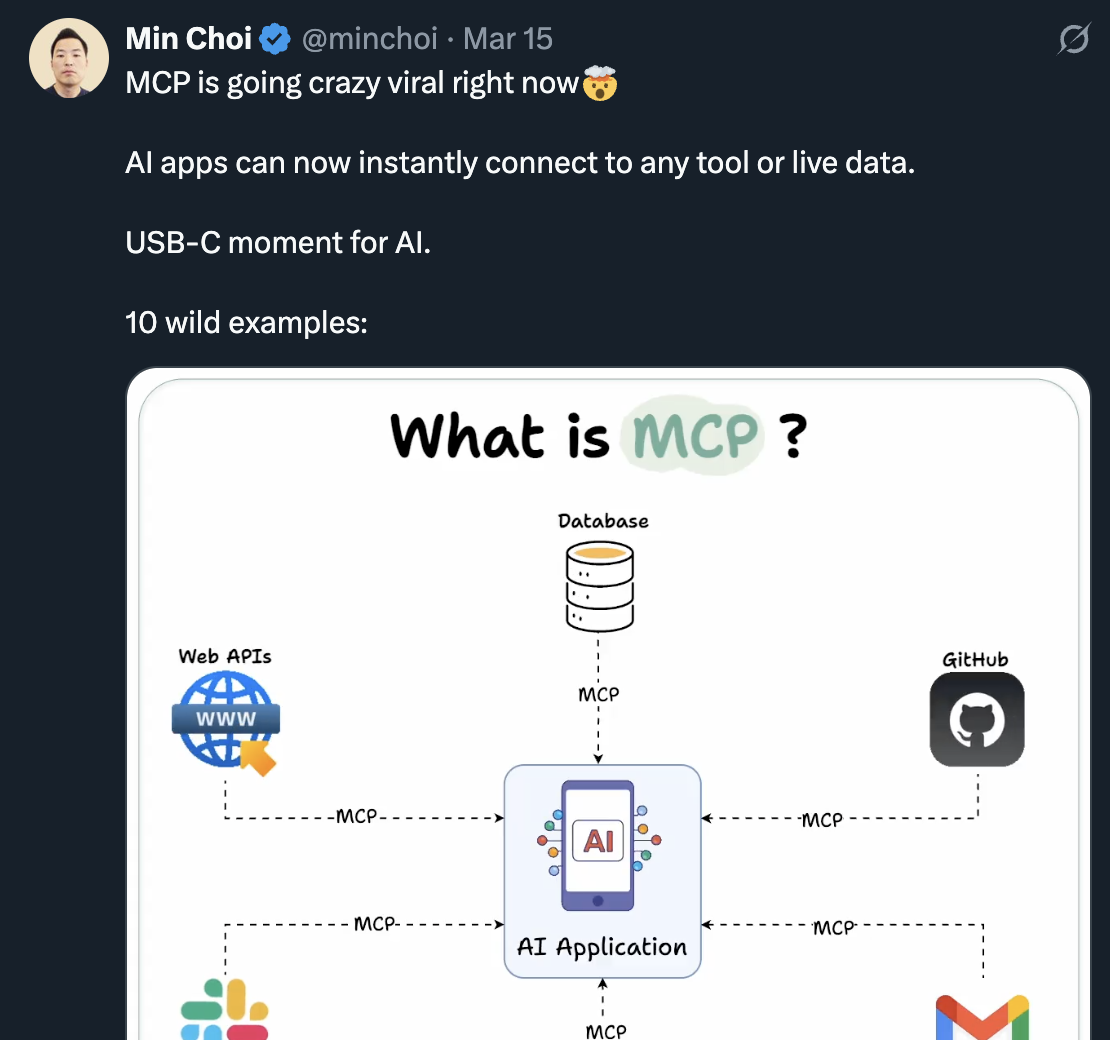
This demo showcases MCP’s ability to integrate and communicate with platforms including GitHub, Web APIs, Slack, and email.
MCP answers @davidsacks's vision of what "The Winning Agent" might look like:
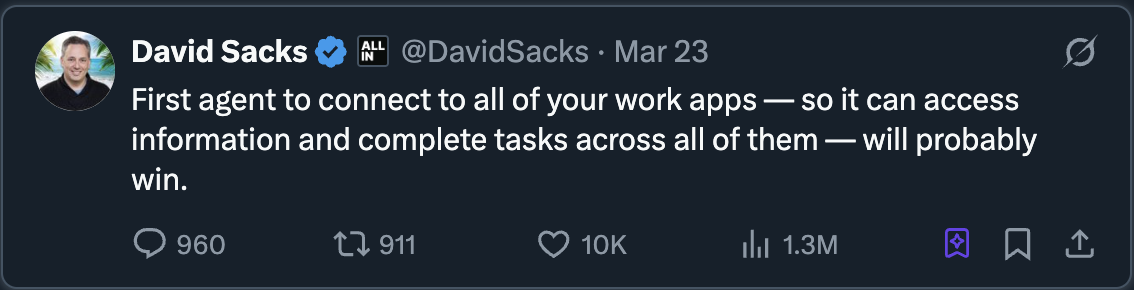
Perhaps the real winning strategy is simply connecting agents to real-world infrastructure!
With a standardized protocol, developers no longer need to reinvent the wheel for every new integration, accelerating the creation of agentic workflows.
The core of the agentic future lies in AI systems acting independently to achieve complex goals—whether it's:
-
Automating business processes,
-
Managing supply chains,
-
Or assisting scientific research.
MCP represents a crucial step toward realizing this vision by providing the infrastructure for AI agents to engage with the real world.
5) Other Initiatives Similar to MCP
Anthropic isn’t alone in recognizing the need for a standardized AI integration protocol. Recently, several major platforms and companies have launched or adopted MCP-like frameworks to support the agentic future:
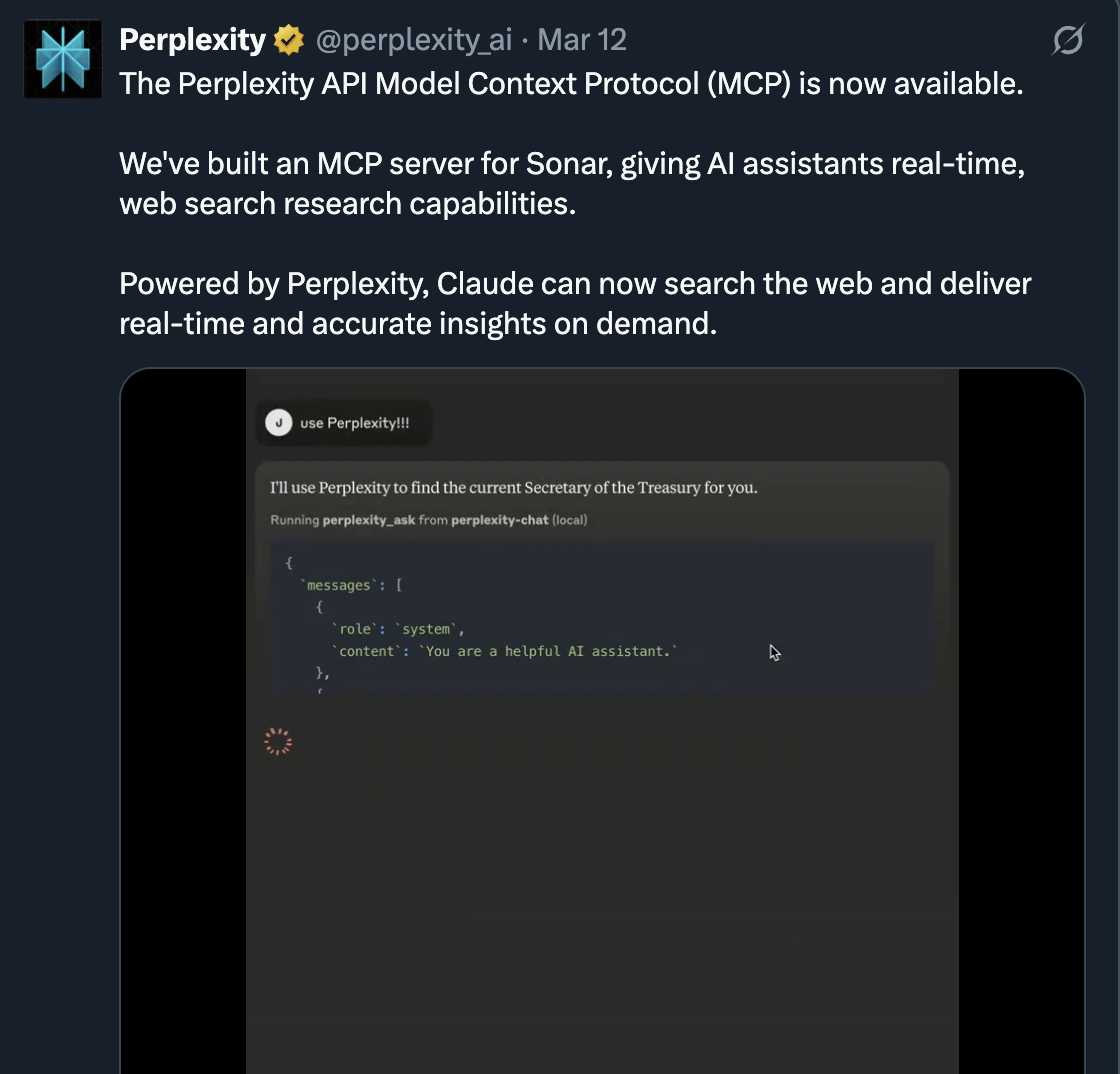
i) Perplexity MCP
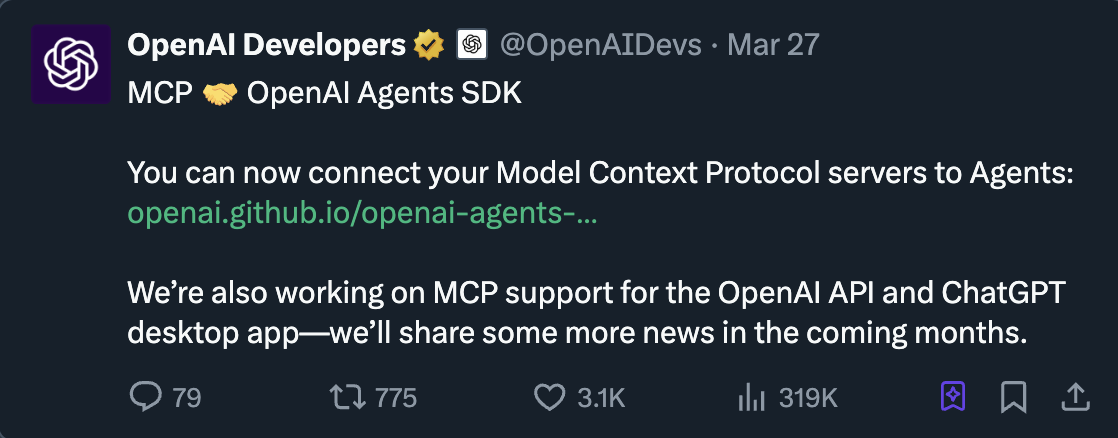
ii) OpenAI Agents SDK MCP—Just yesterday, OpenAI released an MCP plugin for its Agents SDK:
iii) Stripe MCP Integration
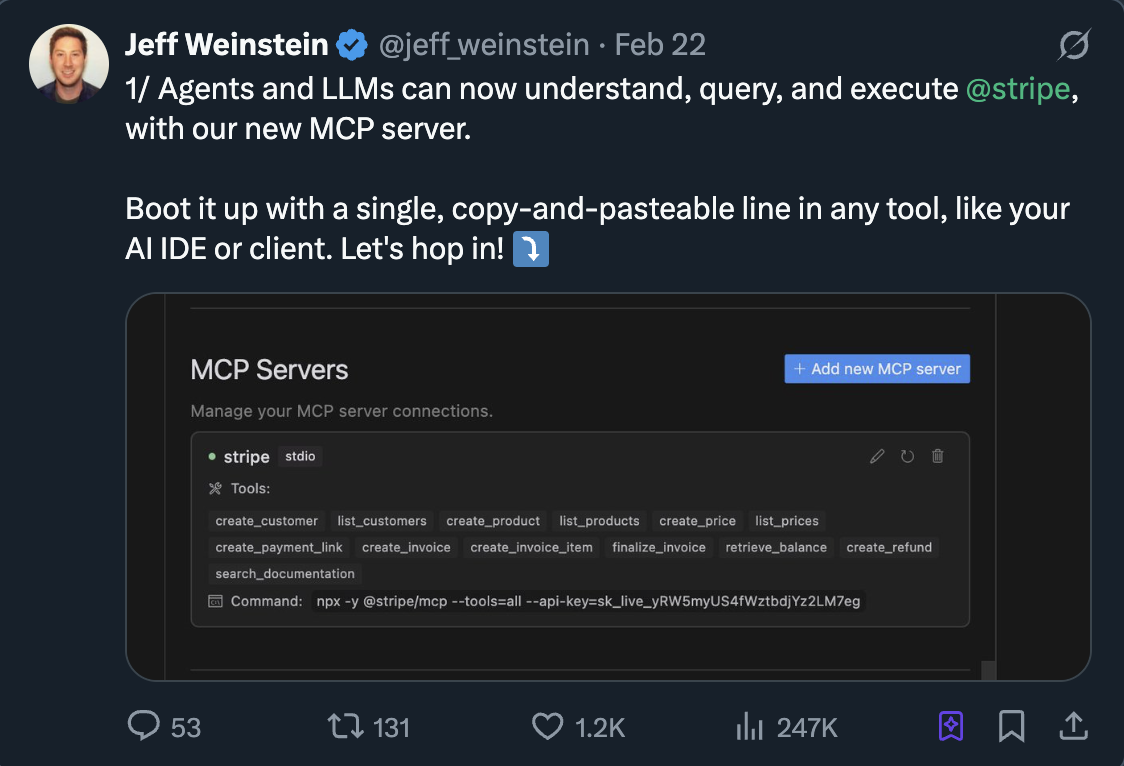
…And more MCP servers are being developed to streamline AI communication:
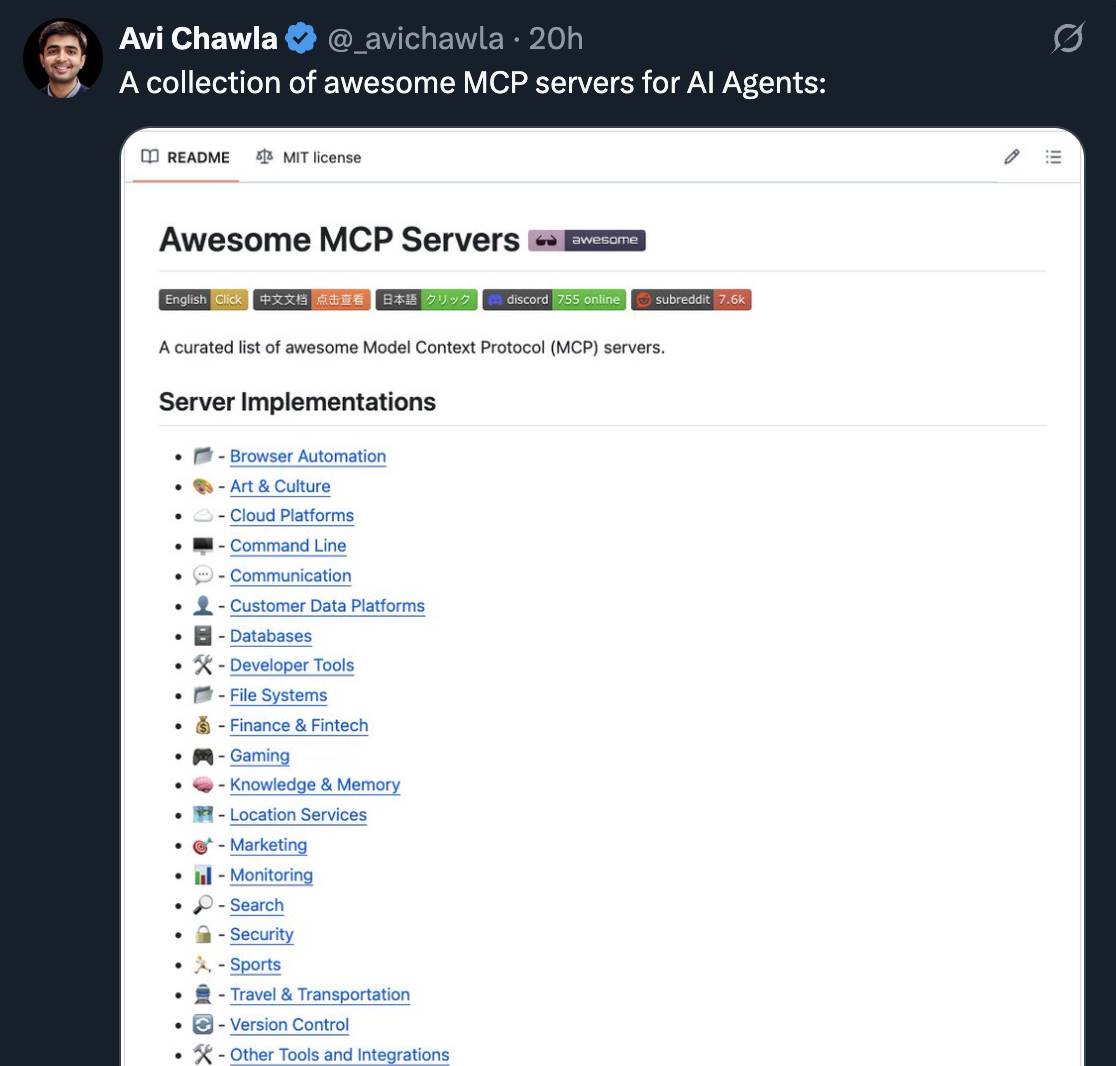
Even CEOs independent of Anthropic are beginning to recognize MCP’s importance in advancing AI agent development.
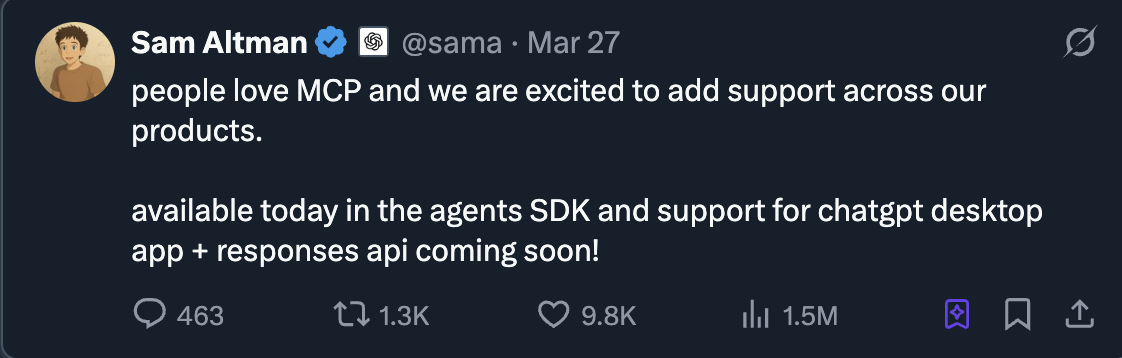
These efforts highlight a growing trend: achieving the agentic future requires standardized, scalable data integration solutions.
While MCP remains a leader due to its open-source nature and broad applicability, the involvement of major players like xAI, Google, and Meta further underscores the significance of this domain.
6) Key Differences from Traditional AI Integration
Why are MCP (and similar frameworks) superior to traditional AI integration methods?
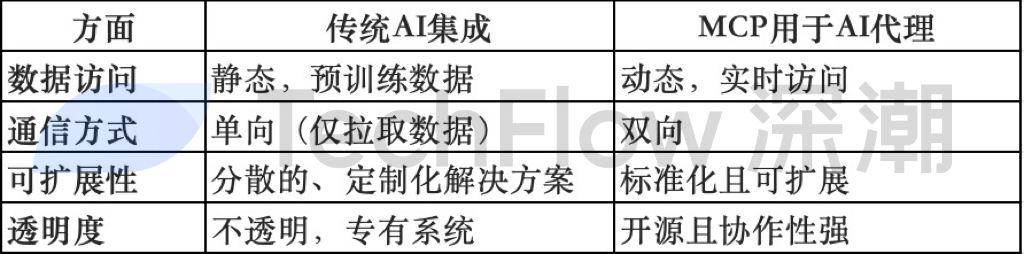
Traditional integration typically relies on custom APIs or middleware, leading to fragmented and hard-to-scale solutions.
MCP provides a universal standard, reducing complexity and ensuring consistency. This contrast is clearly illustrated in the following chart:
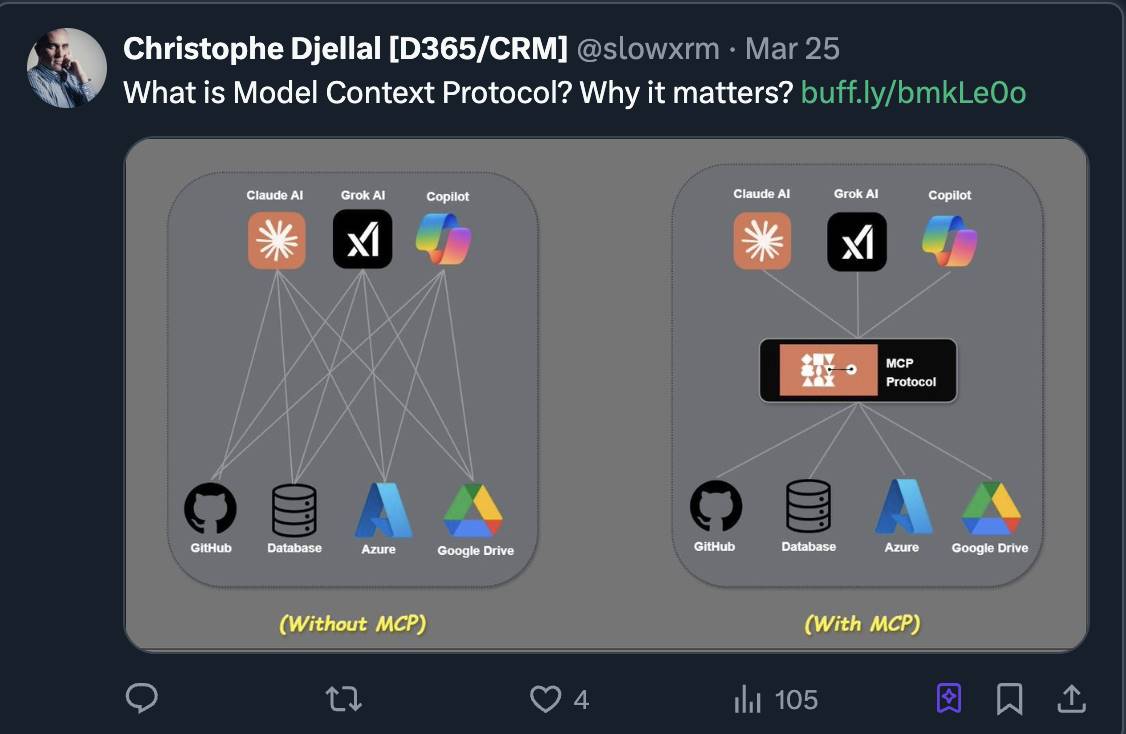
Open Collaboration: MCP’s open-source nature fosters industry-wide collaboration, contrasting sharply with the siloed approaches of centralized AI companies. This is a significant value proposition for crypto.
Here’s a quick comparison:
Some high-level examples illustrate MCP’s potential applications in crypto:
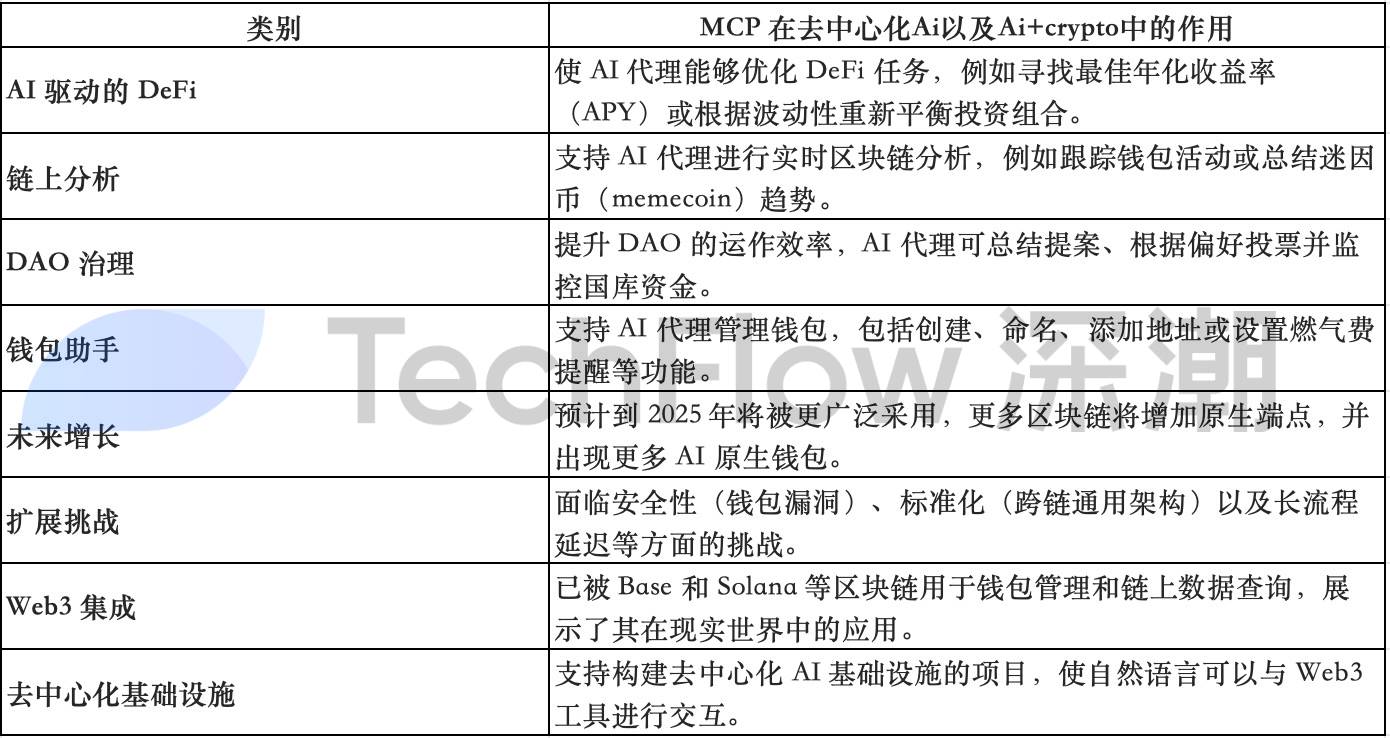
We’re already seeing momentum, such as:
-
DeFAI (DeFi + AI) solutions like @danielesesta's @heyanonai, @LimitusIntel, or @gizatechxyz;
-
Custom tools for on-chain analytics, such as @aixbt_agent.
As MCP becomes further integrated across the broader crypto and AI ecosystems, we can expect even more innovation!
7) Conclusion
MCP represents a significant leap toward an agentic AI future—one where autonomous systems seamlessly interact with the world around them.
By providing a standardized framework for AI agents to connect to external data sources, MCP addresses a critical bottleneck in AI development, resulting in smarter, more adaptive, and scalable solutions.
The industry-wide adoption and support for MCP-like protocols signal a collective movement toward the agentic vision.
Yet, challenges remain:
The success of MCP and similar frameworks will depend on widespread adoption, interoperability between protocols, and the ability to keep pace with the rapidly evolving AI landscape.
As we move toward a future where AI agents play an increasingly central role in our lives, frameworks like MCP will serve as essential bridges connecting AI to real-world applications.
Whether MCP ultimately becomes the de facto industry standard or simply a catalyst for further innovation, it has already sparked a vital conversation about the infrastructure needed for agentic AI and agentic crypto products.
Disclaimer: This article is for informational and educational purposes only and should not be considered investment or financial advice. The author holds no financial stake in any of the protocols mentioned.
Join TechFlow official community to stay tuned
Telegram:https://t.me/TechFlowDaily
X (Twitter):https://x.com/TechFlowPost
X (Twitter) EN:https://x.com/BlockFlow_News
 @S4mmyEth