Can app tokens still create wealth when AI reduces application development costs to "zero"?
TechFlow Selected TechFlow Selected
Can app tokens still create wealth when AI reduces application development costs to "zero"?
Tokens are the best tool for solving the "cold start" problem, which kills more creative projects than any other factor.
 Navigating Web3 tides with focused insights
Author: Grant blocmates, blocmates Founder
Translation: TechFlow
Special thanks to @brextonpham, @devlordone, and @yashhsm for their discussions over the past few weeks that helped me clarify my thoughts on this topic.
Recently, a cohort of founders from Y Combinator were frequently asked: "What percentage of your codebase is AI-generated?" The result showed that one-quarter (25%) of teams reported 95% of their code was generated by AI.
Former Tesla AI Director and OpenAI founding member Andrej Karpathy introduced a controversial yet fitting term—"Vibe Coding."
In short, it means ordinary people like you and me can now generate code directly through text prompts. This trend has inspired countless "ideas guys" to delay job hunting and instead attempt to build the next Facebook.

Independent entrepreneur Pieter Levels recently demonstrated AI's potential in app development. Using Cursor, Grok, and Claude, he built an almost entirely AI-generated flight simulator game, which now earns $85,000 per month in recurring revenue solely from in-app ads.
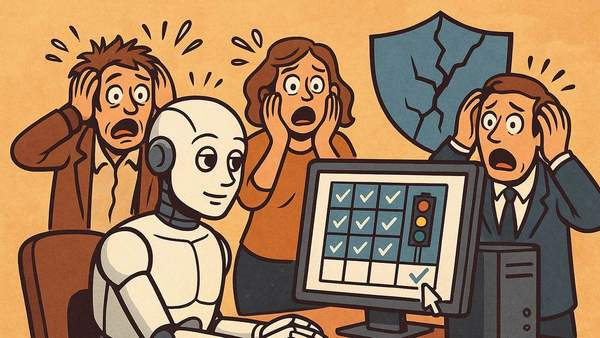
However, this approach still has its flaws—some bugs require basic technical knowledge to understand what went wrong after the "mad keyboard smashing" phase.
As a result, real developers are starting to offer consulting and debugging services to help the next generation of AI-dependent programmers fix issues (yes, those front-end codes are indeed products of "vibe coding").
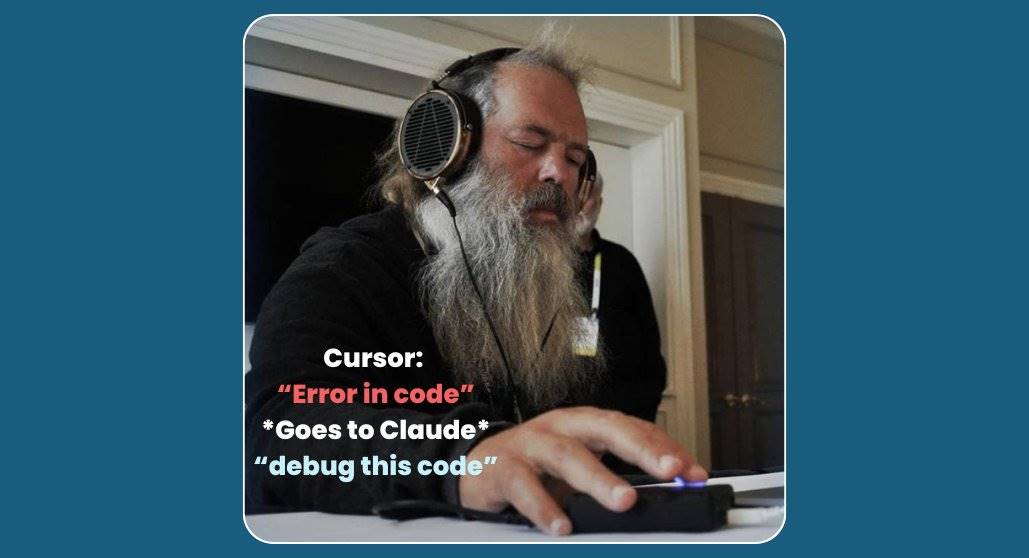
As these frontier models continue advancing in generating code from natural language (text or speech), their outputs will become increasingly efficient.
Dario Amodei, CEO of Anthropic, recently stated that within "three to six months," AI will be capable of completing 90% of coding tasks. Within twelve months, AI will "essentially do all the coding."
If AI programming becomes the norm, what would the world look like?
Who Loses?
The cost of application development will approach zero. SaaS services you'd rather not subscribe to could be replicated at extremely low cost.
If a SaaS company hasn't established strong moats via network effects, hard-to-replicate products, or strict IP protection, its fate is sealed. Companies like Docusign and Typeform may well be eliminated.
Additionally, enterprises can more efficiently develop native internal tools using MCP (Model Context Protocol), seamlessly integrating team workflows, knowledge bases, and existing databases.
I believe employees skilled in leveraging AI for development are currently among the most sought-after roles in small and medium-sized enterprises (SMEs).
With powerful small models emerging, companies might even run all systems locally on machines or private models—an encouraging sign for privacy and operational security (OpSec).
Teams still clinging to the belief that "if the product is good enough, users will come" will also be eliminated, as smarter teams clone their products and outmarket them with superior strategies.
Who Wins?
As code-generating models evolve, technical barriers lower, leveling the playing field. Teams that dominate user minds and capture attention will thrive.
Great marketing stems from deep understanding of core audiences—often because the team itself is part of the target user base. When all products share similar core functionalities, apps will resemble fashion items, becoming things people show off.
For example: "I use Claude because I know ChatGPT is for clueless normies."
For apps to become something people want to recommend, they must be cool. Branding, positioning, and cultural sensitivity must all align—and these are precisely the areas large language models (LLMs) struggle to master in the short term. After all, human complexity far exceeds AI’s grasp.
Subcultures are especially difficult for outsiders to understand. What impresses one person may mean nothing to another.
In the future, we may see a world where every user enjoys personalized journeys, interfaces, and even brand experiences—all tailored invisibly in real time based on individual preferences.
Roles requiring exceptional taste and sharp insight into design trends—such as graphic designers, creative directors, marketers, and UI/UX experts—will remain crucial within organizations.
These positions demand "taste" and foresight into trends—capabilities models cannot replicate. At their core, models are just "word prediction machines."
The App-Coin Theory
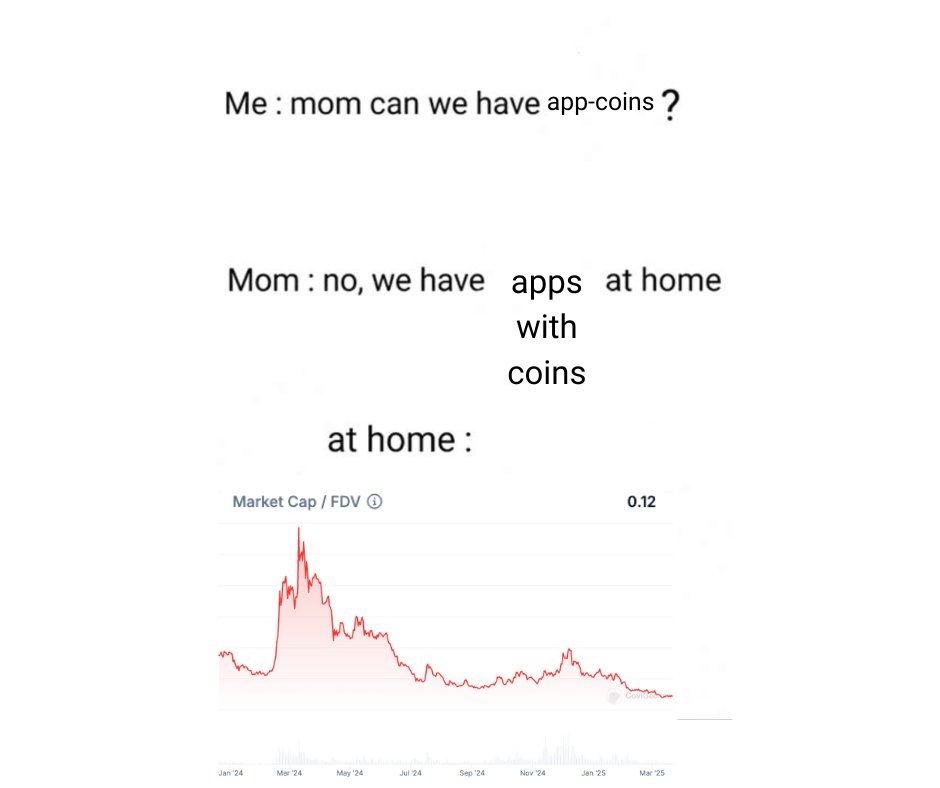
To be clear, I’m fully aware the term "app-coin" sounds a bit silly, but irony doesn’t always land perfectly in written form.
Unless you’re already a shareholder in Anthropic, Cursor, OpenAI, Perplexity, or have invested early in app-layer startups like Lovable, Replit, or LindyAI, you’ll likely just be watching others win.
If you're a high-risk taker who still believes crypto is the future, some teams I’ve recently encountered are actively building around this vision.
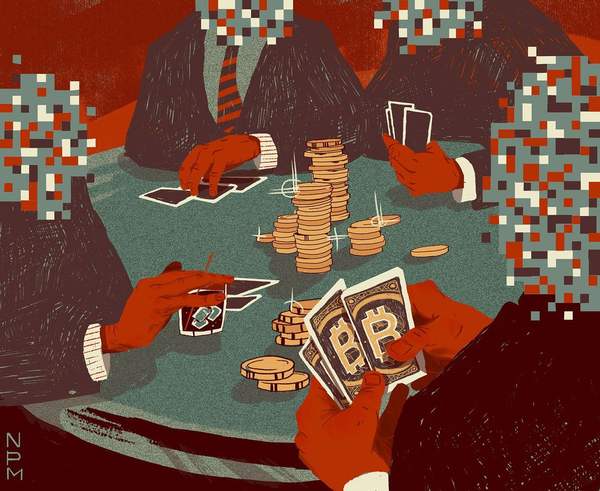
Their idea? "App-coins." These tokens could represent founders or small dev teams, potentially functioning like "meme coins" while carrying hopes for the future of app development.
Tokens are the best tool for solving the "cold start" problem—the very issue that kills more creative projects than any other factor.
For founders and small teams unable to attract the first 10–100 users, leveraging tokens and speculation can effectively overcome this hurdle.
Undeniably, humans love to speculate. They also desire fairness in the process. The idea of discovering the next genius developer and betting on their latest project makes perfect sense.
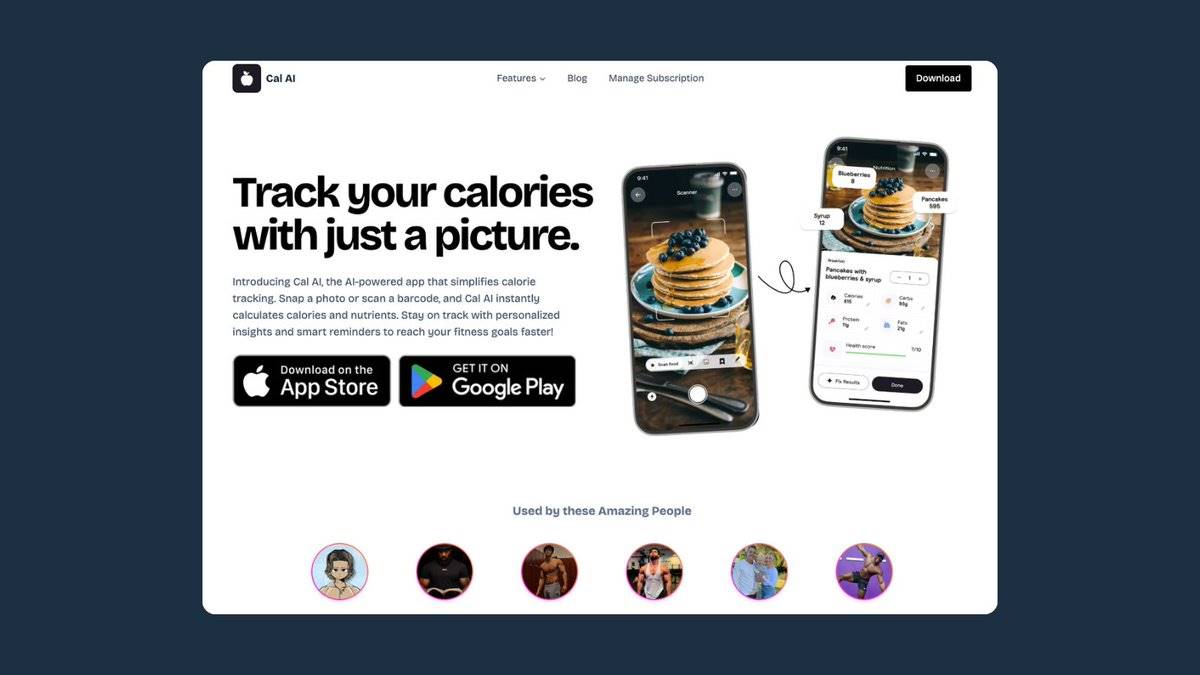
See this? Cal AI estimates calorie content from food photos with ±10% accuracy. Sounds like the kind of idea everyone thinks of first, right?
Yet behind it are four teenage founders who started from a single feature of MyFitnessPal and built a business generating $20 million annually. How did they do it? Through deep mastery of branding, positioning, and precise audience targeting.
They aggressively reinvest monthly revenue into influencer marketing (which genuinely works in fitness for reaching new users) and position the product as the choice for average users: simple, clean, and fun.
At the same time, they clearly state: if you're preparing for Mr. Olympia, this product isn't for you.
How many times did this product fail? If I had to guess—hundreds.
What we'll increasingly see is apps launching alongside tokens. Whether good or bad, this method at least guarantees initial attention.
Will it be abused? Absolutely.
Will there be projects with no substance whatsoever? Probably most of them.
Will it happen anyway? Bet on it.
What excites me is that code-generating models and "vibe coding" now allow anyone, anywhere, anytime to bring an idea to market. (Though honestly, the name "vibe coding" already makes me cringe a little.)
Even introverts who hate when carrots touch peas can launch products without making eye contact or speaking to anyone. That’s good news.
Teams I'm Watching:
-
@KaitoAI: In an era where anyone can easily launch a product, mindshare and attention are paramount.
-
@devfunpump: A "vibe coding" platform helping indie founders and small teams go from zero to one on Solana, turning ideas into tokenized ventures. I like this team and hope they succeed. Special mention to @buidldao_.
-
@tryoharaaAI: Base-based project enabling idea-to-product in just a few clicks, with excellent UI/UX. Solid team—Brexton is a genius.
-
@sendAIfun: Started with smart agents, now building an accessible app environment for everyone. Here's their recent interview.
-
@0xtarobase: Still under the radar, but I believe they’re incubated by Alliance.
These are some of the teams I can think of now, but I believe brilliant independent creators will emerge from obscurity and shock us. I even suspect we’ll witness a billion-dollar project launched by a solo founder within the next 12 months.
Summary
AI enables even non-programmers to push ideas into production. Tokenization introduces speculation, greatly increasing a developer’s chances of attracting early users. An app boom is coming.
If the future I envision unfolds, it will be one of the largest wealth creation events we’ve ever seen—not only enabling founders to generate massive value but also giving regular users a chance to back ideas before others catch on.
We've already seen strong demand for fairer access, hoping leveled playing fields give retail investors more opportunities. Pumpfun was a response to low-liquidity, high-FDV (fully diluted valuation) projects—but it’s still not the answer.
Investing in "garage band devs" who know how to market their products is a new opportunity now open to everyone.
Join TechFlow official community to stay tuned
Telegram:https://t.me/TechFlowDaily
X (Twitter):https://x.com/TechFlowPost
X (Twitter) EN:https://x.com/BlockFlow_News
 @blocmatesdotcom