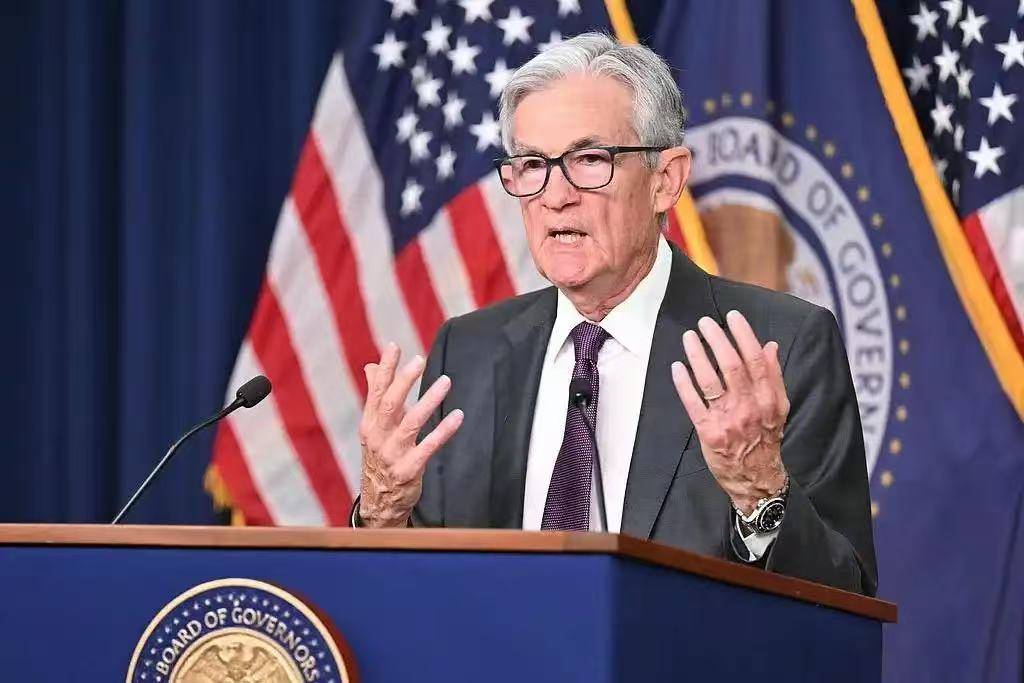
Huobi Growth Academy | Crypto Market Macro Research Report: Fed Holds Rates Steady, Liquidity Turning Point Reached, Bitcoin Poised for Rebound
TechFlow Selected TechFlow Selected
Huobi Growth Academy | Crypto Market Macro Research Report: Fed Holds Rates Steady, Liquidity Turning Point Reached, Bitcoin Poised for Rebound
The Federal Reserve's latest meeting not only revealed its most recent assessment of the current economic environment, but also influenced market expectations regarding future liquidity conditions, thereby directly impacting global asset markets including cryptocurrencies.
 Navigating Web3 tides with focused insights
1. FOMC Meeting Analysis: Policy Stability and Market Expectations Adjustment
The Federal Reserve decided to maintain the federal funds rate target range at 4.25%-4.50% during its latest meeting, a move in line with market expectations. However, the policy language, economic forecasts, and guidance on future interest rate paths have had profound implications for financial markets.
This meeting not only revealed the Fed's latest assessment of current economic conditions but also influenced market expectations regarding future liquidity, directly impacting global asset markets including cryptocurrencies. Below, we provide a detailed analysis from two perspectives: core content of the Fed’s decision and its direct impact on markets.
1.1 Core Content of the Fed Decision: Maintaining Policy Stability While Signaling Easing
The Fed kept the benchmark interest rate unchanged and stated in its post-meeting announcement that "the stance of monetary policy remains restrictive to ensure inflation returns to the 2% objective." This indicates the central bank still believes inflation is not low enough to justify immediate rate cuts. However, compared to previous meetings, the tone has softened. For instance, earlier statements emphasized the need for “restrictive policy for some time,” but this phrasing was downplayed this time, replaced by an emphasis on data-dependent decisions going forward—a shift interpreted by markets as preparation for a future policy pivot.
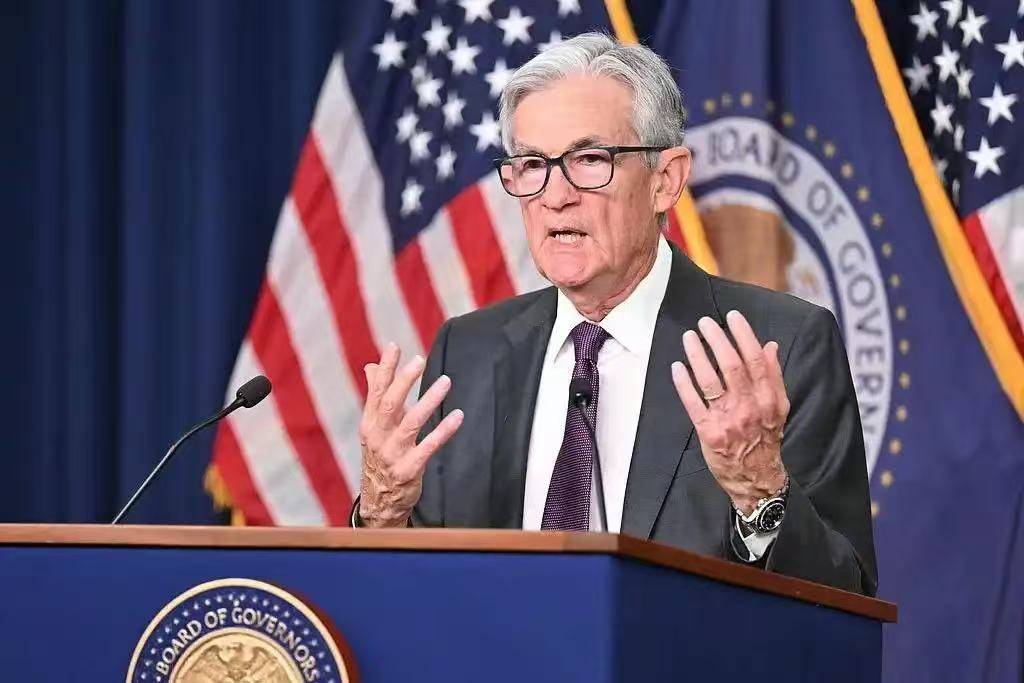
Additionally, the Fed slightly lowered its GDP growth forecast while raising inflation projections over the coming years, reflecting policymakers’ balancing act between slowing growth and persistent inflation. For example, the Fed revised its 2025 U.S. GDP growth projection downward from 2.1% to 1.8%, while the 2025 core PCE (the Fed’s preferred inflation gauge) was raised from 2.2% to 2.4%. These adjustments reflect a cautious outlook—slower growth coexists with sticky inflation, making premature rate cuts unlikely in the short term.
Another key point concerns the Fed's balance sheet policy. Since launching quantitative tightening (QT) in June 2022, the Fed had been reducing its holdings by up to $60 billion in Treasuries and $35 billion in MBS monthly. At this meeting, the pace of Treasury roll-offs was reduced from $60 billion to $50 billion. Though modest, this signals a slowdown in the tightening cycle. The QT program directly affects dollar supply in financial markets; over the past two years, aggressive tightening drained liquidity, pressuring equities and crypto markets. Slowing QT suggests the Fed may be preparing for future easing.
The dot plot remains a critical tool for interpreting the Fed’s policy direction. It shows the median FOMC member expects the fed funds rate to reach 3.75% by 2025—implying at least two rate cuts. While consistent with prior market expectations, there are internal disagreements: some officials anticipate rate cuts as early as Q4 2024, while others expect mid-2025. This divergence reflects differing views within the Fed about inflation persistence, adding uncertainty to the future path of policy.
Overall, although the Fed held rates steady, it sent multiple dovish signals: softer rhetoric, slower balance sheet reduction, lower growth forecasts, and a dot plot indicating future cuts. Together, these factors prompted markets to reassess the future monetary environment, influencing asset price movements.
1.2 Direct Market Impact of Fed Policy: Liquidity Turning Point Approaches, Risk Assets Rebound
The Fed’s policy shifts affect markets across multiple dimensions—particularly the U.S. Dollar Index (DXY), Treasury yields, stock markets, and cryptocurrency markets. Following the announcement, investor expectations for improved liquidity strengthened, suggesting assets like Bitcoin could enter a rebound phase.
First, the DXY dropped sharply. As a key indicator of global capital flows, the dollar index fell to its largest single-day decline since 2023 after the Fed hinted at a slower tightening pace. A weaker dollar typically encourages capital inflows into high-yield risk assets, supporting U.S. equities, gold, and Bitcoin. Over the past two years, strong dollar strength due to rate hikes led to capital outflows from emerging markets and pressure on risk assets. Now, with a potential end to the dollar’s dominance in sight, crypto assets like Bitcoin may attract renewed investment.
Second, Treasury yields declined, signaling a turning point in rate expectations. The 10-year yield dropped from 4.3% to 4.1% post-meeting, reflecting market anticipation of future rate cuts. Lower bond yields reduce funding costs, enhancing the appeal of risk assets. Historically, declining Treasury yields correlate strongly with stronger Bitcoin performance, indicating improving liquidity conditions.
In the equity market, tech and growth stocks surged. Tech firms, which rely heavily on cheap financing, benefit significantly from rising rate cut expectations. The Nasdaq jumped over 2% following the meeting, with shares of Tesla, Apple, and other growth companies rebounding. This trend bodes well for crypto markets, as correlations between tech stocks and Bitcoin have increased in recent years, with growing alignment in capital flows.
Crypto markets reacted swiftly. Bitcoin rose more than 5% immediately after the announcement, breaking above the key resistance level of $85,000. Major altcoins such as Ethereum also rallied, reflecting strengthening expectations for looser liquidity. If the Fed continues sending dovish signals in the coming months, Bitcoin could see a new rally, potentially surpassing previous highs.
In summary, while no immediate rate change occurred, the Fed’s messaging had far-reaching effects. Weaker dollar, falling Treasury yields, rising tech stocks, and Bitcoin gains all indicate shifting market expectations around liquidity. For investors, this suggests a liquidity inflection point may be near, opening the door to a new upward cycle for high-beta assets like Bitcoin.
2. Macroeconomic Context: Liquidity Turning Point Reached, Capital May Flow Back Into Risk Assets
Over the past two years, global financial markets experienced unprecedented liquidity tightening. Starting in March 2022, the Fed initiated a rate hike cycle alongside large-scale quantitative tightening (QT), drastically altering global funding conditions. Rising capital costs and shrinking dollar liquidity triggered sharp corrections in risk assets. Bitcoin, as a highly volatile and elastic asset class, faced severe volatility during this period. However, with the Fed slowing QT in 2024, capital flows are subtly shifting—indicating a quiet arrival of a liquidity turning point.
2.1 Recent Liquidity Environment: Signs of a Market Inflection, Significant Dry Powder Waiting to Deploy
In 2022–2023, synchronized tightening by major central banks—including the Fed and ECB—pushed investors toward safer assets, severely depressing valuations of risk assets. However, several indicators since early 2024 suggest liquidity conditions are changing. According to Coinbase Research, Bitcoin may bottom out and begin rising in the coming weeks, based on the following observations:
First, the pace of global liquidity tightening is slowing. Aggressive rate hikes by major central banks caused significant deleveraging and capital outflows, pressuring both stock and crypto markets. But at the March 2024 meeting, the Fed clearly signaled a slowdown in QT, while the dot plot implied 2–3 rate cuts within the next 12 months. This marks a clear retreat from the restrictive policies of the past two years, paving the way for improved liquidity.
Second, correlation between equities and crypto markets has intensified, increasing crypto’s sensitivity to macro liquidity changes. The 90-day rolling correlation between Bitcoin and U.S. equities—especially the Nasdaq—reached 0.75 in 2024, highlighting stronger linkages. In other words, tech stock performance now exerts greater influence on Bitcoin, and given tech stocks' high sensitivity to interest rates, their recent recovery may foreshadow a broader rebound in crypto prices.
Third, elevated risk aversion led institutions to reduce crypto exposure, yet market structure remains healthy. In late 2023, surging Treasury yields and expectations of prolonged high rates prompted hedge funds and traditional institutions to shift capital into short-term Treasuries and money market funds, reducing liquidity and trading volume in Bitcoin markets. Nevertheless, no systemic risks emerged. Crypto market fundamentals remain sound, with steady inflows into BTC spot ETFs showing institutional investors are still positioning for entry when conditions improve.
Most importantly, total stablecoin supply has grown to $229 billion, signaling accumulation of dry powder awaiting deployment. Historical data show a strong correlation between stablecoin issuance and crypto market inflows. Rising stablecoin balances often precede fresh capital entering the ecosystem. Since late 2023, USDT and USDC supplies have steadily increased, indicating substantial capital is waiting on the sidelines. Once market momentum turns positive, these funds could rapidly flow back into Bitcoin and other digital assets.
Overall, despite ongoing macroeconomic uncertainty, the pressure from global liquidity tightening is easing, and significant capital remains poised to re-enter the market. Should the Fed continue issuing dovish signals and global liquidity improves further, crypto markets could enter a new rebound phase.
2.2 Relationship Between Dollar Liquidity and Crypto Markets: Historical Data Reveal BTC Price Patterns
Historically, Bitcoin performance closely tracks the ebb and flow of U.S. dollar liquidity. Specifically, BTC tends to surge during periods of low rates and loose monetary policy, while suffering under tight policy regimes. This pattern can be broken down into three phases:
Phase One: 2017–2021 – Loose Monetary Policy Fuels BTC Bull Runs
From 2017 to 2021, the Fed maintained low rates and QE, creating abundant global liquidity. Institutional appetite for risk assets soared, driving two major Bitcoin bull markets:
In 2017, BTC rose from $1,000 to $20,000—a gain exceeding 20x.
From 2020 to 2021, the Fed adopted zero rates and unlimited QE in response to the pandemic, pushing Bitcoin from $4,000 to a record high of $69,000.
Phase Two: 2022–2023 – Tightening Policies Trigger BTC Collapse
In 2022, the Fed aggressively raised rates eleven times—from 0.25% to 5.5%—while simultaneously implementing large-scale QT, causing a global liquidity crunch. As a high-volatility asset, Bitcoin plunged over 60% for the year. Institutional withdrawals and declining trading volumes reflected widespread risk-off sentiment.
Phase Three: 2024–2025 – QT Slowdown Signals BTC Recovery
With the Fed slowing QT in 2024, signs of improving liquidity are emerging. History shows that once liquidity pressures ease, BTC typically rebounds as capital returns. If the Fed begins cutting rates or adopts even looser policies before 2025, Bitcoin could enter a new bull market driven by resurgent liquidity.
Currently, the Fed stands at a pivotal juncture. Although full-rate cuts haven’t started, slowing QT, a weakening dollar, and rising stablecoin balances all signal a liquidity turning point. If dovish signals persist in the coming months, crypto markets may draw back significant capital. As a leading indicator of liquidity in risk assets, Bitcoin is likely to lead the rebound.
3. Outlook for Bitcoin Market: Potential for Bottoming Out and Risks Ahead
Recent price action, institutional fund flows, and macroeconomic trends collectively suggest Bitcoin may be forming a base, with potential for a rebound amid improving liquidity. However, investors must remain vigilant against uncertainties—including Fed policy shifts, geopolitical tensions, and internal crypto market risks.
3.1 Short-Term Technical Analysis: Strengthening Bottom Signals, Indicators Suggest Upside Potential
From a technical perspective, Bitcoin’s recent price behavior shows signs of strengthening support, with multiple indicators pointing toward a possible inflection.
First, the $76,000–$80,000 range has formed a solid floor.
Over recent weeks, Bitcoin repeatedly tested this zone without breaking below, indicating strong buying interest. Historically, this range aligns with average entry prices for BTC spot ETFs, where institutional participation reinforces support. On-chain data further reveal accumulation of long-term holder UTXOs (unspent transaction outputs) in this range, reflecting strong holder conviction and absence of panic selling.
Second, RSI (Relative Strength Index) has rebounded, signaling recovering momentum.
The RSI measures overbought or oversold conditions. Readings below 30 indicate oversold markets, often preceding reversals. Recently, Bitcoin’s RSI recovered from near 30 to the 45–50 range, suggesting improving bullish momentum. Such rebounds usually coincide with price stabilization, indicating strengthening demand.
Third, trading volume is gradually increasing, signaling returning liquidity.
Volume dynamics are crucial during bottoming phases. Recently, volume spiked around key support levels, indicating active buying rather than passive holding. Over the past few weeks, volume has risen amid consolidation, suggesting capital inflow. Should sentiment turn positive, incremental buying could accelerate a breakout from the current range.
Overall, if the Fed maintains its current stance and liquidity continues to improve, Bitcoin may consolidate near current levels in the short term, setting the stage for a rebound in Q2.
3.2 Institutional Investor Activity: Growing Fund Inflows Reinforce Support
Institutional activity plays a vital role in shaping Bitcoin’s medium- to long-term trajectory. With the launch of spot Bitcoin ETFs, traditional financial institutions have become increasingly involved, making their capital flows a key barometer of market sentiment.
First, Grayscale’s BTC holdings remain stable, with no sign of mass liquidation. As one of the world’s largest Bitcoin trusts, Grayscale’s BTC holdings serve as a key market indicator. In Q1 2024, its position remained steady, with no significant outflows—contrasting sharply with past episodes where outflows exacerbated downturns. This stability suggests institutions retain confidence in Bitcoin despite short-term volatility.
Second, BTC spot ETF flows indicate institutions are accumulating. Spot ETFs represent one of the most important sources of institutional inflows in 2024. Unlike the massive outflows seen during the 2022–2023 tightening cycle, current ETF data show sustained institutional buying on dips. Continued inflows provide structural demand and reinforce confidence in Bitcoin’s long-term outlook.
Third, MicroStrategy continues to accumulate BTC, signaling enduring institutional belief in its long-term value. As one of the largest corporate holders of Bitcoin, MicroStrategy recently added more BTC, bringing its total holdings above 214,000 BTC. This demonstrates that despite near-term volatility, some institutions continue to view Bitcoin as a strategic asset. Their buying supports market sentiment and signals long-term value to other market participants.
Collectively, sustained institutional inflows provide strong medium- and long-term support for Bitcoin prices and enhance the market’s rebound potential.
3.3 Potential Market Risks: Uncertainties Remain, Watch for Unexpected Shocks
Despite signs of stabilization and recovery, several risks could disrupt Bitcoin’s short-term trajectory.
First, uncertainty surrounding Fed policy. While markets widely expect rate cuts in H2 2024, any resurgence in inflation could delay cuts—or prompt renewed tightening. For example, if upcoming CPI data exceed forecasts, the Fed might revert to a hawkish stance, dampening sentiment and pressuring risk assets. In such a scenario, Bitcoin could face additional downside pressure.
Second, geopolitical risks may affect investor risk appetite. Events such as the Russia-Ukraine war, Middle East tensions, or instability in the Asia-Pacific region increasingly influence global financial markets. Rising safe-haven demand could divert capital into Treasuries and gold, triggering short-term sell-offs in high-risk assets like Bitcoin.
Third, internal liquidity risks within the crypto market. Beyond macro factors, structural vulnerabilities exist. For example, exchange liquidity issues or cascading liquidations could trigger sharp volatility. Additionally, large-scale BTC sales by institutional players facing cash needs could shock the market. Investors should monitor on-chain metrics, exchange flows, and derivatives leverage to assess latent risks.
Currently, Bitcoin exhibits strengthening support, institutional inflows, and improving liquidity—positioning the market for a breakout catalyst. However, investors must remain alert to Fed policy shifts, geopolitical developments, and internal crypto market risks, all of which could impact short-term price action.
Looking ahead, continued improvement in liquidity and sustained institutional inflows increase the likelihood of a Q2 rebound. However, until key resistance levels are decisively breached, the market may remain range-bound. Investors should closely track upcoming macro data, ETF flows, and trading volumes to determine whether Bitcoin is entering a new bull cycle.
4. Investment Strategy and Conclusion
In the current environment, investors should tailor strategies based on individual risk tolerance, investment horizon, and market understanding. Ongoing policy stability, improving liquidity, and emerging rebound signals present both opportunities and challenges. To achieve better returns in this volatile landscape, investors must adapt flexibly and stay attuned to macroeconomic and market developments.
4.1 How Should Investors Respond to the Current Market?
Short-term traders: Volatility makes technical analysis essential. The $80,000 level serves as a critical support reference. If Bitcoin breaks below this zone, short-term traders should consider exiting positions to avoid further downside risk. Conversely, upon signs of stabilization and a confirmed breakout above $88,000, traders can add positions to capture upside momentum.
However, short-term trading carries high risk, especially given lingering liquidity instability in crypto markets. Traders must strictly set stop-losses and avoid excessive exposure. Technical signals—particularly breakouts beyond key resistance zones—can help identify short-term trends. Additionally, traders should closely monitor major economic releases such as U.S. nonfarm payrolls, CPI reports, and Fed meetings, all of which can drive significant volatility.
Medium- to long-term investors: The market still holds substantial upside potential, particularly amid improving liquidity. Unlike short-term traders, long-term investors can afford to wait patiently for favorable entry points. Current price levels may represent a relative bottom, and the liquidity turning point appears to have arrived. Investors can gradually accumulate Bitcoin during pullbacks, especially near key support zones such as $83,000–$88,000, laying a solid foundation for future gains.
As QT slows and liquidity improves, long-term investors stand to benefit from the next rebound cycle. When building positions, focus on Bitcoin’s long-term trajectory and overall market sentiment, avoiding reactionary decisions driven by short-term noise. As market confidence recovers, patient investors are likely to achieve stable returns.
Institutional investors: With greater capital resources and risk management capabilities, institutions typically prioritize long-term value creation through conservative positioning. In the current climate, they should closely watch for further dovish signals from the Fed. Any acceleration in monetary easing or rate cuts would likely boost inflows into risk assets including Bitcoin.
Institutions may also consider long-term holdings of Bitcoin and Ethereum as hedges against dollar depreciation. As the most liquid digital assets, BTC and ETH are increasingly becoming core components of institutional portfolios. As the crypto market matures, this trend is likely to accelerate. Holding these assets allows institutions to capture upside during rallies while hedging against traditional financial risks such as inflation and global uncertainty.
4.2 Future Market Outlook
Overall, with Fed policy stabilizing and liquidity improving, the case for a short-term rebound and medium-term rally in Bitcoin is strengthening. Despite lingering risks—including macro uncertainty, geopolitical tensions, and potential crypto market liquidity issues—the Fed’s dovish tilt and sustained institutional inflows create new opportunities.
First, the outlook for liquidity improvement is bright. With QT slowing, market liquidity is expected to recover gradually. In the near term, looser dollar conditions could channel more capital into risk assets. Historical patterns show Bitcoin performs strongly in such environments. Thus, under favorable macro conditions, Bitcoin may rebound in the coming weeks, offering profit opportunities.
Second, Bitcoin may be entering a new upward cycle. Supported by improving liquidity, Bitcoin could突破 the $85,000–$88,000 resistance zone and initiate a fresh rally. However, this process may involve consolidation and volatility, especially as market psychology adjusts following a breakout.
Third, risks remain. Even as optimism grows, investors must monitor subtle shifts in Fed policy and global economic trends. A resurgence in inflation or escalation in international conflicts could force the Fed to tighten again, weighing on risk assets. Therefore, vigilance is essential—investors must stay informed and ready to adjust strategies promptly.
In conclusion, in an environment of policy stability and gradually improving liquidity, the Bitcoin market presents a relatively optimistic outlook. Yet volatility remains high. Investors should prudently allocate assets according to their risk tolerance and evolving market dynamics.
Join TechFlow official community to stay tuned
Telegram:https://t.me/TechFlowDaily
X (Twitter):https://x.com/TechFlowPost
X (Twitter) EN:https://x.com/BlockFlow_News
 @HTXAcademy