Manus: One Code, Hard to Get — The Future of AI Agents or Just Hype?
TechFlow Selected TechFlow Selected
Manus: One Code, Hard to Get — The Future of AI Agents or Just Hype?
Manus is more like an efficient AI tool platform suitable for specific application scenarios, rather than a general-purpose all-in-one AI.
 Navigating Web3 tides with focused insights
Today, the AI community has been stirred. A product named Manus, with a fully English promotional video and an invite-code-only release strategy, quickly captured widespread attention. Developed by a Chinese team and officially dubbed the "world's first general-purpose Agent," it seemed overnight to render OpenAI's and Anthropic's Operators obsolete. After its release, Manus sparked explosive word-of-mouth within a small circle, reminiscent of the DeepSeek phenomenon. But can Manus truly become the next DeepSeek? Let’s take a closer look.
What Exactly Is Manus?
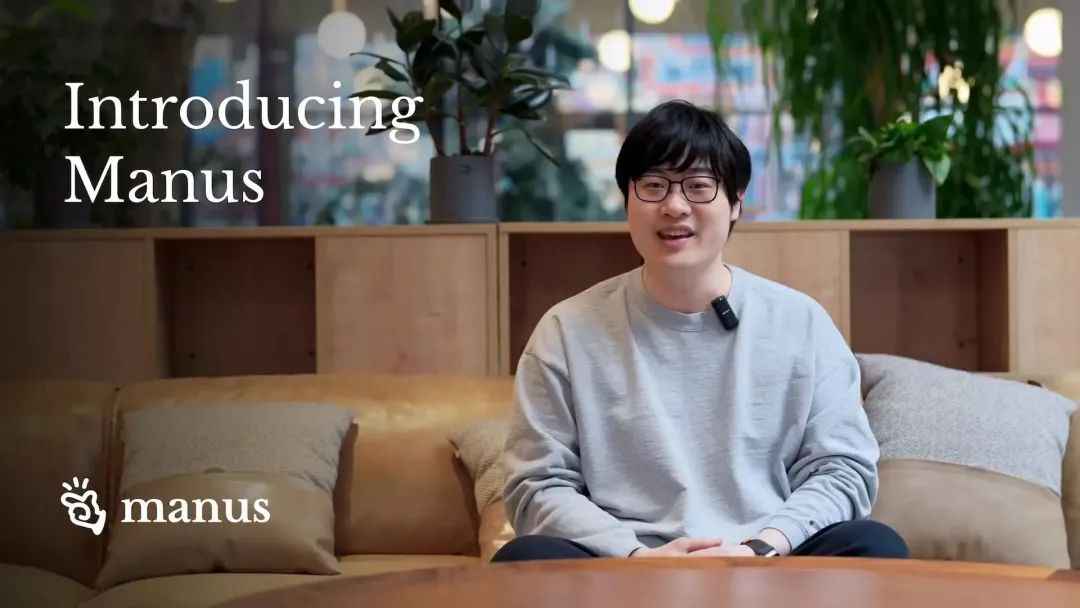
According to its promotional video and official website, Manus is an AI Agent capable of "handling various complex and dynamic tasks, possessing independent thinking and systematic planning abilities, flexibly utilizing tools in virtual environments, and directly delivering complete results." Such descriptions are not uncommon among today’s AI Agent products—many AI tools describe themselves similarly. Manus has not launched publicly; access is currently limited to invitation codes, and its rollout relies entirely on demonstration videos.
In the demo, Manus showcases several practical scenarios: for example, uploading a compressed file containing multiple resumes, automatically decompressing, analyzing, and offering recommendations based on prompts; organizing real estate listings and pricing according to user needs; generating analysis reports on NVIDIA and Tesla stock prices. Similar functionalities have already been demonstrated by other AI products, including OpenAI's Operator, Zhipu AI's Phone Use, and Google Gemini.
From a technical standpoint, Manus has not released detailed technical documentation. Some analysts suggest that Manus may be built upon Claude models, enhanced with open-source model post-training techniques, and executes tasks through predefined workflows. Its innovation lies in packaging these capabilities into a cloud-based virtual environment and delivering services via asynchronous interaction—a step forward, though still short of achieving the industry’s vision of a “general AI.”
The Problem With "General-Purpose Agent"
Manus aims to become a "general-purpose AI Agent"—not just providing suggestions or answers, but autonomously planning and executing tasks. However, this very definition raises questions. Powerful models like Claude already possess the ability to handle complex tasks and efficiently use tools to accomplish them. Thus, the functions demonstrated by Manus could arguably be achieved using more advanced agents or large models alone, without requiring a specialized system like Manus.
Moreover, Manus clearly differentiates itself from traditional AI assistants. It appears to aim at integrating various tools and agents through a "virtual environment" to achieve higher automation. While this lowers the technical barrier for users, does it truly make Manus a genuine general-purpose intelligent agent? After all, personalized agent needs vary greatly across individuals and contexts—whether Manus can adapt to diverse scenarios remains uncertain.
Marketing Strategy: Scarcity and Social Buzz
The "hype" around Manus isn't solely due to technology—its marketing strategy stands out as well. Through the invite-code mechanism, Manus was treated like a scarce commodity, triggering a frenzy in the AI community. On some platforms, invitation codes were reportedly resold for anywhere between 999 yuan to 50,000 yuan. This scarcity-driven approach borrows from classic mobile internet tactics: limited availability, user competition, and influencer-driven viral reviews. While effective in generating buzz, whether this translates into sustained user growth remains to be seen.
Yet, when we turn to overseas tech forums and social media, discussions about Manus appear relatively quiet. This suggests that while Manus is highly popular in China, it hasn’t necessarily impressed global audiences. Notably, Manus seems overly reliant on emotional marketing, attempting to ride on symbols like "DeepSeek" to gain rapid attention. But this may also indicate that its popularity is short-lived, lacking long-term core competitiveness.
Product Value and Limitations of Manus
From a design perspective, Manus can be seen as a repackaging and optimization of existing Cursor-like AI products. By incorporating multiple smaller models and agents, it simplifies operational workflows, enabling non-technical users to easily orchestrate and execute complex tasks. However, this approach isn't entirely novel—similar concepts have appeared in other AI tools such as OpenDevin.
Manus’ strength lies in wrapping complex technologies into a more user-friendly product, allowing average users direct access to AI-powered task execution. Yet its limitations are evident: first, it still depends on pre-defined workflows, which restricts flexibility and creativity; second, its operating environment is relatively closed, confined to a specific set of software tools, unlike a general-purpose operating system that supports broad application interoperability. Therefore, whether Manus can truly achieve "general-purpose" status remains questionable.
Future Competition and Development
Manus is not alone in the Agent space. Competitors like Coze and Dify are also striving to build similar general-purpose agents. More importantly, as large model technology advances, models like Claude 3 and GPT-5 are gaining powerful tool-calling capabilities—potentially absorbing the market once dominated by standalone Agent products. Thus, Manus faces significant challenges in standing out in this fiercely competitive landscape.
A more critical issue is whether Manus can find a clear market positioning. It aims to be a "general-purpose Agent," but based on its current form, it resembles more of an efficient AI tool platform suited for specific use cases rather than a universally capable AI. Without breaking through this bottleneck, Manus' growth may remain confined to a narrow niche.
Conclusion
In summary, Manus is a promising AI product that optimizes user experience and technical integration. However, it does not represent a technological revolution. Its claim as a "general-purpose AI Agent" remains debatable—the design primarily involves re-packaging existing technologies rather than delivering breakthrough innovation. While its use of scarcity marketing and social virality has generated attention, long-term user retention will depend on whether it can establish unique value amid intense competition. If Manus can overcome current limitations by embracing multi-agent collaboration and more efficient task-execution mechanisms, it still holds the potential to become a significant player in the AI field.
Join TechFlow official community to stay tuned
Telegram:https://t.me/TechFlowDaily
X (Twitter):https://x.com/TechFlowPost
X (Twitter) EN:https://x.com/BlockFlow_News
 @News_Techub