Has the meme hype ended? Is the next step "death" or "revival"?
TechFlow Selected TechFlow Selected
Has the meme hype ended? Is the next step "death" or "revival"?
Some memes have already moved beyond the logic of pure narrative or pure traffic, beginning to serve as a means of value承载.
 Navigating Web3 tides with focused insights
By: Blockchain Knight
Aside from the sudden crypto market plunge and cascading liquidations over the past week, one of the biggest stories has been the dramatic collapse across various sectors. While BTC retreated from its peak of $100,000 to below $80,000—a 20% drawdown—this pales in comparison to many Memecoins that have dropped over 80%. In relative terms, BTC remains far more resilient.
The current state of the Memecoin market is best illustrated by the data below. On Pump.fun—the primary battleground—daily trading volume on Ray has plummeted from over $3 billion at its peak to around $144 million, a decline exceeding 95%. Naturally, this reflects the broader market contraction.
In a way, it's hard to fathom such a rapid decline within just one month. The Meme-fueled craze that lasted nearly half a year now appears to have already hit rock bottom.
With falling trading volumes and collapsing market caps, last week’s sentiment turned sharply critical toward Memecoins. Numerous commentators and influencers emerged mocking the once-arrogant PVP (Proof-of-Vanity Participation) players. So, does this mean the grand narrative of Memes—launched as an anti-VC movement—has simply ended in death?
First, let's briefly revisit the "origin story" of Memes and examine their foundational value.
Memecoins didn't suddenly emerge over the past year. They’ve existed since the dawn of Bitcoin, rooted in internet culture itself. When the internet began spreading widely, so did memes—absurd image macros, viral slang, and online cultural phenomena—all falling under the umbrella of “meme.”
The first Memecoin to enter the crypto space (back in 2013) was DOGE, which still holds a $30 billion market cap today after more than a decade in the spotlight. Previously, memes were mostly discussed as isolated assets in crypto, without forming a broad cultural narrative akin to what we see on the internet. That changed only last year when Memes became symbolic of resistance against traditional VC dominance, quickly evolving into a major industry-wide theme.
Then came the influx of celebrities and high-profile organizations riding the Meme wave—driven largely by massive profit potential—ushering in the so-called “Meme Summer.” What started as a niche category rapidly grew into the largest and most dominant narrative in the entire industry.
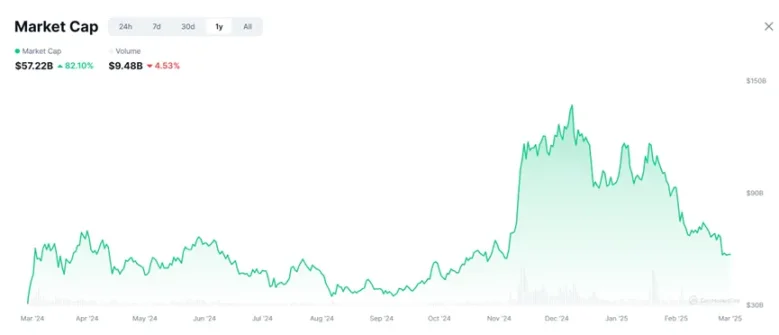
The chart below shows how dramatically Memecoin market capitalization surged over the past year—from $36 billion to a peak of $137 billion in just three months. The growth was astonishing, though the correction has been equally swift.
Late in 2024, we began seeing Meme narratives shift beyond pure hype toward utility-driven concepts like Agent, DeFAI, and DeSci. Memes themselves transitioned from being dismissed as worthless to becoming legitimate vehicles for functional token issuance.
Finally, the true climax—and ultimately, downfall—came with politically themed Memecoins tied to Trump. These now represent the most criticized aspect of the trend, marking the beginning of the end for this cycle.
Looking back at this Meme wave: we set out to resist VC influence, yet ironically fell victim to a new form of centralized control. We experienced excess, stumbled through countless pitfalls, and ultimately faced a purge—not unlike previous cycles of VC-led consolidation.
Yet despite this, the core motivations remain unchanged. People still oppose VC dominance. There's still deep respect for organic, community-driven traffic and engagement. From this perspective, the breeding ground for Memes hasn’t disappeared. Therefore, they won’t vanish either—at least not completely.
Moreover, starting late last year, certain Memecoins began moving beyond mere storytelling or traffic chasing, evolving into actual carriers of value.
Whether driven by IP themes, celebrity influence, or innovative distribution models, this asset class will likely persist—and may even evolve further. After all, what these tokens represent is gradually transforming. Memes are shifting from pure speculation back toward innovation, embracing new frameworks like “Meme+Agent,” “Meme+DeSci,” and “Meme+DeFAI.”
Lastly, looking at prices alone, many Memecoins have entered—or are still entering—a trough phase. As Hamlet famously said, they now face only two paths: “To be, or not to be”—to survive, or to perish.
Their fate lies solely in the hands of their communities and the teams leading them (including funding groups). As long as there's still the will to fight, even those Memecoins that have plunged into oblivion can find hope for rebirth—just as DOGE did years ago. For in crypto, that which does not kill you makes you stronger. This is the spirit of crypto, and where real value lies. So instead of focusing on price, look at who is still building—that’s where the answer truly resides.
Postscript: On the evening after this article was completed (March 2), Trump posted on social media that a presidential task force is advancing a strategic reserve for crypto assets including XRP, SOL, and ADA. This single announcement reversed a week-long bearish trend. Could this mark a turning point? Even in downturns, hope persists. Who knows—markets might suddenly bloom again “like a spring breeze arriving overnight.”
Join TechFlow official community to stay tuned
Telegram:https://t.me/TechFlowDaily
X (Twitter):https://x.com/TechFlowPost
X (Twitter) EN:https://x.com/BlockFlow_News