Money, Time, and Happiness: A Must-Take Life Course for Every Crypto Player
TechFlow Selected TechFlow Selected
Money, Time, and Happiness: A Must-Take Life Course for Every Crypto Player
Money = Time, but the crypto space is a different story.
 Navigating Web3 tides with focused insights
Author: Route 2 FI
Compiled by: TechFlow
Today, I want to talk about a topic I often reflect on: the balance between time and money.
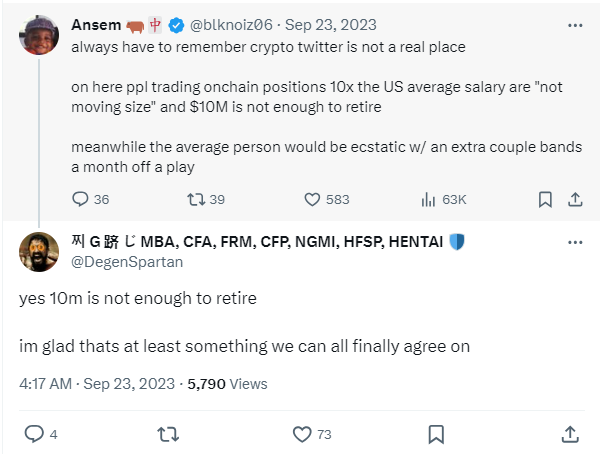
You might have heard the amusing debate—“Is $10 million enough to retire comfortably?” In my view, this discussion is somewhat absurd because the figures mentioned on Twitter are unrealistic for most parts of the world. I’d even argue that just one-tenth of that amount could provide a very comfortable life in most places.
Money is a fascinating subject—it’s not as simple as it appears. We earn money through work and use it to buy goods and services. But its value shifts depending on how and when we use it.
Whether it's your first dollar or your millionth, its purchasing power is essentially the same. Yet, the additional comfort or happiness it brings can vary greatly based on how you spend it. Ultimately, everything we buy with money serves one final goal: achieving happiness.
However, the satisfaction or utility derived from the millionth dollar is far less than that from the first. In fact, beyond a certain point, each additional dollar may bring negative side effects—greater complexity, anxiety, and dependency on future income.
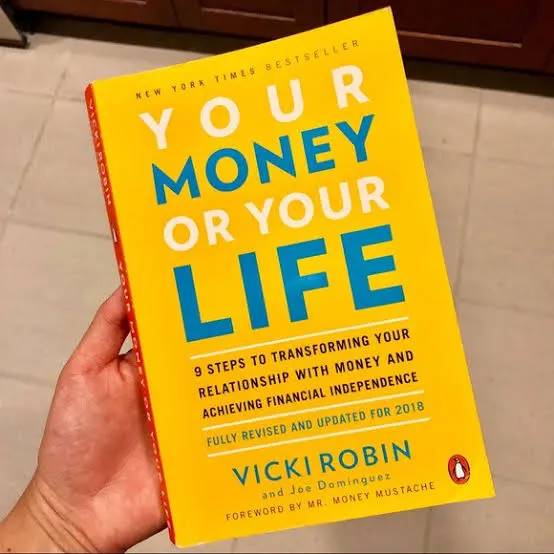
Despite its awkward title, the book Your Money or Your Life was a mental reset for me.
It introduced a compelling concept that reshaped my thinking and ultimately led me into the world of crypto Twitter.
You may have seen the chart below, but it's worth revisiting because it illustrates a crucial point:
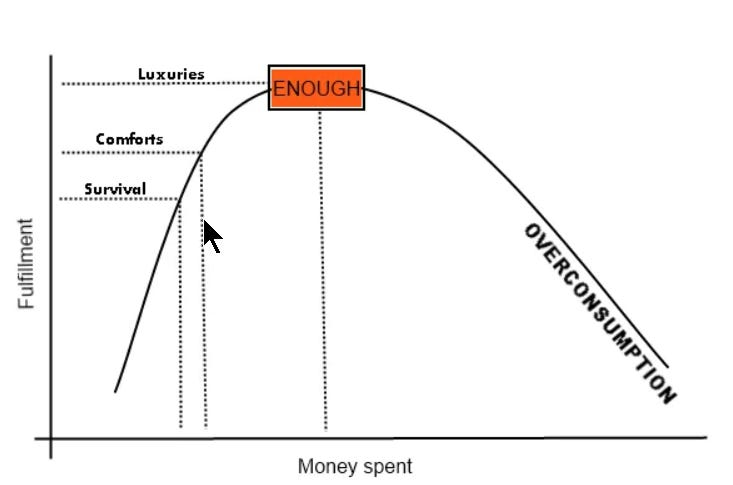
Happiness does increase with spending, but only up to a limit.
This threshold varies from person to person. Each initial dollar tends to bring more happiness because it’s usually spent on more essential and meaningful things.
Yet, once spending hits a certain threshold, additional expenses contribute almost nothing to increased happiness.
Money = Time, Except in Crypto
Money is essentially a representation of time. It’s a store of value. We trade our time and effort—our life energy—for money, hoping to exchange it later for goods or others’ labor.
For most people, the relationship between time and money is linear. After finishing school, we trade X time for Y money:
1X time = 1Y money.
While not always true, this generally holds, especially when viewing work annually. For some, promotions or role changes may create an upward curve or shift in slope.
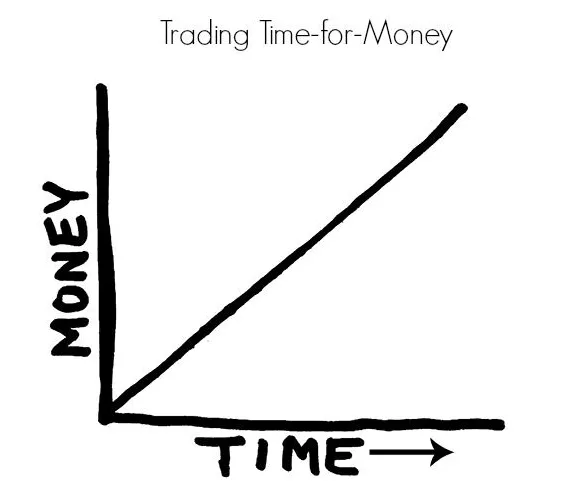
Most people accept this equation—time equals money.
But in crypto, we know this isn’t the whole truth.
A few years ago, when I pursued early financial freedom, my understanding of money stopped here. Over time, however, the more we trade time for money, the worse the trade-off becomes.
Time is finite. As it passes, it grows more precious because we have less of it left. Each day, we move closer to the end. It sounds bleak, but it’s reality.
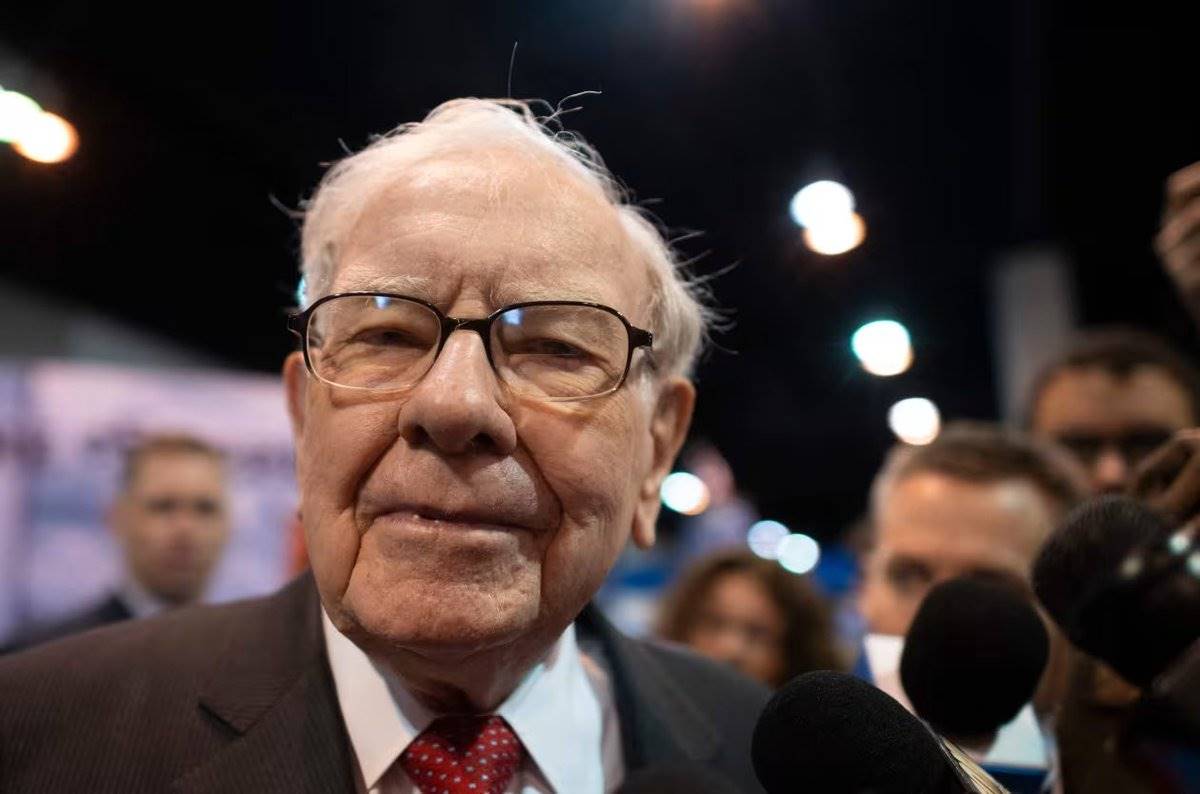
When you’re on your deathbed, what is your time worth?
How much would you pay to live a few more days? Would you trade places with 93-year-old Warren Buffett, who has $100 billion but likely little time left?
Would you keep working, or pursue another kind of life?
I faced this choice too. After a bull market ended, I seriously considered leaving crypto.
In the end, I chose a middle path. The relationship between time and money is nonlinear. As the marginal utility of each dollar declines, so does money’s importance to me. I’m not as wealthy as the crypto OGs, but I’m content—and I believe that’s what truly matters.
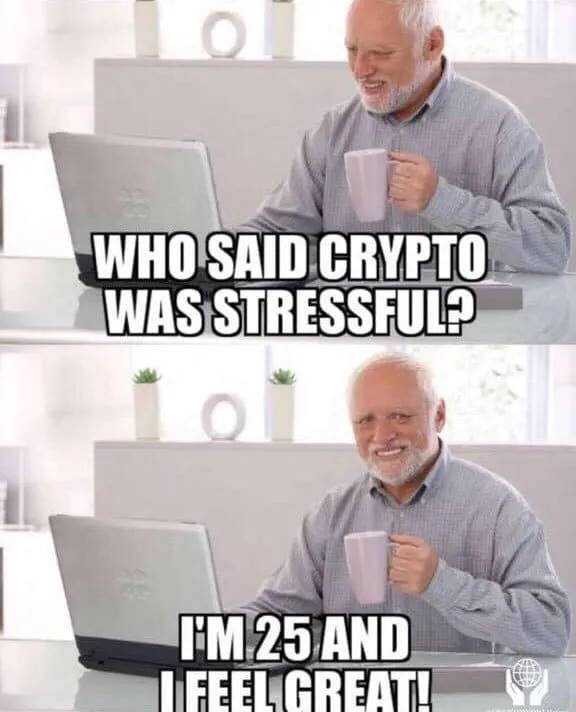
I don’t want to be someone trapped by money. Maybe I should stop trading frequently and focus on long-term investing—but in this industry, what even counts as “long-term”?
Looking back, I used to invest in stock index funds and checked the market once a month. Now, I might check it up to 50 times a day.
Trading time for money isn’t inherently wrong—it’s a choice, and every choice has consequences.
I’ve realized most people play this game for too long.
Some truly have no choice, but most do.
I believe this should be most people’s action plan:
-
Calculate how much money you need: Estimate using “monthly expenses × 12 months × 25.”
-
Reflect on what truly brings happiness and how much it costs to fulfill those needs.
-
Cut all expenses that don’t bring joy.
-
Use the saved money to buy yourself freedom.
-
Use that freedom to do what you love or reduce the work you hate.
-
If you’re still working, regularly assess whether the trade is worth it. If not, go back to step 1 and repeat until satisfied.
-
If you can’t meet step 1, find ways to increase your income.
Forget traditional linear career paths. Leverage your strengths for exponential growth and build a personal brand.
When young, take calculated risks—especially asymmetric opportunities where potential gains far outweigh losses. Invest time in learning, expand your network on platforms like Twitter, and gain valuable experience in crypto through internships.
Discover your strengths, aim to become a top player in your field, and find meaning in work that directly improves your life.
Crypto People: Balancing Money, Time, and Happiness
Don’t get me wrong—making money is good, but finding balance is equally important. I’ve repeatedly crossed this line and nearly fell into depression.
The current market makes me feel like there aren’t enough hours in a day. So many things I want to do, yet not enough time. This state creates stress, especially when trading or holding large overnight positions, which affects my sleep.
I’m not sure I want this to become my norm. I know I could limit my working hours, but with a 24/7 market and FOMO, it’s easier said than done.
If I could do it again, here’s how I’d optimize my life:
If I could go back to age 18, I’d minimize my living costs close to zero and try landing a marketing job in crypto or become a Discord moderator. I’d accumulate experience, save money, invest, and aim to make something happen within two years. Only if that failed would I consider going to college.
Since quitting my 9-to-5 job four years ago, I’ve essentially replaced it with more crypto-related work.
I thought this was freedom, but it wasn’t. Don’t get me wrong—the lifestyle is far better than before, but I still hope to further optimize it.
The worst-case scenario is ending up wealthy but friendless, unhealthy, and with nothing to look forward to.
When you finally succeed in crypto, you might realize it’s not what you truly wanted.
You have money, but you’re still the same person.
Life goals aren’t just about money—otherwise, it’s easy to fall into confusion or even depression.
One Final Note
If you’re entering crypto solely to get rich quickly, then focus on high-risk speculation. In that part of the space, there’s no deeper meaning—it’s all about money.
But if you seek meaning, growth, strength, and real value, connect with those willing to play the long game. Or, create content so they can find you.
Join TechFlow official community to stay tuned
Telegram:https://t.me/TechFlowDaily
X (Twitter):https://x.com/TechFlowPost
X (Twitter) EN:https://x.com/BlockFlow_News
 @Route2FI