









Web3's Law of Silence: Two years to learn how to launch a token, a lifetime to learn when to shut up
TechFlow Selected TechFlow Selected
Web3's Law of Silence: Two years to learn how to launch a token, a lifetime to learn when to shut up
Crypto Ponzi Revelation.
 Navigating Web3 tides with focused insights
Author: Zuo Ye
It takes two years for a person to learn how to speak, and the rest of their life to learn when to stay silent.
In the noisy world of crypto, success and fame are synonymous. There’s no gap between traffic and monetization because the entire ecosystem revolves around asset issuance and redemption—what you might call wealth redistribution. As such, becoming famous has become an essential need for every industry participant.
VCs are no longer elite; instead, they surf Twitter daily, plugging projects;
CEXs have become emotional masseurs, shuffling information across X/TG/WeChat groups to keep PR crises under control;
Male and female BD personnel drift between chasing traffic and drifting aimlessly, burning high salaries into the secondary market in pursuit of overnight riches.
If one luckily avoids these pitfalls or survives a crisis through damage control, they gain massive exposure. Apply the formula: traffic instantly converts into trading volume. Some say Binance’s profit is $50 billion; others claim Bitget handed out year-end bonuses worth 50 months of salary.
Truth or fiction, leadership is unquestionable—but how long can this lead last?
The Leader's Dilemma—Crushed by Its Own Weight
Spreading FUD about Solana or speculating that Binance will sell off holdings is unnecessary. From day one, Solana pursued a "standalone chain" model—the root of its high performance. Jump's trading expertise and SBF's aggressive promotion merely complemented Solana rather than exploiting it unilaterally.
Binance follows a similar logic. Binance as an operation isn’t flawed. The problem lies in the fact that the 2017 version of Binance cannot survive in 2025. If CZ were forcibly locked up for four months and competitors still couldn’t overtake him, then today’s CZ falling behind the times isn’t even the real issue.
Binance's only enemy is itself—perhaps best described as “being crushed by its own weight”:
Internal interest groups and bloated bureaucracy are evident. Trust Wallet being left so far behind by OKX Web3 Wallet that it can't even see its taillights, frequent conflicts between employees and users—yet it falls to co-founders He Yi and CZ to calm the market. It’s a black humor akin to anti-Marxism: instead of employees supporting the company and bosses exploiting workers, it now resembles a hen protecting a weasel.
In 2017, Binance capitalized on global arbitrage opportunities and captured Huobi and OK’s fleeing users and traffic amid regulatory bans—that was its perfect timing. Global migration maximized offshore exchange advantages—that was its geographical edge. Managing internal co-founder dynamics, external investors, and corporate interests constituted its human harmony. Clearly, the timing is gone—the U.S. Department of Justice now effectively dictates Binance’s fate. Geographical advantage has vanished. Binance, Labs, and BNB Chain exist in separate silos. Ecosystem synergy remains unspoken. And there’s no human harmony either—highly educated staff lack the raw, money-focused simplicity of vocational-school BD teams.
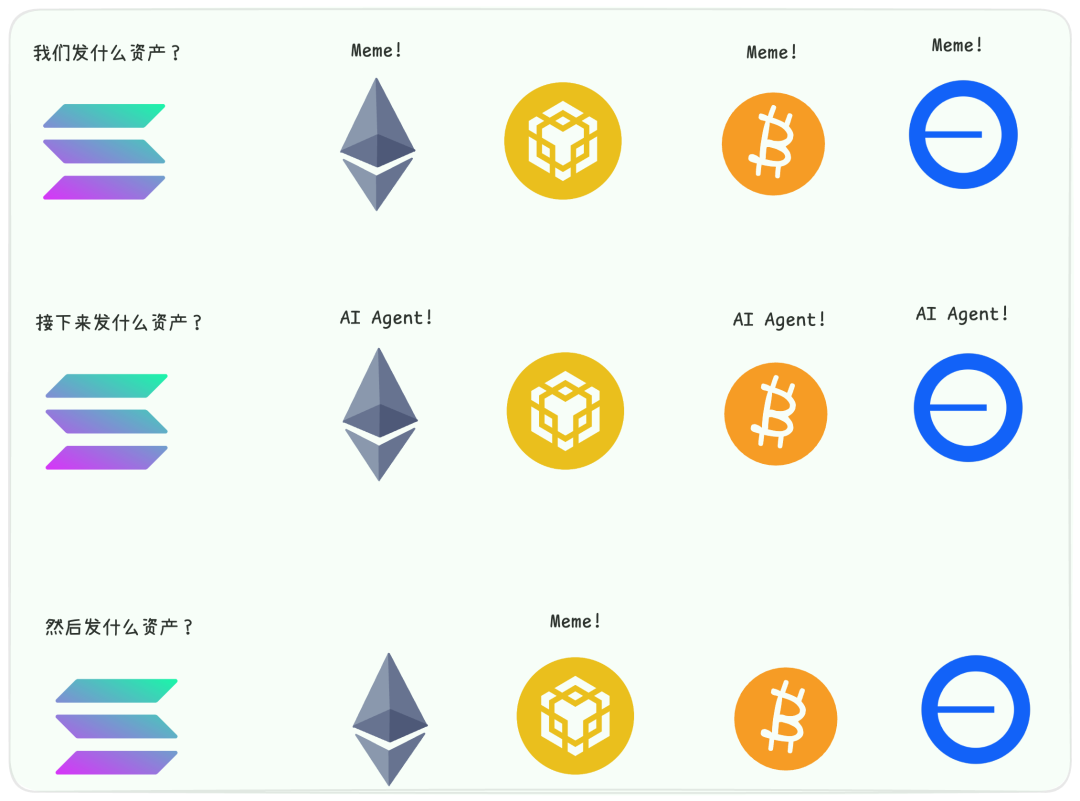
While TST and CZ’s Dog dramas played out serially, Binance only began acting after Four.Meme earned hundreds of millions on Pump.Fun. After AI Agents and Memes faded, CZ started exploring ways to integrate AI Agents with BNB Chain.
A hero growing old—nothing more, nothing less.
At this point, self-rescue is the only path forward. BNB must evolve into a true Web3 asset, tasked with bridging BNB Chain and Binance in a post-regulatory era. Empowering BNB secures Binance’s position among CEXs. Kaito’s airdrop to BNB holders was just an appetizer. The crucial next step is transforming BNB Chain into a genuine independent chain, not merely Binance’s附属chain. With wallets no longer reliable, CZ needs to secure himself a ticket into the future on-chain ecosystem.
To many, BNB Chain still evokes memories of the last cycle’s BSC scam-coin era. Now CZ begins relearning crypto’s playbook. Once fully stepping back from Binance, he’ll finally be tested: is he a master scavenger or a truly capable entrepreneur?
The Follower’s Fate—The More You Do, The More You Fail
PI’s aggressive expansion proves only one thing: $TRUMP’s breakout effect pales compared to Musk’s 2021 Dogecoin endorsement. I once held high hopes for Trump Coin—not for price, but for its crossover potential.
Unfortunately, Trump’s PUMP was too strong, causing a massive and swift DUMP. In 2021, Dogecoin rose gradually. Musk used hints rather than outright endorsements, allowing Dogecoin to develop its own independent momentum.
After Trump, Solana-based coin issuers choosing political figures face the same issue. The collateral damage from politicians is far more complex than that from celebrities. Why do presidential coins have such short lifespans—both per cycle and overall (from Trump to Milei, barely a month)? Perhaps deconstructing political seriousness carries too severe a backlash.
Hence OKX’s decision to embrace PI was stunning in its ripple effect. Whether Bybit accepts it or not—even Binance reviving the retro listing-via-vote mechanism, regardless of actual listings—validates OKX’s high-risk strategy: making the industry follow its rhythm, even directing the steps of industry leaders.
Naturally, after PI’s listing, it will inevitably follow the predestined Ponzi path. But crypto’s great advantage is that everyone knows it’s a Ponzi scheme—the key difference from traditional finance. Traditional finance refuses to admit the emperor has no clothes; crypto chooses to acknowledge it openly.
You’re free to short it—that was He Yi’s reply. In Bitget’s worldview, if I dislike something, I must voice it. I say city gate, you say hip bone. But again, crypto’s hierarchy is too thin—public discourse and private speech are quantum entangled, inseparable by fate, causing crises to infinitely amplify.
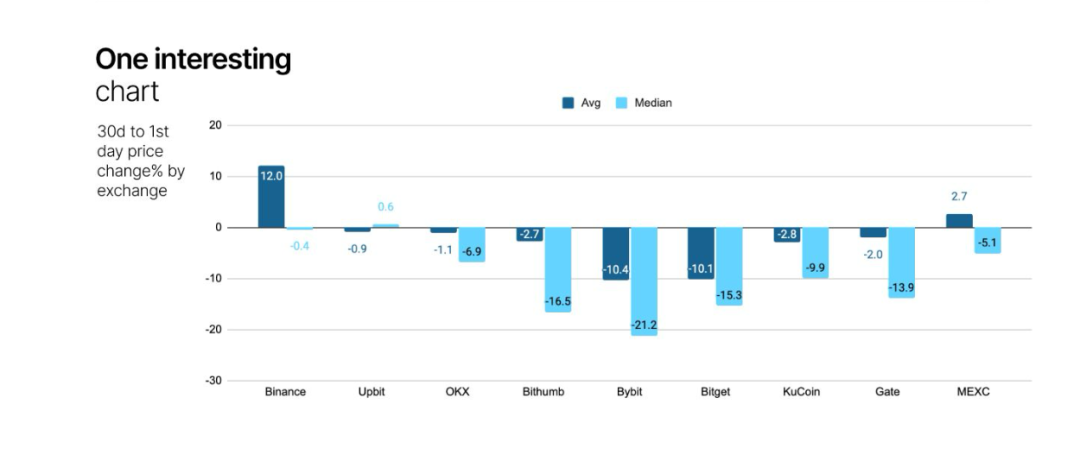
Image caption: Listing performance across CEXs. Image source: Animoca Brands Research
"Time flies like the river, day and night without pause." Foreign interpretation: Confucius stood by the river, pointing at a floating corpse saying, "See that? That’s your future."
For followers, you must consistently do right to earn even a sliver of user trust. Yet one mistake could bring total collapse. But followers can’t afford inaction—stable structures naturally favor the dominant leader. Thus, industry bootcamps with 4-month employee tenure naturally emerge. Even Yan Xishan wouldn’t survive half a year here.
Leaders may have many flaws, but scale outweighs all. Every misstep can be buried under a single BNB token airdrop or a simple price surge—then peace returns.
Crypto giants will resemble internet companies; internet firms will mirror state-owned enterprises. Everything is becoming institutionalized, part of the established order.
Conclusion
Pinduoduo caught up with JD by cutting employee bathroom breaks, becoming China’s second-largest e-commerce platform. Temu now challenges Amazon. Being second in both markets makes you number one globally. Today’s crypto followers will adopt internet strategies from 5–6 years ago. In short, 2025 will be dominated by more cutthroat, drama-filled CEXs. They won’t be quickly replaced by DEXs like Hyperliquid, let alone self-destructive moves by Solana-based DEXs like JUP.
Whether Solana will become the third major chain after BTC/ETH remains uncertain. Now BNB Chain is entering the battlefield too.
Join TechFlow official community to stay tuned
Telegram:https://t.me/TechFlowDaily
X (Twitter):https://x.com/TechFlowPost
X (Twitter) EN:https://x.com/BlockFlow_News
 @zuoyeweb3











