Manipulating markets and harvesting retail investors? Wintermute founder responds: We're not a charity
TechFlow Selected TechFlow Selected
Manipulating markets and harvesting retail investors? Wintermute founder responds: We're not a charity
A heated deep dive from an experienced trader, uncovering the business logic and operational methods of mysterious market makers.
 Navigating Web3 tides with focused insights
Author: Evgeny Gaevoy, Founder & CEO of Wintermute
Translation: Azuma, Odaily Planet Daily
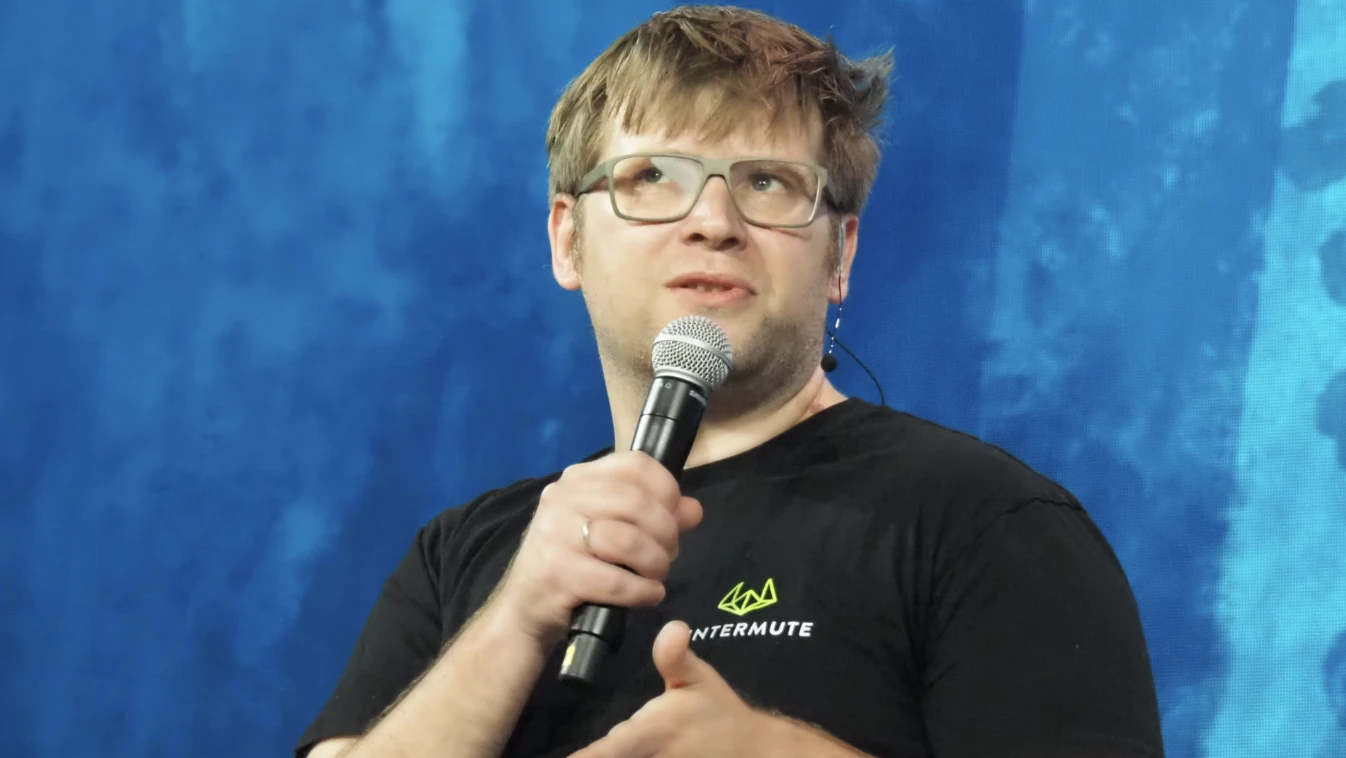
This is an original article written a few days ago by Evgeny Gaevoy, Founder and CEO of Wintermute.
In the article, Evgeny Gaevoy responds in detail to recent community criticisms accusing Wintermute of manipulating prices and exploiting retail traders. Unlike other public figures who typically respond in a calm tone, Evgeny delivers a highly aggressive rebuttal throughout—complete with frequent profanity—but clearly dismantles the allegations by explaining Wintermute’s business logic.
Below is the full translated text of Evgeny Gaevoy’s article, compiled by Odaily Planet Daily (with some abridgment).
X (formerly Twitter) has been especially "lively" lately, with some people displaying an understanding of market mechanics that defies all lower bounds. Although I’ve explained Wintermute’s business model and approach multiple times before, it’s worth going over again.
This Is Not an Apology Statement
We don’t need to appease the keyboard warriors constantly shouting on social media. Yes, we trade against these people on exchanges—both CeFi and DeFi—but essentially, everyone is just pursuing their own interests in an open environment. This post might help a small number of people understand what Wintermute (and other quiet proprietary trading firms) actually do, but honestly, I’m not holding my breath—the majority of retail traders simply don’t grasp that “uninformed flow” is precisely our main source of profit.
This article is written for our real partners—projects, OTC counterparties, exchanges, and the occasional passing regulator.
About My Social Media Style
I’ve been quite active on X over the past few years, and yes, my communication style can be a bit abstract (even our own employees sometimes don’t get the jokes).
I enjoy memes, and I welcome being memed. The recent wave of price-crash chart memes, for example, has been hilarious. If you take offense, that’s your problem. A sense of humor is a basic human trait; if you lack it, well, sorry about that.
If you think making fun of those “liquidated idiots on xxx” is somehow unethical… welcome to the craziest casino ever. Adults should take responsibility for their own decisions.
We Are Not a Charity
Like every other proprietary trading firm, Wintermute exists to make money through trading—we are not a charity. More specifically, our core business is digital asset trading. Therefore, we’re not only interested in capturing as many market opportunities as possible, but also deeply invested in the ongoing development, growth, and evolution of this space. Since 2020, our venture arm has consistently invested in crypto, and we have never had a net short position. Our crypto exposure has consistently ranged between 20% and 30% of our net assets.
The idea that we’re shorting the market is complete nonsense. During black swan events like the Luna collapse, 3AC blowup, and FTX bankruptcy, we lost far more than we gained—not to mention the long bear market that followed.
What Does Wintermute Actually Do?
Our core operations span DeFi, CeFi, and OTC—and compared to most competitors, our business is significantly more diversified. We shift focus based on market trends: BTC, ETH L2s, Memes, AI—nothing is off-limits.
CeFi Market Making: We place orders for hundreds of assets across more than 50 exchanges including Binance and Coinbase, earning profits from bid-ask spreads. In bull markets, we profit from high trading volumes; in bear markets, we compete with other market makers to “farm” less sophisticated ones. We also run so-called “market-making” strategies that allow us to arbitrage across platforms and exploit slower, dumber market makers.
DeFi Arbitrage: We provide liquidity on 1inch, Jupiter, and Bebop; arbitrage on Uniswap; execute liquidations on Aave and Morpho; and make markets on Hyperliquid. We are absolute experts in this domain.
OTC Trading: Our coverage is broad, spanning token quantities and transaction types (spot, futures, options). We scale through superior technology rather than larger sales teams.
All these operations are maintained in a risk-neutral (delta neutral) manner. This means that if we sell an asset on Binance, we simultaneously seek the best available price to buy it back across all liquidity sources. OTC trades may take longer to balance, especially with long-tail assets, but our ultimate goal remains risk neutrality.
We occasionally take directional bets, but they are small and never held long-term. The vast majority of our active positions are long—such as buying the dip or acquiring locked tokens at steep discounts. While we do short occasionally, it’s rare—because meme coins can randomly pump 500%, making shorts extremely risky.
Why Do Token Prices Fall?
Now let’s dive into why prices drop—specifically, why tokens still fall even after being listed on Binance or when Wintermute starts market-making.
Macro Environment Impact
The last two major crashes were driven by traditional financial markets (DeepSeek disrupting AI valuation logic, tariff impacts). Crypto is now highly correlated with US equities (Nasdaq down → BTC down → SOL down → meme crash). To become a better trader, understand that our little crypto world is directly tied to the outside real world. Of course, you can ignore this and believe Wintermute and Binance are conspiring. Good luck, and enjoy staying poor.
Supply-Demand Imbalance
The higher a token’s liquidity, the easier it is to sell. When a token lists on Binance or when Wintermute begins market-making, liquidity improves, allowing early holders to exit more easily. If the project lacks lasting appeal, the price naturally drops. If you still don’t get this and prefer blaming exchanges and market makers for your poor trading skills, I’ll just wish you good luck again.
Market-Making Agreement Terms
Some token projects embed call options into agreements with market makers. When the token price exceeds the strike price (which is often set far above the entry level), market makers can sell. This does impact market fairness. I believe the industry needs more transparency—but disclosure ultimately lies in the hands of the project teams.
Quick Q&A
Finally, responses to some common community questions.
About “Hunting” Stop-Loss Orders
We don’t hunt stop-loss orders. Maybe we should, but I’ve always seen it as a risky business, so avoiding it works fine for me.
About Price Manipulation
Sigh, we don’t manipulate prices. First, I don’t know how. Second, our core business is profitable enough that we don’t need to do stupid illegal things. Third, I live in London and enjoy traveling to the U.S.—I have zero interest in moving to Dubai.
About On-Chain Transfers
These are just rebalancing moves across platforms. Sometimes AMMs show candlestick patterns resembling Christmas trees—that’s just traces of our CeFi-DeFi arbitrage.
About the Alleged Luna Manipulation Video
It’s out-of-context editing (remarks taken weeks or months apart). You can keep posting them; I’ll keep ignoring them.
About DMs
Don’t DM me asking for trade signals—I won’t reply (except to West Ham fans). All such chat screenshots are fake.
About Meme-ing Crashes
I reserve the right to keep meme-ing.
Join TechFlow official community to stay tuned
Telegram:https://t.me/TechFlowDaily
X (Twitter):https://x.com/TechFlowPost
X (Twitter) EN:https://x.com/BlockFlow_News
 @wintermute_t