Will the proposed changes to Solana's inflation model boost the price of SOL further?
TechFlow Selected TechFlow Selected
Will the proposed changes to Solana's inflation model boost the price of SOL further?
Favorable for SOL holders, unfavorable for validators, and neutral for stakers.
 Navigating Web3 tides with focused insights
Yesterday, SOL's market capitalization surpassed BNB, once again making it the fifth-largest cryptocurrency by market cap. At the same time, Multicoin Capital, an early investor in Solana, published a governance proposal aimed at modifying the network’s current inflation model and reducing the inflation rate of its native token SOL. The proposal, designated SIMD-0228, seeks to make SOL’s issuance rate dynamic and variable, aligning it more closely with market conditions.
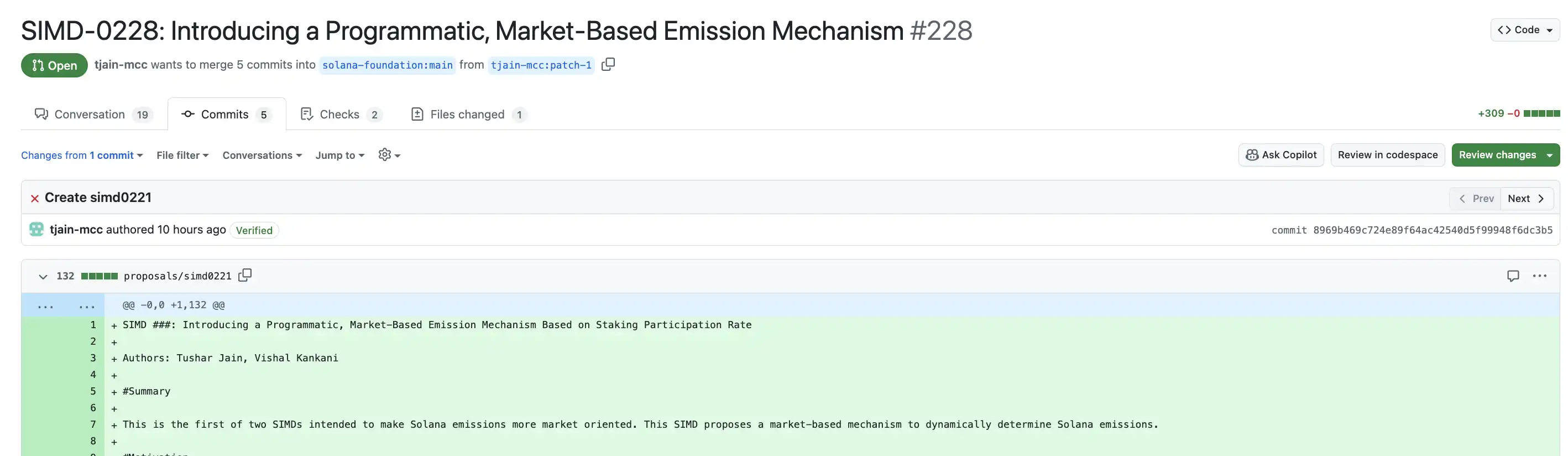
The proposal sets a target staking rate of 50% to enhance network security and decentralization. If more than 50% of SOL is staked, issuance will decrease, lowering yields to discourage further staking. If less than 50% is staked, issuance will increase to boost yields and incentivize staking. The minimum inflation rate would be 0%, while the maximum would be determined based on Solana’s current issuance curve.
In Solana’s mechanism, inflation refers to the issuance of SOL to validators running the Solana software and helping build the blockchain. Validators then distribute these issuance rewards, along with part of MEV rewards, to users who delegate their SOL for staking.
Currently, Solana’s inflation mechanism is fixed, meaning the rate at which SOL is issued as staking rewards is static and does not respond to market conditions. If this proposal passes, however, the network’s inflation rate would become variable and adjust dynamically based on market activity.
Why This Proposal Was Introduced and Its Potential Impact
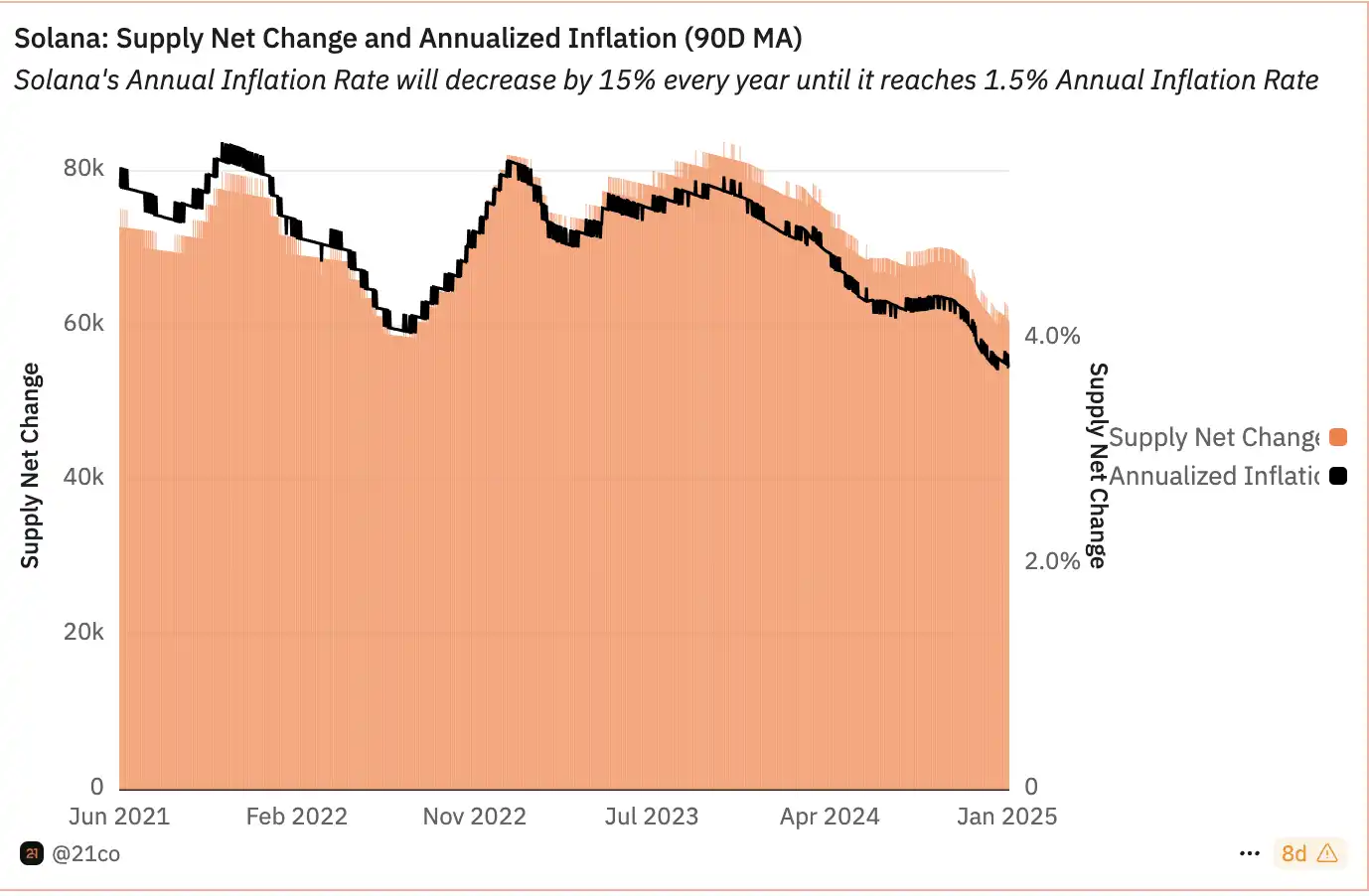
Solana’s inflation rate was initially set at 8%, scheduled to decline by 15% annually until reaching 1.5%. According to Dune analytics dashboards, the current inflation rate of SOL is approximately 3.7%.
Solana co-founder Anatoly Yakovenko said in the Lightspeed podcast that the idea of a fixed inflation rate was inspired by Cosmos’ blockchain design, calling inflation “just an accounting mechanism.” Yakovenko isn’t particularly concerned about inflation because issuing new SOL doesn’t create or destroy value—it only redistributes it. Newly minted SOL goes to stakers, while non-stakers experience relative dilution.
Nevertheless, Multicoin believes reducing SOL inflation is necessary for several reasons:
Newly issued SOL is allocated exclusively to stakers, potentially leading to network centralization; high inflation reduces SOL’s utility in DeFi and other use cases due to the high opportunity cost of holding unstaked SOL; additionally, only 9% of staked SOL is liquid, and reducing staking rewards could also alleviate sell pressure from jurisdictions where staking income is taxed.
While issuance technically imposes no direct cost on the network, the negative perception caused by inflation-driven dilution of unstaked holdings is, in Multicoin’s view, sufficient justification for limiting inflation.
“Given current levels of network activity and fees, the existing Solana inflation schedule is suboptimal, as it issues more SOL than necessary to secure the network,” said proposal authors Tushar Jain and Vishal Kankani. “This mechanism cannot sense network activity nor incorporate it into inflation calculations.”
If implemented and functioning as intended, the authors believe it would “systematically reduce selling pressure when staking participation remains adequate,” and “by aligning inflation adjustments with actual deviations, network issuance can better reflect real-time economic and security conditions.”
One obvious consequence of this proposal—SOL staking yields may decline. Historically, SOL staking yields have remained above 7%. If issuance decreases, so too will these yields. Although growth in MEV rewards might partially offset the impact of lower inflation, overall returns from staking SOL are likely to decrease.
What Does the Community Think?
This proposal touches multiple stakeholder interests within the Solana ecosystem, naturally generating diverse opinions.
Messari analyst Patryk supports passing the proposal, arguing that Solana would evolve from “blind issuance” to “smart issuance,” making it a positive development. He believes SIMD-0224 is unfavorable for validators, neutral for stakers, and beneficial for SOL holders.
“Currently, total staking rewards on Solana far exceed the minimum required to ensure network security. The network has matured enough that such high inflation is no longer needed. SIMD-0224 proposes shifting Solana’s inflation model from a fixed schedule to a programmable, market-driven one. This change would dynamically incentivize staking participation, similar to networks like @Polkadot. It would minimize inflation and bring staking ratios closer to MNA.”
Patryk believes this move could reduce SOL selling pressure and lessen the “tax burden” currently imposed on non-participating SOL holders.
However, Solana Forum member Bji opposes the proposal. He argues that the primary purpose of inflation is to encourage more validators to participate and maintain network security—and that inflation rewards were always meant to gradually decrease. Solana’s long-term plan is for transaction fees to play a larger role in compensating validators, thereby reducing reliance on inflation.
Today, most validators already earn significantly more from transaction fees, priority fees, and MEV than from inflation rewards. Therefore, even if inflation rewards are reduced, validator income won’t be substantially affected—though staker rewards may decline.
Bji notes that if, as suggested in the proposal, a 50% reduction in inflation leads to a 50% drop in staked SOL, this isn't critical because all participants would reduce staking proportionally. After such a proportional reduction across all holders, validators’ relative share of staked tokens—and thus their voting power—remains unchanged. With no shift in voting power, the network’s security properties remain intact. Hence, there's no compelling reason to target a specific inflation rate for security purposes.
Some community members worry that yield-driven stakers may lose motivation if staking rewards are cut by 50%. If total staked volume drops by half, the cost of attacking the network could fall significantly. “If only 20% of the total supply is staked, the distribution among stakers might stay the same, but that means an attacker only needs to buy and stake 10% of the total supply to halt the network.”
The community remains观望 and engaged in discussion. Key figures in the Solana ecosystem—including Solana founder Anatoly and Helius founder Mert—have not yet commented on the proposal. However, economic model changes on Solana are a matter of concern for every SOL holder. Blockworks data analyst Dan Smith observes, “Solana has officially entered an era of economic transformation.”
Join TechFlow official community to stay tuned
Telegram:https://t.me/TechFlowDaily
X (Twitter):https://x.com/TechFlowPost
X (Twitter) EN:https://x.com/BlockFlow_News
 BlockBeats