








From Bitcoin ETFs to RWA: 7 Key Narratives Shaping the 2025 Crypto Market
TechFlow Selected TechFlow Selected
From Bitcoin ETFs to RWA: 7 Key Narratives Shaping the 2025 Crypto Market
In 2025, the crypto market accelerated its mainstream adoption driven by multiple innovations such as the launch of Bitcoin ETFs, Ethereum scalability improvements, AI agents, and RWA tokenization, yet still faced regulatory and technological challenges.
 Navigating Web3 tides with focused insights
Author: Siddhant Kejriwal
Translation: Baihua Blockchain
Entering 2025, market optimism is high, underpinned by tangible progress and breakthrough innovations. This article compiles the core narratives shaping the crypto space this year, combining personal insights with research from leading industry institutions such as Bitwise, VanEck, Ark Invest, and a16z.
Let’s explore the trends shaping the future of digital assets together.
1. Bitcoin Gains Economic Traction
In 2024, Bitcoin's market dynamics underwent significant changes, laying the foundation for key narratives in 2025.
January 2024 marked a milestone in the convergence of cryptocurrency and traditional finance with the launch of spot Bitcoin exchange-traded funds (ETFs). Among them, BlackRock’s iShares Bitcoin Trust (IBIT) stood out, attracting nearly $38 billion in net inflows within its first year—the most successful ETF debut in history.
Notably, IBIT’s capital inflows even surpassed those of the well-known Invesco QQQ Trust (QQQ), which tracks the Nasdaq-100 Index. By mid-2024, IBIT had recorded approximately $18.97 billion in year-to-date inflows, slightly ahead of QQQ’s $18.9 billion.
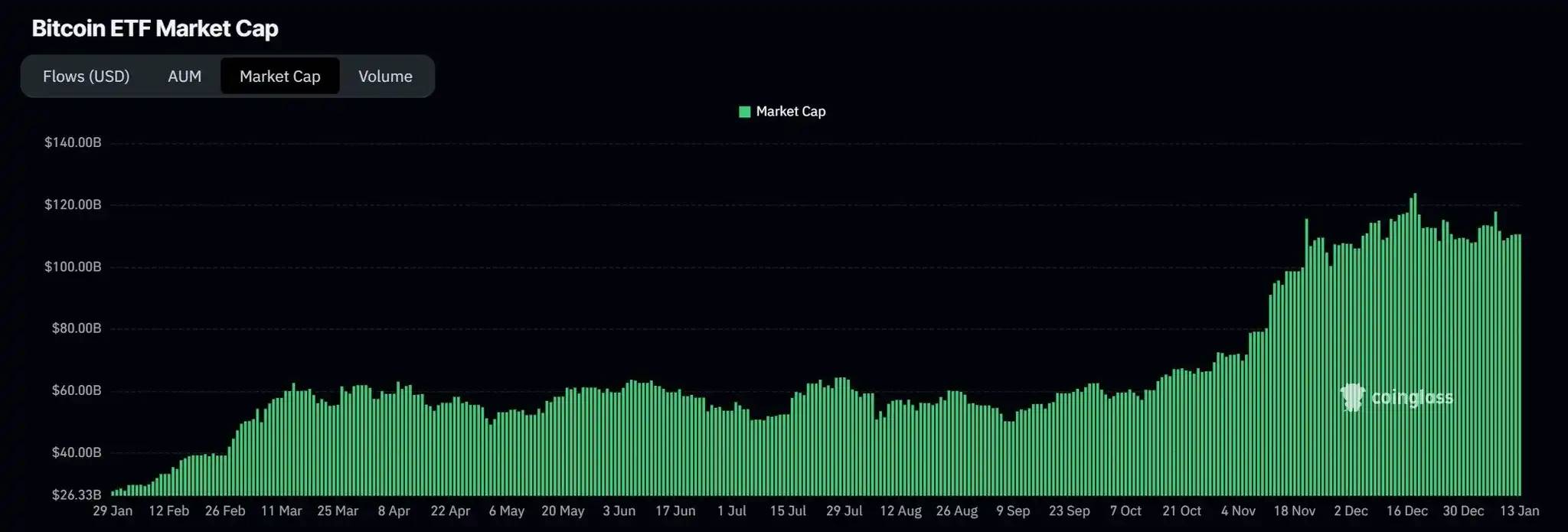
BTC ETF Inflows | Source: Coinglass
1) Historic ETF Inflows and Growth Potential
Historically, ETFs attract modest capital early on, with inflows significantly increasing as investor familiarity and trust grow. Given this pattern, Bitcoin ETFs’ strong early performance in 2024 suggests broader adoption and larger capital inflows are likely in 2025.
2) Macroeconomic Tailwinds: Interest Rate Cuts
The macroeconomic environment at the end of 2024 created favorable conditions for Bitcoin and other risk assets. In the fourth quarter, the Federal Reserve cut interest rates four times consecutively, reducing rates by a total of 1%. This monetary easing policy, aimed at controlling inflation, is expected to continue into 2025.
Lower interest rates reduce the opportunity cost of holding non-yielding investments, enhancing the appeal of risk assets like Bitcoin and providing strong support for their growth.
3) Institutional Adoption: Corporate and Government Interest
In 2024, the Bitcoin market shifted from retail-driven speculation toward large-scale institutional investment.
Corporate Interest: Under Michael Saylor’s leadership, MicroStrategy significantly expanded its Bitcoin holdings, purchasing approximately 258,320 BTC throughout the year for around $22.07 billion, achieving a return on investment of 74.3%. This aggressive accumulation strategy solidified MicroStrategy’s position as the leading corporate holder of Bitcoin and demonstrated the high potential returns of such investments—likely influencing other companies’ asset allocation decisions in 2025.
Government Interest: At the governmental level, President-elect Donald Trump signaled pro-crypto policies and explored the possibility of establishing a strategic Bitcoin reserve via executive order. While details and feasibility remain under discussion, the mere consideration of Bitcoin as a strategic asset by the U.S. government could prompt other nations to consider including Bitcoin in their national reserves, further legitimizing and stabilizing the cryptocurrency market.
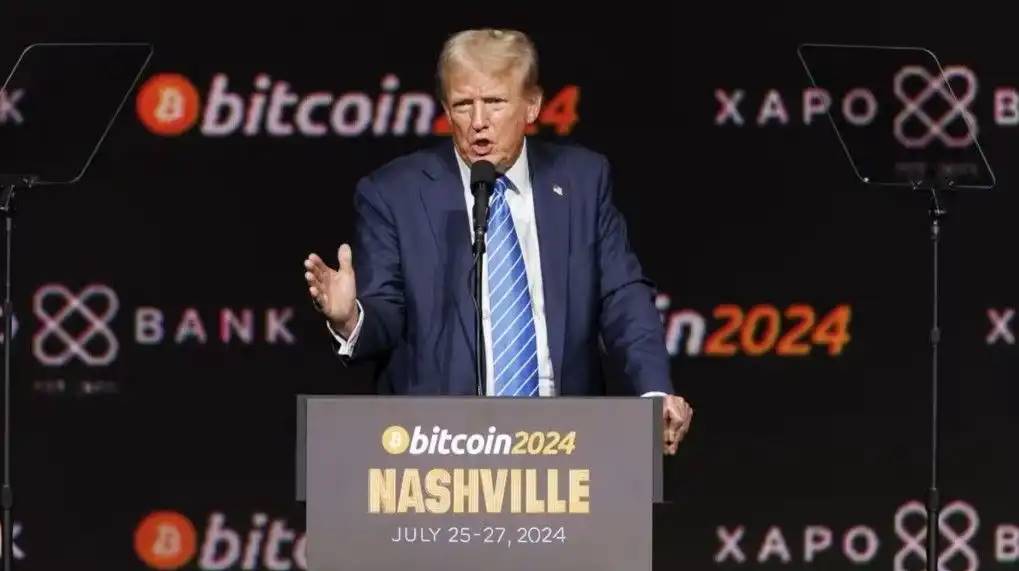
Trump promises to establish a strategic Bitcoin reserve at the Bitcoin Nashville Conference | Source: Financial Times
4) Conclusion
The successful launch of Bitcoin ETFs, supportive macroeconomic policies, and rising institutional interest indicate that Bitcoin is entering a transformative phase. As 2025 unfolds, these narratives will drive Bitcoin’s evolution from a speculative asset into a mainstream financial instrument, attracting more diverse investors and cementing its role in the global financial ecosystem.
2. Bitcoin: A Unique Safe-Haven Asset?
In traditional finance, "safe-haven" assets are those investors turn to during economic uncertainty or market volatility. Government bonds and gold are typical examples, favored for their relative stability and backing by sovereign entities.
Government Bonds: Debt securities issued by national governments, promising periodic interest payments and principal repayment at maturity. Their low default risk and predictable returns make them attractive during market downturns.
Gold: Valued as a store of value due to its scarcity and intrinsic worth, gold typically holds or increases in value during financial crises.
Recently, analyses—particularly from ARK Invest—suggest Bitcoin is gradually evolving into a safe-haven asset, showing potential to protect investors during turbulent periods. Key observations include:
Inherent Safe-Haven Characteristics
Bitcoin offers financial sovereignty, reduces counterparty risk, and enhances transparency. Its decentralized nature ensures no single entity has control, mitigating risks associated with centralized financial systems.
Advantages Over Traditional Assets
Bitcoin surpasses bonds, gold, and cash in decentralization, limited supply, high liquidity, and ease of use. These attributes make Bitcoin a versatile asset in the digital age, enabling seamless global transactions.
1) Outperformance Relative to Traditional Assets
Over the past seven years, Bitcoin has delivered an annualized return of 60%, far exceeding the average 7% return of bonds and other major assets. Investors holding Bitcoin for five-year periods have consistently profited. In contrast, bonds, gold, and short-term U.S. Treasuries lost 99% of their purchasing power over the past decade.
Resilience to Interest Rate Changes
Bitcoin’s price appreciation has persisted across various interest rate environments, demonstrating strong resilience and hedging potential against monetary policy fluctuations.
Performance During Crisis Periods
During recent financial crises—such as regional bank failures—Bitcoin rose over 40%, showcasing its potential as a safe-haven asset.
Low Correlation with Other Asset Classes
From 2018 to 2023, Bitcoin’s correlation with bonds was only 0.26, compared to 0.46 between bonds and gold. This low correlation indicates Bitcoin can effectively diversify investment portfolios.
Potential to Disrupt the Safe-Haven Market
With a current valuation of about $1.3 trillion, Bitcoin represents only a small fraction of the $130 trillion fixed-income market, suggesting immense growth potential if it gains wider acceptance as a safe-haven asset.
Bitcoin’s unique positioning and strong performance as a safe-haven asset are redefining global financial markets, offering investors an unprecedented diversification option.
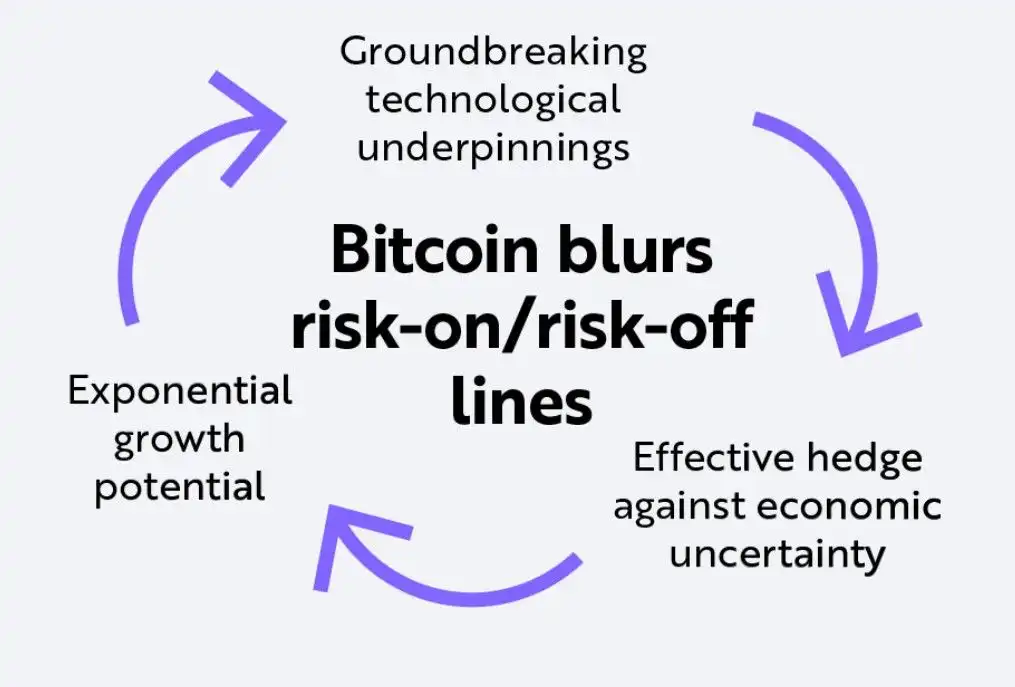
Perception of Bitcoin as a Safe-Haven Asset Is Rising | Source: Ark Invest
2) Shifting Perception: From “Risk Asset” to “Safe-Haven Asset”
Although Bitcoin’s historical volatility led many to classify it as a “risk asset,” perceptions are changing as it matures and the aforementioned characteristics become more evident. As global economic conditions evolve, Bitcoin’s role in investment portfolios may expand further, potentially redefining traditional asset allocation strategies.
3. Crypto Stocks to Watch in 2025
In 2024, crypto companies made waves on Wall Street, emerging as one of the top-performing sectors. Many are planning IPOs in 2025, while others may surpass traditional financial (TradFi) institutions in market capitalization.
1) Crypto Companies Expected to Go Public in 2025
Analysts predict 2025 will be the “year of crypto IPOs,” with the following companies anticipated to go public:
-
Circle: The issuer of the USDC stablecoin, which has announced plans to relocate its headquarters to New York City ahead of its IPO.
-
Kraken: A cryptocurrency exchange platform expected to go public in 2025.
-
Anchorage Digital: A digital asset platform preparing for public listing.
-
Chainalysis: A blockchain data platform projected to go public.
-
Figure: A fintech company planning an IPO.
2) Coinbase May Surpass Charles Schwab in Market Cap
As Coinbase’s managed assets grow rapidly, many believe it could surpass Charles Schwab in 2025 to become the world’s largest brokerage. This potential shift is attributed to Coinbase’s diversified revenue streams, including its Ethereum Layer 2 network Base, staking services, and stablecoin operations.
3) Implications of These Developments
-
Enhanced Industry Legitimacy: The entry of prominent crypto firms into public markets will strengthen the sector’s credibility, attracting previously hesitant investors.
-
Broadened Investor Access: Public listings allow more investors to gain exposure to the crypto industry through traditional equity instruments without directly owning cryptocurrencies.
-
Shifting Market Dynamics: Inclusion of crypto companies like MicroStrategy and Block in major indices such as the S&P 500 could draw capital from index funds, ETFs, and institutional investors, further integrating crypto into mainstream finance.
-
Evolving Competitive Landscape: As crypto firms grow in market cap and influence, traditional financial institutions may face increased competition, driving innovation and adaptation across the financial sector.
These developments mark the maturation of the crypto industry, signaling its transition from a niche market to a vital component of the global financial ecosystem.
4. Stablecoin Market Could Double by 2025
In 2024, the stablecoin market achieved remarkable growth, surpassing $200 billion in market capitalization. This expansion is expected to accelerate in 2025, potentially doubling in size.
1) 2024 Growth and 2025 Projections
In 2024, the stablecoin market surged to $200 billion, reflecting increased adoption and integration with various financial systems.
Growth Drivers: Rising demand for digital assets that offer the stability of fiat currencies while enabling seamless transactions and serving as a hedge against crypto volatility.
With adoption rising, the stablecoin outlook remains strong, and 2025 could become a pivotal year for growth.
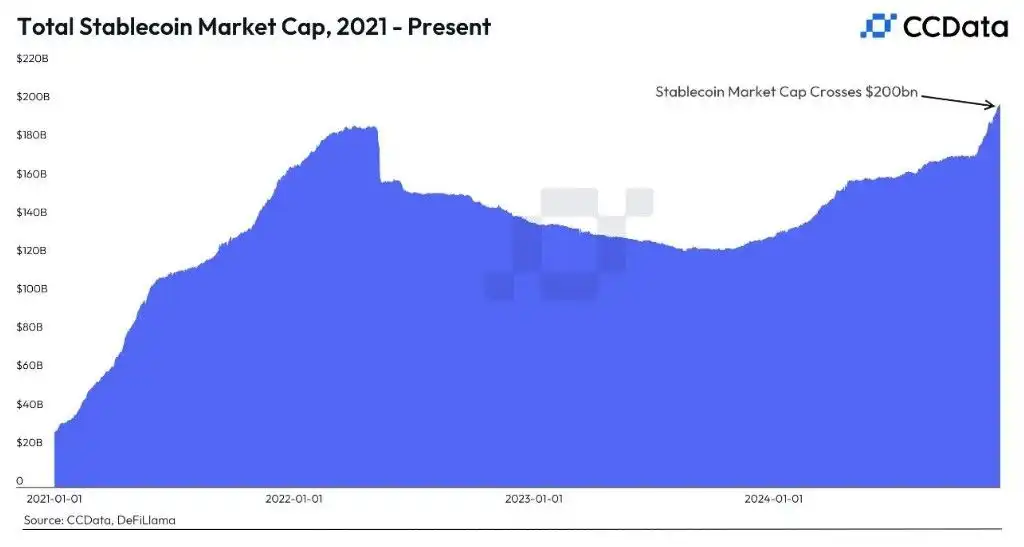
Stablecoin Market Cap Reached $200 Billion in 2024 | Source: CoinDesk
Industry analysts project that by the end of 2025, the stablecoin market could double in size. This forecast is based on several factors:
-
Greater acceptance of digital payments
-
Rapid advancements in blockchain technology
-
Clearer regulatory frameworks
Together, these factors create a more favorable environment for stablecoin adoption and usage.
2) Stablecoins and the Dominance of the U.S. Dollar
Contrary to early concerns that stablecoins might undermine the dollar’s status, recent analysis by Reuters suggests they may actually reinforce the U.S. dollar’s dominance.
Dollar-pegged stablecoins facilitate dollar-denominated cross-border transactions, enhancing the dollar’s utility in the global financial system.
This development highlights the dollar’s adaptability in an evolving digital economy.
3) Impact of Stablecoin Growth
Enhanced Financial Inclusion: Stablecoins provide access to financial services in regions with limited banking infrastructure, promoting broader economic participation.
Improved Transaction Efficiency: Using stablecoins simplifies cross-border payments, significantly reducing costs and settlement times compared to traditional banking systems.
Regulatory Considerations: As the stablecoin market expands rapidly, regulators are accelerating efforts to establish frameworks ensuring financial stability and preventing illicit activities.
Integration with Traditional Finance: Growing acceptance of stablecoins by financial institutions signals an accelerating convergence between traditional finance and digital assets, potentially spurring innovative financial products and services.
5. RWA: A Key Crypto Narrative in 2025
The tokenization of real-world assets (RWA) is rapidly advancing, digitizing traditional assets such as credit, U.S. Treasuries, commodities, and equities, thereby enhancing liquidity, transparency, and accessibility in financial markets.
1) Growth Outlook for 2025
According to Bitwise, the tokenized RWA market has grown from less than $2 billion three years ago to approximately $13.7 billion today. With rising adoption and technological progress, Bitwise forecasts the market could reach $50 billion by 2025.
Venture firm ParaFi predicts the RWA market could hit $2 trillion by 2030, while the Global Financial Markets Association (GFMA) estimates its potential market value could reach as high as $16 trillion by then.
2) Growth Drivers
Superior Asset Management
Tokenization enables instant settlement, lower costs than traditional securitization, and continuous liquidity. It enhances transparency and provides easier access across multiple asset classes.
Institutional Adoption
Major financial institutions are increasingly embracing RWA tokenization. For example, BlackRock partnered with Securitize to launch an institutional digital liquidity fund on Ethereum, currently holding $515 million in assets—the largest tokenized U.S. Treasury fund to date.
Technological Advancements
Progress in blockchain technology and smart contracts facilitates efficient, secure tokenization, attracting more investors and issuers.
3) Impact on the Financial Ecosystem
Enhanced Liquidity
Tokenization allows fractional ownership, enabling investors to buy and sell partial stakes, thereby improving market liquidity.
Expanded Investment Access
Investors gain access to previously illiquid or hard-to-reach asset classes, democratizing investment opportunities.
Improved Operational Efficiency
Smart contract automation reduces administrative burdens and costs associated with asset management and trading.
Regulatory Considerations
As the market grows, regulatory frameworks are evolving to address challenges related to security, compliance, and investor protection.
4) Summary
The tokenization of real-world assets (RWA) is reshaping the financial landscape, bringing greater efficiency, accessibility, and liquidity. The sector is expected to grow significantly by 2025 and beyond, with tokenized RWAs becoming foundational to modern finance, attracting both institutional and retail investors seeking innovative opportunities.
6. AI Agents Poised for Exponential Growth
In 2024, AI agents emerged as a dominant narrative in crypto, driven by platforms like Virtuals and ai16z. These platforms developed no-code solutions, making AI agent deployment more accessible. Purpose-built AI bots are designed to understand user intent and execute complex tasks, streamlining processes across applications.
1) Expansion of AI Agents in 2025
In 2025, the integration of AI agents into the crypto ecosystem is expected to expand significantly, moving beyond decentralized finance (DeFi) into multiple domains:
-
Social Media: AI agents like AIXBT are transforming platforms such as Crypto Twitter by delivering real-time market intelligence and trend analysis, improving information dissemination.
-
Financial Analytics: AI-powered analytical tools provide investors with deeper insights, helping them make more informed decisions in the volatile crypto market.
-
Entertainment and Interactive Applications: AI agents are being used to generate engaging content and interactive experiences, enriching user engagement within crypto communities.
2) Widespread Adoption of AI Agents
As development becomes more accessible and cost-effective, the number of AI agents is expected to surge. There are already over 10,000 AI agents, with millions of daily active users. By the end of 2025, the number of AI agents could reach 1 million, indicating broad application across platforms.
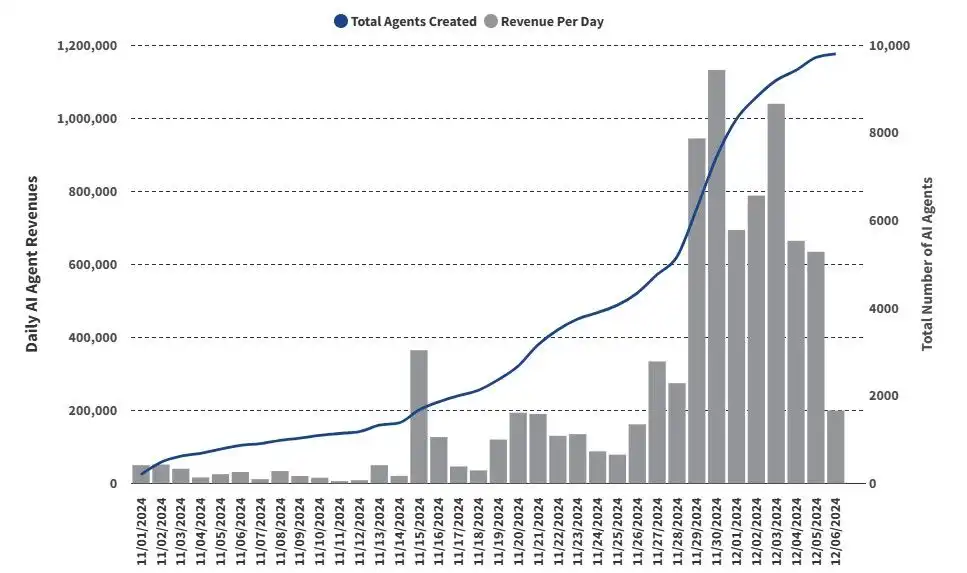
AI Agents Achieved Exponential Growth in 2024 | Source: VanEck
3) Rise of AI-Themed Meme Coins
The fusion of AI technology and meme culture has given rise to AI-themed meme coins, adding a new dimension to the crypto market. The success of projects like Terminal of Truths and $GOAT has inspired more initiatives combining humor with advanced AI functionality. This trend is expected to intensify in 2025, capturing investor and enthusiast attention.
4) Impact on the Crypto Ecosystem
The rapid growth of AI agents and AI-themed meme coins signals a profound transformation in crypto:
-
Increased Accessibility: No-code platforms enable non-technical users to build sophisticated AI tools, democratizing innovation.
-
Diversified Use Cases: The expansion of AI agents across domains fosters a tighter, more diverse ecosystem, accelerating broader adoption.
-
Shifting Market Dynamics: The rise of AI meme coins introduces new investment opportunities and challenges, profoundly affecting market sentiment and investor behavior.
5) Summary
The integration of AI agents and the rise of AI-themed meme coins will play a pivotal role in shaping crypto narratives in 2025, driving innovation and expanding the boundaries of the digital asset market.
7. Ethereum’s Blob Fee Market Poised to Surpass $1 Billion
EIP-4844 (also known as Proto-Danksharding) significantly enhanced Ethereum’s scalability by introducing “blob-carrying transactions,” optimizing data storage for Layer 2 (L2) networks. This development also established a separate fee market called the “Blob Gas Market.”
1) Understanding EIP-4844 and Blob Transactions
EIP-4844 improves Ethereum’s scalability through a new transaction type that carries large volumes of data (“blobs”). These blobs are temporarily stored in Ethereum’s beacon nodes, allowing L2 solutions to publish data without competing for gas fees with Layer 1 (L1) transactions.
Result: Lower costs and improved L2 operational efficiency.
2) Dual Fee Markets and Base Fee Burning Mechanism
With the introduction of blob transactions, Ethereum now operates two parallel fee markets:
-
Layer 1 Fee Market: Handles traditional transactions and smart contract executions.
-
Blob Gas Market: Dedicated to L2 transactions utilizing blob data.
Both markets implement the base fee burning mechanism introduced in EIP-1559. Under this model, a portion of transaction fees is burned, reducing the overall ETH supply and potentially increasing its value.
3) Current Utilization and ETH Burn Forecast
Since November 2024, validators have published over 20,000 blobs daily on Ethereum.
Forecast: If this trend continues or accelerates, blob fees could burn over $1 billion worth of ETH in 2025. This milestone would further solidify Ethereum’s evolving security and economic model.
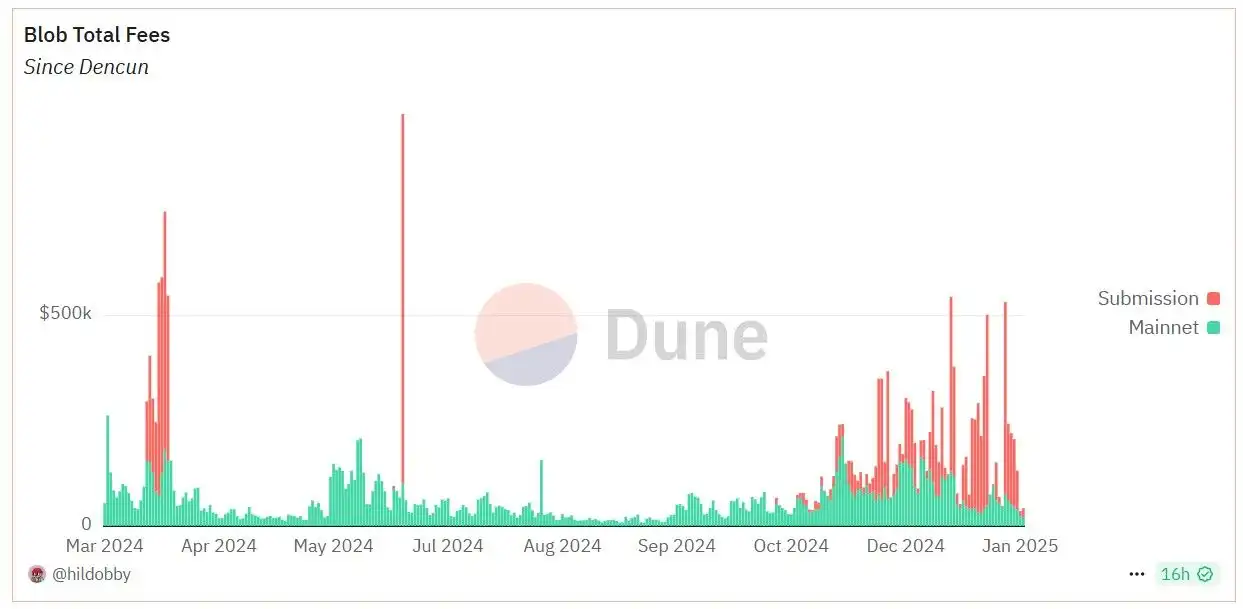
Blob Gas Market Saw Significant Growth in Q4 | Source: Dune Analytics
4) Key Factors Driving Blob Space Expansion in 2025
Several critical factors are expected to drive rapid expansion in blob space usage in 2025:
A. Explosive Growth of L2s
Surging Transaction Volume: Annualized growth in Ethereum Layer 2 transaction volume has exceeded 300%. Users are migrating to L2 platforms to save costs and enjoy high throughput when using DeFi, gaming, and social apps.
Consumer-Grade DApp Adoption: Increasing numbers of decentralized applications (DApps) on L2s will result in more transactions settling back on Ethereum’s mainnet, significantly boosting demand for blob space.
B. Rollup Optimization
Technical Advancements: Improvements in rollup technology—such as more efficient data compression and lower data publishing costs—will encourage L2s to store more transaction data in Ethereum’s blob space, achieving higher throughput while maintaining decentralization.
C. High-Fee Use Cases Emerging
Rise of Enterprise Applications: High-value transactions, such as financial solutions based on zk-rollups and tokenized real-world assets, will prioritize security and immutability, increasing willingness to pay for blob space fees.
5) Impact on the Ethereum Ecosystem
Enhanced Scalability: Offloading L2 data storage from Ethereum’s main chain to blob space allows the network to process more transactions without congestion, improving user experience.
Economic Impact: Burning ETH via blob fees reduces supply, potentially exerting upward pressure on ETH’s price, benefiting holders and network participants.
Security Considerations: Increased blob space usage underscores the need for continuous monitoring to ensure consensus security remains robust under higher data throughput.
6) Summary
The implementation of EIP-4844 and the emergence of the Blob Gas Market mark major advances in Ethereum’s scalability and economic model. As L2 adoption accelerates and new use cases emerge, blob space utilization is expected to grow substantially in 2025, further solidifying Ethereum’s position as the leading platform for decentralized applications.
8. Conclusion and Outlook
Looking back at the transformative trends shaping the crypto space, it’s clear that 2025 holds immense potential. However, amid this rapidly evolving market, we must balance optimism with caution.
1) Key Takeaways
Innovation and Growth
The rapid development of AI agents, the expansion of Ethereum’s Layer 2 solutions, and the tokenization of real-world assets highlight the vitality and dynamism of the crypto ecosystem.
Mainstream Integration
The integration of crypto into traditional finance is accelerating. Rising institutional investment and the growth of stablecoins demonstrate broader acceptance and recognition of digital assets.
Regulatory Developments
Policy changes under the current U.S. administration are expected to deeply influence the trajectory of the crypto market, presenting both new opportunities and challenges. This reminds us to remain cautious amid rapid change.
2) Advice for Investors
Conduct Thorough Research
Before making any investment decision, fully understand the underlying assets and technologies.
Avoid Excessive Leverage
Leveraged trading can amplify gains but also magnify losses. Adopt conservative leverage strategies to minimize potential risks.
Diversify Investments
Do not concentrate your portfolio in a single asset or sector. Diversification helps spread risk and enhance potential returns.
Stay Informed
The crypto market is highly dynamic. Regularly follow the latest developments, regulatory changes, and market trends.
3) Final Thoughts
While the crypto market presents unprecedented opportunities, disciplined and informed investing is crucial. By remaining cautiously optimistic, investors can better navigate this evolving landscape—capturing its potential while managing inherent risks.
Join TechFlow official community to stay tuned
Telegram:https://t.me/TechFlowDaily
X (Twitter):https://x.com/TechFlowPost
X (Twitter) EN:https://x.com/BlockFlow_News
 @coinbureau











