Dragonfly Capital Managing Partner: How to Succeed in Crypto Without Relying on Luck?
TechFlow Selected TechFlow Selected
Dragonfly Capital Managing Partner: How to Succeed in Crypto Without Relying on Luck?
A bear market is like a truth-revealing mirror, clearly showing who has come with genuine intentions and who is silently persevering.
 Navigating Web3 tides with focused insights
Source: When Shift Happens
Compiled by: Yuliya, PANews
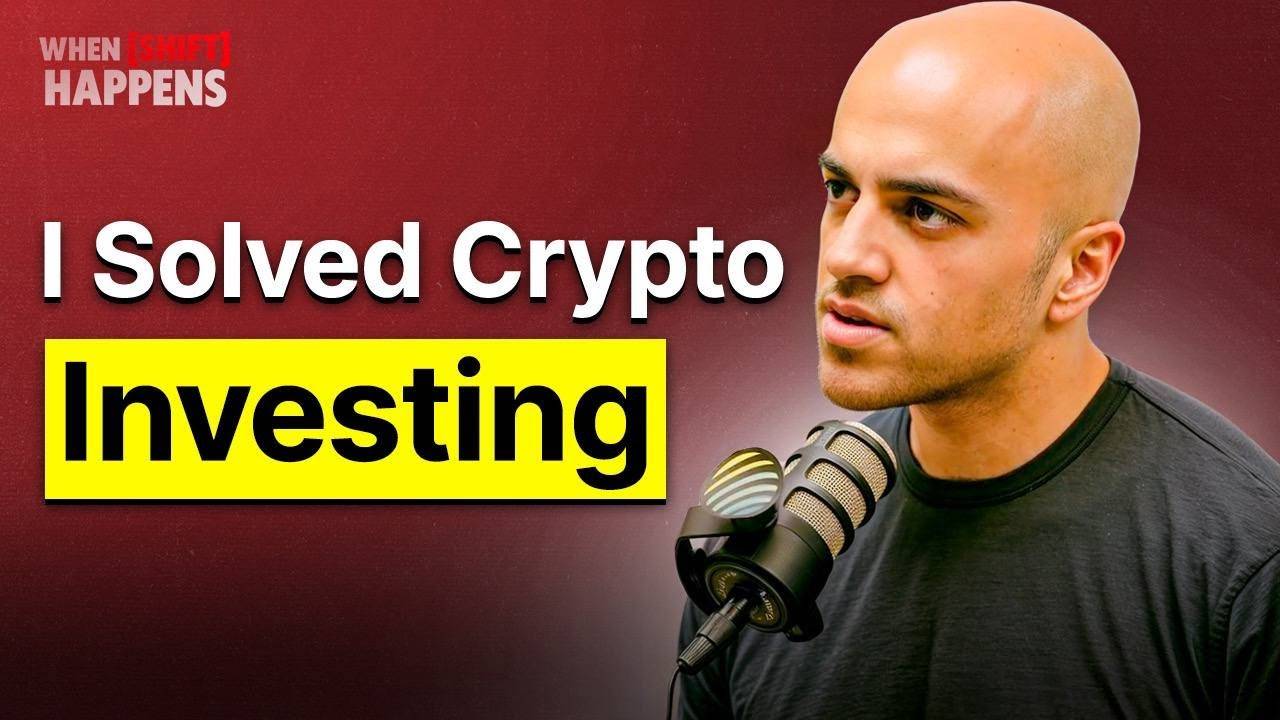
In the world of cryptocurrency investing, finding the next 100x opportunity is every investor’s dream. As one of the top global crypto investment funds, Dragonfly is renowned for its unique investment insights and deep technical understanding. Its portfolio includes major projects such as Avalanche, Near Protocol, Monad, and Athena.
In this episode of *When Shift Happens*, Dragonfly managing partner Haseeb Qureshi shares his remarkable journey from professional poker player to leading crypto investor, and how to build lasting influence in this fast-moving industry. The discussion covers some of the most critical topics in crypto investing: turning crypto into a team sport, why money doesn’t buy happiness, how to deal with impostor syndrome, and common mistakes made by new investors. PANews has transcribed and translated the podcast.
Personal Background
Haseeb:
I’m Haseeb Qureshi, currently a managing partner at Dragonfly Capital, a global cryptocurrency investment firm managing billions of dollars in assets. My career path has been quite dramatic: starting as a professional poker player, transitioning into software engineering, then becoming an entrepreneur, and finally entering venture capital over six years ago. Among all these paths, crypto investing has been the most challenging—but also the most meaningful and valuable choice I’ve made.
Host: What prompted you to ultimately leave your poker career behind?
Haseeb:
It was a very turbulent period. I had built a solid reputation in the poker world, but it was severely damaged due to an incident involving cheating by one of my students. At the same time, I was growing increasingly disillusioned with poker. I didn’t want to be 50 years old looking back and realize I’d spent my life just playing cards to take money from others. That wasn’t the kind of meaning I wanted in life.
I made a radical decision: I kept only $10,000 for basic living expenses and gave away or gifted the rest—some to charity, some to my parents for retirement. I wanted to force myself to start over. I was 23 at the time, and I went back to school to study English and philosophy—non-technical subjects. Being the oldest student in class, with nothing on my resume except “professional gambler,” was genuinely terrifying.
This decision gave me a new perspective. Working as a software engineer in Silicon Valley, I earned about $100,000 a year—far less than I made playing poker. But interestingly, my level of happiness didn’t change much. Because true satisfaction comes from learning new things, personal growth, and building genuine connections with people around you.
Poker vs. Venture Capital
Host: Moving from professional poker to venture capital is a huge shift. How do you see the similarities and differences between these two fields?
Haseeb:
The most fundamental difference lies in the feedback cycle.
-
In poker, you get immediate feedback on whether a decision was right or wrong. For example, when you suspect your opponent is bluffing and decide to call, the result is revealed instantly.
-
In venture capital, it's completely different. It often takes six to seven years before you can truly judge whether an investment was good. You often see startups progressing smoothly from seed to Series A, only to face a fatal crisis at Series C. This delayed feedback mechanism places extremely high demands on an investor’s judgment. Notably, thanks to rigorous evaluation, we successfully avoided collapsing projects like FTX, BlockFi, and Luna.
Host: So the feeling of being right must be very different too?
Haseeb:
Absolutely. The contrast is stark. In poker or trading, correct decisions bring instant, intense rewards—an immediate dopamine rush. That “I won” feeling hits directly and powerfully.
But in venture capital, success is gradual. It’s more like nurturing a tree: there are no dramatic climaxes, just sustained patience and continuous effort. You watch startups grow step by step: each funding round brings steady valuation increases, operational metrics improve, and together you navigate challenges and find solutions.
This process demands immense patience and perseverance. Unlike the quick win-lose judgments in poker, venture capital is more like a marathon—it tests long-term thinking and the ability to create sustained value. It’s precisely this incremental growth that makes venture capital so meaningful.
Investment Judgment
In venture capital, judging people is often more important than analyzing business models. While investors like Naval Ravikant or Chamath Palihapitiya often emphasize the need to look beyond stereotypes, the actual judgment process is far more complex. As an experienced investor, I’ve found there’s a key paradox here.
Junior investors typically go through a learning curve: they come to understand that analyzing business models and technological innovation requires continuous study and deep research—often built through studying tech and business history to form systematic analytical frameworks. Ironically, however, understanding human nature is something we’re born with.
Our nervous systems are naturally equipped to read other people. When you feel distrust toward someone—even if you can’t pinpoint exactly why—that feeling often stems from subtle signals you’ve subconsciously picked up.
Yet junior investors often dismiss these gut feelings, instead relying too heavily on surface-level evidence:
-
“Maybe I’m just inexperienced and my judgment isn’t accurate.”
-
“This founder has an impressive resume and a solid business plan.”
-
“They have endorsements from many well-known partners.”
With experience, you gradually learn: trust your intuition. The key is to look past social credentials and sense a person’s core traits—how they might act under pressure, uncertainty, or moral dilemmas. More often than not, your first instinct is correct.
Stereotypes
At its core, venture capital is a people-driven industry. While social psychology faces a “replicability crisis,” “stereotype accuracy” remains one of its most robust findings. For instance, if you perceive aggressive people as generally unreliable, that judgment is often accurate.
The human brain is a statistical learning machine. Although modern culture tends to reject stereotypes, they can be positive, negative, or neutral. For example, the stereotype that “Asians prefer rice” is neutral—and statistically accurate.
Motivation Behind Investing
Host: What drives you to keep diving into these underdeveloped fields?
Haseeb:
Essentially, the fields I’ve entered—from early poker to today’s crypto—are both highly chaotic and creative, fundamentally different from linear, traditional industries. For example, quantitative analysis on Wall Street is essentially an intelligence competition: the higher your “score,” the greater your rewards.
But emerging fields like crypto are more like exploring uncharted territory. They demand not just intelligence, but courage to take risks, the ability to innovate continuously, and multidimensional insight. It’s precisely this challenging environment that keeps me deeply engaged.
Crypto has no established “aristocracy.” Unlike traditional VC, you don’t need elite backgrounds, massive networks, or prior experience building billion-dollar companies. Genuine effort and persistent work are what truly matter.
Bear markets act like truth detectors, clearly revealing who’s here for the right reasons and who’s quietly committed. Every bull market attracts successful Web2 entrepreneurs with large amounts of capital, but those who remain are usually the ones considered “weird” or “crazy”—and they’re the ones actually building valuable projects.
Reflections
Structured Learning
Host: Can you share your thoughts on learning methods?
Haseeb:
I believe learning falls into two categories: structured and unstructured.
Structured learning follows clear paths with supporting tools. Take chemistry, for example: it has comprehensive textbooks and resources—you just follow the sequence step by step. The key here is discipline and focus. Most of our formal education trains us in this way. But the real world rarely cares about structured learning outcomes. When you graduate and enter the job market, you quickly realize: almost nothing you studied in school applies directly. Education is more about certification—proving you have the baseline capacity for professional training.
In real-world, high-value roles, there’s rarely a manual or textbook to guide you. You can’t prepare like for an exam. You must explore and learn in uncharted territory. Even if experts exist, they rarely have time to teach systematically.
Host: Could you give examples of unstructured learning in practice?
Haseeb:
-
I encountered this early. When I started playing poker in 2006, educational resources were scarce. There were books, but most weren’t great. To become world-class, you had to gather fragmented information from blogs, forums, and videos. You had to experiment, risk your own money, learn from failure, and iterate constantly.
-
Similarly, six or seven years ago in crypto, only a few resources existed—like *Mastering Bitcoin* and a Princeton textbook (co-authored by Arbitrum’s co-founder), where Ethereum got just a few paragraphs. To learn, you had to dive in, talk to pioneers, and build your own curriculum through iteration.
This kind of unstructured learning is often the most valuable—and the most rewarded by the market. Those who master it tend to earn the highest returns, precisely because schools don’t teach it.
Money Doesn’t Buy Happiness
Host: You once said, “Money doesn’t buy happiness.” Can you elaborate?
Haseeb:
I started playing poker professionally at 17 and met many young, wealthy people—most of whom were deeply unhappy. In poker, you see 20-somethings worth millions buying luxury cars and watches, but nobody really cares. If you buy these things only for status, not genuine enjoyment, it’s meaningless. Money solves financial problems, but research shows that beyond a certain income level (say $50k–$100k annually), happiness plateaus sharply.
True happiness comes from personal progress, growth, and relationships—with friends, family, and others. It sounds cliché, but it’s true.
Effective Altruism
Host: What are your thoughts on the Effective Altruism (EA) movement?
Haseeb:
I discovered EA after leaving poker, around 2012–2013, when the movement was just beginning. During the FTX era, EA became “cool,” which made me uncomfortable because EA is inherently unconventional. Now, post-FTX collapse, the opposite is true.
This is EA’s bear market—which is somewhat healthy. When EA was trendy, people questioned newcomers’ motives. Now, identifying as EA invites skepticism, which actually tests genuine belief in the principles. Like crypto: FTX’s failure doesn’t shake my belief in crypto, because FTX represented centralization and third-party trust—the opposite of crypto’s core values.
Host: How do you handle public misconceptions about these fields?
Haseeb:
This touches on philosophy vs. politics. Most people don’t dig into details and easily misunderstand. It makes working in EA or crypto harder, but what matters is staying true to core values and beliefs.
Views on Cryptocurrency
Host: Do you have any unique insights into the essence of cryptocurrency?
Haseeb:
Crypto is fundamentally philosophical. It poses a core question: Should the flow of value and money be controlled by individuals or by the state? This question runs much deeper than the actions of any Bahamian businessman.
I didn’t join this space out of libertarian ideology. In fact, I’m not even sure crypto will ultimately benefit the world. It could cause more chaos: weakening national control over monetary policy, increasing hacking risks. Especially in the AI era, uncensorable, unstoppable money flows could have terrifying consequences.
But the point is, crypto’s development is inevitable. Like social media—regardless of whether people think it’s good or bad, it’s now part of reality.
Host: You mentioned crypto differs significantly from other technologies?
Haseeb:
Yes, that’s crypto’s most distinctive trait. Over the past 50 years, most tech innovations have strengthened state power—think internet, AI—they’ve enhanced government control in various ways.
But crypto is inherently disruptive. Just as YouTube broke the monopoly of traditional TV, crypto is creating “user-generated money.” If money were already free and programmable, we wouldn’t need crypto. Its existence is a direct response to government restrictions.
Many assume technology should eventually be “tamed” by governments. But crypto’s core value lies precisely in its resistance to being tamed. This makes many uncomfortable—and explains why some try to separate blockchain technology from cryptocurrency.
Looking at what Snowden revealed, the internet has actually amplified government surveillance. In contrast, crypto may be the only major technological innovation in the past 50 years that truly empowers individuals rather than the state.
Keys to Success
Host: What are the key principles for succeeding in crypto?
Haseeb:
1. First and foremost: deepen your technical understanding. While everyone has different skill levels, crypto is fundamentally a technological innovation. Without technical comprehension, you can’t build robust mental models to predict industry trends. You don’t need to be a top smart contract developer, but you should understand how computers and programs work at a basic level. Only then can you distinguish feasibility from empty promises. In this field, improving technical literacy is always the right move.
2. The second key principle: start writing and sharing publicly. Many hesitate, thinking they lack original ideas or should wait until they know enough. This is a big mistake. I started blogging about crypto early on. Looking back, my early posts were naive—but that doesn’t matter because:
-
No matter your current level, someone needs the basics you’re learning
-
Having few followers early on is actually beneficial—it gives you room to practice
-
Improving just 1% daily leads to astonishing results over a year
Advice for Newcomers
Host: What’s the most counterintuitive truth for new investors?
Haseeb:
The crucial realization: nearly all major crypto projects are built by crypto natives—not elites from Google or Harvard. Whether Ethereum, Uniswap, or other breakthroughs, they were created by deeply immersed “eccentrics.” These people might seem “too online,” but they’re the ones building the most impactful projects.
Host: So how does one become a crypto native?
Haseeb:
Focus on finding your unique edge. Don’t try to reinvent yourself as another Vitalik or master zk-proofs overnight. Instead:
-
Identify what you’re genuinely best at
-
Push that strength to its extreme
-
Find the crypto projects or people who need that skill most
-
Demonstrate your value through action
It’s like entrepreneurship: don’t copy others’ paths. Find your own niche based on strengths. Don’t ask, “How do I get that cool person’s job?” Ask, “What value can I bring to this industry?”
Host: Sounds like entrepreneurial thinking?
Haseeb:
Exactly. It’s identical to starting a company. You ask: What am I good at? What problem can this solve? You pick something you love and excel at, not just chase the next Uber. Likewise, in your career, don’t replicate others’ journeys—build your own path based on your strengths and weaknesses.
Follower Count ≠ Influence
Host: When I started on Twitter, I thought follower count equaled influence. But I later realized many high-follower accounts are just “content farms”—high engagement, low real impact. Interestingly, true industry leaders often have modest followings. This is known as the “Button Paradox”: in extremes, two normally correlated factors (followers and influence) decouple. Can you explain?
Haseeb:
It’s something many intuitively sense. Accounts with millions of followers may be great at content and entertainment, but when they try to drive real action, nothing happens. For example, a 5M-follower account tries to pump a token price—but gets zero traction.
Conversely, some low-follower accounts command the entire industry’s attention when they speak. Take Bow, a Dragonfly partner—he’s extremely low-key on Twitter, doesn’t even maintain social media, yet he’s one of the most influential figures in the space.
The Influence Curve
This phenomenon reveals two truths:
1. Social media reach doesn’t equal real influence
-
Many admire high-follower accounts, assuming they’re powerful
-
But in reality, their actual influence is often limited
-
This often leads to a moment of harsh self-awareness for these accounts
2. The relationship between follower growth and influence is nonlinear
-
Growing from 200 to 2,000 followers brings noticeable change
-
But going from 50K to 100K may yield little real increase in influence
-
This suggests that beyond a threshold, further investment in follower growth yields diminishing returns
Host: So how do you actually build real influence?
Haseeb:
Many think influence in crypto comes from self-promotion, flaunting connections, or flipping presales. But the real way is:
-
Create value for the industry
-
Help founders solve problems
-
Do meaningful work behind the scenes
-
Add value in every interaction
This is far harder than just posting online—which is why most never build real influence. Because most people are takers, not givers.
VC Experience and Reflections
The crypto industry attracts diverse participants: short-term day traders, professional hedge fund operators, innovative founders, and VCs supporting them. The space often feels zero-sum—a “player versus player” game. Long-term players may struggle mentally, becoming cynical, falling into nihilism, cycling through false booms, and enduring constant pressure to cash out quickly.
Yet venture capital plays a unique role. Unlike zero-sum games, VC succeeds by identifying talent and providing support to help teams thrive. A VC’s success depends entirely on the success of the founding teams—transforming what could be a “single-player game” into a “multiplayer game.” This not only creates greater value but offers a healthier mindset and development model. This collaborative approach may be the best way to engage with such a transformative and important industry.
Impostor Syndrome and Self-Awareness
Host: Did you experience impostor syndrome during your transitions?
Haseeb:
Yes, constantly. If someone claims they’ve never felt it, they’re either not thinking deeply or lack self-reflection. The goal isn’t to eliminate it, but to learn to live with it. When I first became an investor, I strongly felt: “I’ve never built a successful company—why should I advise others?” Ironically, it was this “outsider” perspective that allowed me to see issues founders might miss.
When you offer advice as an investor, it carries special weight. For example, a company might have obvious flaws—poor marketing, weak product positioning—that everyone internally sees, but the founder ignores. Yet when an investor—even a junior one—raises the same point, the founder often listens.
Part of this “magic” comes from the external vantage point, free from the company’s internal “gravitational field.” For instance, Polygon once ran six product lines simultaneously. I told the founder: “Too many products—market messaging is confusing. Simplify and clarify your story.” The feedback was well received, even though I wasn’t the only one saying it.
Success vs. Failure
Host: What’s the biggest “success moment” in venture capital?
Haseeb:
To be honest, there’s no explosive “eureka” moment. VC is a daily, cumulative process. Even when a check arrives from an exit, it feels more like “finally” than “unbelievable!” This characteristic makes VC healthier than other forms of investing.
Host: How does failure feel? Can you share an example?
Haseeb:
In VC, the biggest mistakes aren’t bad investments—they’re missed opportunities. Because of power law dynamics, missed winners hurt more than failed bets.
My biggest regret was missing Uniswap’s Series A. We analyzed everything:
-
Liquidity pool profitability
-
Trading volume
-
Pros and cons of pricing mechanisms
All our analysis was “smart” and technically “correct”—but we completely missed the revolutionary insight: Uniswap enabled a fully automated system where anyone could list and trade any asset.
The Eternal Dilemma of Investing
Haseeb: As an investor, you’re never fully satisfied because:
-
You regret missing good deals
-
You regret not investing more
-
You worry about selling too early or too late
But this discomfort is normal—even healthy. If you’re too comfortable, that might actually be a red flag.
As a VC, I’ve grown more at ease with market timing. The key is to understand:
-
Don’t aim for perfect exits
-
Set realistic goals—exiting within 40% of the peak is already a success
-
Chasing precision is dangerous—it can make you miss the entire cycle
-
Precise market bottoms and tops are impossible to nail
Managing Public Perception
Host: As a public figure, how do you handle drastic shifts in public opinion?
Haseeb:
It’s definitely challenging. Take 2021–2022: the entire crypto industry’s image shifted dramatically. After FTX collapsed, the whole sector suffered. Due to my association with effective altruism, I was personally affected. Suddenly, I wasn’t invited to events, and people distanced themselves.
For a VC, perception matters—it’s part of the business. But I’ve found the best response is:
-
Be transparent
-
Speak your mind honestly
-
Keep creating value
In this industry, you’ll inevitably upset people. I’ve angered the Solana community, the Cardano community, and others. But crypto has a short memory. I once wrote a critical piece about EVM (Ethereum Virtual Machine), and the Ethereum community was furious. Today, many see me as an Ethereum maximalist.
When facing controversy, ask: “Is this a fight I truly care about?” If not, delete the post and move on. In this fast-moving industry, you don’t need to win every argument.
Outlook on the Future
Host: Looking ahead 12 months, what are you watching most closely?
Haseeb:
From a macro perspective, market direction will largely depend on Federal Reserve policy. The institutionalization of crypto is an irreversible trend, but it will be gradual—no sudden shocks expected.
Note the shift in institutional attitudes. Take BlackRock: five years ago, we were trying to win their approval; now, they’re actively advocating for Bitcoin ETFs. This transformation is significant. The progress crypto has made in institutional acceptance over the past five years exceeds most participants’ expectations.
Given the current environment, I expect growth over the next two to three years to be more rational. However, crypto markets are unique: once a new cycle begins, trends may defy conventional expectations. This could stem from shifts in risk appetite or interest rate conditions. Overall, I’m cautiously optimistic about crypto markets, but anticipate less volatility than in the 2021 cycle.
Join TechFlow official community to stay tuned
Telegram:https://t.me/TechFlowDaily
X (Twitter):https://x.com/TechFlowPost
X (Twitter) EN:https://x.com/BlockFlow_News
 PANews