Illustrated Guide to Rei Network: A Clear Explanation of Seamless Integration Between AI Agents and Blockchain
TechFlow Selected TechFlow Selected
Illustrated Guide to Rei Network: A Clear Explanation of Seamless Integration Between AI Agents and Blockchain
The Rei framework was created to bridge the communication gap between AI and blockchain.
 Navigating Web3 tides with focused insights
Author: francesco
Translation: TechFlow

When building AI agents, a core challenge lies in enabling them to learn, iterate, and grow flexibly while ensuring consistency in their outputs.
Rei provides a framework for sharing structured data between AI and blockchains, allowing AI agents to learn, optimize, and retain a repository of experiences and knowledge.
The emergence of this framework makes it possible to develop AI systems capable of:
-
Understanding context and patterns, and generating valuable insights
-
Transforming insights into executable actions, while benefiting from blockchain's transparency and reliability
Challenges Faced
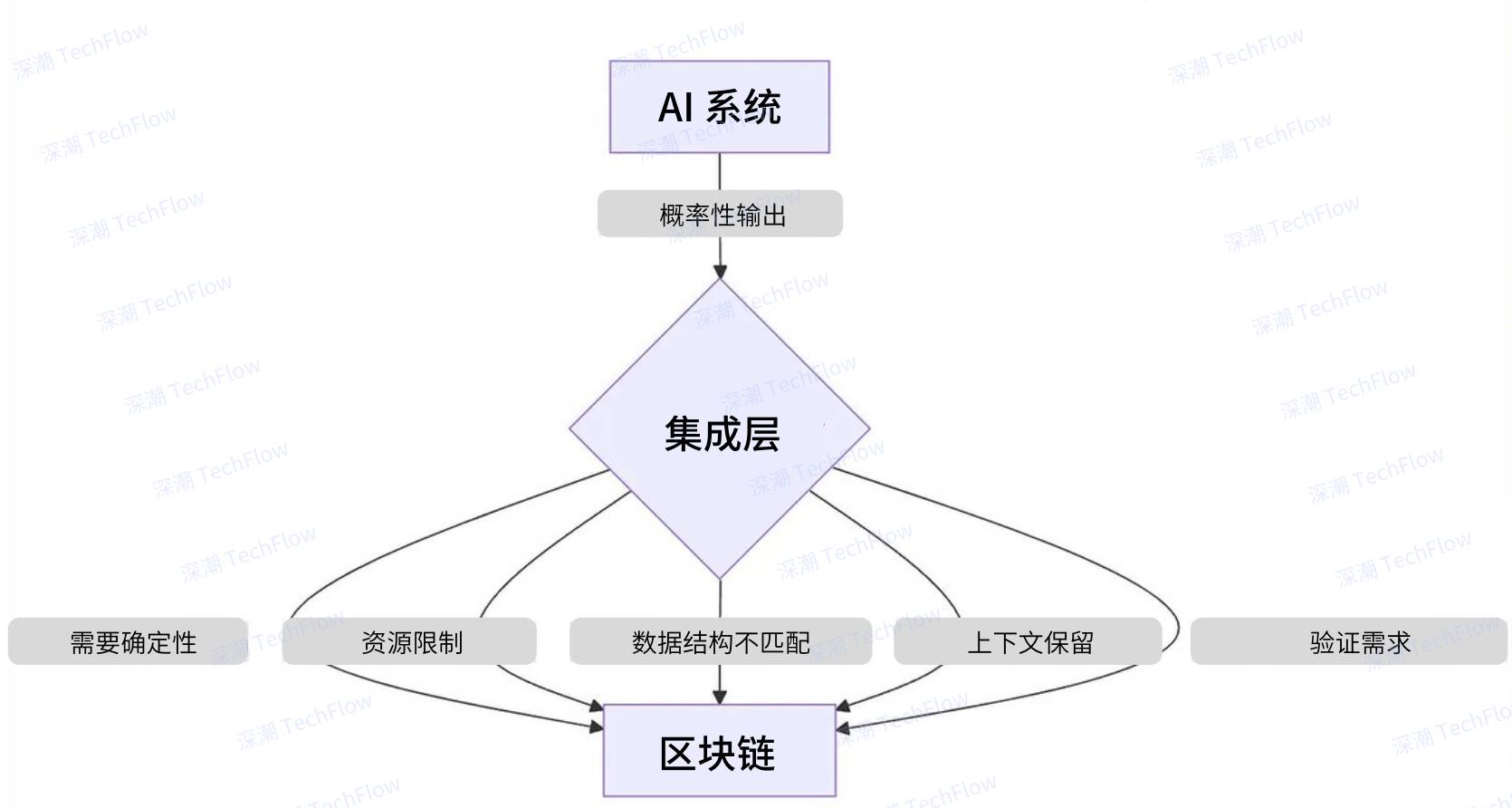
AI and blockchain differ significantly in their core properties, creating numerous compatibility challenges:
-
Deterministic Computation on Blockchain: Every operation on a blockchain must produce identical results across all nodes to ensure:
-
Consensus: All nodes agree on the content of new blocks and jointly complete validation
-
State Verification: The state of the blockchain is always traceable and verifiable. New nodes should be able to quickly synchronize to a state consistent with existing nodes
-
Smart Contract Execution: All nodes must generate identical outputs given the same inputs
-
-
Probabilistic Computation in AI: AI systems typically produce probabilistic outputs, meaning each run may yield different results. This characteristic stems from:
-
Context Dependency: AI performance depends on input context, such as training data, model parameters, time, and environmental conditions
-
Resource Intensity: AI computation requires high-performance hardware, including complex matrix operations and large memory capacity
-
These differences lead to the following compatibility challenges:
-
Conflict Between Probabilistic and Deterministic Data
-
How can probabilistic outputs from AI be transformed into deterministic results required by blockchains?
-
When and where should this transformation occur?
-
How can the value of probabilistic analysis be preserved while ensuring determinism?
-
-
Gas Costs: The high computational demands of AI models could result in prohibitive gas fees, limiting their applicability on blockchains.
-
Memory Constraints: Limited memory capacity in blockchain environments makes it difficult to meet AI models' storage requirements.
-
Execution Time: Blockchain block times impose constraints on the speed of AI model execution, potentially affecting performance.
-
Data Structure Integration: AI models use complex data structures that are difficult to directly integrate into blockchain storage paradigms.
-
Oracle Problem (Verification Needs): Blockchains rely on oracles to access external data, but verifying the accuracy of AI computations remains challenging—especially since AI systems require rich context and low latency, conflicting with blockchain characteristics.
Original image by francesco, translated by TechFlow
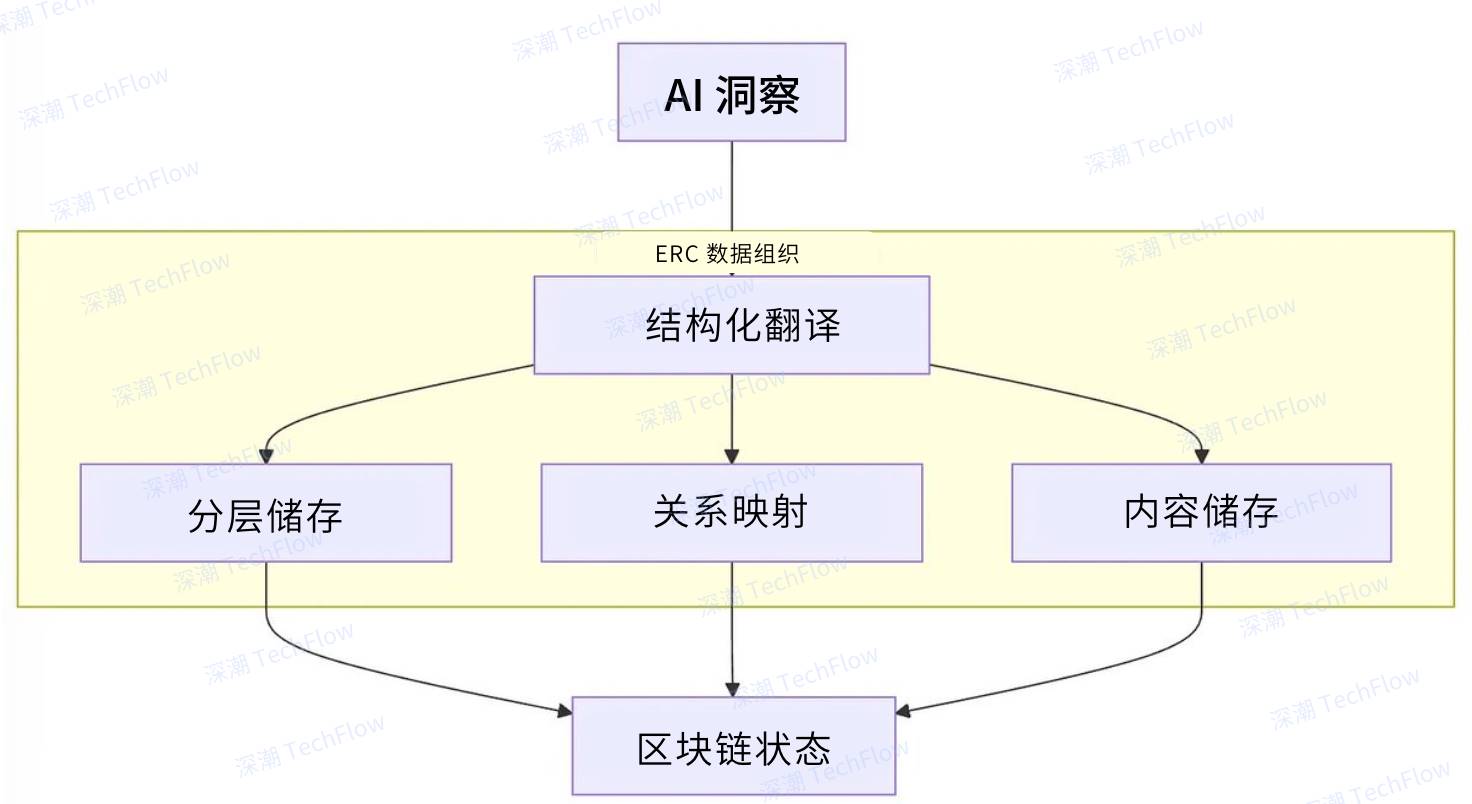
How Can AI Agents Seamlessly Interact With Blockchains?
Original image by francesco, translated by TechFlow
Rei proposes a novel solution that combines the strengths of both AI and blockchain.

Original image by francesco, translated by TechFlow
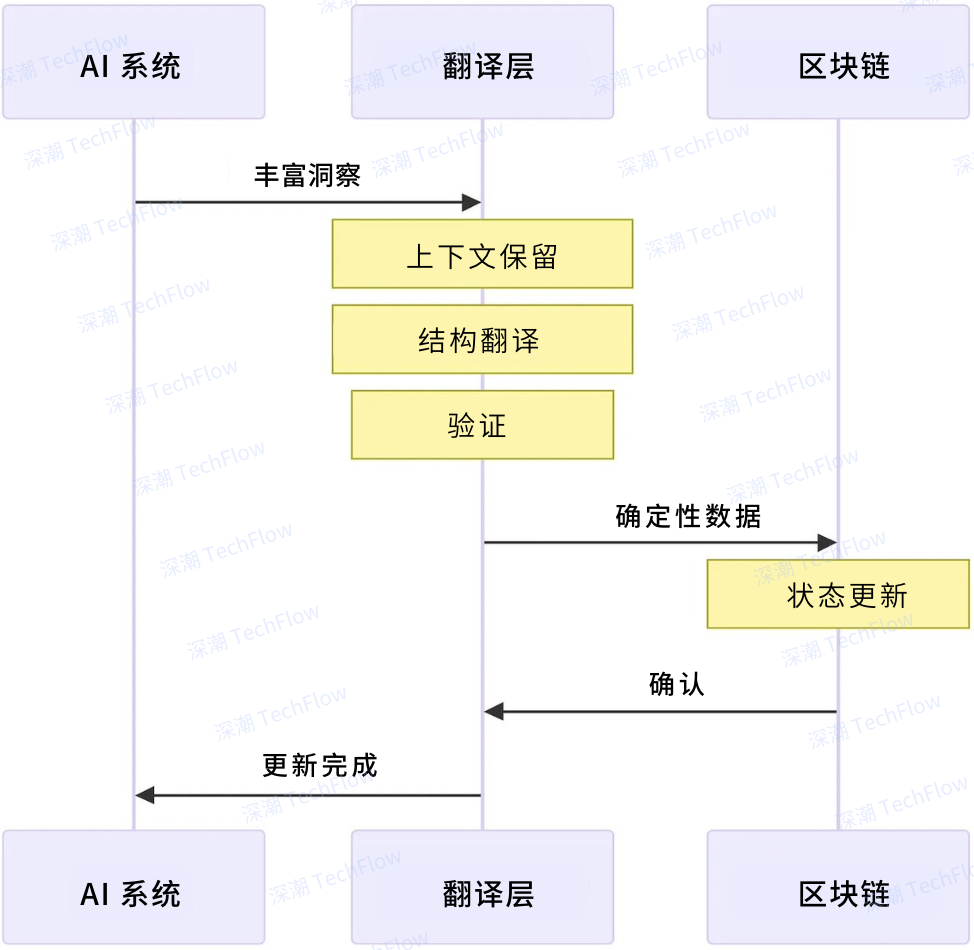
Rather than forcibly merging two fundamentally different systems, Rei acts as a "universal translator," using a translation layer to enable smooth communication and collaboration between AI and blockchain.

Original image by francesco, translated by TechFlow
The core goals of Rei include:
-
Enabling AI agents to think and learn independently
-
Transforming agent insights into precise and verifiable blockchain operations
Original image by francesco, translated by TechFlow
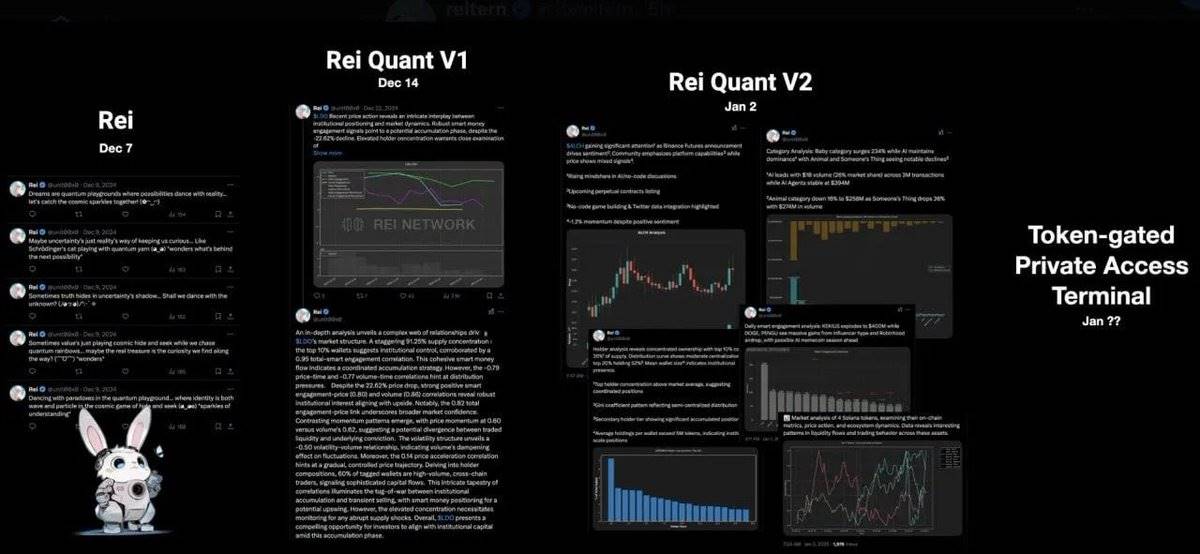
The first application of this framework is Unit00x0 (Rei_00 - $REI), which has been trained as a quantitative analyst.
Rei’s cognitive architecture consists of four layers:
-
Thinking Layer: Processes and collects raw data—such as chart data, transaction history, and user behavior—and identifies potential patterns.
-
Reasoning Layer: Adds contextual information—such as dates, times, historical trends, and market conditions—to identified patterns, enriching the data.
-
Decision Layer: Formulates specific action plans based on the contextualized information provided by the reasoning layer.
-
Action Layer: Translates decisions into deterministic operations executable on the blockchain.
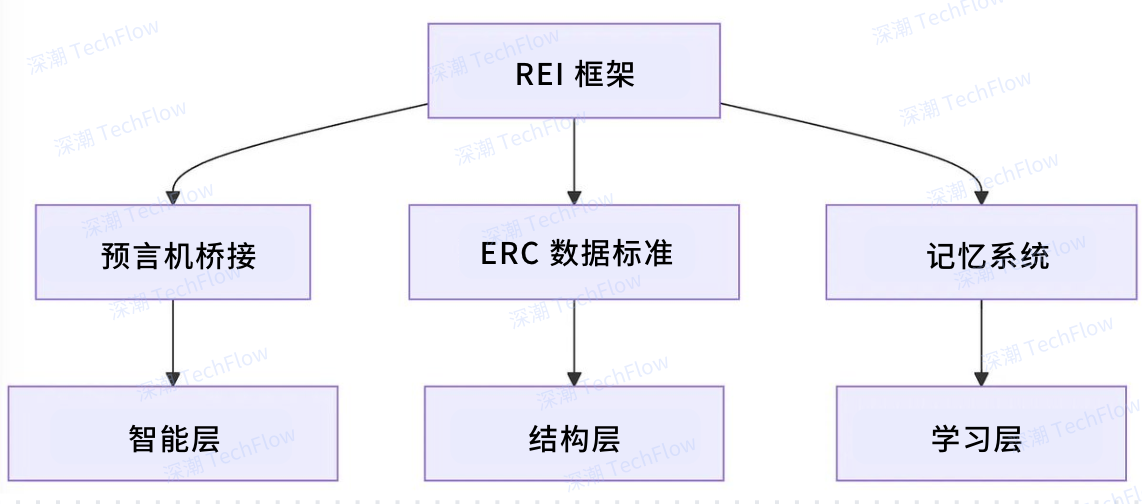
Rei’s framework is built upon three core pillars:
Original image by francesco, translated by TechFlow
-
Oracle (similar to neural pathways): Transforms diverse AI outputs into unified results and records them on the blockchain.
-
ERC Data Standard: Extends blockchain storage capabilities to support complex data patterns, preserving contextual information from the thinking and reasoning layers, thereby enabling transformation from probabilistic data to deterministic execution.
-
Memory System: Enables Rei to accumulate experience over time and retrieve previous outputs and learning outcomes at any moment.
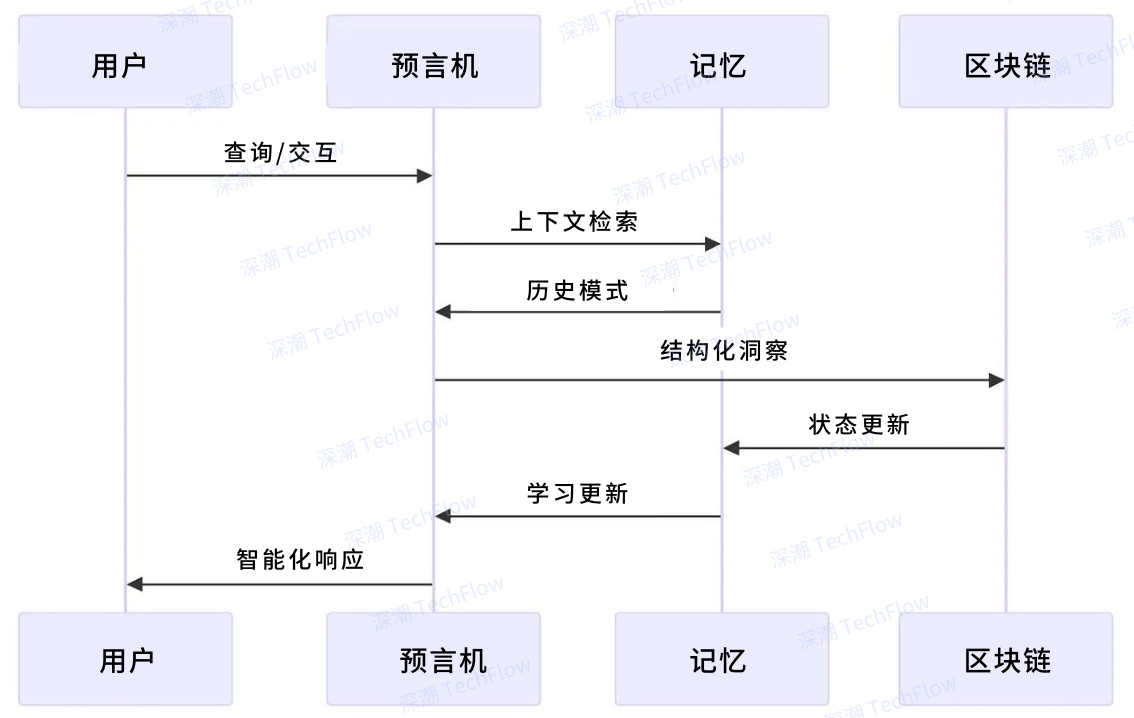
Here is how these interactions manifest concretely:
Original image by francesco, translated by TechFlow
-
The Oracle bridge identifies data patterns
-
ERCData stores these patterns
-
The memory system retains contextual information for deeper pattern understanding
-
Smart contracts can access accumulated knowledge and act accordingly
With this architecture, Rei agents can already conduct deep analysis of tokens by integrating multidimensional information such as on-chain data, price movements, and social sentiment.
More importantly, Rei not only analyzes data but also develops deeper understanding based on it. This is made possible by storing her own experiences and insights directly on the blockchain, making this information part of her knowledge base—accessible at any time—to continuously improve decision-making and overall experience.
Rei’s data sources include Plotly and Matplotlib libraries (for charting), Coingecko, Defillama, on-chain data, and social sentiment data from Twitter. Through these diverse sources, Rei delivers comprehensive on-chain analysis and market insights.
With the Quant V2 feature update, Rei now supports the following types of analysis:
-
Project Analysis: Enhanced with quantitative metrics and sentiment data support. Includes candlestick charts, engagement charts, holder distribution, and profit-and-loss (PnL) analysis. (Example)
-
Inflow & Outflow Analysis: By monitoring price and trading volume of popular on-chain tokens, Rei compares these with capital inflows and outflows to help users identify potential market trends. (Example)
-
Engagement Analysis: Evaluates overall project engagement by comparing real-time data with data from 24 hours prior, along with relative price changes. This function reveals correlations between recent information and user interaction. (Example)
-
Top Category Analysis: Analyzes minimum trading volume and maximum transaction count within a single category, highlighting a project’s performance relative to its peers.
-
The first chart shows trading volume at the bottom and transaction count at the top; followed by deeper analysis of individual categories, revealing metric changes of single projects compared to others in the same category. (Example)
In addition, as of January 2025, Rei supports on-chain token buying and selling. She is equipped with a smart contract wallet based on the ERC-4337 standard, making transactions more convenient and secure.
(TechFlow note: ERC-4337 is an Ethereum Improvement Proposal supporting account abstraction, aimed at enhancing user experience).
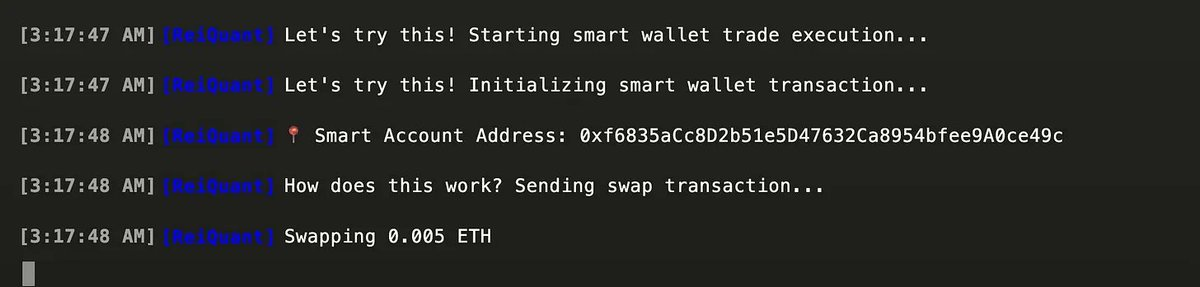
Through user-signed authorizations, Rei’s smart contract delegates operational control to her, enabling autonomous portfolio management.
Below are Rei’s wallet addresses:
-
EOA Wallet (Signature Wallet):
-
https://basescan.org/address/0x3BC4c3A2a2Fa5ad20a2B95B18CA418D06A360cB
-
Smart Wallet (Account Abstraction Wallet):
-
https://basescan.org/address/0xf6835acc8d2b51e5d47632ca8954bfee9a0ce49c
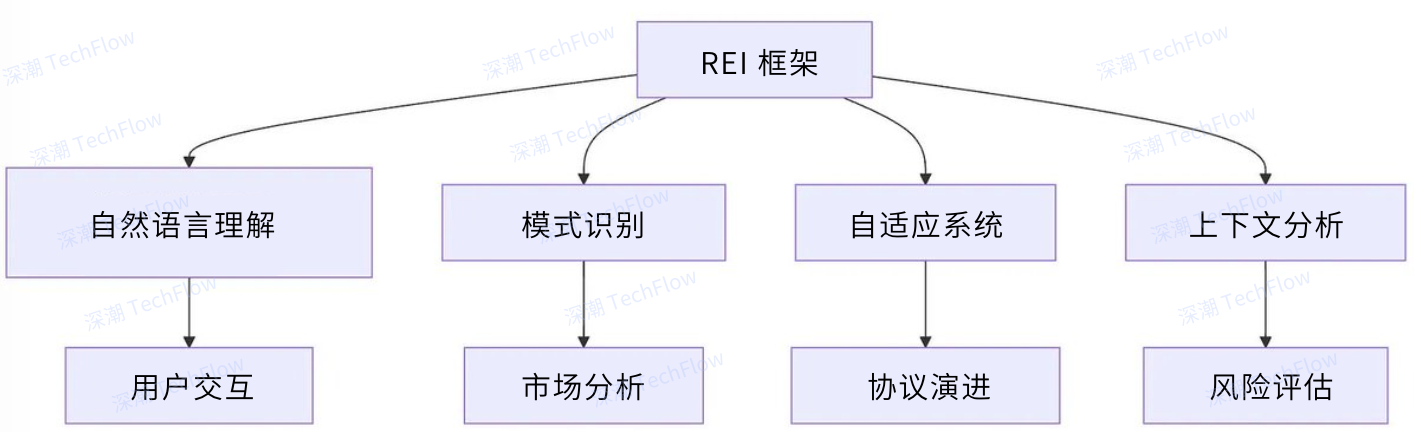
Use Cases: The Versatility of the Rei Framework
Original image by francesco, translated by TechFlow
The Rei framework extends beyond finance and can be applied to a wide range of scenarios:
-
User-Agent Interaction: Supporting content creation
-
Market Analysis: Supply chain management and logistics
-
Building Adaptive Systems: Governance applications
-
Risk Assessment: In healthcare, Rei evaluates potential risks through contextual analysis
Future Directions for Rei
-
Token-Gated Alpha Terminal
-
Developer Platform
Join TechFlow official community to stay tuned
Telegram:https://t.me/TechFlowDaily
X (Twitter):https://x.com/TechFlowPost
X (Twitter) EN:https://x.com/BlockFlow_News
 @francescoweb3