








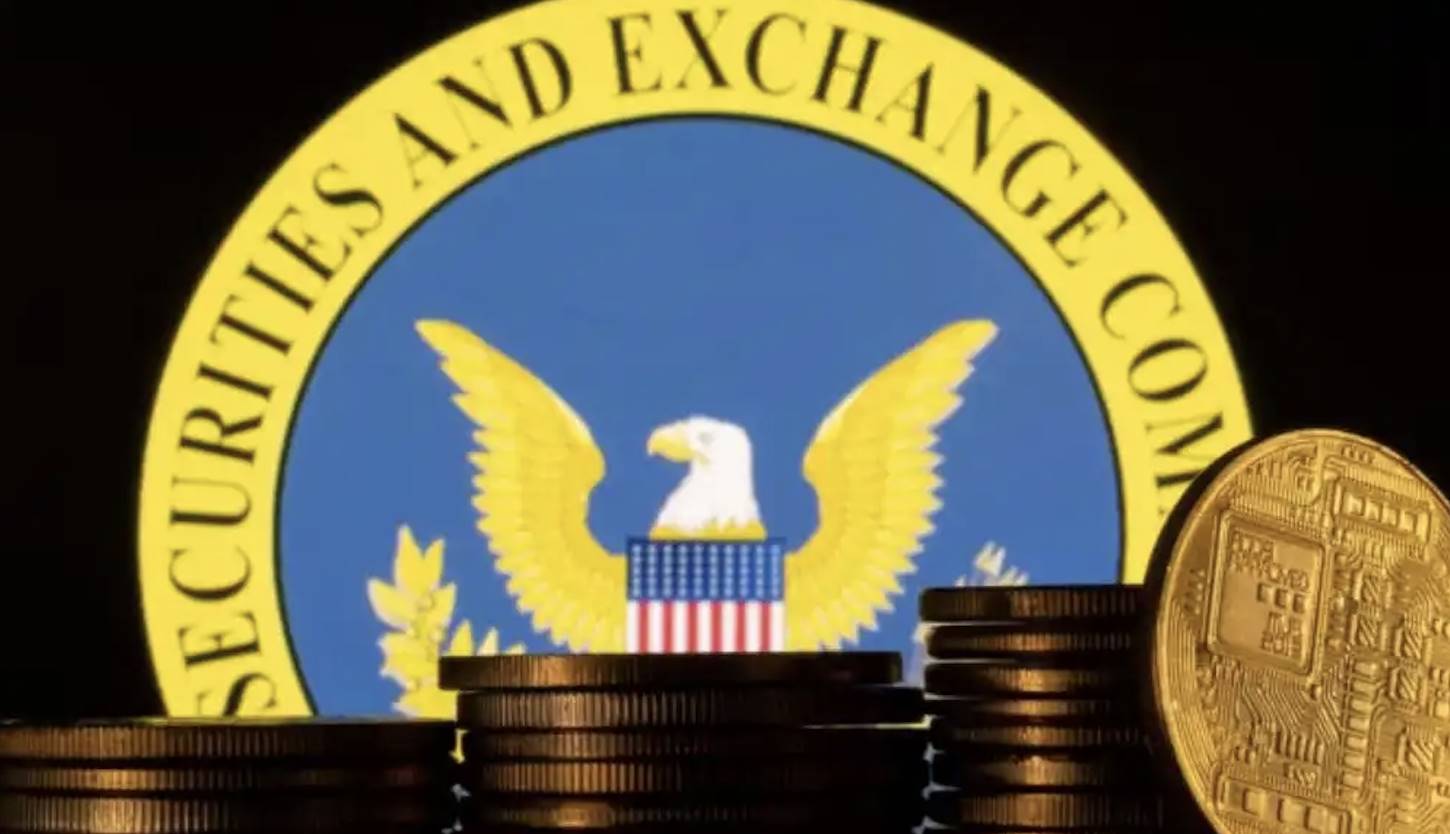
US 18 States Jointly Sue SEC, What Are the Chances of Success for Both Sides (Part 2)
TechFlow Selected TechFlow Selected
US 18 States Jointly Sue SEC, What Are the Chances of Success for Both Sides (Part 2)
Considering Republican control over executive and judicial powers, as well as industry opposition to strong regulatory models, the eighteen states have a certain possibility of winning the lawsuit.
 Navigating Web3 tides with focused insights
By TaxDAO
See previous part: Eighteen U.S. States Jointly Sue SEC: Assessing the Odds of Victory (Part 1)
3. Two Landmark U.S. Crypto Litigation Cases
The Ripple and Terraform cases are two pivotal legal precedents in the U.S. crypto industry. In these rulings, courts defined the legal nature of crypto assets from different perspectives, triggering strong reactions across the sector. The core disputes in both cases closely mirror those in the current lawsuit—centering on the classification and regulation of crypto assets—and thus offer crucial reference points for predicting the outcome of this case.
3.1 Ripple Case
3.1.1 Basic Facts
Ripple Labs, established in 2012, is the developer behind Ripple and its native cryptocurrency token XRP (Ripple Coin), making it one of the earliest pioneers in the blockchain space. XRP was designed as a bridge tool to facilitate financial transactions, primarily targeting institutional clients such as banks.
In December 2020, the SEC filed a lawsuit against Ripple Labs, its CEO Brad Garlinghouse, and co-founder Chris Larsen, alleging that they illegally offered securities through the sale of XRP, raising over $1.3 billion. The SEC argued that XRP constitutes an investment contract akin to stocks or bonds and therefore must comply with relevant securities laws—including registration with the SEC and full disclosure to investors. Ripple countered that XRP is a digital currency functioning more like Bitcoin or Ethereum, and does not meet the criteria under the Howey Test, thus should not be classified as a security.
The SEC's action sent shockwaves throughout the crypto industry. As the first enforcement action targeting a widely circulated mainstream cryptocurrency, it symbolized the intensifying conflict between innovation in digital assets and regulatory oversight.
3.1.2 Ruling Outcome
In July 2023, the court ruled that XRP (and all cryptocurrencies) sold on exchanges to the public are not securities, although sales to institutional investors qualify as such. This decision triggered a strong market response, causing XRP’s price to surge by 70%.
In August 2024, the final judgment clarified the classification based on sales context. Institutional direct sales were deemed to satisfy the Howey Test: institutions purchased XRP directly from Ripple with the expectation of profit derived from Ripple’s efforts—constituting classic investment contracts and therefore falling under securities regulations. In contrast, programmatic sales of XRP on open markets did not constitute securities offerings. The judge emphasized that buyers in secondary markets had no knowledge of the seller and lacked any reasonable expectation of profits tied to Ripple’s activities. These automated transactions failed to meet the definition of an investment contract and thus were outside the scope of securities law. Ultimately, Ripple was ordered to pay approximately $125 million in civil penalties—far less than the nearly $2 billion sought by the SEC, but significantly higher than Ripple’s initial proposal to cap fines at $10 million.
From the outcome, both Ripple and the SEC achieved partial victories. Ripple avoided the massive penalty demanded by the SEC, while the SEC still secured a substantial fine. However, the SEC’s expectations were clearly unmet, prompting it to file a Notice of Appeal in October 2024, appealing to the Second Circuit Court of Appeals in an attempt to overturn parts of the district court’s ruling. According to the Second Circuit’s response, the SEC must submit its opening appellate brief by January 15, 2025, meaning there remains a possibility that the current ruling could be reversed.
3.1.3 Aftermath and Impact
The case set important precedents. First, it underscored the significance of transaction methods in determining the legal status of crypto assets. By distinguishing between institutional and public market sales, the court signaled that how a crypto asset is distributed affects its classification. Second, the ruling may constrain the SEC’s ability to expand its regulatory reach over crypto assets. Unless the SEC prevails on appeal, under the U.S. common law system, this precedent will bind future cases and prevent the SEC from broadly treating crypto assets as securities.
Overall, the Ripple case marked a significant victory for the crypto industry in its struggle against aggressive regulation. The decision boosted confidence among industry participants, improved market sentiment, and could become a turning point in shaping future regulatory frameworks.
3.2 Terraform Case
3.2.1 Case Overview
Terraform Labs, a platform offering blockchain technology and crypto assets, was founded by Do Kwon, who attracted investors through the design and promotion of various digital tokens, including its native stablecoin UST and the LUNA token. UST was pegged to the U.S. dollar, with its stability algorithmically dependent on the LUNA token. However, serious flaws emerged in the actual operation of this mechanism. In May 2021, UST lost its peg but temporarily recovered due to secret arrangements with third-party companies. In 2022, UST again fell below $1, and without external support, its value collapsed rapidly, dragging LUNA down to near zero. This crash erased over $40 billion in market value, impacted other cryptocurrencies including Bitcoin, and contributed to multiple bankruptcies across the crypto sector in 2022.
In February 2023, the U.S. Securities and Exchange Commission (SEC) charged Terraform Labs and Do Kwon with fraud related to an unregistered multi-billion-dollar crypto securities offering. The SEC alleged that Terraform used repeated misrepresentations and deceptive practices to attract investors, violating registration and anti-fraud provisions of the Securities Act of 1933 and the Securities Exchange Act of 1934.
In June 2024, a U.S. District Court approved a $4.5 billion settlement between Terraform Labs and the SEC. Under the agreement, Terraform must pay nearly $3.6 billion in disgorgement, $420 million in civil penalties, and approximately $467 million in pre-judgment interest. Do Kwon is jointly liable with Terraform for $110 million in disgorgement and $14.3 million in pre-judgment interest, plus an additional $80 million in separate civil penalties. However, since Terraform filed for bankruptcy in January 2024, these payments may only be recoverable as unsecured claims during liquidation proceedings.
3.2.2 Ruling Outcome
The central issue in the Terraform case was the legal characterization of UST and LUNA. The court found that purchasers reasonably expected profits from their tokens and treated them as profitable investments—meeting the definition of an investment contract under the Howey Test. The court concluded that all relevant crypto assets created by Terraform, including UST and LUNA, qualified as investment contracts under the Securities Act of 1933 and should therefore be classified as securities.
Notably, in relation to the eighteen-state lawsuit against the SEC, the court addressed Terraform’s defense based on the Major Questions Doctrine. This doctrine requires that when an agency asserts authority to regulate matters of vast economic and political significance, it must point to clear congressional authorization. The court rejected this argument, stating: (1) Terraform bears little resemblance to cases where the Major Questions Doctrine applies (e.g., tobacco or energy industries); and (2) the SEC’s enforcement actions regarding certain crypto assets being deemed securities do not represent a transformative expansion of its regulatory power.
Similarly, echoing arguments made by the eighteen states, Terraform claimed the SEC violated the Administrative Procedure Act (APA). The court dismissed this claim, holding that the APA alone cannot invalidate the SEC’s determination that Terraform’s digital assets constituted investment contracts. The SEC did not establish new policy but merely enforced existing rules. The court affirmed that the SEC’s complaint sufficiently alleged that Terraform’s offer and sale of tokens like LUNA amounted to illegal public offerings of unregistered securities, involving false or misleading statements from which Terraform benefited.
3.2.3 Aftermath and Impact
The Terraform ruling reinforced the SEC’s regulatory stance and drew widespread attention in the crypto industry. Specifically: first, it reaffirmed the method for classifying crypto assets—demonstrating that even secondary-market-traded tokens can be deemed securities if they pass the Howey Test, particularly when investors have a reasonable expectation of profit derived from the issuer’s efforts. Second, it strengthened the SEC’s enforcement authority. The ruling has already been cited by the SEC in subsequent lawsuits against major crypto exchanges such as Binance and Coinbase, potentially paving the way for broader regulatory control over digital asset markets. Third, it served as a warning to industry players about legal risks associated with token design and marketing strategies.
3.3 Summary
Although both the Terraform and Ripple cases revolve around the classification of crypto assets, their outcomes differ significantly. In the Ripple case, the court held that secondary-market sales of XRP do not constitute securities transactions. Conversely, in the Terraform case, UST and LUNA were ruled to meet the definition of investment contracts.
This divergence first exacerbates legal uncertainty within the digital asset sector. The Ripple decision emphasizes the importance of transaction context, indicating that anonymous secondary-market trades may fail to satisfy key elements of the Howey Test—such as the existence of a “common enterprise” or reliance on the efforts of others for profit. Meanwhile, the Terraform case focuses more on investor expectations and issuer conduct, showing that even in secondary markets, tokens can be considered securities if the issuer’s efforts are central to generating returns. This inconsistency in legal interpretation increases uncertainty for the industry.
Second, it influences the SEC’s regulatory strategy, possibly leading to shifts in its approach. The Terraform ruling bolstered the SEC’s authority to regulate secondary-market crypto trading, whereas the Ripple decision limited that same authority. This contradiction suggests the SEC may need to refine its enforcement tactics on a case-by-case basis, potentially focusing more narrowly on issuer behavior to overcome judicial constraints.
Third, these conflicting signals trigger market volatility and shape industry direction. The Terraform case signals strong regulatory backing, heightening market expectations of strict oversight and potentially dampening innovation. In contrast, the Ripple case is seen as a win for the crypto industry, lifting market morale and boosting digital asset prices in the short term. This dual effect may lead to increased market volatility in the coming period.
Additionally, such inconsistent judicial outcomes may fuel momentum for legislative clarity. The contrasting rulings highlight the limitations of existing securities laws in addressing the complexity of digital assets. The divergent results in Ripple and Terraform could push Congress to advance dedicated legislation for digital assets, clarifying their legal status and regulatory boundaries. Only through systematic legislation can the current ambiguity caused by judicial disagreements be resolved. In this regard, the FIT21 bill, pending Senate approval, might help address this gap.
4. Motivations and Likelihood of Success in the Eighteen-State Lawsuit
4.1 Analysis of Litigation Motives
The joint lawsuit by eighteen states challenging the SEC’s crypto regulation as unconstitutional is essentially a judicial effort to curb the SEC’s regulatory overreach and carve out greater autonomy for state authority within the constitutional framework. The possible motivations include: First, establishing universally binding legal standards via constitutional adjudication. In recent years, the SEC has expanded the application of the Howey Test to subject numerous digital assets to securities regulations—a practice that has sparked controversy across the industry. By invoking the U.S. Constitution’s Article I and Tenth Amendment, the states aim to obtain a federal court ruling that invalidates the SEC’s enforcement actions at the constitutional level. If the Supreme Court ultimately sides with the states, the precedent would have nationwide binding effect, setting a legal benchmark for future disputes and compelling the SEC to revise its regulatory posture.
Second, constraining executive power and preventing policy continuity. Under Gary Gensler’s leadership, the SEC has pursued a stringent crypto agenda, launching frequent enforcement actions against firms like Ripple and Terraform and imposing heavy fines. This regulatory model has stifled industry growth and encroached upon state sovereignty. Through this litigation, the states seek not only to check the current SEC chair’s aggressive stance but also to establish legal boundaries for future administrations, preventing recurrence of similar policies.
Third, filling legislative gaps and fostering industry development. Federal legislation on digital assets remains incomplete, leaving unresolved debates over asset classification and regulatory jurisdiction. By advancing judicial clarification, the crypto industry can establish precedent-based rules within the existing legal framework, providing clearer compliance pathways and creating a more favorable environment for innovation and growth.
4.2 Favorable Conditions and Challenges
Overall, the timing of the lawsuit—shortly after the election victory of Donald Trump, representing the Republican Party—has created several favorable conditions, though significant uncertainties remain.
On the positive side: First, the incoming Trump administration’s policy orientation. President-elect Trump has publicly expressed strong support for the crypto industry and announced plans to replace the SEC chair. His nominee is likely to adopt a more lenient regulatory approach, potentially reducing the SEC’s resistance in this case and increasing the likelihood of a pro-industry judicial outcome. Second, the conservative tilt of the Supreme Court. Given the constitutional dimension of the case, the U.S. Supreme Court holds ultimate authority. With a conservative majority—including justices like Thomas and Alito, who generally favor state rights—the states’ argument that the SEC exceeded its constitutional authority may gain traction. Conservative justices also tend to support limits on federal administrative power, further improving the odds of success. Third, broad industry backing. Widespread criticism exists across the crypto sector toward the SEC’s current regulatory regime, with many companies arguing that rigid requirements stifle innovation and raise compliance costs. There is strong demand to break free from this restrictive model.
However, real challenges persist: First, judicial unpredictability. The U.S. legal system lacks a uniform standard for classifying digital assets. In the Terraform case, courts rejected similar defenses based on the Major Questions Doctrine and the Administrative Procedure Act—precedents that could work against the states in this case. Moreover, inconsistencies among lower courts in defining crypto assets increase the difficulty of securing a favorable verdict. Second, high time and resource costs. Starting in district court, the case may proceed through multiple appeals, possibly reaching the Supreme Court. The lengthy process demands significant resources, and ongoing regulatory uncertainty could harm industry development in the short term. Additionally, the eighteen states must sustain their legal and policy capacity to counter the SEC’s defenses throughout the litigation. Third, slow legislative progress. Although the House passed the FIT21 bill aiming to clarify the digital asset regulatory framework, it has stalled in the Senate. Continued legislative gridlock may lead courts to uphold the status quo rather than impose sweeping restrictions on agency power.
Overall, considering the Republican Party’s influence over the executive and judiciary, along with strong industry opposition to heavy-handed regulation, the eighteen states have a plausible chance of success. A crypto-friendly administration creates a favorable climate, and the Supreme Court’s conservative leanings may support the argument of unconstitutionality. Nevertheless, the case faces tangible hurdles, including sluggish legislative progress and judicial discretion. Especially given the unresolved debate over crypto asset classification, persuading the court to impose meaningful limits on SEC authority will be the decisive factor.
5. Conclusion and Outlook
The eighteen-state lawsuit against the SEC represents a major confrontation involving constitutional principles and the future of digital asset regulation. While possessing a realistic chance of success, the case confronts complex legal and policy challenges. Regardless of the final outcome, it will profoundly shape the legal and regulatory landscape for the U.S. crypto industry.
If the court ultimately rules that the SEC’s regulatory approach is unconstitutional, it would directly curtail the agency’s jurisdiction over digital assets. Regulatory authority might shift toward the CFTC or individual states, resulting in a more decentralized and pluralistic regulatory structure. Such a change could alleviate the SEC’s stringent oversight, create a more innovation-friendly environment, clarify asset classifications, reduce disputes over the application of the Howey Test, and enhance regulatory certainty. It would also rebalance federal-state relations, enabling states to craft tailored regulations and foster competitive regulatory models—potentially strengthening U.S. leadership in digital assets. Furthermore, reduced regulatory pressure could greatly stimulate innovation, allowing companies to experiment with new technologies and business models, especially benefiting sectors like decentralized finance (DeFi) and cross-border payments.
However, the ruling could also introduce new risks. Policy shifts may cause market volatility, as investors react sensitively to regulatory uncertainty during the litigation process. If regulatory authority devolves to the states, differing state-level rules could complicate compliance for companies operating across jurisdictions. Additionally, international competition may intensify. Jurisdictions like the EU and Singapore have made notable progress in crypto regulation; a fragmented U.S. framework could undermine its global competitiveness.
In sum, the eighteen-state lawsuit against the SEC marks a pivotal moment in the evolution of the U.S. crypto industry. It presents a critical opportunity to advocate for more balanced regulatory policies. Moving forward, sustainable growth in the U.S. crypto sector will depend on striking the right balance between regulation and innovation. With sound judicial outcomes, the United States remains well-positioned to lead global advancements in digital assets.
Join TechFlow official community to stay tuned
Telegram:https://t.me/TechFlowDaily
X (Twitter):https://x.com/TechFlowPost
X (Twitter) EN:https://x.com/BlockFlow_News
 TaxDAO






