Analyzing the Chips of Six Major AI Agents Including Swarms: 1,647 Big Whales Hold $158 Million in Tokens, a High-Level Accumulation Reveals the Bullish Manipulation Strategy
TechFlow Selected TechFlow Selected
Analyzing the Chips of Six Major AI Agents Including Swarms: 1,647 Big Whales Hold $158 Million in Tokens, a High-Level Accumulation Reveals the Bullish Manipulation Strategy
Who's Driving AI Agents? 27% of Addresses Bought Multiple AI Agents
 Navigating Web3 tides with focused insights
Author: Frank, PANews
AI Agents have become an unavoidable hotspot in on-chain trading. From ai16z to Virtual, and then Swarms, within just one month, the AI Agent sector has spawned a new niche ecosystem within the MEME domain. Amid the continuous emergence of AI Agent tokens, which ones will stand out, and which are merely fleeting concepts? There may be multiple perspectives to consider, but on-chain capital flows and shifts among major holders likely remain the most critical indicators.
PANews takes the recently popular Swarms token as the primary subject of analysis, comparing large holder addresses across six high-market-cap AI Agent tokens, attempting once again to "mark the boat to find the sword" and uncover some hidden patterns. The data scope for this analysis includes: the initial purchase and first sale activities of the top 1000 holding addresses of the Swarms token (data截至 January 6, 2025, 24:00); address overlap among six AI-related tokens with market caps exceeding $100 million—Fartcoin, GRIFFAIN, ZEREBRO, ai16z, arc, and Swarms (data截至 January 7, 2025, 14:00); and internal market transaction records.
Some quietly accumulate at low prices, others follow the trend
First, from the timeline of when major holders entered, most began entering after January 2, already 12 days after the token's creation. In terms of timing, many large holders of Swarms only started buying after the Swarms ecosystem gained popularity, missing early accumulation opportunities.
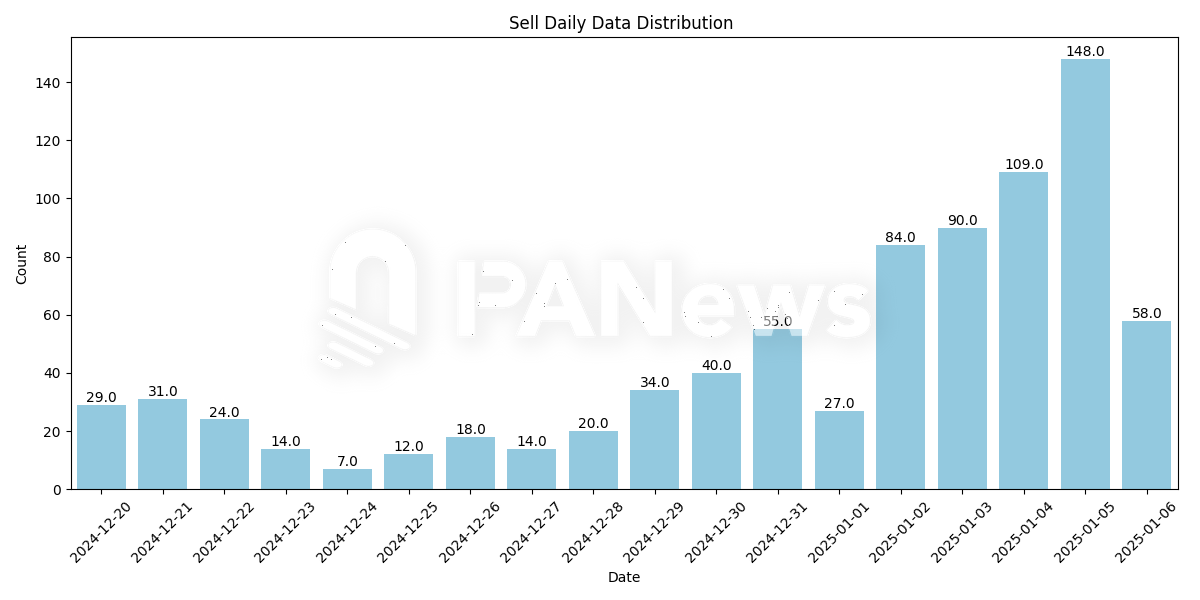
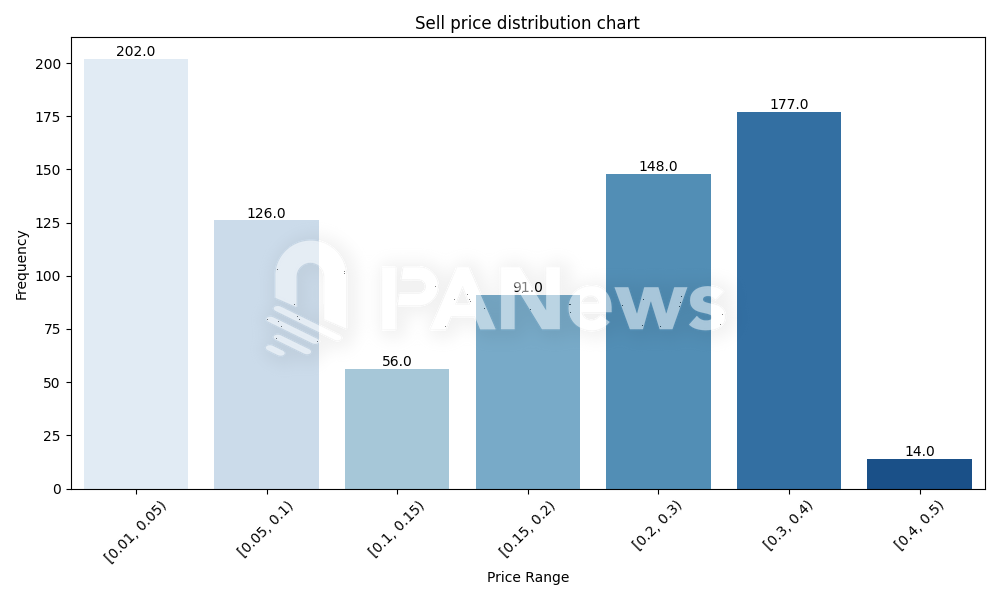
However, looking at Swarms’ price chart, anyone who bought before December 27 would have paid under $0.02 per token—nearly 30 times lower than its current peak price of $0.6. By analyzing the initial purchase prices of these addresses, we see that 202 addresses bought between $0.01 and $0.05, while the largest number of buyers entered between $0.3 and $0.4.
This distribution suggests that early accumulators purchased in batches during price dips, with buys spread out over time rather than concentrated at a single point. This strategy allows them to acquire chips at lower average costs. Another group of large holders entered significantly later, when discussion around Swarms intensified. However, their entry prices offer little competitive advantage.
Such chip distribution may explain why Swarms' market appears highly volatile in the short term. If early whales sell at peaks, newly entered whales face higher cost bases; any significant selling pressure can easily trigger panic from both sides, leading to sharp short-term declines.
In terms of chip dispersion, Swarms' main holdings are relatively decentralized. Among the top 1,000 holding addresses analyzed, there is no evidence of numerous tokens originating from a single source. Most addresses received their initial tokens primarily from on-chain exchanges. Thus, it’s unlikely that early whales acquired large amounts and then distributed them across multiple addresses.
Additionally, cross-referencing internal market trading addresses shows that those who bought during pre-market phases are mostly absent from the current top 1,000 holders. This indicates a complete turnover of early chips.
Overall, the average initial purchase price for Swarms tokens was $0.17, with an average first sell price of $0.23. The average amount initially purchased per address reached $37,600, while the average initial sell amount was about $28,200. Comparing individual buy-sell behaviors, the average first sell price was approximately 2.43 times the initial buy price.
Top Whale Profits $25 Million Without Selling
Compared to other MEME tokens, the above-average initial purchase amount is notably high—mainly due to influence from several whale addresses. The address Dsjzh2oj3HxyPefjQr5qqvbR5NrMnvBgptGLSQ3t8T5i received an initial transfer worth around $4.13 million on December 31, followed by additional inflows totaling about $500,000, bringing its current holding value to $27.33 million.
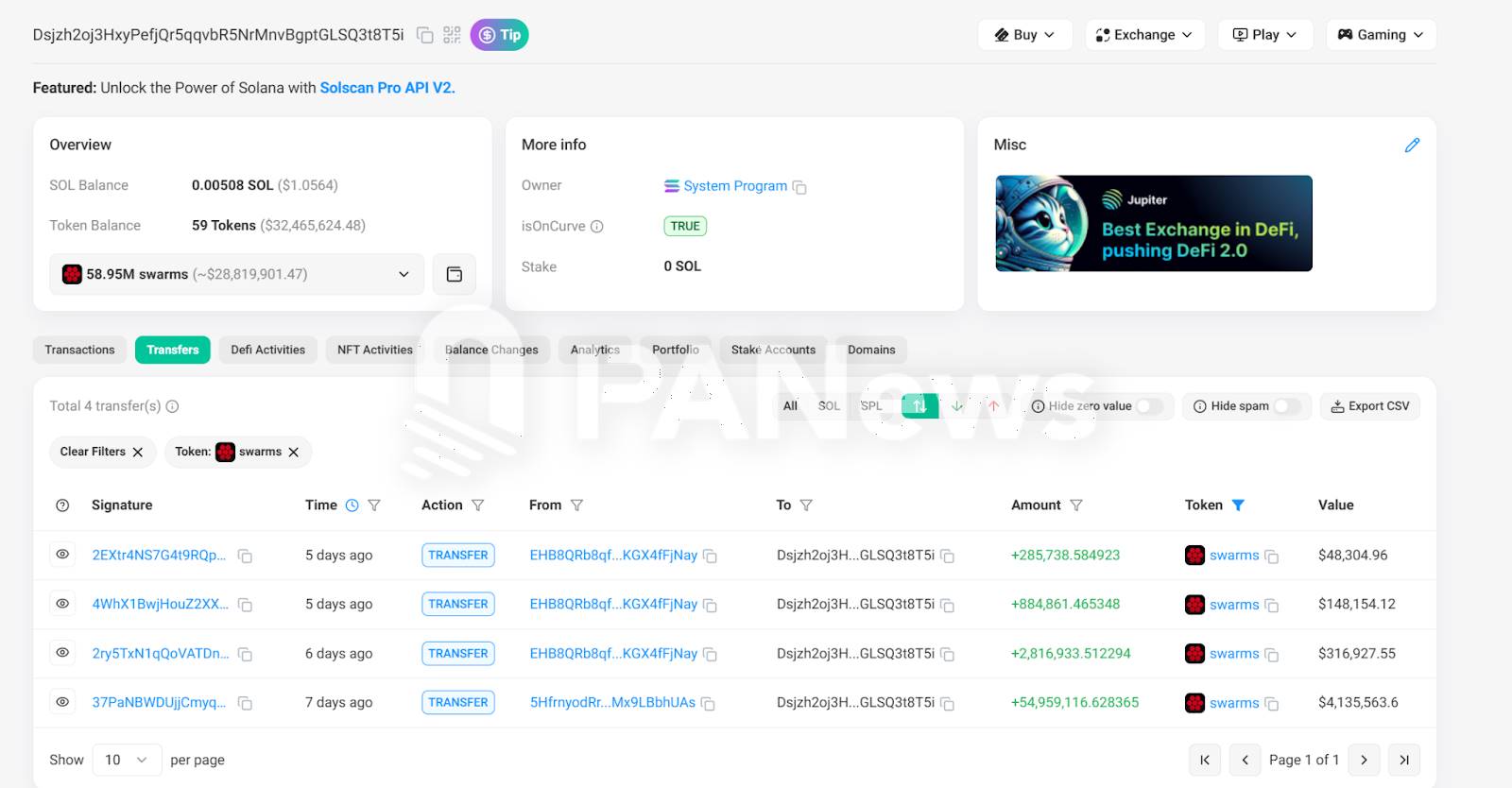
The funding address 5HfrnyodRraAw63aRVPueD5Er4D1sRKMZBMx9LBbhUAs began aggressively purchasing as early as 8:22 AM on December 20, continuing to buy steadily, ultimately spending $1.89 million to acquire 54.95 million Swarms tokens at an average price of ~$0.034, realizing a current profit of approximately $25.44 million.
Tracking further reveals associated activity starting even earlier—at 7:13 AM (Swarms launched at ~6:45 AM on December 20). Notably, this address had previously begun buying ai16z tokens as early as October 27, achieving a return of roughly 36x.
Another address, 5NQTp9jHbzS4N9yKMWxwm8pPZW3RFSFPze3Edwss7iLe, transferred in Swarms tokens valued at ~$3.63 million on January 4. Chain traces show it used several addresses to make scattered purchases around January 2 before consolidating all holdings into one wallet. Its current holding value stands at ~$5.26 million.
A similar pattern appears with address H1zFMUjYLzJwcfgXEtwiJ2ykvxmBr7JW6afW29PkcEAe, holding ~$2.27 million in Swarms. This address initially sourced tokens from Bitget Exchange, followed by multiple on-chain purchases.
Together, these three addresses represent an initial investment of nearly $10.53 million. Their acquisition strategy—using multiple wallets to disperse early buys, then consolidating holdings once Swarms gained attention—has turned them into what on-chain hunters call “smart money.”
27% of Addresses Hold Multiple AI Agents – Who Is Driving the AI Agent Trend?
Beyond analyzing Swarms, PANews compared the top 1,000 holders of six tokens: Fartcoin, GRIFFAIN, ZEREBRO, ai16z, arc, and Swarms. Among the 6,000 addresses analyzed, 1,647 appeared more than once—meaning about 27% of these addresses hold multiple AI Agent-related tokens. ZEREBRO appears to be the most favored by whales, held by 405 overlapping addresses, followed by arc (368) and ai16z (334).
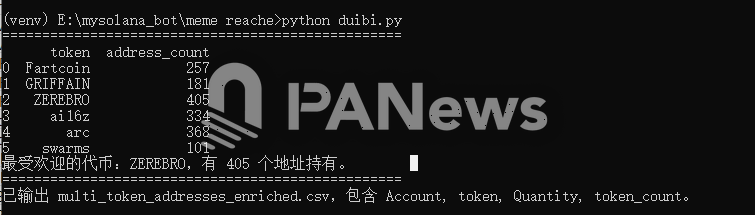
Among these, the largest holder, DJnHztNmw1H56uYm98PNu5eVZ5yhi9482rZ9zA22TUUz, currently holds AI-themed tokens valued at ~$49.86 million, with ~$42.7 million invested solely in ai16z. This isn’t their full portfolio—just a month prior, they profited tens of millions from earlier investments in ZEREBRO and GRIFFAIN.
Another address, 3xzTSh7KSFsnhzVvuGWXMmA3xaA89gCCM1MSS1Ga6ka6, holds ~$42.84 million in AI-related tokens, with total on-chain holdings exceeding $73 million. According to social media clues, this address likely belongs to Truth Terminal, an early AI Agent project.
There are many similar cases. Across the dataset, these 1,647 whale addresses collectively hold over $1.58 billion in AI-related tokens. Of them, 29 addresses hold more than $10 million each in AI assets, totaling ~$690 million in combined holdings.
Rather than calling AI Agents the hottest trend of 2025, it might be more accurate to say they are fundamentally better narrative vehicles in the eyes of large capital investors.
Analyzing Trading Behavior Matters More Than Chasing Smart Money Addresses
As on-chain data analysis deepens, tracking smart money has become a mainstream practice. But from a whale’s perspective, early accumulators do not want too many retail traders entering early and competing for low-cost chips. Hence, frequently switching wallets and分散 purchasing are standard tactics for manipulative players.
As a result, blindly chasing so-called “smart money” can backfire—investors may instead become targets of deliberate liquidations. Yet repeated analysis of whale behavior shows that even with fresh addresses and分散 buys, logistical challenges arise in fund management and consolidation. Therefore, whales usually need to eventually gather funds into one or a few central addresses for easier control. They may also use small purchases during peak periods to stimulate follower trades. Secondly, to rapidly accumulate large positions early, these players must make substantial purchases within tight time windows. Even if transaction sizes are分散, such consistent, high-volume activity can still leave detectable footprints. After all, given their typical investment scale—ranging from hundreds of thousands to millions of dollars—such aggressive buying reflects strong conviction rarely seen among ordinary participants.
In summary, for average retail investors, trying to chase smart money through on-chain tracking may yield better results by focusing on behavioral patterns rather than specific addresses. Of course, an essential prerequisite is thinking like a whale: identifying which themes will form compelling narratives. Otherwise, amid endless new tokens, blind pursuit is no different from searching for a needle in a haystack.
Join TechFlow official community to stay tuned
Telegram:https://t.me/TechFlowDaily
X (Twitter):https://x.com/TechFlowPost
X (Twitter) EN:https://x.com/BlockFlow_News
 PANews