








Why is MSTR in such a hurry to jump the gun on premium?
TechFlow Selected TechFlow Selected
Why is MSTR in such a hurry to jump the gun on premium?
By selling shares at 2-3 times book value, MSTR is effectively buying bitcoin at a steep discount.
 Navigating Web3 tides with focused insights
Author: Zhang Yaqi, Wall Street Insights
MicroStrategy (MSTR) has continued its aggressive Bitcoin accumulation for the ninth consecutive week—buying more even as its stock price declines. What's behind this seemingly paradoxical strategy?
On the 6th, Craig Coben, former head of equity capital markets at Bank of America Global, wrote in a column for the UK's Financial Times that MSTR’s strategy appears to have a structural flaw: the company tends to buy more Bitcoin when its price is higher. This approach carries significant risk. If Bitcoin falls, MSTR’s net asset value premium shrinks, its share price drops, and its $7.2 billion convertible bonds could face repayment at maturity rather than conversion into new shares.
While Bitcoin remains around $100,000, MicroStrategy’s stock price has declined. Since peaking at $552 per share on November 21, the company’s stock has dropped by 40%.
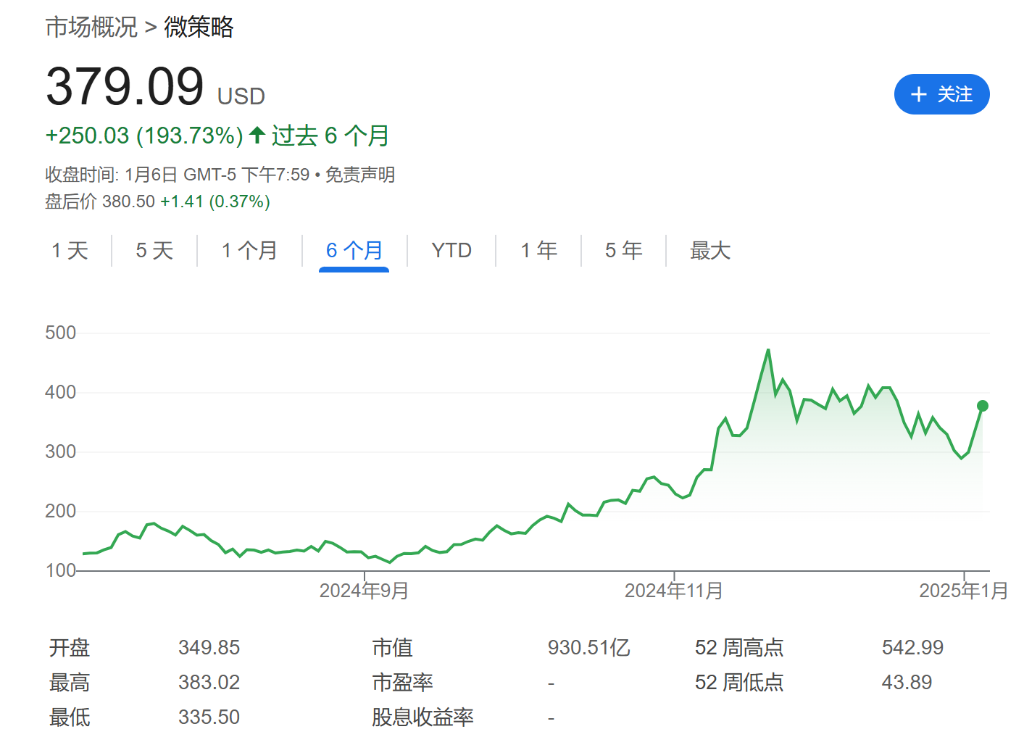
Consequently, the company’s premium over net asset value has fallen from a high of 3.8x to 1.9x. Notably, MSTR executives have been selling large amounts of company stock—cashing out $570 million in 2024 alone.
At the same time, MSTR has accelerated its Bitcoin purchases. A planned $21 billion "at-the-market" stock offering, originally structured as a three-year program, has already completed two-thirds within just two months. According to JPMorgan analysts, MSTR accounted for a staggering 28% of total inflows into the cryptocurrency market in 2024.
MSTR is simultaneously selling company shares while aggressively buying Bitcoin. Analysts suggest that by selling shares at 2–3 times their net asset value, MSTR is effectively purchasing Bitcoin at a steep discount.
Racing Against the Premium!
MicroStrategy appears to be engaged in an urgent effort to scale up fundraising. Last Friday, the company announced plans to issue up to $2 billion in perpetual preferred stock this quarter to buy more Bitcoin. Just over a week earlier, MSTR sought shareholder approval to increase its authorized shares from 330 million to 10.33 billion—a more than 3,000% increase.
Coben believes this pattern suggests that company leadership recognizes the current net asset value premium may not last, and they are racing against time to exploit this opportunistic window.
The behavior of MSTR’s senior management has also drawn attention. Chairman Michael Saylor publicly denounces diversified investing and has even advised investors to mortgage their homes to buy Bitcoin. Yet other company executives have sold substantial amounts of stock—$570 million worth in 2024 alone.
Coben points out that MSTR tends to buy more Bitcoin when prices are higher. During the crypto winter of 2022–2023, when Bitcoin traded between $10,000 and $20,000, MSTR significantly slowed its purchases. But as Bitcoin’s price surged, so did the company’s buying spree.
As long as Bitcoin continues rising, MSTR can maintain its net asset value premium—an essential pillar underpinning the entire strategy.
However, this strategy carries substantial risk. If Bitcoin falls, the net asset value premium will shrink, share prices will decline, and the $7.2 billion in convertible bonds could face mandatory repayment instead of conversion into equity. Given that MSTR’s software business is unprofitable and Bitcoin itself generates no cash flow, such a scenario would pose severe challenges for the company.
Coben argues that MSTR’s current wave of executive stock sales is precisely aimed at mitigating this risk:
By selling shares at 2–3 times their net asset value, MSTR is effectively acquiring Bitcoin at a significant discount.
Join TechFlow official community to stay tuned
Telegram:https://t.me/TechFlowDaily
X (Twitter):https://x.com/TechFlowPost
X (Twitter) EN:https://x.com/BlockFlow_News


