MIRA: Uplifting Cancer Research with the Form of a MEME
TechFlow Selected TechFlow Selected
MIRA: Uplifting Cancer Research with the Form of a MEME
Let the candlelight of crypto hope illuminate more places.
 Navigating Web3 tides with focused insights
By Pzai, Foresight News
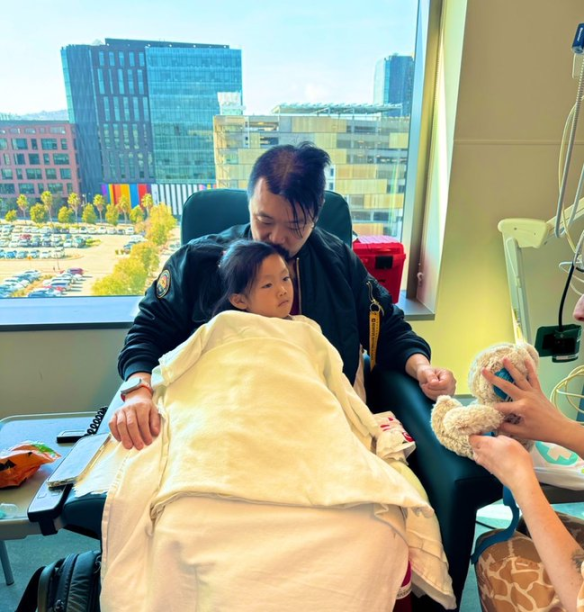
In the world of cryptocurrency, meme coins are often seen as symbols of speculation and entertainment. However, the emergence of MIRA appears to break this stereotype. It is more than just a token—it carries a father’s deep love and hope to raise research funds for his young daughter Mira, who suffers from a rare brain tumor. When cryptographic consensus meets a family's hopes, what kind of spark will be created?
A Community-Driven Fundraiser
On December 25, Siqi Chen, CEO and CFO of startup financing platform Runway, shared that his four-year-old daughter Mira had been diagnosed with a rare craniopharyngioma. Though benign, the tumor is located in a critical area of her brain, posing significant risks. In his search for hope amid despair, Chen partnered with Dr. Hankinson’s lab at the University of Colorado to advance research toward a cure.
Following a successful surgery, Chen turned his focus outward, urging well-wishers to contribute to pediatric brain tumor research. However, the high cost of rare disease research became a major obstacle—until an anonymous user named Waddles launched the MIRA token on Solana, gifting 50% of the supply to Siqi Chen, aiming to harness the power of the crypto community to fund vital research. “When I saw the story about Mira and her illness,” Waddles wrote on X, “I thought buying and sending you tokens would be great—hopefully enabling the Solana community to support a charitable cause this Christmas.”
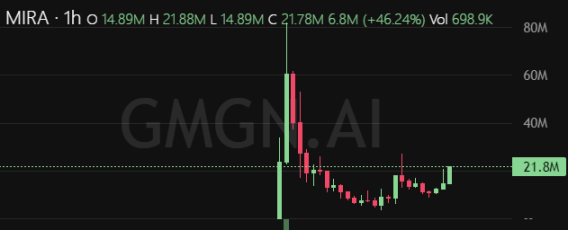
Fueled by community momentum and surging attention, the MIRA token skyrocketed to an $80 million market cap within a single day, with trading volume exceeding $100 million. At its peak, Chen’s holdings alone were worth over $14 million.
Chen committed to selling $1,000 worth of MIRA every 10 minutes, pledging to donate 100% of proceeds to the lab’s rare cancer research. He also initiated a community vote on whether to continue the sales—65.7% voted in favor.
“I’ve been online for 30 years and seen some things, but this has been the craziest day of my life,” he said. Yet after the meme-fueled surge, Chen urged profiteers to donate a portion of their gains, emphasizing that the original purpose was to help rare disease patients—not to fuel speculation. This sparked deeper discussions about whether emotionally-driven memes are vulnerable to exploitation by speculators.
The fundraising effort for rare disease research far exceeded expectations. By December 30, MIRA had raised over $1 million for the laboratory, surpassing the initial $200,000 goal. The original GoFundMe campaign also neared its $300,000 target, further bolstered by cryptocurrency donations.
MIRA’s success was amplified by active participation from the Solana community. Prominent Web3 figures like Shaw, founder of ai16z, donated 100,000 DegenAI tokens to support Mira’s treatment and research. Bio Protocol suggested that funding decentralized science (DeSci) could become a primary use case for crypto in the next cycle.
In real-world contexts, rare disease research is rarely funded. Use cases like BIO and Pump.science are laying the groundwork for DeSci financing, and MIRA emerged at a pivotal moment, demonstrating this urgent need.
Conclusion
The rapid rise of MIRA not only highlights cryptocurrency’s unique advantages in philanthropy—transparency, speed, and global participation—but also sparks profound discussion about the intersection of goodwill and speculation. Despite wild fluctuations in MIRA’s market value, Siqi Chen remained steadfast in the original mission: urging profit-takers to donate, and directing all proceeds toward rare disease research. This community-powered act of charity brought hope to Mira—and offers valuable lessons for the future of crypto-based giving.
The story of MIRA shows that when technology meets humanity, cryptocurrency can transcend speculation and entertainment to become a force for change. It reveals how compassion and innovation can move forward together, lighting a beacon of hope for those who need it most.
MIRA is more than a meme coin—it is a charity miracle driven by community action. It leveraged the power of crypto to bring hope to rare disease research, while prompting deep reflection on the future of blockchain-enabled philanthropy. Perhaps the true miracle lies in this: when we collectively choose kindness in different ways, the world really can become a better place.
Join TechFlow official community to stay tuned
Telegram:https://t.me/TechFlowDaily
X (Twitter):https://x.com/TechFlowPost
X (Twitter) EN:https://x.com/BlockFlow_News
 Foresight News