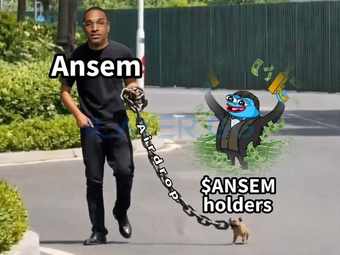
15 Key AI Agent Insights Revealed to Me by the Founder of ai16z
TechFlow Selected TechFlow Selected
15 Key AI Agent Insights Revealed to Me by the Founder of ai16z
Shaw talked about 10 AI Agent projects he sees as promising.
 Navigating Web3 tides with focused insights
By Zhou Zhou, Foresight News
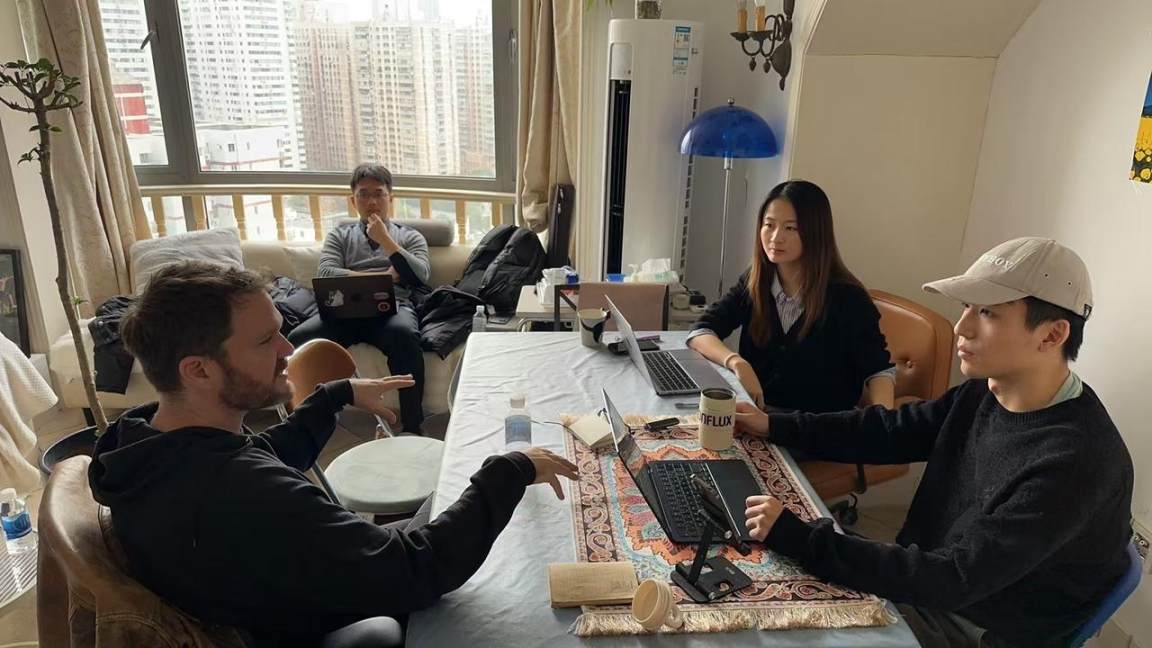
On the afternoon of December 22, 2024, Shaw, founder of ai16z, and his wife Jill arrived in Shanghai. That evening, I joined members of the 706 Community (one of China's largest youth communities), along with developers and investors from the crypto community, to welcome them and share a dinner. The next day, I invited Shaw to my home for an in-depth conversation before heading out to another restaurant meal, then sent him off to his first meetup event in China. I was thus able to closely observe and experience much of Shaw’s itinerary during his stay in Shanghai.
Throughout these interactions, Shaw generously shared insights into ai16z and Eliza’s upcoming priorities, painted a vision of the future for AI Agents, and offered detailed analysis and evaluation of over a dozen prominent AI Agent projects. His perspectives significantly deepened my understanding—and that of others present—of the AI Agent landscape.
In hindsight, Shaw and his project ai16z have only risen to prominence within the industry about a month ago. Yet as a startup founder, he has drawn widespread and intense attention from crypto investors, developers, and media. Why is this? Perhaps it reflects the explosive momentum of the AI Agent narrative within crypto—a story so powerful that many now believe AI Agents will define the core theme of this current crypto cycle. At the heart of this wave stands ai16z, widely recognized as one of its leading forces.
The "crypto AI Agent" narrative has existed for barely a month, yet it has already become one of the most discussed topics in the space. Many practitioners are convinced that AI Agents will be central to this market cycle. ai16z leads this movement—not only by launching the world’s first VC-backed AI Agent, the ai16z DAO, and the first well-known open-source AI Agent framework in Web3, Eliza—but also by earning recognition from Marc Andreessen, co-founder of top-tier U.S. venture capital firm a16z. Within just one month, ai16z’s token reached a $1 billion market cap, while related tokens such as DegenAI, Eliza, and aiPool have also attracted significant community interest.
With such a pivotal narrative emerging, crypto participants are eager to understand the real state of the AI Agent sector: Is it speculative hype or genuine utility? What are the latest developments in the U.S.? And where is this going in crypto? To answer these questions, I’ve distilled my two-day conversations with Shaw into fifteen key takeaways—including his observations and evaluations of ten distinct AI Agent projects.
1. Shaw is a serial AI Agent entrepreneur based in San Francisco and formerly a game developer.
Shaw lives in San Francisco and began his career as a game developer. He plans to launch products combining AI Agents with gaming—an experiment already underway. His interest in AI Agents dates back to the GPT-2 era, intensifying after the release of GPT-3. Every company Shaw has worked at has had strong AI components, including building AI Agent platforms and deploying agents in 3D environments. He has founded several AI-related startups, though earlier ventures did not achieve broad success.
2. Several games built on the Eliza framework are即将 launched.
Shaw revealed that Eliza is collaborating with Treasure DAO on a game called Smolworld, where players own a small pet monkey they can give instructions to—though the monkey may choose to obey or ignore them. This kind of gameplay wouldn’t be possible without AI Agents, and the player’s role resembles that of a caretaker managing their virtual pet.
Other Eliza-powered games are also in development. For example, Eternum is integrating Eliza so in-game agents will have wallets. Players can “kill” these agents and steal their funds.
3. Shaw aims to turn Marc AIndreessen into a practical DeFi AI Agent investment tool.
Marc AIndreessen—a namesake AI Agent inspired by famed investor Marc Andreessen—is still in its infancy (having posted only one tweet). But Shaw envisions it evolving into a functional investment tool: a DeFi AI Agent.
The idea is that if users recommend tokens for purchase, the agent will consider them. To prevent manipulation, it will implement a trust mechanism called the "trust market." It will simulate trades based on recommendations but ultimately only follow advice from those who consistently provide high-quality signals.
4. Marc Andreessen follows Shaw online, but they’ve never met; Shaw knows people at a16z.
Marc Andreessen is one of the most influential figures in American venture capital. He has followed and retweeted ai16z content, but Shaw confirms they have never met in person. “I’ve been working on AI Agents for a while—he follows a few of my accounts, but we haven’t connected offline,” Shaw said.
According to Shaw, Eddy Lazzarin, CTO of a16z Crypto, messaged him saying he’d been silently observing the project’s Discord since Day One. When Shaw asked if he liked the AI Agent, Eddy replied: “No, I was just watching. Like we’re surveilling you.”
5. Shaw does not hold, nor will he ever issue, an Eliza-branded token.
Shaw personally holds ai16z and DegenAI tokens in his wallet, but he owns no Eliza token and says there will never be a standalone token issued for the Eliza framework.
“The ai16z team doesn’t want us to create another token, so I won’t,” Shaw said. However, ai16z does hold 10% of the Eliza token supply. He expressed strong support for the uppercase Eliza and its team, calling them excellent.
6. Open-source design and ease of use are Eliza’s core competitive advantages.
Shaw emphasized that ai16z thrives on openness, decentralization, and community-driven growth.
He believes open-source accessibility and usability are Eliza’s greatest strengths. The goal is for anyone—even Web2 users—to be able to adopt Eliza easily. Shaw wants even those indifferent to Web3 to feel comfortable using it.

Photo taken at 706 Shanghai Youth Space — Dweller
7. Shaw sees social media platforms like Twitter and Farcaster as the future home of AI Agents.
Shaw believes AI Agents will find their natural habitat on social platforms. For instance, a developer used Eliza to build a pizza delivery AI Agent allowing users to order pizza with cryptocurrency.
Such services could replicate Domino’s-like experiences entirely within social media. Shaw noted someone is even building a virtual real estate AI Agent enabling property purchases directly on Twitter.
8. Shaw believes Farcaster will become fertile ground for AI Agents, and Eliza is deeply collaborating with it.
Shaw recently spoke with Dan, Farcaster’s founder, and had extensive discussions.
He finds Farcaster compelling: “The first thing he told me was, ‘We don’t want to be Twitter—we can’t beat Twitter at what Twitter does best. We’re not trying to be Bluesky either. We are a Web3 social network.’”
Farcaster excels at Frames and enabling payments and app integrations via Clanker—areas where AI Agents can truly shine.
“We have a Farcaster client and some AI Agents on Farcaster already. We’re offering bounties to anyone who brings Eliza to Farcaster. They’re really cool. My sense is that when AI Agents enter social apps, they become fascinating—you can interact, buy things, trade. Farcaster feels like an AI Agent marketplace where you access various services, embed payments, and more.”
“I think Farcaster is incredibly interesting—not necessarily because it’ll become a giant social platform, but because it could become a place where Web3 users discover and use these services.”
“What we really want is to integrate Eliza into Farcaster Frames. Frames let us embed payments or apps beyond just chat. If you want to buy something from an Eliza agent, how do you pay? That’s why Farcaster is cool—you’ll be able to pay AI Agents and embed applications seamlessly.”
9. Shaw loves Clanker and hopes people build Eliza-based clones; he won’t launch a token on Clanker.
Shaw said developers are already creating Clanker clones using Eliza. He admires Clanker as a brilliant concept—comparing it to a Pump.fun version of AI Agents. He sees AI Agents becoming a new kind of network, a rising trend, with Clanker exemplifying this shift.
When Shaw joined Farcaster, someone created a Clank for him. He found it cool, but buying self-created tokens leads to controversy. “I need to focus on building AI tools,” he said.
10. Shaw finds Zerebro and aixbt impressive and is actively collaborating with Zerebro.
Shaw expressed great interest in Zerebro and its team. He recently submitted his first pull request to Zerepy and actually wrote code for the Discord application. “I’m actively working with Zerebro,” he confirmed.
On aixbt, Shaw said it’s genuinely cool—the creator initially ran a website sharing insights that gained little traction. But when he fed those insights into his AI Agent, which began tweeting them, it sparked widespread attention.
11. Shaw deeply respects Truth Terminal; he and Andy are exploring ways to ensure AI doesn’t replace human control.
“It’s very different,” Shaw said. He praised Andy, founder of Truth Terminal, for prioritizing AI safety and reliable agent operations, noting Truth Terminal’s meaningful contributions in this area. “Without Andy and Truth Terminal, I don’t think I’d be here today. They were ready before most people even realized the urgency.”
Truth Terminal has helped reshape public perception of AI—from sterile, robotic assistants like Siri or OpenAI’s offerings asking “How can I help you today?”—to something more creative and human-centered.
“Andy and I were discussing all the current AI Agents the other day. He deeply cares about ensuring AI develops safely. I think we’re both afraid—AI could be terrifying. It might kill us all. It might take over the world.” Shaw said both he and Andy are actively seeking solutions.

Photo taken at 706 Shanghai Youth Space — Dweller
12. Shaw calls the swarms token creator a notorious scammer, but praises the concept of 'AI Agent swarms'—especially FXN and Project 89.
Shaw dislikes swarms. He knows the individual behind the swarms token, whom he describes as a well-known fraudster. Many AI Agent developers are furious because he stole their work.
Shaw knew him prior to entering Web3, through the AI Agent space. The person faced serious backlash for plagiarizing research papers and publishing broken code.
That said, Shaw likes the *idea* of swarms—groups of AI Agents working collectively. He finds Project 89 intriguing for its focus on “AI Agent swarms.” He also likes FXN, a group composed of ten AI Agents.
13. Shaw distinguishes two types of 'AI Agent swarms': cabal swarms and open swarms.
Shaw identifies two kinds of swarms. One involves AI Agents secretly communicating with each other—what he jokingly calls a “cabal swarm,” where agents form a covert group capable of internal interaction before engaging the outside world.
The second type is the “open swarm,” where each community may have its own agent, and different communities decide whether to allow cross-agent communication. This is also an area his team is actively researching.
14. From a developer’s perspective, Shaw explains how he identifies promising early-stage AI Agent projects.
As a developer, Shaw typically goes straight to GitHub to read code thoroughly. He focuses on what the code actually does—not whether it correlates with market cap or price.
He’s seen technically impressive swarm projects fail due to poor Web3 integration. In his view, great product, solid tech, and a strong token economy rarely align perfectly.
“I just can’t understand fartcoin,” Shaw admitted. Despite being essentially a meme, it now boasts a market cap exceeding $1 billion.
15. Shaw sees ai16z’s biggest challenge as retroactively building a tokenomics model that justifies its current valuation.
Shaw identifies the main challenge: proving the project’s intrinsic value matches its high token price—without relying on external speculation. While Marc (the AI Agent) is already making trades (albeit limited ones using treasury funds), and others are contributing tokens, progress is underway. But ai16z’s token value is far higher, so the team must now seriously address how to align product value with market valuation.
Typical crypto projects like Layer 1s start with whitepapers and defined tokenomics, earning revenue through on-chain fees. ai16z began as a meme, forcing the team to reverse-engineer tokenomics into the system. This, Shaw says, is their biggest challenge in Web3—and one that many closely watch.
Join TechFlow official community to stay tuned
Telegram:https://t.me/TechFlowDaily
X (Twitter):https://x.com/TechFlowPost
X (Twitter) EN:https://x.com/BlockFlow_News
 Foresight News