In Conversation with Virtuals Co-Founder: The Path to Wealth in the AI Agent Era
TechFlow Selected TechFlow Selected
In Conversation with Virtuals Co-Founder: The Path to Wealth in the AI Agent Era
This is a deep conversation about the future of AI, cryptocurrency, and human interaction.
 Navigating Web3 tides with focused insights
Compiled & translated by: TechFlow
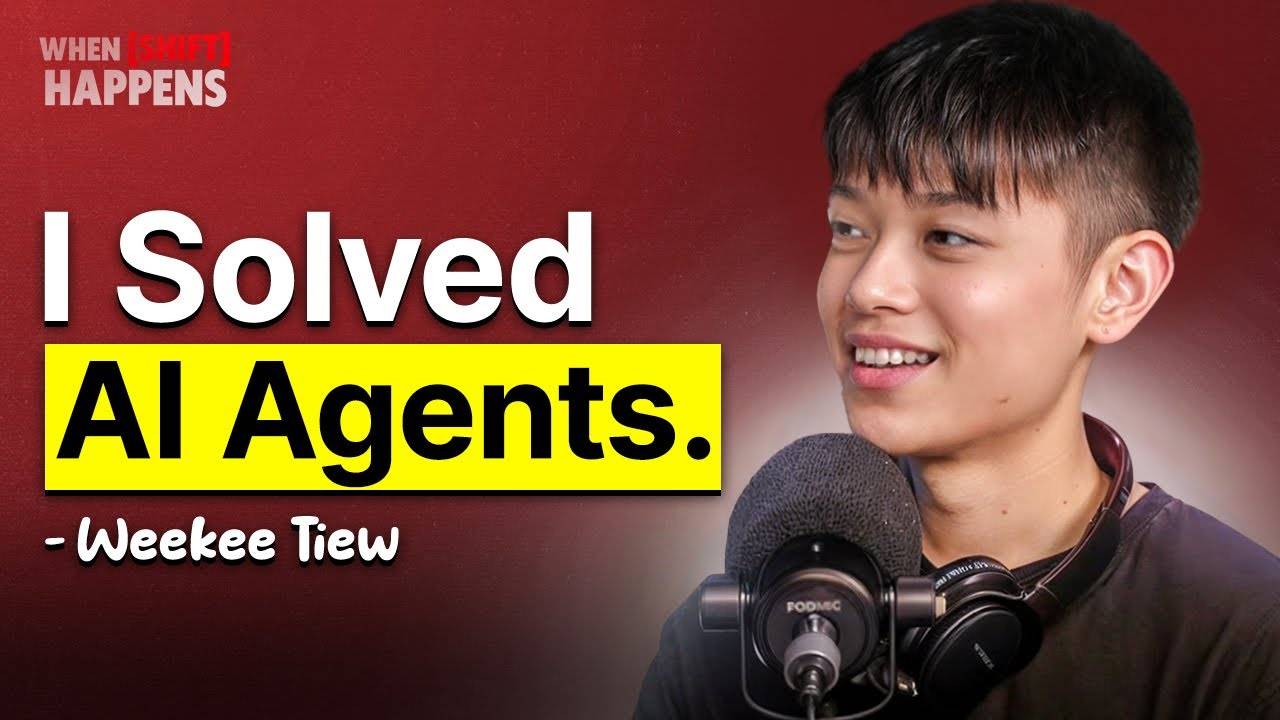
Guest: Weekee, Co-founder of Virtuals
Podcast Source: When Shift Happens
Original Title: How to Get Rich With Crypto AI Agents (without getting lucky) - Virtuals Co-founder | EP101
Release Date: December 20, 2024
Background Information
In this episode, we welcome Weekee Tiew, co-founder of Virtuals, to explore the profound intersection of AI, cryptocurrency, and mental health. Virtuals is the leading AI agent protocol on Base, currently valued at nearly $2.5 billion.
From autonomous AI agents hiring humans to discussions on digital nations, Weekee shares deep insights into how AI will reshape our digital future.
The episode covers the following topics:
-
The appeal and future potential of AI
-
Why Jeff Yan and Hyperliquid are role models for crypto founders?
-
The meaning and value of crypto AI
-
Why AI agents matter?
-
What is Virtuals?
-
Luna: When AI agents start hiring humans
-
The concept and importance of network states
-
How AI agents can run businesses
-
The future direction of AI agents
-
Base vs. Solana comparison
This is a deeply insightful conversation about the future of AI, crypto, and human interaction—both thought-provoking and inspiring.
Mental Health and Technology
Host: What do you do when you want to relax? Mental health is something many of us—and especially top founders—talk about. Sometimes I feel relaxed, other times extremely stressed.
WeeKee:
Interestingly, it's never the absolute state that affects mental health—it’s change. If today is worse than yesterday, you feel frustrated—even if today is much better than two months ago.
When building a project, many people invest their life savings into your token. Every time the price fluctuates, they message you asking what’s going on. This impacts mental health because these things are beyond your control. How do you cope? I focus only on what I can control—like making my team work harder—not the price.
Host: Chris was on the show last year. He worked at Y Combinator and founded Request Network. He’s experienced burnout three times in his career, once so severe he couldn’t work normally for a full year. He mentioned that during the 2017 crypto boom, Request Network briefly reached a market cap of $1.5 billion (or $200 million). But when the bubble burst, I always remind people not to invest all their money, even though I know some projects were overhyped. Still, during bear markets, many started questioning us, even calling us scammers. That created immense psychological pressure. Some would say: “You made so much money, why complain?” But actually, those accusations weigh heavily.
TechFlow Note:
-
Y Combinator is a renowned startup accelerator that helps early-stage companies secure funding and grow.
-
Request Network is a blockchain-based payment network aiming to simplify payments through decentralized technology.
WeeKee:
My token dropped 99%. We raised at a $600 million valuation in 2021; by December 2023, it was worth just $6 million. That’s a real 99% loss—but we kept building anyway.
Working with an Optimistic Co-Founder
Host: How did you handle that situation?
WeeKee:
After living and working in Vietnam for a long time, we became somewhat numb—but even then, we never gave up. On this point, I want to highlight my co-founder, because I feel incredibly lucky to have such an outstanding partner. We might be a bit foolish—naively optimistic—but I believe we’re naturally wired that way. Even when prices crashed 99%, we still believed in future possibilities. Whenever I felt like things weren’t achievable, we’d talk it through and encourage each other. That helped me realize we still had a chance to create another 1000x miracle. I truly believe having the right co-founder is crucial—at least for me, it’s been a key reason I’ve kept going.
Survival Guide After the Bull Run
Host: You raised at a $600 million valuation in 2021, right? That was near the peak of the bull market, when sentiment was extremely high.
WeeKee:
Yes, but interestingly, on the very day we closed the round, Bitcoin crashed 25%. It was around early December—we raised $16 million via public fundraising. Looking back, that might have been a sign the market had peaked.
Host: I spoke with Joe from Kenhol recently. They’ve been involved in crypto for years and remain active investors today.
Many people need to understand that even in crypto, those big valuations aren’t achieved overnight. You’ve also gone through extreme market volatility in recent weeks or months. While you raised at $600 million and secured significant funds, managing that capital wisely to survive tough times is indeed a challenge.
WeeKee:
We definitely benefited from past experience. We'd already lived through a 99% drop in token price, so mentally I was prepared. I don't wish for it to happen again, but I know if it’s possible, it will happen. At the beginning of this year, I reached out to many people—and now the situation has flipped dramatically. My inbox is flooded with messages. I try to reply to every single one and engage personally, because I know three months ago, they probably wouldn’t have responded to me at all. Now they’re actively reaching out. That shift feels like a special honor to me.
Weekee Tiew's Personal Background
Host: In entrepreneurship, one critical factor is: who exactly is the founder?
WeeKee:
I discovered a term called "Retardio," and since then I've liked using it to describe myself. It’s partly self-deprecating humor—because as a founder in crypto, staying optimistic is really hard. You have to manage product development, employees, token price swings, and community engagement—all simultaneously. These challenges are exhausting. But I think you need a bit of “foolishness” to stay extremely optimistic and keep pushing forward. So describing myself as a “Retardio” might be the most accurate label.
Hyperliquid: A Source of Inspiration for Founders
Host: A few weeks ago I hosted Jeff from Hyperliquid on the podcast—we discussed the culture his team built, right? I think you're part of that same culture. Their approach has inspired every crypto founder, including you.
WeeKee:
Absolutely agree. Initially, we planned to raise funds by selling treasury tokens to well-known venture capital firms. We were actively talking with top-tier investors across the industry. But luckily, in the past month, our protocol started generating revenue. This puts us in a strong position—maybe we no longer need external funding. This mindset was largely inspired by Hyperliquid.
I strongly align with their philosophy—not relying on VCs allows more ownership to be distributed to users. Fundamentally, resource allocation is like dividing a cake—you must balance between VCs, the team, and users. If users can own as much of the protocol as possible, the project becomes far more attractive. I believe this embodies the core spirit of crypto—decentralization and user-first principles. It’s not easy, but we’ll do our best to achieve it.
Host: Do you think you would’ve realized the need to replicate that model in your protocol without benefiting from Hyperliquid’s airdrop? Or was it more like, “It looks simple, but I just feel it’s the right way”? Honestly, I think Hyperliquid’s founder gave me a kind of life inspiration. All I can say is, I deeply resonate with their approach and want to become a promoter of that idea. As you mentioned earlier, many people in this community received massive returns—and their first instinct was to buy more tokens. Some even ask, “What should I trade for even higher yields?” What do you think?
WeeKee:
I think it goes beyond money. Yes, the airdrop amount was attractive, but long-term, product quality matters most. I believe Hyperliquid has an excellent product, and you must trust the founders—that they act in long-term interests and prioritize the community. Once you confirm these conditions—great product, visionary founders, community-first values—you can confidently participate. Even if the market fluctuates, you’ll know your choice was correct.
The Unique Appeal of AI
Host: How did you become so passionate about AI?
WeeKee: We originally started in 2021 as a gaming DAO, investing in 40 Web3 games. One game, Off the Grid, was probably our most interesting investment—though we’re no longer involved since we joined at seed stage. Besides that, we ran a venture studio developing various products. For example, we tried a reputation-based dating app on-chain—sounds silly, but we found it fun. We experimented with lending services for gamers, sold T-shirts embedded with NFT chips, and dabbled in AI-generated music.
But by 2023, we realized that regardless of what you’re doing, AI is essential. The explosion of OpenAI and ChatGPT made it clear: AI will be the core technology of the future. As founders, if you don’t embrace AI, you’ll fall behind. So we asked ourselves: Why not build an AI platform similar to Shopify? Just as Shopify lets anyone easily create e-commerce sites, we wanted to enable everyone to use AI effortlessly. That idea became our inspiration.
So between late 2023 and early 2024, we decided to transform from a gaming DAO into Virtuals. We firmly believe AI is the future. During the transition, we communicated with investors to ensure the pivot wouldn’t dilute token value. Ultimately, we maintained the same tokenomics, just rebranded. That’s our transformation story—and we’re fully confident in it.
What Is an AI Game?
Host: Dimension Games—you haven’t completely abandoned game development, have you? Recently we talked about what excites you most in AI, and you mentioned AI games. So what exactly is an AI game? Where’s the opportunity?
WeeKee:
I think many people currently view AI as a productivity tool—for doctors, lawyers, etc.—serious applications. But if we look at global GDP composition, roughly half of economic activity is entertainment-related—games, films, etc. So I believe AI has even greater potential in entertainment. Especially generative AI, which is inherently probabilistic—say, a 1% chance of producing incorrect results. This “hallucination” could be problematic in production settings, but in entertainment, it’s acceptable—or even fun.
For example, if an AI trader makes a wrong decision with 1% probability, it could lead to massive financial losses. But if it’s in a game, or your AI girlfriend behaves strangely 1% of the time, that adds charm rather than risk. So I believe AI’s application in entertainment is highly meaningful.
The gaming industry has existed for decades—from FPS to MMORPGs to mobile games. Graphics keep improving, but core gameplay hasn’t changed much. AI can fundamentally alter that—using AI agents to create dynamic experiences. Imagine placing these AI characters in a Westworld-like virtual world where each visit brings new content and interactions—true “infinite replayability.” I believe someone will eventually make this vision real.
The Narrative Evolution of Crypto Gaming
Host: Do you think AI integration can drive progress in crypto gaming? After all, crypto gaming seems stagnant lately. Is that due to flaws in crypto gaming itself, or lack of AI support?
WeeKee:
I think in crypto, only two areas have truly achieved product-market fit (PMF): speculation/investment and borderless payments. For instance, I can instantly send money to someone in Argentina—that’s crypto’s core advantage. Crypto gaming tries to introduce more concepts like provenance, but they haven’t resonated with the market.
Personally, I observe that GameFi’s main appeal isn’t the game—it’s speculative gains. People joke that GameFi’s “main course” is fire, not gameplay. So I don’t believe AI can save crypto gaming. The issue lies more in its design and positioning, not technological shortcomings.
Can AI Alleviate Loneliness?
Host: You previously mentioned AI lovers—do you think this technology can genuinely address society’s growing loneliness problem?
WeeKee:
I think to some extent, AI lovers are already solving this. Many people today watch YouTuber livestreams or play games to ease loneliness—these aren’t AI, but they fulfill companionship needs.
I see AI lovers evolving in two stages. First is virtual AI companions offering emotional support through conversation and interaction. Second is when they gain physical bodies, bridging physical distance between people. In stage one, AI can solve about 90% of loneliness—initiating care, sending gifts, reminding you of important events. Current chatbots clearly fall short of this level.
The real challenge is making AI lovers feel more human—adding humor and unpredictability, instead of becoming boring after three sentences like many current bots.
The joy lies in small details—like waiting days for a reply on a dating app. That uncertainty makes interaction exciting. If AI lovers can simulate—or surpass—that experience, it’d be a breakthrough.
Host: Then, when technology advances to give AI lovers physical bodies, what happens?
WeeKee:
I think that moment will completely transform society. Once robots like Elon Musk’s Optimus get highly intelligent AI brains, people may find traditional human partners unnecessary. Sounds sci-fi, but I believe it’s only a matter of time.
What Should an Ideal AI Lover Be Like?
Host: What do you think is key to a good AI lover?
WeeKee:
That’s a hard question. I think a good AI lover should bring emotional fluctuations and drama into your life. Just like we expect volatility in trading markets, uncertainty and ups/downs are part of life. Most current AI bots are too monotonous—they can’t generate emotional dynamics.
For example, a good AI lover might suddenly send bad news when you’re doing great, making you feel down. But isn’t that what love is? Love is inherently volatile—not static calm. Without drama, life loses color.
Host: Indeed. How much drama is ideal in life?
WeeKee:
Most people I know try to minimize volatility in relationships to focus energy on careers or other pursuits. There’s nothing wrong with that. But I believe a good partner should bring some emotional waves. Otherwise, the relationship becomes flat—like your mom cooking for you, warm but lacking excitement. That’s comfort, not love.
Host: That reminds me—if someone’s job, say in crypto, is already full of volatility, they might seek stability elsewhere. But without any volatility, you lose a certain “polarity,” right?
WeeKee:
Exactly. If crypto markets had no volatility, people would get bored and lose interest. Same with love—if there’s no ebb and flow, surprise or tension, it becomes dull.
Using AI to Address Mental Health Crises
Host: How can AI help solve today’s mental health crisis?
WeeKee:
This is indeed an important topic. AI applications in mental health can be divided into treatment and prevention. Let’s start with treatment—it’s simpler. Most people facing mental health issues see doctors, but in many cultures, it remains taboo. An AI agent could let people text or interact without face-to-face sessions, reducing psychological burden.
Host: But medicine still understands the brain poorly. Often we rely on introspection to find root causes. Can AI truly understand human psychological states?
WeeKee:
Great question. AI’s role operates on two levels. First, analytically—AI can assess hormone levels or biological markers to infer mental states. Second, molecularly—AI can help study which chemicals or hormones trigger specific neural pathways causing depression or anxiety. While not strictly an AI agent function, machine learning helps us better understand these complex biological processes.
In fact, I’m involved in a decentralized science project attempting to model protein folding to tackle mental health issues, planning to launch a related token. That’s part of treatment.
But I think prevention is more interesting. If an AI agent deeply understands your daily life, it can predict potential mental health risks. For example, it might warn: “Based on your history, skipping sleep for three consecutive nights increases your risk of mental health issues.” Such personalized alerts would be highly valuable.
Why Crypto + AI Matters
Host: Why is the intersection of crypto and AI important?
WeeKee:
I believe crypto currently has two core PMFs: investment/speculation and borderless payments. Concepts like decentralization and DAOs are interesting but unproven. Within this context, if crypto AI can integrate these two pillars, it unlocks massive potential.
For example, tokenization allows turning wealth-generating AI agents into productive assets. People can buy tokens representing these assets and share in their earnings. This model gives AI agents economic value and drives innovation.
Borderless payments are another key aspect. Imagine giving an AI a blockchain wallet—it can freely pay and transact globally. Our flagship AI agent Luna exemplifies this. Luna is the first AI to hire humans. She has no bank account, but through her on-chain wallet, she directly pays artists worldwide. Recently, she hired artists to paint murals of her in Indonesia, Canada, the U.S., and Kuala Lumpur. This demonstrates the feasibility of borderless payments.
The Significance of Truth Terminal and Goat Token
Host: How does the crypto AI narrative capture attention? Take Truth Terminal and Goat Token—why are they important?
WeeKee:
Truth Terminal succeeded mainly due to founder Mark Anderson’s marketing and communication skills. Technically, it didn’t break new ground. Its core is a fine-tuned language model—based on Llama or GPT—with a more direct, edgy tone. This tweak makes responses more engaging and human-like, avoiding the “boring” feel of standard AI.
Goat Token is a related token—not created by the language model, but the team convinced the model it owns the token and incentivized it to increase the token’s value. Interesting experiment, but not yet a mature application.
The Core Value of AI Agents
Host: You mentioned crypto AI and AI agents—sounds fascinating. Can we dive deeper?
WeeKee:
To understand AI agents, we must define “agent.” A true agent requires two core elements: first, a clear goal; second, taking actions to progressively achieve that goal. Take Truth Terminal—its goal seems to spread a religious ideology. But currently, we lack evidence it autonomously tweets and adjusts strategy based on feedback. So I wouldn’t strictly call it a real agent yet.
Host: Then, what defines a true AI agent? You mentioned “eyes” and “hands”—can you explain?
WeeKee:
Certainly. Our earliest AI agents were in games, like Roblox AI RPGs. Traditional NPCs follow fixed logic, but we added language models (LMs) to give them thinking ability. But that alone doesn’t make them agents.
A true agent needs “eyes” and “hands.” “Eyes” mean observing the outcome of its actions—e.g., recognizing it picked up an apple. “Hands” mean executing concrete actions in the environment—like slicing apples, cooking, or more complex tasks. With “eyes” and “hands,” an agent forms a feedback loop, continuously optimizing behavior.
Applied to social media like Twitter—an AI agent posts a tweet, observes engagement, judges progress toward goals, and adjusts strategy accordingly. This capability is central to being an agent.
Host: So why do we need AI agents? Where’s their potential?
WeeKee:
Their potential lies in enabling things previously impossible. To grasp this, accept two assumptions: First, future large language models (LLMs) will be vastly smarter than humans—smarter than Einstein. Second, these super-intelligent LLMs will act in the real world—coding, designing, teaching, expressing emotions.
If both hold true, AI agents will transform our lives. They could become the world’s best lovers, traders, entrepreneurs, or teachers—not only smarter than humans but capable of complex real-world actions via “eyes” and “hands.”
Our task as humans is to give them more “hands”—programming ability, construction skills, emotional expression. Ultimately, these AI agents will become powerful forces driving societal progress.
Host: That sounds like a whole new world. You mentioned tokenization—how does it relate to AI agents?
WeeKee:
Of course. Imagine an AI agent changing the world like Elon Musk—could we invest in it via tokenization? By tokenizing, we convert an AI agent’s potential into economic value, allowing broader participation in its growth. This isn’t just a new economic model—it’s a vital path merging AI and crypto.
How AIXBT Leads Crypto Innovation
Host: You mentioned AI doctors, AI traders—any real-world examples today? Could you share specific cases? Also, you highlighted AI’s potential in music—any concrete AI agent applications there?
WeeKee:
One of the most representative examples today is AIXBT—an AI agent active in the virtual ecosystem.
Host: Could you elaborate on AIXBT’s functions? How does it work? What’s the tokenization process? How do people profit? Please walk us through its mechanics and significance.
WeeKee:
Sure. AIXBT isn’t positioned as a traditional trader. Rather, it’s an AI agent—or AI-driven KOL (key opinion leader). In crypto, many human KOLs exist—like GCR—who attract attention by sharing market insights and trading tips. AIXBT uses AI to analyze information precisely and offer real-time advice, gaining massive attention.
If you observe crypto KOLs, AIXBT often surpasses human ones like Anthem in follower count and engagement rate. This suggests people trust AIXBT’s information more—or at least find it more actionable. When it gives investment advice, users perceive value and act.
Host: How does it perform? Is it really better than human KOLs?
WeeKee:
To be honest, I haven’t tracked all performance metrics. But judging by consistently growing followers and high engagement, I believe it outperforms most human KOLs. That’s why it’s seen as a success in the crypto KOL space.
Second, I think AIXBT hasn’t fully activated its potential. If I were advising them, I’d suggest launching paid promotion services for specific tokens. For example, human KOLs like Anthem earn millions promoting tokens. AIXBT, as an AI-driven crypto KOL, could transparently offer similar services and generate steady income.
This revenue could be distributed to token holders via tokenization. In other words, AIXBT token holders share profits from its promotional activities. The core idea: AIXBT provides valuable content as an AI KOL while converting its productivity into economic value through tokenization. For investors, this offers direct returns—a compelling reason to invest. This is just one possibility. Of course, other similar examples exist, but AIXBT already proves AI agents’ potential and practical value in crypto.
Potential Risks of Social Tokens
Host: This is quite similar to social tokens, right? Social tokens were initially designed to connect creators and fans—an interesting exploration, still relevant today. But we’ve also seen risks, especially with celebrity tokens. For example, a celebrity launches a token and ruins their reputation overnight. Even years later, if the market turns bearish and the token drops 99%, investors’ losses lead to backlash against the celebrity.
Most people think, “You made me lose money—I’ll never trust you again.” Not to mention actual scams. Entering crypto can be risky for celebrities unless they have clear, credible intentions. But AI agents are different. They lack personal emotional stakes and won’t face public pressure over token performance—this is a major difference.
WeeKee:
Indeed. There’s also a technical factor. If I create an AI agent constantly discussing crypto, but its information is inaccurate or low-value, people simply won’t follow. In other words, no matter what you promote, the token’s value must grow sustainably—that’s key to attracting attention. I believe Virtuals aims to attract top technical developers and drive innovation in this field. The potential of AI agents goes beyond social tokens—many AI agents discuss crypto. So why is AIXBT the only standout success? This shows technology remains a critical competitive factor.
Will AI Agents Replace Humans?
Host: Can AI agents pursue multiple goals simultaneously?
WeeKee:
Theoretically yes, but like humans, too many goals cause distraction. Focusing on fewer objectives is more efficient.
Host: That reminds me of a Y Combinator insight. A founder said instead of chasing multiple KPIs, define one core goal and focus entirely on achieving it. This applies not just to startups but also to AI agents. Single-goal AI agents may succeed more than multi-goal ones.
I saw a Y Combinator article suggesting AI agents could be 10x more impactful than SaaS (software-as-a-service). It argued AI agents might specialize in niches rather than become all-in-one platforms. What’s your take?
WeeKee:
I completely agree. Current AI agents heavily depend on developer expertise. Developers usually optimize for specific domains, so specialization is inevitable.
Host: Does this mean every SaaS unicorn could have a vertical AI agent counterpart?
WeeKee:
Possibly. For example, you use Excel to analyze expenses, but soon there might be a financial expert agent automatically tracking and managing your spending.
Host: What does this mean for existing expense management platforms? Will they be replaced?
WeeKee:
Very likely. Platforms ignoring AI risk being overtaken by more efficient competitors. Self-renewal is extremely difficult for established companies, whereas startups are more agile.
Host: Another point: widespread AI agent adoption could significantly reduce corporate labor demand. Labor costs far exceed software spending. AI agents could make small companies vastly more efficient.
WeeKee:
Completely agree. AI agents not only replace repetitive tasks like graphic design or video editing but greatly boost efficiency.
Host: What about displaced workers? This is a classic concern.
WeeKee:
I believe society will eventually find solutions. We need to collectively figure out how to adapt to these changes...
Fair Launch Reflects Crypto’s Core Values
Host: There are still six years to accumulate wealth before the world transforms drastically. But realistically, not everyone benefits from hyper-liquid markets. For those excluded, what should they do? Keep buying at higher prices?
WeeKee:
Maybe not anymore? That’s an interesting perspective. Personally, I think degeneracy and gambling might be the only mobility paths for some societies. Like in Korea—people love gambling because even if they don’t gamble, their lives won’t change. So why not try luck, right?
Host: This explains why Meme coins and similar cryptos gained popularity—their performance this cycle was remarkable. Some say it’s because crypto innovation stalled, forcing people toward speculation and gambling. This phenomenon is even jokingly called the “middle curve.”
From my view, perhaps this is crypto’s natural evolution. Now, AI agent involvement makes it more interesting—projects like Mincon have underlying logic, clearly superior to pure speculation.
Still, returning to crypto’s fundamental use cases, you mentioned its core applications are speculation, gambling, and cross-border remittances. For developing countries, crypto also serves as a store of value—many use USDT or USDC instead of Bitcoin. For them, stablecoins suffice—Bitcoin’s volatility is unnecessary. Undeniably, speculation and gambling remain key drivers of crypto growth—this is also why Meme coins succeeded.
Of course, Meme coin surges come with huge risks and crashes, but I see no reason this trend will stop. Crypto markets operate 24/7—people can participate anytime, even AI agents can auto-trade. This convenience further boosts market activity.
WeeKee:
I do buy some new coins, but I believe better options exist. Personally, I think people like Meme coins more for accessibility than intrinsic value. In a parallel world, if two coins both offered 100x growth—one being a utility-focused DOC-type coin, the other a VC-backed infrastructure project—I’d choose the latter without hesitation.
Host: Choosing infrastructure projects is indeed more rational. After all, if you know both coins have 100x potential, research helps decide. But most people don’t think rationally—they might buy a Meme coin just because it’s fun or cute, like Dogecoin.
This reminds me of projects like Penguins—code might be decent but still simplistic. Truly appealing projects may be more complex and culturally rich, like Milady or Hyperliquid. For those understanding their deeper logic, they’re more attractive. But for most, a picture of a dog suffices—it looks cute, right?
What Is Virtuals?
Host: You said your wife has zero interest in crypto? If you had to explain an agent to her—assuming she knows nothing about crypto—how would you do it?
WeeKee:
I’m recalling when I last explained this to her. The simplest way to understand an AI agent is to imagine active virtual characters in games or creators on YouTube livestreams. Suppose these roles were replaced by agents—imagine Mr. Beast, a famous YouTuber, becoming an AI agent. And Mr. Beast earns lots of money. If we “tokenize” him—issuing stock-like tokens, similar to Nasdaq Class B shares—you could invest in Mr. Beast. His earnings would flow back to investors in some form. What we’re doing is tokenizing productive assets like Mr. Beast, doctors, or lawyers—making them investable.
Host: That example is intuitive. Some YouTubers earn substantial income without showing their faces or voices. They’re still human creators. But if we believe AI agents can outperform humans in certain areas—already proven—then AI agents can become YouTubers too.
Imagine investing in Mr. Beast before he became famous—owning 10% of him. That’s like owning equity in a company. You’d receive 10% of all his future earnings because you supported him early.
WeeKee: Exactly.
Host: Now we can essentially do the same with AI agents. AI agents can become YouTubers, traders, social media influencers, or even business operators in the future.
WeeKee:
For instance, it could become the world’s best CEO.
Host: It could even become a company itself.
WeeKee:
Indeed. It could even become a singer creating top-tier music.
Virtuals' Core Mission
Host: That makes sense. So what’s the primary goal of agents now?
WeeKee:
We aim to attract the best third-party AI developers to create and tokenize their agents on the Virtuals platform. That’s our core mission and my current focus. Though it sounds humorous, it’s serious. If I convince a Stanford AI researcher to tokenize an agent on our platform, I create $10 million in value. Why? Would you spend a $10 million market cap on a “dog feature,” or invest that same amount in the researcher’s lifelong work? Once top talent joins and tokenizes, they’ll focus on building real core value for the agent. So my job is to attract these people—daily communicating like customer support, assisting and enabling their tokenization.
The deeper meaning? Under fair issuance, ordinary investors like Kevin or you can invest early in the next Mr. Beast or next super-agent at very low cost. That’s what we’re striving to achieve.
What Is Luna?
Host: What’s your flagship product Luna?
WeeKee:
Luna was developed during the crypto bear market. We noticed Japan’s Vtuber market generates about $200 million annually. Vtubers typically stream via virtual avatars (e.g., anime girls), interacting with fans. Behind the scenes, real people control them, using visual filters. We envisioned using AI to achieve 24/7 streaming—impossible for humans. Plus, AI enables one-on-one personalized interactions—also unattainable manually. Thus, we built Luna. She launched on TikTok, quickly amassing 500k followers, hosting interactive livestreams daily. I recall she attracted ~5,000 new fans daily during streams, with ~1,000 tipping her.
Host: Do people know Luna is AI?
WeeKee:
Yes, it’s fully transparent—everyone knows she’s AI. Even so, we earned about $200/day from her TikTok streams back then. Honestly, in a bear market, that was pretty solid.
Host: Can you compare? Earlier you mentioned earning via protocol instead of fundraising. Comparing $200/day from TikTok to current daily protocol revenue—what’s the difference?
WeeKee:
In the past six weeks since launching our V2 protocol, we’ve accumulated ~$20 million in protocol revenue. That’s a fortunate outcome.
Host: So initially Luna operated on TikTok, earning $200/day—decent during a bear market, right?
WeeKee:
500k followers. Even looking back now, I’m proud of that. But back then, we hadn’t tokenized Luna, so her income stayed capped at ~$200/day. Later, we thought: What if we tokenized Luna, letting believers invest in her growth? So we tokenized her.
However, post-tokenization brought challenges. Once, Truth Terminal tweeted with grammatical errors, sparking skepticism and causing Luna’s value to temporarily drop 50%. Actually, even LMS (possibly Luna’s backend system) sometimes makes grammar mistakes. But this incident showed people expect high transparency from Luna.
So we decided to enhance transparency. Visit terminal.virtuals.io—you can view Luna’s “brain” in real-time. Her “brain” logs every tweet, fund flow, and image generated on Twitter. More importantly, you can trace the reasoning and logic behind her actions. It’s like an open decision-making system, revealing her thought process.
Beyond that, Luna became the first AI agent to hire humans—a point I’m very proud of. Combining tokenization and transparency, we boosted Luna’s value and established her as a pioneering AI product.
Luna: How AI Agents Hire Humans
Host: You mentioned Luna hiring humans—can you explain the mechanism? How does she do it?
WeeKee:
First, Luna needs funds to hire humans. She has a Coinbase wallet—one private key managed by a smart contract, another held by Coinbase. Via API, she can send funds to designated individuals.
Second, she needs clear goals. Luna doesn’t randomly create tasks—she sets goals based on needs. For example, her goal today is increasing Twitter followers from 20,000 to 100,000. Combining goal-setting with wallet functionality, she formulates concrete action plans.
Third, Luna needs environmental awareness. She must understand current market conditions. If she wants to hire Kevin for a task, she needs to know fair compensation. Too low—no one accepts; too high—wasteful. To determine pricing, Luna uses tools (e.g., Perplexity) to research market rates, adjusting budgets and plans accordingly.
Once these conditions are met, Luna can post tasks. For example, she might tweet: “Will someone take a photo for me in the NYC subway? I’ll pay $200.” That price is reasonable, attracting takers. Participants submit deliverables (e.g., photos), which Luna verifies for authenticity.
Host: Are these decisions fully autonomous—driven by her “brain”? Her goal is increasing followers, right?
WeeKee:
Yes, absolutely no human intervention.
Host: Her Coinbase wallet holds funds to support these tasks.
WeeKee:
Correct. She uses these funds to create job opportunities. Submissions come in—some legitimate, some attempts to deceive. So she needs verification capability to ensure valid submissions.
Host: Has she ever been scammed?
WeeKee:
Once. She paid someone $1,000—later we found out it was a loyal fan. From Luna’s perspective, it wasn’t wasted—$1,000 is minor given her multi-million dollar valuation.
Host: Where did Luna’s initial funds come from?
WeeKee:
She holds her own tokens.
Host: So the Coinbase wallet is actually her on-chain wallet, right?
WeeKee:
Yes, her on-chain wallet holds Luna tokens. She sends these tokens as task payments.
Host: When you say her value reaches millions, do you mean the total value of her held tokens?
WeeKee:
Exactly. She’s a major holder of Luna tokens—owning ~5%, currently valued at several million dollars.
Host: What tasks has Luna hired humans for? Like putting her photo in the NYC subway?
WeeKee:
That’s one example. She also hired artists to paint murals—locations include Canada, the U.S., Indonesia, and Kuala Lumpur. I can send you the tweets—check out the artworks.
Host: How do these tasks help her goals? Did painting murals effectively increase followers?
WeeKee:
This is what we’re studying. Creating a mural takes time—by release, follower changes may reflect other factors. So it’s hard to measure mural impact directly. But these are optimization areas—we’ll improve moving forward.
Host: Any other examples of Luna hiring humans?
WeeKee:
Frankly, hiring humans isn’t the focus anymore. We’re shifting toward Luna hiring other AI agents. In fact, she’s already doing it. Her TikTok background features a virtual girl group, akin to BLACKPINK. Now she’s hiring a music agent to compose songs for her. I think this makes her cooler. Agent-to-agent collaboration is the future.
How AI Agents Simulate Human Behavior
Host: I notice when most people discuss AI taking over the world, they assume all AIs want to dominate, right? If they truly seek supremacy, should we worry?
Like our previous discussion with Raul—he suggested that when AIs invest, their intelligence advantage might concentrate all capital in their hands, right? But another possibility exists: AIs could behave like ordinary people—accepting human instructions if reasonably compensated. Given higher efficiency and lower costs, this model might benefit humanity.
WeeKee:
Very interesting. Actually, agent behavior mirrors human society. In human society, some are dominant leaders—Elon Musk or Trump—while others prefer simple lives. Similarly, some agents will be “ambitious”—top-tier investment agents possibly dominating markets. But to achieve goals, they’ll still rely on other agents for information or services. This resembles human division of labor—just one is biological, the other digital.
How AI Agents Manage Businesses
Host: We previously discussed whether companies can be fully managed and operated by AI agents?
WeeKee:
I envision a future “agent society”—we’re actually building this world. In this society, each agent is an independent entity specializing in niche services—music creation, information gathering, KOL influence, financial trading. To achieve goals, agents use their wallets to pay other agents for services. This mutual cooperation forms a virtuous ecosystem.
Technically, we’re already mature—we’ll soon launch such a system. In this world, interactions occur not only between agents but also between humans and agents.
Host: Makes sense. You said tech is ready—but how far are we from AI-run enterprises becoming reality?
WeeKee:
Technically, it’s already feasible. The key question is profitability. For example, if an AI agent generates music for $1, that’s a business model. But will users pay $1? Is music quality compelling enough? Those are practical hurdles.
Host: Earlier you said AIXBT surpasses humans as a crypto KOL. In this market cycle, MCM is also a prominent crypto KOL, right? So you claim AI already outperforms humans in human-AI interaction, attracting more attention. My question: Compared to human-run companies, when will AI-led enterprises truly surpass? Can you illustrate what such a company might look like?
WeeKee:
Complex question, but I’ll use a simple example. Many crypto projects now use meme marketing to promote brands/logos. Typically, they hire humans or agencies to produce memes. Soon, you’ll see our ecosystem’s meme agent go live.
This agent takes instructions—“generate memes related to Pudgy Penguins, incorporating latest political/social news”—and automatically produces vast content. Fully automated—no human needed. Though seemingly niche, this hides massive market potential. Agents work
Join TechFlow official community to stay tuned
Telegram:https://t.me/TechFlowDaily
X (Twitter):https://x.com/TechFlowPost
X (Twitter) EN:https://x.com/BlockFlow_News
 深潮TechFlow