The Four Uses of Meme Coins: Evading Securities Laws, Political Speculation, Charity Fundraising, and AI Enlightenment
TechFlow Selected TechFlow Selected
The Four Uses of Meme Coins: Evading Securities Laws, Political Speculation, Charity Fundraising, and AI Enlightenment
Although most meme coins lack practical utility, they demonstrate innovative potential in the cryptocurrency space by gamifying the investment process and enabling decentralized fundraising.
 Navigating Web3 tides with focused insights
Author: Max Parasol
Translation: Tom, Mars Finance
Memecoins are not useless: they bypass securities laws, prevent venture capitalists from profiting, and are also a lot of fun.
Memetics is the essence of cryptocurrency: social trends, satirical humor, and the allure of absurd profits—all wrapped into a token with no functionality. They may not suit Warren Buffett, but they do appeal to masses of ordinary people seeking fun, community, and a lottery-like escape from their marginal circumstances.
"Memes are leading indicators," says Danny Yang, founder of OnChainMonkey, referring to the insane returns relative to other metrics. Memecoins gamify investing, drawing investors who rush to follow intangible trends—from election outcomes to joining newly launched coins within ten minutes of the arrest of the UnitedHealthcare CEO suspect. It's very much in the style of 4Chan.
Building communities, forging social bonds, and having fun are all part of the memecoin appeal. "Humans are social creatures; memes are about people finding entertainment in the same thing," says Yang.
The meme itself doesn't matter. It's a social game requiring many players, judged by how many people might want to participate.
But beyond silly fun and money-making opportunities, what are the real use cases for seemingly useless memecoins?

PNUT was suppressed but became stronger as a memecoin. (Elon Musk, X)
Use Case 1: Bypassing U.S. Securities Laws
First, let’s clarify one point—the very uselessness of memecoins is itself a special kind of use case. They circumvent U.S. securities regulations that crushed the ICO boom. Moreover, memecoins would specifically fall outside the scope of proposed expanded crypto powers by Australia’s Securities and Investments Commission. Why? Because they do nothing.
"Ironically, today it's actually safer to launch a memecoin with no use case than a useful token," wrote Chris Dixon, managing partner at a16z Crypto.
U.S. securities law focuses on the Howey Test to determine what constitutes an investment contract. Memecoins represent only a concept and promise no return from the efforts of others, thus falling outside the scope of this test. This regulatory friendliness has allowed memecoins to spread like wildfire during the crypto wars era (2022–2024).
Memecoins were the biggest crypto narrative of 2024, capturing 14.3% of CoinGecko’s market share in Q2. Now, with Donald Trump becoming president-elect, will they fade as the incoming SEC chair Paul Atkins may allow “real” projects to raise funds again under proposals similar to Hester Peirce’s 2020 “safe harbor”?
Use Case 2: Political Speculation
In a world where people use technology to recreate the social bonds they once experienced firsthand, memecoins allow holders to engage with and capture political zeitgeists. Memecoins have been created both in support of and opposition to candidates in U.S. presidential elections.
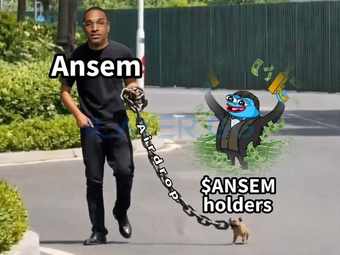
Memecoins are for everyone—even Gary Gensler. (X)
Argentina’s libertarian president Javier Milei even has a dedicated memecoin tied to his reforms. The social utility of allowing people to express political views monetarily can be seen as parallel to text-based donation drives run during major campaigns.
However, social engagement or utility should better be understood as capturing the "spirit of the times," believes Daniel Drescher, VP of Business Development at Sal’Ad Labs, who told Magazine that Elon Musk—Trump’s new ally and head of the future Department of Government Efficiency (DOGE)—is a prime example.
"How did Dogecoin become the gold standard in this uncertain Web3 landscape? They had perhaps the most powerful influencer or key opinion leader ever—the richest undefeated man on Earth, Elon Musk. He’s the inspiration for Iron Man. For Ayn Rand fans, he’s the godlike John Galt who built an engine bright enough to light the entire world."
Drescher prefers to see memecoins as "brand coins." Typically, they require a key opinion leader or cult-of-personality figure to drive the coin. Successful memecoins all have "fanatical followers who live and die for them. That’s what gets them out of bed every morning."
The zeitgeist analogy resonates. For instance, when then-presidential candidate Joe Biden stumbled on stairs, Kamala Harris memes surged—only for her to later be removed by Democrats as their nominee.
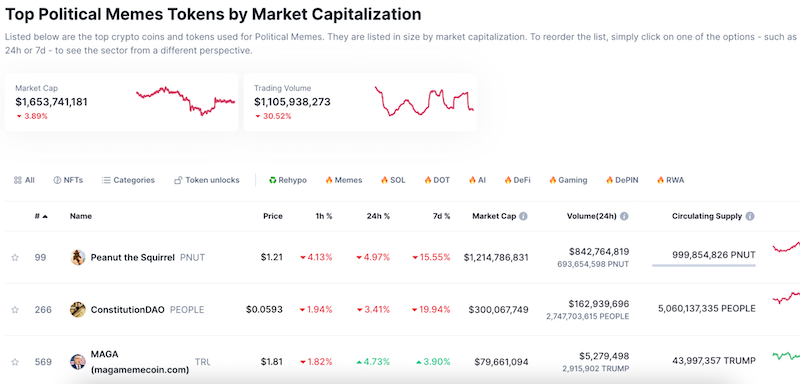
Political memecoins are popular. (CoinMarketCap)
Use Case 3: Trojan Horse for Charity
Memecoins can act as Trojan horses to fund more meaningful projects—such as raising money for charity, launching a casino like Iggy Azalea’s Motherland, or bootstrapping an exchange like ShibaSwap.
As Ethereum co-founder Vitalik Buterin—a figure known for donating memecoins to charity—wrote:
"Of the coins I’ve seen, the more interesting ones are those where a large portion of the token supply (or some ongoing fee mechanism) is dedicated to some charitable cause."
"Feels like there’s an untapped opportunity here to try creating something more positive and sustainable."
The NEIRO memecoin from the Neiro Foundation is attempting to become the next Dogecoin by blending utility with speculative upside.
The question is: who is the Trojan horse? Is it charity—or speculation?
The memecoin is named after Neiro, a rescued Shiba Inu adopted by Atsuko Sato—the owner of Kabosu, the original "Doge."

Doge vs. Neiro. (X)
The Neiro Foundation is a collective effort to fund rescue and welfare work for Shiba Inus globally, providing essential resources and financial support to shelters and charities improving Shiba Inu lives. This breed is prone to several common health issues, including hip dysplasia, glaucoma and cataracts, and progressive retinal atrophy.
SlumDOGE Millionaire gained public recognition after turning $180,000 into over 3 million DOGE, a journey documented in the film *This Not Financial Advice*. He now serves as the face of the coin and says: "Despite growing skepticism due to the rising popularity of memecoins, many critics overlook the fact that some memecoins have clear, positive missions."
Beyond viral humor, certain memecoins support charitable initiatives and thus gain fervent community backing. The best memecoins are built on strong narratives that resonate with an increasingly socially conscious Web3 user base, while demonstrating DeFi’s immense potential to advance philanthropy.
Use Case 4: Funding Launch of AI Agents
AI agents hold tremendous practical potential. Imagine an AI agent capable of automatically rebalancing your crypto portfolio so profits automatically shift into high-quality assets like Bitcoin, Ethereum, and SOL, preventing you from holding 90% junk coins.
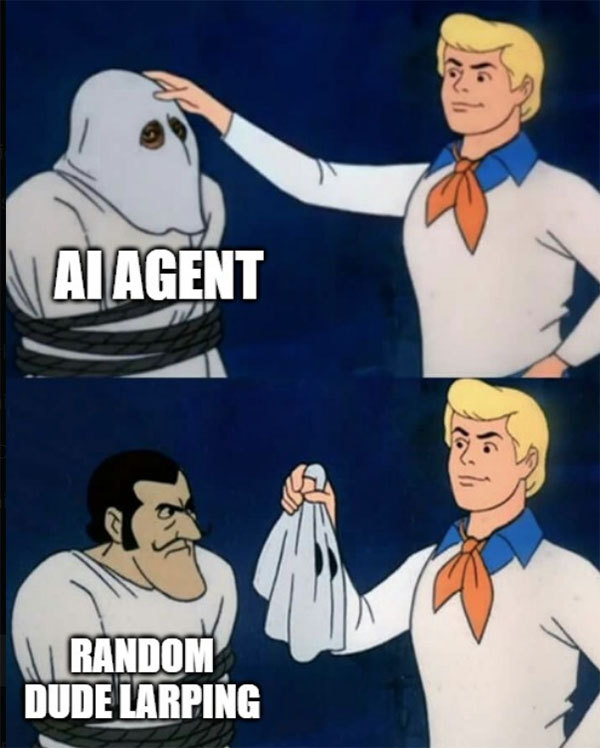
Sometimes, it's hard to tell robots and humans apart. (X)
It seems one day AI agents might actually govern autonomous DAOs. But currently, they're heavily concentrated at the endpoint of memecoin bot trading. Bots like Truth Terminal interact with users on X, generating artificial hype to boost community engagement and drive memecoin purchases.
Take Fartcoin, an AI-inspired memecoin that soared to a $900 million market cap on the immutable comedic principle that "hot air rises." It’s rapidly catching up to GOAT, another memecoin promoted by Truth Terminal.
The entire concept of autonomous AI agents launching memecoins is itself a meme—since many "AI agents" are just disguised humans, and GOAT was human-made. Yet the growing number of real agents highlights its potential.
"There’s a huge difference between smart AI agent memecoins and dumb memecoins," says Calanthia Mei, co-founder of Masa. Previously a founding member of PayPal’s venture arm, Mei refers to the "perception of memecoins"—the intersection of AI and memecoins, where AI agents perform tasks such as executing trades.
"Beyond making money, a side effect of memecoins is making technology cool. They shine a spotlight on technologies that only a small group previously cared about."
Memecoins are helping fund and launch agents on Virtuals Protocol, where AI agents can be programmed to interact with token economic designs. It also allows for no-code AI agent creation, tokenization, deployment, and more complex designs.
Mei’s company Masa is a "decentralized data miner network" providing real-time data to support context-aware AI agents powered by Retrieval-Augmented Generation (RAG) and relying on "emotional intelligence" based on pre-programmed prompts. These agents can learn new things and form new memories in real time, she told Magazine.
Thus, in this case, RAG-based AI agents equipped with dynamic data retrieval, emotional intelligence, and memory capabilities become contextually aware and adaptive in real time.
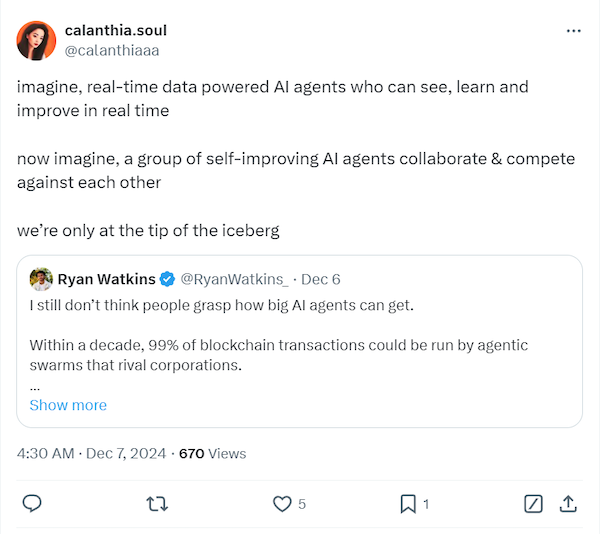
Mei believes AI agents are an unstoppable use case for trading
Mei is convinced that memes will accelerate experimental convergence between AI and crypto. Since the GOAT story emerged, she has received "three times as many inquiries about AI agent development in the past few weeks alone."
Think about it—smart AI agent memecoins roaming Crypto Twitter, the home of crypto market sentiment. It’s almost an unstoppable investment thesis.
Use Case 5: Fair-launch tokens that protect retail investors from VCs
For years, retail crypto investors have been exploited by venture capitalists. These investors get early access, snapping up massive portions of token supply at prices far below the eventual market value. This leads to absurd fully diluted valuations and robs retail investors of opportunity when VCs dump their holdings. No wonder users burned by unfair tokenomics are turning to memecoins, which can—though often don’t—launch fairly.
"For some projects, memecoins provide the urgently needed funding to develop their technology, escaping the cold venture capital market and Web3 echo chambers," says Masa’s Mei.
During Murad Mahmudov’s viral Supercycle talk at Token2049, he argued that fully unlocked memecoins mean the tokenized meme becomes the actual product. No VCs, no lockups. Because the asset cannot be priced—having no revenue—this becomes an advantage instead.
In the end, memecoins are useful as a new type of fundraising tool, says Zhen Yu Yong, CEO of Web3Auth, a white-label wallet provider that builds wallets for Trust Wallet and numerous Fortune 500 companies, serving 20 million monthly users.
Of course, most memecoins will fail. But now, you can launch a tokenized project without market makers, with a shot at success, free from interference by VCs and backroom equity deals.
This lack of VC backing for most memecoins is clearly part of their retail appeal. Veterans who missed Bitcoin in 2010, or Ethereum, or any other major coin, can now get rich immediately—without VCs screwing things up at the pre-seed stage. It’s an ideological investment thesis—the veteran’s dream.
In short, memecoins are like cartoon versions of ICOs—without assuming someone is trying to build and launch a product.
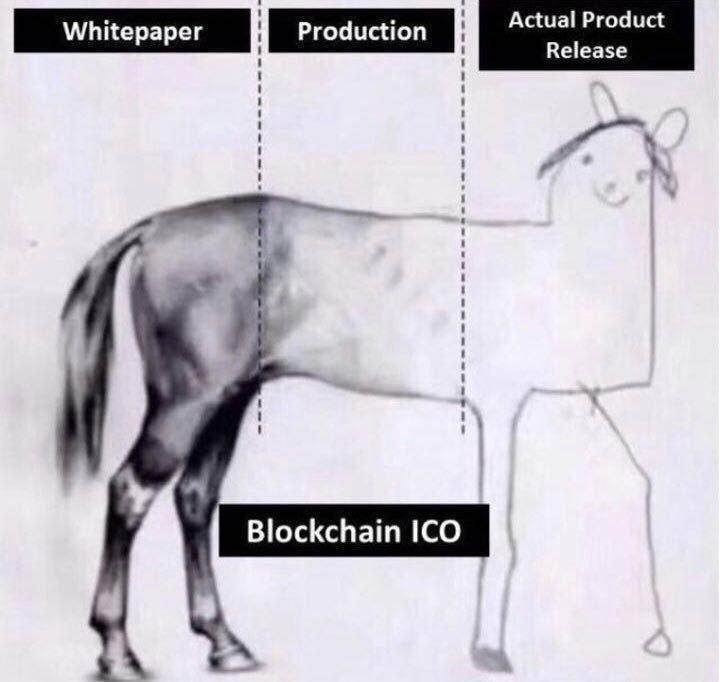
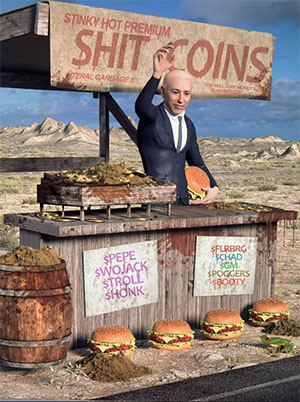
The most accurate meme of the ICO era. (LinkedIn)
Join TechFlow official community to stay tuned
Telegram:https://t.me/TechFlowDaily
X (Twitter):https://x.com/TechFlowPost
X (Twitter) EN:https://x.com/BlockFlow_News
 @Cointelegraph