GPU Competition Amid the AI Wave: How Will Spheron Break Through with Efficiency and Flexibility as Mainnet Approaches?
TechFlow Selected TechFlow Selected
GPU Competition Amid the AI Wave: How Will Spheron Break Through with Efficiency and Flexibility as Mainnet Approaches?
By analyzing its赛道 positioning and implementation logic, we explore the immense potential of decentralized computing markets and Spheron's development opportunities.
 Navigating Web3 tides with focused insights
Author: TechFlow
As AI agents flood the market and hidden opportunities in AI become increasingly difficult to uncover, how can one smarter mine value within the AI赛道?
From Solana to Base, from Pump.fun to Virtuals, the AI赛道is boiling over—hundreds or even thousands of new AI agents emerge every day, a level of intensity unmatched by any other sector.
Yet most attention remains fixated on application-layer products that are easily perceptible to the general public, while foundational infrastructure projects driving higher-quality development in AI applications continue operating quietly behind the scenes (and generating wealth).
If you're growing weary of the PvP battlefield of AI memes, shifting your focus from applications to foundational layers might be a smarter gold-mining strategy in the AI赛道. After all, demand created by application-layer growth will eventually flow down to the base layer, opening immense growth potential for AI infrastructure projects.
So how do we begin our search for alpha from the foundational AI perspective?
By breaking down the three key pillars of AI development—"data, models, compute"—to identify market opportunities, Spheron has come into broader view. Aiming to integrate global compute resources to build a GPU marketplace, Spheron provides highly customizable, low-cost computing services for compute-hungry applications including AI, DeFi, and gaming, empowering the decentralized economy.
What are the current supply-demand challenges facing GPUs? In this space where AI and DePIN strongly intersect, how does Spheron achieve peer-to-peer GPU supply-demand matching through its well-designed Providers nodes, Fizz nodes, and effective ecosystem incentives? As AI fever persists and competition intensifies in the GPU space, what unique market positioning does Spheron hold compared to other projects?
This article dives into Spheron, analyzing its market positioning and implementation logic to explore the vast potential of decentralized compute markets and Spheron’s own growth opportunities.
Decentralization: The Cure for GPU Supply-Demand Imbalance
To truly appreciate the elegance of a solution, one must first understand the nature of the problem.
Why is the GPU market—which Spheron targets—so important?
First, as an electronic circuit capable of high-speed mathematical computation, GPUs outperform CPUs in parallel processing, enabling simultaneous handling of massive data streams, making them indispensable tools in modern computing.
In fact, GPUs are already ubiquitous in our lives: whether it's graphics rendering for large-scale games and animation production, AI training and inference, or high-frequency trading and risk modeling in finance, GPUs provide powerful momentum for building superior products.
Indeed, in today’s digital wave sweeping across the globe, GPUs have become a cornerstone of the digital economy.
Given their obvious importance, where lies the problem in the GPU market?
Imbalance between supply and demand.
On the supply side, the high barrier to large-scale GPU deployment has led to increasing monopolization in the GPU market. Meanwhile, GPU idling is becoming more pronounced—with many GPUs underutilized, leading not only to resource waste but also reduced returns for suppliers.
On the demand side, acquiring GPUs is not only expensive but often inflexible, limiting access for most small and medium enterprises and further constraining innovation at the application layer.
With the problem defined, what’s the solution?
In the past year, as AI—highly dependent on GPUs—has gained favor in the Web3 ecosystem rooted in decentralization, market trends have already provided an answer.
A key advantage of decentralized markets is low-barrier participation: anyone can contribute idle compute power or access compute resources tailored to their needs without permission. This openness enables more long-tail participants to enter the market, expanding the overall GPU supply and enhancing flexibility and efficient resource allocation.
Beyond connecting supply and demand, decentralized markets excel in peer-to-peer transactions and efficient settlements: eliminating intermediaries reduces transaction costs, while avoiding the complexity and delays of traditional payments enables faster value circulation on both sides of the market.
Most importantly, a well-designed token economy offers transparent incentive distribution. Markets can use tokens to encourage broad participation, with each contributor’s efforts honestly recorded and rewarded accordingly—fueling a virtuous cycle of sustainable ecosystem expansion.
Having explored the industry backdrop, let’s now turn to the specific mechanics of the solution:
Leveraging decentralization, how does Spheron build a globally accessible, low-barrier, fair-benefit GPU marketplace?
Global Supercomputing Network: How Spheron Achieves Efficient GPU Matching
Simply put, Spheron’s core architecture revolves around a matching engine designed to aggregate global GPU resources and efficiently connect suppliers and users.
Compute Supply Side:
-
Providers Nodes: Enterprise-grade GPU providers forming the backbone of Spheron’s global supercomputing network
-
Fizz Nodes: Aggregating long-idle home computing power, allowing ordinary users to contribute GPU capacity
Compute Demand Side:
- Primarily applications with significant compute demands
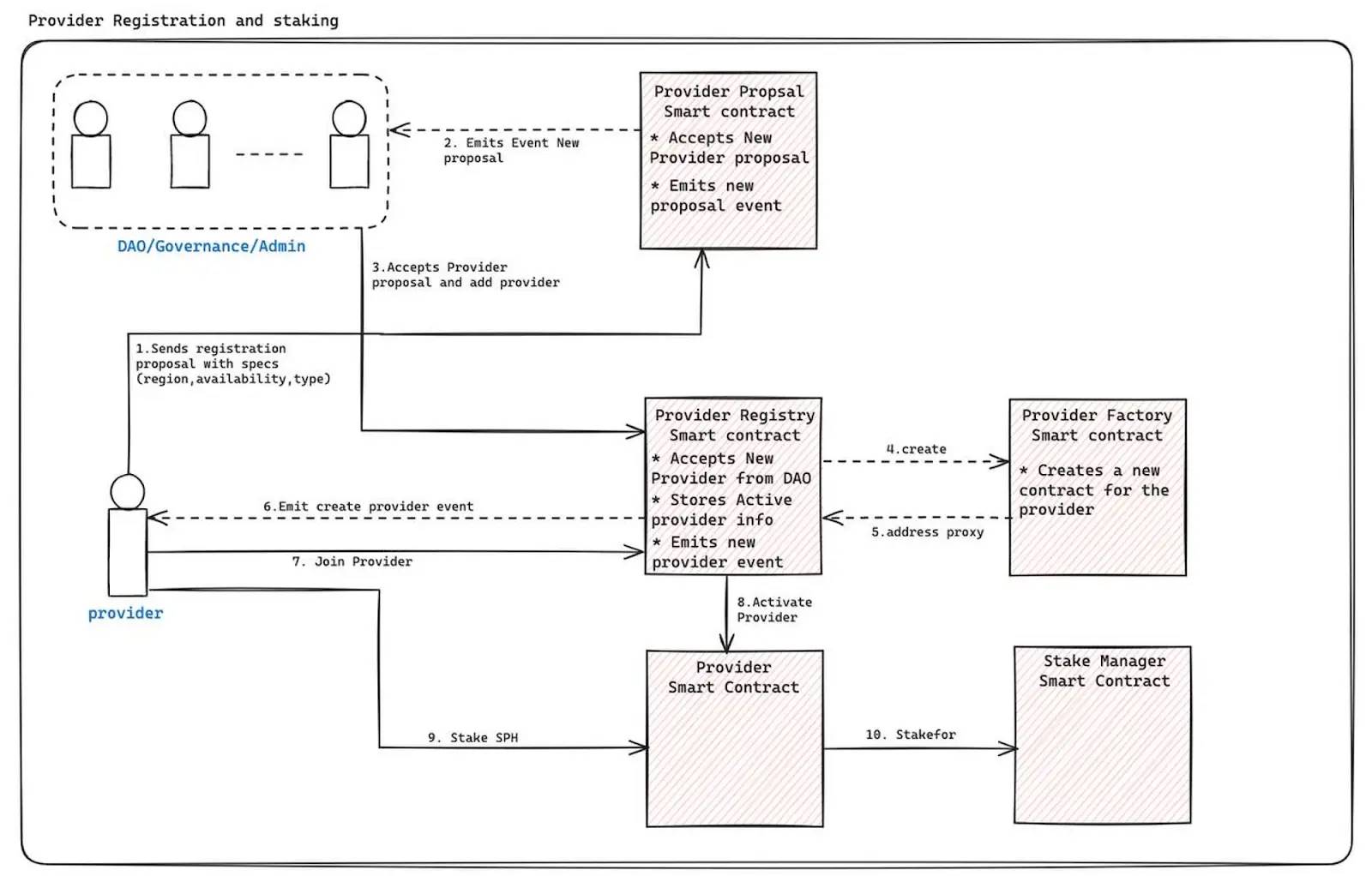
Providers Nodes are critical to network stability and reliability, thus they face high entry barriers and rigorous review processes:
Applicants must first submit a registration proposal—a self-declaration of their GPU capabilities, including computational power, tier, and types of computation;
Then, the Spheron governance body verifies and approves proposals (in the initial phase, all verified proposals are approved). Additionally, Spheron employs multiple verification methods such as random audits and challenge mechanisms to continuously monitor node status and protect against fraud.
Introducing a staking mechanism for Providers Nodes is a key step in safeguarding ecosystem integrity: becoming a node requires staking SPON tokens, and misbehavior leads to slashing or confiscation of staked funds—further incentivizing good conduct.
Fizz Nodes target everyday users’ laptops and hardware, aiming to integrate the global long-tail compute market with minimal barriers, while optimizing resource allocation, increasing participation, and boosting decentralization.
As a vital part of the Spheron network, Fizz Nodes set minimal requirements for CPU, RAM, storage, and GPU support, enabling even standard laptops to contribute compute resources and earn rewards.
Participants first register a Fizz Node on the Spheron network by answering a few questions, requiring a small amount of ETH on the Spheron chain as gas (during testnet, available via Spheron faucet or Arbitrum Sepolia).
After registration, users download the terminal and complete simple setup to run: key components of the Fizz client include pricing configuration, orchestrator, and service tunnel, enabling contribution of underused computing resources to the network.
Gateway service is another core feature of Fizz Nodes, managed by Providers Nodes or individual gateway operators, facilitating user interaction with Fizz clients and handling most communications.
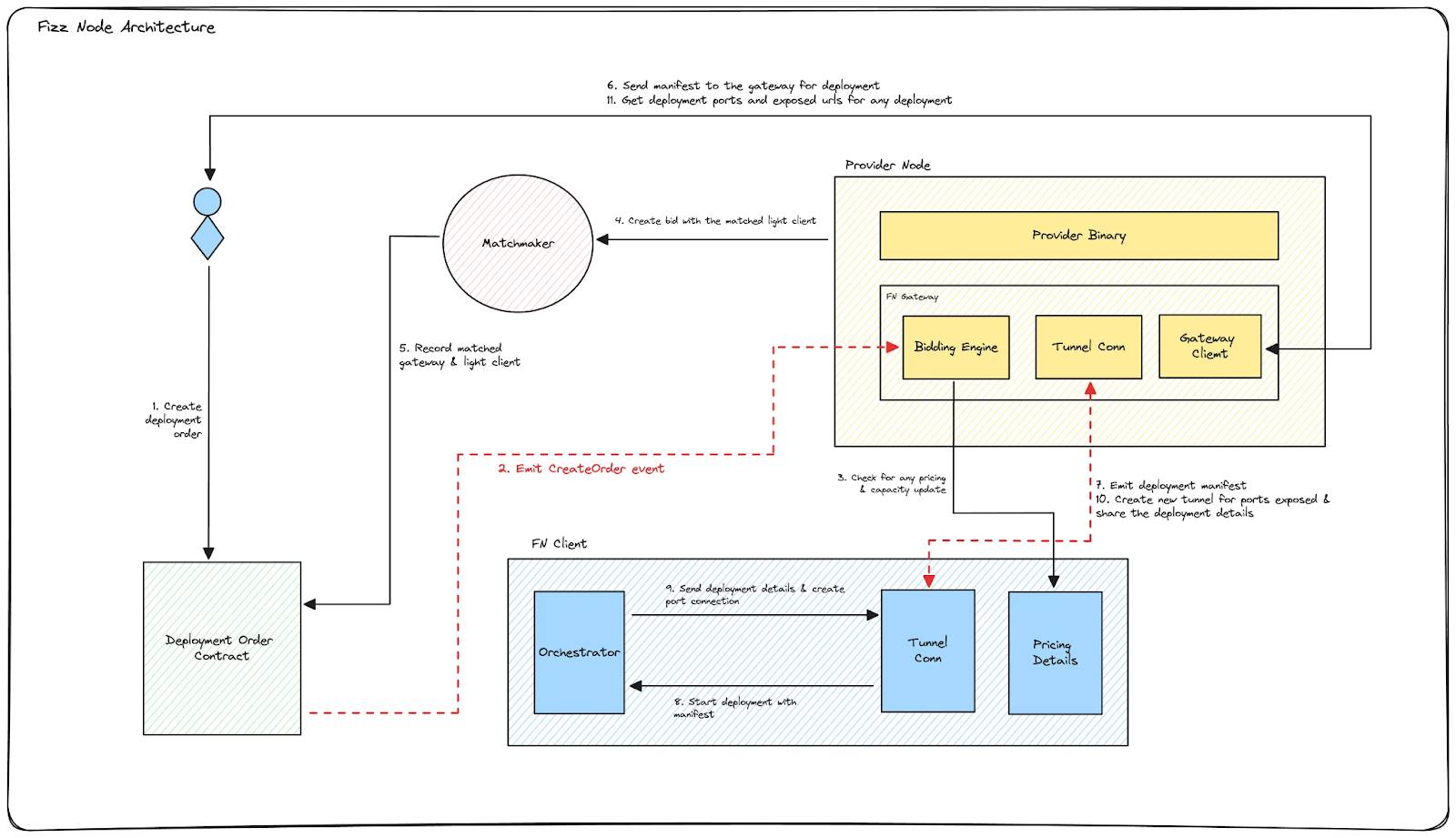
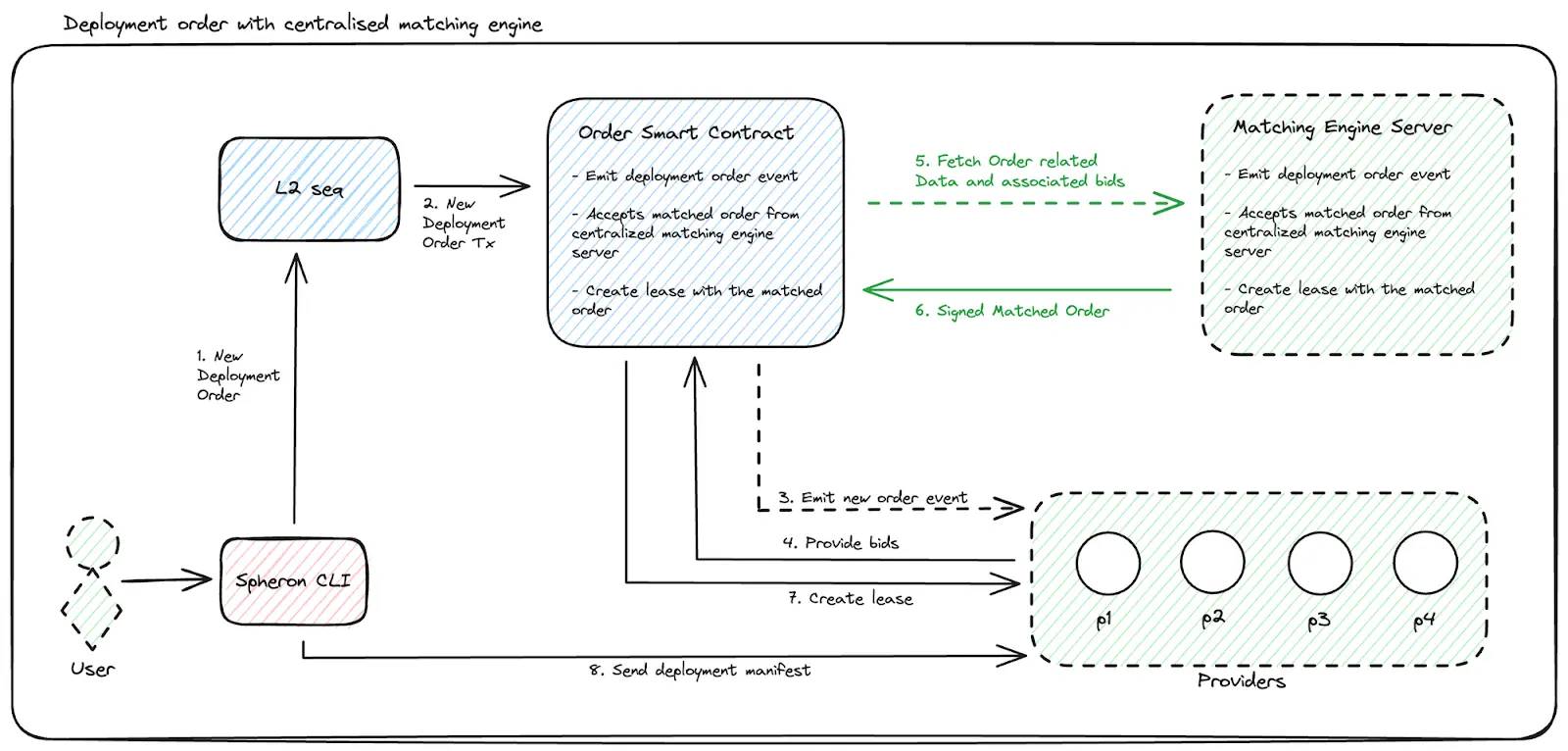
With the dual-node design of Providers and Fizz, Spheron’s supercomputing network has taken basic shape. But beyond aggregation, the bigger challenge lies in efficient utilization—here, Spheron’s powerful matching engine built on AVS architecture plays a crucial role: constructed on Arbitrum, it quickly matches supply and demand based on location, hardware, and network speed. Users transmit deployment manifests via MTLS connections to launch workloads on designated providers.
First, Spheron implements a tiered system for GPU suppliers, classifying nodes by capability and trustworthiness to enable more precise demand management and matching;
Spheron operates a matching engine on Arbitrum that rapidly identifies the best-matched GPU resources for supply and demand based on geography, hardware, and internet speed. Users transmit deployment manifests via MTLS connections to initiate workload deployment on selected providers.
When a GPU user initiates a new deployment request, suppliers listen and submit bids to the smart contract;
After collecting all bids, the matching engine selects the option best fitting the user’s requirements; the user then validates the proposal and sends the deployment manifest to the matched supplier;
Finally, the GPU provider confirms the manifest and deploys the service—an efficient, low-cost, and well-matched compute pairing is completed.
Thus, the framework for efficient GPU supply-demand matching is now clear. And through the effective ecosystem incentives powered by the native token SPON, Spheron ensures stable, sustainable growth and continuous ecosystem expansion.
SPON Token: The Keystone of Spheron’s Positive Flywheel
We all know economic models are central to blockchain network design—they define a token’s utility and usage, directly impacting long-term sustainability, user incentives, and ecosystem direction.
As Spheron’s native token, SPON serves multiple functions, promoting sustainable ecosystem development and offering diverse rights and benefits to holders.
First, SPON is used as gas fee in the Spheron network, creating fundamental demand for the token.
Second, SPON is the core value exchange medium in Spheron’s payment system, providing users with efficient payment options. While the network supports other tokens as payment methods to enhance flexibility, non-SPON payments require governance approval to ensure security and consistency. Payments using SPON are free, whereas other tokens incur a 2% additional fee.
Spheron also introduces a staking mechanism for its token: on one hand, Providers Nodes must stake SPON tokens to increase trust, and failure to fulfill commitments risks slashing or confiscation; on the other hand, token holders can stake SPON to Providers Nodes, supporting network security and stability while earning staking rewards.
Token utility centers on ecosystem incentives—and Spheron is no exception: both Providers and Fizz Nodes can earn SPON rewards by deploying nodes. Beyond staking rewards, token holders can gain additional incentives by participating in ecosystem activities and supporting network development. This multi-layered reward system ensures sustained participant engagement.
Beyond serving as a payment tool and incentive medium, SPON is also a key vehicle for ecosystem governance. SPON holders can vote on major ecosystem decisions, ensuring fairness and guiding the network toward community-driven evolution.
Thanks to this SPON-powered incentive system, a rare positive flywheel is clearly emerging in Spheron’s ecosystem:
Through effective ecosystem incentives, more Providers, Fizz Nodes, and users are drawn in, enhancing decentralization, boosting on-chain activity and revenue, enabling greater value return to token holders, fueling a self-reinforcing upward spiral—growing stronger with each cycle.
Indeed, in just over a year since its inception, Spheron’s expanding ecosystem and series of breakthrough achievements demonstrate this compounding growth effect.
Mainnet Approaching, Token Launch Imminent: Strong Growth Outlook for Spheron
2024 is a milestone year for Spheron, marked by remarkable ecosystem progress.
Over the past year, Spheron’s ecosystem welcomed many heavyweight partners: Spheron has established collaborations with Arbitrum, Caldera, Ora Protocol, Sentient, Witness, Genlayer, Heurist, DeNet, Akaave, Filecoin, and several other top-tier AI projects, becoming a key driver in the rapid advancement of Web3 AI.
Spheron launched its public testnet this year. Public data shows GPU utilization on the Spheron network reached as high as 80%, demonstrating highly efficient resource utilization thanks to its powerful matching engine.
On the node front, after successfully launching Providers Nodes, Fizz Nodes focused on community participation have officially gone live, enabling more individuals to easily contribute compute power via laptops and turn idle capacity into extra income.
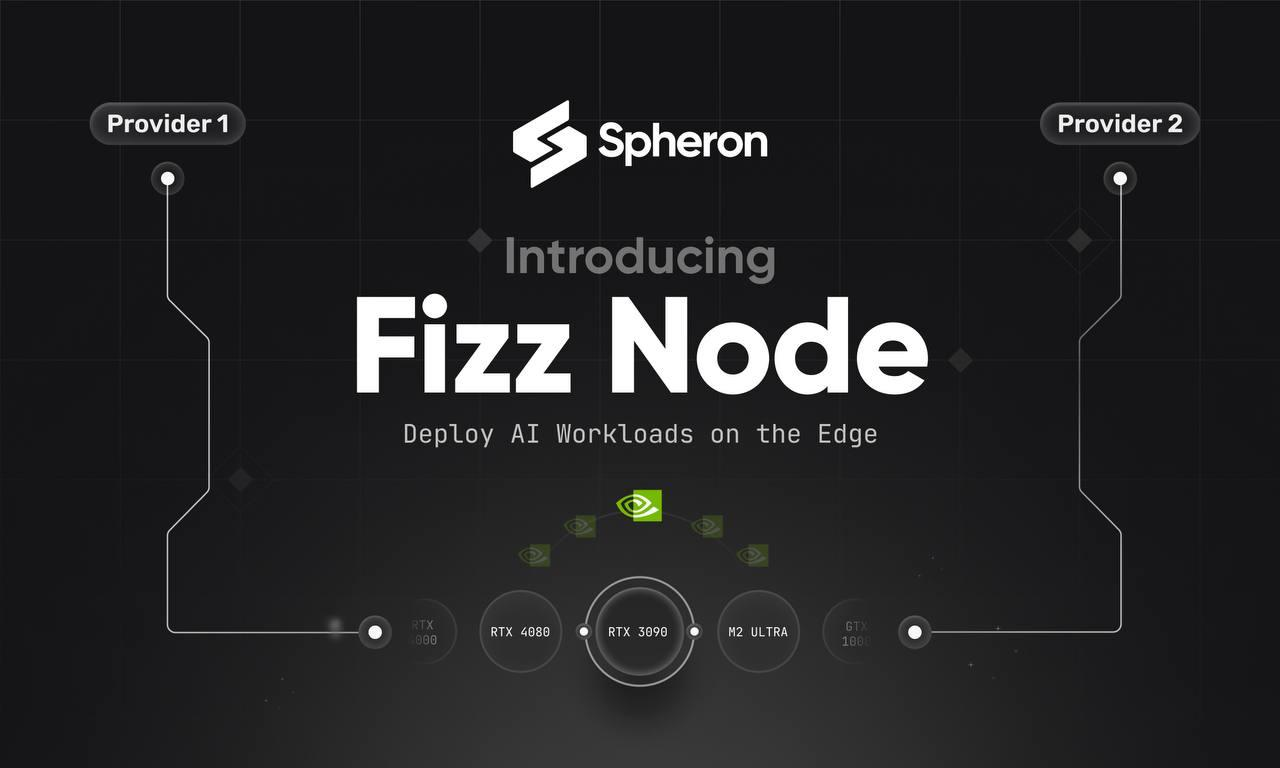
Additionally, Spheron has expanded its ecosystem by launching a console app enabling seamless GPU access, along with CLI and SDK tools to lower developer barriers and simplify integration.
These milestones have driven rapid community growth: according to Spheron’s dashboard, total addresses exceed 36,000, with over 13,000 connected nodes, making it one of the largest DePIN compute networks today.
Looking ahead, upcoming announcements on social media and the published roadmap suggest more key events are imminent, setting strong expectations for continued growth in 2025.
In terms of partnerships, Spheron recently announced collaboration with Mira to co-develop trustless, scalable AI, improving accuracy, bias mitigation, and reliability of AI outputs. Mira will also offer 1,000 whitelist spots exclusively for the Spheron community—users can apply using code “SPHRN”.
Moreover, major partnership announcements with Witness, Genlayer, and Heuristic are forthcoming.
On the functional side, Spheron is preparing to launch its first service-layer DePIN node, Supernoderz, and introduce a model marketplace for seamless model deployment.
More importantly, as community momentum builds, Spheron’s highly anticipated mainnet is approaching, with the token launch to follow shortly thereafter.
As a critical pre-mainnet milestone, users now have multiple ways to actively participate in the Spheron ecosystem and accumulate future rewards. The most direct path is deploying a Fizz Node. Meanwhile, the second phase of the Lunar Fizzer campaign is live—25,000 node operators will gain Lunar Fizzer status and exclusive perks, including special identity, airdrop priority, private community events, activity rewards, and leasing bonuses—sparking enthusiastic community participation.
Spheron’s impressive performance has also attracted institutional interest: in August 2022, Spheron revealed a $7 million raise from investors including Alphawave Ventures, NexusVP, Zee Prime Capital, Protocol Labs, ConsenSys Mesh, Paradigm Shift Capital, Matrix Partners India, and Tykhe Ventures, with notable individuals such as Sandeep Nailwal, Aniket Jindal, and Julian Traversa. According to community discussions, a new funding round will be announced soon.
Conclusion
During the AI boom, the compute market stands out as one of the most promising and in-demand sectors.
The GPU market targeted by Spheron is hailed as the oil of the new era. With its elegant product design, effective ecosystem incentives, and a supply-demand matching mechanism balancing security, efficiency, cost, and flexibility, Spheron is poised to drive a wave of decentralized innovation across AI, gaming, and DeFi applications built on GPUs.
Yet the AI boom has also intensified competition in the GPU compute space, with rivals including Aethir, Akash Network, Gensyn, Render Network, and io.net. Since these projects fundamentally rely on token incentives to attract compute providers and deliver services—boosting idle resource utilization while meeting customer needs at lower costs—the sector faces growing homogenization and cutthroat competition.
In this crowded landscape, Spheron is standing out through its global compute aggregation and powerful matching engine, showcasing superior efficiency and flexibility:
In terms of focus, Render primarily serves 3D artists; io.net targets AI and gaming; Aethir and Netmind focus on AI/ML engineers and enterprises;
Additionally, because io.net mainly rents compute resources from nodes, it excels in GPU rental but falls short in flexibility and comprehensiveness in meeting diverse customer needs. Render Network faces similar limitations—despite improved rendering efficiency via off-chain rendering, its reliance on off-chain operations still hampers adaptability to varied demands.
Spheron aims to deliver compute matching closely aligned with real-world needs through its Providers Nodes, Fizz Nodes, tiered system, and powerful matching engine—offering more flexible, diversified GPU services that meet varied user demands, thereby empowering a new wave of decentralized innovation across AI, gaming, and DeFi built on GPUs.
With the launch of Fizz Nodes, and mainnet and token release on the horizon, for investors tracking the GPU compute market, hands-on experience through node deployment may offer clearer insights than mere words alone.
Join TechFlow official community to stay tuned
Telegram:https://t.me/TechFlowDaily
X (Twitter):https://x.com/TechFlowPost
X (Twitter) EN:https://x.com/BlockFlow_News
 深潮TechFlow