Four Key Dimensions Analyzing Hyperliquid's Growth Potential
TechFlow Selected TechFlow Selected
Four Key Dimensions Analyzing Hyperliquid's Growth Potential
This article will focus on Hyperliquid's market opportunities and the fundamental investment thesis behind the HYPE token.
 Navigating Web3 tides with focused insights
Author: Flo
Translation: Yuliya, PANews
Hyperliquid is a perpetual contract trading protocol built on its own L1 blockchain, aiming to deliver a trading experience comparable to centralized exchanges while offering fully on-chain order books and decentralized trading functionality. The protocol supports spot, derivatives, and pre-launch market trading.
This article will not delve into the specific operational mechanisms of Hyperliquid or its differences from other perpetual DEXs. Instead, it will focus on Hyperliquid's market opportunities and the fundamental investment thesis behind the $HYPE token.
At the time of writing, $HYPE is trading above $20, with a market cap of $7.5 billion and a fully diluted valuation (FDV) exceeding $20 billion, placing it among the top 30 cryptocurrencies by market capitalization. What factors are driving such strong market performance?
This analysis will explore the following four aspects:
-
Exchange growth opportunity
-
EVM ecosystem opportunity
-
Revenue composition, valuation, and peer comparison
-
Potential risks
Exchange Growth Opportunity
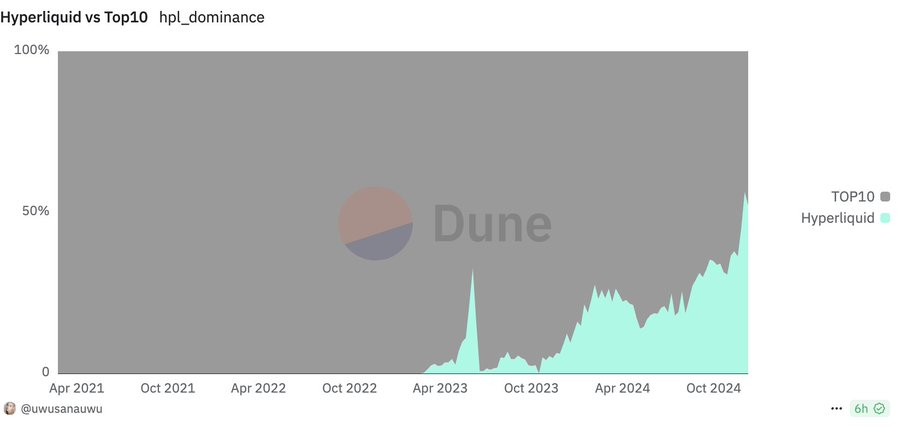
Hyperliquid dominates the perpetual DEX market, recently capturing over 50% of trading volume.
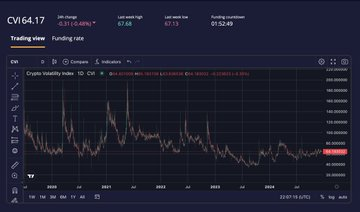
Currently, according to data from Coinalyze and CVI.Finance, its open interest (OI) is about 10% of Binance’s. As the bull market deepens and volatility increases (the cryptocurrency volatility index stands at just 64), open interest, trading volume, funding rates, and liquidations are expected to continue rising.
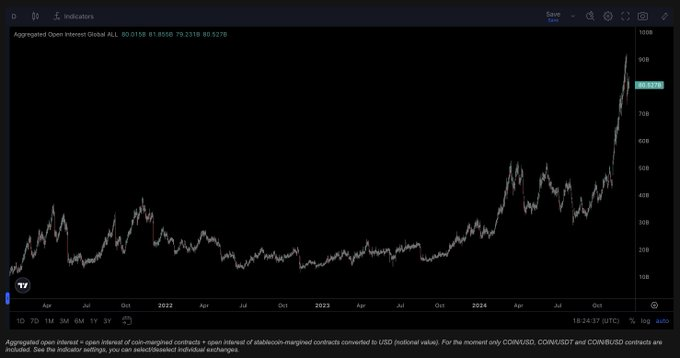
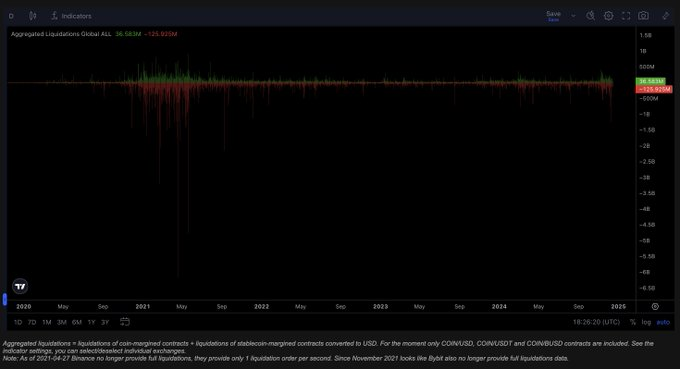
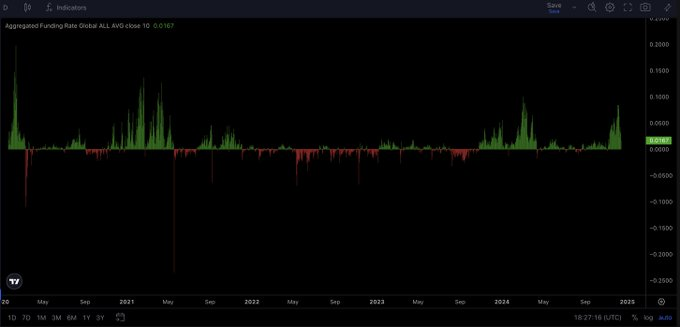
The DEX share in the perpetual contracts market is poised to gradually increase against CEXs, mirroring the trend seen earlier when AMMs and Uniswap drove DEX adoption in spot trading.
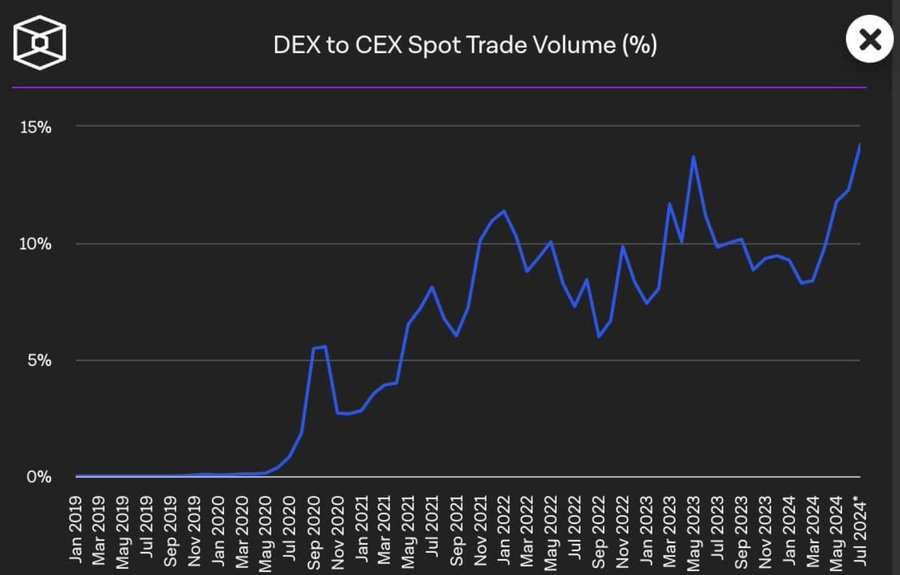
Leveraging lower fees than CEXs and more attractive incentive programs, Hyperliquid is well-positioned to attract users and capital from centralized platforms. Its token generation event (TGE) and the rapid price rise of $HYPE have served as powerful marketing tools.
Although the exact incentive structure has not been disclosed, it is expected that both perpetual and spot trading volumes will be incentivized, given that over 40% of the token supply is reserved for community rewards.
Initial airdrop distribution was as follows:
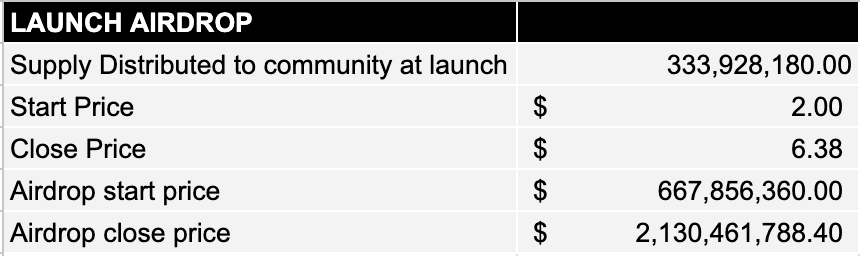
Assuming 10% of the reserved supply is allocated for incentives in the first year, the situation would look like this:
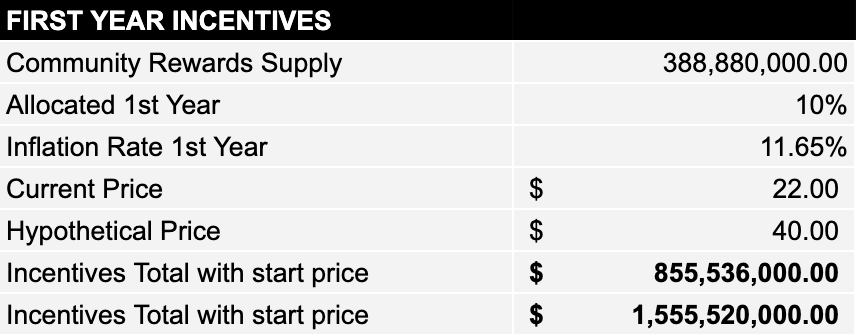
At current prices, nearly $1 billion in incentives could be distributed in the first year—surpassing the allocation size at the initial $2 opening price. This implies an inflation rate of approximately 11.65% (including staking rewards). However, increased user activity could drive higher trading volume, revenue, token burns, and buybacks, potentially reducing actual dilution. The team might also adopt higher inflation and incentives to attract users—this dynamic nature is precisely what makes $HYPE’s fully diluted valuation (FDV) uniquely compelling.
In spot trading, Hyperliquid aims to become a top-three DEX in the near term. Yesterday, it recorded around $500 million in trading volume, ranking fifth across all chains. With the development of the EVM ecosystem and the addition of more utility tokens and native assets, new trading pairs will emerge.
Trading tools built on Hyperliquid’s open infrastructure and developer codebase are proliferating. Projects like Insilico Terminal, Katoshi AI, and pvp.trade show strong promise, further enhancing user experience and attracting additional capital inflows.
Exchanges and stablecoins represent two of the most profitable businesses in crypto. The fact that Hyperliquid directly competes with major players like Binance, Coinbase, Bybit, and OKX is itself a bullish signal.
In the most optimistic scenario:
-
Other exchanges may use Hyperliquid as a decentralized backend
-
Exchanges may hedge risk by accumulating $HYPE
While these scenarios are unlikely in the short term, anything is possible in the fast-moving world of crypto.
EVM Ecosystem Opportunity
HyperEVM is a critical component of the Hyperliquid ecosystem. It shares unified state and consensus with Hyperliquid L1 but operates as a separate execution environment:
-
L1 is a permissioned chain handling core components such as perpetual and spot order books, programmable via APIs
-
EVM is a general-purpose Ethereum-compatible chain supporting standard Ethereum development tools, with smart contracts able to directly access on-chain liquidity from the L1 layer
HyperEVM is scheduled to launch in the coming months, and numerous teams are already preparing actively. Why is this development bullish? Key reasons include:
New DeFi Ecosystem
Many DeFi projects are preparing for the HyperEVM launch. Major DeFi categories—including automated market makers (AMMs), lending platforms, liquid staking, and CDPs (collateralized debt positions)—are expected to go live upon EVM activation.
These protocols will significantly improve overall capital efficiency by allowing $HYPE holders to use $HYPE as collateral in lending and money markets.
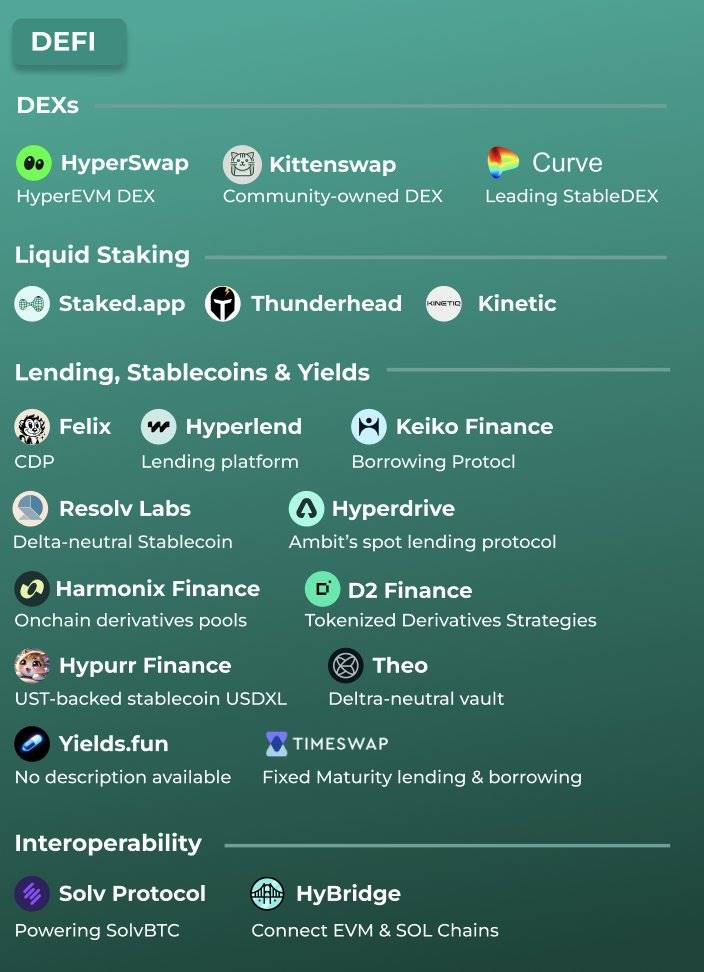
Beyond traditional DeFi, the unique characteristics of on-chain order book liquidity may give rise to innovative applications. This fertile ground could enable entirely new DeFi-native protocols, positioning Hyperliquid as a preferred platform for innovation.
For example, Ethena Labs plans to integrate Hyperliquid to reduce reliance on CEXs. This strategy enhances system resilience and could lower and diversify counterparty risk through decentralized hedging—a plan already discussed in their governance proposals.
Demand for Utility-Driven Projects
Recent market trends clearly indicate strong investor appetite for projects with real-world utility. This is evident in the AI boom on Base and Solana, Hyena’s strong performance, and robust demand for $HFUN and $FARM on the Hyperliquid platform.
With the upcoming expansion of its DeFi ecosystem, Hyperliquid is likely to become a key battleground for utility-driven investments in the near to medium term. Notably, AI infrastructure developments currently underway on Solana—led by projects like AI16Z and Zerebro—are likely to extend to Hyperliquid.
Hyperliquid’s native vault feature is particularly noteworthy. Strategies running within these vaults enjoy advanced features similar to those of the DEX, including liquidation mechanisms for over-leveraged accounts and high-throughput market-making capabilities. This democratizes access—any entity, whether a DAO, protocol, institution, or individual—can deposit funds and share in the returns. In return, vault operators receive 10% of total profits.
Additional Tailwinds from HyperEVM Launch
-
Fee revenue potential: HyperEVM operations will generate additional transaction fees, which can be used for staking rewards, token burns, etc. For reference, Base generated $15 million in fees over the past 30 days. HyperEVM is expected to reach similar levels of activity within months.
-
Enhanced $HYPE utility: The EVM rollout will greatly expand $HYPE’s use cases. Users will need $HYPE to pay gas fees and will be able to stake, lend, lock tokens for yield, and more. These new utilities will create stronger buy-side pressure. Recall the 2024 Solana meme coin surge and the 2020–2021 Ethereum DeFi and NFT booms—on-chain activity significantly boosts demand for native tokens.
-
Revenue growth avenues: Influx of high-market-cap utility projects, combined with expanded bridging options for native assets (e.g., native USDC, spot BTC, SOL, ETH), will boost spot trading volume and platform revenue. Additionally, as more projects launch on EVM, the price of token ticker auctions is expected to rise, generating extra income.
-
Improved ecosystem visibility: The EVM launch will help position Hyperliquid as a “legitimate” L1 blockchain, increasing ecosystem exposure and potentially activating sidelined capital.
-
According to the latest ecosystem map (and many new projects have joined since its release last week), Hyperliquid is building a comprehensive blockchain ecosystem. This holistic structure will fuel sustained growth.
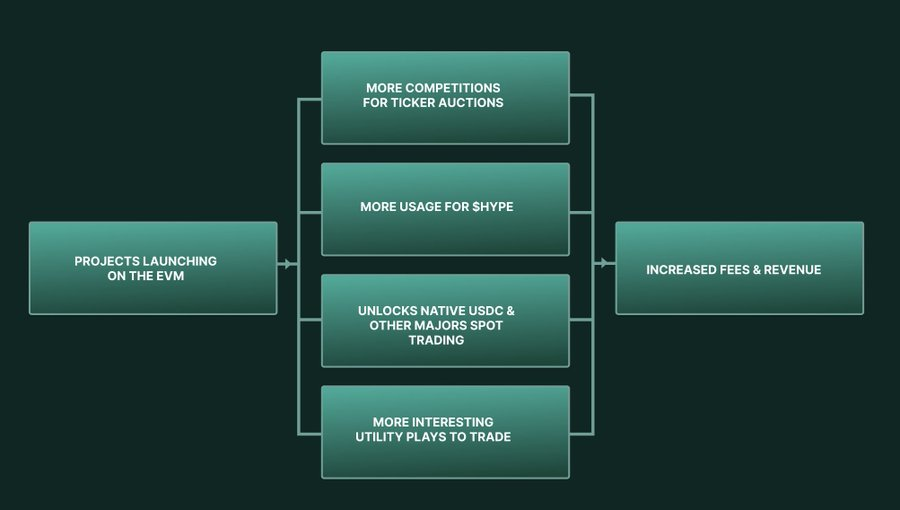
The compounding effect of these tailwinds is expected to bring significant value appreciation and ecosystem vitality to Hyperliquid.
Revenue Composition, Valuation, and Peer Comparison
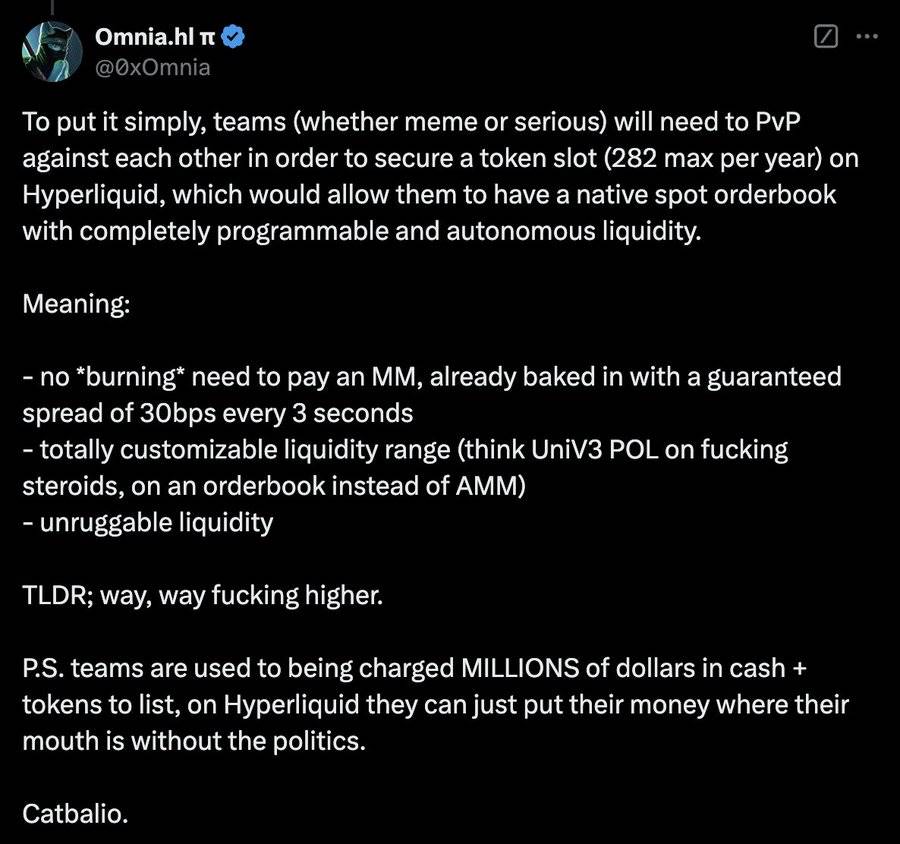
Hyperliquid primarily generates revenue from platform fees and token auctions.
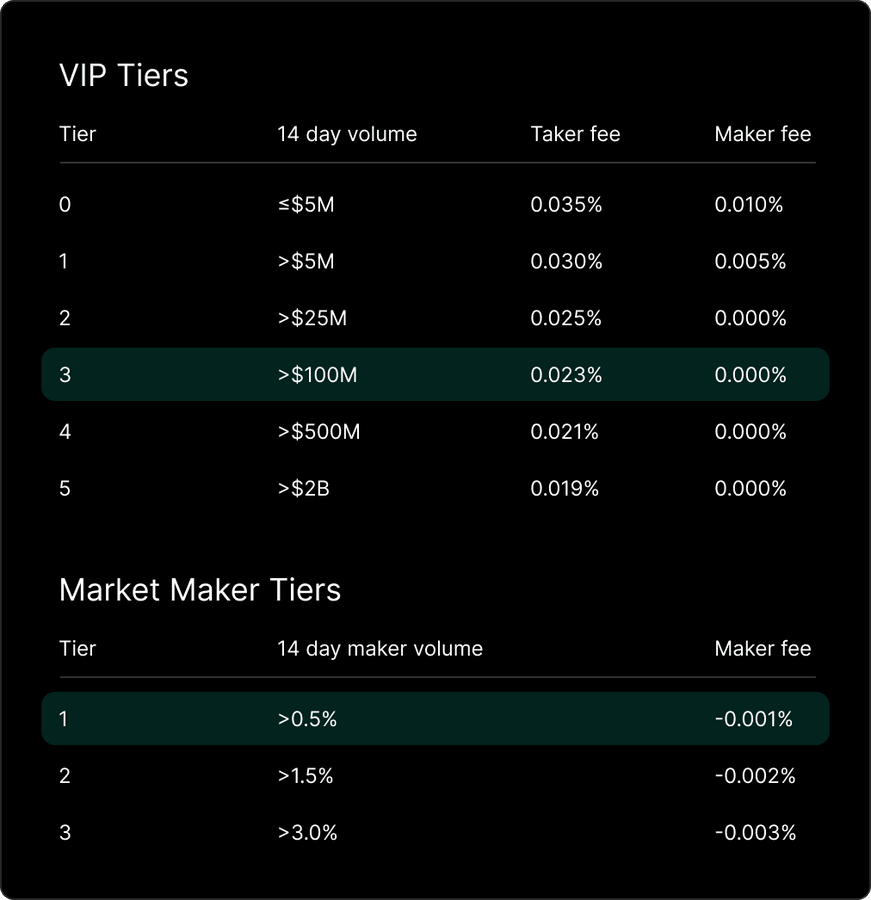
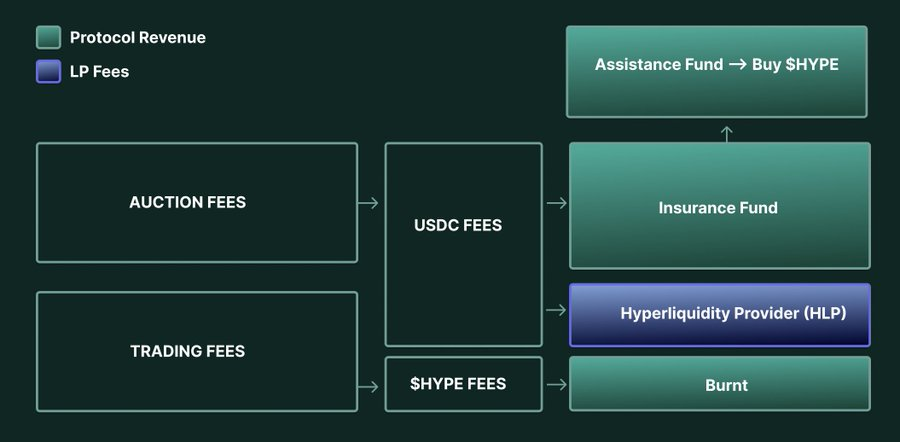
(Flow of fees on-chain)
The relief fund currently holds about 10.76 million $HYPE (over 3% of circulating supply) and 3.14 million USDC. The insurance fund has accumulated approximately 7.07 million USDC awaiting transfer to the relief fund. In total, over $10 million in USDC could be used to repurchase $HYPE from the market.
Recent Performance
Over the past 30 days, Hyperliquid generated approximately $26.5 million in USDC revenue, broken down as follows:
-
$2 million from token auctions
-
$24.5 million from platform fees
-
An additional ~79,600 $HYPE burned (~$1.75 million)
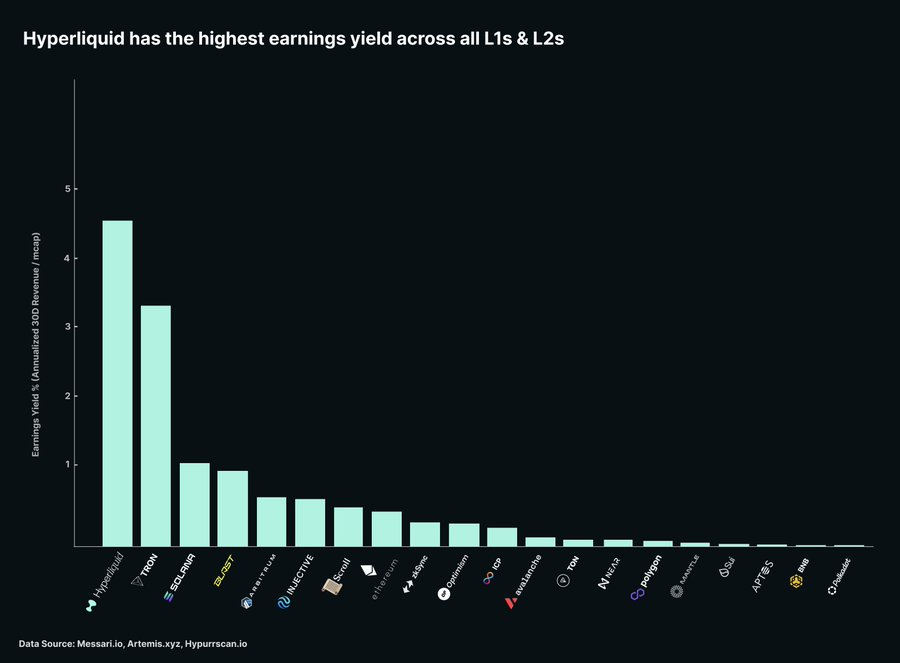
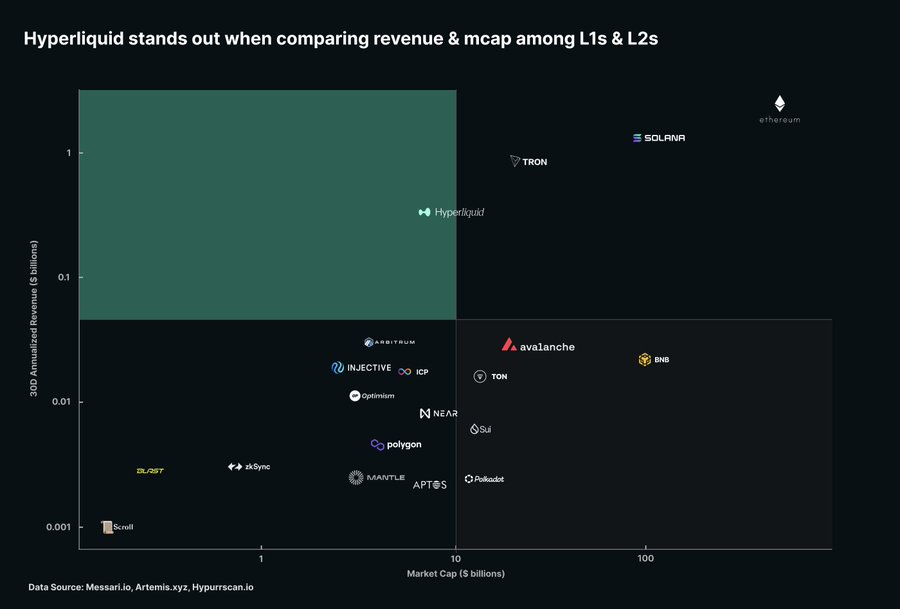
Annualized revenue exceeds $336 million, ranking behind only Ethereum, Solana, and Tron among public blockchains—yet its market cap is significantly lower. In terms of yield (annualized revenue / circulating market cap), Hyperliquid far outperforms other L1s and L2s.
Revenue Growth Potential
-
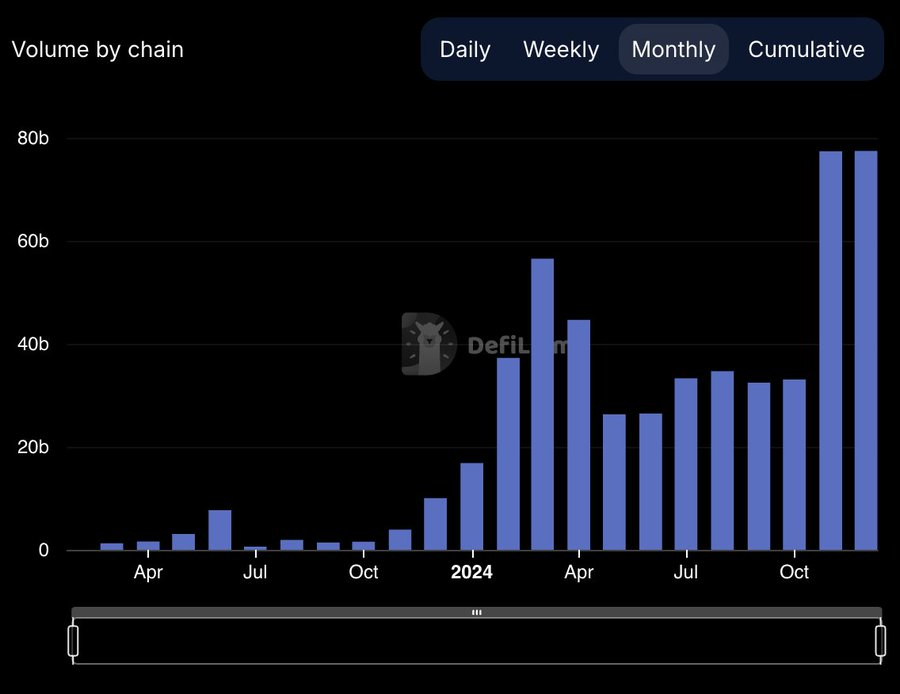
Platform fees: December trading volume has matched November levels, suggesting a potential 100% month-over-month increase
-
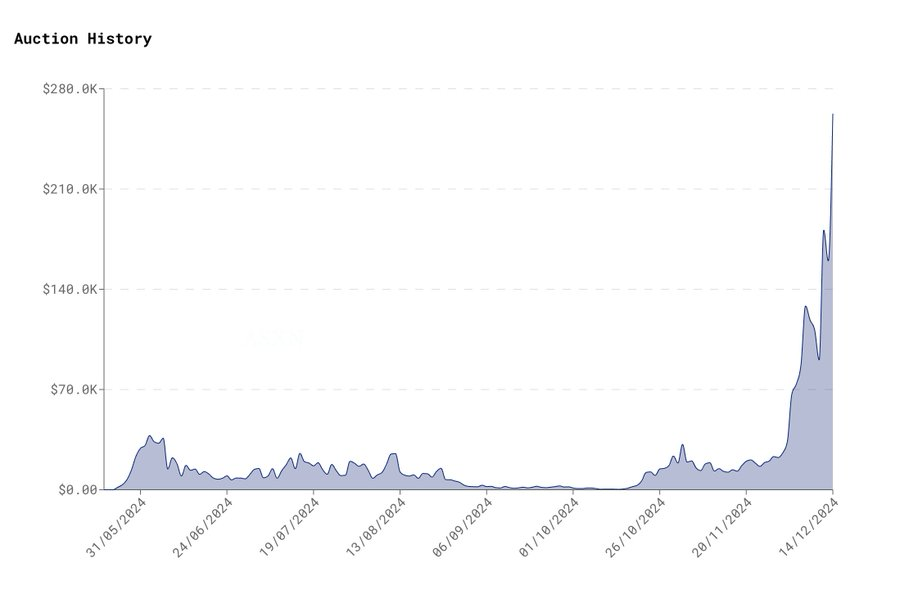
Auction revenue: The latest auction round approached $500,000. With only 282 slots available annually, intensifying competition may push prices even higher
-
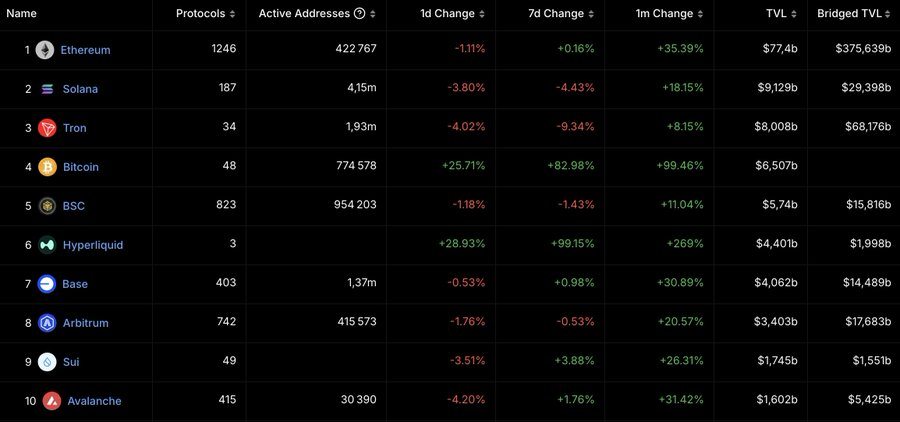
EVM revenue: Base generates ~$15 million in monthly fees. Given that Hyperliquid already exceeds Base in TVL, EVM launch could unlock similar or greater economic activity
Valuation Scenario Analysis
Base Case:
-
Trading volume increases by one-third compared to the last 30 days
-
Auction revenue remains stable
-
EVM activity matches Base
Optimistic Case:
-
Trading volume doubles compared to the last 30 days
-
Auction prices double ($1 million per slot)
-
EVM activity reaches twice that of Base
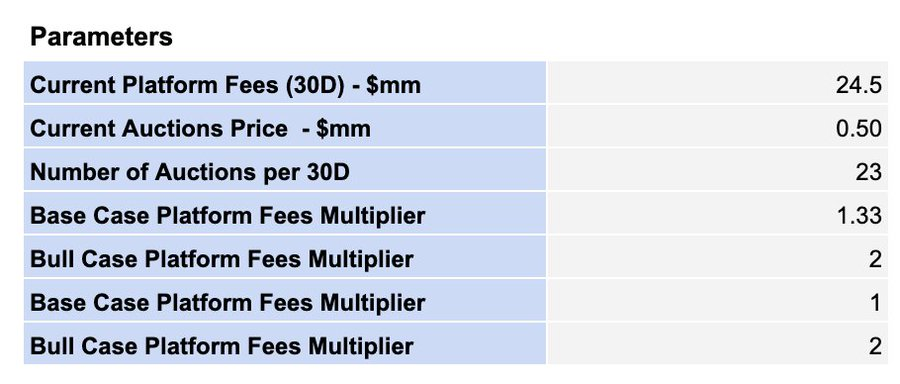
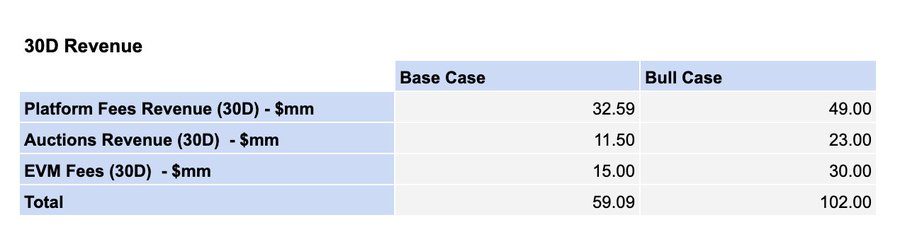
In the base case, 30-day revenue could reach $59 million; in the optimistic case, $102 million. Valuations are calculated using mainstream L1 P/E multiples applied to annualized revenue.
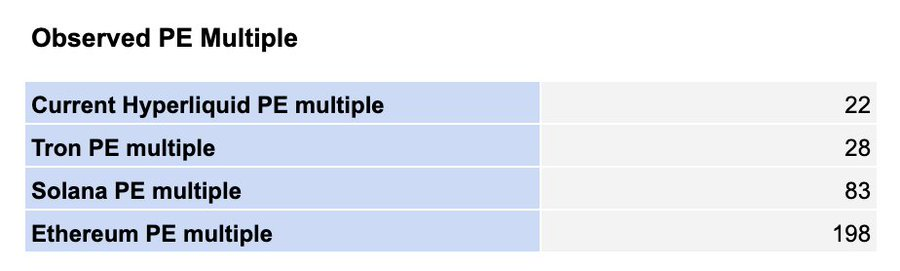
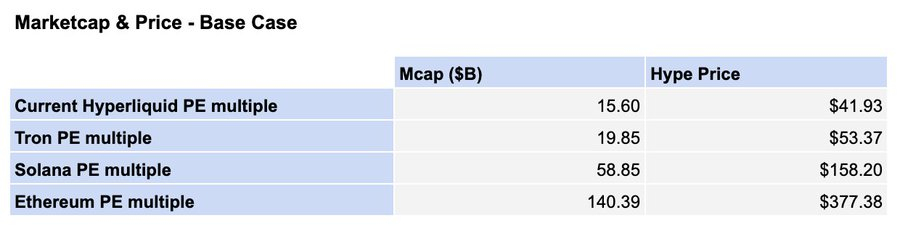
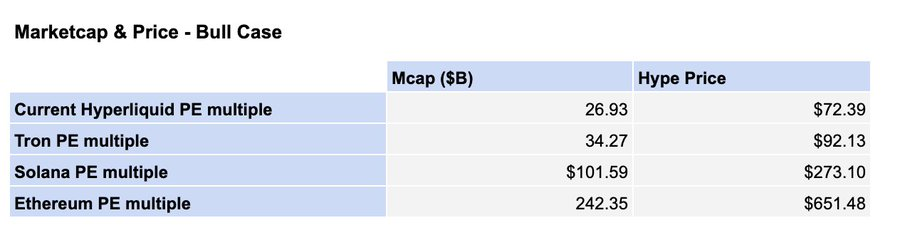
Considering current circulating supply and an 11.6% inflation rate (for incentives and rewards), the $HYPE price range is:
-
Base case floor: $41.93 (lowest multiple)
-
Optimistic case ceiling: $651.48 (highest multiple)
Reasonable Valuation Assessment
Compared to Solana and Ethereum, HYPE should command a lower valuation multiple due to:
-
Relatively early-stage project
-
Higher risk profile
-
Revenue concentrated in DEX activity, unlike broader ecosystems like Solana and Ethereum
“Reasonable” valuation assumptions:
-
40x P/E multiple
-
$1 billion annualized revenue (between base and optimistic cases)
-
Implies $40 billion market cap ($100 billion FDV)
-
$HYPE price around $100
Historical Cycle Comparison
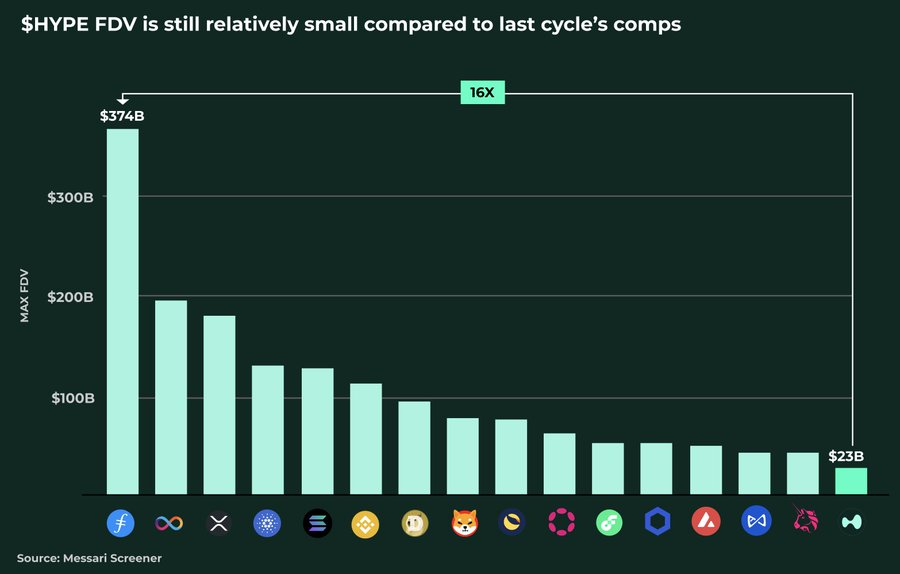
While a $40 billion market cap and $100 billion FDV may seem high, bull markets can get even more extreme.
During the 2021 bull run:
-
BNB: $5B → $100B (20x)
-
ADA: $5B → $95B (19x)
-
SOL: $86M → $77B (900x)
-
AVAX: $282M → $30B (100x)
-
MATIC: $85M → $20B (235x)
FIL reached an FDV of $373 billion—16 times today’s $HYPE FDV.
Potential Capital Inflows
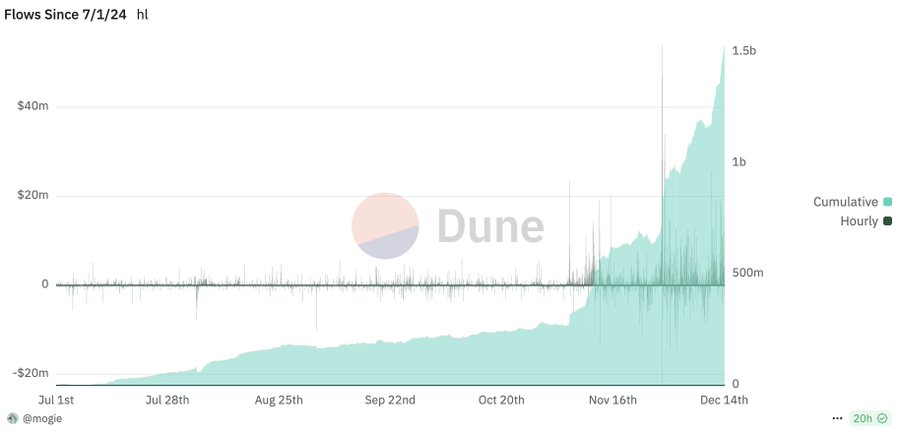
Currently, $HYPE has around 60,000 holders—relatively low compared to:
-
$KMNO: 55,000 holders
-
$WIF: 211,000 holders
-
$BONK: 861,000 holders
Using Messari’s estimated capital inflow multiplier (10x), attracting just 5% of SOL’s market cap and 1% of ETH’s market cap (~$10 billion total) could have a dramatic impact on price.
Potential Risks
While this article presents a highly optimistic outlook for Hyperliquid, it is not without risks.
Validator Centralization Risk
Currently, validators on the Hyperliquid mainnet remain highly centralized, with only four validator nodes operated by the team in Tokyo. Although the testnet includes over 60 decentralized validators—including reputable institutions like Chorus One, ValiDAO, B Harvest, and Nansen—the transition to full decentralization faces challenges. A drop in validator performance could harm user experience and erode trust.
EVM Ecosystem Risk
The quality of the ecosystem will directly impact HyperEVM’s success:
-
High-quality projects are needed to sustain ecosystem vitality
-
Low-quality or copycat projects will reduce capital inflows and engagement
-
Attracting genuine builders rather than mere speculators is crucial
DeFi Innovation Risk
With the EVM launch, $HYPE’s capital efficiency will increase via liquid staking, lending, and other mechanisms. New DeFi innovations may introduce unforeseen risks:
-
Novel financial products interacting with L1 may create unknown vulnerabilities
-
New DeFi protocols could negatively impact $HYPE’s token value
-
Exchange operations themselves could be affected
Regulatory Risk
While regulatory risk exists, geographic distribution and shifting political attitudes—particularly under a potential Trump administration—may somewhat mitigate it. Nevertheless, as an exchange platform, Hyperliquid must remain vigilant regarding evolving regulatory landscapes.
Market Correlation Risk
As an exchange token, $HYPE is highly correlated with the broader crypto market:
-
The team must achieve key milestones before the end of the market cycle
-
Market sentiment swings can significantly affect token price
-
Opportunities must be seized during the bull cycle
Investment Disclaimer
Cryptocurrency investments are highly risky, and any token—including $HYPE—could go to zero. Investors should:
-
Conduct thorough independent research
-
Objectively assess their risk tolerance
-
Not treat this analysis as financial advice
-
Exercise caution regarding market volatility
Join TechFlow official community to stay tuned
Telegram:https://t.me/TechFlowDaily
X (Twitter):https://x.com/TechFlowPost
X (Twitter) EN:https://x.com/BlockFlow_News
 @fmoulin7