Microsoft shareholders politely decline Bitcoin, is the "crypto stimulus" sustainable?
TechFlow Selected TechFlow Selected
Microsoft shareholders politely decline Bitcoin, is the "crypto stimulus" sustainable?
Why did the shareholders decline the strategic investment from Emerging Assets?
 Navigating Web3 tides with focused insights
By Pzai, Foresight News
As the U.S. makes significant progress toward regulatory acceptance of Bitcoin investments, growing numbers of companies are beginning to show interest in cryptocurrency assets. Following MicroStrategy's successful precedent, the National Center for Public Policy Research (NCPPR) formally advised Microsoft to allocate 1% of its profits into Bitcoin as an inflation hedge.
On December 10, Microsoft’s major shareholders voted against adding Bitcoin to the company’s balance sheet. The market sentiment was consequently dampened—Bitcoin traded at $97,304 at press time, down from recent highs. Is this “crypto booster shot” truly embraced by all U.S. equity investors? And why did shareholders reject strategic investment in this emerging asset class?
Emerging Interest
In October this year, Microsoft included a proposal on Bitcoin investment in its shareholder meeting agenda filed with the SEC. The proposal was put forward by the conservative think tank, the National Center for Public Policy Research. However, the board recommended that shareholders vote against it, calling the proposal “unnecessary,” stating that management had “already carefully considered” the matter. It also noted that volatility “is a factor to consider when evaluating cryptocurrency investments.” Two months later, Bitcoin has once again broken new records, while MicroStrategy—an S&P-listed peer—has emerged as a dark horse in the stock market by embracing Bitcoin, rapidly surging in share price within a short period.
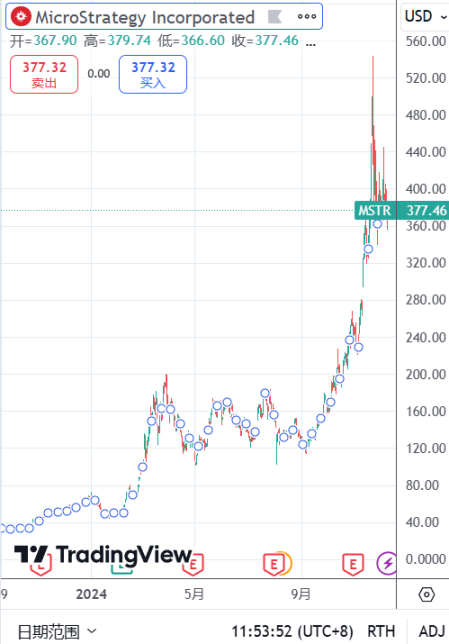
Leveraging its own success, MicroStrategy CEO Michael Saylor attempted to persuade Microsoft shareholders to support NCPPR’s proposal. Saylor emphasized Bitcoin’s value as “digital capital” and argued that allocating part of Microsoft’s assets to Bitcoin could significantly boost its stock price. Additionally, NCPPR played a video asserting that Microsoft should not miss out on the “next technological wave” driven by Bitcoin and demonstrated the potential value such holdings might generate.
Despite these efforts, Microsoft’s major shareholders ultimately sided with the board, concluding that including Bitcoin on the corporate balance sheet would not serve long-term shareholder interests. They expressed concerns that Bitcoin’s high volatility could negatively impact financial stability and questioned whether such an investment could reliably deliver positive returns. Proxy advisory firm Glass Lewis also noted that experts generally agree there is no guarantee that investing in crypto improves overall portfolio performance.
Market Sentiment
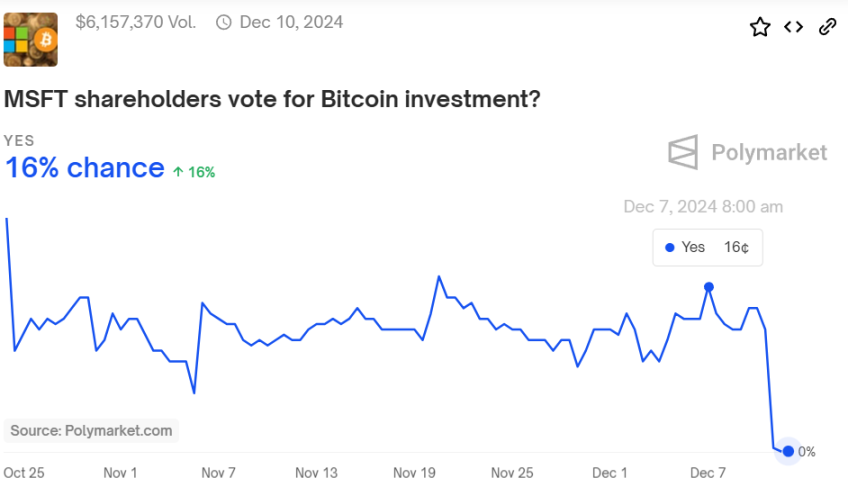
In the broader market, traders largely viewed Microsoft’s shareholder decision pessimistically. On Polymarket, the probability of approval for the Bitcoin investment proposal fluctuated between 10% and 20%.
Beyond Microsoft, other U.S.-listed firms are actively exploring Bitcoin as a corporate treasury asset, including Tesla, Riot Platform, and Galaxy Digital. Had Microsoft adopted a similar strategy, it would have become the largest Bitcoin-holding public company by market cap. Bernstein analysts noted that large tech firms possess substantial cash liquidity deployable into Bitcoin; however, due to their strong core businesses, Bitcoin may remain a non-material component of their asset strategy. In contrast, smaller companies with ample cash reserves but weaker core operations could more feasibly emulate MicroStrategy’s model.
Notably, two of Microsoft’s largest institutional investors—Vanguard and BlackRock—played pivotal roles in this vote. As major shareholders, their stance carried decisive weight in the outcome. Interestingly, BlackRock itself offers crypto ETF products and actively participates in the crypto investment space. Yet, when it comes to strategic corporate asset allocation, these investors still favored more stable, traditional assets—indicating that even as major financial institutions enter the crypto market, they remain cautious about endorsing corporate-level strategic holdings of such volatile assets.
In summary, Microsoft’s shareholder vote reflects the current dilemma facing U.S. corporations considering entry into the cryptocurrency arena: on one hand, rising Bitcoin prices and anticipated policy shifts under a potential Trump administration are driving increasing recognition of Bitcoin as a legitimate investment and reserve asset; on the other, concerns over financial security and stability impose natural constraints on the scale of such investments. In this context, Microsoft chose to maintain its existing investment strategy, focusing instead on more stable and predictable options. Nevertheless, this vote has already sent a powerful signal to the crypto market, heightening expectations for future adoption.
Join TechFlow official community to stay tuned
Telegram:https://t.me/TechFlowDaily
X (Twitter):https://x.com/TechFlowPost
X (Twitter) EN:https://x.com/BlockFlow_News
 Foresight News