Deep Dive into Token Unlocks: What Is the Most Important Factor Behind Price Changes?
TechFlow Selected TechFlow Selected
Deep Dive into Token Unlocks: What Is the Most Important Factor Behind Price Changes?
Regardless of size or type, 90% of unlocks generate negative price pressure, and team unlocks trigger the most severe crashes and irrational sell-offs.
 Navigating Web3 tides with focused insights
Author: Keyrock
Translation: Felix, PANews
Key Takeaways:
-
Over $600 million worth of tokens are unlocked weekly
-
90% of unlocks exert negative price pressure regardless of size or type
-
Price impact typically begins 30 days before the unlock event
-
Larger unlocks lead to sharper price drops (2.4x) and increased volatility
-
Team unlocks trigger the most severe crashes (-25%) and irrational selling
-
Investor unlocks show controlled price behavior due to smarter strategies that reduce market impact
-
Ecosystem development unlocks are among the few with positive effects (average +1.18%)
Introduction
More than $600 million in locked tokens are unlocked every week—equivalent to Curve’s market capitalization. These tokens are typically released at scheduled intervals and distributed to various participants. The scale, timing, anticipation, dates, and recipients of these unlocks all influence token value and market dynamics.
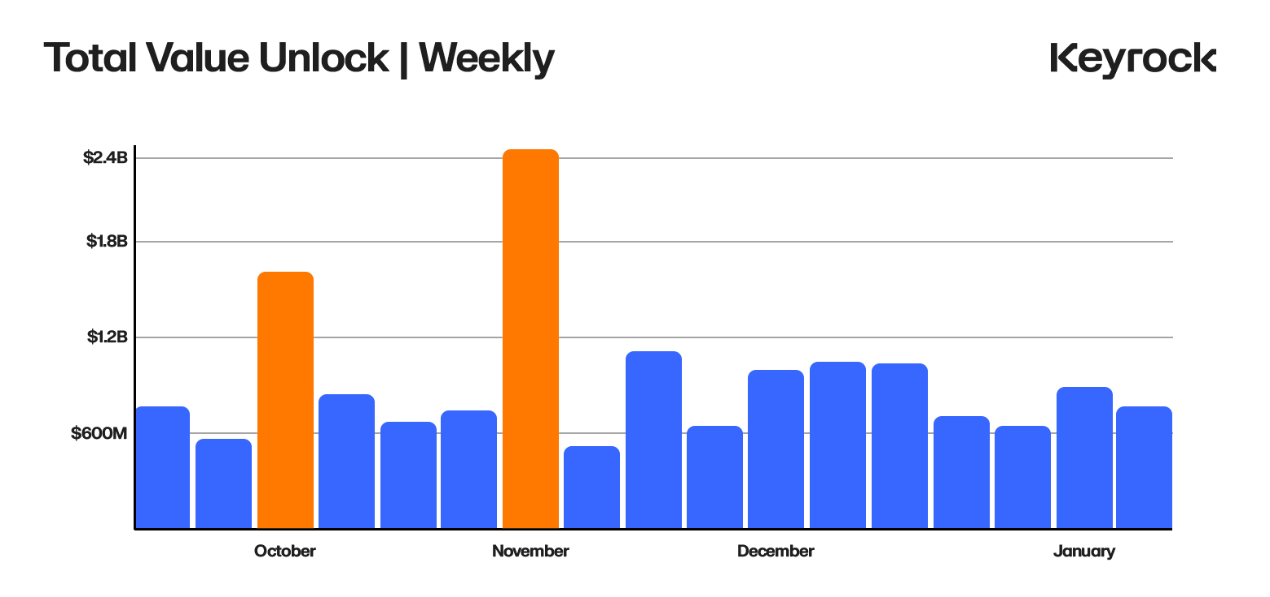
In the crypto space—driven by short-term decisions and rampant profit-taking—the rhythm and structure of token unlocks are critical for ensuring long-term value accrual and holder satisfaction. Unlocks are not a new concept. In traditional finance, mechanisms like equity vesting have long been used to align employee incentives over time. However, in blockchain projects, approaches to token unlocks vary widely in frequency and impact.
Among the 16,000 unlock events analyzed in this article, one striking pattern emerges: unlocks across all types, sizes, and recipient categories almost always negatively affect price.
This analysis takes a trader-centric approach, examining some of the most prominent token unlocks over recent years. It explores how different unlock scales and recipient types affect price, identifying recurring patterns and key behavioral differences across the ecosystem.
Understanding Unlocks
As a trader, you cannot see into the individual buy/sell decisions of retail investors, but you can gain insight into another group of holders—those on vesting schedules. Unlock timetables are the key to solving this puzzle; they signal not only future supply shocks but also serve as leading indicators of sentiment and volatility.
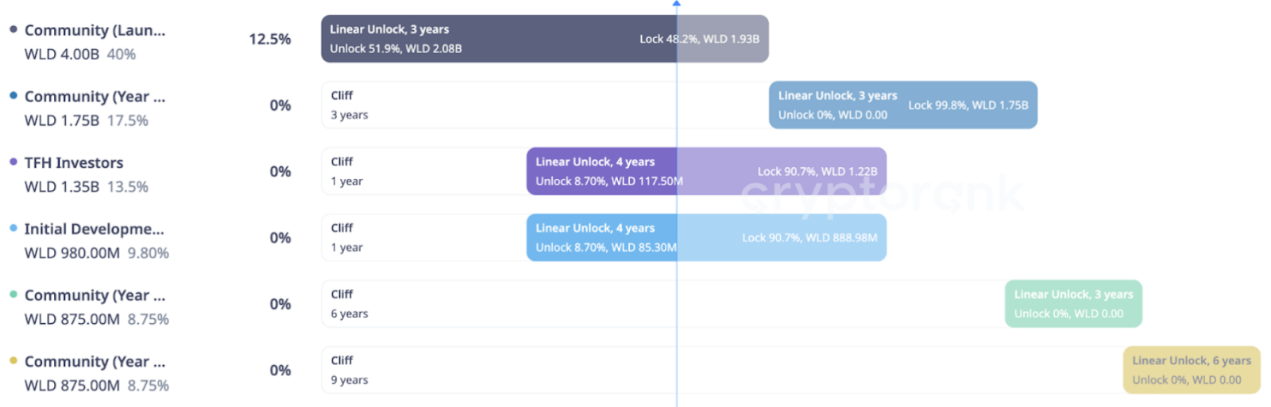
Most vesting schedules resemble the table above: a long calendar marked with “cliffs” and “linear or bulk unlock blocks.” These blocks are assigned to different recipients—categories such as “seed investors,” “core contributors,” or “community.”
Designing unlocks is a delicate task for any project. You cannot simply give away all tokens upfront, as recipients might leave and sell immediately. But you also cannot make them wait too long, or they may lose faith in the project. Projects must strike a balance: incentivizing recipients to stay engaged during early development while maintaining long-term involvement. The solution often lies in gradually distributing tokens over a defined vesting period.
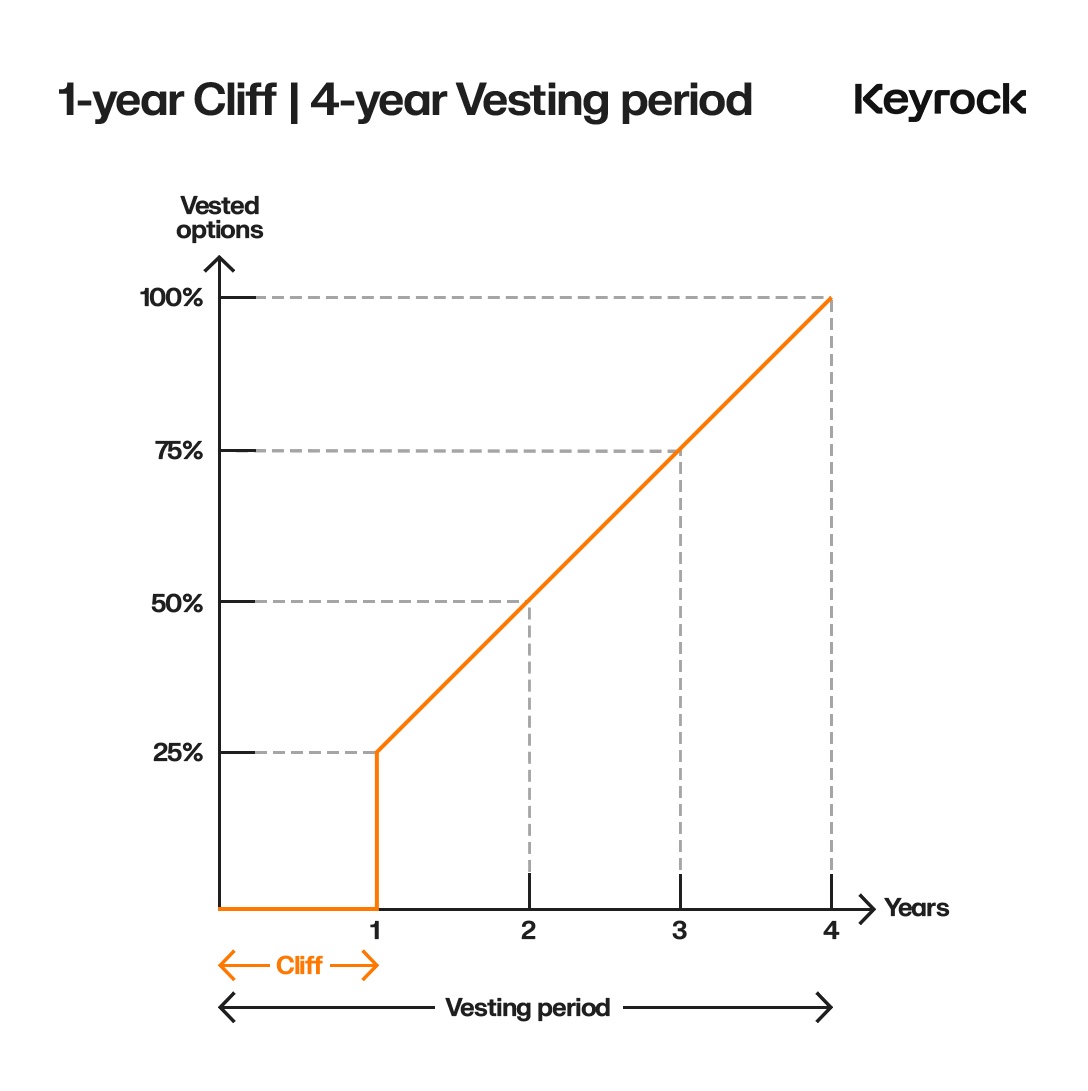
A typical unlock schedule might begin when the relationship between recipient and organization starts and continue until full allocation. For most crypto projects, these are outlined early in whitepapers. During the first ⅓ ± ¼ of the vesting period, no tokens may be distributed. Then, a large batch is released at once, followed by linear unlocking over the remainder.
This method works well because it ensures recipients commit a minimum amount of effort before receiving rewards. For example, developers are incentivized to keep contributing, while investors face an initial lock-up followed by partial cash-outs. Gradual releases help ease market pressure.
Not all unlocks follow this structure. Some, known as “bulk unlocks,” release all tokens at the end of a cliff. Others are purely linear, starting distributions immediately without cliffs and continuing regularly until fully allocated.
Unlock Size: A Key Factor in Price Dynamics
The analysis began by breaking down 16,000 composite unlock events and categorizing each by size. For every event, daily token prices were tracked from 30 days before to 30 days after the unlock. Additionally, median price and volatility metrics were recorded for each token during the month prior to the 30-day pre-unlock window. This step was crucial, as many projects use monthly unlock schedules. While imperfect, this approach better isolates smaller-scale unlocks.
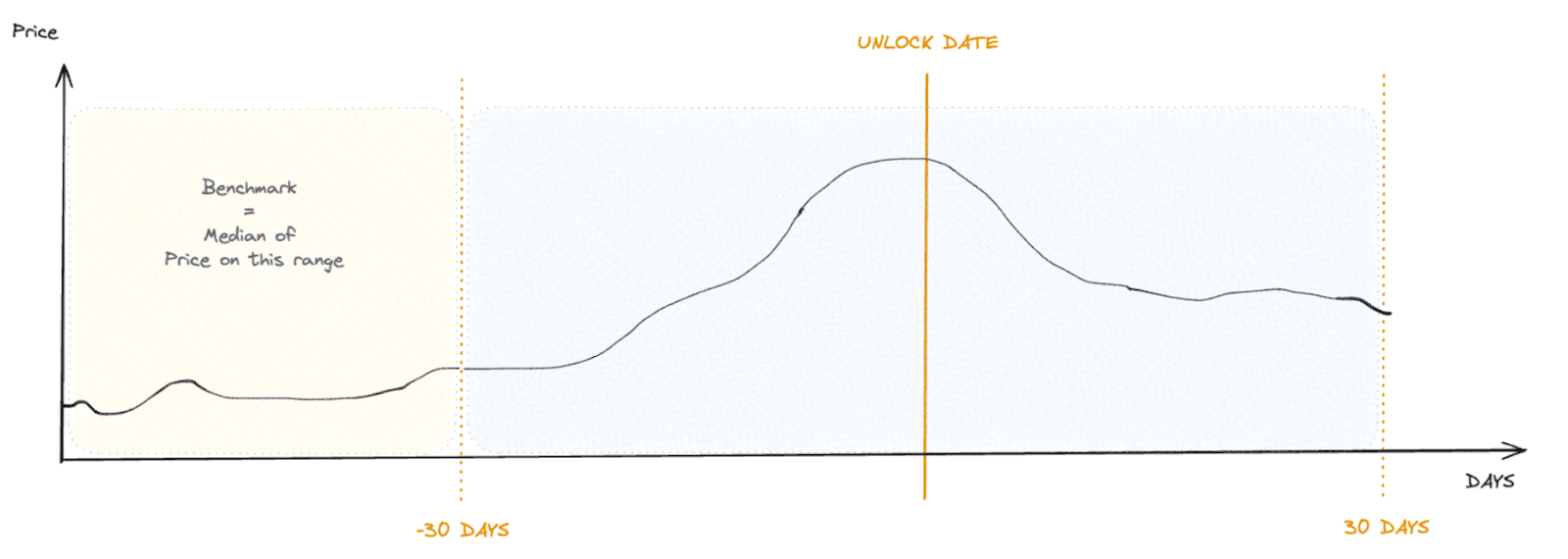
Finally, no asset exists in isolation from broader market movements. This is especially true for altcoins, which often exhibit extreme beta correlation with their base protocol tokens. To account for this, price changes in each unlock's data series were standardized.

For simplicity, ETH was chosen as the benchmark. Prices within the sample (before, during, and after unlocks) were weighted against ETH to derive a more market-independent metric.
Unlock Size Doesn’t Tell the Whole Story
After decomposing, categorizing, and quantifying unlock events, average price impacts were plotted across different time intervals post-unlock. Visually, the data appears messy. One might expect a proportional relationship between unlock size and price impact, but beyond 7 days, the correlation weakens.
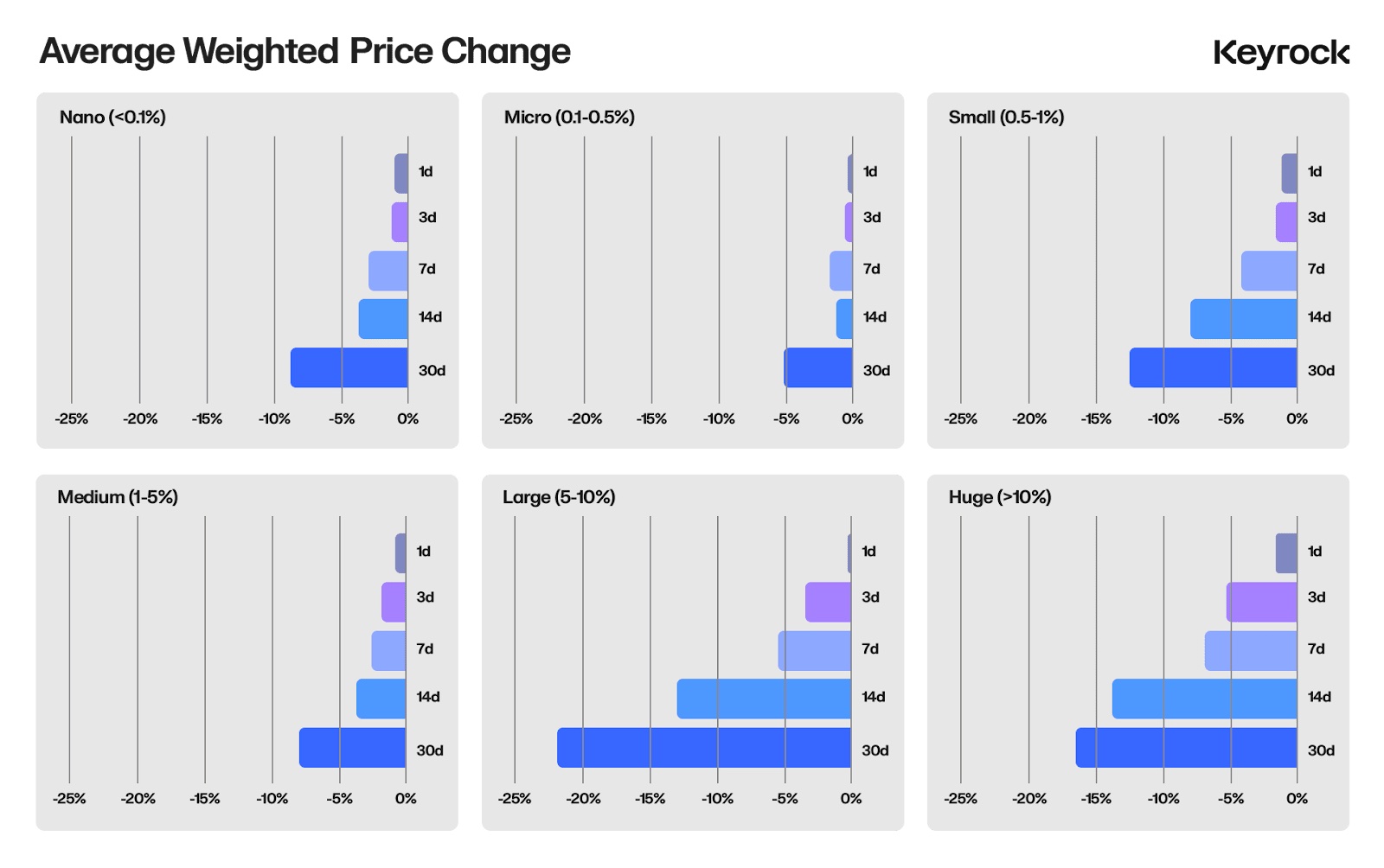
When scaled relatively, most unlocks appear similar in terms of price suppression. Instead, frequency proves to be a more telling factor. As previously noted, unlocks typically occur either as single large batches following an initial cliff or continue steadily throughout the vesting period. Except for large or massive unlocks, even small, steady unlocks consistently exert downward price pressure. Thus, it becomes difficult to judge whether larger or smaller unlocks are preferable.
The Divide Between Cliffs and Linear Unlocks
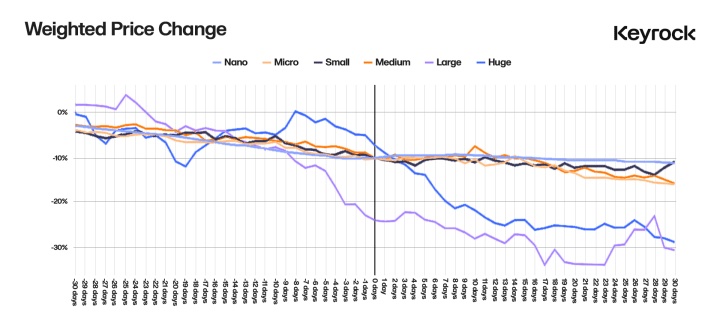
Data reveals clearer behavioral patterns around larger unlocks ahead of the event. Typically, prices decline steadily starting 30 days before the unlock, accelerating in the final week. After the unlock, prices tend to stabilize over about 14 days, returning to neutral levels.
This price behavior can be attributed to two main phenomena:
-
Sophisticated hedging: Large unlocks are often allocated to recipients who hedge via market makers. By locking in prices or leveraging volatility before the unlock, these parties reduce token pressure and mitigate direct impacts. Most entities begin hedging 1–2 weeks—or even a month—in advance. When executed properly, this strategy can effectively minimize market disruption.
-
Retail front-running: The sharp drop in the final week may result from retail traders selling early. Knowing an unlock is imminent, they offload tokens to avoid dilution, often unaware that recipients may have already hedged or sold.
This behavioral pattern is also evident in weighted trading volume across categories, which typically peaks 28 or 14 days before the unlock.
Interestingly, data shows that massive unlocks (>10% of supply) perform as well as—or better than—large unlocks (5%–10%). This may be because their sheer size makes full hedging impossible, and liquidation cannot be completed within 30 days. Consequently, their market effect tends to be more gradual and prolonged.
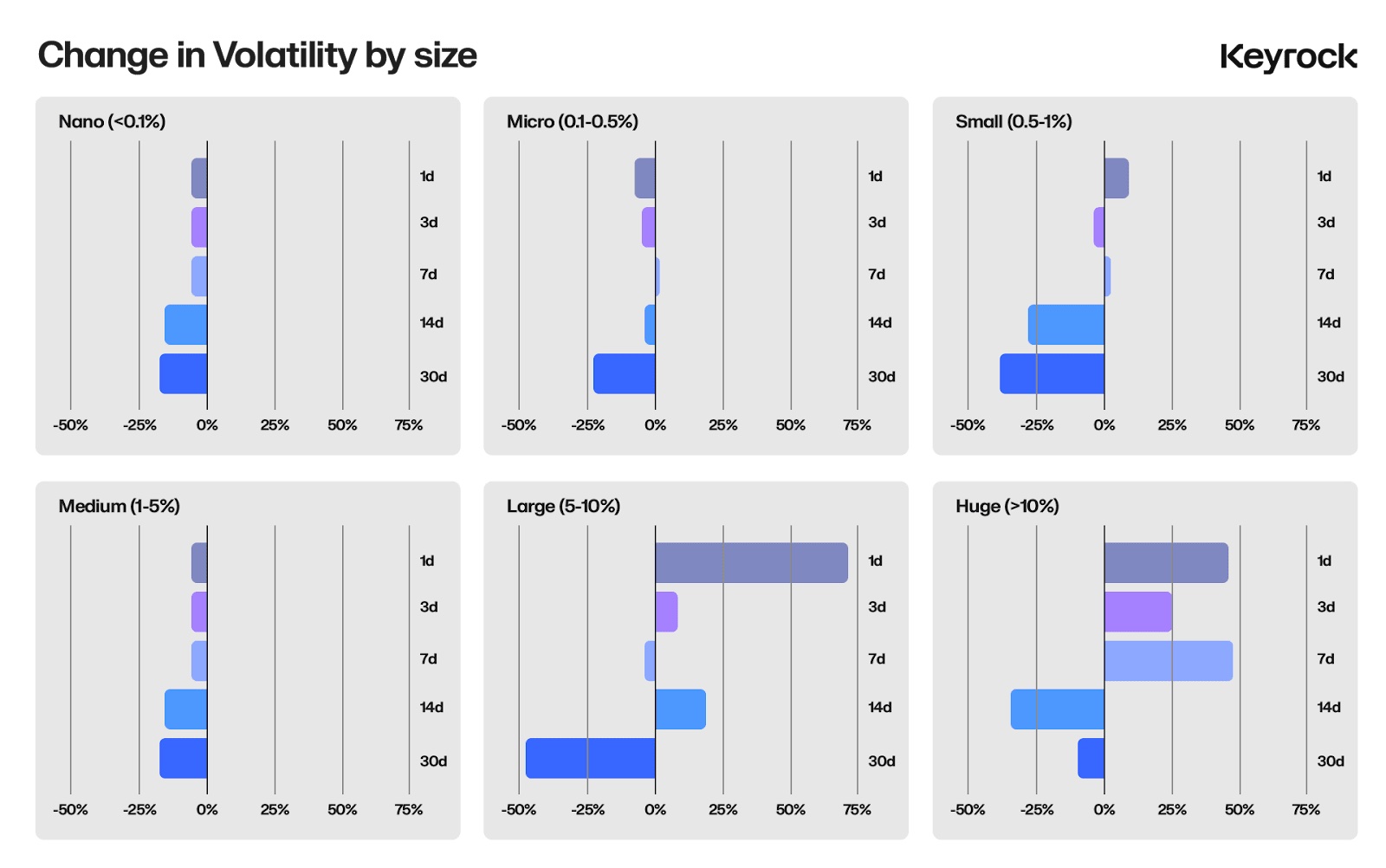
The last chart highlights changes in volatility. Large unlocks cause significant volatility on day one. However, this volatility largely dissipates within 14 days.
How Should You Trade This?
In most cases, focus should be on mega and large unlocks listed on calendars. These often mark the start of linear vesting periods following initial cliffs. The proportion granted at cliffs varies significantly—from 10% to 50%. What truly matters is the unlock’s size relative to total supply.
Data suggests the best time to enter is 14 days after a major unlock, when volatility has settled and hedging positions may have been unwound. For exiting, the optimal time is 30 days before a major unlock, when hedging or market anticipation typically begins.
For smaller unlocks, it’s generally best to wait until they are fully completed.
Recipient Type: A Key Predictor of Price Impact
When analyzing unlocks, the second—and most important—factor is the recipient type. Who receives the tokens, and what does that imply for price behavior? Recipients vary widely but generally fall into five main categories:
-
Investor unlocks: Tokens allocated to early investors as compensation for funding the project
-
Team unlocks: Tokens reserved to reward core team members, either as lump-sum payments or salaries
-
Ecosystem development unlocks: Tokens injected into the ecosystem to fund liquidity, network security, grants, etc.
-
Public/community unlocks: Tokens distributed to the public via airdrops, user rewards, or staking incentives
-
Burn unlocks: Tokens designated solely for burning, reducing supply. These are rare and excluded from this analysis
Opinions differ on which recipient type exerts the greatest downstream price impact. Some argue community airdrops are mostly claimed by Sybil attackers, flooding the market with sell pressure. Others believe injecting millions of tokens into the ecosystem dilutes value. Still others claim VCs and investors are the fastest sellers, eager to take profits.
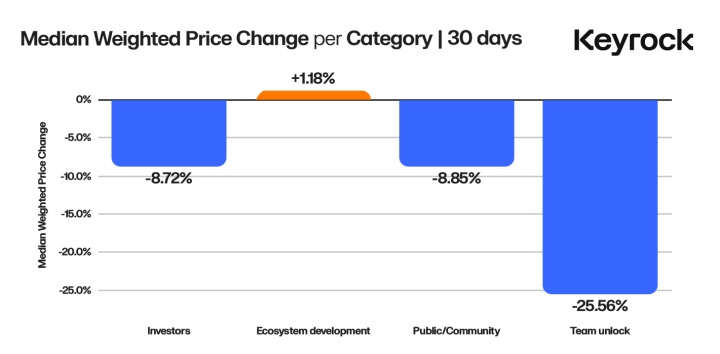
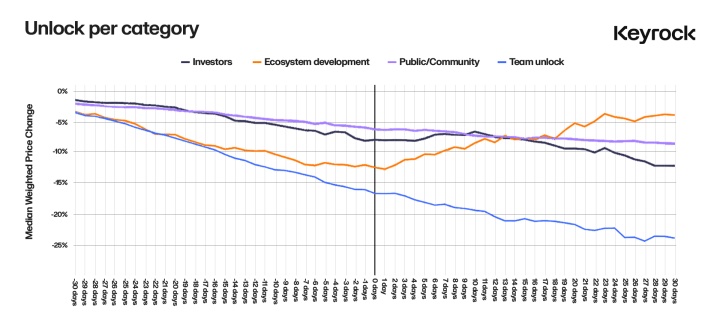
After analyzing thousands of unlock events, the data shows:
-
Almost all categories exhibit negative price impacts, but with nuances
-
Ecosystem development unlocks are least disruptive, while team unlocks consistently cause the largest price declines
-
Investor and public/community unlocks have moderate price effects
Yet, as with unlock size, the numbers alone don’t tell the full story. When plotting price trends 30 days before and after unlocks by recipient type, distinct behaviors emerge.
What Drives Recipient Behavior?
At first glance, team unlocks appear most destructive, while ecosystem unlocks seem nearly harmless. But these are surface-level insights. Why do differences exist? What drives recipient behavior? What lessons can protocols learn from this data?
Team Unlocks
Team unlocks are among the most detrimental categories for price stability. Caution is warranted when teams approach cliffs or mid-point allocations.
When charted, the impact follows a roughly linear downward trend beginning 30 days before the unlock and continuing sharply downward. Team unlocks exhibit two characteristics that more strongly affect price than other recipient categories.
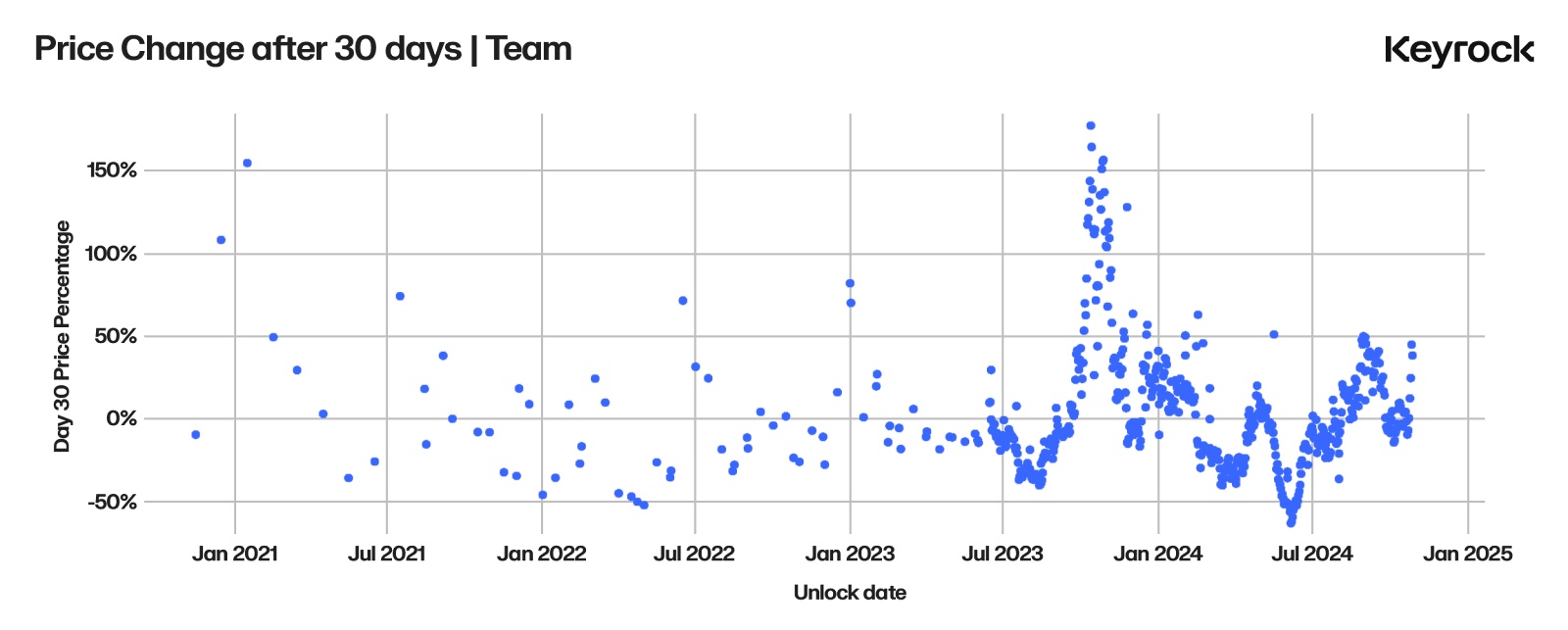
Uncoordinated team selling:
-
Teams consist of multiple individuals with diverse financial goals and no coordinated plan for token disposal
-
Many team members view tokens as compensation for long-term (sometimes multi-year) work without proper pay. When tokens unlock—especially near cliffs—the incentive to profit is understandably high
-
Even under linear vesting, these tokens often represent part of their income and need to be sold
Lack of hedging or mitigation strategies:
-
Unlike large investors or institutions, teams rarely employ sophisticated techniques to reduce market impact when selling
-
Experienced entities often hire market makers to strategically manage large token distributions
-
Additionally, pre-hedging strategies can reduce direct market pressure at unlock over time
This explains the negative price impact—but why observe price declines 30 days prior? This is likely due to cumulative price pressure and overlapping linear unlocks. That’s why median prices were controlled for; despite continuous unlocks, data still shows suppression. In this context, you should not only avoid bulk cliff unlocks but also delay purchases during linear vesting periods if possible.
Ecosystem Development Unlocks
In ecosystem development, a unique trend emerges: slight price decline 30 days pre-unlock, followed by immediate positive price impact post-unlock. Unlike other unlock types, ecosystem development unlocks often channel tokens into programs that create long-term value and strengthen the protocol.
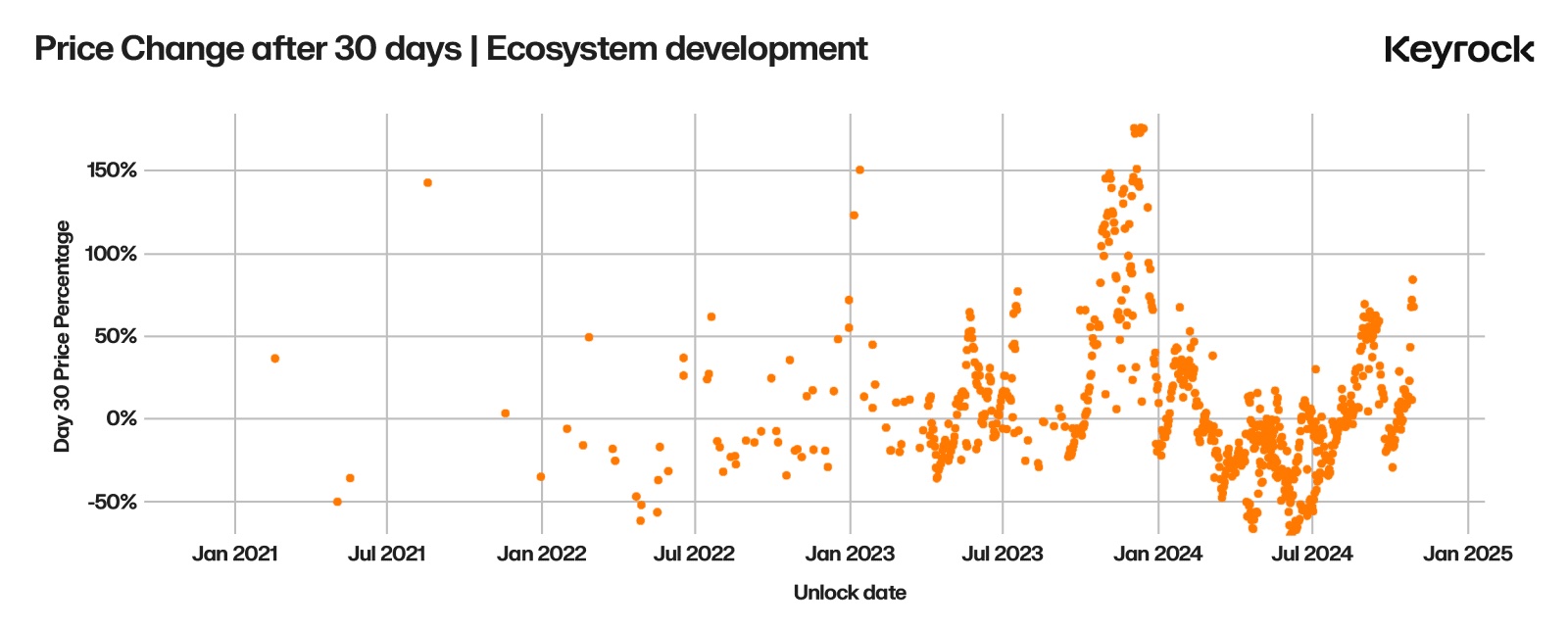
Why prices rebound (and often rise) after unlock:
-
Liquidity provisioning: Tokens are often allocated to lending platforms or liquidity pools, increasing market depth, reducing slippage, and enhancing overall token availability. By improving "market usability," these unlocks not only stabilize trading conditions but also boost participant confidence
-
Participation incentives: Ecosystem funds often drive user engagement through incentive programs. Initiatives like liquidity mining or staking rewards create flywheel effects that promote network activity. As participants recognize sustained growth potential, they’re less likely to sell immediately and more inclined to remain invested
-
Grants and infrastructure funding: Developer grants and infrastructure funding support dApp creation and network scalability. While returns on these investments typically take 6–12 months to materialize, they signal long-term commitment to ecosystem growth, mitigating short-term sell pressure
How to explain the pre-unlock price drop? Two factors contribute:
-
Anticipatory selling: As mentioned, many investors sell early before unlocks, fearing supply increases will dilute value regardless of unlock purpose. This is especially common among retail participants whose misunderstanding of unlock types drives short-term decisions
-
Liquidity preparation: Large recipients of grants or allocations often need to prepare liquidity in advance. For instance, to establish a liquidity pool on a DEX, recipients may sell existing assets to secure stablecoins or pairing assets. This preparatory selling creates downward price pressure even before token deployment
Investor Unlocks
Investor unlocks are among the most predictable events in the token market. Unlike other categories, these unlocks typically show controlled price behavior. Data from 106 unlock events reveal a consistent trend: slow, minimal price decline. This stability is no accident. Early investors—whether angel or Series C—usually have VC backgrounds and possess professional expertise in position management.
These investors aren’t just offloading risk; they actively avoid market disruption while optimizing returns. By understanding the sophisticated strategies they employ, traders can anticipate how these events will unfold and adjust positions accordingly.
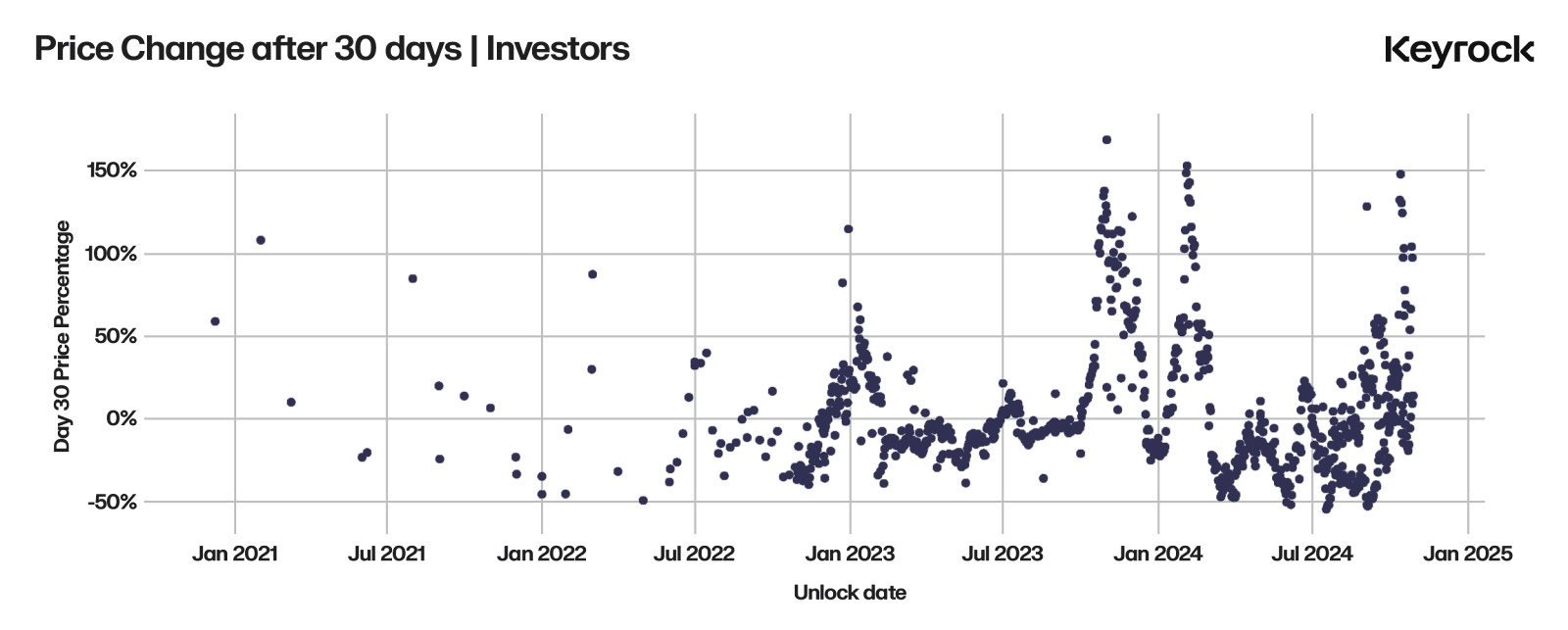
OTC back desks: Investors often engage liquidity providers or OTC desks to sell large token volumes directly to interested buyers. This method bypasses public order books entirely, avoiding immediate sell-side pressure and market signaling.
TWAP/VWAP and hedging: Time-weighted average price (TWAP) or volume-weighted average price (VWAP) execution strategies help spread token sales over time, minimizing price impact. Many investors also pre-hedge positions using futures to “lock in” prices before the unlock. They then gradually unwind these hedges post-unlock, further reducing volatility.
“Locking” or “hedging” essentially means opening short positions via derivatives before the unlock date, helping guarantee prices early when selling tokens and closing shorts afterward.
Since 2021, advanced options strategies have expanded beyond investors, with more project teams adopting them to generate recurring revenue or manage capital more efficiently. For traders, this evolution reflects growing sophistication in crypto markets, revealing opportunities to predict and align with major players’ strategies. Options—whether privately sold or used as loan collateral—play a key role in shaping market dynamics, offering informed traders a clearer lens through which to interpret token activity.
Community and Public Unlocks
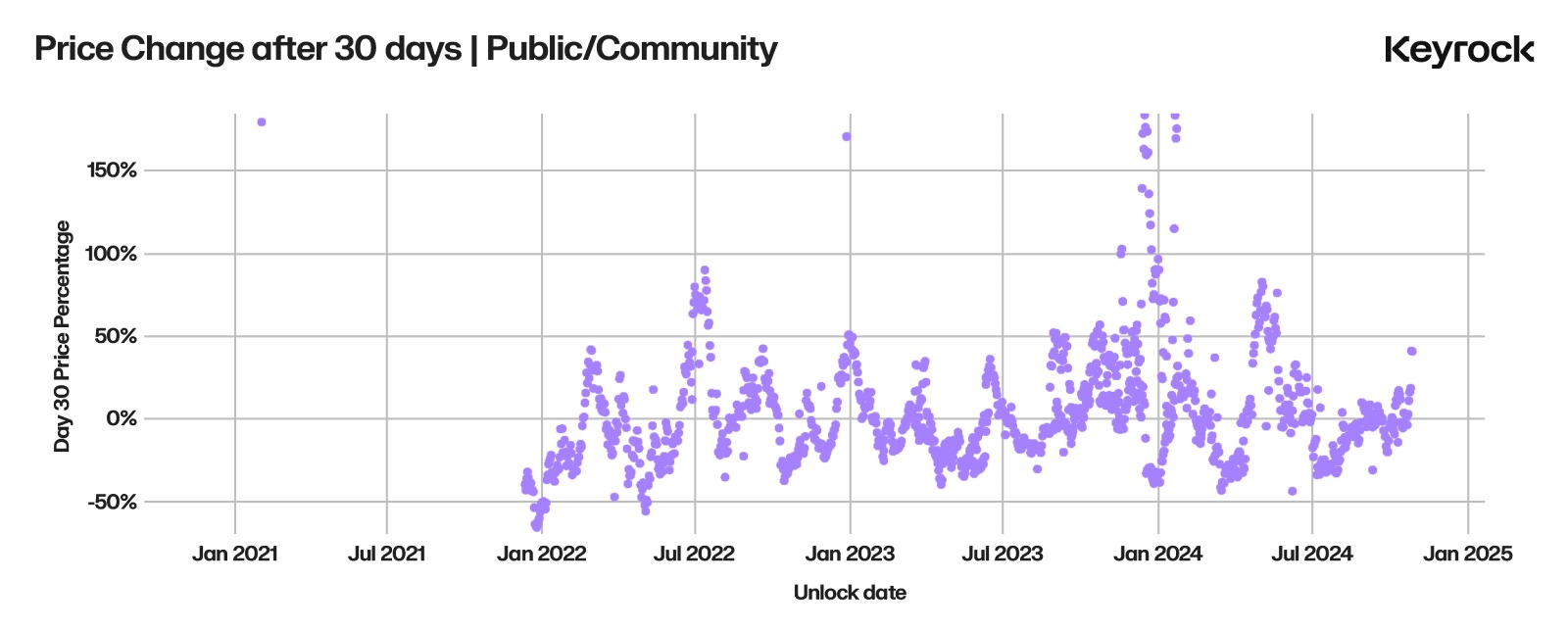
Community and public unlocks—such as airdrops and points-based reward programs—behave similarly to investor unlocks, showing gradual price declines before and after events. This dynamic is shaped by two distinct behaviors among recipients:
-
Immediate selling: Many retail participants liquidate rewards upon receipt, prioritizing liquidity
-
Long-term holders: Most public airdrop recipients hold rather than sell, reflecting a cohort of engaged users or less active traders
While overall price impact is modest, these outcomes highlight the importance of thoughtful reward program design. Well-crafted plans can prevent unnecessary market chaos while achieving intended goals of fostering community growth and participation.
Summary
Token unlocks are essential mechanisms in the crypto ecosystem, funding development, incentivizing participation, and rewarding contributors. However, their timing, scale, and recipient categories are key determinants of price impact. Understanding what these impacts are and why they occur enables better trading decisions and helps protocols design more effective unlock structures.
Analysis of over 16,000 unlock events across 40 tokens highlights key trends:
-
Linear unlocks outperform initial cliff unlocks in minimizing short-term price disruption, although larger cliffs often recover better after 30 days
-
The most significant price movements often stem not from token recipients themselves, but from retail reactions to narratives and broader sentiment
Recipient Category Dynamics
-
Ecosystem unlocks: Consistently positive outcomes driven by liquidity provision, user incentives, and infrastructure funding
-
Investor unlocks: Minimal disruption due to sophisticated strategies like OTC sales, TWAP/VWAP execution, and options hedging
-
Team unlocks: Most disruptive category; uncoordinated and immature selling leads to sharp price drops. Teams can mitigate impact by partnering with market makers
-
Community unlocks: Limited long-term impact as many recipients hold, though short-term “miners” typically sell for immediate gains
Conclusion
Before making long-term trades, always consult unlock calendars using tools like CryptoRank, Tokonomist, or CoinGecko. Unlock events are frequently misunderstood but play a crucial role in token performance.
Contrary to popular belief, VC and investor unlocks are not primary drivers of price declines. These participants are often aligned with the protocol’s long-term vision and employ strategies designed to minimize market disruption while maximizing returns. Instead, team unlocks warrant closer scrutiny, as poorly managed distributions frequently expose tokens to downside pressure. Ecosystem unlocks present a unique opportunity—when aligned with clear growth objectives, they often act as catalysts for adoption and liquidity, making them favorable entry points into the market.
Join TechFlow official community to stay tuned
Telegram:https://t.me/TechFlowDaily
X (Twitter):https://x.com/TechFlowPost
X (Twitter) EN:https://x.com/BlockFlow_News
 @KeyrockTrading