Elon Musk ruined X, and 20 million "Twitter refugees" are rushing to this app疯狂涌向这个 App
TechFlow Selected TechFlow Selected
Elon Musk ruined X, and 20 million "Twitter refugees" are rushing to this app疯狂涌向这个 App
Replacing Twitter, this time it's really promising.
 Navigating Web3 tides with focused insights
Author: Moonshot, GeekPark
If you had to name two star users on X right now, who would come to mind? For many people, the answer might be Trump and Musk.
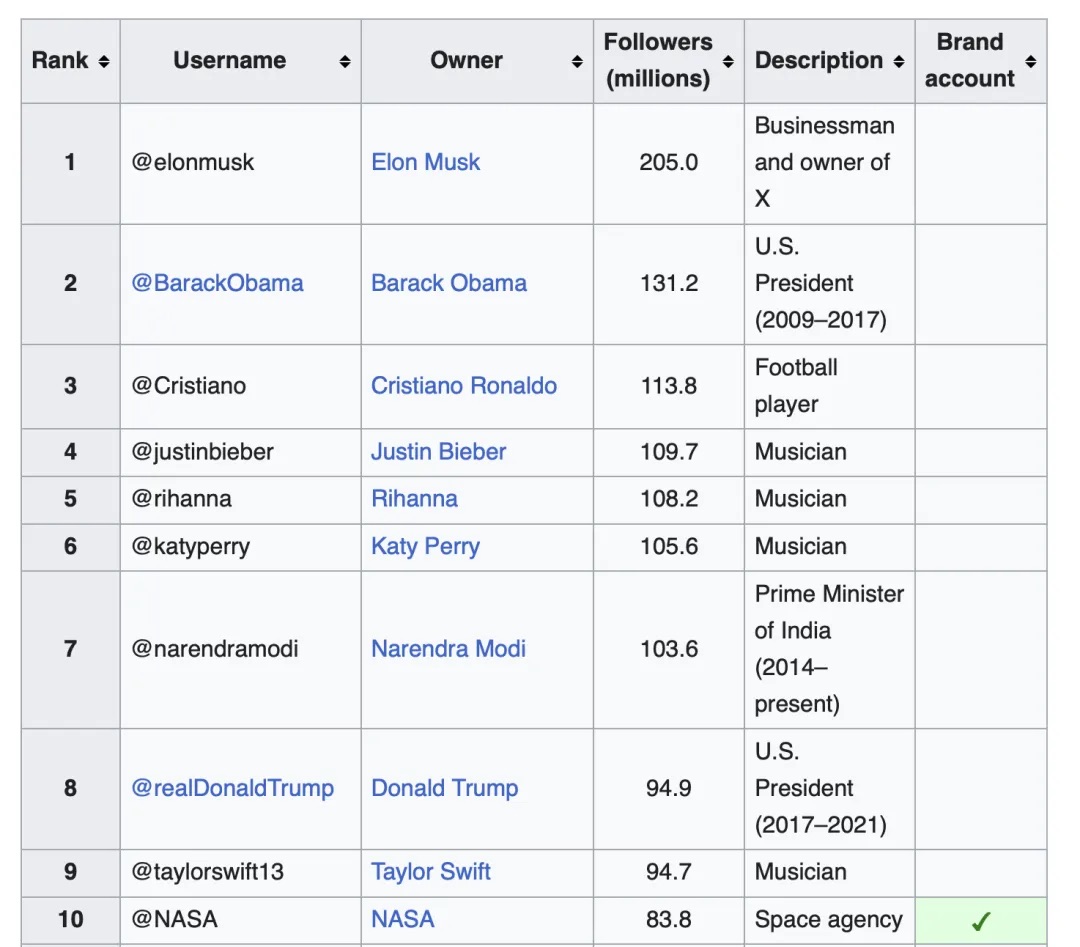
Top followers on X—Trump and Musk are the most active among the top ten|Source: Wikipedia
When Trump returned to the White House, both X and its biggest ally Musk played significant roles. Back then, disapproving of the "political correctness" on other social media platforms and upset about Trump's suspension from Twitter, Musk acquired Twitter.
After Musk implemented sweeping changes to X—including rebranding, layoffs, and subscription services—the platform’s valuation has plummeted from $44 billion at acquisition to around $9.4 billion, a nearly 80% drop. Company revenue has declined by 84%, and many major advertisers have pulled their ads from X.
But even more alarming:
Users are leaving.
X has seen a 15% decline in global daily active users, with an 18% drop in U.S. users. After the U.S. election, this user exodus accelerated. On election night, over 115,000 American users deactivated their X accounts—the highest single-day deactivation rate since Musk took over.
Suspectedly to cover up user loss, Musk recently announced that X will hide engagement metrics such as likes, comments, and reposts. He claimed the reason was “to keep the interface cleaner.”
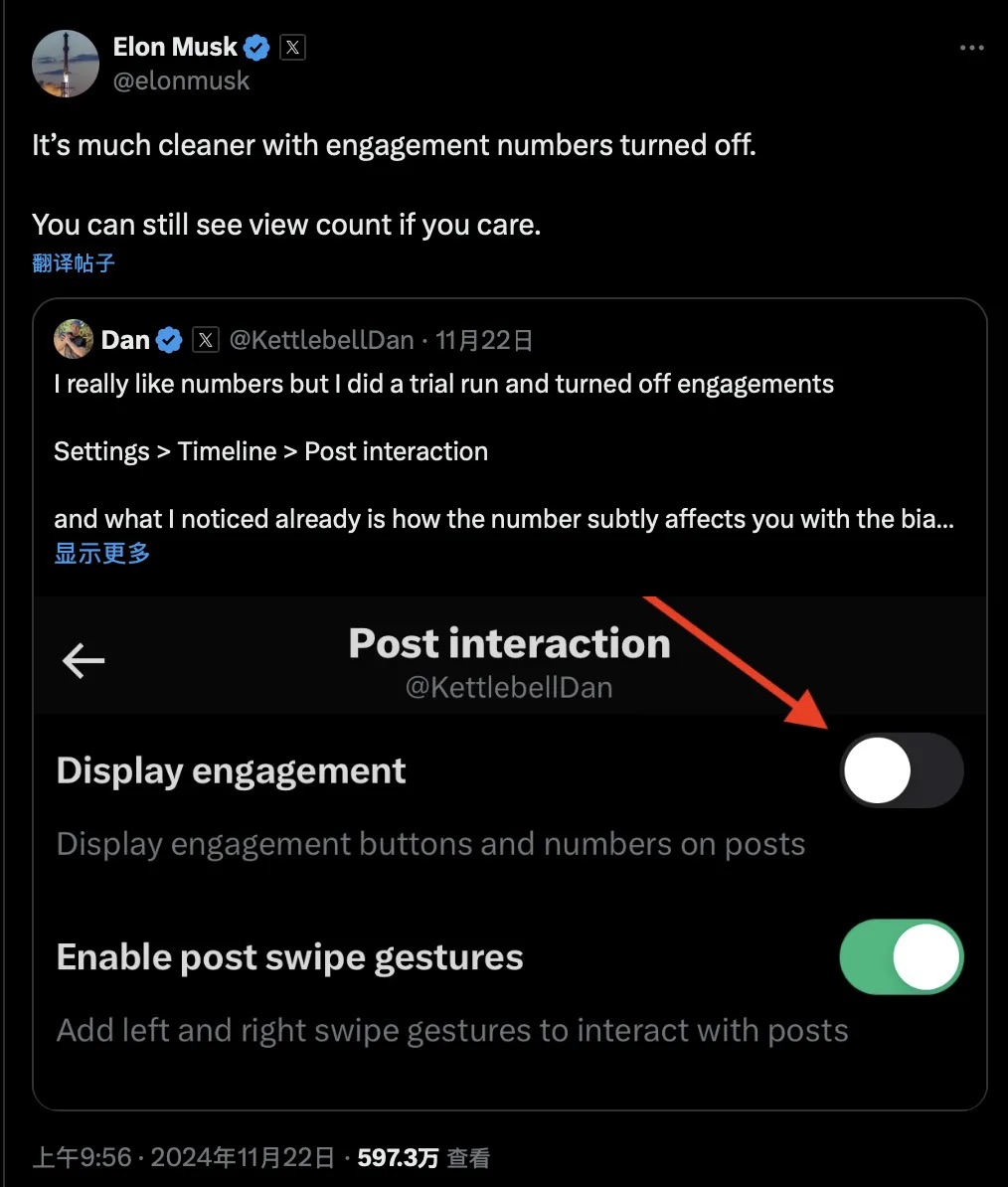
Musk hides like counts and other engagement numbers on X|Source: X
However, users don’t disappear—they migrate. One destination for departing X users is Bluesky.
On the same day of the U.S. election count, Bluesky attracted approximately 1.2 million visitors—more than Threads’ 950,000. On November 14, Bluesky reported roughly 2.5 million new users in the past week, surpassing 16 million total users, with daily active users surging to 3.5 million. By November 19, Bluesky officially surpassed 20 million users—an increase of 300% since election day.
So what exactly is Bluesky? Is it a peaceful alternative to X, just another fleeting social media trend, or perhaps the true successor to pre-Musk Twitter?
01 The Real Twitter Successor
Open Bluesky’s homepage and you might think you’ve landed on someone’s old Twitter profile.
That’s because it was modeled directly after Twitter, originated within Twitter itself, and was initially created to become the ideal version of Twitter.
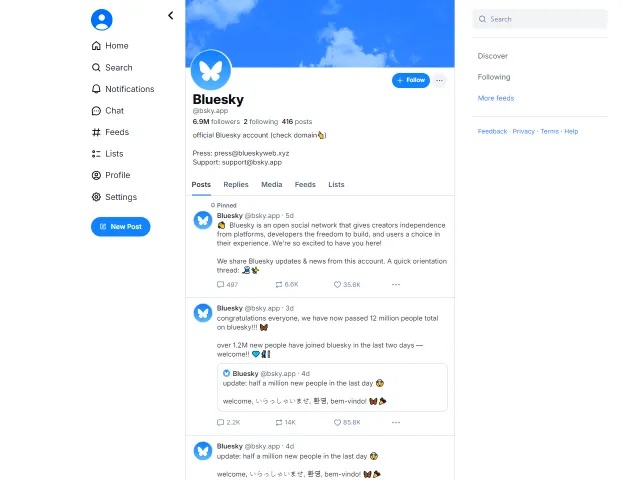
Feels very tweet-like|Source: Bluesky
Bluesky began in 2019 when Jack Dorsey, Twitter’s co-founder and then-CEO, announced the project on Twitter. The goal was to build an open, decentralized standard for social media—one that ensures greater data security and minimizes algorithmic manipulation of content feeds.
Dorsey also hinted in 2019 that he hoped Twitter itself could eventually adopt this decentralized standard.
In 2021, Bluesky spun off from Twitter and formed Bluesky Social. After Musk acquired Twitter in 2022, Bluesky severed all legal and financial ties with Twitter and accelerated app development.
Bluesky’s original mission was to create a technical standard for decentralized social media. After 2022, they aimed to directly become a decentralized version of Twitter.
Only in February this year did Bluesky fully open registration. Within ten months, it accumulated 20 million users—and growth momentum remains strong.
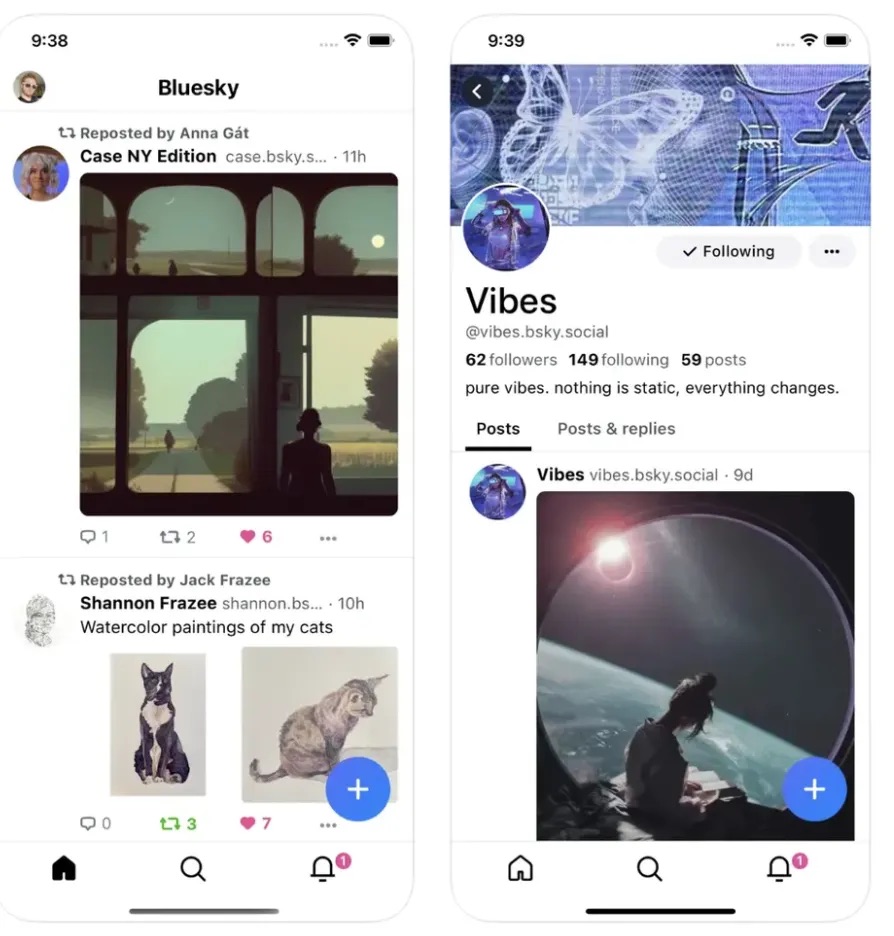
Bluesky and Twitter look almost identical|Source: Bluesky
Bluesky closely resembles Twitter in form. Posts consist of text, images, and videos under 300 characters, with options to reply, repost, quote, and like. Despite CEO Jay Graber’s objections, users have affectionately dubbed these posts “skeets” (a blend of Sky and Twitter).
What makes Bluesky especially appealing isn't just its similarity to Twitter—but how fundamentally opposite it is to X in both technology and content philosophy.
02 What X Opposes, We Embrace
Bluesky’s core technology is the AT Protocol, which enables different social media platforms to communicate. Users can follow and interact across platforms without relying on a single centralized service.
Users can also choose where their data is stored—on their own servers or cloud storage. The AT Protocol ensures user data isn’t locked into one platform. Even if users leave Bluesky, they can easily take their content and data with them.
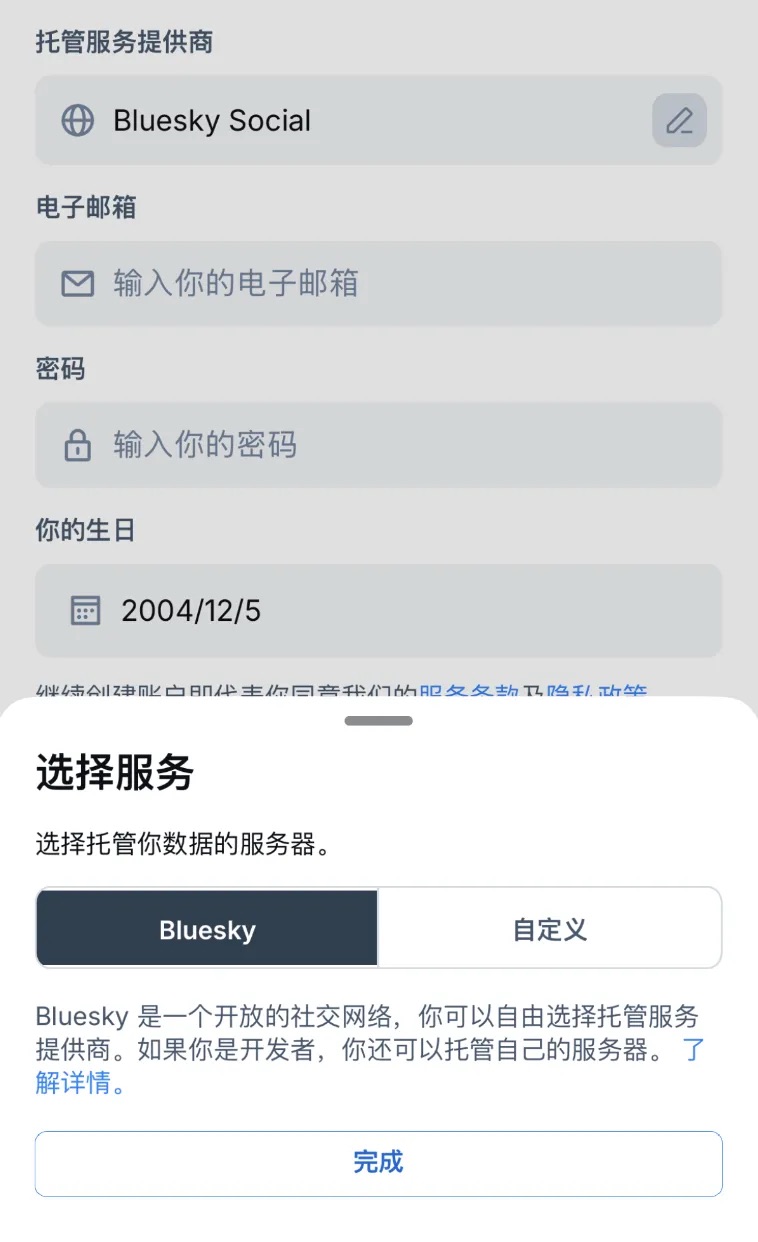
From account creation, users can select their data storage server|Source: Bluesky
In short, users no longer need to juggle multiple apps to browse feeds, fear losing data upon account deletion, or stay on a disliked platform due to migration costs.
Bluesky wants developers to have the freedom to build platforms—and users to have the right to leave.
How does X compare? Recently, Musk vaguely indicated that X is actively limiting the visibility of posts containing external links. In October 2023, he admitted: “Our algorithm optimizes for time spent on X, so external links aren’t prioritized—if people click away, they spend less time on X.”
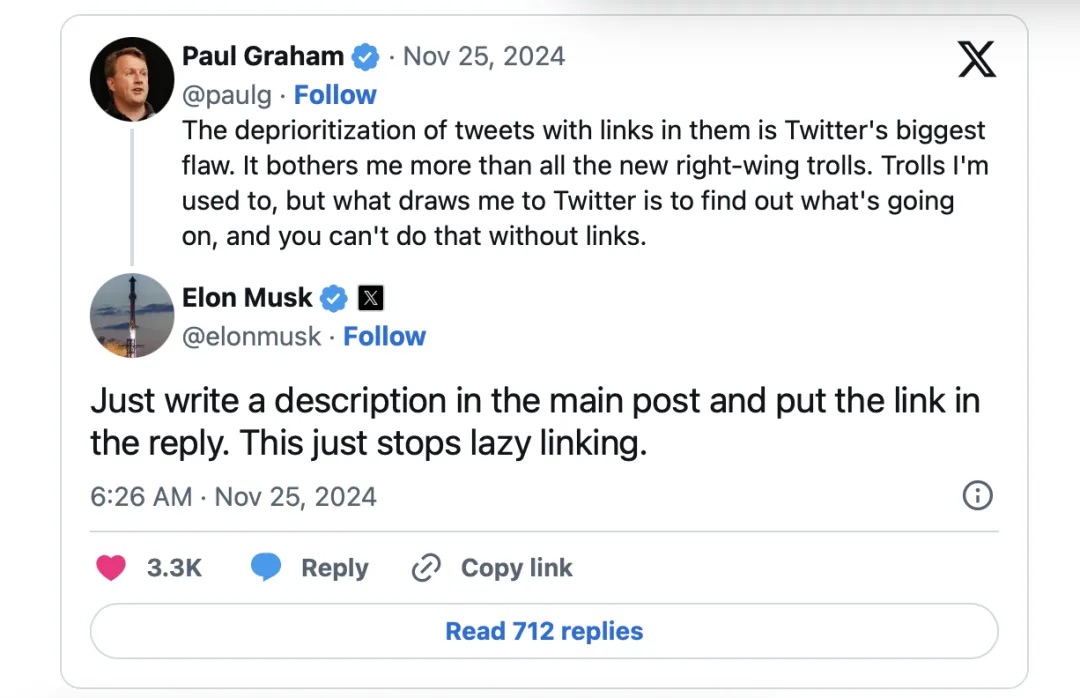
Criticism from renowned tech observer Paul Graham|Source: X
Last January, X officially banned third-party clients, ending the era of many popular third-party Twitter apps. In February, X eliminated free API access. On October 30, X raised the price of its lowest-tier API package from $100 to $200 per month.
These restrictive moves stem from Musk’s desire to keep users, data, and money within X. The actual result? All three are fleeing.
Today, X and Bluesky—descendant of Twitter—seem like personifications of two opposing icons: a stark black-and-white centralized X versus a butterfly-shaped sky evolved from Twitter’s blue bird.
Two platforms, vastly different vibes|Source: Author-created
The contrast becomes even clearer at the content level.
X’s suppression of external links and tolerance for misinformation have deeply frustrated journalists and traditional media outlets. In early November, The Guardian announced it would no longer post officially on X, calling it “a toxic media platform” whose owner (Musk) “uses his influence to shape political discourse.”
Foreign media previously reported that Musk adjusted X’s recommendation algorithm to boost visibility of right-leaning content. According to a 2024 Pew Research Center study, X has grown increasingly popular among right-leaning users, with conservative content seeing higher reach and engagement.
X’s two biggest stars—Musk and Trump—have repeatedly endorsed right-wing politicians and views over the past two years, even expressing support for Germany’s far-right Alternative für Deutschland (AfD) party.
During this year’s election cycle, Musk aggressively backed Trump. Deutsche Welle reported after the election: “Not only did Musk publish and spread misinformation himself, but he also amplified misleading narratives, conspiracy theories, and false claims through reposts.” According to the latest report from CCDH, Musk’s misinformation posts on X garnered 1.2 billion views between January and July 2024.

Besties show up to support|Source: AP
X is no longer a neutral social platform. Misinformation, conspiracy theories, harassment, gender polarization, online abuse, and extreme right-wing ideologies dominate the space. X is clearly shifting hard to the right.
Bluesky isn’t entirely neutral either. In February 2023, during its closed beta phase, Bluesky invited large numbers of minority communities and subcultures—journalists, transgender individuals, Black artists, left-wing activists, etc.—shaping its early user base.
Both *Vice* and *The Atlantic* described Bluesky’s early users as “weird”—part compliment, part reflection of the platform’s diverse atmosphere.

Media praise Bluesky for maintaining its "weird roots"|Source: Vice
In a recent interview, Bluesky COO Rose Wang said the early goal during open testing was to “cultivate a group of users who can help promote Bluesky’s ideals and strengthen community culture.” Bluesky’s terms of service explicitly prohibit discriminatory behavior targeting individuals based on “race, gender, religion, ethnicity, nationality, disability, or sexual orientation.”
Clearly, Bluesky positions itself in direct opposition to X—tilting left.
Unlike X, where algorithms create echo chambers via “recommended follows,” Bluesky’s algorithm is decentralized. Users can cross platforms and customize their own content recommendation engines without being bound by any single platform’s algorithmic rules. The official feature “custom feeds” also helps users avoid endless algorithmic scroll loops.
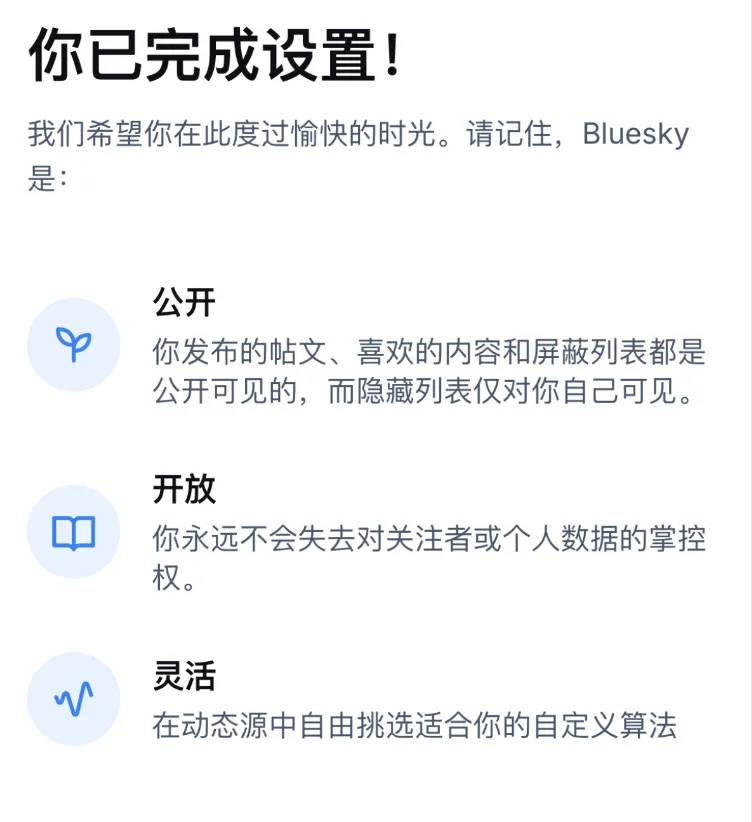
Welcome message before entering Bluesky|Source: Bluesky
Twitter was once a global town square for breaking news and idea exchange (its name literally means “chirping”). But over time, and with changing leadership, it became X—and increasingly a megaphone for one political ideology.
“I think the surge of new users to Bluesky is actually because people are so fed up with X,” said Bluesky COO Rose Wang.
03 How to Make Money? Or Just a Flash in the Pan?
Bluesky isn’t the first platform to challenge X. Earlier attempts, like the Gen Z-focused “noplace,” tried to become a younger version of Twitter but quickly faded after initial buzz.
New social media platforms emerge constantly, yet the landscape remains dominated by Meta and X.
But Bluesky is different. Born from the original Twitter team, inheriting Twitter’s format while innovating technically, it champions decentralization, diversity, free speech, and data freedom—addressing long-standing frustrations with social media: walled gardens, opaque algorithms, echo chambers, online harassment…
In today’s digital climate, Bluesky feels perfect—idealistic and principled.
But how do ideals survive? How can we ensure Bluesky doesn’t become the next Twitter—acquired and corrupted?
Learning from past failures, Bluesky has already made structural changes unlike typical tech companies.
In 2019, Bluesky received $13 million in development funding from Twitter. By 2022, it became independent as Bluesky Social, later restructured as a public benefit corporation—legally permitted to use profits for public good, without obligation to maximize shareholder value.
As disclosed, by the end of 2024, Bluesky’s operations were primarily funded by investors and venture capital firms. On October 24, Bluesky announced a $15 million Series A round.
CEO Jay Graber has pledged that Bluesky will remain permanently free, with no plans for ad-based monetization. They aim to commercialize while staying true to their values.
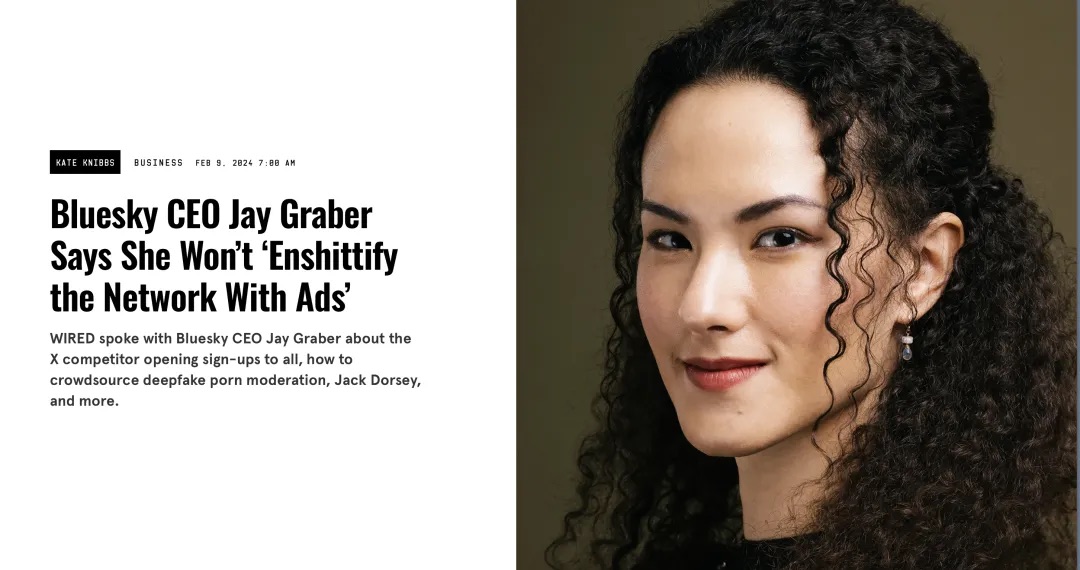
Bluesky CEO Jay Graber|Source: Wired
The team reflects on Twitter’s commercialization pitfalls: becoming too platform-centric, moving from open to closed to monetize platform control—a trajectory accelerated under Musk’s X.
Bluesky’s monetization strategy centers on preserving openness, returning to their self-developed AT Protocol. For example, they’re selling custom domains, giving users naming rights beyond usernames, and licensing the AT Protocol to other apps for fees.
They’re also exploring premium subscriptions—offering higher video quality and advanced profile customization. Additionally, Bluesky aims to build peer-to-peer payment tools within creator communities, enabling purchases of digital art, paid articles, code, or tips.
For now, with users rapidly deleting X accounts and signing up for Bluesky, financial pressure is far less pressing than server scalability.
“Using Bluesky feels like logging into Twitter ten years ago. It’s weird, but friendly. Everyone seems genuinely curious,” many new users have remarked.
Meanwhile, Bluesky celebrated its Series A funding in a blog post, noting previous funds went toward anti-harassment and safety tools, launching custom feeds, open-sourcing moderation tool Ozone, and rolling out custom domain sales…
Everything seems orderly, bright skies ahead.
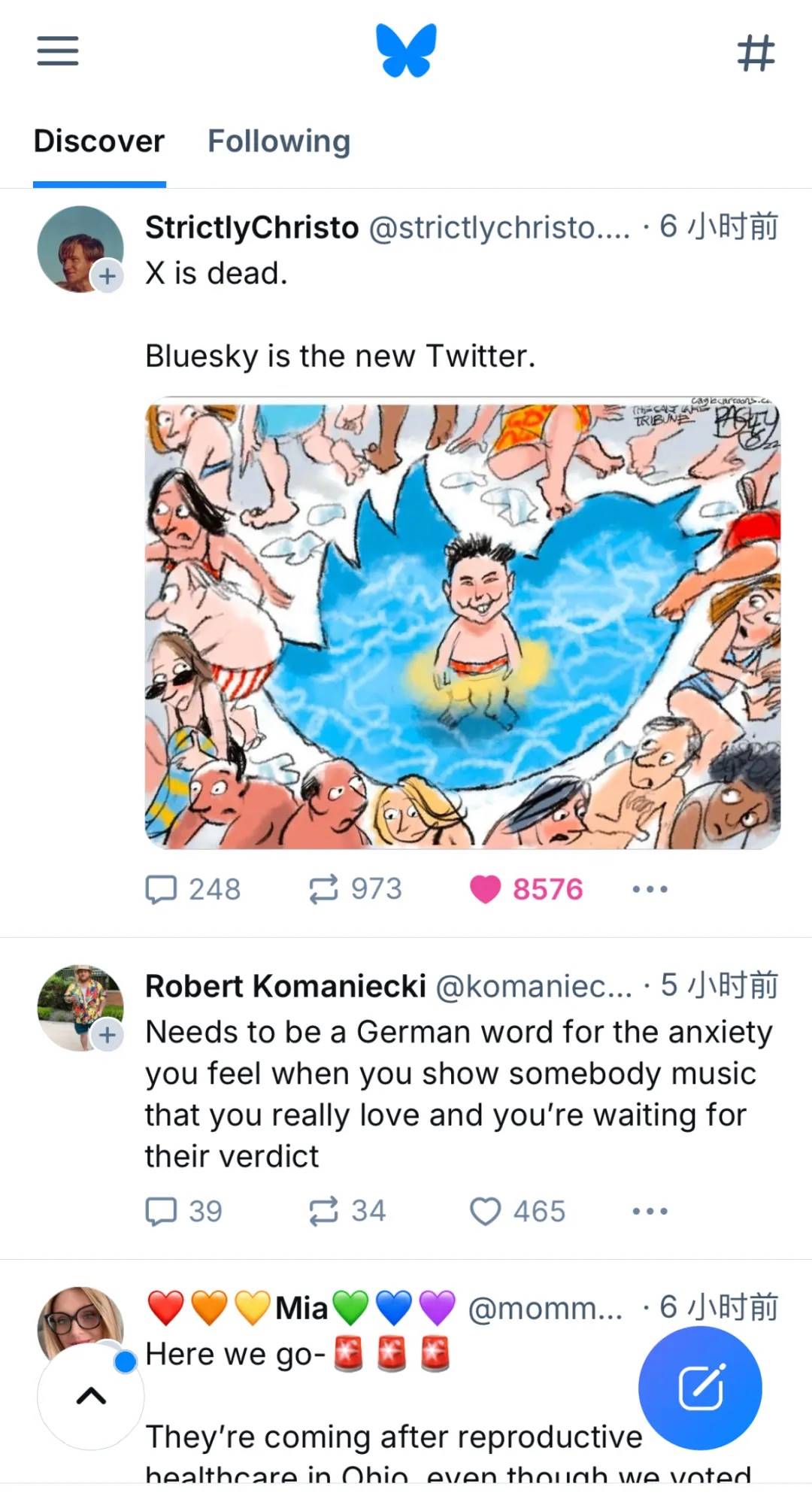
"Twitter refugees" crowning a new king|Source: Bluesky
At the end of the post, they wrote: “Traditional social media companies lock down public data, close their APIs, kill independent developers’ livelihoods, and deploy opaque, unpredictable algorithms. That old era of social media is over—we’re giving choice and power back to you.”
At a time when AI fuels misinformation and ideological divides run deep, Bluesky arrives embodying the old internet spirit. Whether it can sustain its初心, or truly challenge Meta and X, it has already established a new set of rules—showing what the internet and social media should look like.
The world needs this kind of social media now more than ever.
Join TechFlow official community to stay tuned
Telegram:https://t.me/TechFlowDaily
X (Twitter):https://x.com/TechFlowPost
X (Twitter) EN:https://x.com/BlockFlow_News
 极客公园
极客公园