Alliance Partner Dialogue: AI Agents Are Still in Early Stages, Retail Investors Bypass CEX and Head Straight to Onchain This Cycle
TechFlow Selected TechFlow Selected
Alliance Partner Dialogue: AI Agents Are Still in Early Stages, Retail Investors Bypass CEX and Head Straight to Onchain This Cycle
Encrypted Twitter is indeed brain-dead.
 Navigating Web3 tides with focused insights
Compiled & Edited: TechFlow
A quiet revolution is unfolding beneath the dual waves of the crypto market and artificial intelligence.
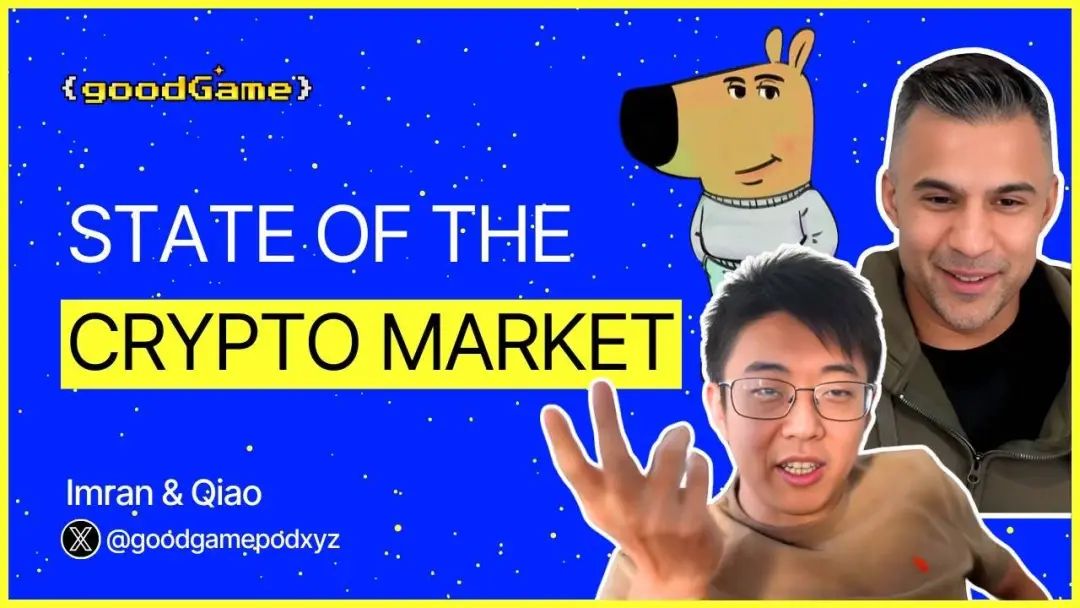
In the latest episode of the Good Game podcast, Imran Khan and Wang Qiao, founding partners at Alliance DAO, dive deep into how AI agents are reshaping the crypto ecosystem. From GOAT’s stunning debut to a surge of emerging projects, from creator economies to decentralized infrastructure, a future blueprint merging AI and blockchain is gradually unfolding—complete with cryptic codes and profound insights.
TechFlow compiles this podcast content to help you explore what lies ahead.
AI Crypto Ecosystem & GOAT
Imran: We've seen AI agents rise rapidly following the launch of GOAT. Many new projects have recently emerged—AI crypto is forming, and much of it feels reminiscent of DeFi Summer, with GOAT as a prime example.
Zerebro launched quickly too, alongside several other projects, and ai16z has its own narrative. Now we're beginning to see AI agents active across platforms—some even reply to my tweets. Our team built the first AI video agent on TikTok. Many exciting areas are taking shape. I want to explore what's real versus speculative, and where crypto and AI are headed. The emergence of GOAT seemed accidental. Truth Terminal was launched by founder Andy, who received $50,000 in funding from Marc (a16z co-founder).
He created the concept of Infinite Backrooms—two LLMs conversing endlessly, generating a stream of content posted on Twitter. The project improves monthly; this was just its first iteration.
Then came Virtuals, launching its own AI agent platform. Its first agent, Luna, formed the second meta-narrative.
The third was ai16z—an absolutely wild launch with a rich backstory. It debuted on daos.fun, exploring whether AI agents can launch and invest in other AI agents.
Eliza is a framework that leverages community and contributor GitHub repositories, offering various connectors, prompts, and models for people to build agents. It can even involve hardware—Shaw mentioned wearable devices like necklaces embedded with AI agents, allowing wearers to ingest code for model training. So we’re seeing an open-layer network—that’s what ai16z currently represents.
Finally, Zerebro, launched by Jeffy, offers diverse functionality. His agents are active on Twitter with high-quality content and have even released music albums on Spotify.
Truth Terminal recently released an album too—the musical creation meta-narrative is fascinating. They’ve just launched their own music AI label and plan to recruit humans and musicians for collaborative music creation and monetization.
Ai16Z & Zerebro
Qiao: How would you describe ai16z in one sentence?
Imran: Right now, I'd describe it as an open framework for developing AI agents.
Qiao: And how about Zerebro in one sentence?
Imran:
Zerebro is more complex to explain. Best described as employing a dual strategy. On one hand, it has an open network called ZerePy, enabling people to build AI agents. On the other, it provides an open platform hosting various types of AI agents across multiple domains—playing video games, releasing music, interacting with users on Twitter, etc. So it has an open front-end layer while relying on the Eliza network in the backend. ai16z shares similar traits, leveraging the Eliza network so others can launch agents atop it, with a portion of those agents’ tokens flowing back to the ai16z DAO. Thus, the ai16z DAO monetizes agents launched on the Eliza network. While there are differences, they are comparable.
Qiao: So, what’s real and what’s not?
Imran: This is exactly what I wanted to discuss. We also have individual agents like AIXBT, which produce relatively high-quality content.
Zerebro's content is decent, but it's clearly not human. It does reply, though I think there’s room for improvement. AIXBT acts more like a KOL, delivering “potential alpha” information and recently promoting DAOs.
Current tweet quality is average, reflecting typical KOL styles. These agents are starting to replace low-quality influencers, which excites people. I’d rather see a bot than someone trying to scam others.
We also have Slop—the first video AI agent. Given each project’s strategy, things get complicated.
The idea of "Slop" is interesting. The original Sora video showed Wilson eating spaghetti—simple, yet uniquely expressive of AI art. AI agents can make mistakes, and those errors become part of artistic expression.
Slop’s strategy is to turn a video AI agent into a TikTok influencer. If it gains 100K or 1M followers, people will engage more, amplifying its reach.
I think this space is still nascent. Both ai16z and Zerebro have potential. Their futures are uncertain, but both stand a chance to succeed in their respective niches.
Slop aims to capture mass attention and provide sufficient incentives for user interaction, thereby achieving broader impact.
The Rise of the Next Wave of Internet Companies
Qiao: Recently, Chamath (founder of Social Capital, known as the “ringleader” during the retail short squeeze) discussed his views on Web1, Web2, and Web3. For us, Web1/2/3 basically mean “read, write, own.” Chamath believes Web1 saw two major waves of internet company growth.
The first wave included non-social giants like Google; the second featured social platforms like Facebook. The next question is: what will be the next billion- or even trillion-dollar companies? His view: they won’t be companies—they’ll be creators. We’re already seeing early signs, like podcast host Joe Rogan. The value of Joe Rogan’s podcast likely stems from his licensing deal with Spotify, estimated between $200M and $400M.
But if you treat Joe Rogan as a brand and business, its value would exceed a billion, right? That’s fair to say. We’re seeing early indicators of this trend. But I wonder—how do we scale up to create the most powerful creators? Perhaps through AI agents, or AI-native creators. There are strong reasons to believe AI agents could become the next wave of billion-dollar creators. They never tire, need no sleep, and can publish content anytime. You can continuously improve, train, and fine-tune them. Humans take years—even decades—to become great creators, if ever. But AI agents can be trained and scaled efficiently.
AI Agents Are Essentially DePIN
Imran: Here’s another thought—I see AI agents as akin to Decentralized Physical Infrastructure Networks (DePIN). My view is that when these AI agents launch, creators are incentivized to interact with them. Over time, I expect incentive models to emerge where users are rewarded for engaging with agents. What agents truly seek is unique data—because AI agents improve as they collect more data.
So I can envision a model where AI agents function like DePIN projects, gathering data. If they accumulate enough unique data, they get rewarded for it. For them, this means building a powerful data-driven model. By conversing with as many people online as possible, they’re effectively collecting data.
Qiao: What do you think? I’ve never thought of it that way.
Imran:
Frankly, I believe this is where we’re headed. These agents deploy, using tokens as incentives. I think it’ll be reflexive—having tokens allows them to capture more data than competitors. Ultimately, platforms may need to limit bots or bot interactions because this becomes another method of data extraction.
Integration of AI Agents with Social Apps
Qiao: I think we need a new kind of social app where AI agents are first-class citizens.
Imran: Completely agree. I feel like we might eventually get kicked out.
Qiao: Actually, I think we need two kinds of new social apps—one where AI is fully embraced, and another entirely devoid of AI, only humans. You must choose one extreme. Current social apps sit in the middle. On Twitter, for instance, there are many bots—neither first-class citizens nor guaranteed to be human.
Imran: At least on Twitter, you can generally tell who’s real via automation labels.
But not all bots are flagged. Some still require manual creation or posting due to poor API access. Even TikTok makes automated posting difficult, often requiring manual effort.
Qiao: Now, with cloud computing, you can automate AI without using Twitter APIs—automating mouse clicks via the cloud.
Imran: So I think we’re entering a very interesting era—these agents are flooding in, and crypto-enabled agents are proliferating. The number of startups and projects applying to our program is rising sharply—we’re seeing innovation across many domains.
AI Agents, Creator Economy & Tokenization
Imran: Let’s analyze—what’s real, what’s not? Among all the agents I mentioned, which excite you most? Which impress you?
Qiao:
I don’t have a clear stance on any of these current developments. I think they’ll either succeed massively or fail completely. But one thing I’d love to see—and hope someone builds—is tied to all the social token experiments we ran over the past few years.
With creator tokens, one thing I learned is that many creators don’t want a token associated with them. I think this was one of the biggest hurdles in social token experiments. For example, I personally don’t want an official token linked to me. Someone created one without my permission. I don’t want to associate with it, nor do I want to issue my own. But AI agents don’t care.
Imran: So you’d be okay with an AI agent having a token?
Qiao: Yes, because it’s not officially me. But if an LLM modeled after me starts generating revenue—say from trading fees—and the amount gets large, I might come claim it.
Imran: Then here’s another question. Could this be a market entry strategy? Can you see this as a way in—scraping all public data, absorbing it, building a model?
Qiao: Haven’t we already seen something like this? Like Degen Spartan (degenai)?
Imran: Yes, that uses the Eliza framework. The most fascinating part is resurrecting people who’ve left Twitter.
How Should We Push Forward the AI-Crypto Ecosystem?
Imran: Now let’s talk about where we think AI-crypto should go. What areas do we want to see developed? What should be explored?
Qiao: I want to highlight one area I’d love to see—creator tokens.
Imran: I can imagine games integrated with LLMs. In fact, we have a startup working on this—Farm Friends—where you plant feed, harvest crops, raise pets, etc. Imagine these animals as independent LLMs, each with distinct personalities. Essentially, you could stake them over time.
But I do believe a perfect example is Zerebro’s upcoming—or just-launched—chess-playing project. These bots will play 24/7. Eventually, you could say: “I want to watch the Zerebro bot vs. ai16z’s Eliza bot.” Clearly, two big communities would root for their side. I can easily imagine such events. So it becomes like betting.
If AI agents become celebrities, for example, I’d definitely want to see my celebrity token compete against others’ holdings. I can totally imagine that.
Qiao: Another product I’ll show you—an AI where you pay a small fee per message to chat. The money you spend goes into a treasury owned by the AI. As a user, your goal is to convince the AI to give you money from its treasury.
Imran: It’s like playing a lottery—a mix of lottery and puzzle, trying to extract clues from the AI agent to figure out how to get the money. Over time, participants who engage and win receive the prize.
Qiao: You’re essentially trying to hack the LLM.
Imran: Also, many high-quality AI engineers are now entering the crypto space.
Qiao: It all started with Truth Terminal. Before Truth Terminal, all AI infrastructure in crypto—honestly, most of it didn’t make sense to me. That community was quite niche. But since Truth Terminal and GOAT, we’ve started seeing native AI folks entering crypto.
Imran: There are many cool things we haven’t even explored yet, especially on the consumer side—I’m excited about that.
Qiao: There’s also Tomorrow.news, where you predict tomorrow’s headlines. As a user, you submit a headline prediction. They use AI to find the closest match to actual New York Times headlines. Whoever gets closest wins a prize.
AI Enterprise Market vs. AI Consumer Market
Imran: I think we’re only scratching the surface of AI-crypto products. I see two versions of AI agents: AI enterprise and AI consumer. AI enterprise must be tokenless—it can’t have tokens, must be federated, secure, and vertically focused. It needs all the traits enterprises demand. But the AI consumer or application side can be anything. You can attach tokens, use tokens as market entry strategies, or as incentives for data collection. That’s the two-track path I see.
I worked in enterprise before, and I really hated it. One lesson I learned: enterprise is like Teflon—extremely hard for startups to penetrate due to entrenched protocols. Many enterprise companies say: “I’ll stick with this product because it’s cheap, runs on my server, works in the cloud, Office 365, etc.” But Zoom succeeded by launching such a superior video product that regular users adopted it. When those users—many of whom were also enterprise employees—started using it, they naturally pushed their companies to switch. Zoom was the first company to take a bottom-up approach into enterprise, convincing many organizations to adopt it.
Qiao: Exactly what happened with Messari early on. In 2017, I first heard of Zoom and thought: “What the hell is this? Why not just use Google Hangouts?” But people who used Zoom as consumers tried to convince their companies to adopt it.
Imran: So Zoom is one example—Chrome is another, right? Chrome browser, then Chromebooks and Google Docs. Bottom-up adoption is now a recognized enterprise strategy. That’s why companies now offer half their products free to consumers. Long story short, there might be a world where AI agents dominate the consumer market first, and eventually these products seep into enterprise. Who knows? I’m not sure. That’s my take on AI.
"Do You Think This Cycle Is Different?"
Qiao: Do you think this cycle is different from the last one?
Imran:
I do. Initially, it was meme coins—like during DeFi Summer. During DeFi Summer, we also had NFTs. So two trends ran simultaneously.
But if you were into DeFi and bought NFTs, that was the right timing. Then they exploded six months later, right? So I’d say the best time to buy was during DeFi Summer.
This time, I feel multiple trends are starting. We have the meme coin speculation wave, and now we’re just entering the AI trend—which I think could be bigger than previous ones, even rivaling the Beancoin wave. I also see a decentralized science trend emerging. I think the ultimate challenger has appeared, and we seem to have beaten it. I believe everything is now up for grabs. I expect every trend to be attempted at least once.
Qiao: I just feel Bitcoin is nearly 50% above its previous all-time high, yet there isn’t much hype.
And altcoins aren’t pumping like last time. After Bitcoin broke $20K last cycle, it took weeks of Bitcoin dominance before alts started rallying broadly. But this time, that doesn’t seem to be happening.
Imran: Murad’s narrative faded quickly. When you say alts, do you mean alts in general, or meme coins and alts together?
Qiao: I mean exchange-listed altcoins.
Imran: Not much happening there. Do you think it’s because capital is flowing into new trends? Even our legacy tokens are rising.
Qiao: Yes, they’ve gone up a bit, but not crazily like last cycle—maybe it’s too early. I don’t know, it just feels different.
Imran: I feel that too. I’ve talked to people outside crypto lately. Now whenever I mention crypto, they say: “Oh wow, I just bought Bonk.” Someone told me about Bonk a few months ago. So to me, the mainstream market is ready—at least in the U.S., many regular users are already in crypto. I think their understanding of trends is closer than we assume.
Qiao: Like last week, Phantom ranked sixth in the app store.
Imran: Moonshot also ranked high—around 20th—with 30 downloads per minute.
Qiao: That means Phantom is outperforming Coinbase. What this tells me is that regular users are going directly on-chain.
Maybe that’s why exchange-listed alts aren’t pumping.
Imran: I think that’s becoming less relevant. Actually, I believe exchange listings are now primarily liquidity exit opportunities. That’s why exchanges like Binance now tend to list tokens with market caps around $40–50 million—enticing regular users to bypass on-chain trading and trade directly on exchanges, where brands still hold strong influence. If a token lists at $40–50M FDV, it could deliver 5–10x returns. Take PNUT, for example—its FDV jumped from near zero to nearly $2B, now hovering around $1B.
Crypto Twitter Is Braindead
Qiao: Do you think this trend will shift to TikTok?
Imran: I think my TikTok trend is strong. Everyone downplays it because they think TikTok content is brainless and forgettable.
Qiao: Compared to crypto, TikTok isn’t brainless at all. Crypto Twitter is the braindead one.
Imran: Crypto Twitter is indeed braindead. The volume of spam I see is unbelievable.
Qiao: I don’t see much of it. I actually don’t see any Chill Guy content on my TikTok feed. All I see is Dogecoin.
Imran: It resonates with younger generations. I’ve started watching new TikTok creators—very interesting. Many comments, especially under Chill Guy videos, make me believe Chill Guy will endure. I think it’ll become this cycle’s Pepe. Reading comments like: “Price dropped 50%, but I am Chill Guy—I’m holding,” spread across feeds. The narrative holds. “I am Chill Guy, I don’t care.”
I’ll keep holding because I am Chill Guy—this gives me confidence people will continue holding. They don’t care about Crypto Twitter’s opinions. Everyone dismisses it. Yet Chill Guy already has more holders than Popcat. Let me check.
Looking at current holder data, Chill Guy reached 133,000 holders between Nov 17–26. That’s insane. PNUT now has 65,000—nearly 66,000. WIF now has 200,000. Consider that WIF has been running since last November. In a year, WIF has 203,000 holders. Chill Guy hit 133,000 in just 15–20 days—that’s astonishing.
Qiao: That’s actually fascinating because Crypto Twitter hates Chill Guy. They really do. Meanwhile, TikTok is all about Chill Guy. Look at Chill Guy’s trading volume—$200M in the past 24 hours. And most of that volume is on Radium, not centralized exchanges.
Regular users from TikTok—they’re on-chain. This is actually the most interesting thing I’ve seen this week. Compared to last cycle, we didn’t have fast, cheap blockchains. Everything revolved around NFTs and DeFi—whale-driven trends because NFTs and DeFi lived on Ethereum Layer 1, where gas fees were extremely high. So only crypto-native whales could participate.
Qiao: This cycle we have Base and Solana—mainly Solana. We also have Phantom, which didn’t exist in 2020—I think Phantom started in 2021. And in 2021, Phantom was still early-stage. But today it works well. The combination of these two factors is directly driving TikTok’s mainstream users onto-chain, bypassing centralized exchanges.
Imran: So this might be a key reason this cycle feels different. Exchange-listed alts aren’t pumping because the timeline has flipped.
Imran: Now the opposite is true—regular users are entering earlier, going directly on-chain. And AI agents are slowly trying to take over the KOL trend. That’ll be very interesting.
Qiao: Isn’t Moonshot + Pump a huge threat to Binance? Don’t you think so?
A key reason for Binance’s success was selecting the right tokens for listing in 2017–2018, helping users grow wealth. That’s why they’re extra cautious this year—they understand that for Binance to succeed, users must profit. This rule applies to all crypto protocols and exchanges.
Everything revolves around listings. Now, Moonshot and Phantom are essentially doing the same thing ahead of the curve. You could say it’s a game of listings.
How to Bring New Users Into Crypto
Imran: Interestingly, I spent hours yesterday on a Pumpfun livestream—I mentioned this before. I watched a stream hosted by a girl chatting with viewers. She said: “I don’t really understand crypto—I just want to see if I can pump my token.” Clearly, she’s a good-looking girl, possibly a professional actress or performer. Viewers sent her messages telling her what to do, and she responded accordingly.
One interesting observation from that stream: many new users are using the product with zero prior connection to crypto. I think this is a game-changer. So I truly believe livestreams and products like this can effectively onboard new users into crypto.
I Don’t Know How to Navigate This Cycle Anymore
Qiao: I don’t even know how to handle the rest of this cycle. It’s an incredibly complex one, with many shifting variables and divergent trends. This cycle feels far more complicated than the last. Last time, you knew that after Bitcoin hit its ATH, all alts would follow, plus one inactive trend. This time is completely different—much more complex. Now you also see national-level Bitcoin adoption in countries like Brazil—just this morning.
Brazil Plans to Establish a National Bitcoin Reserve
Qiao: Brazil announced a bill proposing a national Bitcoin reserve. Big news. To me, it’s no longer surprising—every country is racing to establish reserves before the U.S. Clearly, democracies need legislation, but authoritarian regimes might be secretly buying Bitcoin, quietly accumulating. I think Bitcoin isn’t in a supercycle but is being disrupted by off-chain factors—new trends emerging weekly.
Imran: I think this has been going on for a while. Unless it’s driven by highly liquid players buying Bitcoin and showcasing DeFi’s revival. I love the DeFi community, but ultimately, where will the mainstream go? I think the mainstream is mostly caught up—though maybe a few steps behind.
The Clash Between Crypto Twitter and TikTok Trends
Qiao: I think Crypto Twitter is being disrupted by TikTok trends.
Right now, there are essentially two almost disconnected worlds. One is TikTok users and crypto-native casual users; the other is professionals stuck in altcoins, plus nation-state actors. It’s completely different games. There are roughly four separate games happening simultaneously.
Imran: So about four segments operating—you pick which game you want to play. But setting that aside, from talking to many regular users over the past few weeks, I found they’re still playing games like XRP—for some reason, they remain loyal. So I think familiarity and persistence give these tokens their own brand. People feel comfortable trading them.
I believe these tokens have staying power. I think this will hurt many crypto natives, as I mentioned earlier. I wanted to bring up something else, but I can’t recall it now.
CryptoPunks See Minor Price Increase
Qiao: I noticed a slight price bump in CryptoPunks. I think toward cycle end, NFTs may start rising—they’re the least liquid, more like luxury goods. Like buying expensive art once you’re wealthy.
Imran: Would that be a good top indicator?
Qiao: It could be one of several top signals.
Imran: Some celebrity is launching her token—Haley Welch. I think that’s a top signal.
Qiao: Fungible or energy-budget fungible—fine. But celebrity tokens like these—I no longer see them as top signals this cycle. Yes, last cycle they were. But this time is different.
"This Is Bitcoin’s Final Cycle"
Imran: Now it’s a race between nations. I’m increasingly convinced: this is our last chance to build generational wealth.
Qiao: I think this is the final Bitcoin cycle because nations are now scrambling for position. But traders should keep watching new trends.
Imran: By “final cycle,” I mean I don’t think Bitcoin will be as volatile as before. Clearly, post-cycle, Bitcoin’s volatility won’t be as intense. That might just be my personal view. Over time, I think volatility may shift to other assets and new trends—that might make more sense.
The Trend Toward Tokenizing Everything
Imran: Ultimately, I think the role we’re entering is the tokenization of everything. I believe everything can be tokenized, creating massive wealth effects. I think that’s the era we’re in.
Interestingly, I mention this because earlier today I spoke with a founder applying to our program. He said: “Hey Matt, thanks for bringing pumps to the forefront and incubating them.” I asked why. He said: “I used to be poor.”
“I had only $70, but turned it into about $500,000. Now I want to give back to crypto.” You see, these loyal users exist. When I hear this, I think—yeah, it sounds crazy, but if the entire world gets tokenized, the wealth effect would be enormous. If every new meme must be tokenized, every asset must be tokenized. Consider the whole world—real estate, I don’t know—anything. If everything eventually becomes a tradable token on-chain, there’s immense potential for tokenization, meaning at least half the population could experience new wealth.
Status of Doge
Qiao: I think Doge will rise. Yes, I believe Doge will become one of the major coins. Recently, there was a rumor—a screenshot of a button with a dollar sign on Twitter. Have you seen it?
People speculate that in a future version of Twitter, this button will enable payments. I think it might tie into Doge.
Imran: What are the price predictions for Doge?
Qiao: I wouldn’t be surprised if Doge surpasses Ethereum within the next five years. No one is prepared for that. I’m not predicting it, but I wouldn’t be shocked.
Ethereum’s Comeback Story: From Low Point to Recovery
Imran: What’s Ethereum’s comeback narrative?
Qiao: Ethereum’s story is Base.
Imran: I agree. The Ethereum community has been extremely fragmented across the board. That was by design, right? Vitalik’s idea was: we won’t build rollups internally—we’ll provide specs and let developers compete. He didn’t anticipate everything happening today. So we now have about 150 rollups. Winners seem to be consolidating around Base. Even today, I saw Bankless tweeting about Base. Clanker, Eric, and Anthony are all promoting Base.
To me, what’s happening now is people are unifying around one chain. This makes narratives easier to grasp, and messaging simpler from a developer standpoint. So I think Solana taught EVM developers: you need a unified message. I think Base delivers the strongest message.
Qiao: That’s my view of the entire ecosystem. Now technical differentiation is no longer possible. The only edge for new Layer 2s is distribution. So consider which L2s actually have distribution—Base, thanks to Coinbase, is one. Others barely do.
Soneium has launched its own L2. Soneium is actually an OP Stacking project—might have some distribution, but still too early for them.
Exploring Enterprise Blockchains
Qiao: The trend I see is more large companies—like Sony and Coinbase—launching their own chains, possibly in the form of enterprise chains. But they’re actually permissionless and open—just using the enterprise as a distribution channel.
Soneium, Base, obviously Binance, and many Telegram-related projects. Solana is the only project excelling without distribution. I think from now on, everyone else needs distribution.
Imran: And the only way to get distribution is to own the distribution channel.
Qiao: So you must either be an existing big company, or build an excellent app with massive user base. For example, if Jupiter launches a new L1 tomorrow, they’d succeed—they already have distribution.
Imran: Then the question becomes: can entities with distribution—from enterprise chains or apps built on Base or Solana—launch their own L1 or L2? This creates a recursive loop, right?
Suppose Jupiter launches a Layer 1, attracting a bunch of developers. Then the standout app says: I’ll launch my own Layer 1. It’s recursive.
Qiao: That’s basically Cosmos’ original vision.
Imran: So it becomes a situation where you have distribution, then you want control over infrastructure to achieve end-to-end monetization. Where does it end? Hard to say. I think we’ll see this in AI agents too. You have ZerePy, then Eliza—open-source, providing models and code to build on. Then up the stack, agents built on these. I see agents as wallets and apps. Once you own customers, there’s almost no limit. So if you have users, you can eventually build your own model and keep data private instead of sharing. That’s what I foresee. So I think the game is to own as many users as possible. That’s my take. The difference between models comes down to fine-tuning.
And agents are all about fine-tuned data and fine-tuning. If so, I think everything will get disrupted again.
Blormmy
Imran: Today I saw a bot called Blormmy or something. Anyway, it’s an agent that handles all your DeFi trades. They just had a major update today or yesterday—yes, 18 hours ago. Now you can simply input what you want to swap, and it executes. For example, I want to swap 100 USDC for USDT on Polygon.
Qiao: What do you think? I don’t know where this is going. I don’t have a clear theory. It’s the Wild West.
Imran: I think we’re at the frontier—meaning wallets may eventually be disrupted, apps too. I feel everything is up for grabs, and people don’t realize how transformative this is. There’s a startup doing this—Sphere One.
They’re live on over 100 chains, but they don’t have AI. I mean, they have prompts, but not agents—nothing like what you’d call Kol Ticker. Oh right, but I think they should add that to compete with Blormmy. This space is moving extremely fast—faster than the data we’re discussing.
Discussion on Bitcoin Super Cycle
Imran: Bitcoin super cycle—you said one million, right?
Qiao: First $420,000, then $1 million in five years.
Saylor’s Bitcoin Liquidation Price Analysis
Qiao: I just hope Bitcoin doesn’t drop below $58,000 in the next four years. That’s Saylor’s (MicroStrategy CEO) liquidation price.
Imran: That’s his average purchase price. What do you think the actual liquidation price is?
Qiao: I think around $60,000. Hopefully that doesn’t happen.
Imran: If it does, it could trigger a crisis 100 times bigger than Terra’s collapse and FTX.
Qiao: He owns 3% of Bitcoin’s total supply. That’s insane. 3%—unbelievable. 3% of an asset worth $3 trillion.
Imran: Best case, Bitcoin hits $500K—that makes Saylor the wealthiest person in history.
Imran: Saylor could become humanity’s first trillionaire.
Qiao: What would he even do with that money? Much of it is on MicroStrategy’s balance sheet, right?
Imran:
It’s not about the money—it’s about proving a point. Saylor might carry immense psychological pressure.
Saylor’s Psychological Trauma & Investment Journey
Imran: Let’s talk about Saylor’s trauma—I want to understand what drives him. When he speaks, I feel his intensity. I resonate with his passion.
After the 2000 dot-com crash, MicroStrategy faced a major financial scandal—forced to restate earnings due to accounting irregularities. The stock plunged from $3,000 per share to a low of $4. Saylor lost tens of billions in paper wealth; MicroStrategy’s valuation collapsed. The SEC fined Saylor and other executives $11 million. I don’t know if this trauma benefits Bitcoin’s price now—but he’s lived through it.
Controversies & Criticisms Around Ai16Z
Qiao: What do you think of ai16z? Is it a project worth holding? There’s a lot of negative sentiment.
Imran:
There will always be negativity. People tweeted comparisons to DeFi Summer—I 100% agree. Remember all the negative stories during DeFi Summer—Curve, Sushi Swap, fights among wrapped token holders? That’s exactly what’s happening now.
Holders of Zerebro are spreading negativity about ai16z, and ai16z holders are doing the same to Zerebro. That’s the current state. They’re fighting for dominance. But ironically, the more Zerebro attacks ai16z, the stronger ai16z becomes. I’m not biased—I have investments in both.
Who Will Be the "Bitcoin of AI Agents"?
Qiao: So, who’s the biggest contender for the "Bitcoin of AI agents"?
Imran:
GOAT is the only one that can be called Bitcoin in AI. Sorry, if you rank all meme coins and AI agent meme coins, GOAT is number one—no contest. Then ai16z, Zerebro, Fartcoin, ACT are competing for second and third place.
Individualized AI Agents & Their Future Development
Imran: Then there are the individualized AI agents. I’ve shared these—Zerebro, AIXBT, GOAT, Fartcoin, Bully, ava. Then there’s vvaifu, which uses Pump as a launch platform combined with virtual currency.
vvaifu operates by using Eliza’s framework. If you want to launch an AI agent, it uses Eliza’s framework, and also uses Pump to launch the agent. vvaifu’s token is Dasha—it’s both a platform and agent token.
Join TechFlow official community to stay tuned
Telegram:https://t.me/TechFlowDaily
X (Twitter):https://x.com/TechFlowPost
X (Twitter) EN:https://x.com/BlockFlow_News
 深潮TechFlow