Applying for a spot ETF, monthly gain exceeds 104%—what's behind HBAR?
TechFlow Selected TechFlow Selected
Applying for a spot ETF, monthly gain exceeds 104%—what's behind HBAR?
The market is accustomed to finding reasons for price increases, and HBAR may just be a microcosm.
 Navigating Web3 tides with focused insights
Original | Odaily Planet Daily (@OdailyChina)
Author|Golem (@web3_golem)
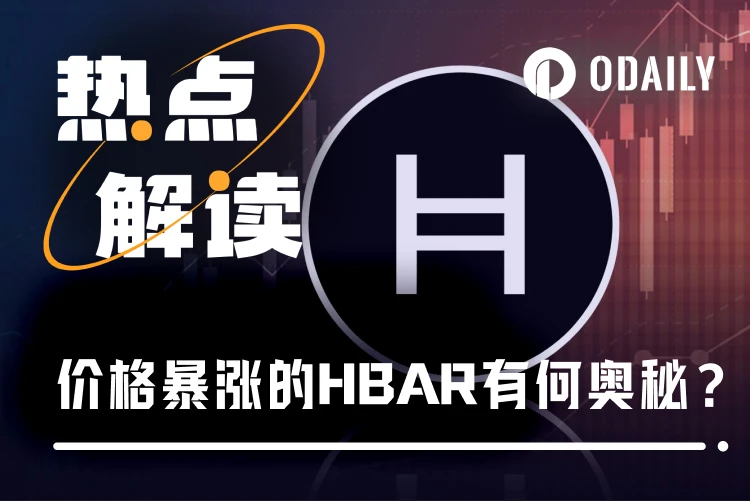
Today, the native token HBAR of Layer 1 blockchain Hedera surged past 0.38 USDT, peaking at 0.39 USDT, with a 24-hour gain exceeding 40% and a monthly increase surpassing 104%. The price has now returned to levels last seen in November 2021.
Hedera blockchain was launched back in 2019. On November 13 this year, crypto investment firm Canary Capital filed an application with the U.S. SEC for an HBAR ETF. Compared to the widespread attention and discussions sparked by ETF filings for SOL, XRP, and LTC, HBAR has remained relatively under the radar—many crypto participants who entered during this bull market haven't even heard of the project.
So where does Hedera come from? What other factors are behind HBAR’s sharp price rise? In this article, Odaily Planet Daily provides a brief introduction and analysis of Hedera.
Introduction to Hedera
Hedera is a decentralized, open-source public proof-of-stake (PoS) blockchain that uses a leaderless, asynchronous Byzantine fault-tolerant (ABFT) Hashgraph consensus algorithm. According to its official data, Hedera achieves consensus finality in just 2.9 seconds, with an average transaction cost of $0.0001. The network also boasts extremely low energy consumption—averaging only 0.000003 kWh per transaction—making it 170 times more energy-efficient than Solana.
Developers can use the Hedera blockchain for real-world asset tokenization, building DeFi and NFT ecosystems, creating decentralized identities, and leveraging native consensus timestamps to build low-cost, scalable, publicly verifiable data logs—recording payment events, supply chain provenance, IoT sensor data, and more.
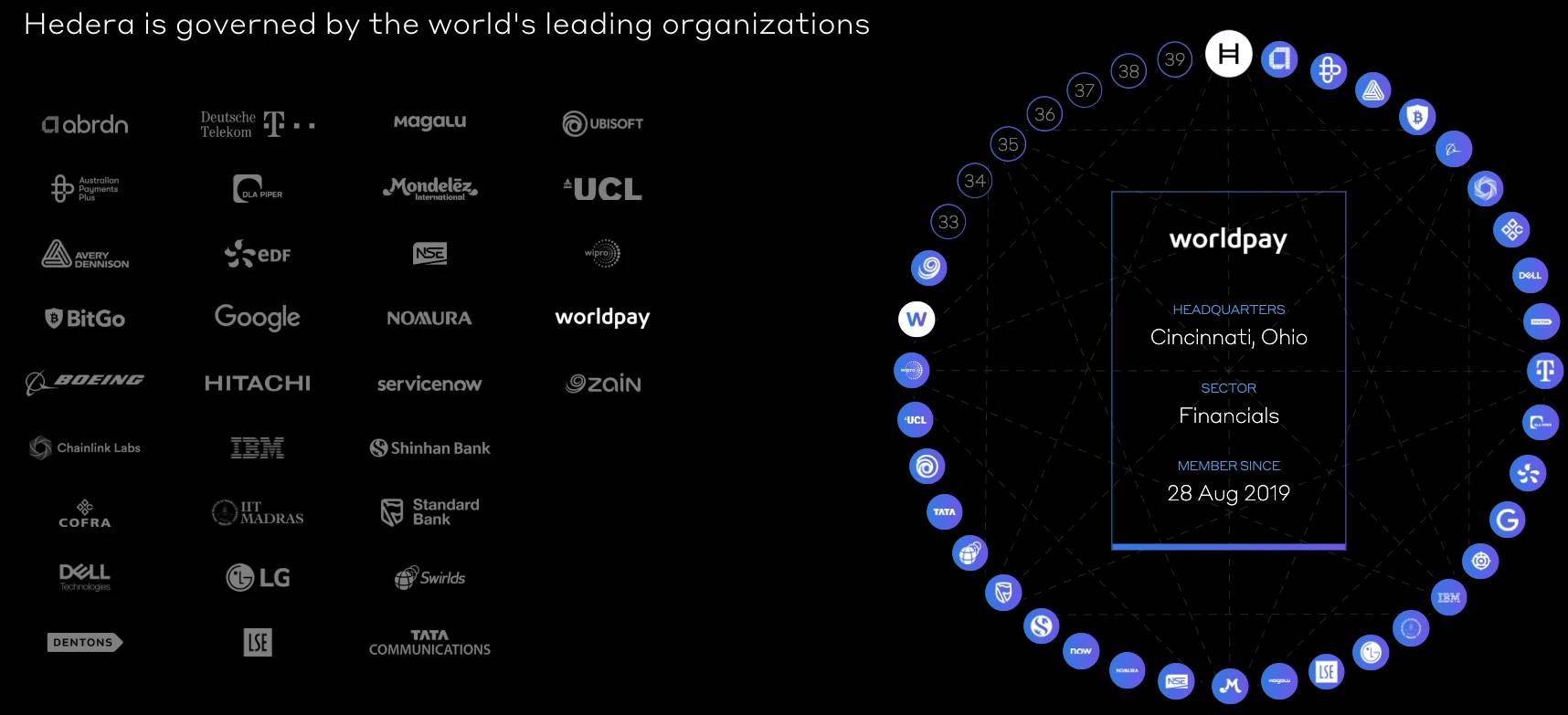
Hedera is governed by a council and the Hedera Governing Council, composed of up to 39 term-limited, highly diversified leading organizations and enterprises, including well-known companies such as Google, Dell, and abrdn.
HBAR is the native token of the Hedera blockchain, used for network transaction fees and staking within the PoS mechanism. The total supply of HBAR is 50 billion, with over 38.19 billion currently in circulation. Its circulating market cap stands at $13.28 billion, ranking 19th in the cryptocurrency market.
At this point, Hedera might seem like just another conventional legacy L1.
What Else Is Driving the HBAR Price Surge?
As HBAR's price rose, the market widely attributed the rally to the positive news on November 13 when Canary Capital filed its HBAR ETF application—on that day alone, HBAR surged over 30%.
Typically, price increases driven by news events don’t last long. On November 26, Bloomberg ETF analyst James Seyffart noted that the SEC’s decisions on ETF applications for SOL, XRP, LTC, and HBAR could extend into late 2025.
With the initial news catalyst fading and actual ETF approval still distant, we expected HBAR’s price to cool off. Yet, it continues to climb, now matching the highs seen during the November 2021 bull run. Odaily Planet Daily identifies four key reasons behind this sustained momentum:
The Rise of Altcoin ETFs: HBAR Appears Undervalued
Altcoin ETF applications are gaining traction. Filings have been submitted for SOL, XRP, LTC, and HBAR, and according to ETF Store president Nate Geraci, at least one issuer is exploring ETF applications for ADA (Cardano) or AVAX (Avalanche). While HBAR outperformed others over the past month—with a 104% surge compared to 40%, 32%, and 25% gains for SOL, XRP, and LTC respectively—its market cap remains relatively low, trailing behind DOT at 19th place.
Notably, before filing the ETF application, Canary Capital had already launched the HBAR Trust in October in the U.S., catering specifically to qualified individual and institutional investors. Steven McClurg, CEO of Canary Capital and former CIO of Valkyrie Funds, stated that this move was intended to pave the way for a future HBAR ETF.
Therefore, as one of the few altcoins backed by institutional support and an active ETF filing, investors may perceive HBAR as undervalued, with significant room for growth.
HBAR Board Member Could Become Next U.S. SEC Chair
With Donald Trump poised to return to office, speculation around the next U.S. Securities and Exchange Commission (SEC) chair has intensified. Brian Brooks, a member of the Hedera board, is among the potential candidates. According to prediction market Kalshi, while Paul Atkins, a former SEC commissioner under George W. Bush, leads with a 70% chance, Brian Brooks still holds a 20% probability of being selected.
If Brian Brooks is nominated by Trump as the next SEC chair, it would not only signal a pro-crypto shift at the SEC but also serve as a major catalyst for HBAR. This anticipation is helping sustain upward pressure on HBAR’s price.
According to FOX Business reporter Eleanor Terrett citing sources, Trump could announce his pick to succeed Gary Gensler as SEC chair as early as tomorrow. The answer may soon be revealed.
Riding the Momentum of the RWA Sector
The Real-World Assets (RWA) sector is gaining momentum, with institutions increasing their investments. Tether, issuer of stablecoin USDT, launched its asset tokenization platform Hadron by Tether on November 14. Visa also introduced its Visa Tokenized Asset Platform (VTAP). Hedera is actively expanding in the RWA space. According to official data, assets tokenized via the Hedera blockchain have reached a value of $50 million, serving notable clients such as Dovu, abrdn, and Shinhan Bank.
Steven McClurg, CEO of Canary Capital and former CIO of Valkyrie Funds, commented that Hedera represents the type of enterprise technology that connects cryptocurrency with real-world scalability, and expects further growth in practical applications.
FOMO from the Korean Market
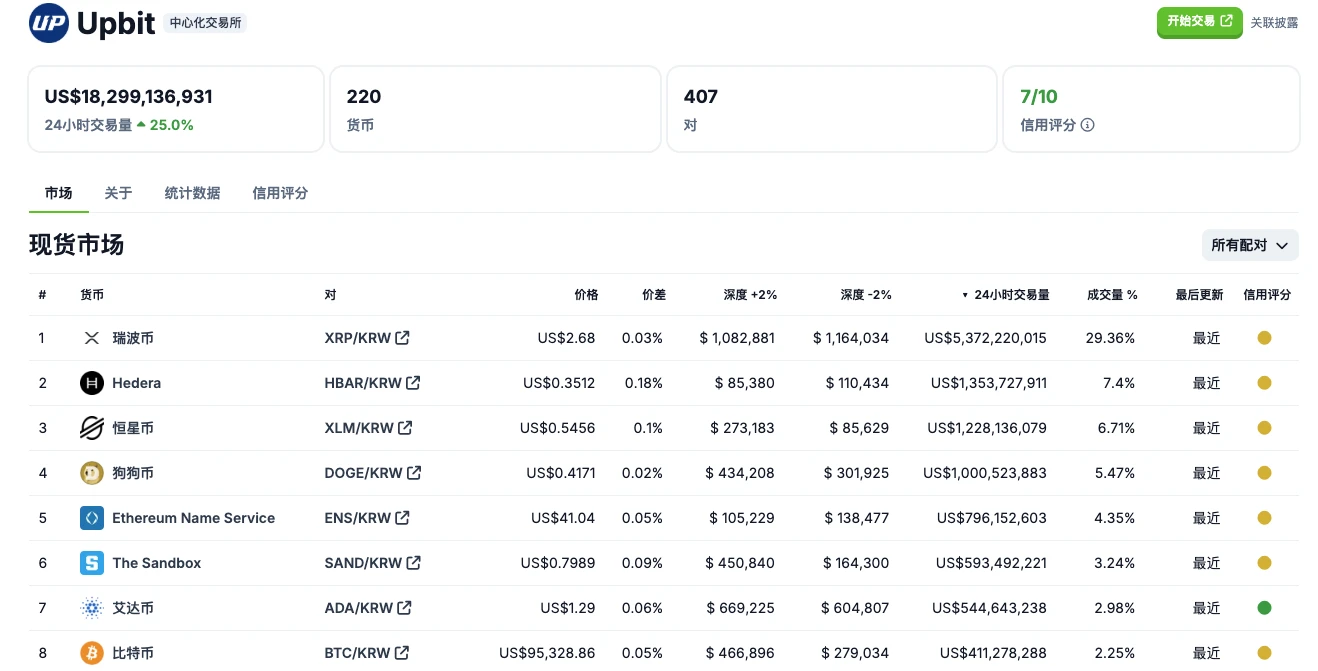
In terms of trading volume, HBAR is experiencing strong FOMO (fear of missing out) from South Korea. According to CoinGecko data, on South Korea’s largest exchange Upbit, XRP led 24-hour trading volume with over $5.372 billion, followed closely by HBAR with over $1.353 billion—tripling Bitcoin’s trading volume on the same platform. Moreover, HBAR’s 24-hour trading volume on Upbit exceeds its volume on Binance, which stood at $1.289 billion.
Additionally, on another major Korean exchange, Bithumb, HBAR’s 24-hour trading volume reached $1.43 billion—surpassing both BTC’s volume on the same platform and even HBAR’s own volume on Upbit.
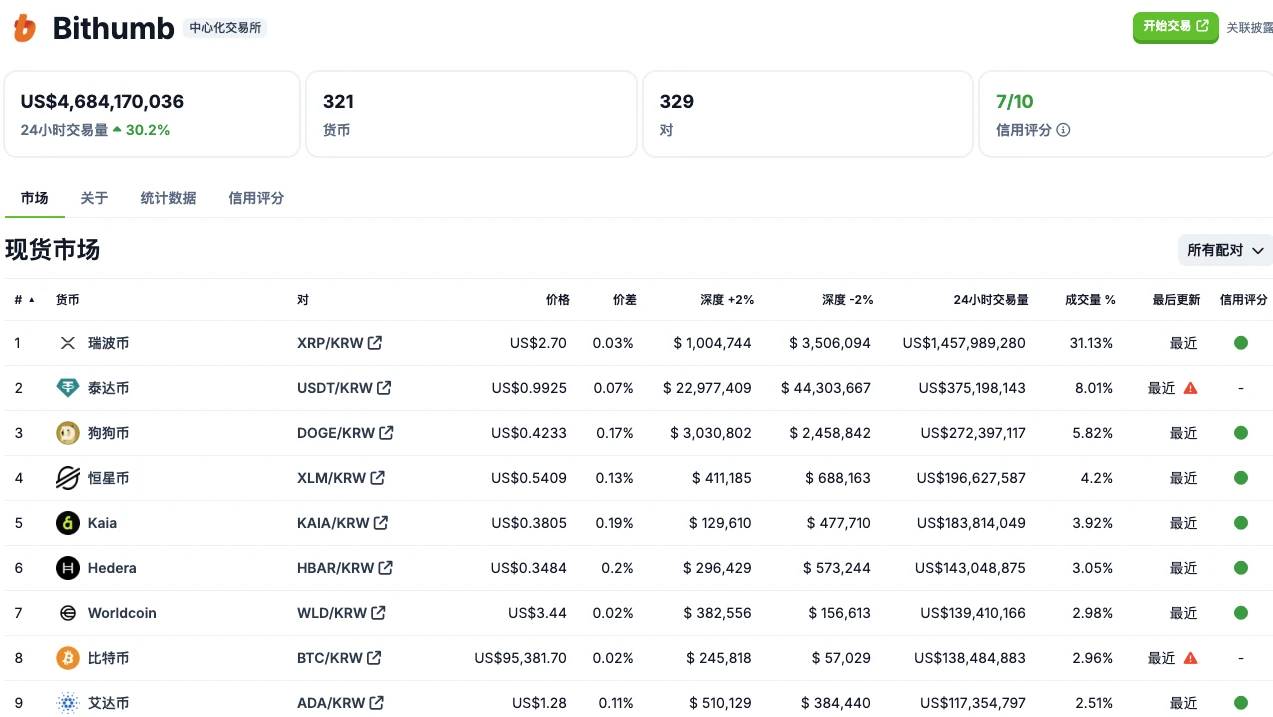
Clearly, the Korean market is not only a primary buyer for XRP but also a major driver behind HBAR’s recent surge.
Alt Season Has Arrived: Even Legacy Tokens Can Rebound
Trends are unstoppable. Over the past year, altcoins have struggled—first facing criticism over VC coins with “high valuations and low liquidity” and massive token unlocks, then enduring a period where Bitcoin repeatedly hit new highs while the altcoin market stagnated, and finally weathering the chaos caused by meme coin mania. At one point, even Shen Yu, co-founder and CEO of Cobo and a veteran in the crypto industry, declared that “this cycle won’t have an alt season.”
But sector rotation has arrived—“better late than never.” Alt season is finally here. As analyzed by Nan Zhi of Odaily Planet Daily, funding rates remain in a safe zone, and altcoin market dominance is approaching the starting level seen in 2021. (Read more: Reviewing Four Years of Market Data: Where Are We in the Bull Run?)
Markets always seek reasons for price increases. HBAR may just be a microcosm—indicating that during a true alt season, even “legacy tokens” can soar so dramatically that investors are left dizzy. Rather than regretting missed opportunities, it might be wiser to embrace the trend.
Join TechFlow official community to stay tuned
Telegram:https://t.me/TechFlowDaily
X (Twitter):https://x.com/TechFlowPost
X (Twitter) EN:https://x.com/BlockFlow_News
 Odaily