What Sets Hedera Apart, Partnering with BlackRock and Nearly Doubling in Price?
TechFlow Selected TechFlow Selected
What Sets Hedera Apart, Partnering with BlackRock and Nearly Doubling in Price?
In crypto news, truth doesn't matter—what matters is how long the impact lasts.
 Navigating Web3 tides with focused insights
By TechFlow
In today's market volatility, the standout performer is undoubtedly $HBAR.
The project behind the token, Hedera, recently announced on Twitter that BlackRock—one of the world’s largest asset management firms—has successfully tokenized its Money Market Fund (MMF) using the Hedera network, in collaboration with Archax, Ownera, and the HBAR Foundation.
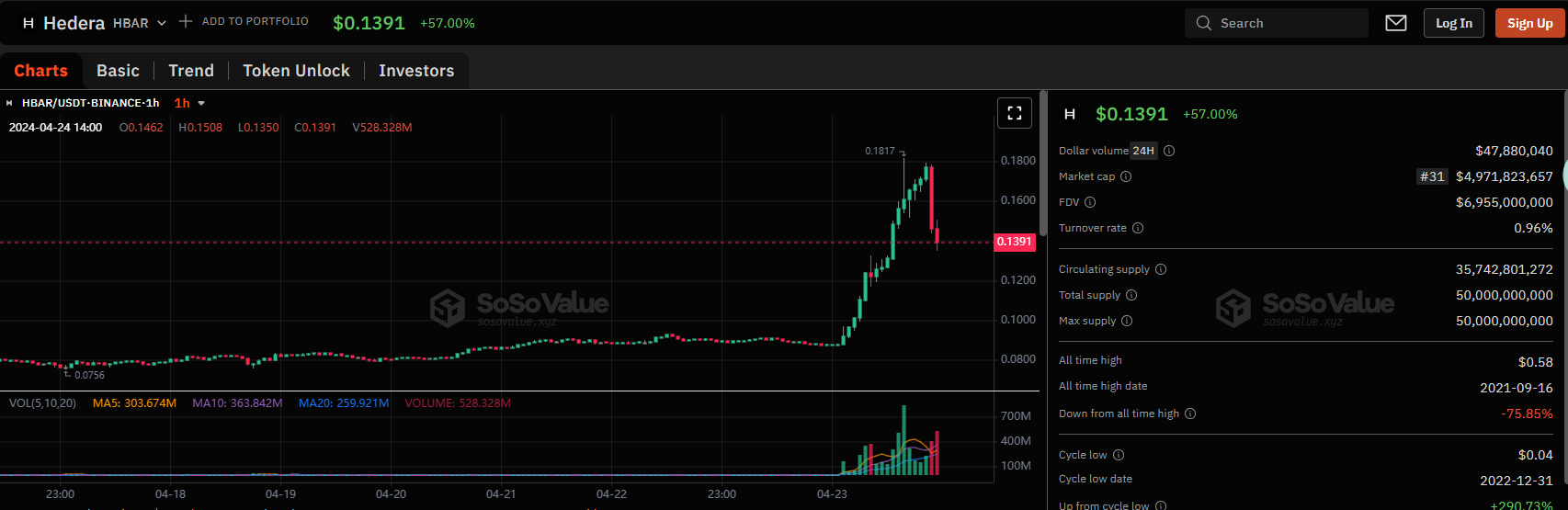
As the news spread, $HBAR surged dramatically, briefly doubling in price. At the time of writing, it had pulled back somewhat but still maintained an intraday gain of nearly 60%.
BlackRock’s strong commitment to RWA (Real World Assets) is evident. Last month, its newly launched tokenized asset fund BUIDL attracted over $240 million in capital, which also drove price increases across various RWA projects such as Ondo Finance.
This time, BlackRock’s momentum has reached Hedera.
However, unlike Ondo which focuses on applications, Hedera itself is a blockchain. So why did BlackRock choose Hedera for tokenizing traditional assets? What makes this project stand out?
Understanding the RWA Collaboration Model
When it comes to RWA, technology matters—but resources may matter even more.
Let’s first examine the Hedera-BlackRock partnership through the lens of institutional adoption.
Based on official announcements and related reports, BlackRock’s “tokenization of money market funds (MMF)” was not accomplished solely by the Hedera blockchain.
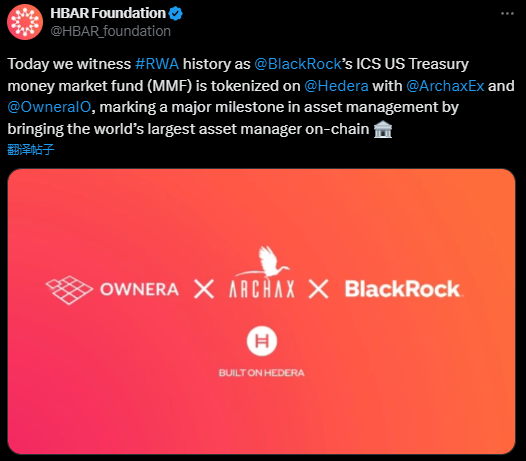
In this initiative, BlackRock partnered with Archax (a digital asset exchange), Ownera (an institutional-focused digital asset platform), and the HBAR Foundation. Together, these entities enabled the tokenization of BlackRock’s money market fund on the Hedera platform. The process involved converting shares of the MMF into digital tokens, which can then be traded and circulated on digital asset exchanges.
The collaboration likely works as follows:
-
Archax provides the trading platform and custody services, enabling investors to buy and sell MMF tokens.
-
Ownera supports underwriting the tokenized money market fund and ensures compliance in transactions.
-
The HBAR Foundation, responsible for supporting the development of the Hedera ecosystem, offers technical and financial backing.
Hedera itself fulfills its core function as a distributed ledger, recording all relevant transactions and data. The end result is this:
If an MMF is divided into 1,000 tokens, purchasing one token genuinely grants you a 1/1000 ownership stake in the total assets of that MMF. This approach makes buying and selling assets more flexible and instantaneous, as trades can be completed quickly on digital asset exchanges without going through traditional subscription and redemption processes.
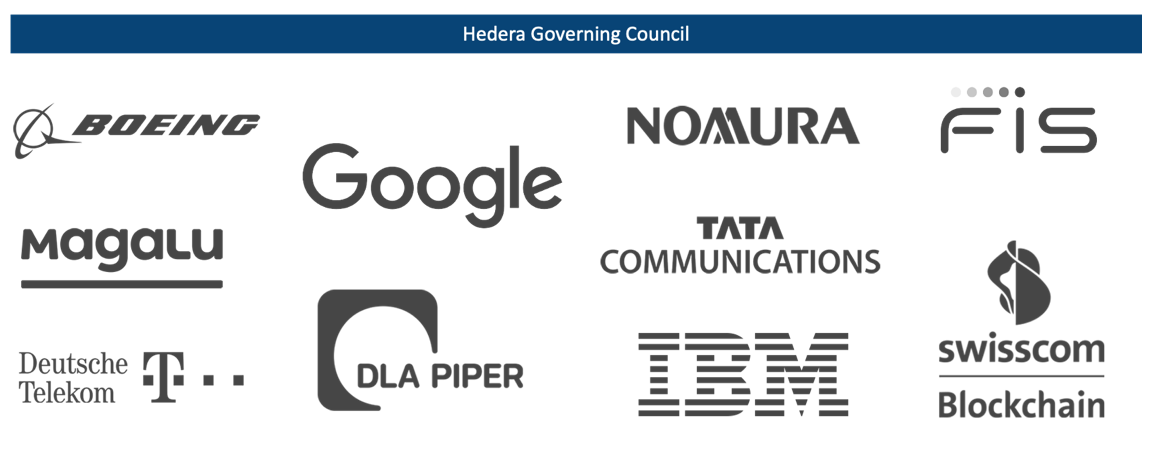
Notably, Hedera has a governing council responsible for strategic planning, upgrades, network policies, and overall management direction, including global giants such as Google, IBM, Boeing, and Deutsche Telekom. This gives Hedera a significant advantage in connecting with institutions and accessing high-level resources.
An Enterprise-Focused Alternative Blockchain
Beyond resource advantages, another key reason BlackRock might have chosen Hedera for tokenizing traditional assets could be:
Hedera is fundamentally built as an enterprise-grade blockchain, ideal for large corporations and financial institutions seeking high efficiency and enterprise-level governance models.
-
Hashgraph Consensus Algorithm
Unlike traditional blockchain technologies like Bitcoin or Ethereum, which rely on blockchain structures and consensus mechanisms such as Proof of Work (PoW) or Proof of Stake (PoS), Hedera uses the Hashgraph consensus algorithm. Hashgraph is based on Directed Acyclic Graph (DAG) technology, meaning transactions are not grouped into blocks and sequentially added to a chain. Instead, each transaction directly links to multiple prior and subsequent transactions, forming a web-like structure.
You can think of it simply as achieving faster consensus.
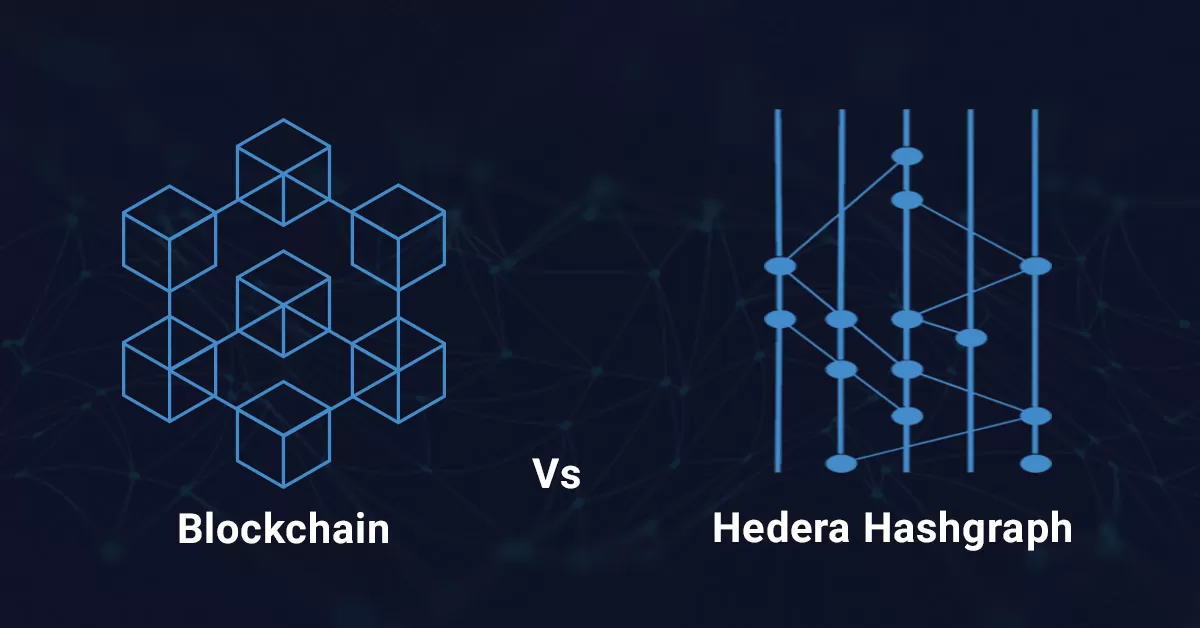
In Hashgraph, every new transaction rapidly propagates across nodes, and each node collects and shares information without requiring centralized confirmation from miners or validators. This allows Hedera to process hundreds to thousands of transactions per second (TPS) with extremely low latency.
-
Controlled Node Operation and Semi-Centralization
But speed comes at a cost.
Hashgraph does not require miners to validate transactions or create blocks. Instead, it confirms transactions through rapid information exchange among nodes with known identities. While this design offers efficiency benefits, it also means the network relies to some extent on the reliability and integrity of these nodes.
Thus, Hedera appears better suited for enterprise needs—where full decentralization isn’t the primary goal, and consensus among relevant corporate stakeholders suffices.
Additionally, node operation is controlled rather than open to anyone, unlike fully decentralized blockchain networks where anyone can freely join and run a node.
Currently, network nodes are primarily operated and managed by members of the governing council. This setup ensures high consistency and security in network operations.
These characteristics make Hedera resemble a consortium chain—it combines certain advantages of blockchain technology (such as security, transparency, and efficiency) with some benefits of traditional centralized management (like stability and controllability). This architecture suits large enterprises and financial institutions looking for high efficiency and enterprise-grade governance, explaining why a firm like BlackRock would choose Hedera as its technological foundation.
Fact or Fiction?
Shortly after Hedera announced its collaboration with BlackRock, prominent crypto media outlet Cointelegraph claimed there was a misinterpretation—that BlackRock had not actually tokenized its money market fund on Hedera.
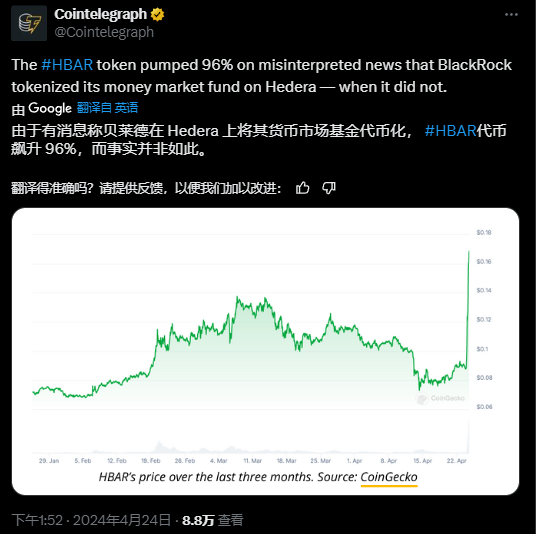
Following the report, $HBAR dropped sharply, falling 20% from its peak.
At the time of writing, Cointelegraph’s tweet was still visible, drawing widespread ridicule in the comment section, with users criticizing the outlet for unprofessional reporting—jumping to conclusions without verifying facts that were already confirmed by multiple parties.
By the time of publication, Cointelegraph had deleted the tweet.
Regardless of the news’ accuracy, the incident clearly illustrates the "news-driven market" nature of crypto assets—prices can nearly double on positive headlines, yet plummet just as fast due to false FUD (fear, uncertainty, doubt).
As legendary short-seller GCR once said:
In crypto, whether news is true or false matters less than how long its impact lasts. The market’s reaction and its duration are what truly provide guidance.
When the “BlackRock RWA” concept has evolved into a distinct sector or theme, pent-up sentiment only needs a news trigger to ignite. For most crypto participants, the key is to quickly identify tokens likely to benefit within this sector—and wait for the next spark.
Join TechFlow official community to stay tuned
Telegram:https://t.me/TechFlowDaily
X (Twitter):https://x.com/TechFlowPost
X (Twitter) EN:https://x.com/BlockFlow_News
 深潮TechFlow