Seraph: Exploring and Innovating in Web3 AAA Games
TechFlow Selected TechFlow Selected
Seraph: Exploring and Innovating in Web3 AAA Games
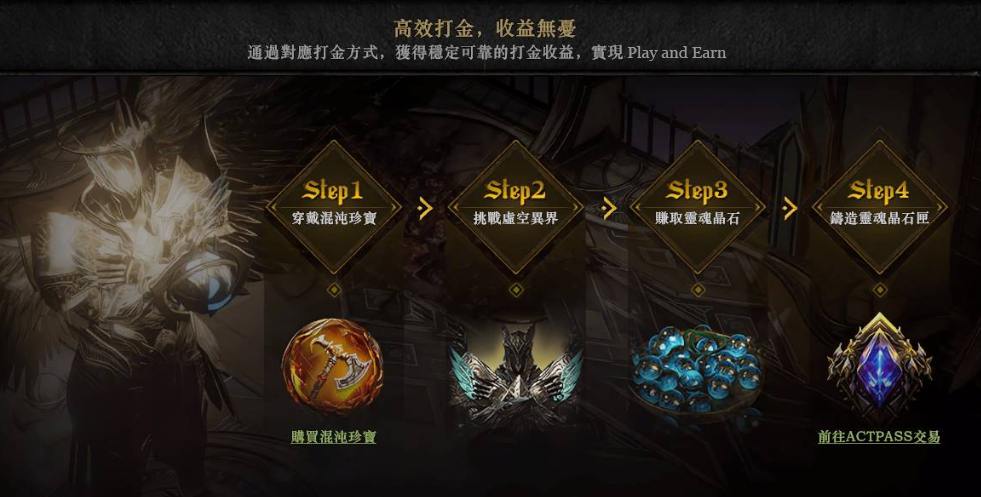
Seraph's economic model combines the "everything is tradable" philosophy with "Play and Earn" to create a self-sustaining, sustainably developing gaming economy.
 Navigating Web3 tides with focused insights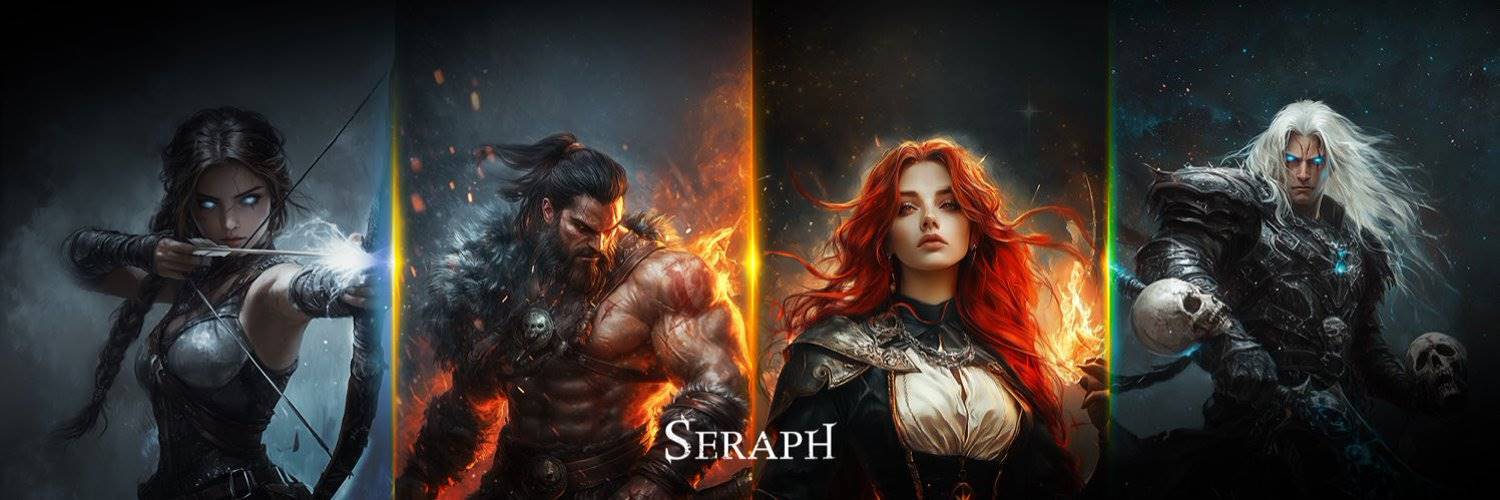
After the temporary cooling of TON's mini-games, the blockchain gaming sector has seemed relatively quiet. However, at recent major industry events such as Token2049 in Singapore, THBW2024 in Bangkok, and Binance Blockchain Week in Dubai, blockchain gaming projects have shown vibrant energy, with both established and emerging titles actively present at key exhibition booths. Among them, Seraph has attracted significant attention with its positioning as a next-generation AAA blockchain game and striking design. This article will analyze Seraph’s game design, economic model, and global strategy, exploring how blockchain gaming projects can break through bottlenecks and what insights they may offer for the future development of GameFi.
Project Background
Seraph is a AAA-tier loot-based game developed by Seraph Studio. The project has raised over $10 million in funding, providing strong financial support for its goals in technology development, game production, and ecosystem building.
Seraph began its A-test in April 2023, followed by B-test, Chaos Legacy Test, Preseason, and Season 0. It is now preparing to launch Season 1, with official figures showing participation from 90,000 players. It currently ranks among the top games on BNB Chain. Seraph had dedicated exhibition booths at BNB Incubation Alliance (BIA) live events and was prominently displayed near the main entrance at Binance Blockchain Week in Dubai. Binance CEO Richard Teng even posted a photo with the team on X (formerly Twitter), reflecting strong backing from BNB Chain for this flagship ecosystem project.
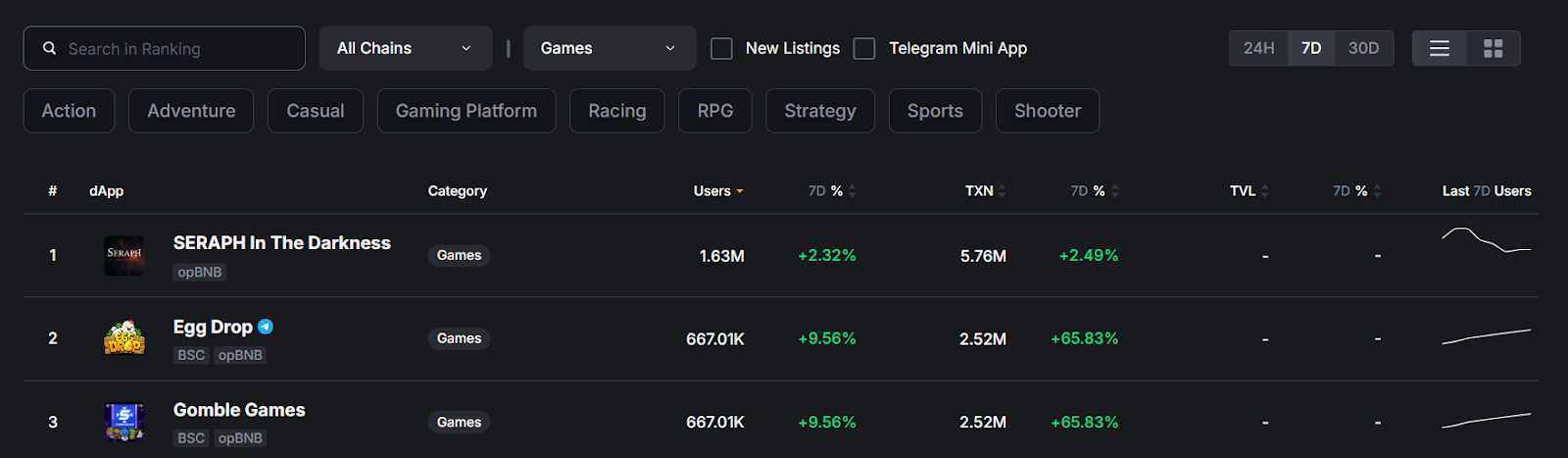
According to data released by Seraph, its player base spans numerous countries and regions worldwide, with particularly strong presence in Europe, North America, and Southeast Asia. The user base is growing rapidly and highly active. The Southeast Asian market, possibly due to higher acceptance of blockchain games, shows especially notable player numbers and growth rates. Seraph has already generated over $10 million in revenue, primarily from in-game purchases and service fees collected from peer-to-peer trading of NFTized equipment.
Game Content: Market-Validated Classic Gameplay
Seraph currently supports PC and Android platforms, with upcoming releases planned for Steam, Google Play, and iOS. The game features classic ARPG (Action Role-Playing Game) mechanics, set in a dark fantasy world where players use magic or combat skills to defeat monsters and bosses. As players take on increasingly difficult challenges, they continuously acquire stronger and more visually impressive weapons and gear through monster drops.
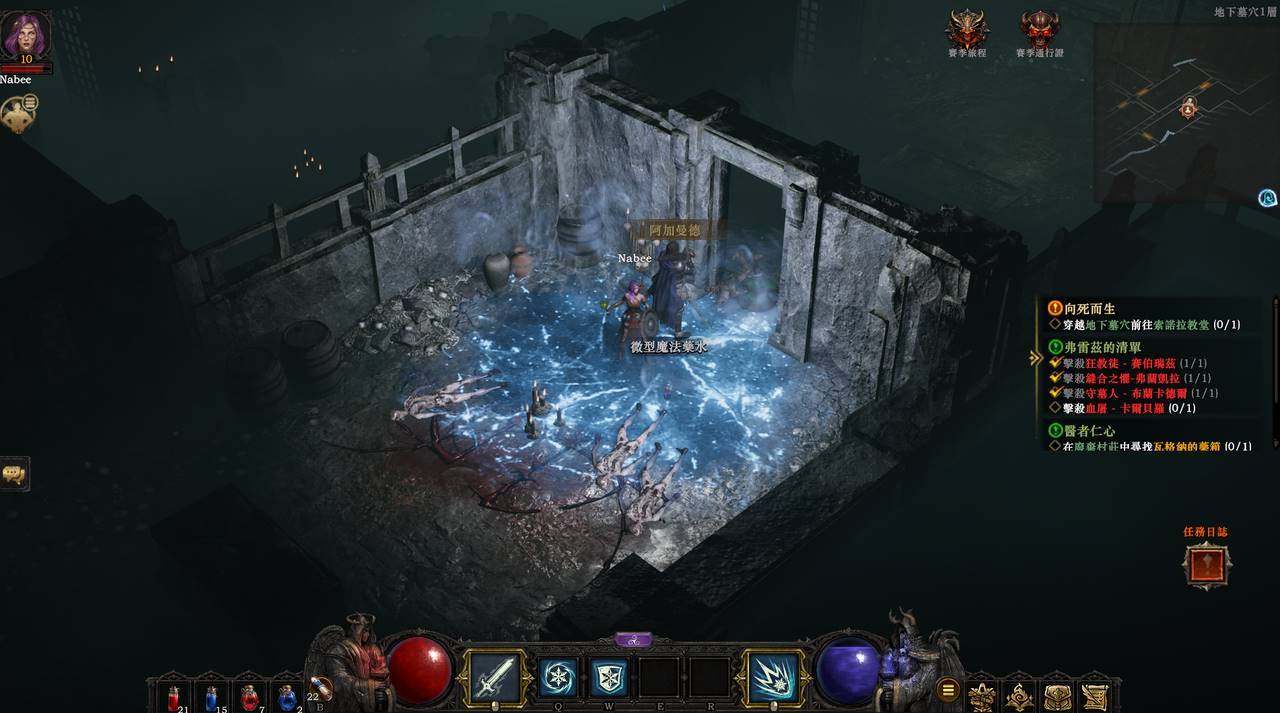
In short, upon entering the game, players first create a character, complete story-driven quests, and learn core mechanics—moving, attacking, and using skills—to defeat enemies and progress through challenges, gradually leveling up to level 60. After reaching level 60, players enter the game’s core gameplay loop: loot farming. They repeatedly challenge tougher dungeons and bosses to obtain rarer, higher-tier gear, creating a positive feedback loop typical of loot-based games. Combined with multiple difficulty tiers and seasonal modes featuring new mechanics, the game offers fresh and exciting experiences with each season.
It’s important to note that the dividing line between Web2 and Web3 gameplay in Seraph occurs precisely after level 60. While players can continue enjoying the loot-farming content, those who wish to monetize their playtime must purchase an NFT piece of gear—a real-money investment that acts as both an "entry ticket" and startup capital. With this NFT, players can participate in special challenges to earn randomized treasure chests containing valuable NFTs, NFT fragments, or limited-edition cosmetic items.
After seeing countless simple clicker games and lightweight blockchain titles, Seraph’s visual quality and depth of content are nothing short of a "pleasant surprise," truly rivaling traditional Web2 AAA games. Its character progression, skill system, and gear mechanics are robust and deeply layered, allowing players to build powerful builds (BDs) through skill combinations and equipment synergies. For seasoned Web2 gamers, these systems feel familiar and intuitive. This gameplay framework has endured across decades of Web2 gaming and remains widely popular—an approach thoroughly validated by market demand.
Within this proven structure, and without compromising core gameplay fun, Seraph seamlessly integrates NFTized gear and a player-driven open marketplace to build a self-sustaining in-game economy—an approach that feels logical and acceptable to traditional gamers.
Economic Model: “Everything is Tradable” and “Play and Earn”
Seraph’s economic model combines the principle of “everything is tradable” with the “Play and Earn” (play-to-earn evolution) concept, enabling peer-to-peer trading of in-game NFT gear to create a self-sustaining, long-term viable in-game economy:
-
NFTized Equipment: All premium loot gear in the game exists as tradable NFTs, which players can obtain by completing dungeons and opening Treasure Chests. These items possess not only functional in-game attributes but also varying degrees of rarity and collectible value, and can be sold on the in-game marketplace for real profit.
-
Player-Driven Open Marketplace: The built-in marketplace allows trading of all in-game assets. Players set their own prices, and supply-demand dynamics determine price fluctuations. This decentralized mechanism ensures true ownership of digital assets.
-
Earning Mechanism & “Play-to-Earn” Model: Players earn gear and items through loot farming, monster grinding, and cooperative challenges, then trade them on the market—making it possible to generate real economic returns directly from gameplay.
-
Self-Sustaining Economic Ecosystem: As the player base grows, in-game demand expands, driving more transactions and liquidity. This reinforces ecosystem stability, continuously enhancing both gameplay experience and earning potential.
Comparative Analysis: In-Game NFTs vs. Artistic NFTs
As previously mentioned, Seraph has generated over $10 million in revenue, partly driven by trading of in-game equipment NFTs. We know that the broader NFT sector has somewhat faded from mainstream attention—even becoming taboo to mention. Yet Seraph’s NFT ecosystem based on weapons, gear, and in-game items presents a different picture. Below is a comparison between mainstream artist/celebrity NFTs and Seraph’s in-game NFTs:
-
Origin and Acquisition: Artist/celebrity NFTs derive value primarily from personal branding, unrelated to actual usage. Their worth depends heavily on the creator’s fame and fanbase. These NFTs are typically acquired via direct purchase, offering little interactivity. In contrast, in-game gear NFTs are earned through dungeon runs, crafting, or other in-game efforts—directly tied to player input. This method enhances engagement, satisfaction, and perceived value.
-
Functionality and Use Cases: Artist/celebrity NFTs are largely digital collectibles with aesthetic or symbolic value, lacking practical utility. Their value stems from emotional attachment or scarcity rather than function. In contrast, in-game gear NFTs serve clear purposes—enhancing character stats, improving farming efficiency—and can be used or traded inside and outside the game, generating real economic value. This utility makes them inherently more attractive.
-
Market Drivers and Value Stability: Artist/celebrity NFT values rely on the creator’s popularity; if interest wanes, their value can plummet or collapse entirely. In contrast, in-game gear NFT values are determined by in-game supply and demand. Rare gear correlates directly with player demand. As long as the game remains active, these NFTs maintain liquidity and stable value.
-
User Engagement and Interactivity: Artist/celebrity NFT acquisition is passive—users simply buy. This lack of interaction often leads to short-lived enthusiasm. In contrast, in-game gear NFTs require active participation: players earn them through gameplay, making the process engaging and rewarding. This encourages sustained time and effort investment, boosting community vitality.
In summary, compared to the single-dimensional nature and volatility of artist/celebrity NFTs, in-game gear NFTs outperform in functionality, market drivers, and user engagement. Artist/celebrity NFTs depend too heavily on individual influence, making their value fragile. Gear NFTs, however, are integral to the gameplay experience—players gain both achievement through use and income through trade, resulting in greater sustainability. While game NFTs are limited by the size of the game’s audience, their design logic and transactional value are far more rational.
Seraph’s revenue figures validate the maturity and effectiveness of its NFT-based economic model, demonstrating strong self-sustainability. Players earning real rewards within the game further amplify its appeal, attracting more users. More players drive deeper market activity, while Seraph continues updating content to deliver fresh experiences—forming a virtuous economic flywheel.
Asset Management System: Lowering the Barrier for Web2 Gamers Entering Web3
A major obstacle for Web2 players entering Web3 games is the complexity of blockchain technology—wallet creation, private key management, and on-chain transaction processes. Seraph addresses this by integrating ActPass accounts and an asset management system. Players log in via email or account credentials, abstracting away wallet setup and private key handling. An embedded MPC wallet allows players to manage assets and conduct transactions directly within ActPass. This design offers several advantages:
-
One-Click Wallet Creation – Simpler Operation: Most Web3 games require downloading and configuring external wallets. ActPass is integrated natively into Seraph, allowing one-click wallet generation and automatic account binding—no need to switch apps. This mirrors Web2 login methods like email or social sign-in, drastically lowering entry barriers.
-
Built-In Asset Management – Reduced Operational Burden: Managing assets in blockchain games often involves complex on-chain operations. ActPass stores digital assets like gear and items directly in the internal wallet, enabling fast in-game trading and management. Players complete everything within the game, avoiding cumbersome signing processes.
-
Hiding Complexity – Optimized User Experience: ActPass automatically handles gas fees and allows payments in fiat or stablecoins, shielding users from most blockchain technicalities. Players don’t need to learn complicated procedures and can focus purely on gameplay, leading to smoother experiences. Additionally, thanks to opBNB—the Layer-2 network of BNB Chain—transactions benefit from low gas costs, high speed, and security, reducing costs for player transactions and asset bridging.
In short, this design maintains a clean separation between gameplay and Web3 asset systems, avoiding the frustrating repeated verifications and wallet interactions common in many Web3 games. It effectively reduces both technical and psychological barriers for Web2 players transitioning to Web3, resulting in higher conversion rates and market penetration. This approach can be seen as an exemplary bridge between Web2 and Web3.
Exploring New Market Frontiers: Bridging Web2 and Web3
In the face of intense competition in existing markets, expanding into new user segments has become a critical mission for the Web3 space. Blockchain games, as representatives of incremental markets, leverage high user stickiness and interactivity to serve as a key gateway for bringing Web2 players into Web3. Particularly, AAA-grade blockchain games—compared to lightweight blockchain applications—offer new possibilities for user conversion through superior technology, immersive experiences, and richer ecosystems.
Based on the above analysis of Seraph, here are some reference design principles for similar games:
-
Lower Entry Barriers: Integrate seamless Web3 wallets and simplify asset management and trading so Web2 players can participate without needing blockchain expertise.
-
Strengthen Economic Incentives: Implement a “Play and Earn” model where players earn NFT gear through gameplay (e.g., loot farming, boss challenges) and monetize them via trading, increasing motivation to engage.
-
Deliver Immersive Experiences: Offer high-quality graphics, rich narratives, and diverse gameplay to mirror traditional AAA titles, making the transition easier and more appealing for Web2 players.
-
Balanced Economic System: Carefully design scarcity and market dynamics (e.g., limited-edition gear or functional items) to maintain market activity and encourage long-term player involvement.
The potential of the blockchain gaming incremental market cannot be overlooked. According to BusinessResearch, the GameFi market is projected to reach $90.51 billion by 2031—a 10x to 15x growth opportunity. In the current bull cycle, the blockchain gaming sector has yet to fully unleash its potential. With more high-quality titles like Seraph emerging, the perception of Web3 games as simplistic or poorly made could gradually shift, bringing a new wave of players into the Web3 ecosystem.
Join TechFlow official community to stay tuned
Telegram:https://t.me/TechFlowDaily
X (Twitter):https://x.com/TechFlowPost
X (Twitter) EN:https://x.com/BlockFlow_News
 吴说区块链
吴说区块链