Chronicles of Feuds in the Chinese Crypto Community
TechFlow Selected TechFlow Selected
Chronicles of Feuds in the Chinese Crypto Community
Don't test human nature with Bitcoin—human nature will never withstand the test.
 Navigating Web3 tides with focused insights
Author: Xinghai Jianchang, Lu Kewen Studio
One
In 1986, in Shaoyang, Hunan Province, a baby boy was born.
Don’t get the wrong idea—this infant wasn’t later to become one of China’s top five male beauty bloggers—Lu Yanzu (a nickname for actor Leon Lai), but rather the future richest man in Hunan—Friedcat (Jiang Xinyu).
Calling him the richest man in Hunan is no exaggeration.
Based on incomplete estimates, Friedcat holds 74,715 bitcoins across two known wallets. At the peak price nearing $100,000 per bitcoin in November 2024, his assets amounted to 54.9 billion RMB—solidifying his status as Hunan's wealthiest individual.
Yet, Friedcat may never have lived to see himself crowned as such.
Friedcat had been an academic prodigy since childhood. In 2001, at just 15 years old, he ranked 11th nationwide and entered the Young Elite Class at the University of Science and Technology of China—the pride of all Shaoyang. To this day, his name remains displayed on his alma mater’s honor board, gazed upon by younger students with admiration.
In 2009, at age 23, Jiang Xinyu published a paper titled "Building Secure Thread Mechanisms Using Formal Methods," completed his master's degree, and went on to study as a visiting PhD student at Yale University in 2011.

No one knew that this journey would spark a massive revolution in China’s Bitcoin market.
The story of Bitcoin traces back to a small subculture emerging in 1992.
That year, a group of crypto-anarchists formed. During a gathering, Timothy May—an electronics engineer at Intel—delivered his "Crypto-Anarchist Manifesto," formally introducing the concept of crypto-anarchism.
The opening line sounds familiar:
"A specter is haunting the modern world—the specter of crypto-anarchism."
The core belief of crypto-anarchism is using cryptographic software to avoid harassment, surveillance, and prosecution when sending or receiving information over computer networks, thereby defending privacy rights and political freedoms.
With religious devotion, they resolved to create a new digital technology rooted in decentralization and built upon the SHA256 algorithm—a tool to resist state regulation and corporate monopolies in modern society.
They firmly believed this technology could transform human civilization:
"Computer technology will soon enable individuals and groups to communicate and interact anonymously.
... Combined with the emerging information marketplace, crypto-anarchy will create a fluid market for all materials expressible in words and images.
Arise, crypto-anarchists! You have nothing to lose but your barbed wire fences!"
While these ideas might seem like idealistic self-indulgence, in reality, they profoundly changed our lives.
Sir Tim Berners-Lee, inventor of the World Wide Web; Bram Cohen, creator of BitTorrent; Sean Parker, co-founder of Facebook; Julian Assange, founder of WikiLeaks—all were members of this group.
And of course, so was Satoshi Nakamoto, the mysterious founder of Bitcoin.
Who exactly is Satoshi Nakamoto? Unknown. To this day, despite exhaustive efforts by elite hackers, intelligence agencies, and computer scientists around the globe, no one has uncovered his true identity—leading some to speculate he might be a time traveler from the future.
It must be said, Nakamoto's enduring anonymity perfectly embodies crypto-anarchism.
In 2008, amid the global financial crisis, on November 1st, Nakamoto released his whitepaper: "Bitcoin: A Peer-to-Peer Electronic Cash System," announcing to the world: "I am working on a new electronic cash system that operates entirely peer-to-peer without relying on any trusted third party."
Thus began widespread awareness of Bitcoin—an electronic currency immune to manipulation by political or financial powers.
This meant crypto-anarchists could now have their own central bank and build their own financial system.
To test his theory, at 18:15 on January 3rd, 2009, Nakamoto mined the first block of Bitcoin—the "genesis block"—on a small server located in Helsinki, Finland, earning the first mining reward: 50 bitcoins.
From that moment, Bitcoin was officially born, and Nakamoto became its "creator."
Nakamoto quickly published the mining algorithm, prompting tech enthusiasts worldwide to begin mining on university servers, rapidly increasing the number of Bitcoins in circulation.
But soon came the question: How do we prove Bitcoin functions as money? Or more simply, how can we show Bitcoin can buy things?
On May 18th, 2010, Laszlo Hanyecz, a cryptography expert from Florida, USA, posted online offering 10,000 bitcoins for two pizzas, insisting on face-to-face exchange.
You heard it right—10,000 bitcoins. At current valuations, that’s roughly 7 billion RMB.
At the time, everyone thought it was a joke. No one responded.
Four days later, a British man, thinking “you can't go wrong buying two pizzas,” ordered two pizzas delivered to Hanyecz’s home and received the 10,000 bitcoins. Meanwhile, Laszlo happily devoured what would become the most expensive pizza in history—worth 7 billion RMB.
Since then, every May 22nd has been celebrated within the crypto community as “Bitcoin Pizza Day,” commemorating Bitcoin’s first commercial transaction.

After the pizza incident, Bitcoin’s value gained recognition, trading emerged, and prices began rising steadily.
Soon, Chinese entrepreneurs noticed this path to wealth.
Interestingly, the first Chinese group to embrace Bitcoin wasn’t university tech geeks, but rather nonconformist youth with dyed hair found in small towns:
Online game gold farmers.
In 2010, China’s most popular game was *World of Warcraft*. Behind it existed a full ecosystem—leveling services, competitive play, gold farming, equipment grinding, dungeon runs—and countless teenagers earned tens of yuan per night through grueling sessions. With luck, rare gear drops could fetch hundreds or even thousands.
Suddenly, ads appeared in QQ groups recruiting miners: install a simple program, let your computer mine automatically while you play games. The next day, you’d receive coins, which you could sell for 2–3 RMB each. Earning about 10 bitcoins per night meant covering daily food expenses.
And so, Bitcoin spread organically among these young people—who knew nothing about crypto-anarchism—flourishing through grassroots adoption.
These eccentrically dressed youths couldn’t imagine that the random code they casually sold would one day become priceless.
However, early miners soon faced business disruption due to technological advances in late 2010.
According to Nakamoto’s original design, Bitcoin represented a utopian vision where “everyone is their own central bank.” Anyone with a CPU could mine—just a regular computer and software were enough to start.
But this decentralized dream didn’t last long—GPUs entered the scene.
Mining relies heavily on computational power. Initially, CPUs were used, but deeper analysis revealed mining involved repetitive tasks. As general-purpose processors, CPUs weren’t suited for parallel computing—handling only a dozen operations at once—making them inefficient.
In contrast, GPUs contain thousands of stream processors, inherently optimized for mining and far more efficient.
Nakamoto initially opposed GPU mining and even advocated a gentlemen’s agreement to limit it, aiming to preserve fairness.
But he underestimated human nature.
Once Bitcoin gained value, people naturally sought profit.
When Hanyecz open-sourced his GPU-optimized mining algorithm (now you know why he had 10,000 BTC), network-wide computing power exploded, scaling up from MH/s to GH/s. Where one might previously mine a dozen bitcoins per day, GPU miners could now earn over a hundred.
Chinese gamers flocked en masse to internet cafes equipped with high-end graphics cards, leaving cafe owners baffled. This indirectly triggered China’s first large-scale upgrade of gaming cafe hardware—and helped alleviate Nvidia’s inventory crisis under Jensen Huang.
GPU mining dominated for two years before facing another challenge.
In June 2012, Butterfly Labs in the U.S. successfully developed ASIC miners, sparking another mining revolution.
ASIC miners use specialized chips designed specifically for Bitcoin’s SHA256 algorithm—delivering superior performance, lower energy consumption, and smaller size.
For comparison: a high-end RTX 4090 GPU achieves approximately 129.8 MH/s with ~322W power draw. The Antminer S9? 13.5 TH/s—orders of magnitude higher!
Whoever owns the miner controls the minting power.
At Yale, Friedcat learned of Butterfly Lab’s progress and immediately sensed a business opportunity.
Part of the post-80s generation raised on *Readers* magazine—one famous article told how during the California Gold Rush, few prospectors got rich, but those selling shovels made fortunes.
Friedcat thought: Why not be the guy selling shovels?
Almost simultaneously with Butterfly Lab’s breakthrough, Friedcat posted on Bitcointalk forum under the ID "Friedcat," claiming development capability and launching a public fundraising campaign.
His plan: drop out of Yale, establish BitSpring Information Technology Co., Ltd., issue 400,000 shares priced at 0.1 BTC each.
No one realized this marked the first-ever ICO (Initial Coin Offering) in cryptocurrency history.
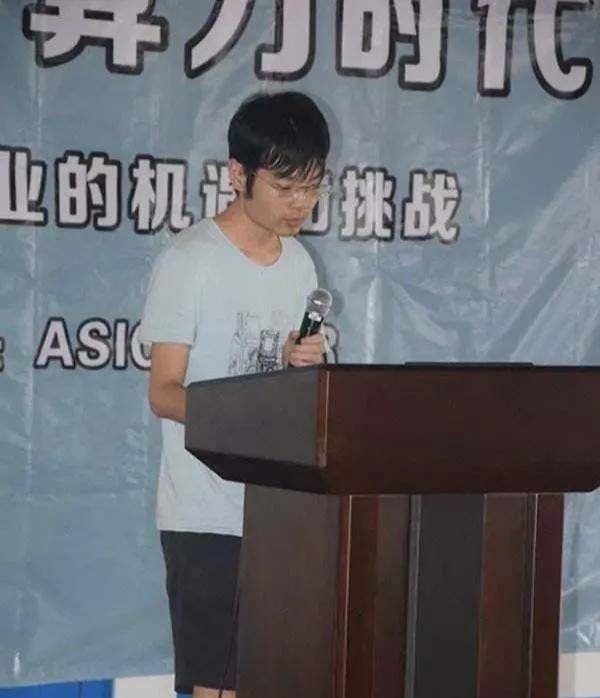
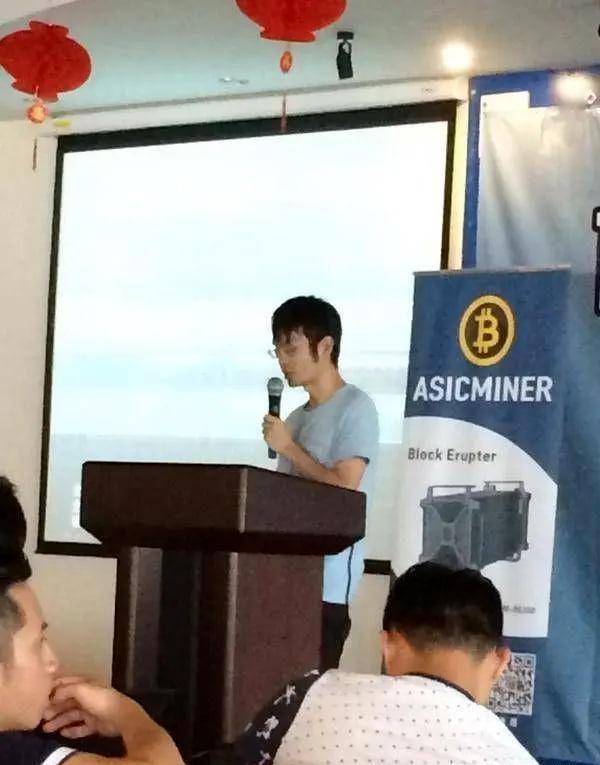
Friedcat didn’t just raise funds online—he also conducted roadshows promoting his mining machines. Ultimately, he raised 16,000 bitcoins, worth about 1 million RMB at the time. His largest investor was a 26-year-old named Wu Jihan, who contributed 15,000 BTC.
With capital secured, development progressed smoothly. Just two months later, Friedcat launched his product—the first-generation Friedcat Miner.
Testing it in his company warehouse, upon startup, his mining farm captured 51% of the world’s Bitcoin hash rate!
In other words, at least half of all newly mined Bitcoins globally in early 2013 belonged to Friedcat.
At its peak, the "Friedcat Mine" alone mined over 40,000 bitcoins per month!
This unprecedented success triggered panic across the crypto community. After all, there are only 21 million bitcoins total—if Friedcat mines most of them, what’s left for others?
Hence, hacker attacks followed swiftly.
To diffuse backlash, Friedcat retained only 20% of the network’s hash power, selling off excess capacity.
At the time, no miner could match Friedcat’s. Though Butterfly Lab succeeded technically, they failed mass production. Similarly, Zhang Nangeng’s Avalon Miner (developed by a Beihang University PhD) hadn’t begun deliveries. Thus, in the ASIC mining market, Friedcat reigned supreme.
People traveled from around the world to purchase Friedcat miners. One account recalls: “Some threw money and ran with the machines, terrified someone else would snatch them.”
Within six months, Friedcat earned billions. He was only 27.
Friedcat dreamed of owning an island—an independent territory belonging to no nation, free of armies and police, where Bitcoin was currency and crypto-anarchists could live freely.
But before he earned enough to buy the island, his dream collapsed.
Mining machines were too profitable, attracting endless competitors.
In June 2013, Butterfly Lab finally achieved mass production. By July, Avalon Miners started shipping. Meanwhile, Friedcat struggled—unable to secure TSMC’s 55nm chips, his second-generation miner stalled in development. His network share plummeted to just 4%.
Not until January 2014 did Friedcat release his third-generation BE300 miner. Hoping for a comeback, the chip suffered packaging flaws leading to repeated burnout incidents—ultimately ending Friedcat’s mining machine venture.
By the end of 2014, Friedcat vanished. No one has seen him since. His wallet containing 74,715 bitcoins disappeared along with him.
Thus ended the legend of Friedcat.
Around August 2017, one of Friedcat’s two wallets transferred 17,600 bitcoins within a week. On November 12, 2024, after seven years of silence, the dormant account moved again—transferring 206.34 BTC, valued at $18.12 million.
Was this action taken by Friedcat himself? Controlled by someone else? Is Friedcat still alive? No one knows.
All anyone knows is that the pioneer who wore wrinkled T-shirts during presentations yet radiated sharp-eyed brilliance will never return.
Two
Friedcat’s downfall left his major backer, Wu Jihan, seeking new ventures.
Now no longer a novice, Wu had become a millionaire thanks to dividends from Friedcat.
Still bullish on Bitcoin, Wu wanted to stay in mining hardware—but he needed help. He turned to someone: Changjia.
Changjia is a pen name. Unknown to many, he’s legendary in sci-fi circles.
We all know Liu Cixin reigns as China’s top sci-fi writer, winning the Galaxy Award—the country’s highest sci-fi honor—for seven consecutive years from 1999 to 2006.
Who won in 2007 and 2008?
Changjia.
Interestingly, Changjia is also from Hunan. His real name is Liu Zhipeng. Inspired by Qu Yuan’s poetry, especially the verse: “Girded with long swords, wearing towering hats, adorned with moonlight and precious gems,” he adopted the name “Changjia” (Long Sword).

In real life, Changjia is equally passionate and idealistic. At 16, he began writing sci-fi stories. Works like *Kunlun*, *Highway 674*, *Injury of Fusang*, *Dragon-Slaying Technique*, and *If Ma Kai Were Alive* brought him fame.
One critic noted: “His works blend modernity with history—classical pieces echo heroic Chu ballads, while modern ones reveal Western romanticism.” After winning the Galaxy Award, many saw him as Liu Cixin’s successor.
But after 2009, Changjia stopped publishing sci-fi fiction.
Many speculated he hit creative block. Yet one anonymous forum user cryptically replied: “Changjia is doing something very sci-fi.”
Indeed, Changjia was doing something very sci-fi: Bitcoin.
A side note: if you examine China’s crypto history, you’ll find an overwhelming presence of sci-fi fans.
Changjia—the sci-fi author.
“Mad Xiaoqiang,” founder of Xuanlian—also a sci-fi writer.
Wu Jihan, nicknamed “magnetron”—his standalone chip project named after “Sophon” from *The Three-Body Problem*.
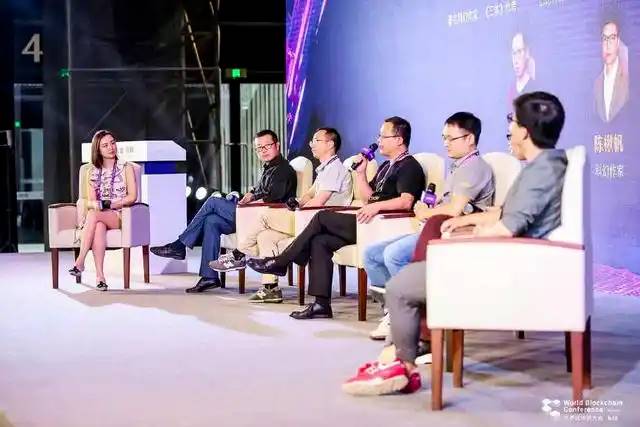
How much does Wu love Liu Cixin? In 2018, during the Wuzhen Blockchain Conference, he hosted a special cross-disciplinary panel titled “The Sci-Fi World Within Blockchain” just to meet Liu Cixin.
Zhang Jian, founder of Fcoin, named his fund “Geographer Capital” after a character in *The Three-Body Problem*.
And so on.
Why such strong overlap between sci-fi and early crypto communities?
Probably because both share common traits: technical sensitivity, emotional depth, and imagination.
Bitcoin naturally appeals to them—it’s both technical and philosophical, realistic yet idealistic.
Changjia was exactly such a person. Upon encountering Bitcoin in 2009, he was instantly captivated by its grand vision. Recalling later: “Bitcoin perfectly matched my imagination of cloud-era, large-scale distributed computing systems. I fell deeply for it…”
In 2011, Changjia took a government job, emulating Liu Cixin—working daytime hours while secretly evangelizing Bitcoin online.
That year, a female college student asked on Zhihu: “With 6,000 RMB, how should I invest?”
Changjia gave an answer beyond conventional wisdom: “Buy Bitcoin, securely store your wallet, then forget about it. Check again in five years.”
Years later, when Bitcoin surged, anyone who followed his advice would’ve become a billionaire.
This response resurfaced repeatedly, worshipped as a legendary “Zhihu post.”
But at the time, instead of praise, he faced ridicule. Bitcoin was near rock-bottom; no one believed it could generate returns.
Unwilling to back down, Changjia began publishing articles on his blog, debating skeptics.
One day, he received a message from someone named QQAgent: “Blogger, I think your site has great value. Why not get an independent domain and hosting? I’ll pay.”
QQAgent was Wu Jihan.
Still, Changjia refused to join Wu in building mining hardware. His understanding of Bitcoin ran deeper than most.
He believed: “If you view Bitcoin merely as an investment vehicle, you’re just a temporary passenger satisfied with modest gains. But if you grasp it philosophically and technically, immersing yourself fully, you’ll be infinitely richer—in both wealth and spirit.”
Unwilling to lose himself in volatile riches, in 2011 Changjia partnered with Wu Jihan to launch 8btc (Babit), creating the first major Chinese-language media platform dedicated to Bitcoin.
If Friedcat was the guy selling shovels during the gold rush, Changjia was the innkeeper selling news and connections.
Yet perhaps due to excessive idealism, Changjia’s crypto career faltered. Both Babit and later Bytom Chain enjoyed brief popularity before fading away.
Compared to contemporaries who achieved financial freedom, Changjia appears notably “unsuccessful.”
So why dedicate so much space to his story? Not only because he was Bitcoin’s chief evangelist in China, but because his platform connected nearly the entire early Chinese crypto ecosystem.
In the wild west era of Bitcoin, almost every pioneering entrepreneur met through Babit.
One day in 2013, a user named “GGGGG” posted an invitation: Let’s meet offline.
The venue? Garage Cafe in Beijing—a holy land for grassroots startups.
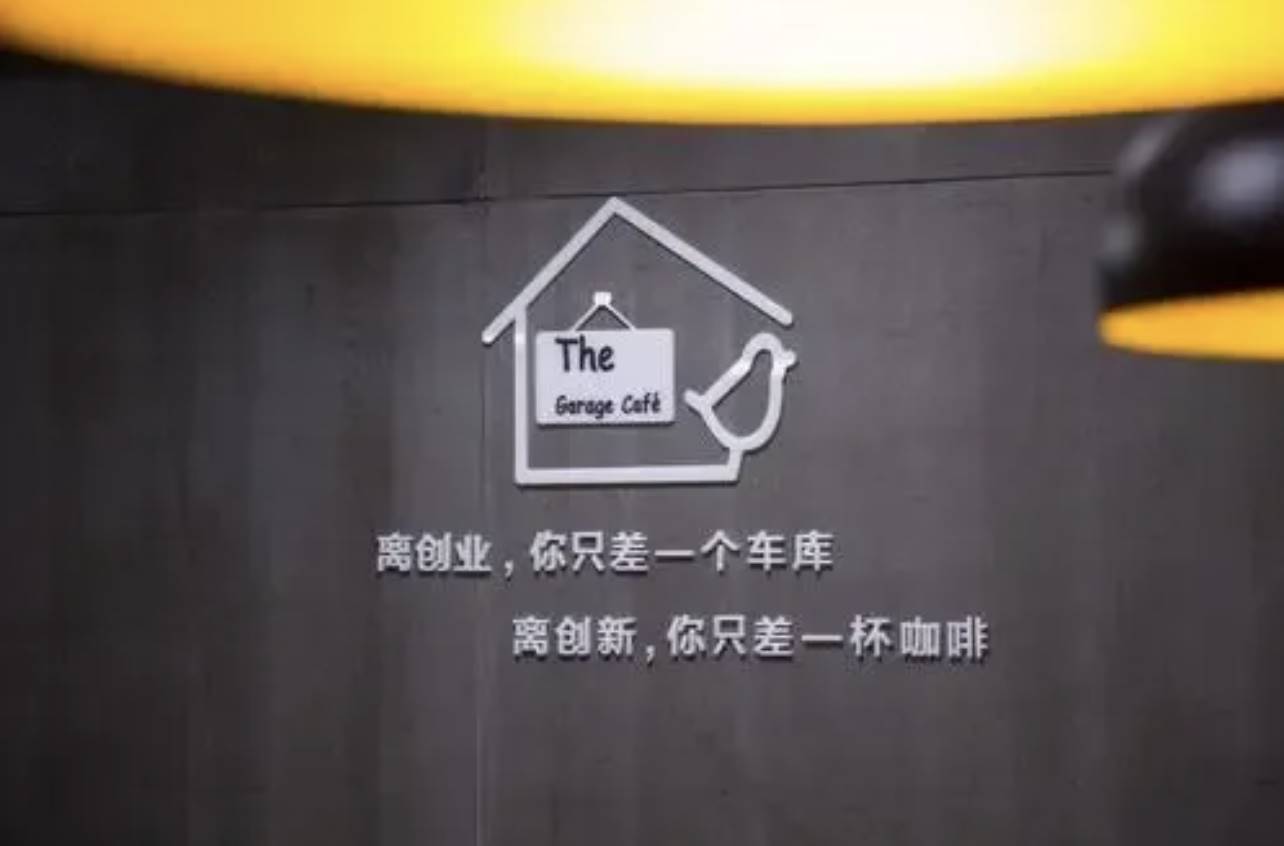
That meetup gathered scrappy dreamers—most of whom later became industry leaders: Shenyu, Zhao Dong, Li Xiaolai, Nangua Zhang, and others—all discussing Bitcoin’s future.
Thereafter, crypto enthusiasts nationwide began organizing frequent offline gatherings—to exchange resources, form partnerships, and forge new legends.
Wu Jihan met Zhan Ketuan, an integrated circuit expert, and together founded Bitmain.
Nangua Zhang teamed up with Li Jiaxuan to establish Canaan Creative, later becoming a mining giant.
Li Xiaolai partnered with Zhu Fangyi to launch his own mining farm.
Li Lin connected with Du Jun to plan a trading platform.
Even Friedcat sold many miners via forum posts.
They often gathered in courtyards, talking late into the night, departing filled with ambition.
Darkness cloaked the sky, dim lights flickered, the road ahead unclear—yet all burned with unwavering passion.
Through these early connections, mining rigs and farms sprouted everywhere—Yinyin, Little Bee, Lande, TMR, SmarT, 42BTC—ushering in China’s golden age of Bitcoin.
As mining grew, problems arose.
The biggest pain point for these pioneers? They had mining machines and Bitcoin—but lacked a Chinese-controlled trading platform.
Back then, global Bitcoin trading was dominated by two platforms: Japan’s Mt. Gox and Slovenia’s BitStamp.
Domestically? Only one—Bitcoin China.
Founded by Yang Linkun, originally a sauna equipment seller, he accidentally invested a few ten thousand RMB into building a Bitcoin trading website.
But the system was primitive: deposits required bank transfers to two personal accounts—held by Yang’s wife and mother-in-law.
Hardly futuristic.
More critically, both domestic and international exchanges suffered poor security, slow speeds, and typically charged 0.3% fees in both directions.
With growing complaints, entrepreneurs eyed the opportunity.
Thus in 2013, Xu Mingxing’s OKCoin and Li Lin’s Huobi emerged as new Bitcoin trading platforms.
To capture market share, both adopted zero-fee models—mirroring China’s booming internet industry: attract users with free services, monetize later.
This strategy allowed Chinese exchanges to instantly crush international rivals, capturing 80% of global Bitcoin trading volume.
Luck favored them—they caught Bitcoin’s bull run.
In 2012, one Bitcoin was worth $13. By end of 2013, it surpassed $1,000!
What business offers such insane profits? People flooded into crypto—including clueless middle-aged women (“aunties”). Exchanges turned into chaotic markets, servers crashed, transactions delayed for hours.
Reality proved: selling shovels isn’t profitable. Selling information isn’t either. The real money lies in running exchanges.
In just one year, Xu Mingxing and Li Lin earned more than most could in ten lifetimes. By 2020, both appeared on Hurun Research Institute’s “Global Self-Made Young Billionaires List.”
It was a golden era—those who caught the wave soared; those who missed it, missed everything.
But good times didn’t last. Bitcoin’s explosion drew regulatory attention, prompting risk assessments.
On December 5, 2013, China’s central bank and five other ministries issued a notice denying Bitcoin’s monetary attributes, stating it cannot and should not circulate as currency.
Panic swept the market. Bitcoin prices crashed. Countless speculators lost everything overnight.
Two months later, Japan’s Mt. Gox announced a hack—over 750,000 bitcoins vanished. The company declared bankruptcy.
Global fear erupted—was it a real hack, or a fake hack to flee?
Soon after, Butterfly Labs was shut down by U.S. federal courts over suspected fraud.
Thus began Bitcoin’s prolonged bear market.
Zhao Dong blew up his leveraged position, losing 150 million RMB.
Yang Linkun dumped most of his holdings.
Friedcat disappeared.
Li Xiaolai sold his bitcoins, planning to open a billiards hall.
During winter, those shouting “faith in Bitcoin” forgot: no matter how strong faith is, it cannot withstand reality.
Yet those who persevered through the bear market were handsomely rewarded later.
Wu Jihan continued improving his miners, maintaining 42.5% of global hash power during the Bitcoin winter—laying the foundation for Bitmain’s future dominance as the “mining king.”
Li Lin believed policy rejected Bitcoin’s currency status but didn’t ban its commodity value. Seeing ongoing investment potential, Huobi secured angel investments and continued operating.
Xu Mingxing’s OKCoin introduced margin trading—treating Bitcoin as a financial product, enabling shorting and long positions. Profits came from RMB withdrawal fees.
Countless dreamers crisscrossed the nation—from northern grasslands to Guizhou mountains—setting up mining farms powered by cheap wind and hydropower to launch their “minting empires.”
Over two years later, fate finally rewarded their perseverance.
Bitcoin’s underlying technology—blockchain—gained widespread attention starting in 2016. Vitalik Buterin, a Russian prodigy, added smart contracts, vastly expanding blockchain applications. Blockchain became the new darling, reigniting crypto fever.
Those who held on rode the next bull market to redemption.
Ironically, new technologies are always exploited first by scammers.
Blockchain didn’t bring spring for crypto-anarchists—it unleashed rampant “shitcoins.”
Simple reason: vast numbers of people neither understood crypto-anarchism nor blockchain—but they understood human greed.
Wherever greed exists, they exploit it for profit.
Recall those days: were you bombarded with ads for “blockchain wealth management”? Celebrities livestreaming endorsements? Friends and family urging you to join, saying blockchain is hot—get on board now?
Truth is, they just wanted to harvest韭菜 (reap lambs).
Shitcoin operators typically register shell companies, hire outsourcing teams to create random tokens—Dogecoin, Catcoin, Pigcoin, Eelcoin, Shitcoin—with absurd names. Then deploy paid trolls, celebrity promotions, livestreams to hype projects, lure investors into ICOs, deposits, even crowdfunding for virtual mining rigs.
With constant price pumps—sometimes +10% daily—who could resist? Even aware of risks, people gamble they won’t be the last to hold. As long as someone buys, they believe they can profit.
Eventually, they become mere lambs for slaughter.
Once sufficient harvesting occurs, operators declare collapse—leaving chaos behind.
Then rebrand and repeat.
Worse still, shitcoins became money-laundering channels for telecom scams. Victims’ money instantly converts into obscure tokens, vanishing somewhere on Earth.
China’s market descended into chaos. Worse, these schemes operated entirely outside regulation—immune to oversight, easily manipulated. You thought you’d achieve financial freedom, but instead enabled someone else’s wealth—while you remained a fresh, green lamb.
In this era of unchecked shitcoin growth, some got rich overnight—many more lost homes and families. Frankly speaking, every profit in crypto bears bloodstains.
Something had to change. Regulation must act against Bitcoin.
Why?
Unlike finance-based economies like the U.S. and UK, China is manufacturing-driven. Markets like cryptocurrencies stimulate speculation but offer negligible benefits to real economy, tax revenue, or consumption.
Moreover, these chaotic “shitcoins” are essentially capital plunder—rich insiders harvesting the masses. Far from promoting shared prosperity, they amplify greed. If they collapse, societal consequences follow—with ordinary people paying the price.
Additionally, China is a massive energy consumer under huge decarbonization pressure. Mining farms are major carbon emitters—one facility consuming millions of kWh daily; a single southwestern mining operation using annual electricity equivalent to three cities combined.
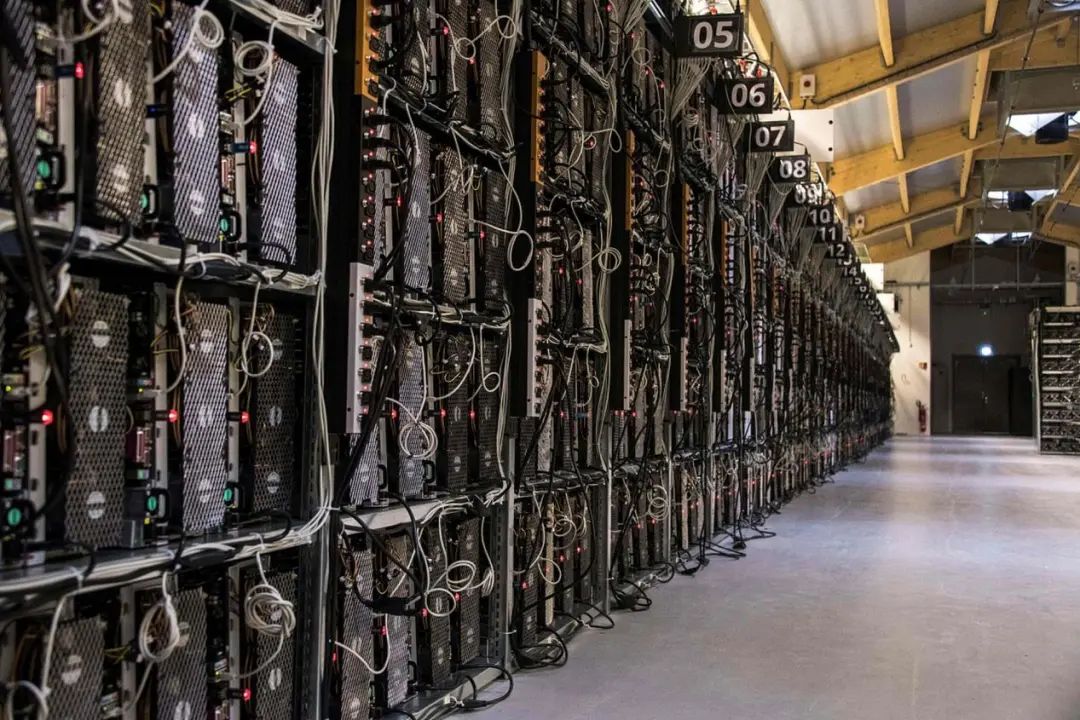
Such immense power consumption supports no real industries, produces no tangible value, creates no jobs or taxes—only generates wealth myths, luring more people like moths to flame.
Thus, on September 4, 2017, seven Chinese agencies jointly banned ICOs, citing risks of illegal fundraising and financial fraud. All completed ICO projects were required to refund investors and cease related activities.
This seismic event shook the crypto world—the “94 Event.”
Immediately, many shitcoins dropped to zero. Some exchanges shut down outright.
Harsher measures followed: on September 14, 2017, the Chinese government ordered the shutdown of all domestic cryptocurrency exchanges, requiring complete exit from the Chinese market by September 30.
Consequently, altcoins like TC, ETH, ETC, BCH crashed—Bitcoin itself fell over 20%.
So what did China’s crypto players do?
Escape.
Yang Linkun sold “Bitcoin China” to a Hong Kong blockchain investment fund.
Li Lin sold all global shares of Huobi to Bailian Capital.
Xu Mingxing transitioned most successfully—OKCoin gradually shifted toward blockchain technology application and development. Xu even became chairman of the Beijing Youth Internet Association’s Blockchain Committee.
Little did Xu expect that the future of Bitcoin exchanges would be swallowed whole by his former subordinate—who recently walked out of an American prison as China’s richest man: Zhao Changpeng.
Zhao Changpeng is from Jiangsu, born in 1977. In 1989, his mother queued for 36 hours outside the Canadian embassy to obtain visas and immigrate.
Zhao’s first impression of Canada? “I drank fresh milk for the first time!”
After graduation, Zhao worked at Bloomberg, later contributing to the development of Blockchain.info.
By chance, he met He Yi.
He Yi—the future queen of crypto—was originally a host at Travel Channel. She joined Xu Mingxing’s OKCoin in 2014 as VP overseeing branding.
She approached Zhao hoping Blockchain.info would promote OKCoin cheaply, but Zhao bluntly refused.
Man, you’ve caught He Yi’s attention.
She admired his professionalism—refusing favors—and introduced him to Xu Mingxing, inviting him to join OKCoin.
That year, Zhao was 37.
Joining OKCoin, Zhao excelled—offering insights on on-chain transaction architecture, custody, and security. Thanks to his overseas experience, he naturally excelled in international expansion, quickly rising to VP.
Thus, Xu Mingxing, He Yi, and Zhao Changpeng became the 2014 crypto icons—the “iron triangle.”
But the iron triangle wasn’t solid. Xu and Zhao soon clashed.
Some say conflict stemmed from differing technical and operational visions.
Others claim Xu discovered Zhao and He Yi’s affair, accusing them of undermining him.
Xu once tweeted:
“They’re a couple partnering with me alone—how sustainable is that? Company rules clearly stated internal relationships require one party to leave. As an executive, she broke the rule herself. Now bringing this up hardly proves her professional ethics or partnership spirit. Anyway, without me, she wouldn’t have this marriage—she should thank me.”
Clearly referring to Zhao and He Yi—and Zhao was married at the time.
Given this, collaboration became impossible. Zhao and He Yi resigned.
Then in 2017, Zhao and He Yi reunited to found Binance.
Zhao couldn’t imagine then that Binance would become the world’s largest exchange.
Perhaps he should thank the 94 Event.
The 94 crackdown devastated Bitcoin China, Huobi, and OKCoin—but for Binance, it was a golden opportunity to leapfrog.
Why? Binance registered overseas with servers abroad. Zhao, holding foreign citizenship, naturally leaned international. While other exchange founders were “invited for tea,” Binance relocated servers to Hong Kong—turning crisis into advantage, gaining sudden fame.
At the time, 80% of the world’s Bitcoin was held by Chinese. The 94 Event sent shockwaves—holders rushed to transfer assets out. Having experienced OKCoin’s domestic chaos firsthand, He Yi targeted Chinese male users with the “Binance 101 Girls”—young, fair-skinned, leggy beauties—running campaigns like “deposit and get private gifts from girls.” Crude? Yes. Effective? Absolutely. Massive traffic poured in.
Post-94, traffic from Bitcoin China, Huobi, and OKCoin all flowed into Binance. Chinese-held Bitcoin literally elevated this newborn platform into a global crypto titan.
What is “hero shaped by circumstances”? This is it!
By 2021, Binance had become the world’s largest crypto exchange. Ironically, Bitcoin—meant to be decentralized—became centralized through Binance.
Binance processes up to $76 billion daily, earning massive fees—like a casino profiting regardless of player wins or losses.
Beyond trading, Binance issues its own token BNB, collects listing fees, service charges—raking in enormous profits.
In January 2022, Bloomberg’s Billionaires Index listed Zhao Changpeng with $94.1 billion net worth (~634.8 billion RMB)—surpassing Zhang Yiming, Zhong Shanshan, Zeng Yuqun—to become the “richest ethnic Chinese.”

Historically, the first Chinese individual nearing $100 billion valuation—and the most controversial.
But wealth doesn’t guarantee safety. Often, it brings greater danger.
Ever since crypto-anarchism emerged, regulators have loomed overhead like Damocles’ sword. From financial stability and investor protection standpoints, authorities worldwide viewed Zhao Changpeng with disdain. An American economist listed cryptocurrency’s “seven deadly sins”: secrecy, corruption, deception, crime, fraud, pump-and-dump—and CZ.
CZ—Zhao Changpeng.
After leaving China, Binance wandered globally—warned by financial regulators in the UK, Germany, Japan, Malaysia, South Africa, Singapore. Zhao dared not return home, hiding long-term in UAE—yet ultimately unable to escape U.S. long-arm jurisdiction.
In June 2023, the U.S. SEC filed 13 charges against Zhao and Binance.
No more talk of “business environment.” After negotiations, Zhao pleaded guilty to money laundering, unlicensed remittance, sanctions violations—paying a $4.316 billion settlement.
Even compliant, the U.S. didn’t stop.
Upon signing the plea deal in the U.S., his passport was seized. Additional fines piled up—another $3 billion.
See? This is the power of a national-level “pig butchering scam.”
Ultimately, after efforts by lawyers and collective letters pleading mercy from 161 relatives—including ex-wife, current wife, partner, co-founders, sister, mother—Judge handed Zhao a light sentence: four months imprisonment.
On September 29, 2024, Zhao Changpeng was released.
But it’s not over.
In October 2024, U.S. prosecutors emphasized Binance failed to report over 100,000 suspicious transactions involving Hamas, Al-Qaeda, and ISIS. The platform also facilitated child sexual abuse material sales and served as a receiver for ransomware proceeds.
In November 2024, Zhao faced renewed lawsuits demanding recovery of nearly $1.8 billion allegedly transferred “based on fraud.”
Zhao’s legend continues. His legal battles continue. Clearly, as long as Zhao’s wallet exists, America’s extraction won’t end.
So-called “government-challenging crypto-anarchism,” when facing actual governments, collapses instantly.
Three
Looking back at a decade of crypto history—how should we evaluate Bitcoin?
Technically speaking, Bitcoin has no inherent good or evil, beauty or ugliness. It’s merely a program, an algorithm, a string of hidden code on the internet.
Humanistically, Bitcoin combines individualism, liberalism, and technological determinism. It represents the hope of tech geniuses and madmen striving for a stateless, utopian society.
Yet no matter how noble the ideal, it must confront gravity of reality.
To libertarians, Bitcoin embodies humanity’s greatest progressive ideal.
To those indifferent to technology but eager to profit, Bitcoin is merely a wealth-making tool.
Due to lack of regulation, Bitcoin remains volatile, perpetually spawning rags-to-riches tales. Due to survivorship bias, people only see winners.
When someone brags on social media: “Accidentally made another 100 million.”
When someone photographs half a Maserati logo with caption: “Heaven rewards the diligent.”
When others flaunt yachts surrounded by young models.
Who can resist desire?
Humans have desires—and Bitcoin awakens the innermost greedy beast. You can’t resist. Neither can I.
Ruo Xuwang, founder of Bibi Jingling, once offered a vivid metaphor:
Bitcoin is the One Ring to rule all rings. It corrupts minds. Those who wear it eventually become slaves to Sauron.
In reality, unless possessing extraordinary willpower, most who put on the Bitcoin ring become its slaves.
Bitcoin, created by crypto-anarchists, is neutral in essence. But when technology meets unresolvable human nature, problems inevitably arise.
Satoshi Nakamoto could brute-force the unique hash among 4.4 trillion trillion possibilities—but he couldn’t calculate the madness of human nature.
When human greed distorts a neutral entity, the entity itself becomes irrelevant. Once it was tulips; now it’s Bitcoin. Tulips weren’t wrong. Bitcoin isn’t wrong. The fault lies solely in human nature.
Therefore, when human nature cannot withstand technology’s negative feedback, regulatory intervention becomes essential.
After all, Bitcoin cannot feed hunger, circulate widely, nor anchor to any monetary standard. Beyond consuming vast energy to fabricate wealth myths, it brings mostly disaster.
Why are ethnic Chinese so obsessed with crypto?
Why did 70% of Bitcoin mined come from Chinese hands?
Why do Chinese control 50% of the global Bitcoin market and nearly all major exchanges?
Reflect on the stories of these crypto titans—soaring to peaks, then crashing down—we may find answers.
Never test human nature with Bitcoin. Human nature will never withstand the test.
Join TechFlow official community to stay tuned
Telegram:https://t.me/TechFlowDaily
X (Twitter):https://x.com/TechFlowPost
X (Twitter) EN:https://x.com/BlockFlow_News