









WOO X Research: Can MicroStrategy’s Strategy Reach the Shore? Or Is It a New-Gen Luna?
TechFlow Selected TechFlow Selected
WOO X Research: Can MicroStrategy’s Strategy Reach the Shore? Or Is It a New-Gen Luna?
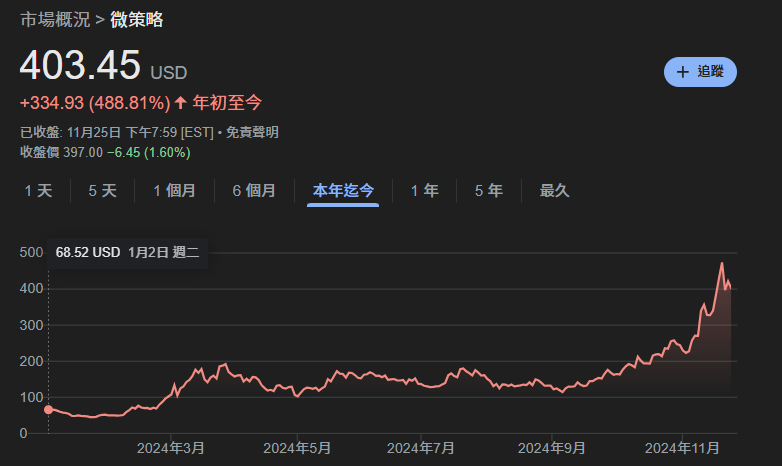
Up nearly 500% year-to-date, outperforming Bitcoin by a wide margin.
 Navigating Web3 tides with focused insights
It's widely known that Michael Saylor, CEO of MicroStrategy, is a fervent believer in Bitcoin, continuously accumulating the asset regardless of bull or bear markets. Following Trump's election victory, Bitcoin surged toward the $100,000 mark, and MicroStrategy—holding 386,000 Bitcoins—has seen its stock price rise sharply, gaining approximately 500% year-to-date compared to Bitcoin’s 121%.
How does MicroStrategy's strategy work? Does the stock still have room to grow? Is it a leveraged version of Bitcoin, or the next Luna of this cycle? Let WOO X Research break it down for you!
What strategy does MicroStrategy use to buy Bitcoin?
Most people today associate MicroStrategy primarily with Bitcoin purchases. However, MicroStrategy is actually a technology company founded back in 1989, originally providing data analytics solutions to help enterprises analyze information and support decision-making.
In August 2020, CEO Michael Saylor recognized Bitcoin’s value, viewing it as a scarce digital asset with long-term appreciation potential—capable of hedging against inflation and preserving wealth—and converted $250 million of the company’s reserves into Bitcoin. This marked the beginning of MicroStrategy’s aggressive Bitcoin accumulation.
As of November 2024, MicroStrategy holds approximately 386,700 Bitcoins, representing about 1.8% of the total global Bitcoin supply.
How did they achieve this?
MicroStrategy issues debt to purchase Bitcoin:
-
The company raises capital by issuing bonds (e.g., convertible bonds), then uses these funds to buy Bitcoin.
-
This marks the starting point of the strategy—using leverage to increase exposure to Bitcoin holdings.
Rising Bitcoin prices boost MicroStrategy’s market capitalization:
-
As Bitcoin’s price increases, so does the value of MicroStrategy’s assets (its large Bitcoin holdings), driving growth in the company’s stock market cap.
Higher market cap increases stock weight in indices:
-
Increased market cap raises MicroStrategy’s weighting in financial indices such as the S&P 500 or NASDAQ.
-
This forces more index-tracking funds to include MicroStrategy shares in their portfolios, further pushing up the stock price.
MicroStrategy issues stock to buy more Bitcoin:
-
With a higher market cap, MicroStrategy leverages strong investor demand for its stock to issue new shares at a premium, sells them, and uses the proceeds to purchase additional Bitcoin.
Bitcoin price rises again, further boosting market cap:
-
The newly acquired Bitcoin increases in value as prices rise, further enhancing the company’s asset value and market cap.
-
Higher market cap reinforces investor confidence and attractiveness in the stock.
MicroStrategy issues stock again—repeating the cycle:
-
Using the increased market cap, MicroStrategy repeats the process of issuing stock and buying Bitcoin, creating a self-reinforcing "flywheel effect."
The key lies in initiating this positive feedback loop, turning Bitcoin and MicroStrategy’s market cap into a perpetual upward engine. A deeper dive reveals the elegance of this model.
Currently, MicroStrategy has five outstanding convertible bonds totaling $4.25 billion in principal, maturing between 2027 and 2032—long-term debt obligations, most of which are zero-coupon bonds. This means no principal repayment is required before maturity, significantly reducing default risk.
On the equity side, since launching its Bitcoin strategy, MicroStrategy has announced five follow-on stock offerings, raising nearly $4.4 billion in total.
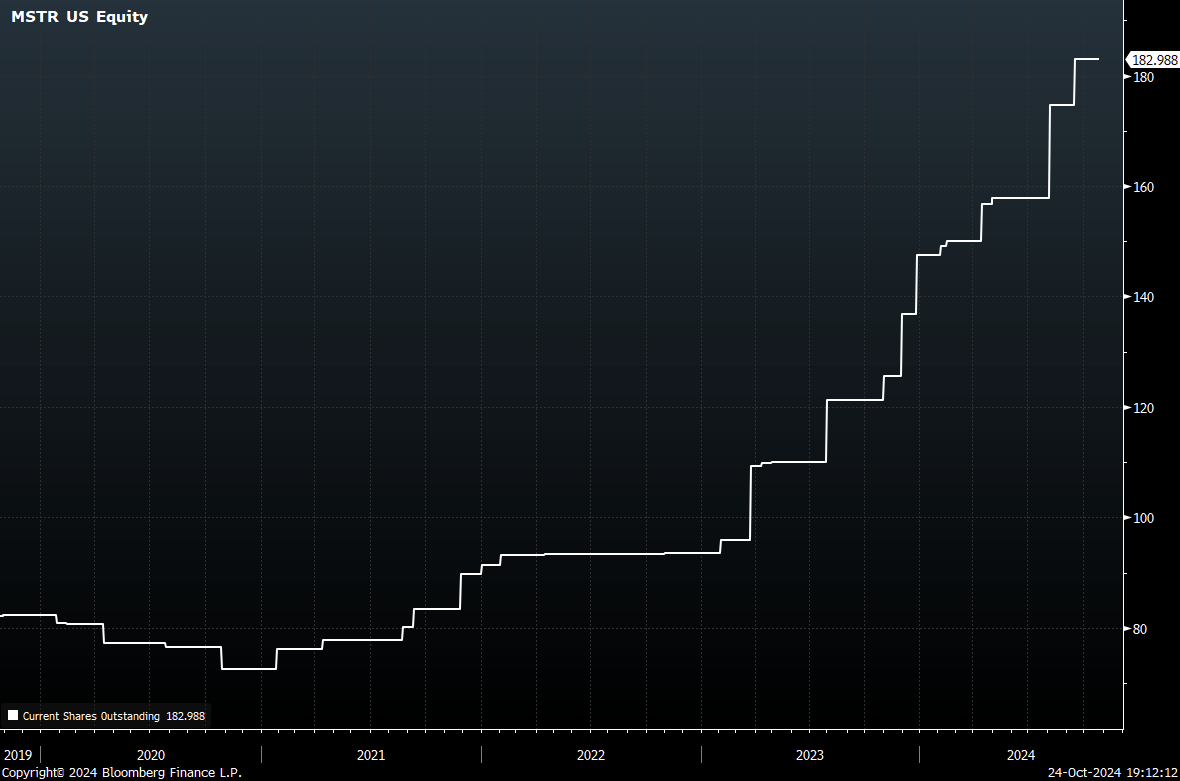
Source: Bloomberg
If Bitcoin price drops, will MicroStrategy face liquidation?
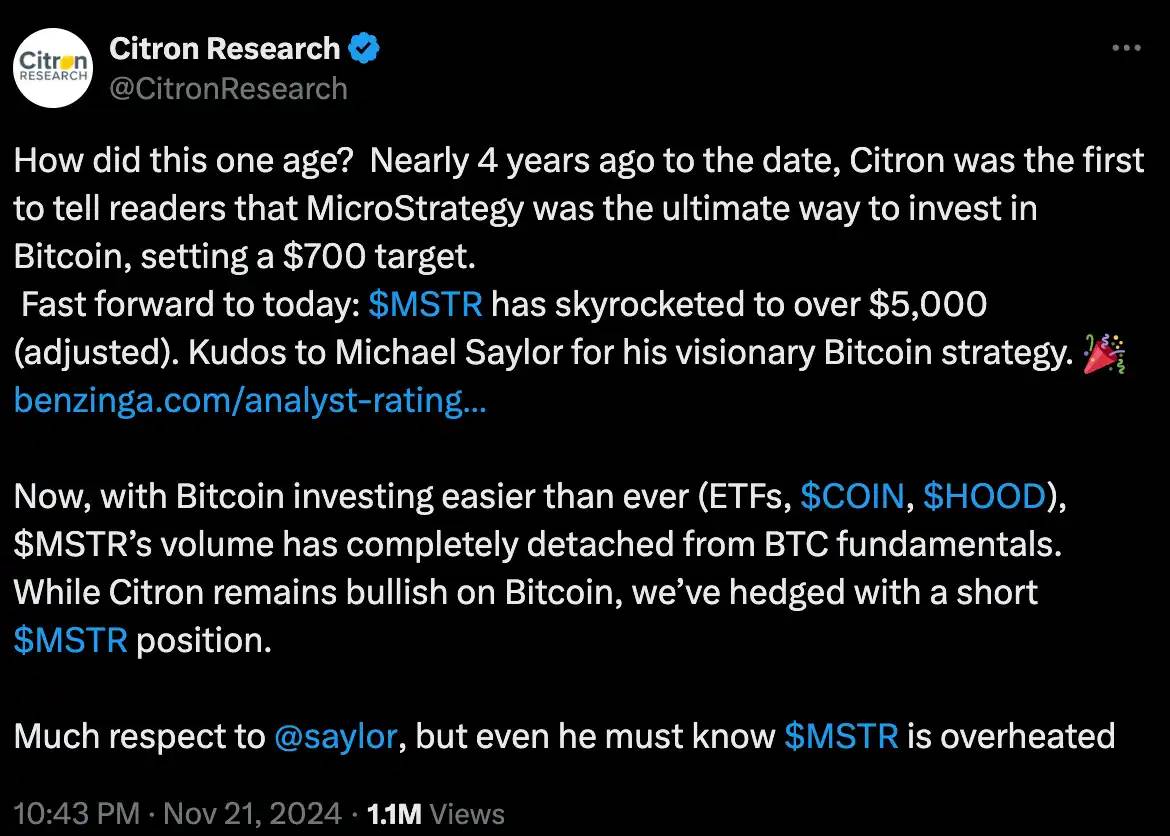
On November 21, prominent short-selling firm Citron Research stated: "While we remain bullish on Bitcoin, we’ve hedged our position by shorting MSTR. We deeply respect Saylor, but even he must recognize that MSTR is overheated."
Is Citron’s concern justified?
The flywheel design inevitably draws comparisons to Luna/UST, where two assets propped each other up in a rapid ascent. This raises concerns: if one asset falls, could it trigger a cascading liquidation spiral?
However, MicroStrategy’s model differs significantly from Luna:
-
Low debt ratio: MicroStrategy currently has a market cap of around $75 billion, with $4.25 billion in bonds—meaning debt accounts for a small portion of its overall capital structure, with maturities stretching from 2027 to 2032.
-
No intention to sell Bitcoin: Prominent KOL @TheFlowHorse recently tweeted that if Michael Saylor ever sold Bitcoin, it would be “the greatest trade in history.” Saylor responded clearly: he will not sell any Bitcoin.
This commitment ensures the sustainability of MicroStrategy’s “premium stock issuance” strategy.

-
Premium returns to 2021 levels: The chart below shows that even during the 2022 bear market, MicroStrategy maintained a premium valuation without breaking below parity.
The green line is now surging rapidly, indicating renewed market confidence in MicroStrategy’s Bitcoin strategy, returning to the levels seen during the 2021 bull run.
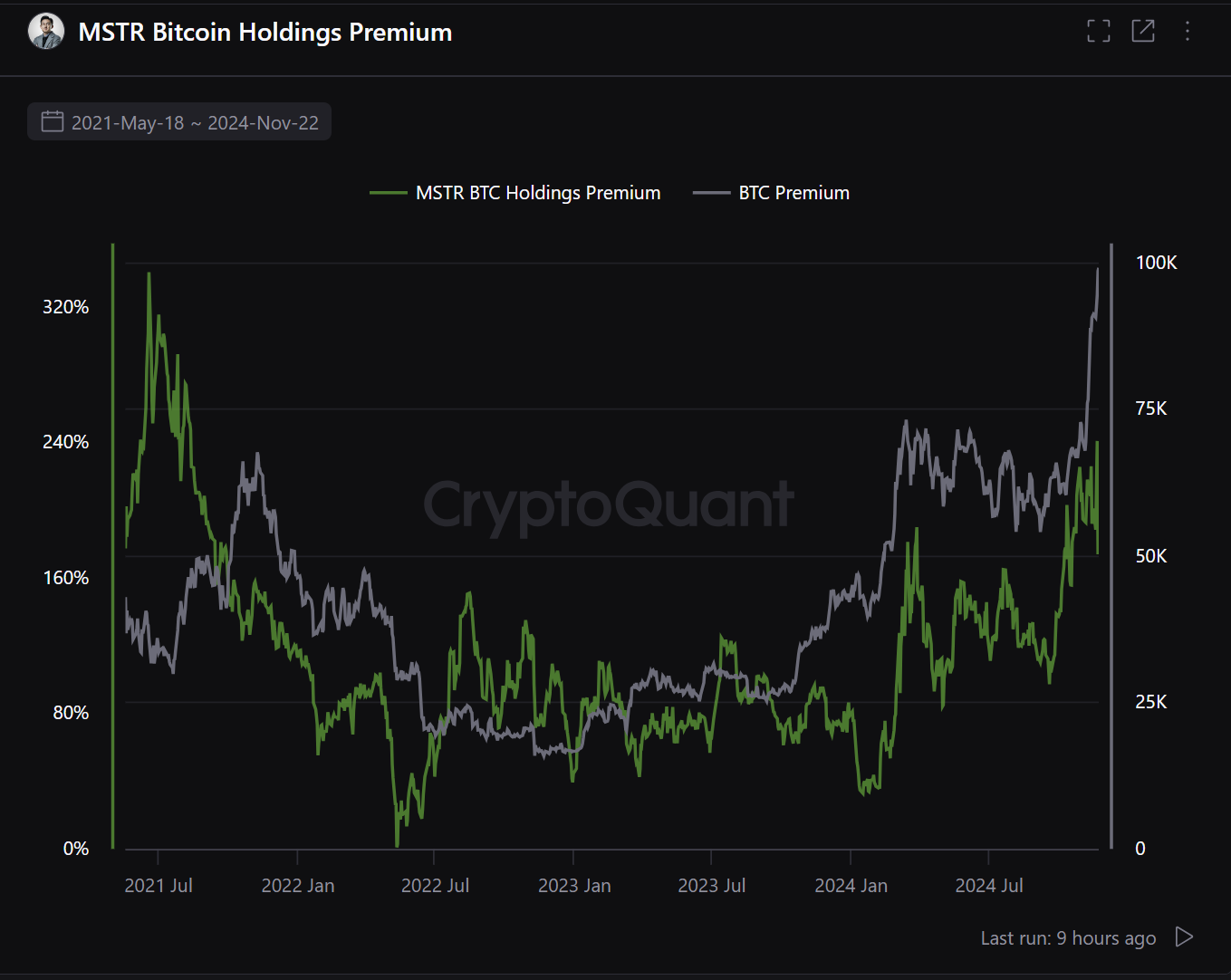
Source: CryptoQuant
The likelihood of MicroStrategy being forced to sell Bitcoin in a market crash—triggering a chain reaction of stock and crypto sell-offs—is very low. Its leverage level isn’t as extreme as it may seem.
Conclusion: MicroStrategy’s success sparks a Web2 corporate BTC accumulation trend
MicroStrategy’s successful Bitcoin treasury strategy has inspired numerous other companies to follow suit, including:
-
RUMBLE: A video-sharing platform that announced plans to allocate up to $20 million in Bitcoin as corporate reserves
-
Interactive Strength: A fitness equipment company announcing $5 million worth of Bitcoin purchases for reserves
-
Hoth Therapeutics: A biopharmaceutical firm announcing $1 million in Bitcoin reserves
There are many more examples. An increasing number of small-cap companies are attempting to replicate MicroStrategy’s successful model. However, most are chasing short-term hype. First, the strategy's success relies heavily on access to capital; second, smaller firms adopting this approach often face greater investor skepticism and regulatory scrutiny.
Nevertheless, Bitcoin remains the ultimate winner.
Join TechFlow official community to stay tuned
Telegram:https://t.me/TechFlowDaily
X (Twitter):https://x.com/TechFlowPost
X (Twitter) EN:https://x.com/BlockFlow_News
 @WOOXResearch











