Decoding the Hype Opportunity of Crypto x AI: Finding the Overlapping Ground Within Two "Impossible Triangles"
TechFlow Selected TechFlow Selected
Decoding the Hype Opportunity of Crypto x AI: Finding the Overlapping Ground Within Two "Impossible Triangles"
The AI-blockchain synergy matrix will become an important tool for evaluating projects, effectively helping decision-makers distinguish between genuinely impactful innovations and meaningless noise.
 Navigating Web3 tides with focused insights
Author: Swayam
Translation: TechFlow
The rapid advancement of artificial intelligence (AI) has concentrated unprecedented computational power, data resources, and algorithmic expertise in the hands of a few large technology companies. However, as AI systems become increasingly embedded in society, questions about accessibility, transparency, and control have moved to the center of technological and policy debates. In this context, the integration of blockchain technology with AI offers a promising alternative path—one that could potentially redefine how AI systems are developed, deployed, scaled, and governed.
We do not aim to completely replace existing AI infrastructure. Instead, through analysis, we seek to explore the unique advantages that decentralized approaches may offer in specific use cases. At the same time, we acknowledge that traditional centralized systems may remain more practical in certain scenarios.
The following key questions guide our research:
-
Do the core characteristics of decentralized systems—such as transparency and censorship resistance—complement modern AI system requirements like efficiency and scalability, or do they conflict?
-
In which stages of AI development—from data collection to model training and inference—can blockchain technology provide meaningful improvements?
-
What technical and economic trade-offs arise at different stages in the design of decentralized AI systems?
Current Limitations in the AI Technology Stack
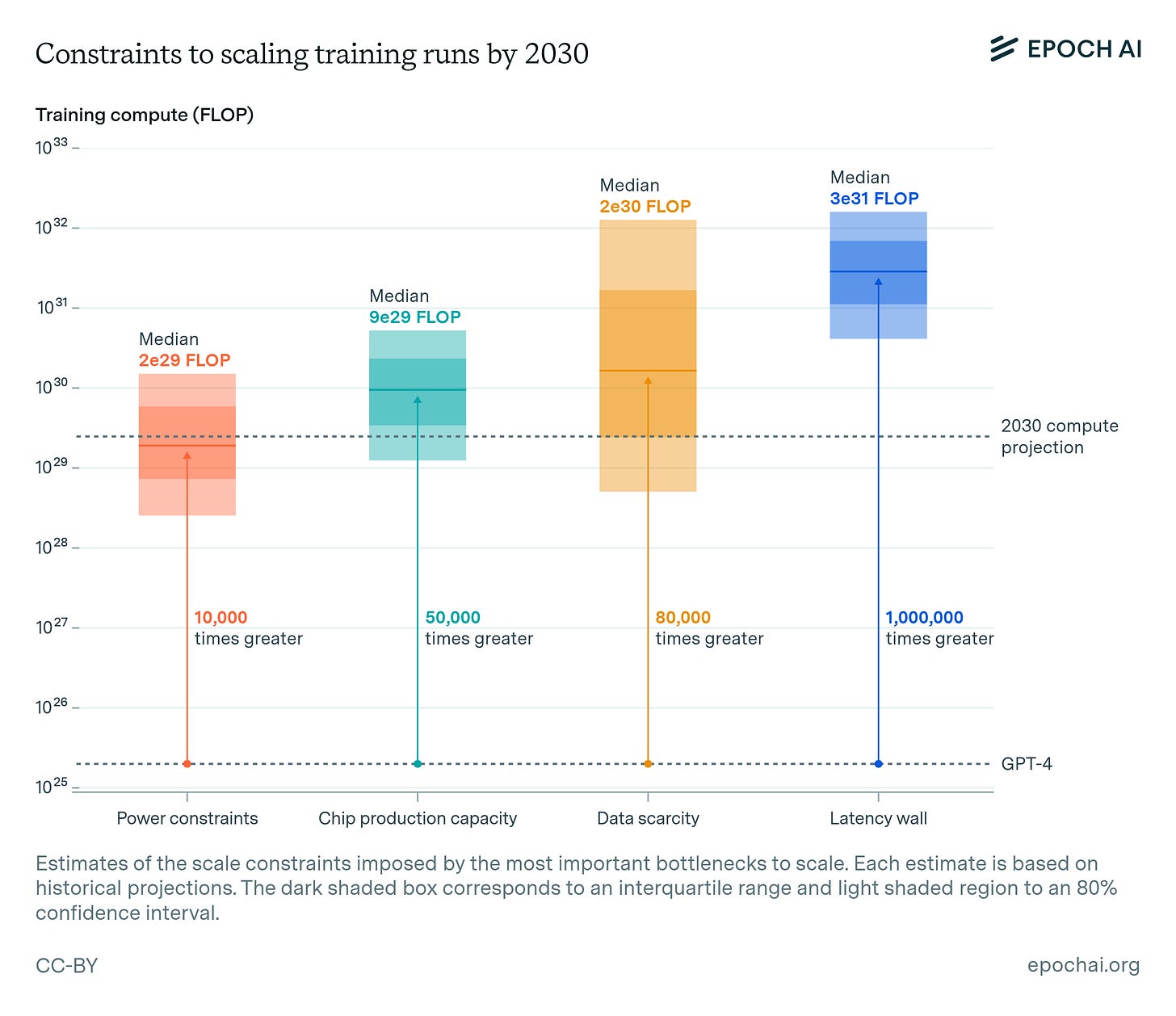
The Epoch AI team has made significant contributions in analyzing the limitations of the current AI technology stack. Their research details the major bottlenecks that may constrain AI training compute scaling through 2030, using floating-point operations per second (FLoPs) as the primary metric for measuring computational performance.
The study shows that AI training compute scaling could be constrained by multiple factors, including insufficient power supply, chip manufacturing bottlenecks, data scarcity, and network latency. Each of these sets different ceilings on achievable compute capacity, with latency considered the most difficult theoretical barrier to overcome.
The chart emphasizes the need for advances in hardware, energy efficiency, unlocking data captured on edge devices, and networking to support future AI growth.
-
Power Constraints (Performance):
-
Feasibility of Scaling Power Infrastructure (2030 Projection): Data center campuses are projected to reach capacities of 1–5 gigawatts (GW) by 2030. However, achieving this will require massive investments in power infrastructure and overcoming logistical and regulatory hurdles.
-
Limited by energy supply and electrical infrastructure, global compute capacity is expected to scale up to 10,000 times current levels.
-
-
Chip Production Capacity (Verifiability):
-
Production of advanced computing chips (e.g., NVIDIA H100, Google TPU v5) is currently constrained by packaging technologies such as TSMC’s CoWoS, directly limiting the availability and scalability of verifiable computing.
-
Chip manufacturing and supply chain bottlenecks remain significant barriers, but could still allow for up to 50,000x growth in compute capacity.
-
Additionally, advanced chips enable secure enclaves or Trusted Execution Environments (TEEs) on edge devices. These technologies are critical not only for verifying computation results but also for protecting sensitive data privacy during processing.
-
-
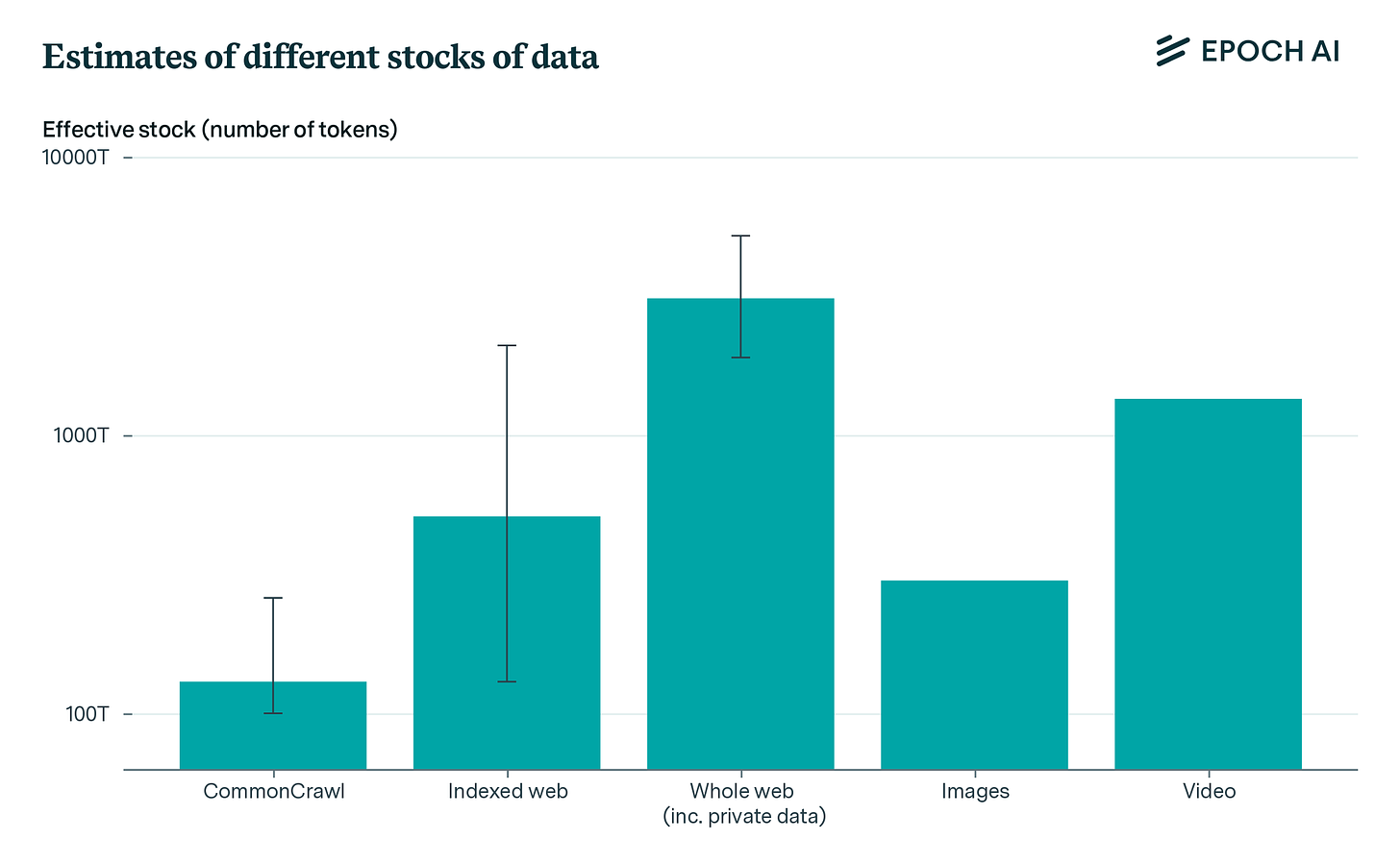
Data Scarcity (Privacy):
-
Latency Barrier (Performance):
-
Inherent Latency Limits in Model Training: As AI models grow larger, the sequential nature of computation significantly increases the time required for each forward and backward pass. This latency is a fundamental constraint in model training that directly impacts training speed.
-
Challenges in Scaling Batch Size: A common approach to mitigate latency is increasing batch size to process more data in parallel. However, practical limits exist, such as memory capacity constraints and diminishing returns in model convergence as batch size grows, making it harder to offset latency through batching alone.
-
Foundations
The Decentralized AI Triangle
The various constraints facing current AI—such as data scarcity, compute bottlenecks, latency, and chip production—collectively form the "Decentralized AI Triangle." This framework seeks to balance privacy, verifiability, and performance—three essential attributes for ensuring the effectiveness, trustworthiness, and scalability of decentralized AI systems.
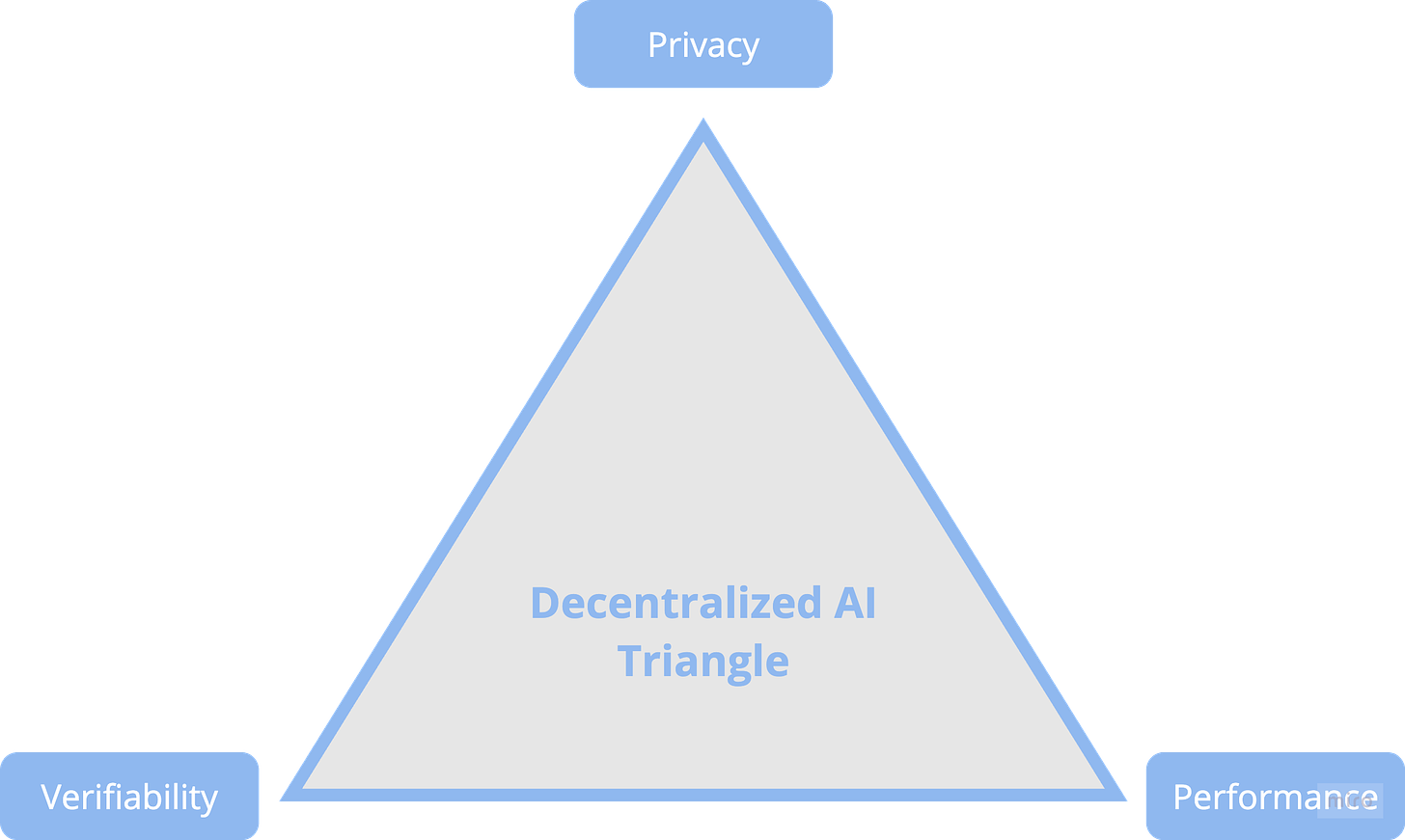
The table below provides a detailed analysis of the key trade-offs among privacy, verifiability, and performance, exploring their definitions, enabling technologies, and associated challenges:
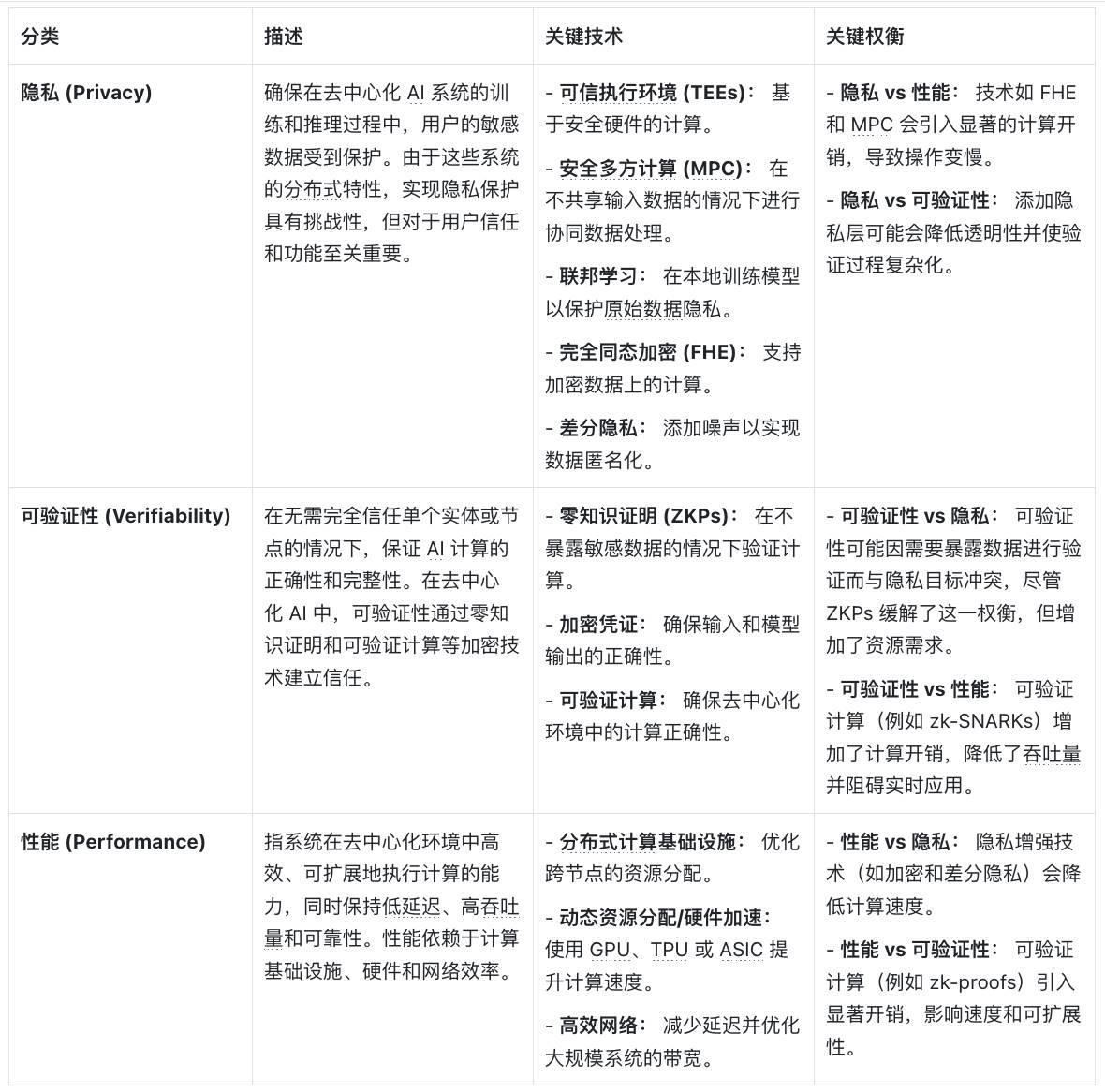
Privacy: Protecting sensitive data during AI training and inference is crucial. Key technologies include Trusted Execution Environments (TEEs), Multi-Party Computation (MPC), Federated Learning, Fully Homomorphic Encryption (FHE), and Differential Privacy. While effective, these techniques introduce performance overheads, reduce transparency (impacting verifiability), and face scalability limitations.
Verifiability: Ensuring computational correctness and integrity relies on Zero-Knowledge Proofs (ZKPs), cryptographic credentials, and verifiable computing. However, balancing verifiability with privacy and performance often requires additional resources and time, potentially increasing computational latency.
Performance: Efficient execution and large-scale deployment of AI computations depend on distributed computing infrastructure, hardware acceleration, and high-speed networking. However, privacy-enhancing techniques slow down computation, while verifiable computing introduces additional overhead.
The Blockchain Trilemma:
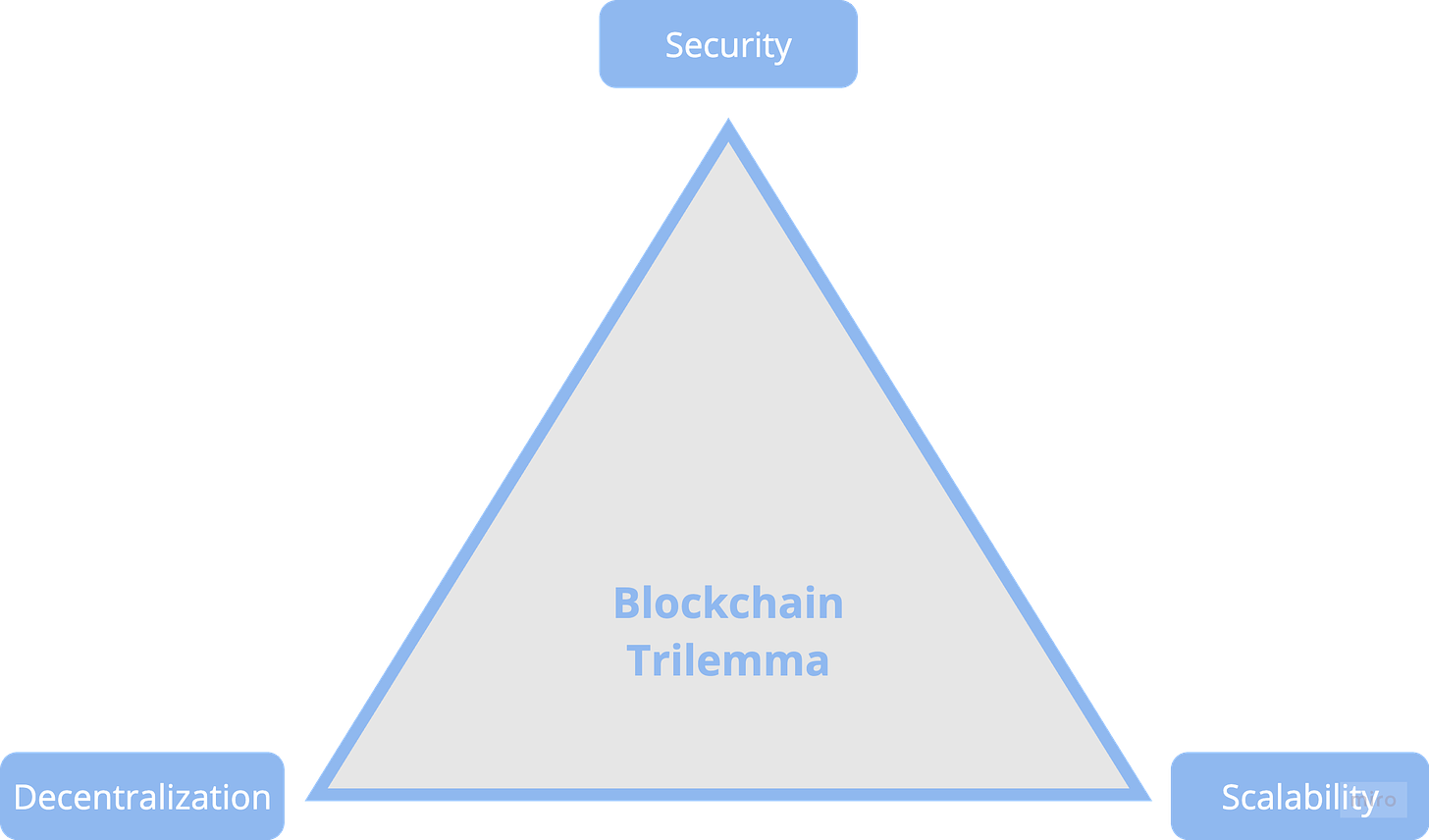
The core challenge in blockchain—the trilemma—requires every blockchain system to make trade-offs among three properties:
-
Decentralization: Distributing the network across many independent nodes to prevent any single entity from controlling the system.
-
Security: Protecting the network from attacks and ensuring data integrity, typically requiring robust validation and consensus mechanisms.
-
Scalability: Processing large volumes of transactions quickly and cost-effectively, often achieved by sacrificing decentralization (fewer nodes) or security (weaker validation).
For example, Ethereum prioritizes decentralization and security, resulting in relatively slow transaction processing speeds. For deeper insights into these architectural trade-offs, see related literature.
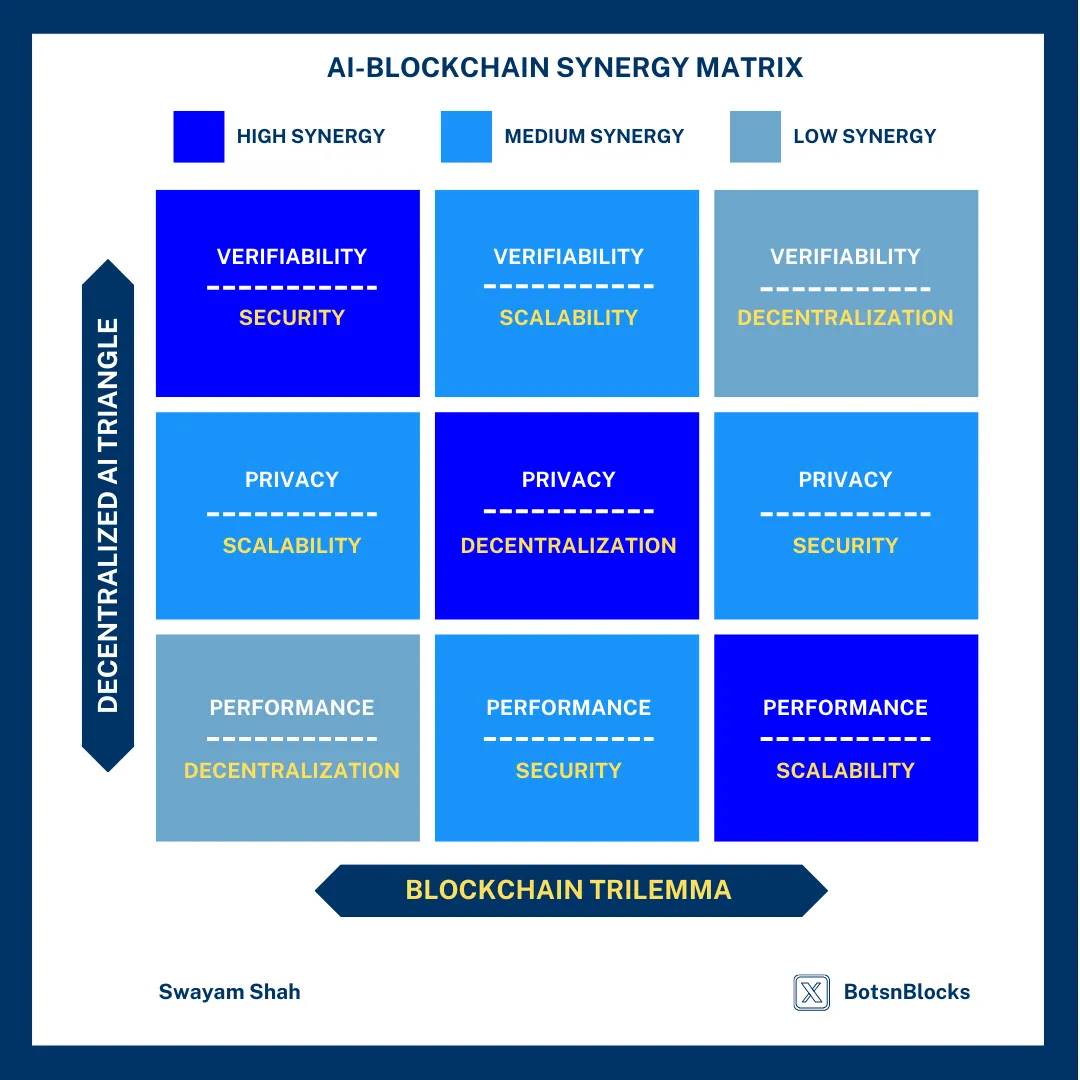
AI-Blockchain Synergy Analysis Matrix (3x3)
The convergence of AI and blockchain involves complex trade-offs and opportunities. This matrix illustrates where the two technologies may clash, align harmoniously, or even amplify each other's weaknesses.
How the Synergy Matrix Works
Synergy strength reflects the compatibility and mutual enhancement between blockchain and AI attributes in specific domains. It depends on how both technologies jointly address challenges and augment each other’s capabilities. For instance, in data privacy, blockchain’s immutability combined with AI’s data processing power can yield novel solutions.

How the Synergy Matrix Works
Example 1: Performance + Decentralization (Weak Synergy)
In decentralized networks like Bitcoin or Ethereum, performance is often constrained by node resource variability, high communication latency, transaction costs, and complex consensus mechanisms. For AI applications requiring low latency and high throughput—such as real-time AI inference or large-scale model training—these networks struggle to deliver sufficient speed and computational reliability, falling short of high-performance demands.
Example 2: Privacy + Decentralization (Strong Synergy)
Privacy-preserving AI techniques like Federated Learning can effectively leverage blockchain’s decentralization to enable collaborative learning while safeguarding user data. For example, SoraChain AI offers a solution using blockchain-supported federated learning to ensure data ownership remains with users. Data owners can contribute high-quality data for model training without compromising privacy, achieving a win-win for privacy and collaboration.
The matrix aims to help the industry clearly understand the intersection points of AI and blockchain, guiding innovators and investors toward viable directions, exploring high-potential areas, and avoiding speculative projects.
AI-Blockchain Synergy Matrix
The matrix axes represent different attributes: one axis covers the three core properties of decentralized AI systems—verifiability, privacy, and performance; the other represents the blockchain trilemma—security, scalability, and decentralization. Where these attributes intersect, they generate a spectrum of synergies ranging from strong alignment to potential conflict.
For example, combining verifiability with security (high synergy) enables powerful systems to prove the correctness and integrity of AI computations. But when performance demands clash with decentralization (low synergy), the overhead of distributed systems significantly reduces efficiency. Some combinations—like privacy and scalability—fall in the middle, offering potential but facing complex technical hurdles.
Why does this matter?
-
Strategic Compass: The matrix provides decision-makers, researchers, and developers with clear direction, helping them focus on high-synergy areas—such as using federated learning for data privacy or decentralized computing for scalable AI training.
-
Focusing Impactful Innovation and Resource Allocation: Understanding synergy distribution (e.g., security + verifiability, privacy + decentralization) helps stakeholders concentrate resources on high-value areas, avoiding waste on weak or impractical integrations.
-
Guiding Ecosystem Evolution: As AI and blockchain evolve, the matrix serves as a dynamic tool to evaluate emerging projects, ensuring they meet real needs rather than fueling hype cycles.
The table below summarizes these attribute combinations by synergy strength (from strong to weak), explaining how they function in decentralized AI systems. It also includes examples of innovative projects demonstrating real-world applications. This allows readers to intuitively grasp the intersection points of blockchain and AI, identifying impactful areas while avoiding overhyped or technically unfeasible directions.

AI-Blockchain Synergy Matrix: Classifying Key Intersection Points by Synergy Strength
Conclusion
The convergence of blockchain and AI holds transformative potential, but its future requires clear direction and focused effort. Truly innovative projects are shaping the future of decentralized intelligence by addressing critical challenges in data privacy, scalability, and trust. For example, federated learning (privacy + decentralization) enables collaboration while protecting user data; distributed computing and training (performance + scalability) improve AI system efficiency; and zkML (zero-knowledge machine learning, verifiability + security) ensures trustworthy AI computation.
At the same time, we must approach this space with caution. Many so-called AI agents are merely superficial wrappers around existing models, offering limited functionality and shallow integration with blockchain. Real breakthroughs will come from projects that fully leverage the strengths of both blockchain and AI to solve tangible problems—not from those chasing market hype.
Looking ahead, the AI-Blockchain Synergy Matrix will serve as a vital tool for evaluating projects, helping decision-makers distinguish impactful innovation from meaningless noise.
The next decade will belong to projects that combine blockchain’s reliability with AI’s transformative power to solve real-world problems. Energy-efficient model training will drastically reduce AI’s energy footprint; privacy-preserving collaboration will create safer environments for data sharing; and scalable AI governance will enable broader, more efficient intelligent systems. The industry must focus on these critical areas to truly unlock the future of decentralized intelligence.

Join TechFlow official community to stay tuned
Telegram:https://t.me/TechFlowDaily
X (Twitter):https://x.com/TechFlowPost
X (Twitter) EN:https://x.com/BlockFlow_News
 @BotsnBlocks