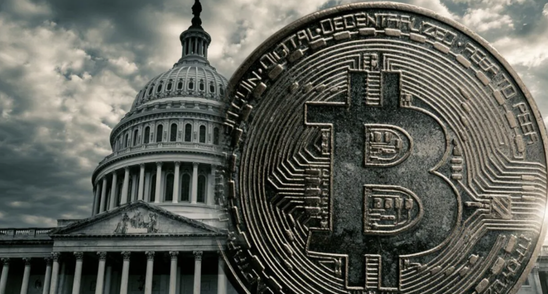
Arthur Hayes: Cash Out When You Should — Bitcoin to Reach $250,000 by End of 2025
TechFlow Selected TechFlow Selected
Arthur Hayes: Cash Out When You Should — Bitcoin to Reach $250,000 by End of 2025
With the potential return of the Trump administration, the United States' loose monetary policy could trigger a depreciation of the dollar, thereby driving up the prices of Bitcoin and other crypto assets.
 Navigating Web3 tides with focused insights
Compiled by Wu Talk Blockchain
In a recent exclusive interview on the podcast Alpha First, Arthur Hayes shared his bold predictions for the future of the cryptocurrency market. He believes that with a potential Trump administration returning to power, loose U.S. monetary policy will trigger a depreciation of the dollar, thereby driving up prices for Bitcoin and other crypto assets. He also discussed global inflation, sovereign monetary policies, and how these factors could benefit not only Bitcoin but also meme coins and other digital assets. Hayes emphasized that investors must remain cautious during bull markets, avoiding greed-driven decisions and staying aware of market risks. Additionally, he outlined future market trends and forecasted that Bitcoin could reach a milestone of $250,000 by 2025.
Note: The views expressed by guests do not represent those of Wu Talk Blockchain. Wu Talk does not endorse any products or tokens. Readers should strictly comply with local laws and regulations.
Listen to the full podcast (YouTube)
Trump’s Economic Policies Will Weaken the Dollar and Benefit Bitcoin
Dreamer: It's been just a few weeks since the election, and market prices have changed significantly. What can we expect in the next 12 months? Do you have any vision you'd like to share? What should we pay attention to within the broader landscape of crypto predictions?
Arthur:
From my perspective, the market is correctly priced. Investors anticipate that Trump and his new cabinet will print massive amounts of money in the U.S. One of their campaign platforms is to bring manufacturing and industrial enterprises back to America through a weak-dollar policy. Then they’ll inject large volumes of credit via banks, increasing overall credit supply in the U.S. economy to boost production and raise wages—ultimately fueling inflation.
The ultimate losers will be those holding dollars or U.S. Treasuries. Meanwhile, assets with fixed supplies—like Bitcoin—will perform exceptionally well. We’re already seeing this trend, right?
I’ve charted some data comparing total U.S. bank credit against Bitcoin performance. Right now, Bitcoin is clearly leading. This suggests that if Trump returns to office, his plan is already evident: weaken the dollar, stimulate markets with credit, get people back to work, and restore American productive capacity. And I believe he will follow through on this agenda.
Could Bitcoin Reach $1 Million?
Scott: A follow-up question about Trump. You previously made a bold prediction that if Trump returns to power, Bitcoin could hit $1 million. Do you still think this will unfold as expected? Are you still confident?
Arthur:
I’m very confident—but unsure whether it will happen in the short term. Actually, this trend began when Trump was first elected in 2016. Back then, he initiated a trade war with China, which the Democratic Party and the Biden administration continued afterward. So now, this confrontation has become deeply embedded in American political culture.
America previously offshored much of its manufacturing and productive capacity to China and Asia. Those countries gained competitive advantages by weakening their currencies, while American workers suffered. Therefore, the U.S. must bring these industries back home. To achieve this, trillions of dollars in credit must be allocated to corporations so they can profitably operate domestically.
Biden has already passed the CHIPS Act, infrastructure bills, and green energy initiatives—all requiring massive funding. This trend will continue.
Global Economic Policies Will Drive Inflation and Favor Crypto Assets
Dreamer: People in crypto are often the most disruptive thinkers. There’s still more to discuss regarding Trump. Domestically, your outlook makes sense and gives many reason for optimism. But looking globally, how might the election affect foreign policy, wars, and trade? For Asia, certain policies may cause concern. Could these pose negative implications for the economy or crypto? Or should we not worry too much?
Arthur:
I believe fundamentally, every country is now pursuing a “nation-first” policy. The U.S. champions “America First,” while China promotes “common prosperity,” aiming to return wealth to rural areas and low-income populations. Thus, the Chinese government suppressed the real estate bubble and is now stimulating the economy again through monetary easing.
Japan is bringing capital back home—a move that will boost its economy, though it requires more credit to prevent bank failures. Europe, having cut off cheap Russian energy and switched to expensive American alternatives, has placed itself at a disadvantage. Yet it still needs to support corporate operations, so it too will resort to stimulus measures.
Every nation is striving to protect its own citizens—this means revitalizing domestic industry and boosting demand for goods. This global trend will drive inflation higher and further undermine long-term bond yields.
Under such conditions, cryptocurrencies will thrive. Though national policies appear different, they all aim at the same goal: prioritizing the welfare of their own people. This requires increased domestic credit allocation and expanded supply chains to support production and job creation. This worldwide shift is extremely bullish for Bitcoin and other crypto assets.
Will Bitcoin’s Rally Lift Other Cryptos?
Dreamer: It seems like a great opportunity for crypto, especially Bitcoin. But what about other cryptocurrencies? Do you think they’ll ride the wave of Bitcoin’s rise? Are you a Bitcoin maximalist who believes only Bitcoin has a future, while others won’t follow? Or do you see opportunities in projects like Ethereum? For instance, NFTs, meme coins, and DeFi—these trends have risen and fallen before. Will they benefit from the broader market surge? Or is the focus mainly on institutional investors flocking solely to Bitcoin?
Arthur:
I don't really track institutional movements because everyone always talks about them entering—but institutions have complex investment logic and credit considerations; they buy or don’t buy for various reasons. From a retail investor’s standpoint, when Bitcoin rises, everyone’s most important asset becomes Bitcoin. When my wealth in Bitcoin grows, I don’t want to go back to fiat—it doesn’t make sense, right? And I won’t just hold Bitcoin. I want to invest in other crypto assets that could outperform Bitcoin.
So what else can we do? We turn to meme coins, new Layer 1 blockchains, Layer 2 projects, NFTs, gaming, and so on. Bitcoin leads the market, and then capital gradually flows into other categories. Ultimately, the goal is to earn more crypto—not convert back to fiat. I truly believe fiat will eventually go to zero.
Scott: Yes, I think people try to capture quick gains and even become addicted to rapid growth. After all, this is one of the fastest-growing asset classes. If someone profits from Bitcoin, many won’t cash out to fiat—they’ll rotate into other promising crypto assets. You mentioned that meme coins in this cycle have surprised everyone, just like NFTs did in the last cycle. I heard you hold some meme coins—is this segment interesting to you? How are meme coins performing this cycle? Can they easily reach multi-billion dollar valuations?
Arthur:
It’s definitely fascinating—I love it. These phenomena are fun and whimsical. Take that squirrel meme coin, for example—it went from zero to $2 billion in about nine days. All because the U.S. government executed a squirrel, suddenly there’s a $2 billion meme coin trading globally. This shows how quickly our global culture reacts to current events and turns them into playful, engaging narratives via meme coins. Now, everyone knows about the squirrel “executed” by the U.S. government—or New York State—and thus a meme coin emerged around it.
It’s both entertaining and reflective of reality. There might even be an underlying subculture expressing dissatisfaction with the government, particularly its inflationary policies. Meme coins have become a fast-moving attention economy.
The Rapid Rise of Meme Coins Reflects Global Cultural Responsiveness
Dreamer: We also have so-called "blue-chip" meme coins—ones tied to current events, like you just mentioned. I think these will fluctuate, but some meme coins have stabilized, like Dogecoin. Some say it could reach $1—do you think that’s possible?
Arthur:
I think it’s possible. It’s fascinating, especially when figures like government efficiency departments or a new “Elon” confirm something—that act itself becomes a classic meme. I wish I had bought some earlier because these memes are just too good, too entertaining. Elon is an exceptional meme creator—possibly one of the greatest in history. While I have questions about his business models, in terms of meme artistry, he’s undoubtedly a genius. So yes, Dogecoin could indeed reach $1.
However, I feel that once people begin realizing the huge gap between government propaganda and actual outcomes, there will be a “fall from grace” moment. People may reevaluate the meaning behind these memes and the messages they convey. That shift will be very interesting to watch.
Advice for Newcomers: Stay Rational in Bull Markets and Cash Out Timely
Dreamer: Today, technology makes it easier than ever to launch new Layer 1 projects or meme coins. I believe we’ll see more creativity flooding into this space, along with growing professionalization. Moreover, as you pointed out, the momentum driven by elections is very strong. Looking back—for example, at the rise of DeFi and NFTs, and other past hype cycles—the excitement felt similar. Are there lessons or cautionary tales worth sharing? Especially for those experiencing their first bull market, what advice would you give? How can one avoid repeating mistakes in this “beautiful yet brutal world”?
Arthur:
First, no one can profit from the market forever. Everyone knows you can make money quickly in a bull market, but the key is preserving those gains. For instance, the meme coin you’re holding today might cease to exist in one or two months. Its market cap could drop from $200 million to $5 million—such drastic changes are unpredictable.
Statistics show only about 0.01% of meme coins ever surpass a $500 million market cap. Most traders ultimately lose money. Many see massive paper profits, but they get caught in the emotion of “I can make even more,” and end up losing everything they’ve gained.
So if you’ve earned life-changing money, take some off the table. The market will always offer new opportunities. Maybe take a step back, go on vacation, and reassess later. Staying rational is crucial.
Are There Potential Risks or Catalysts in the Market?
Scott: In such an environment, people easily experience rollercoaster-like volatility. As you said, some assets may vanish within months. Some truly earn life-changing money in days—like with the meme coin Peanut. Even coins reaching $2 billion can crash rapidly. So your point stands: timely profit-taking is essential, whether with meme coins or Bitcoin. You need to gradually exit portions of your positions. As you said, taking profits never results in a loss.
Dreamer: Are there any “black swan” events or hidden catalysts that could disrupt the market? Looking back over recent years—events like the FTX collapse or other unforeseen shocks—are there particular trends or entities we should remain vigilant about? Under a new Trump administration, has the market cleared away uncertainties and become simpler for development?
Arthur:
I think much has already been cleaned up. Many lost heavily in FTX, Genesis, Three Arrows, and Luna. So perhaps Bitcoin will already be at $100,000 by now (maybe that’s the price when this interview publishes). Long-term, when traditional finance sees crypto prices rising, they’ll want to participate—through venture capital, for example.
Many VC firms have raised substantial funds, similar to the last cycle, and they need major companies or significant projects to invest in. Early in the market cycle, capital is usually well-allocated and put to good use. But as the bull market deepens, money may flood into “hot sectors” simply because investors feel pressured to deploy capital. In such cases, business models built on perpetual price increases emerge, accumulating risk until market imbalance occurs.
I don’t yet know exactly which sector will face this, but we haven’t reached the “overheated” stage. Particularly as traditional financial capital enters, certain areas may experience investment surges—this is where investors must stay alert, to avoid being caught in a shakeout when market prices diverge sharply from fundamentals.
Dreamer: As you speak, I’m reminded that after many successful trades, people grow bored and crave that fast-profit thrill again. Currently, many Bitcoin Layer 2 protocols are announcing yield programs—but where is that yield actually coming from? We don’t want to repeat past mistakes of promising high returns without real foundations. Others may chase newer trends for bigger gains, gradually increasing risk. So for those who lived through the last bull run, I hope they’ve learned lessons. And for newcomers, I hope they learn from others’ experiences.
A Casual Chat About Skiing
This interview has been fantastic. We truly appreciate your time. Tonight there’s an IFC event—an alpha showdown—we wonder if you or others might attend. It’s a global gathering, and we’d love to invite you in the future. I believe you’d enjoy such events and meeting influential figures in the crypto space. Now, I’ll pass the mic to Scott to wrap things up.
Scott: Yes, thank you so much for your time, sitting down with us to answer these questions. It would be great to see you at IFC. One final light-hearted question: when you’re not doing crypto-related work, what do you do? Any hobbies? How do you relax or disconnect? Are you a foodie, hunting for new restaurants? Or do you have other ways to recharge?
Arthur:
I love skiing. Every year, I spend three to four months in the mountains, immersed in snow. During ski season, I ski eight hours a day. Aside from physical exercise and enjoying the outdoors, I hardly do anything else. It brings me great joy.
Scott: What’s your favorite skiing destination?
Arthur:
Niseko in Japan. Their powder snow is incredible—dry and light. It snows consistently every January and February. It’s truly amazing.
Scott: So you’re preparing now? Getting into shape?
Arthur:
Yes, I’m getting ready for skiing. Though the only downside of Japanese ski resorts is the lack of steep slopes—there aren’t those dramatically steep runs.
Dreamer: Salt Lake City has lake-effect snow. I live in Singapore now, but used to live in the U.S. and skied often—I’m a snowboarder.
Scott: Me too! I still ski, but I prefer snowboarding. Some places are better suited for boards.
Dreamer: Right, some spots are ideal. And you won’t have snowboarders trampling your tracks on the slopes.
Scott: That’s awesome! I haven’t skied in years, but it’s a hobby I’d love to pick up again. I’m from the Northeast U.S., grew up in New Jersey and New York—easy access to Vermont slopes. But for the past decade, I’ve lived in Houston, where skiing isn’t convenient anymore. It’s no longer just pack your gear and drive a few hours.
Scott: Hope you enjoy the rest of your time. I’d really love to experience skiing in Japan—I never realized how great the conditions are there. Definitely want to try it someday.
Bitcoin Price Predictions for Year-End and 2025
Scott: Just one specific question—what do you think Bitcoin’s price will be by the end of this year, and around this time next year?
Arthur:
I believe Bitcoin will reach $100,000 by the end of this year, and by the end of 2025, it could hit $250,000.
Scott: There you have it—the first official Alpha First forecast: Bitcoin will reach $100,000 by year-end, and $250,000 a year later. Maybe we can meet again at DevCon or other events next year to check in on this prediction. I hope it’s not just $250,000—but even higher.
Join TechFlow official community to stay tuned
Telegram:https://t.me/TechFlowDaily
X (Twitter):https://x.com/TechFlowPost
X (Twitter) EN:https://x.com/BlockFlow_News
 吴说区块链
吴说区块链