Conversation with Vitalik Buterin: The World Shouldn't Fall into an AI-Dominated Power Kingdom
TechFlow Selected TechFlow Selected
Conversation with Vitalik Buterin: The World Shouldn't Fall into an AI-Dominated Power Kingdom
Behind the two technological forces lie two conflicting technological philosophies.
 Navigating Web3 tides with focused insights
Lead Writer | Zhang Xiaojun
Editor | Yang Buding
Produced by | Tencent News "Qianwang"
Our world is being reshaped by multiple emerging technological forces.
The first is artificial intelligence, represented by OpenAI, which has become the dominant force shaping global tech discourse. The second is Web3, cryptocurrency, and blockchain technology. Over the past two years, these two forces have diverged significantly.
In November 2024, we met with Ethereum founder Vitalik Buterin, who stood on the shores of crypto and gazed across at AI. In his view, AI is quietly entering human emotions, thoughts, and even subconsciousness under a seemingly equal and harmless guise—and through this, it may build an unprecedented power center. A technological revolution is driving a "game of power" that will shape humanity’s fate.
Vitalik is the spiritual leader of Web3. The Ethereum network he founded ranks second in the industry, just behind Bitcoin. Since Bitcoin's creator Satoshi Nakamoto has never revealed himself, Vitalik has become the de facto spokesperson for the field—his personal journey adding to his legendary status.
Born in 1994, Vitalik experienced parental divorce as a child and immigrated from Russia to Canada. He dropped out of university at 19 to launch Ethereum and became one of the youngest crypto billionaires in his twenties. In China, people call him “V God.” He recently celebrated his 30th birthday.
Vitalik constantly articulates a philosophy of technology. In his view, AI and crypto represent two fundamentally different underlying philosophies. AI is more centralized and powerful, aiming to make human civilization and technology stronger; crypto, in contrast, promotes a decentralized, egalitarian survivalist philosophy. Unlike AI, which is concentrated in a few elite global strongholds, crypto’s nodes are scattered worldwide—and better suited to serve marginalized regions. As Silicon Valley investor Peter Thiel puts it: “Crypto is libertarian and AI is communist.”
“Right now, people use ChatGPT like chatting with a friend. But ten years from now, people will tell ChatGPT all their thoughts. If your AI doesn’t respect privacy, you’ll have no privacy at all—not even privacy of thought,” Vitalik said. “And if it’s centralized, that means a single big company could read your mind—that’s dangerous.”
Vitalik’s lifestyle aligns closely with the technological ideals he advocates. We met in a modest office space, scheduled for 8 a.m., but he arrived at 7:40 a.m. Alone, he carried a beige canvas tote bag patterned with cats, containing a Dell laptop he bought for distributed AI work. On his wrist was a plastic watch adorned with tiny cat motifs. This is how he moves between disparate Web3 communities.
Vitalik speaks six languages, with English, Russian, and Chinese being his strongest. Our conversation was conducted in Chinese.
He still carries a certain youthful, nerdy charm, laboring carefully to retrieve the right Chinese characters from memory to express complex technical ideas. When staff poured him a cup of tea, he repeatedly rubbed the little tag on the tea bag, folding it, setting it down, picking it up again, unfolding it, then refolding it…
If one day the ultimate AI power—or “Big Brother”—tries to destroy humanity, would your crypto kingdom come to save us?
“That’s a very complicated question,” Vitalik replied.
Below is the full transcript. (The text has been lightly edited for clarity.)
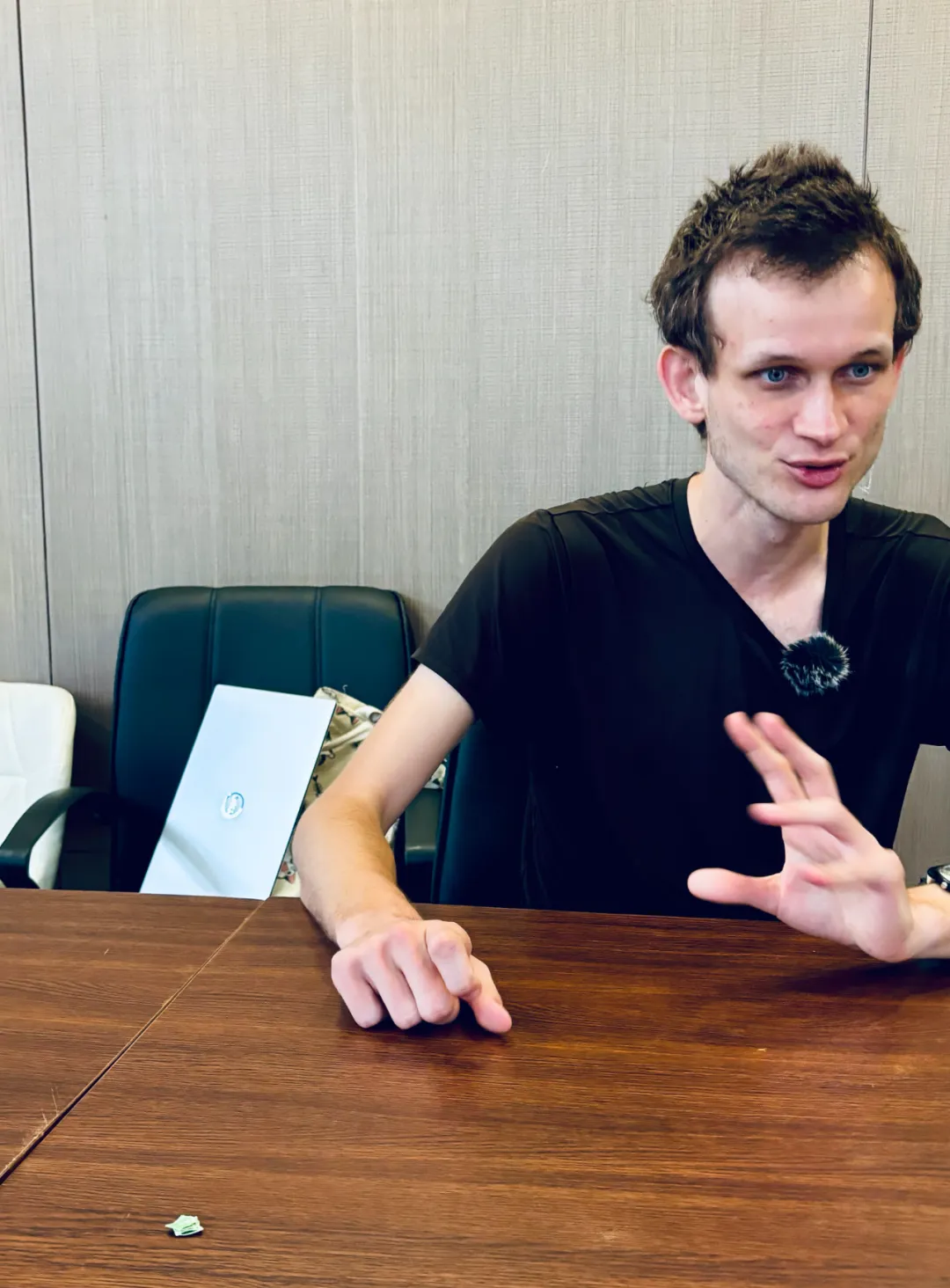
Photo by author, showing Vitalik Buterin
"LLMs Are Extremely Powerful"
Qianwang: In your blog post marking your 30th birthday, "The End of My Childhood," you wrote: "One thing that fascinates me about modern AI is that it allows us, mathematically and philosophically, to engage differently with the hidden variables guiding human interaction: AI can make 'resonance' legible." Can you elaborate on what AI means to you?
Vitalik:
Philosophers love using the latest technologies as metaphors to describe what humans are. 100–200 years ago, during the industrial era, early robots existed—mechanical beings without minds, embodying basic automation. People said: humans are machines. Recently, quantum technology has caught attention, and many ask: is the human brain quantum? I don’t think so. Human thinking can be irrational. But people keep asking: what do humans have in common with computers? With factories? With animals? To understand ourselves.
Now, the cutting-edge technology is next-generation AI: LLMs (Large Language Models). Looking at the concept of LLMs, they’re extremely complex—but also extremely powerful. They can do many things, and we don’t know exactly how. They’re black boxes.
The difference between an LLM and a regular program: if you randomly delete a line of code in a normal program, the whole thing might crash—it’s fragile. But with an LLM, small changes don’t affect core functionality. Change a little, output changes only slightly.
So LLMs resemble humans and animals—they’re like biological life.
Anthropic did research aiming to see what individual parameters in a smaller LLM represent. They found visible representations—for example, one parameter stands for red, another for the letter A, another for capitalism—even abstract concepts.
I once asked ChatGPT to draw an extreme Bitcoin person and an equally extreme Ethereum person. The Bitcoin figure turned out to be an exaggerated nouveau riche; the Ethereum figure was a computer-loving geek. You can see cultural differences between Bitcoin and Ethereum through AI. And through AI, we can reflect on social concepts and better understand ourselves.
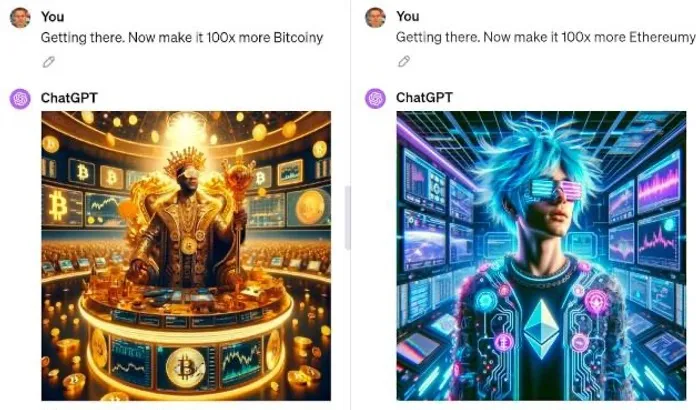
Qianwang: Over the past two years, AI and large language models have overtaken Web3, crypto, and blockchain as the mainstream of global tech thought. Standing on the crypto side, watching the surging tide of AI across the river—what are your thoughts?
Vitalik:
Blockchain and AI serve completely different roles. AI is a short-term tool—everyone can use it to boost efficiency. For instance, when writing code or articles, especially on topics I’m not good at, ChatGPT helps me most. But long-term, will AI surpass humans in intelligence? Definitely—it’s just a matter of whether it takes five years or fifty.
Blockchain solves trust issues. You want to build applications requiring many people to interact and communicate. Without a central trusted party, blockchain applications can solve this. Our world faces growing trust problems—more acute than a decade ago.
But in the crypto space, there’s been a problem over the last five years: people’s dreams and hopes were high, but the technology couldn’t deliver most of them. In 2020 and 2021, Ethereum, Bitcoin, and other chains had very high transaction fees—paying $1 or $3 for a simple transaction. Most non-financial applications simply weren’t feasible. But now, thanks to Ethereum’s Layer 2 scaling solutions, transaction fees have dropped from $0.50 to sometimes $0.005. Many previously impossible applications are now viable.
This kind of thing has happened repeatedly in computing: for years, people had ideas, but needed CPU speeds, internet bandwidth, and infrastructure to mature before they could become real. Over the next one, two, or three years, this same trend will unfold in Web3.
Qianwang: Will a Super App emerge in the crypto space within the next three years?
Vitalik:
Sometimes I think about a longer-term question: will the very concept of an “app” change dramatically in ten years?
Today, apps mean you have a computer or phone with an interface—you click buttons to do things. But AI is changing how we interact with computers and the internet.
In the AI world, startups say: now that we have AI, let’s build AI apps. Some succeed. But most will realize: actually, people don’t need apps. Whatever they want, they can just tell ChatGPT, and it gives them the answer. So maybe the future Super App is this: you directly talk to your computer, phone, or any device via AI, and it understands what you want and does it for you.
Qianwang: The AI revolution tends toward centralization. Does its development move further away from the world you envision?
Vitalik:
It’s complicated. Recently, I noticed something interesting with AI: when doing things many others have done but I’m bad at, ChatGPT is extremely helpful. But when working on highly advanced topics—say, complex cryptography—something only I and maybe a thousand others have done—AI gives me zero help.
On one hand, AI enables more equal outcomes, helping people do things outside their expertise.
On the other hand, ChatGPT is a highly centralized application. When you use it, you must fully trust it won’t expose your data. I believe this issue will become glaringly obvious in ten or twenty years.
Now, people use ChatGPT like talking to a friend. But in ten years, people may share all their thoughts with it. Maybe BCI (brain-computer interfaces) will enable deep human-machine connections. If your AI lacks privacy, you have no privacy at all—not even privacy of thought. That’s the first concern.
The second issue: if a centralized company controls it, they can shut it off anytime, change rules, alter terms. Whether you’re an individual, a company, or a nation, dependency creates risk.
So AI has many benefits—but also these problems.
I know many people are building open-source AI, decentralized AI. In fact, I use these tools myself. I deliberately bought a computer—(Vitalik turns and pulls the laptop from his canvas bag)—this one has a GPU, an NVIDIA 4070, so I can run some LLMs locally.
When I don’t need the highest quality from ChatGPT, I can do it on my own machine. One advantage: I can use it offline. Decentralized AI matters.
"OpenAI First Sacrificed Openness for Safety, Then Safety for Profit"
Qianwang: I'm curious—how do you view OpenAI? Could it become the largest, perhaps final, monopoly?
Vitalik:
The OpenAI story is fascinating. On one hand, they’ve created an incredibly useful tool.
I can't speak for everyone. ChatGPT has two tiers: free access, and a $20/month subscription, available in some countries but not others. It’s extremely useful, especially when I enter unfamiliar domains.
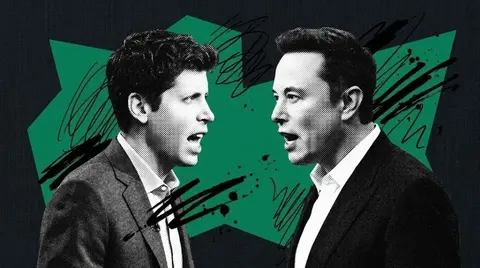
But OpenAI has a problem. Elon Musk originally saw big Silicon Valley companies developing AI and worried it would become too centralized—posing major risks—so he co-founded OpenAI. Five years later, citing safety concerns, they didn’t technically close source, but redefined “open” to mean their services are openly accessible.
Qianwang: It became CloseAI.
Vitalik:
Yes, they became CloseAI. Now there’s another issue: first, they sacrificed openness for safety; then this year, they sacrificed safety for profit.
Last year, the conflict between the company and board erupted. Afterward, Sam Altman appeared to win. Recently, they announced plans to shift from a nonprofit to a for-profit entity, reducing the board’s power—to essentially advisory status. That worries me.
Qianwang: A few days ago, I interviewed Dr. Kai-Fu Lee, a leading Chinese AI scientist, investor, and entrepreneur. He made several statements—I’d like to hear if you agree.
He said: "Whoever builds AGI first and crushes the competition will inevitably become a globally dominant monopolist, with ambitions to be the ultimate monopoly." "OpenAI is an exceptionally powerful monopolistic company. Sam Altman may become the biggest monopolist in history. He doesn’t monopolize today, but his ambition, strategy, and foresight—thinking steps one, two, three ahead—are impressive. As a practitioner, though, I’m deeply concerned."
Vitalik: Exactly.
Qianwang: What do you think of Sam Altman as a person?
Vitalik:
I’ve only met him once, so it’s hard to form a deep judgment. All I can go by is what he does. Many of the things he’s done at OpenAI I disagree with.
His Worldcoin project has good intentions. I don’t think Worldcoin should be the world’s sole digital identity system, but it’s tackling a real, pressing problem. I’ve communicated often with the Worldcoin team—they care about the same issues I do.
But creating “the next global currency” is difficult. Anyone trying will face opposition. Doing this requires two conditions—which is interesting: first, the world must trust you personally; second, there must be a mechanism so people don’t need to trust you personally. They’ve improved a lot this past year—I hope they continue moving in a positive direction.
Qianwang: You just said people need to both trust you and not need to trust you. Does Sam satisfy this condition?
Vitalik: Current OpenAI does not.
Qianwang: Ilya Sutskever (OpenAI’s chief scientist) and other key figures have left OpenAI. Will this affect the AI landscape?
Vitalik:
This is a red flag—something to worry about.
People leaving doesn’t always mean the company is flawed. Ethereum had many co-founders leave early on. When someone leaves or gets fired, it usually signals underlying conflicts or value differences. You need to look at specifics.
Looking at OpenAI’s details, I believe the company first sacrificed openness for safety, then safety for profit. It reminds me of a quote from one of America’s founding fathers: “Do not sacrifice freedom for security, for if you do, you will lose both.” Watching OpenAI’s actions, it seems this is exactly what’s happening.
Qianwang: Between Sam Altman and you—who should humanity trust more?
Vitalik: I’d rather not answer that. (Laughs)
"Biological and Silicon Merger Is the Only Way Humans Can Participate in Superintelligence"
Qianwang: How do you interpret Peter Thiel’s statement: 'Crypto is libertarian and AI is communist.'?
Vitalik:
I think he means: AI is centralized, crypto is decentralized. Where does AI’s power come from? First, computing power; second, data.
More computing power makes AI stronger; more data does too. AI is inherently powerful. The best AI is the biggest AI. To build an AI, the simplest way is to centralize all computing power and data in one place.
You can see this now: AI companies are almost entirely clustered in 3–4 places—Silicon Valley, London, and a few cities in China. But crypto communities and projects are highly dispersed. The Ethereum Foundation has only 25% of its staff in the U.S.—where are the rest? Everywhere. Germany, UK, Singapore have many; China has a few developers. Every country has some. Why? Because crypto does something different.
Where is crypto most useful? In marginalized areas lacking centralized trust institutions.
Qianwang: In places without centralized power? That suggests it’s not the world’s main stage.
Vitalik:
Crypto’s goal is to build applications where everyone can see the rules and contracts. Not everyone needs to read the code themselves, but many can audit it. Everyone can participate. Blockchain is global. So AI and crypto really do pull in opposite directions.
Qianwang: Their core values are different.
Vitalik:
Yes. And people join these fields for different reasons. Money is a common motivator. But beyond that, their goals differ.
People in AI care deeply about advancing human technology—accelerating our evolution into a multi-planetary civilization, making humanity more powerful, and themselves along with it. People in blockchain care about decentralized trust, social fairness, and similar issues.
Qianwang: Will AI and crypto split into two separate paths, or converge? If they diverge or converge further, what would we see?
Vitalik:
Crypto’s role is to create games—games with many possible objectives. Trading is one such game. Another example is prediction markets—Polymarket, a prediction market project, has seen notable success recently.
Crypto can create games where smart contracts securely enforce rules. AI can then participate in these games. If only humans play, efficiency may be low. Take prediction markets—I’ve used Polymarket a lot this year. Four years ago, result quality wasn’t great. Now it’s much higher. Why? Partly because liquidity has increased—from maybe $1M–$10M last year to $100M–$200M now. But I’ve also noticed that even on low-liquidity items, answers are better now.
So likely, AI is participating. LLMs react extremely fast. A human would need to stay glued to the screen 24/7, monitoring every news update. An LLM can run autonomously.
I expect more examples in the future—perhaps in social spaces or elsewhere. Crypto provides a secure foundation, enabling fair game rules. AI’s role is to participate.
Qianwang: So it’s not crypto joining AI’s game, but AI joining crypto’s game?
Vitalik: Yes.
Qianwang: If one day the ultimate AI force—or “Big Brother”—tries to destroy humanity, would your crypto kingdom come to save us?
Vitalik:
That’s a very complicated question. Crypto’s role is to define game rules, not solve specific problems directly.
Humans have many goals—live longer, live more comfortably, go to Mars. Achieving these requires solving coordination problems among people. If you’re alone on an island with no one else, crypto is useless. Its only purpose is to solve interpersonal problems. But if you're alone on an island, AI is still useful. This example shows crypto doesn’t solve your problems directly—it solves them indirectly. Crypto sets up the game, but still needs people, robots, or other agents to play.
So how could crypto save the world? Not crypto alone—but crypto plus something else. Crypto + what?
● First possibility: Crypto + Decentralized AI;
● Second possibility: Crypto + a technology that could replace AI.
What could replace AI? The only answer: deeper integration between humans and computers. Recent years have seen rising interest in VR, AR, and the metaverse—Meta glasses, for example. What’s special about these? They increase the bandwidth and efficiency of communication between human brains and machines.
Put on Meta glasses, and they can track where you’re looking. Today, computers receive some of your conscious input; with glasses reading eyes and body movements, they could connect directly to your subconscious.
An interesting point: the flow of information between the left and right hemispheres of the human brain isn’t particularly high. If we could achieve ultra-efficient, high-bandwidth, rapid communication between humans and machines, the computer truly becomes part of you.
Why am I interested in this direction? Because something smarter than humans will exist—maybe in 10, 100, or 1000 years. But will it be a separate entity surpassing us—or can we become part of it? I find the second option far more interesting.
Qianwang: We become part of it?
Vitalik:
Yes—or it becomes part of us. Merging together—biological and silicon technologies merging. This is the only way humans can actively participate in superintelligence.
If we don’t do this, the only alternative is a standalone computer vastly smarter than us, controlling everything while humans lose all influence.
But this path must be pursued responsibly. There’s Neuralink—Elon Musk’s brain-computer interface company—but such technology carries risks. A computer that can read your thoughts—if it’s not open-source, if it’s centralized, if your data goes to a server—means a big company could read your mind. That’s dangerous. So I hope both software and hardware sides embrace open-source, security-respecting designs.
How can crypto contribute? First, business models. Open-source tech has a perennial weakness: monetization is hard. If you build a centralized, proprietary system, there are many ways to make money. But with open-source, anyone can download and use it—no ongoing relationship needed. Great tech, but tough to fund. Crypto offers many ways to support open-source financially.
If we use crypto to fund open-source tech, we might get more open-source BCI, more open-source AI, more open-source everything.
Qianwang: So AI architecture built on top of crypto?
Vitalik:
The business model could sit on crypto, or we could build new architectures using crypto techniques.
I haven’t mentioned this yet: there are exciting new crypto technologies emerging, like PC (Programmable Cryptography) and FHE (Fully Homomorphic Encryption). The benefit: you can run AI computations on private data without revealing the data itself. The AI computes using your data but never sees what it is. These techniques have been theoretically possible since 1982, but are only now reaching practical usability.
Qianwang: In AI, who do you admire most—and who do you dislike most?
Vitalik:
Wow… no clear examples come to mind. I respect people who maintain principles over time. Over the past five years, amid external changes, many have shifted views—not necessarily for good reasons. Often, it’s reactive: “I dislike that team’s idea, so I must oppose it.”
Few people remain intellectually open-minded and principled over the long term. If they do, I respect them.
"If All We Do Is Launch Tokens and Exchanges, Our Industry Has Failed"
Qianwang: Given AI’s recent popularity and appeal to young talent, what advice would you give to aspiring technologists torn between careers in blockchain and AI?
Vitalik: Ultimately, follow what interests you most.
Qianwang: Objectively speaking, will AI’s current boom cause crypto to cool down?
Vitalik:
Definitely. Some who previously engaged with crypto have shifted to AI due to its momentum.
I observe three types of people:
● First: those aiming to do the most impactful things, regardless of domain—wanting to make big, historical contributions, or earn more money.
● Second: those drawn to crypto for specific reasons—concerned about money, open-source, trust, human freedom. They stay in blockchain and don’t switch to AI.
● Third: those primarily seeking profits, often producing lower-quality work.
I have a concern: if the brightest minds abandon crypto, those remaining may lack innovative ideas. The only applications left might be the financial ones we’ve seen for years. Then we end up in a loop: launch a token, build an exchange; launch another token, build another exchange; launch a third with a cute dog on it—fun, yes, but if that’s all our industry does, we’ve failed.
The challenge is to build meaningful applications that attract broad participation.
Recently, I’ve seen more people pursuing this goal. 2022 and 2023 were dangerous years—AI succeeded, but crypto hadn’t yet. People saw AI’s LLMs were amazing, knew what ChatGPT could do. But Layer 2 wasn’t ready, or was in early stages with high fees. So 2022–2023 marked the widest gap in what AI versus crypto could realistically achieve.
But now, crypto’s capabilities have grown significantly. More developers are building meaningful, user-friendly applications. If crypto continues progressing, many will still choose to engage with it.
Qianwang: When I told people in China’s venture capital scene I was meeting you, many asked the same question: after all these years, why does the Ethereum or broader Web3 ecosystem still lack real-world applications?
Vitalik:
My answer is what I just said. Until recently, transaction fees were too high, key technologies immature, account security unresolved, privacy unsolved—many issues unaddressed. So until now, our industry lacked the technical foundation for mass-market applications. DeFi succeeded partly because it offered high financial returns.
If there’s a chance to multiply your money tenfold, you’ll endure technical complexity. Even with a 30% chance of losing everything, if winning means a 10x return, most people will still take the risk.
But for everyday goals—protecting your money, safeguarding your identity, joining non-financial applications—people won’t participate if technical barriers and security risks remain.
This year, we’ve finally started solving these. This is the best moment yet to build meaningful applications.
Qianwang: Constantly trading and hoarding tokens—is that really what you want?
Vitalik: No.
Qianwang: What do you want, then? What kind of world are you trying to build?
Vitalik:
I want a fairer, more open world—building applications that solve critical trust problems. Creating a fair, open society starts with solving trust. Why are many things broken? Because people don’t know who to trust.
Look at crypto use cases. In countries facing severe financial instability—like Argentina—crypto generates strong interest.
● First: it offers a reliable financial system. People can store money without fear of sudden collapse.
● Second: it connects to mainstream finance. Many use crypto to work for U.S. or European companies, earning international salaries and sending money home to family—participating in a fairer global economy.
● Third: other applications. Terms like “identity” or “credit systems” are often discussed—they all aim to solve trust: knowing who to trust. A current topic: distinguishing humans from bots.
If we solve these via decentralization, we can build secure, globally accessible applications—avoiding the risk of global fragmentation.
Qianwang: So crypto suits places lacking trust and fairness; AI suits places striving for greater human power—two distinct human ideals. Might crypto ignite nations like Argentina, while AI ignites powers like China and the U.S.? Globally, are their spheres of influence different?
Vitalik:
In the long run, we all need to enhance capabilities. Even with perfect, fair, decentralized institutions, if people’s abilities don’t improve, we’ll eventually fall behind.
Beyond crypto, technologies like AI and biotech require global participation. But they can be developed in different ways. If done in a decentralized, open manner, crypto may play a role. Short-term adoption will vary greatly by country.
Argentina, for example, faces fundamental financial issues. The U.S. generally does not. For me, crypto’s most useful function is donating to international charities—hard via banks, easy via crypto. In developed nations, those most active are individuals deeply engaged in global markets and societies. In smaller countries, adoption of app-specific chains (Appchains) is higher.
How these dynamics evolve long-term—I can’t say.
Qianwang: I have a basic confusion. For ordinary people, what’s the difference between a centralized app and a decentralized one?
Vitalik:
Let me give a concrete example. Recently, decentralized SocialFi apps have gained traction on Ethereum—Lens and Farcaster are two accessible examples. What’s the difference between Farcaster and Twitter?
On Twitter: first, its algorithm is completely opaque; second, if you dislike Twitter and want to migrate, you lose your entire network. Anyone dissatisfied starting anew must rebuild from zero—a tough network effect to overcome.
Farcaster’s architecture: a decentralized network layer, plus interface layers where users post and view content. The most popular client is Warpcast—an excellent, user-friendly decentralized app. Even users unfamiliar with crypto can use it. But if you dislike Warpcast, alternatives like Firefly exist. You can switch to Firefly and still participate in the Farcaster network. Your posts remain visible on Warpcast; you can still see others’ posts.
A decentralized foundation ensures interoperability across clients, preventing any single client from becoming a monopoly.
This is an open platform—anyone can build a client. In the Farcaster ecosystem, this open architecture already gives users significant advantages.
Qianwang: What do you think of speculators in the crypto industry? Why are there so many?
Vitalik:
Speculators exist in many fields—stock markets, sports betting. Many people have this tendency.
What should our industry do? First, for those drawn to gamified finance, I hope we align incentives so their participation benefits their society and country.
Second, we need sustainable ways for people to grow wealth over time. Historically, real estate served this role—people bought homes. But housing markets are deeply unfair to many—uncertain whether they gain or lose. If crypto can offer long-term financial products tied to the real economy, that would be excellent.
Why hasn’t this worked before? First, regulation wasn’t clear enough—but recently, many countries have clarified rules. Second, technology needed to be more secure.
If you can 10x your assets, you’ll accept high risks. But real-world returns are typically lower—3%, 8%, maybe 10%. With reasonable returns, security becomes paramount. We’ve made some progress. I hope to offer better financial choices.
"I Don’t Have a Butler, Driver, or Bodyguard"
Qianwang: You became a billionaire at a very young age. What’s your current lifestyle like?
Vitalik:
Not much different from five years ago. I travel to different countries, attend various events.
The biggest change: more people want photos with me now.
Qianwang: Do you have a butler, driver, or bodyguard?
Vitalik: None. Maybe at big events, briefly. But most of the time—no.
Qianwang: I’ve seen social media posts—including from China—showing you riding the subway in Singapore. Why do you keep taking the subway?
Vitalik: Because Singapore’s subway is great.
Qianwang: What about other countries?
Vitalik: Different countries are different. Where there’s no subway or it’s inconvenient, I’ll take a taxi. If walking is possible, I prefer it—I like walking.
Qianwang: Why do your bag and watch both feature cats?
Vitalik: Because cats are cute.
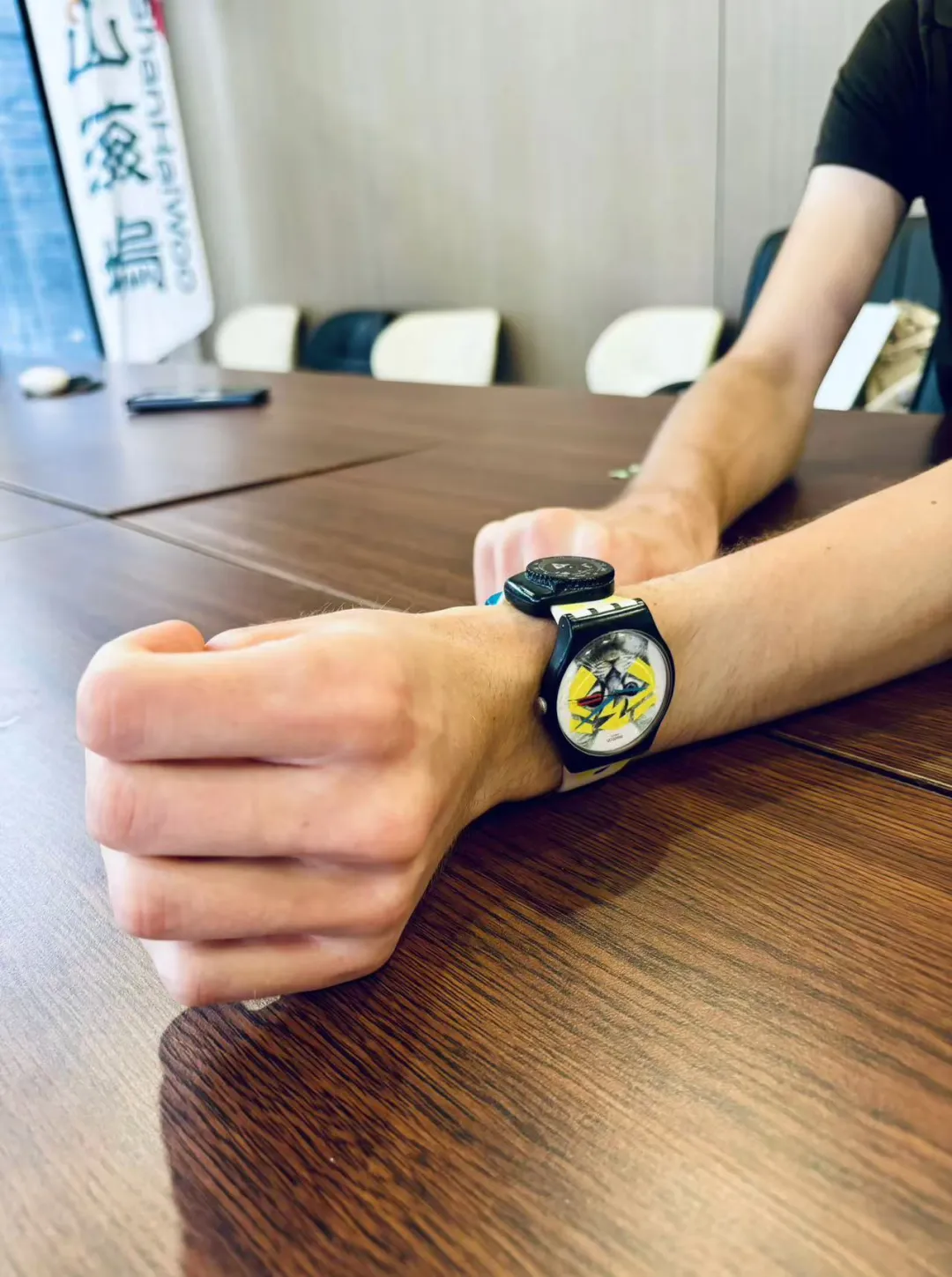
Photo by author, showing Vitalik’s watch
Qianwang: Did you buy them in Thailand?
Vitalik: No. The watch was a gift from a friend. The compass I found myself on Amazon. The cat bag was a gift from my Thai friend.
Qianwang: In interviews, you’ve mentioned hearing stories as a child about wealthy people spending fortunes on private jets, helicopters, luxury cars, or other foolish things—ending up broke. You recall thinking: that’s so stupid. Now that you’re rich, have you ever had a foolish impulse? Did you give in, or resist it?
Vitalik: Hmm, not sure how to answer that.
Qianwang: In other words, has wealth ever led you astray?
Vitalik: I don’t think about it that way.
Qianwang: Do you often check your bank balance?
Vitalik: Not really.
Qianwang: It’s surprising you speak fluent Chinese despite never living in China. How did you learn and master it?
Vitalik:
I started learning in 2013, shortly after dropping out of university, while writing for Bitcoin Magazine. I decided to travel—to explore the Bitcoin worlds of China, the U.S., and Europe. I came across articles about China’s Bitcoin community and projects—very interesting.
Many told me Chinese is the hardest language. That made it an appealing challenge, so I began studying. At first with language apps, then my first trip to China in 2014, chatting with many Chinese friends. I kept learning.
Qianwang: You speak many languages—six, I believe? Does multilingualism help in crypto?
Vitalik:
My strongest are English, Russian, and Chinese. French I learned in Canadian schools, studied from 2014 to 2019. I self-studied some German and Spanish. About six total—I know only basics in the others.
Actually, yes. Interestingly, European languages are easier—they’re close to English, descended from Latin. Europeans often speak English well, especially on technical topics. But for non-Europeans, it’s different. Being able to speak Russian, Chinese, or a bit of Spanish in South America is especially helpful.
Qianwang: Right now, what are the three most important things on your mind?
Vitalik:
First, the development of the Ethereum ecosystem—what we need to do to help Ethereum’s apps and community grow stronger.
Second, broader macro-level human issues, including AI.
Third, many smaller technical tasks—what I need to do today, what article I’ll write next—lots of little things.
Qianwang: What do you think of the U.S. election and the two candidates—the results are about to be announced. (This conversation took place one day before the U.S. election results.)
Vitalik:
Who wins today may not matter much 20 or 30 years from now. Certain trends will unfold regardless of today’s outcome. If not today, perhaps in 2028. If not in the U.S., perhaps elsewhere. So focus on long-term, global trends. Within ten years, global culture, technology, race, and economics will transform dramatically.
Qianwang: As a cosmopolitan or builder of utopian communities, you constantly try to break old orders and create new ones. What do you think of human marriage? Do we still need marriage?
Vitalik:
This topic may change greatly in 50 years. Previously, people married mainly for economic security and children. But now, at least in developed countries, economic pressures are less urgent—people can reflect more on life, on what they enjoy. And many don’t want or can’t have children.
The internet has transformed our social relationships. Thirty years ago, moving cities meant losing all your friends. Not anymore. As circumstances change, our lives will change profoundly.
Qianwang: Are you already a free person?
Vitalik: Sometimes free, sometimes not.
Qianwang: When are you not free?
Vitalik: So many people in the Ethereum community. I often think about what they’re thinking, what they want.
Qianwang: Do you have fears?
Vitalik: I’m afraid of bugs.
——End——
(After the conversation ended, Vitalik left the tea bag tag on the table.)

Photo by author
Join TechFlow official community to stay tuned
Telegram:https://t.me/TechFlowDaily
X (Twitter):https://x.com/TechFlowPost
X (Twitter) EN:https://x.com/BlockFlow_News