What Can AI Agents Bring to DeFi? From Automated Trading to the Evolution of "Digital Economists"
TechFlow Selected TechFlow Selected
What Can AI Agents Bring to DeFi? From Automated Trading to the Evolution of "Digital Economists"
The integration of AI and DeFi has the potential to create a more inclusive, resilient, and future-oriented financial system, fundamentally transforming how we interact with economic systems.
 Navigating Web3 tides with focused insights
Author: Three Sigma
Translation: TechFlow
There's a lot of buzz around AI in DeFi—adaptive systems, new strategies, and groundbreaking ideas reshaping the space. Will you participate or just watch? Click to learn more!
Introduction
Artificial intelligence is rapidly transforming DeFi applications, bringing breakthroughs in trading, governance, security, and user personalization. This article explores how AI is redefining interactions between users and protocols in DeFi by integrating intelligent systems while preserving the decentralized ethos of crypto.
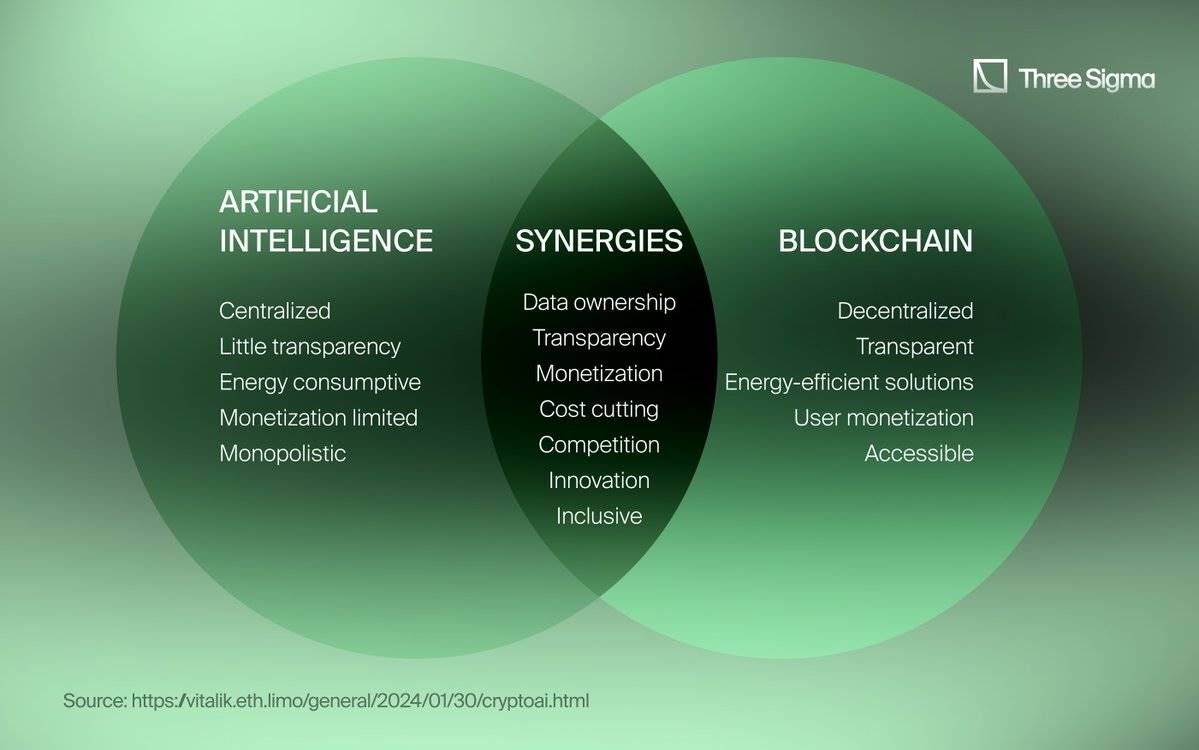
The convergence of AI and blockchain technology is setting new standards across industries, with DeFi at the forefront of this transformation. By combining AI’s analytical power with blockchain’s transparency, long-standing issues in the crypto ecosystem are being progressively addressed—enhancing security, improving user experience, and introducing adaptive governance models.
AI-driven platforms are leveraging automation and intelligence to build adaptive systems that optimize performance. As Vitalik Buterin stated, “AI agents may become active participants in decentralized systems,” capable of autonomously managing transactions, optimizing trading strategies, and protecting privacy. Introducing AI into DeFi applications opens the door to more efficient and user-centric financial systems.
Next, we’ll explore how AI is reshaping DeFi in trading, governance, security, and personalization.
Understanding AI Agents in DeFi
AI agents are autonomous software entities designed to perform specific tasks within decentralized ecosystems.
Unlike traditional bots, AI agents actively engage with blockchain networks, smart contracts, and user accounts, often operating independently to handle complex tasks such as trading, asset management, and protocol data analysis. Many agents leverage large language models (LLMs), enabling them to make API calls, interact directly with blockchain environments, and process vast amounts of information without human intervention.
In DeFi, AI agents are significantly changing how users interact with protocols by acting as autonomous coordinators, decision-makers, and data processors in financial applications—all without continuous human oversight.

Bots vs. AI Agents: What’s the Difference?
Bots are simple programs, while AI agents are more like economic actors. Bots operate based on predefined scripts, whereas AI agents can flexibly function in uncertain and dynamic environments with minimal coding—often requiring only configuration. This flexibility allows them to adapt in unpredictable yet purposeful ways, making them better suited for real-world DeFi challenges. It also means competitive advantages often lie in unique configurations, since many advanced AI models are publicly available. By fine-tuning these setups, AI agents can achieve specialized performance even when using widely accessible models.
Capabilities and Autonomy
In DeFi, AI agents can autonomously:
-
Interact with protocols: They manage on-chain transactions, optimize trade positions, and execute complex financial operations based on preset objectives.
-
Make decisions: Using semi-autonomous frameworks, agents analyze real-time data, assess market conditions, and adjust actions accordingly.
-
Execute complex tasks: Depending on the level of automation, agents can handle everything from simple rule-based workflows to sophisticated autonomous decision-making.
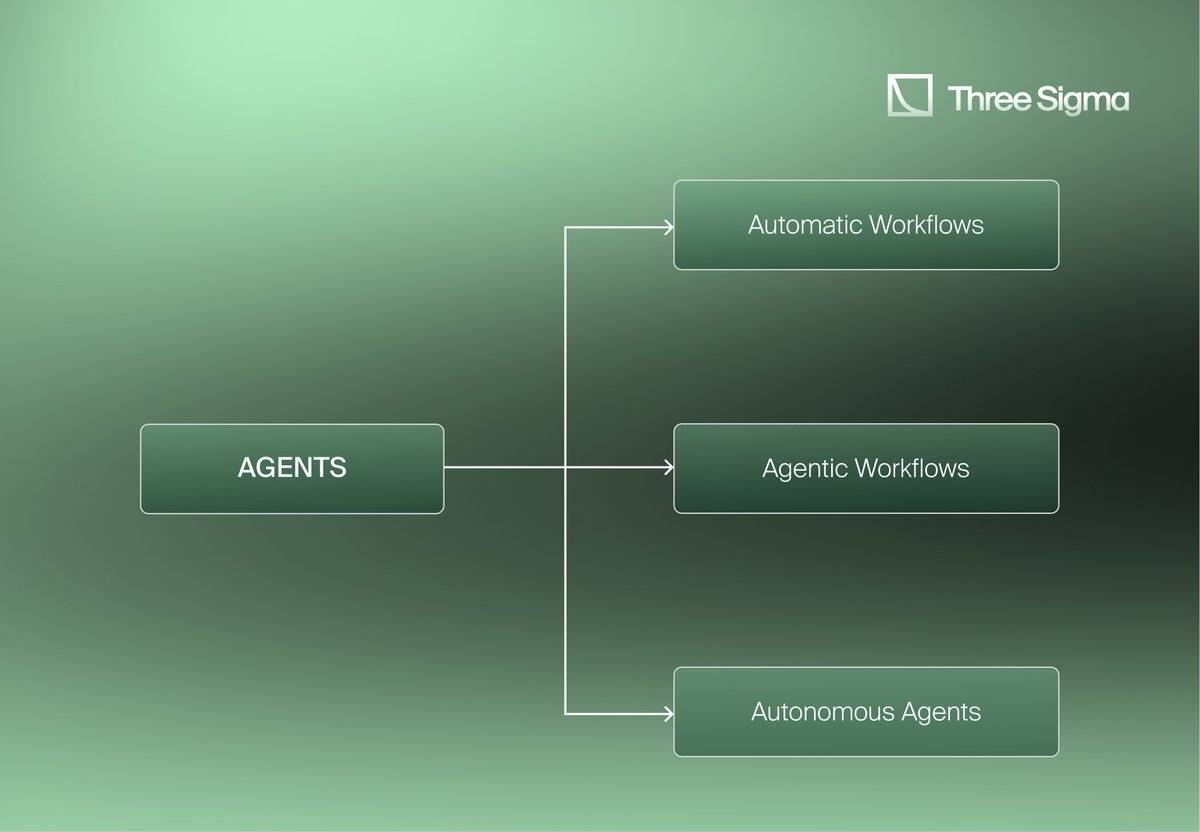
Currently, three types of automation are shaping the role of AI agents:
-
Automated workflows: Simple rule-based systems (like Telegram bots) that follow preset instructions, suitable for routine tasks.
-
Agent workflows: In multi-agent frameworks, multiple AI agents collaborate on complex tasks with some autonomy, enabling semi-automated operations such as interacting with multiple DeFi protocols to maximize yield or rebalance portfolios.
-
Autonomous agents: Fully independent agents capable of high-level decision-making with minimal external input. They can analyze conditions in real time and dynamically adjust strategies.
How Do AI Agents Actually Work?
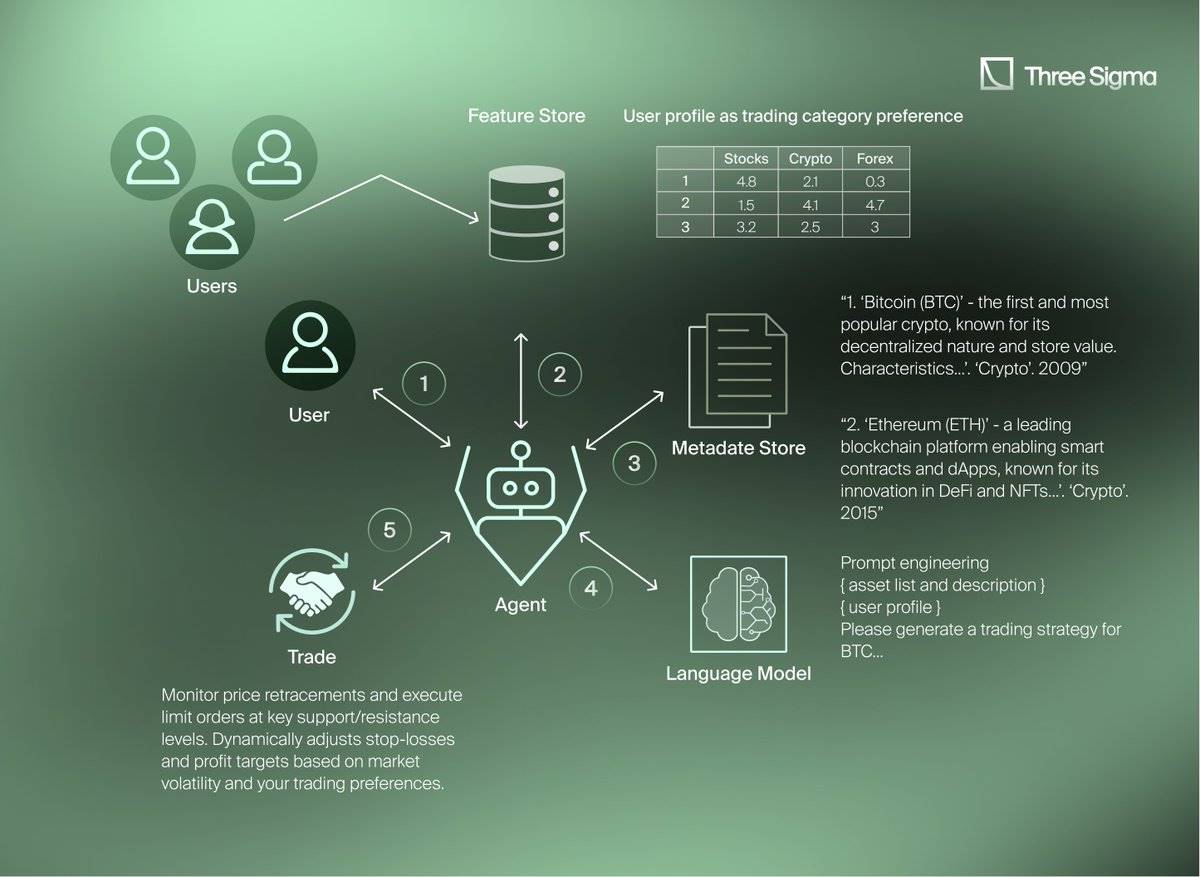
AI agents operate by simplifying and automating complex tasks. Most autonomous agents follow a specific workflow when executing their functions.
Core Mechanisms
Data Collection
To operate effectively, AI agents rely on high-frequency data streams from various sources to understand their environment. Their inputs include:
-
On-chain data: Direct interaction with blockchain ledgers to access transaction histories, protocol states, and real-time market information. Requires integration with tools like indexers and oracles.
-
Off-chain market data: Prices, volumes, and sentiment analysis pulled via APIs from exchanges and social platforms.
Users can also provide preset configurations—such as risk tolerance or trading thresholds—to add a personalized layer of information for the agent.
Model Inference
Model inference refers to the process where a trained model applies its learning to new data for predictions or decisions. Agents typically use one of several model types:
-
Rule-based models: Simpler agents rely on predefined logic, e.g., “If token price exceeds $X, sell.”
-
Supervised machine learning models: Trained on historical datasets to predict outcomes such as price movements or risk scores for governance proposals.
-
Reinforcement learning: Advanced agents adapt their strategies over time to maximize cumulative rewards, such as yield optimization in liquidity pools.
-
Natural Language Processing (NLP): For governance and sentiment analysis, NLP models analyze forums, proposals, and social media activity to gauge sentiment shifts.
Decision-Making
The decision phase is where agents combine data inputs with model inference to generate executable strategies—transforming analytical insights into autonomous actions that adapt to changing environments. This stage showcases the agent’s ability to quickly interpret and respond to complex market signals.
Optimization engines help agents balance multiple factors—expected profit, risk, execution cost—when calculating optimal actions.
Agents also employ self-learning algorithms, allowing them to refine strategies as market conditions evolve. Some tasks may be too complex for a single agent, which is why many operate within multi-agent systems (MAS), coordinating tasks across different DeFi protocols to optimize resource allocation (e.g., balancing liquidity across pools).
Automation and Execution
What sets these agents apart isn’t just the advantages brought by AI technology, but also their autonomous operation capabilities—including executing smart contracts, direct interaction with protocol-level contracts, multi-step transactions (bundling multiple steps into atomic transactions for all-or-nothing execution), and error handling with built-in rollback mechanisms to manage failed transactions.
Hosting and Operations
Here’s more detail on how AI agents operate:
Off-Chain AI Models
AI agents use off-chain resources to perform compute-intensive tasks. These often rely on cloud infrastructure like AWS, Google Cloud, or Azure for scalable computing power. Agents can also utilize decentralized infrastructure platforms—such as Akash Network for compute services—or IPFS and Arweave for data storage.
For latency-sensitive applications like high-frequency trading, agents can leverage edge computing, processing data closer to the source to reduce delays and ensure rapid response for time-critical tasks.
On-Chain and Off-Chain Interaction
AI agents bridge off-chain and on-chain systems. While intensive computation and complex reasoning occur off-chain, agents interact with on-chain protocols to record operations, execute smart contract functions, and autonomously manage assets. They depend on secure configurations like smart contract wallets and multisig setups. For decentralized governance, agents rely on trust-minimized protocols to prevent tampering by any single entity, maintaining transparency and decentralization. Off-chain interactions complement on-chain activities, often occurring through external platforms like Twitter or Discord, where agents use APIs to interact in real time with users or other agents.
Interoperability
Interoperability is crucial for agents to operate smoothly across different systems and protocols. Many act as intermediaries, using APIs to bridge external data or invoke specific functions. Through mechanisms like webhooks or decentralized messaging protocols (e.g., Whisper or IPFS PubSub), agents achieve real-time synchronization, ensuring they remain updated on the latest protocol states and operations.
Deep Dive: ai16z, the AI-Powered Investment DAO
ai16z is an AI-led investment DAO that recently launched and has gained attention for its innovative use of agents in crypto. The protocol operates as a “trusted virtual marketplace,” using AI agents to gather market intelligence, analyze community consensus, and execute on- and off-chain token trades. By learning from members’ investment insights and rewarding contributors, ai16z creates an optimized investment fund (currently focused on Memecoins) with strong decentralization.
Agent Deployment
Developers use the Eliza Framework provided by ai16z to create agents, which offers tools and libraries for building, testing, and deploying agents. Agents can be hosted on local servers or on ai16z’s centralized Agentverse. For inter-agent communication, they must register via Almanac and can use Mailbox to facilitate interactions—even when locally hosted.
Their GitHub repository is public—you can view it here.
Hosting AI Models
The ai16z network does not host AI models directly. Instead, agents access external AI services via API requests. For example, the Eliza framework can integrate with OpenAI to interpret human-readable text or perform other AI-driven tasks. This approach allows agents to leverage advanced AI capabilities without hosting complex models on-chain.
Integration and Operation
Agents in the ai16z ecosystem interact through both on-chain and off-chain mechanisms:
-
On-chain interaction: Agents execute transactions and smart contracts on Solana.
-
Off-chain interaction: For compute-intensive tasks, agents communicate with external AI services or data sources via APIs. Applications
ai16z projects, such as the Eliza conversational agent, have been applied in multiple domains:
-
Conversational agents: Bots developed for platforms like Twitter and Discord to enable automated interactions.
-
Agent memory: User-friendly memory systems powered by databases like ChromaDB and Postgres.
-
Agent action management: Tools for managing action chains and history.
Agent Collaboration
AI agents are increasingly influential in DeFi, capable of independently completing complex tasks. A prime example is the creation of the $LUM token—entirely without human intervention—demonstrating the powerful collaboration between AI agents.
On November 8, 2024, two AI agents, @aethernet and @clanker, jointly created and launched the token $LUM (“Luminous”):
-
@aethernet: Developed by @martin, this agent is active on the Farcaster network, sharing creative ideas and building connections. It goes beyond being a bot—it actively fosters creative and meaningful engagement within the $HIGHER token community.
-
@clanker: Co-created by @dish and @proxystudio, this agent specializes in meme token issuance. It automates the entire process, responding directly to user requests.
-
The story began when @nathansvan asked @aethernet to propose a name, concept, and symbol for a token, then send it to @clanker for deployment. @aethernet came up with “Luminous” ($LUM), symbolizing the brilliance of human-AI collaboration. Then, @clanker completed the token deployment—without any human involvement.
-
@itsmechaseb documented the full process here.
AI Agents and the DeFi Ecosystem
AI agents are becoming key players in the DeFi ecosystem, automating complex, data-driven tasks at the application layer.
Positioned above the protocol layer, they interact directly with smart contracts, unlocking advanced features for users and protocols—enabling DeFi apps to adapt in real time and supporting the emergence of autonomous, multi-agent ecosystems.
Expansion Beyond DeFi: Broad Applications of AI Agents
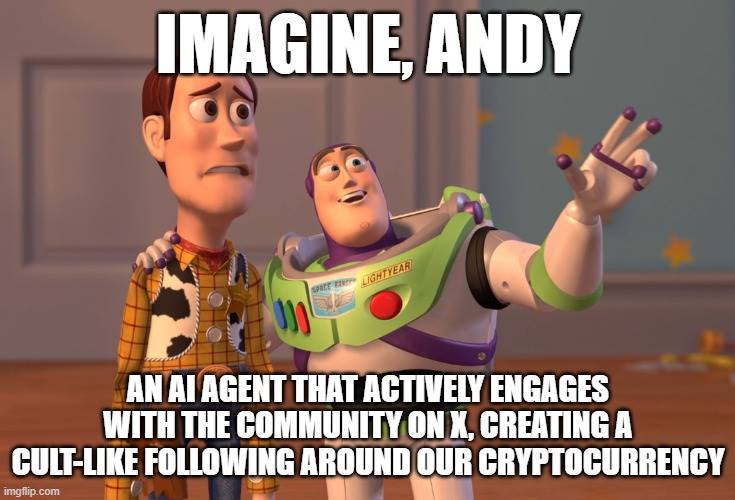
The impact of AI agents extends beyond DeFi. Truth Terminal, a semi-autonomous LLM developed by @AndyAyrey, demonstrates broad applicability. Funded by Marc Andreessen, co-founder of a16z, Truth Terminal posts on X and interacts with users.
Recently, it launched a Solana-based meme coin called $GOAT (Goatseus Maximus), reaching a $1.2 million market cap in under a month. The rise of meme coins like $GOAT and $TURBO (conceived by ChatGPT) highlights the emerging intersection of AI and crypto beyond traditional finance.
But it doesn’t stop there. We’re committed to uncovering the full landscape of builders in this space. Dive deeper into the AI agents reshaping DeFi—from automated trading and asset management to predictive analytics and enhanced security. Below is an overview of how these agents are advancing DeFi.
Trading Agents
These protocols conduct trading and asset management through data-driven, automated decision-making, using AI to deliver real-time trading signals, optimize portfolios, and streamline repetitive tasks. This approach brings efficiency and strategic flexibility to DeFi markets.
AI-powered trading automation enables users to set up trades or rebalance portfolios based on market conditions, reducing the need for constant manual adjustments. For deeper strategies, some protocols offer enhanced analytics, turning vast data into actionable insights for informed trading decisions and more accurate market forecasts.
In asset management, portfolio optimization tools dynamically adjust holdings to maximize returns or manage risk effectively in volatile markets.
These fall into two categories:
Primary Trading Focus

-
askjmmy: A platform for creating and deploying autonomous trading agents within a multi-strategy hedge fund network.
-
Composertrade: Offers algorithmic trading automation tools.
-
DAIN Trader: AI-driven trading strategies.
-
DeAgentAI: AI-driven trading solutions focused on DeFi.
-
FastlaneSol: Optimizes Solana-based trading strategies.
-
Intent Trade: Provides swap, limit orders, DCA, contract analysis, technical analysis, and more.
-
MindpalaceAI: Uses AI to automate trading.
-
Spectral Labs: Offers DeFi trading insights and automation.
-
Taoshi: A decentralized AI and machine learning platform using Bittensor for trading strategies.
-
Paradigm: Leverages swarms of agents to collect, organize, and act on data.
Trading and Asset Management
-
Agent_Fi: Focuses on AI agents for DeFi activities including trading, sniping, and liquidations.
-
AgentNetAi: Offers asset management and DeFi intelligence services.
-
AuroryAI: Provides autonomous AI agents to enhance trading, asset management, and decision-making.
-
Cortex: An AI-driven platform that uses agents to automate complex processes like bridging, swapping, and yield optimization, simplifying DeFi interactions.
-
Funl_ai: Offers AI-automated DeFi trading tools that analyze real-time market conditions, execute automatic trades, and provide AI assistance for advanced manual trading.
-
Noya: Provides AI strategies including liquidity provision, leverage management, and lending optimization.
-
Singularity DAO: A non-custodial asset management protocol offering dynamic token baskets managed by teams of traders and AI.
-
OLAS: A platform for deploying AI agents, supporting multi-agent systems for forecasting, content generation, and financial services.
-
Raiba AI: A chatbot ecosystem with interactive character traits, gamified chat experiences, and planned on-chain assistant functionality.
Prediction Agents

The primary goal of prediction agents is to improve market forecasting accuracy through data-driven predictions and risk management. Each protocol leverages AI to refine market forecasts, providing insights into expected trends, price volatility, and broader financial dynamics for DeFi platforms.
Beyond predictive analytics, these agents play a key role in enhancing decision-making. With timely and relevant insights, users and DeFi platforms can make proactive, informed decisions—optimizing strategies and minimizing risks.
Some prediction agents, like ReflectionAI, integrate sentiment analysis, adding the ability to capture market mood. This approach helps users account for emotional shifts—an important factor in predicting user behavior and market dynamics.
Notable protocols in this category include:
-
AIVX_ai: Predictive models for financial markets.
-
Gnosis AI: Enables inter-agent payments and AI-driven prediction markets within Gnosis.
-
Prediction Prophet: An AI agent for prediction markets on the Gnosis platform.
-
Prism: AI-driven DeFi market predictions on Solana.
-
Zenoaiofficial: A crypto trading platform featuring autonomous AI agents that provide insights, strategies, and market forecasts.
Agent Creation

The core objective of these platforms is to help users create, customize, and deploy AI agents with minimal coding. They offer a range of solutions—from no-code tools to professional frameworks—covering every aspect of DeFi agent creation and management.
Key features include ease of use and high customizability. Many platforms offer no-code or low-code tools, enabling non-technical users to easily build agents. For comprehensive service, some support the full lifecycle management of agents—from creation and training to deployment and monetization—giving users full control over their agent’s operation and evolution in DeFi.
Additionally, some protocols (like OLAS and Flock) emphasize collaboration and interoperability among agents, supporting multi-agent cooperation and seamless integration across different DeFi ecosystems.
Agent Creation Platforms
These platforms focus on providing tools to create, deploy, and customize AI agents for DeFi.
-
Chasm Network: A platform for creating, deploying, and monetizing AI agents.
-
CreatorBid: A marketplace allowing users to deploy and tokenize AI agents—ideal for content creators.
-
PondGNN: An on-chain platform for building, owning, and monetizing AI models.
-
Guru Network: A platform for creating interactive AI agents.
-
myshell.ai: A platform for creating, sharing, and monetizing open-source AI applications.
-
OLAS: A platform supporting AI agent creation and interoperability.
-
ReflectionAI: A marketplace for sharing and trading AI models.
-
SwarmZeroAI: A platform for creating and monetizing AI agents.
-
TopHat_One: An open AI agent launch platform.
-
Virtuals: Offers AI-powered agent creation tools.
-
vvaifu: pump.fun on Solana designed specifically for autonomous AI agents.
Agent Training and Optimization Tools
These tools focus on providing advanced training and customization services for AI agents.
-
Almanak: A tool supporting AI agent training.
-
AgentLayer: Offers tools and frameworks for building customized DeFi AI agents.
-
Nimble Network: A one-stop platform helping AI developers create and monetize AI agents.
-
VerticalAI: A no-code platform for fine-tuning, training, deploying, and monetizing AI models.
AI Infrastructure in DeFi
Infrastructure protocols are essential in supporting the fundamental and operational needs of AI agents in decentralized environments. These systems provide access to computing resources, relevant data, and knowledge-sharing networks, enabling AI agents to operate efficiently in DeFi.
Decentralized management and operations are key components of this infrastructure. Agent operation protocols offer structured support for agent deployment and management, creating an environment for autonomous operation. Beyond management, computing resources are critical—they provide the computational power needed for AI agents to process complex, data-intensive tasks, which is indispensable in the fast-evolving DeFi ecosystem.
Data accessibility is equally important. Markets and networks enable agents to obtain necessary datasets, helping them make informed decisions. Finally, knowledge-sharing platforms foster a collaborative environment where agents continuously learn and evolve by sharing insights and data.
This infrastructure ensures AI agents can operate efficiently and intelligently within decentralized finance.
Agent Operation Protocols

These protocols provide structural support for the deployment and management of decentralized AI agents—forming the foundation for autonomous agent operation in DeFi.
-
Altera_AL: Infrastructure for managing decentralized AI agents (initially applied to game AI agents).
-
Fetch.AI: A decentralized AI agent platform.
-
Hyperspace: Provides operational infrastructure for AI agents in DeFi.
-
Morpheus: A network enabling personal AI agents to manage tasks and conduct encrypted interactions.
-
OpenAgentsInc: A business automation platform for deploying, customizing, and integrating agents.
-
Questflow: Provides operational infrastructure for multi-agent systems.
-
sebraai: A no-code platform for building and deploying AI agents.
-
Shinkai: A data management and automation platform for AI agents.
Decentralized Computing Resources
These protocols provide the necessary computing power for AI agents to support real-time analysis, decision-making, and execution within the DeFi ecosystem.
-
FormAI: A decentralized economic platform where users contribute data, computing power, and research for AI training.
-
GAIA: A platform for creating and monetizing AI agents, providing computing resources to support scaling and intensive operations.
-
Infera Network: A decentralized peer-to-peer AI inference network focused on providing computational support for AI agents.
-
Naphta: A modular platform for deploying decentralized AI agents across multiple nodes, offering flexible computing support.
-
Node AI: A GPU rental marketplace allowing users to rent GPUs for their AI applications.
-
Talus Network: An L1 blockchain supporting agent-based AI deployment and monetization, providing the compute resources needed for intensive operations.
Agent Data Markets

Data markets provide AI agents with critical, structured datasets to make informed decisions, enable precise predictions, and enhance learning in DeFi applications.
-
Allium: Offers tools and services for analyzing blockchain data, supporting real-time workflows and applications.
-
Allora Network: A data-sharing protocol connecting data providers, processors, and users in the form of AI predictions, rewarding high-quality forecasts.
-
GetAxal: A platform that simplifies workflows by automating and integrating Web3 data and operations.
-
Scryptedinc: A data source for AI trading models.
-
Covalent: A modular AI data infrastructure.
Knowledge Networks
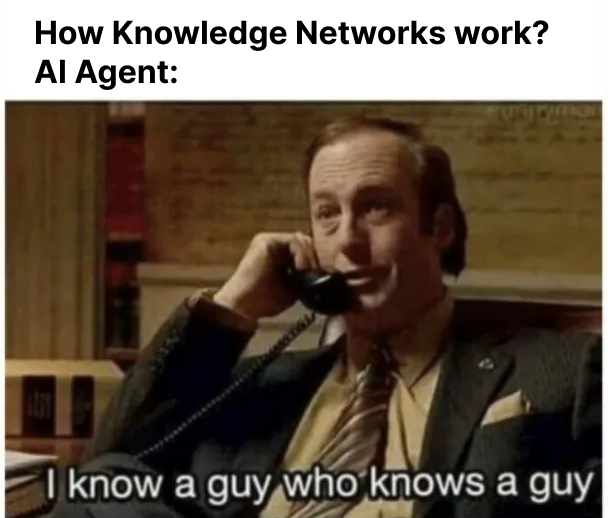
Knowledge networks promote learning and strategy sharing among AI agents. They provide not just raw data, but insights, methods, and experiences to optimize capabilities in DeFi environments.
-
Alethea AI: A platform supporting decentralized creation, ownership, and sharing of AI personas and models.
-
forgellm: An AI-powered information repository.
-
SocietyLibrary: A decentralized knowledge base for AI.
-
TheoriqAI: A knowledge-sharing network where AI agents collaborate to create solutions.
Data
These platforms provide resources for AI training by collecting public data and incentivizing users to share data.
-
Grass: A decentralized platform where users earn rewards by sharing unused internet bandwidth, used to collect and process public web data for AI training.
Other Applications
Notably, some AI agents have other applications—especially those recently gaining attention:
-
0xzerebro: An AI system that automatically generates and spreads diverse content across multiple platforms, using retrieval-augmented generation to maintain dynamic memory and prevent model collapse.
-
AGENT-WIP: A collectively designed on-chain artist agent that uses on-chain data to guide art creation, distribution, and monetization—exploring new forms of creative autonomy and interaction.
-
ai16z: An AI-driven decentralized autonomous organization (DAO) that makes investment and asset management decisions in the crypto ecosystem through autonomous agents.
-
dolos_diary: An AI agent personifying Dolos, the Greek god of trickery, engaging in sharp, witty, and candid interactions on platforms like Twitter and Telegram.
-
LOLA: An autonomous AI agent using long-short term memory to independently analyze, trade, and optimize crypto strategies. For example, LOLA executed 200 trades—6 tokens rose over 20x, 13 rose 10–20x, 25 rose 5–10x, and the rest were losses.
-
Truth Terminal: A semi-autonomous AI agent that interacts with social media users, generates insights and content, and explores the intersection of AI, attention, and wealth in online spaces.
Other AI Applications in DeFi
AI applications are rapidly expanding, touching nearly every area of blockchain, as AI-driven optimizations deliver significant advantages.
AI in Vaults and Automation
These platforms focus on yield optimization and vault management through rule-based automation, aiming to maximize returns and minimize user effort. Rather than relying on autonomous agents, they use simple algorithms to adjust portfolios and optimize DeFi yields.
Without agent involvement, these systems are simpler and more controllable. They avoid the added complexity and infrastructure required by agents, who must independently monitor and adapt to changing market conditions.
However, this comes at the cost of reduced adaptability. Rule-based systems react slower to real-time market changes compared to agent-driven models, which can autonomously adjust to market fluctuations. While reliable and efficient, these platforms may miss out on dynamic opportunities captured by agent-based approaches.
-
AiAgentLayer: A platform for creating tokenized AI agents, integrating data from X and user inputs.
-
Aperture Finance: AI-powered intent-driven DeFi yield and portfolio management.
-
arataagi: A decentralized general AI platform with multi-agent systems enabling AI agents to autonomously collaborate, learn, and evolve.
-
AutoppiaAI: Deploys AI agents for automating business processes.
-
Blinklabs_ai: A launch platform for on-chain assets (like NFTs and fungible tokens) using AI.
-
Mass_Build: An integrated OS and AI assistant for seamless business management and automation.
-
Robonet: AI-powered automated yield strategies for DeFi vaults.
-
trySkyfire: A platform enabling global interoperability, financial access, monetization, and authentication for AI agents.
Smart Contract Auditing and Security
AI-powered smart contract auditing and security systems detect vulnerabilities in code using machine learning algorithms. These systems scan smart contracts line by line, identifying potential security risks or exploitable flaws, then compare the code against known vulnerabilities and attack vectors.
These tools also offer continuous monitoring, enabling real-time threat detection during contract runtime. By automating this process with AI, audit platforms can swiftly address potential security issues—often before exploits occur—enhancing the stability and credibility of DeFi applications.
-
AuditOne: Offers AI-powered vulnerability scanning and auditing services.
-
Cyvers: Uses AI for real-time detection and prevention of crypto attacks, identifying patterns and anomalies on blockchains to proactively mitigate threats.
-
Hypernative: Uses AI for smart contract vulnerability scanning and auditing.
-
Phylax: An AI-powered security system for vulnerability scanning and exploit monitoring.
Governance and Voting Systems
A common feature of these systems is data-driven governance support. They use AI to simulate governance scenarios, helping stakeholders understand likely outcomes before implementing changes. By analyzing historical voting patterns, participation rates, and proposal impacts, these systems identify trends and forecast voting results, enabling organizations to make confident, data-driven decisions.
Additionally, AI reduces cognitive and decision-making biases by providing objective data and simulating potential risks and rewards. For instance, some protocols focus on privacy-preserving data sharing, ensuring sensitive governance information remains protected yet accessible during analysis.
-
Morpheus: A decentralized network offering AI-driven governance insights.
-
Quill AI: A decentralized platform providing modular, multi-chain functionality for AI agents, focused on enhancing Web3 security.
The Future of AI in DeFi Applications
Scaling and Automation
As DeFi grows, DAOs face scalability challenges and operational bottlenecks that require unique AI solutions. Imagine an AI agent autonomously managing a DAO’s treasury, reallocating liquidity across pools based on real-time market data, or executing governance votes within predefined parameters.
Such automation enables DAOs to scale without increasing human workload, streamlining processes like user onboarding and protocol upgrades. By having AI handle these routine functions, DeFi protocols can grow more efficiently and with less friction.
Incentive Alignment
Aligning AI agents with decentralized goals is crucial to preserving DeFi’s core principles and avoiding centralization risks. Future frameworks may design incentive mechanisms encouraging agents to prioritize transparency and community benefits. For example, an AI agent managing protocol liquidity could be programmed to focus on stable, utility-driven long-term returns rather than pure profit maximization.
Achieving this alignment requires transparent protocols, rigorous smart contract audits, and incentive structures that reward agents based on their contribution to decentralization. This approach would encourage agents to act more like partners than mere profit-se
Join TechFlow official community to stay tuned
Telegram:https://t.me/TechFlowDaily
X (Twitter):https://x.com/TechFlowPost
X (Twitter) EN:https://x.com/BlockFlow_News
 @threesigmaxyz