AiFi Summit 2024 Devcon Highlights Recap
TechFlow Selected TechFlow Selected
AiFi Summit 2024 Devcon Highlights Recap
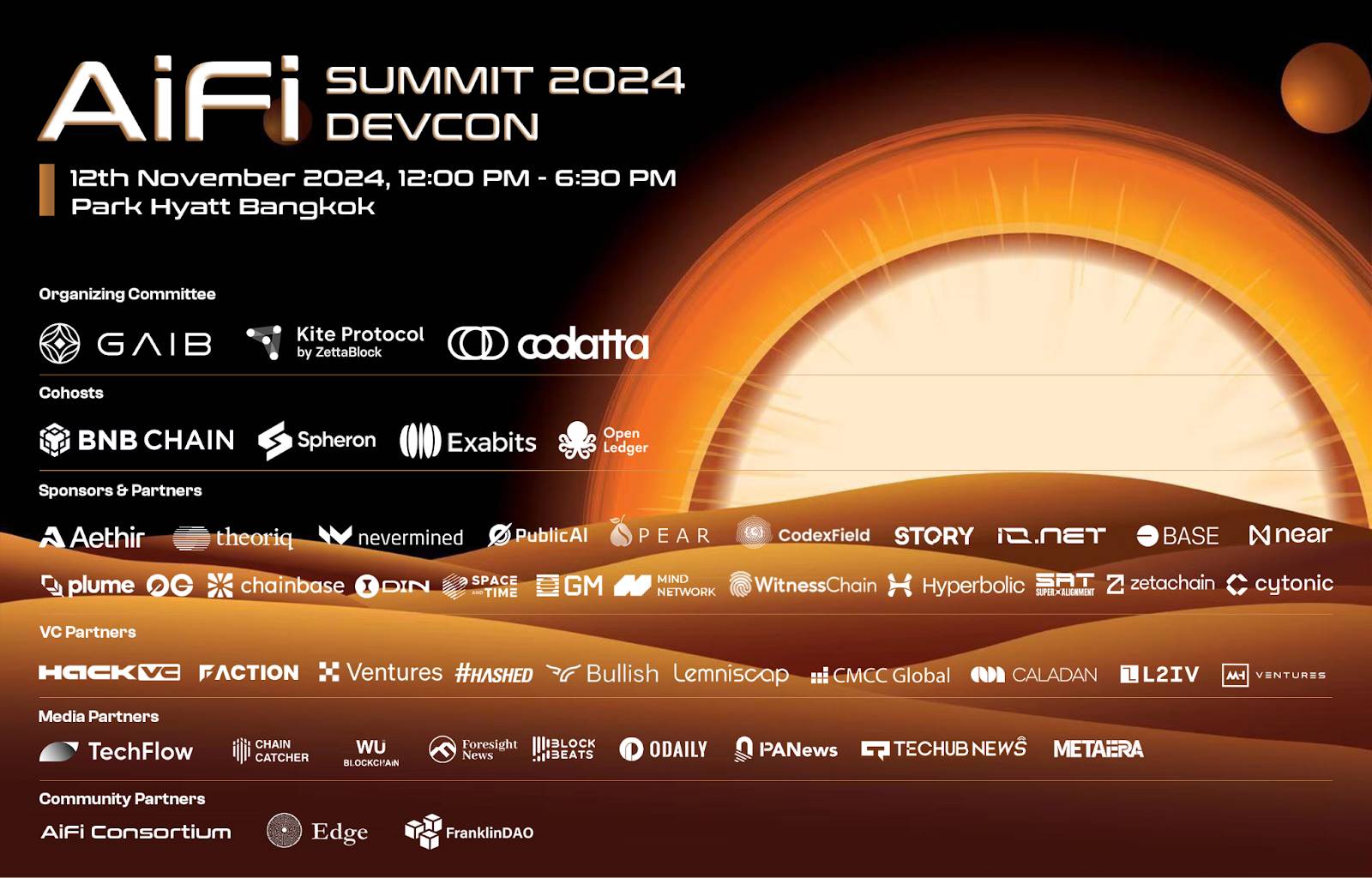
The AiFi Summit 2024 Devcon, co-hosted by GAIB, Codatta, and Kite AI (formerly ZettaBlock) at the Park Hyatt Bangkok, has successfully concluded.
 Navigating Web3 tides with focused insights
The AiFi Summit 2024 Devcon, co-hosted by GAIB, Codatta, and Kite AI (formerly ZettaBlock) at the Park Hyatt Bangkok on November 12, concluded successfully. The summit attracted 1,300 registrants with over 500 attendees in person. Representatives from 27 projects and investment firms—including PayPal, BNB Chain, Base, NEAR Protocol, Story Protocol, 0G, Aethir, io.net, Exabits, Plume, Space and Time, Hyperbolic, Faction, Hashed, and Coinbase Ventures—delivered insightful talks.
Sarah, Head of APAC at BNB Chain, delivered the first keynote speech. She presented an overview of the BNB Chain ecosystem, various developer support initiatives, and shared updates on BNB Chain’s progress in AI applications.
In the following keynote, Kony, CEO of host organization GAIB, shared his views on emerging opportunities in the computing power market. He emphasized that AI represents the most significant era since mobile internet, with compute capturing a substantial share of value across the value chain. Compared to other financial assets, investing in GPU compute resources offers unparalleled returns. However, current challenges include inefficient connections between two key parties: operators who face high financing costs when scaling GPU infrastructure, and investors who struggle to directly access compute assets and often resort to investing in semiconductor stocks like NVIDIA. GAIB aims to address this by tokenizing compute assets and their cash flows, providing decentralized, transparent, on-chain assets backed by AI-generated revenue.
The first panel discussion at AiFi Summit focused on "AiFi: Financialization of AI & Compute Assets." Core team members from GAIB, Exabits, io.net, Aethir, WitnessChain, and Plume discussed current opportunities, challenges, and regulatory considerations within the AiFi space.
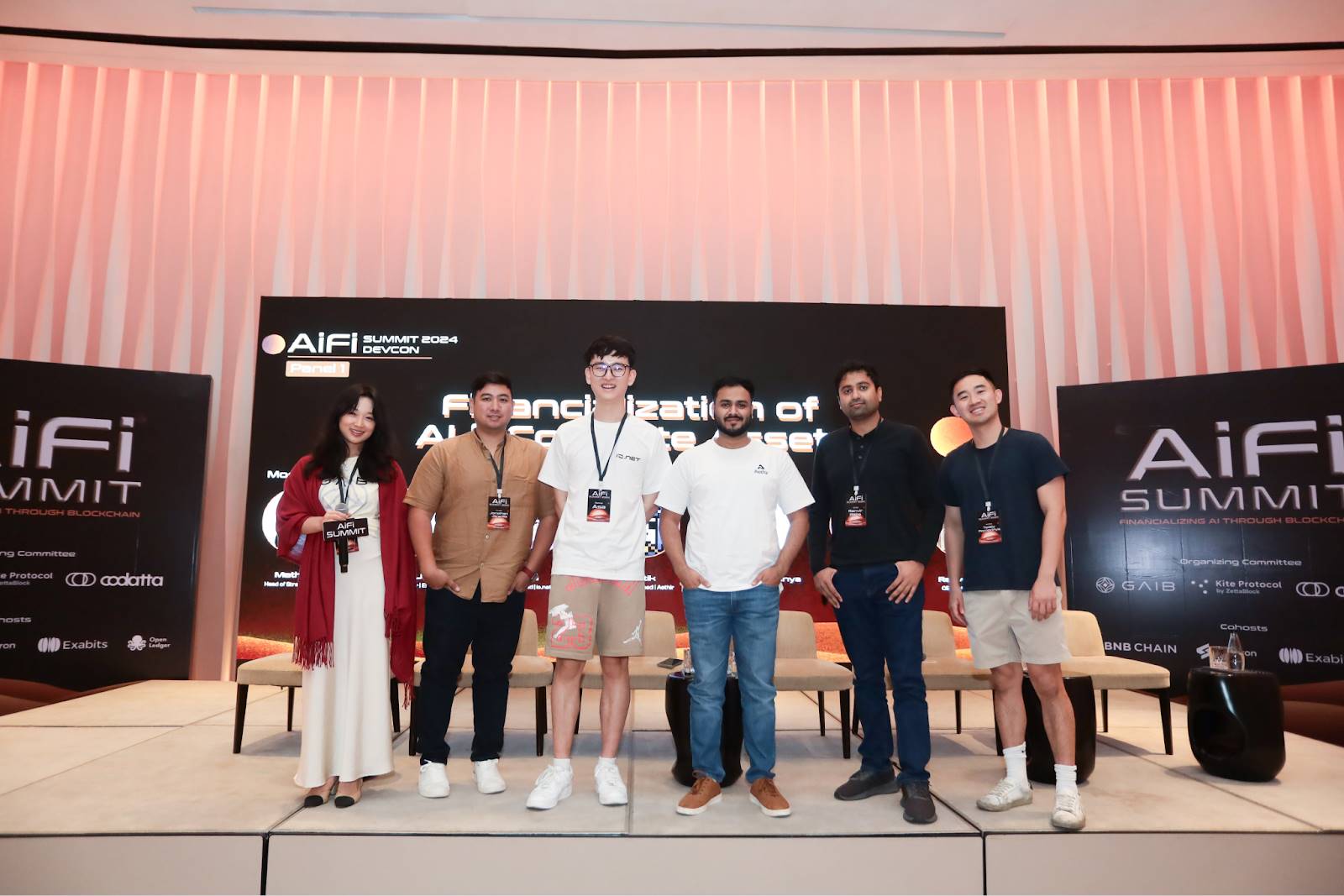
Jonathan, CIO of Exabits, noted that users seeking GPU access typically rely on major cloud providers such as AWS or Azure, which primarily serve large enterprises—limiting growth potential for startups. A more open and democratized GPU resource model could empower SMEs. In the Web3 world, anyone can become a GPU investor, breaking AWS's dominance in compute—a massive industry opportunity.
Asa, APAC Lead at io.net, highlighted that independent data centers outside the three major cloud providers still have 50% of their GPUs underutilized due to limited user reach. Since GPUs require continuous operation and maintenance, designing incentive mechanisms that protect the interests of investors and other participants remains a key challenge in the AiFi sector.
Kartik, Ecosystem Lead at Aethir, pointed out that aligning compute demanders, operators, and investors around a blockchain-based marketplace involves significant hurdles. Regulatory risks also exist—for example, token-based incentives for data center services may raise compliance issues in certain jurisdictions, requiring clear boundaries defined in customer agreements.
Ranvir, Co-Founder and CEO of WitnessChain, proposed that computing power, as a new asset class, requires novel pricing mechanisms. There is no universal formula for valuing compute; different platforms and GPU models vary in cost and performance. Moreover, varying contributions from different GPUs performing the same task create opportunities for innovative financial designs.
Teddy, CBO of Plume, added that regulatory caution is essential when introducing new asset types. For AI-related assets, existing compliance frameworks can help ensure legitimate and viable trading—an area where Plume actively supports ecosystem projects.
In the next keynote, Yi, CEO of Codatta, explained how decentralized data trading can accelerate progress toward AGI and outlined Codatta’s role in this transformation. He stressed that only vertical-specific data enhances foundational models’ reasoning and planning capabilities in niche domains, and achieving AGI requires aggregating vast datasets across diverse verticals. Each piece of data contributed by users can be applied across multiple use cases, each monetized by different companies—meaning contributors can earn ongoing revenue over time. This recurring value is why data should be treated as an asset. Therefore, enabling easier data asset trading and fair market pricing becomes critical.
The second panel discussion centered on the Open Data Economy. Key figures from Spheron, Theoriq, Space and Time, Hyperbolic, Base, and Nevermined explored the state of today’s AI data ecosystem, infrastructural needs, and future requirements for sustainable growth.
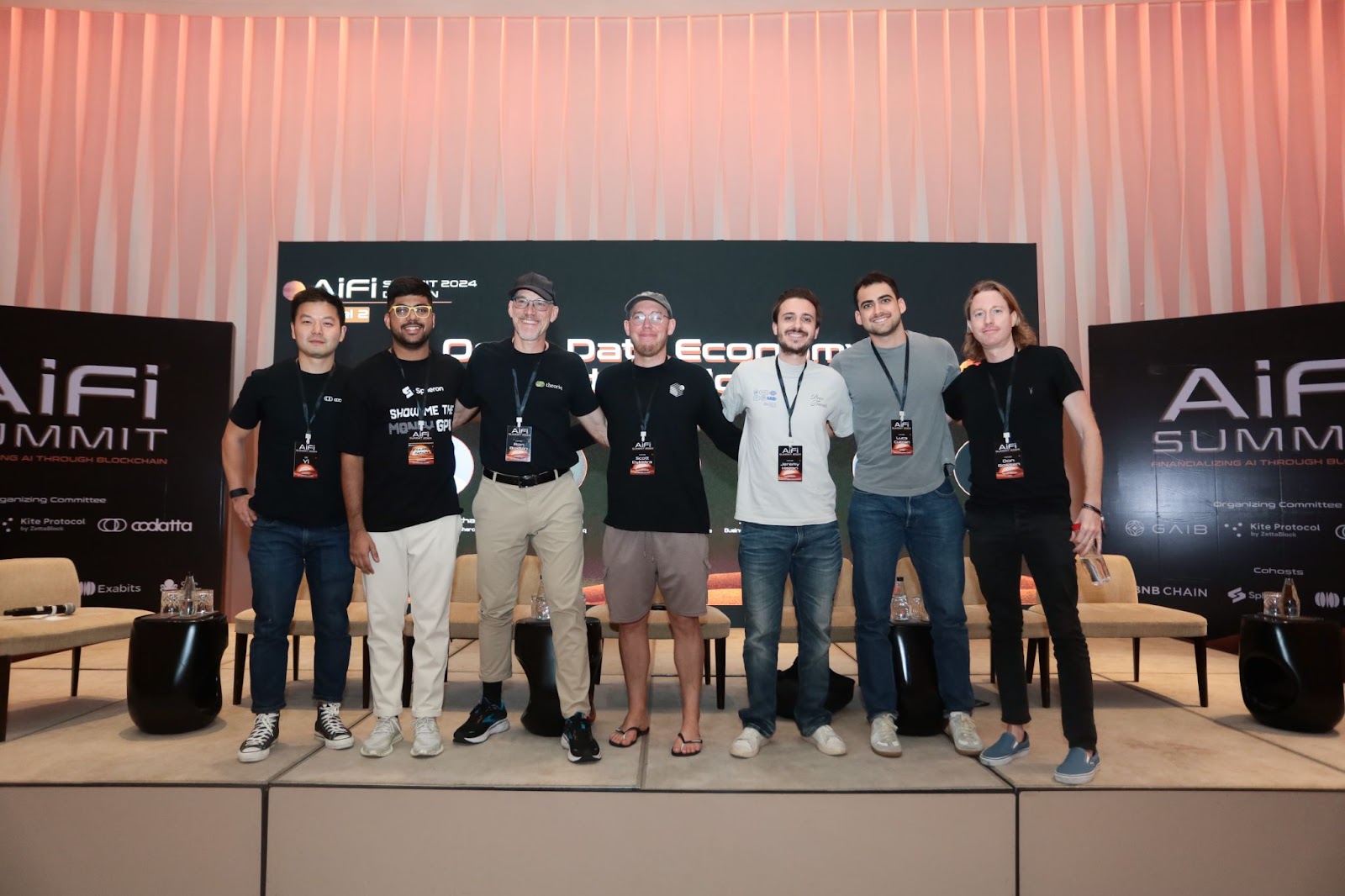
Ron, Co-Founder and CEO of Theoriq, observed that we are now seeing advanced AI applications beyond simple chatbots—such as governance bots on DAOs. These multi-agent systems are increasingly used not just in crypto but also in marketing and analytics. While many believe data’s primary value lies in model training, its role in decision-making is growing. Value is maximized when different agents access complementary data sets and collaborate effectively.
Scott, Co-Founder and CTO of Space and Time, said the company is building rule engines using smart contracts to enable agent systems to operate in trustless environments, allowing them to manage user funds securely—the ideal form for on-chain agents. Their product enables users to audit agent behavior history and enforce strict execution policies.
Don, CEO of Nevermined, argued that success in data markets depends on two factors: establishing control over data transactions and preventing low-value uploads by contributors. A viable approach is developing analytical tools tailored to specific data use cases, maximizing both utility and profitability of data assets.
Chi, CEO of Kite AI and one of the event organizers, announced a rebranding and launched the new artificial intelligence platform, Kite AI, during the summit. She discussed limitations in centralized AI development and how Kite AI expands AI frontiers through its solutions. Due to lack of data distribution channels and ownership verification mechanisms, vast amounts of personal and enterprise data remain inaccessible for large model training. Over the past year, the proportion of internet data available under open licenses dropped from 95% to 75%, making it difficult for model developers to access high-quality data and achieve breakthroughs. The industry urgently needs decentralized AI solutions to unlock valuable data.
The third panel brought together teams from GM Network, Mind Network, 0G Labs, NEAR Protocol, and Chainbase to discuss how Web3 companies can compete in AI, address data privacy concerns, and drive real-world applications.
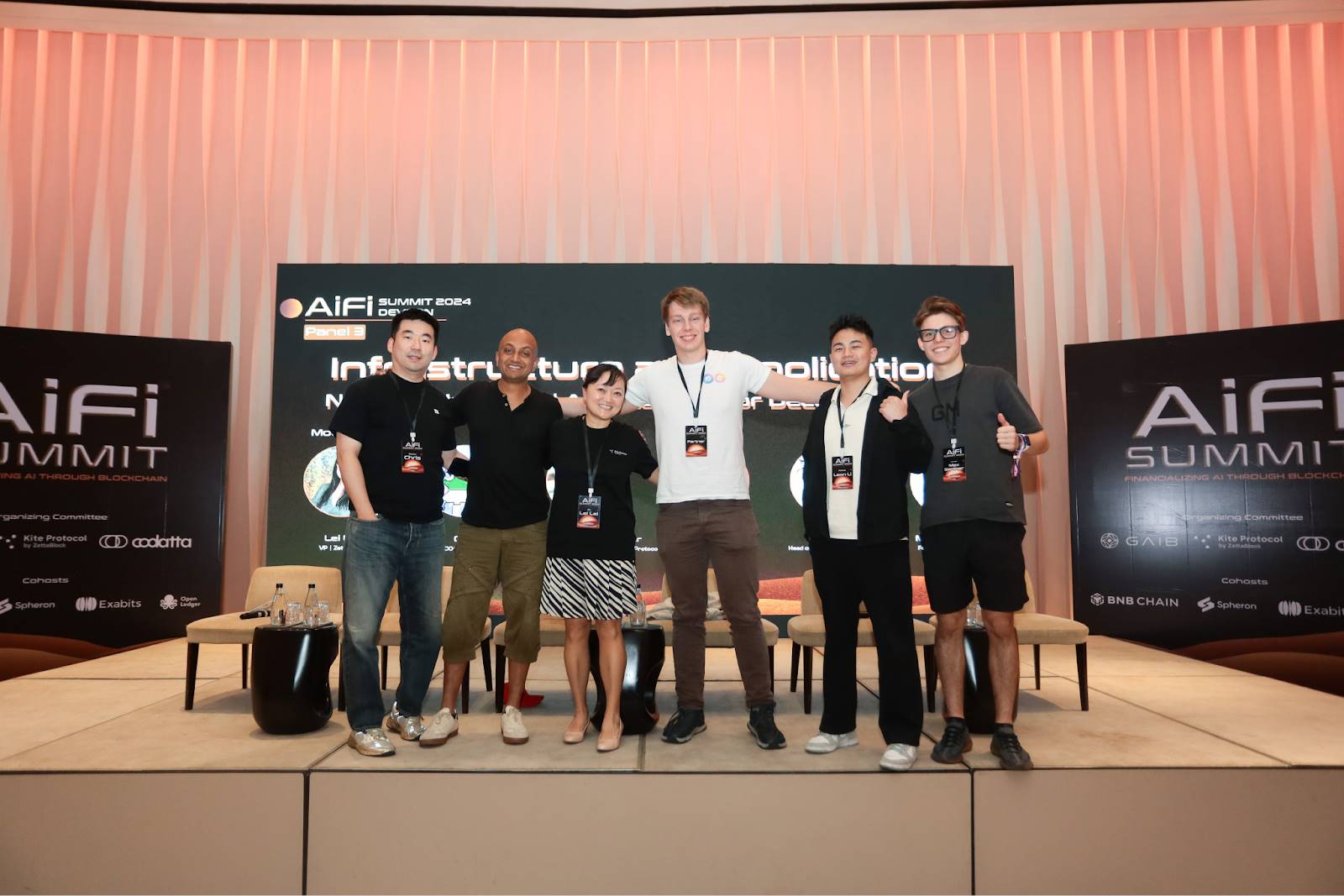
Max, founding team member at GM Network, stated that users continuously generate massive data, yet much of it goes unused, eroding its value. Integrating collected data with AI can make smart devices truly intelligent.
Leon, APAC Lead at Mind Network, noted that while perfect data privacy protection doesn’t exist, combining methods might yield workable solutions. To safeguard user privacy, Mind Network currently employs encryption at three layers: distributed storage encryption, fully homomorphic encryption during GPU computation, and application-level encryption.
Chris, AI Researcher at 0G Labs, explained that even with open-source AI models, it’s hard to know what data was used for training, leading to unpredictable performance in new scenarios and reduced model trustworthiness. With strong data storage infrastructure, 0G enables direct loading of data from the cloud into training pipelines, paving the way for verifiable, secure, and trustworthy models built on personal data validation.
Chris, COO of Chainbase, mentioned two prevailing narratives in the market: “crypto for AI” and “AI for crypto.” Using crypto to counter corporate control over data, compute, and models has been widely discussed. But recently, “AI for crypto” use cases—like truth terminals and AI-powered payments—are gaining traction, with more projects collaborating to support the AI ecosystem. Users care deeply about monetizing their data, so platforms must focus on equitable revenue sharing between contributors and consumers. Developers aren't driven solely by vision—they need time savings and income generation.
Later keynotes featured Bu Fan, Head of IPFi at Story Protocol, and Prakarsh, Ecosystem Lead at Spheron, who shared their perspectives on decentralized AI assetization and how their organizations are adapting to these trends.
Bu Fan noted several early-stage but promising applications of AI and crypto convergence: AI chatbots where creators build characters and issue commercial licenses on-chain; AI meme coins where creators legally link to original IPs and launch tokens; and selling model training data (e.g., images), enabling ongoing royalty collection via blockchain. These are nascent models still evolving. Story Protocol focuses on standardizing IP activities through tokens and enabling diverse forms of IP distribution. He believes most AI itself constitutes IP—if IP can be assetized, so can AI. For instance, training images can be IP, AI models themselves can be IP, and new content generated by AI models can be distributed and traded on-chain as assetized IP.
Prakarsh highlighted that in the AI era, compute will underpin most agents and AI applications. Distributed compute holds great potential—such as hospitals sharing knowledge across institutions while preserving data privacy, or local compute-powered AI dialogue systems evolving into personalized AI assistants.
The fourth panel focused on bridging the crypto and AI worlds. Investors discussed problems with centralized AI systems and where crypto + AI could offer breakthroughs.
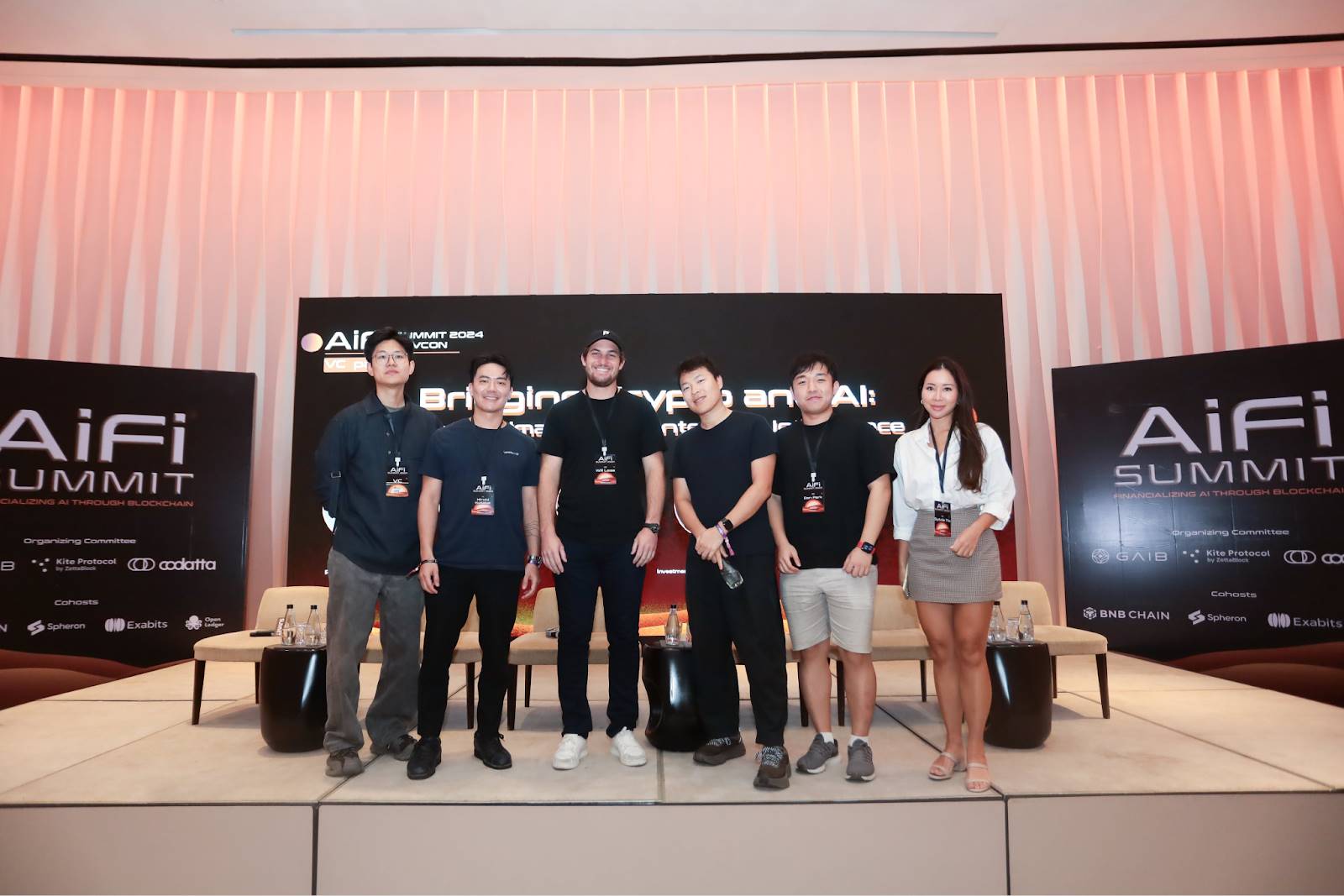
Hiroki, Research Lead at Lemniscap, identified two main challenges in building decentralized AI networks: scalability of distributed compute networks lags behind centralized counterparts, and ensuring consistent quality of user-contributed data remains difficult.
Will, Investment Partner at Faction, said AI can already plan your entire vacation—but cannot execute payments. He believes AI agents need cryptocurrency wallets acting as bank accounts, creating huge opportunities in payment tech stacks, as all financial transactions would flow through these agents.
Ryan, Investment Partner at Coinbase Ventures, noted that most models today only access public data, missing sensitive private data like finance or healthcare records. Crypto can enable access to private data pools, enhancing AI performance in specialized fields. Current agent systems cannot perform highly complex tasks because they fail to understand and act upon smart contract content. We need large models capable of retrieving, interpreting, and explaining smart contracts in human-readable terms.
Dan, Investor at Hashed, stated that current incentive systems in distributed AI are inadequate. Within the AI value chain, only a few make significant positive contributions, yet their efforts aren’t properly rewarded. Poor allocation mechanisms lead to inequity. Additionally, community-owned models must be secure and controllable, with parameter ownership returned to the community for research—not kept as black boxes by centralized firms. If a model serves emotional companionship, it should especially be governed in an open environment.
Sylvia, Director at Bullish Capital, emphasized that incentive design must begin with a clear understanding of actual needs. For example, if edge devices are required, designers must figure out how to locate and coordinate numerous distributed compute units. Without resolving architectural optimization issues first, effective incentive models cannot be built.
This concludes the full recap of AiFi Summit 2024 Devcon. Despite challenges in regulation and incentive design, the AiFi sector brims with opportunity. As markets reach new highs and AI gains momentum across sectors, the overall industry outlook remains positive—with growing talent inflow and increasing innovation on the horizon.
For more information, follow:
GAIB: https://x.com/gaib_ai
Codatta: https://x.com/codatta_io
KITE AI: https://x.com/GoKiteAI
Join TechFlow official community to stay tuned
Telegram:https://t.me/TechFlowDaily
X (Twitter):https://x.com/TechFlowPost
X (Twitter) EN:https://x.com/BlockFlow_News
 @gaib_ai