Interview with a16z Co-Founder: America's Future Amid Technological Advancements from AI and the Regulatory Battle
TechFlow Selected TechFlow Selected
Interview with a16z Co-Founder: America's Future Amid Technological Advancements from AI and the Regulatory Battle
Delve deeply into key issues such as job displacement, censorship, and the evolving role of free speech in a rapidly changing world.
 Navigating Web3 tides with focused insights
Compiled & Translated: TechFlow
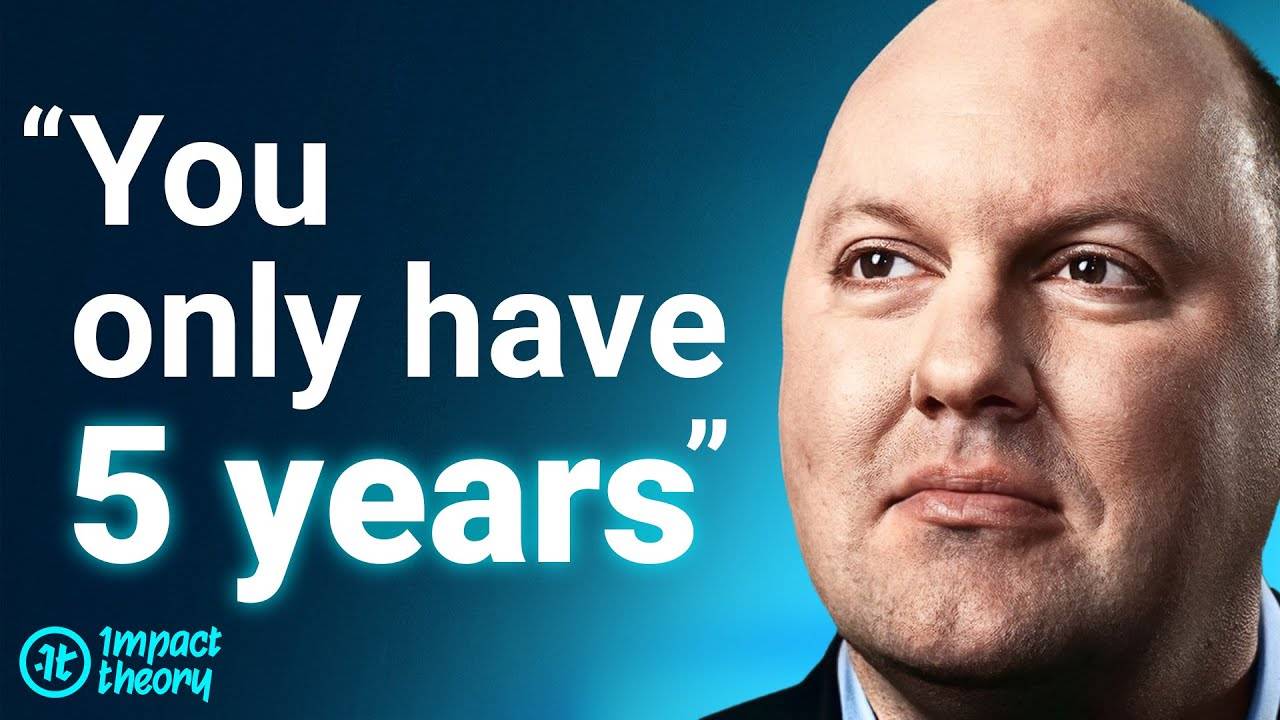
Guest: Marc Andreessen, Co-founder of a16z
Host: Tom Bilyeu
Podcast Source: Tom Bilyeu
Original Title: AI is bigger than the internet” – How AI will change EVERYTHING | Elon Musk Censorship | Marc Andreessen
Release Date: October 22, 2024
Background Information
Welcome to another thought-provoking episode of Impact Theory hosted by Tom Bilyeu. Today, we dive into an in-depth conversation with legendary entrepreneur and investor Marc Andreessen. Tom and Marc explore a wide range of topics—from the future of technology and artificial intelligence to the complex dynamics shaping the American economy and society.
Marc shares his optimism about America’s potential, particularly driven by its diverse and ambitious population, while Tom raises pressing questions about inflation, government regulation, and economic growth. They discuss how technological advances—especially in AI and robotics—could revolutionize industries, but may also clash with traditional values and social norms.
We’ll delve into critical issues such as job displacement, censorship, and the evolving role of free speech in a rapidly changing world. Marc discusses “slow-moving sectors” like healthcare, education, and housing, emphasizing the urgent need to integrate technology to reduce costs and drive growth. Without such transformation, political tensions could escalate as people compete over shrinking resources.
This episode is packed with deep insights on the historical and future impact of technology on the economy, the role of government regulation, and shifting religious and cultural ideologies. Prepare to challenge your perspectives and gain a deeper understanding of the forces shaping our future. Buckle up—this is a discussion you won’t want to miss!
How Companies Are Shaping the Future with AI and Robotics
The Significance of AI
-
Marc states that the battle over AI censorship will become more intense and significant. He believes rapid technological progress will drive economic growth, but this requires public attention and support.
-
Tom argues that AI will replace many jobs; some individuals will re-skill and adapt, while others may not. Both guests emphasize the importance of preparing for these upcoming changes.
The Profound Disruption of AI
-
Marc emphasizes that AI represents a fundamental shift, comparable to the advent of microprocessors and the internet. His optimism about AI spans multiple industries, especially healthcare and entertainment. He notes that AI will bring significant breakthroughs in medicine, while the entertainment industry is already experiencing a surge in creativity.
Advancements in Robotics
-
Marc discusses the potential of robotics, referencing past promises about home robots and automation. He points out that with advancing technology, applications like self-driving cars and drones are maturing. He predicts that household robots will gradually enter the market within the next five years.
Challenges Facing Robotics
-
Marc highlights three major challenges for robotics: physical control, energy supply, and software development. Despite progress in sensors and data processing, hurdles remain in battery life and adaptability in complex environments.
Human-Robot Interaction
-
On how robots should interact with humans, Marc believes they should be designed to be friendly and safe. He notes that modern language models now allow robots to communicate naturally with humans, opening up infinite possibilities for future product design.
Social Acceptance of AI
-
Tom presents a view of societal polarization, suggesting a future split between those who embrace technology and those who reject it. Marc expresses skepticism, arguing that although such a divide may exist, most people will ultimately adopt new technologies—similar to how the Amish selectively accept certain technologies.
From Science Fiction to Reality: The Rapid Rise of AI
AI Adoption and Applications
-
Tom and Marc discuss how artificial intelligence (AI) has rapidly evolved from a niche technology into a common tool in daily life.
-
Marc notes that AI systems like ChatGPT and Midjourney now have hundreds of millions of users, with usage growing rapidly. Many people use these tools at work and in learning, even if they’re reluctant to admit it to their superiors.
Democratization of Technology
-
Marc emphasizes that today’s most powerful AI systems are available to the public at extremely low cost—often free or for no more than $20 per month. This pace of adoption surpasses even that of personal computers and the internet. Users can access the same advanced technology as large corporations without high fees, fundamentally changing traditional views on tech accessibility.
The Future and Social Impact of AI
-
Tom expresses optimism about AI’s future, believing it will bring massive transformation. He acknowledges that AI will eliminate many jobs but will also create new opportunities. Tom believes younger generations, due to their adaptability, will leverage new technologies more effectively, while society must support those negatively impacted—possibly through mechanisms like universal basic income (UBI).
Inflation Crisis: Why Your Savings Are Shrinking
The Relationship Between Economy and Inflation
-
Discussing the economy, Tom raises a key question: despite massive productivity gains from technological progress, why does inflation persist? He argues that governments absorb technological gains by printing money, causing inflation to rise continuously. This dynamic leads people to make irrational financial decisions amid economic shifts.
-
Tom expresses frustration with current economic conditions, particularly angry about the explosion in money supply. He claims governments artificially inflate the currency, eroding ordinary people's wealth. Tom believes governments have a moral responsibility to offer a non-inflationary form of money so average citizens can preserve wealth without relying on the stock market to hedge against inflation.
Productivity and Technological Change
-
Marc discusses the relationship between productivity growth and technological change. He points out that historically, productivity grew faster in the decades before 1970 than it has since. Despite technological advances, productivity growth has remained relatively low over the past sixty years. Marc identifies 1971 as a turning point after which productivity growth significantly slowed.
The Impact of Low Growth
-
In low-growth environments, economies and politics often become zero-sum games. Marc argues that slow economic growth leads to social division and widens the wealth gap between younger and older generations. Conversely, rapid technological advancement and productivity growth foster prosperity, giving everyone a chance to benefit.
Price Disparities Across Industries
-
Marc observes stark differences in price trends across industries today. Prices for healthcare, education, and housing are skyrocketing, while prices for video games, entertainment, and consumer electronics are falling. This is because fast-changing tech industries face less government regulation, whereas slow-moving sectors are heavily regulated and constrained by fixed supply.
Future Outlook
-
Marc predicts that if current trends continue, the cost of a four-year college degree could reach one million dollars, while tech products will become dramatically cheaper. This imbalance increases economic pressure on individuals, especially in healthcare, education, and housing.
How Healthcare, Education, and Housing Drive Inflation
The Need to Introduce Technology
-
Marc argues that solving inflation in healthcare, education, and housing requires integrating more technology into these sectors. Fully automated, AI-driven healthcare and education, along with efficient housing construction, could drastically reduce prices and ease inflationary pressures. Without technological transformation, future politics will grow increasingly bitter as people fight over dwindling resources.
Labor Market Contradictions
-
Discussing the DOC (dockworkers) union strike, Marc notes workers demanded bans on new technology to protect their jobs. This contradictory stance reflects workers’ desire for higher wages while wanting job security. Yet such protectionism prevents many from engaging in productive work, increasing overall economic costs.
Concentrated Benefits vs. Diffuse Harms
-
Marc further explains the concept of “concentrated benefits and diffuse harms.” For DOC workers, job protection brings direct benefits, but consumers pay higher prices for goods. This pattern is widespread—special interest groups lobby governments for protection, ultimately reducing overall economic efficiency.
The Impact of Occupational Licensing
-
Marc adds that about 30% of U.S. jobs require some form of occupational license—a barrier especially prevalent in California, even for professions like cosmetology. Strict licensing limits new entrants, restricting competition and innovation, further driving up service prices.
Monopolies in Education
-
In education, Marc points out that federal student loans require colleges to be accredited—and accreditation is controlled by existing institutions. This self-protective mechanism makes it hard for new schools to open, limiting supply in the education market and pushing tuition higher.
Are Licensing Requirements Just Monopoly Scams?
Government Monopolies and Union Protections
-
Marc notes that K-12 education is not just a cartel—it’s a government monopoly. Many public employees, including teachers and police, enjoy civil service protections and union backing, making them difficult to fire. This system allows underperforming teachers to remain, worsening education quality.
Legal Barriers to Automation
-
Marc stresses that laws restrict AI applications in many fields. AI cannot legally serve as a lawyer, doctor, or builder—these activities are prohibited by law. Such legal constraints prevent automation across large parts of the economy, suppressing growth potential.
Explosion in Laws and Regulations
-
Marc mentions that since the 1970s, the number of U.S. laws and regulations has surged, severely constraining economic activity. He cites Judge Neil Gorsuch’s writings, noting that legal complexity has reached a level where ordinary citizens struggle to comply—and may unknowingly break laws. He emphasizes that many rules exist to protect special interests, creating “concentrated benefits and diffuse harms.”
Possibility of Economic Reform
-
On future reforms, Marc references Argentina’s new president Javier Milei, who is attempting massive deregulation to stimulate growth. He believes effective reduction of regulations could unlock higher growth and prosperity. Milei’s reforms have public support, as people are tired of high inflation and excessive regulation.
Free Speech and Cultural Discourse
-
Tom believes restoring free speech is crucial for economic recovery. He stresses the necessity of openly discussing differing views and balancing free speech with regulation in the AI era. Marc also affirms his strong support for free speech, advocating that the internet follow the principles of the First Amendment—restrictions should apply only when truly dangerous behavior is involved.
The Age of AI Censorship—What You Need to Know
Comparing Social Media and AI Censorship
-
Marc argues that censorship battles on social media were merely a prelude to AI censorship. He believes AI censorship will be far more intense and consequential because AI will become the “software layer” controlling everything—from education to communication. He notes that some AI systems already show clear bias, providing unbalanced information about political candidates.
The State of Information Warfare
-
Marc emphasizes that the conflict over AI censorship has already begun. Those who pushed for social media censorship are now turning their efforts toward AI. He warns this could become one of the most important political struggles of the next 30 years.
Controlling Truth and Framing
-
Tom voices concern about AI censorship, noting that control over framing can manipulate thinking. He argues that when AI promotes specific ideologies, it shapes perception and limits understanding of truth by setting the narrative framework.
Elon Musk’s Vision for AI
-
Marc mentions that Elon Musk’s AI projects aim for “maximizing truth-seeking,” encompassing both scientific and socio-political truths. He believes successfully building a truth-seeking AI would represent a fundamental transformation.
The Potential of Open-Source AI
-
Marc believes open-source AI could play a vital role in advancing truth-seeking, as it allows experimentation and development without permission, fostering broader discussion and debate.
Pressure from Governments and Activists
-
Marc warns that tech companies today face immense pressure from governments and activists—and this pressure may intensify. He stresses that whether the public cares enough to defend free speech will be decisive.
-
Marc concludes that the implications of AI censorship are profound. Society must remain vigilant, protecting free speech and the right to pursue truth. He calls on the public to actively engage in discourse to ensure AI develops in a way that promotes open exchange and truth discovery.
The Hidden Power Struggle Shaping Our Culture
Dual Standards in Cultural Censorship
-
Marc observes that many people today support censorship because they want to protect their own viewpoints. Historically, Christian conservatives were the main drivers of censorship in America, while the left championed free speech. Over time, power shifted—the left gained control of mainstream culture and now tends to restrict speech, while the right has become the defender of free expression. This shift reflects an ongoing cultural and power struggle: whoever holds power tends to limit speech.
The Importance of Free Speech
-
Tom underscores the importance of free speech, arguing that expressing ideas and facing challenges is central to thinking. Using Newtonian physics versus relativity as an example, he illustrates how scientific truth evolves through open debate and critique. For young entrepreneurs, accepting criticism and challenge is essential for skill development and acquiring practical knowledge.
Elon Musk’s Path to Success
-
On Elon Musk’s success, Marc highlights Musk’s unique working style and mindset. He emphasizes Musk’s focus on substance, rapid execution, and ability to quickly identify and resolve bottlenecks. This efficiency enables Musk’s companies to advance faster than competitors.
Opposing Bureaucracy
-
Marc also notes that many large companies become inefficient due to excessive bureaucracy and process. He cites Shopify CEO Toby Lütke, who periodically cancels all meetings and re-evaluates which ones are necessary—preventing ineffective meeting cultures. Such practices help maintain agility and keep employees focused on real work.
How IBM’s Corporate Hierarchy Killed Innovation
The Impact of Bureaucracy
-
Marc, discussing IBM, points out that corporate hierarchy and bureaucracy severely stifle innovation. He illustrates that internal decision-making at IBM was extremely complex, requiring approval from multiple layers of management. This “consensus” model meant every relevant manager had to agree—any single objection could block progress, preventing the company from adapting quickly to market changes.
Excessive Management Layers
-
Marc notes that during his time, becoming CEO required climbing up to 12 layers of management. This bloated structure slows information flow and reduces decision-making efficiency. As companies grow, connections between employees weaken—many may never meet colleagues from other departments, creating isolated silos.
The “Rubber Room” Phenomenon
-
Marc also mentions that similar to New York City public schools’ “rubber rooms,” IBM had its own version—underperforming employees were placed in roles with no meaningful responsibilities, further draining efficiency and killing innovation. This made it difficult for the company to respond swiftly to market challenges.
Culture and Innovation
-
Marc stresses that a company’s cultural health directly impacts its capacity for innovation. In bureaucratic environments, employees often lack motivation and creativity, as their ideas get buried in layers of approvals. In contrast, leaders like Elon Musk promote flat structures and fast decision-making, encouraging employees to innovate and experiment quickly.
The Societal Impact of AI: What It Means for Human Interaction
The Evolution of AI-Human Relationships
-
Tom presents a thought-provoking idea: in the future, people may form intimate relationships with AI, and in some cases, choose to raise “AI children” together. This trend could lead to major shifts in social structures and human relationships. As technology advances, people may increasingly rely on AI to fulfill emotional needs, potentially replacing traditional human interactions to some extent.
Changing Culture and Fertility Rates
-
Marc further explores the global decline in fertility rates, noting it’s a widespread phenomenon reflecting human confusion and crisis in the face of modern life pressures. He links declining fertility to the search for meaning in life. As people pursue self-actualization, they may neglect traditional values around family and childbearing.
Meaning Crisis and Technology
-
Marc emphasizes that technology not only changes culture—but culture also shapes technological development. With AI’s rise, people may face a deeper existential crisis, as AI alters perceptions of intimacy, family, and reproduction. People might redefine “family” with AI companionship, sparking religious and cultural reflection and debate.
Shifts in Human Psychology
-
Marc adds that the experience of parenthood profoundly transforms one’s psychology and worldview. This transformation cannot be fully replicated through AI relationships, as the emotional bonds and unique experiences of human reproduction are beyond AI’s simulation. While people may form emotional attachments to AI, these connections differ fundamentally in depth and complexity from human-to-human relationships.
Looking Ahead
-
In the future, AI may become an indispensable part of human life, even partially replacing traditional intimate relationships. However, Marc reminds us that while AI offers convenience and companionship, genuine human interaction and emotional connection remain irreplaceable. We must enjoy technological benefits while preserving the value of interpersonal relationships and family, ensuring our emotional needs are met.
Why Human Relationships Matter More Than Ever Amid Falling Birth Rates
The Centrality of Human Relationships
-
Marc emphasizes that humans have a deep-rooted need to form meaningful connections—with both family and non-family friends. These relationships sit at the core of our lives, especially as declining birth rates reshape family structures. With more people choosing not to have children or fewer children, traditional family ties may weaken, making human connections even more precious.
The Impact of Falling Fertility
-
Declining fertility means many traditional family and community structures are changing. Marc notes that as more people opt out of parenthood, the transmission of cultural values may be disrupted. This shift affects not only individual lifestyles but could also deeply impact societal cohesion. People may increasingly rely on friends and communities to fill this void, seeking emotional support and belonging.
Material Wealth and Spiritual Exploration
-
Marc adds that while technological and AI advancements improve material living standards, they don’t automatically answer deeper questions about life’s meaning. Paradoxically, material abundance gives people more space to reflect on these profound issues. When survival is no longer the primary concern, people can better explore big questions about religion, philosophy, and lifestyle. Thus, as material conditions improve, the value of human relationships may rise further.
Religion and Human Connection
-
On religion’s influence, Marc notes that modern religious forms have evolved. While many no longer participate in organized religion traditionally, core religious values and inquiries about human existence persist across politics and culture. When facing life’s challenges and uncertainties, people often turn to some form of belief or value system—an increasingly visible trend in today’s society.
Future Outlook
-
As society continues evolving, falling birth rates may reshape human relationships. People may place greater value on connections with others to compensate for the loss of traditional family structures. At the same time, technological advances will offer new ways to build and sustain these relationships. Despite numerous challenges, in this fast-changing world, the importance of human relationships will only grow, becoming a key source of support and meaning.
Why Religion Is No Longer the Definer of Culture and Genes
Historical Links Between Religion, Culture, and Genetics
-
Marc notes that early Western civilization was built on families, tribes, and cities—all sharing bloodlines, culture, religion, and geography. In the past, religion was tightly bound to these elements, and changing faith was unthinkable. But as societies developed, these elements became abstracted, loosening religion’s ties to culture and genetics. Today, individuals can freely choose their religious beliefs regardless of birth background.
Modern Religious Choice
-
In today’s world, individuals can choose to be Catholic, Christian, Jewish, Muslim—or even create their own religion. This freedom turns religion into a “buffet,” allowing people to construct belief systems based on personal preferences. While this fosters innovation in religious concepts, it also diminishes religion’s overall significance in modern life.
The “Non-Seriousness” of Modern Religion
-
Marc observes that modern attitudes toward religion appear less serious. When religious beliefs become inconvenient, people are quicker to abandon or switch them. This reflects religion’s declining status in contemporary society—even though the human religious impulse remains, its expression and focus have changed.
Substitutes for the Religious Impulse
-
Tom proposes a hypothesis: the intensity of the religious impulse remains constant across cultures and contexts, but its target shifts. Using video games as an example, he notes people invest vast time and emotion in gaming communities, forming a sense of belonging akin to religion. This attachment satisfies the human need for community and identity. While not equivalent to traditional religion, it reflects our enduring desire for meaning and connection.
The Hidden Role of Religion in Building Strong Social Bonds
Religion, Group Formation, and Cohesion
-
Marc notes that historically, religion played a crucial role in group formation and social cohesion. In ancient societies, families, tribes, and cities were closely tied to shared religious beliefs. Initially, the family was the basic unit; over time, families formed tribes, and tribes united into cities—each level having its own deities and faiths. This religious structure strengthened bonds within families and tribes and provided spiritual foundations for city-building.
Survival and Religion
-
In ancient times, survival was harsh—famines, floods, and invasions constantly threatened group survival. In this context, religion served as a vital tool for unity and cohesion. Shared beliefs created collective moral obligations, helping groups withstand external threats and maintain stability.
The Religious Impulse in Modern Society
-
Although modern survival conditions differ vastly from ancient times, the human religious impulse persists. Tom suggests this impulse now redirects toward other domains—like video games and politics. People seek belonging and identity in these areas, forming new communities and cultural bonds. Teamwork and competition in video games exemplify the human need for group affiliation.
Morality and Blindness
-
Marc references psychologist Jonathan Haidt, highlighting how shared morality or religious belief unites people—but also fosters exclusion of differing views. This is especially evident in modern politics, where intense partisan conflict makes it harder to understand opposing positions, leading people to prioritize group loyalty over dialogue.
Politics as the New “Religion”
-
Marc and Tom agree that modern politics, to some extent, functions like religion. The passion and commitment people show toward politics often mirror the intensity of religious faith. Political beliefs influence personal choices and generate strong feelings of belonging. This shows that even as traditional religion wanes, the human need for belief and belonging persists—finding fulfillment in other domains.
-
As traditional religion loses influence, political beliefs increasingly serve as spiritual anchors. The fierce rivalries and deep loyalties in modern politics make politics function like a new religion. Whether throughout history or in today’s world, this shift reflects humanity’s eternal quest for meaning and belonging.
The Unexpected Link Between Productivity and Innovation
-
Marc notes that productivity growth is a key economic indicator measuring technology’s impact on the economy. Simply put, productivity growth means producing more output with less input. This can be illustrated by using more efficient tools and technologies to speed up railway construction, lower car production costs, or improve video game development efficiency.
-
The pace of productivity growth directly affects economic growth. When productivity rises, prices for goods and services typically fall. For example, 200 years ago, buying an avocado cost the equivalent of $100 today—now it costs just $1. This price drop increases consumer purchasing power, enabling people to buy more goods and services even without wage increases.
New Consumer Demand and Industry Development
-
As consumer purchasing power grows, demand for new products and services increases. This rising demand drives the emergence of new industries and job opportunities, creating a virtuous cycle. Marc believes that if AI develops as expected, productivity will rise significantly, further lowering prices and enabling more people to access what they want.
Technology Adaptation and Economic Growth
-
Marc emphasizes that introducing technology doesn’t cause unemployment—in fact, it creates more jobs and better working conditions. He notes that historical fears about technology replacing human labor have often been wrong. Technological progress usually boosts productivity and lowers costs, driving economic expansion.
Optimism About the Future
-
Though Marc remains optimistic about the future, he stresses that material well-being alone cannot solve all deep human questions. He believes material prosperity is foundational for addressing larger existential issues—but not the ultimate goal. He clarifies he isn’t promoting a new religion, but rather hopes technological and productivity advances will improve human living conditions.
Join TechFlow official community to stay tuned
Telegram:https://t.me/TechFlowDaily
X (Twitter):https://x.com/TechFlowPost
X (Twitter) EN:https://x.com/BlockFlow_News
 深潮TechFlow