
New to Web3? Which companies should you avoid as a worker?
TechFlow Selected TechFlow Selected
New to Web3? Which companies should you avoid as a worker?
In addition to caring about salary and days off like traditional employees, one should also pay attention to the employer's actual business domain.
 Navigating Web3 tides with focused insights
By Liu Honglin
As the broader economy slows down, layoffs at major internet companies are no longer news. Opportunities in traditional internet industries are also shrinking, prompting more and more professionals from these sectors to consider shifting into Web3.
* Job postings from certain Web3 projects
When they search for relevant information, such job listings appear frequently. These positions typically offer attractive salaries and flexible working hours, making them seem like excellent career options. However, Manqin Lawyers warn new entrants unfamiliar with Web3: the industry has many different tracks, and entering it requires caution—some fields and companies should never be touched by personnel based in China.
A Red Line: Issuance and Fundraising of Virtual Currency
Since the September 2017 announcement by the People's Bank of China and six other departments titled *Notice on Preventing Risks Associated with Token Issuance and Financing*, issuing or fundraising via virtual currencies has been clearly defined in China as "unauthorized illegal public financing." This stance was further reinforced in September 2021 by the *Notice on Further Preventing and Addressing Risks Related to Virtual Currency Trading and Speculation*, jointly issued by the People's Bank of China, the Supreme People's Court, and nine other agencies. From 2017 to now, over a hundred criminal cases—large and small—have occurred within China, involving charges such as "illegal absorption of public deposits" or "fraudulent fundraising."
A well-known example is the Light Cone Coin (LCC) issued by Tianyi Jiahe between 2017 and 2018. At its peak, hundreds of thousands held the token. Eventually, those involved were imprisoned and convicted of fraudulent fundraising. An earlier case includes Dasheng Coin, issued domestically by Guozheng Company from 2016 to 2017, which similarly ended in a conviction for fraudulent fundraising.
Therefore, newcomers to Web3 must first recognize this red line. The crypto community broadly acknowledges this rule: legitimate new project teams conducting ICOs (Initial Coin Offerings, analogous to IPOs in traditional finance) will explicitly exclude Chinese users and RMB as a payment method. When domestic professionals are considering employment opportunities, if the employer’s operations may involve virtual currency issuance targeting mainland China, they must exercise strong legal awareness and make informed decisions.
High Risk: Exchange Operations
According to the September 2021 *Notice on Further Preventing and Addressing Risks Related to Virtual Currency Trading and Speculation* issued by the People's Bank of China, the Supreme People's Court, and ten other agencies, cryptocurrency exchange services—including fiat-to-crypto and crypto-to-crypto trading—are officially classified as illegal financial activities. Around the time this notice was released, exchanges operating in China began shutting down one after another.
Regulators specifically summoned exchanges still operating domestically at the time—including Huobi, Binance, and OKX—and required them to submit plans for winding down their mainland operations. All eventually relocated overseas. Only a few small platforms that were inherently fraudulent and refused to comply with regulations—such as the so-called Aston Exchange and ICC Investment Platform—ended up being prosecuted for fraud.
Today, while major exchanges operate under licenses abroad and have achieved compliance internationally, many emerging exchanges lack such compliance awareness. Newcomers entering Web3 should remain vigilant: if an employer's business involves serving Chinese users through exchange-related activities, they must recognize the serious legal risks involved.
Extreme Caution: Cryptocurrency Mining
Unlike the two previous risks, the act of mining using mining machines does not directly trigger financial regulatory or criminal liabilities under Chinese law. However, mining operations in China may violate the *Energy Conservation Law* and could result in fines or forced shutdowns by authorities.
In fact, most large-scale mining farms in China have already been shut down due to regulatory enforcement. In earlier years, Sichuan Province hosted numerous hydroelectric-powered mining farms thanks to low electricity costs. Some even acquired small hydropower stations solely to power their mining operations—these practices are now relics of the past. Currently, there are no legally operating large-scale cryptocurrency mining farms in China. Yet, criminals have exploited the concept: multiple pyramid-scheme-style传销 (multi-level marketing) cases centered around mining equipment have emerged across the country. Therefore, when new Web3 professionals encounter employers claiming to run mining operations domestically, they should immediately raise suspicions, investigate the true nature of the business, and avoid being drawn into unintended legal trouble.
Diligent Screening: Avoid Involvement in Money Laundering Crimes
Unlike the first three risks, which can often be identified through basic research, determining whether an employer’s operations involve money laundering may be difficult for newcomers to assess before joining. Precisely because of this uncertainty, extra vigilance is essential.
Globally, many Web3 applications leverage highly decentralized blockchain technologies, making them attractive tools for money laundering. In 2023 alone, Binance, the world’s largest cryptocurrency exchange, cooperated with judicial authorities on over 60,000 cases worldwide—most involving movement of criminal proceeds and money laundering activities. Whether before or during employment, whenever doubts arise about the legitimacy of certain operations, seeking advice from individuals who can provide accurate guidance is the right course of action.
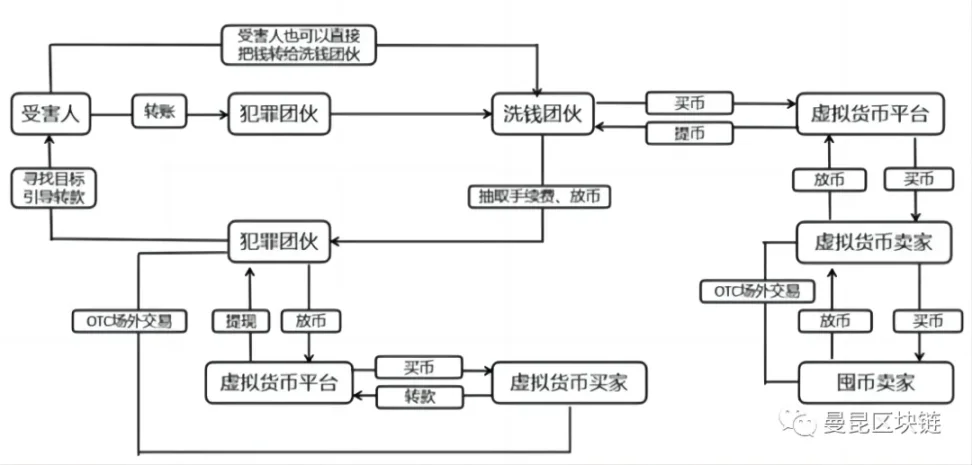
Back in early 2023, Manqin Law Firm published an article titled *Common Methods of Money Laundering Using Virtual Currencies and Associated Criminal Risks*, outlining typical patterns used in such crimes. Newcomers to Web3 are advised to stay alert—if a job involves operational models matching these known schemes, caution is paramount. Better safe than sorry.
Manqin Lawyer Summary
When applying for various Web3 roles, new entrants should pay attention not only to salary and rest days—as traditional employees do—but also carefully examine the actual business scope of potential employers. Of course, the Web3 space evolves rapidly, with new tracks and models constantly emerging. For non-experts, making sound judgments can indeed be challenging. When in doubt about the legitimacy of a position, promptly consulting someone knowledgeable about the industry is essential. Protecting oneself should be a fundamental mindset for every Web3 worker.
Join TechFlow official community to stay tuned
Telegram:https://t.me/TechFlowDaily
X (Twitter):https://x.com/TechFlowPost
X (Twitter) EN:https://x.com/BlockFlow_News