Interview with Syncracy Capital Co-Founder: Valuations of crypto infrastructure projects will decline over time, but application-layer projects won't necessarily rise in value
TechFlow Selected TechFlow Selected
Interview with Syncracy Capital Co-Founder: Valuations of crypto infrastructure projects will decline over time, but application-layer projects won't necessarily rise in value
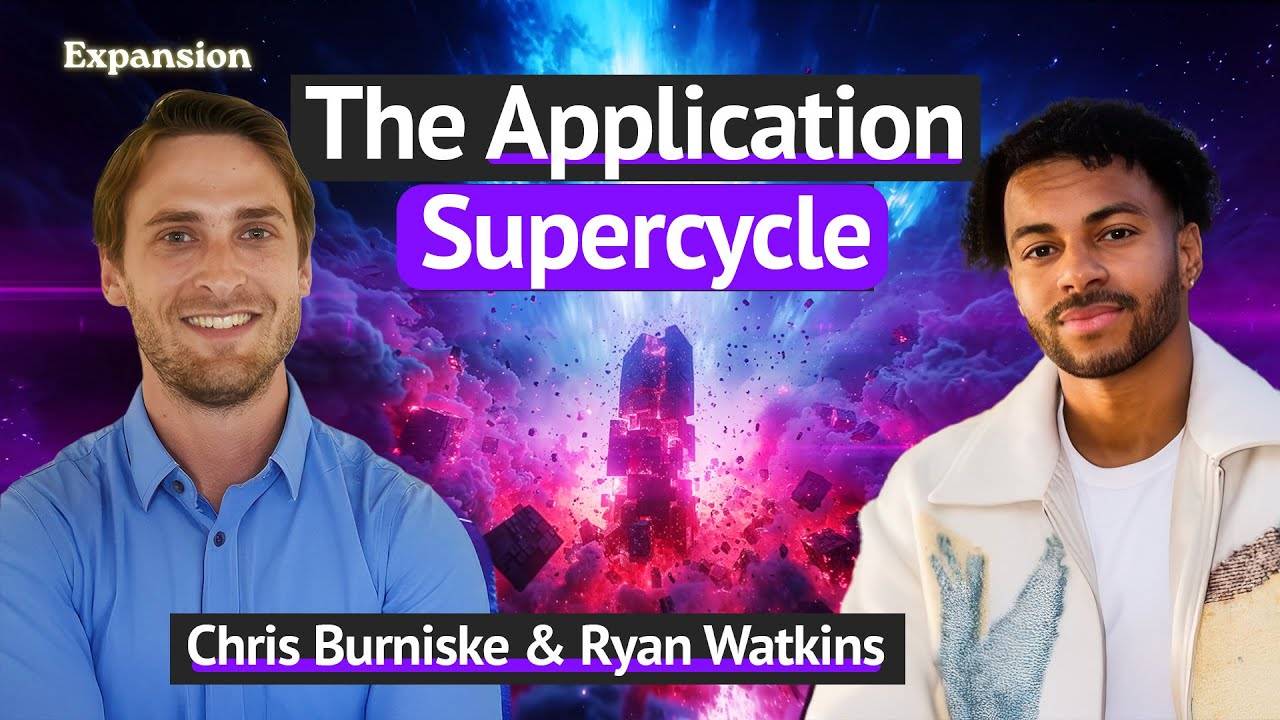
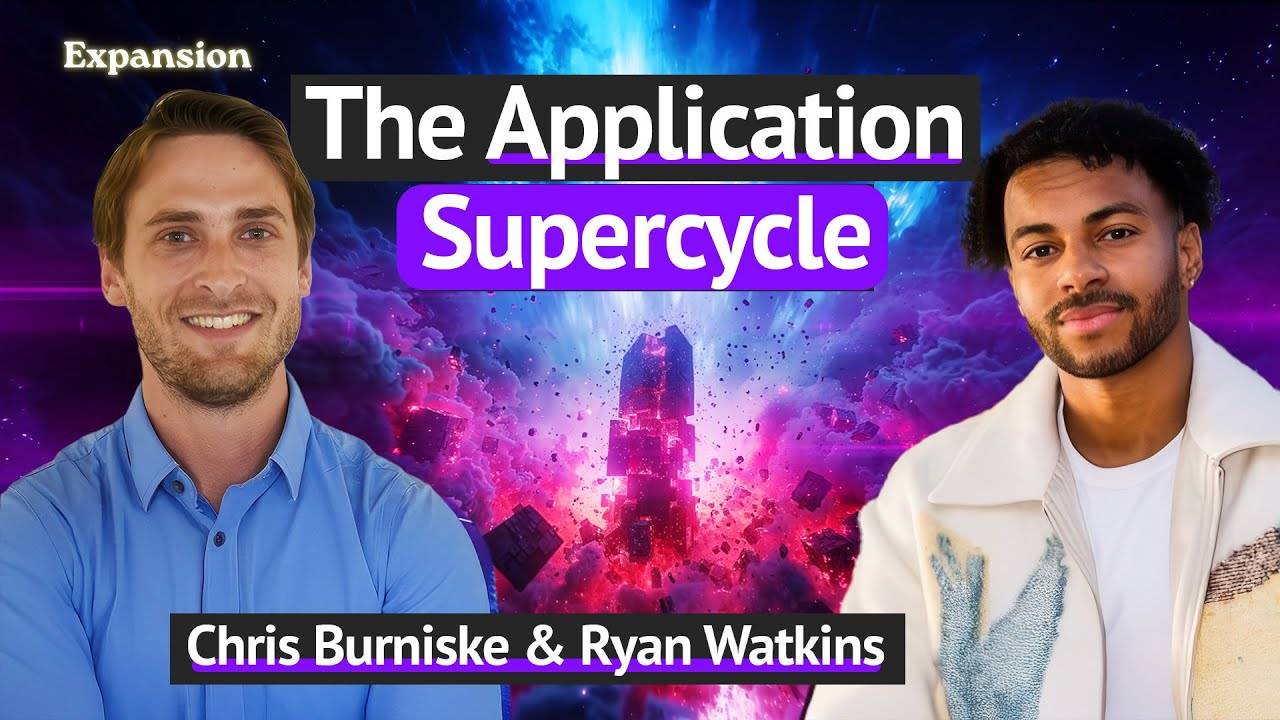
In this episode, Chris Burniske and Ryan Watkins join us to explore the evolving relationship between applications and infrastructure in the cryptocurrency space.
 Navigating Web3 tides with focused insights
Compiled & Translated by: TechFlow
Guests: Ryan Watkins, Syncracy Capital Co-Founder; Chris Burniske, Placeholder VC Partner
Host: Michael Ippolito
Podcast Source: Expansion
Original Title: L1 Valuations and the Rise of Apps | Chris Burniske & Ryan Watkins
Release Date: November 6, 2024
Background Information
In this episode, Chris Burniske and Ryan Watkins join us to explore the evolving relationship between applications and infrastructure in the cryptocurrency space. They delve into the current premium on infrastructure, examine how ETFs are reshaping market dynamics, and discuss new opportunities arising from the convergence of decentralized finance (DeFi) and artificial intelligence (AI). Thank you for listening!
Syncracy Capital is an investment firm focused on cryptocurrencies and blockchain technology. The company typically executes its investment strategy by investing in blockchain projects, crypto assets, and related tech companies. Syncracy Capital aims to leverage its deep understanding of blockchain technology and market insights to deliver high-return opportunities for investors.
Placeholder VC is a venture capital firm specializing in early-stage blockchain and cryptocurrency startups. Founded by Chris Burniske and Joel Monegro, Placeholder VC seeks to support and advance decentralized technologies. Through funding, resources, and expertise, the firm helps early-stage projects grow. It typically invests in blockchain initiatives and crypto-related ventures with strong innovation potential and long-term prospects.
Applications vs. Blockchain Infrastructure
-
Ryan noted that during bear markets, a common narrative emerges—that everything except Bitcoin is worthless. For long-time industry participants, this sentiment is familiar; when prices fall, confidence often wanes.
-
However, Ryan emphasized that internal data shows many applications are actually hitting record-high revenues—annual revenues reaching tens of millions, or even hundreds of millions of dollars—with rapid growth. In some cases, these apps generate more revenue than many infrastructure projects, despite the latter having significantly higher valuations.
-
Ryan further analyzed applications on Ethereum and Solana, finding their combined revenue may rival that of Ethereum itself. This trend suggests apps are capturing an increasing share of the overall blockchain fee pool, with application revenue beginning to surpass infrastructure revenue.
-
Chris added context on the valuation gap between infrastructure and applications. He pointed out that infrastructure valuations are often several orders of magnitude higher than those of apps—a phenomenon partly driven by market perceptions of “money.” He noted that currently, only Bitcoin, Ethereum, and Solana are widely seen as credible forms of money in crypto, and their valuations are based not on cash flows but on their perceived monetary properties.
-
Chris further explained that while a few cryptocurrencies may retain high valuations long-term, most infrastructure projects could eventually become commoditized, with valuations reverting closer to their actual utility.
Capital Inflows and Infrastructure Valuation
-
Michael echoed Chris’s view, suggesting the primary capital driver in crypto is currency debasement. He observed that people flee depreciating fiat currencies in search of harder commodity monies.
-
Michael also noted that while it's difficult to perform discounted cash flow (DCF) analysis on the U.S., proxy indicators can help gauge global investor demand. He compared Ethereum and Solana to U.S. Treasuries, highlighting their high liquidity as monetary assets, though future yield growth might slow.
-
Ryan then discussed Ethereum’s history, noting it was initially viewed as a programmable commodity money rather than an equity-like asset. As Ethereum launched, competitors emerged, prompting comparisons that inflated infrastructure valuations. Ryan suggested investors may not fully grasp the drivers behind these valuations, leading to widespread misunderstanding.
-
Ryan stressed that infrastructure should not be valued the same way as Bitcoin or Ethereum, since many such projects resemble businesses more than currencies. Projects like bridges and middleware lack monetary properties and thus shouldn't be judged by the same standards. Chris agreed, predicting valuations for non-monetary infrastructure could collapse.
Future Asset Classes and Value
-
Chris further explored the idea of Ethereum and Solana as "new-age treasuries," possessing characteristics of both money and cash-flow-generating assets. He noted Bitcoin functions as a commodity money akin to gold, underscoring the importance of understanding its core mechanics.
-
Ryan concluded by highlighting the complexity in valuing these diverse assets—comparable to blind men touching different parts of an elephant. Due to the lack of standardized benchmarks, intelligent individuals may arrive at vastly different conclusions, reflecting varied market perspectives.
Challenges in Infrastructure and App Development
-
Michael mentioned one key challenge in crypto is recognizing the uniqueness of these new systems. He noted that while Bitcoin’s return profile resembles other assets, its fundamental nature is entirely distinct. Many entering crypto impose existing worldviews, resulting in divergent views on “money” versus “applications.” Bitcoin maximalists often dismiss apps, while traditional VCs apply DCF models, overlooking monetary nuances.
-
Then, Michael raised a question about differing L1 (Layer 1) design philosophies, particularly comparing Ethereum and Solana. He observed that Ethereum follows a minimalist approach, allowing market forces to shape its ecosystem, leading to a rich layer of external infrastructure. In contrast, Solana is more integrated, offering built-in functionalities that reduce reliance on third-party providers.
Impact on Application Developers
-
Chris responded by emphasizing how infrastructure design affects app developers. He recalled Placeholder’s focus on Ethereum in 2018–2019, shifting toward Solana during the 2022–2023 bear market. He highlighted that Solana’s architecture enables faster development of efficient apps, citing the success of NFT marketplace Tensor as evidence of developer resilience even in tough conditions.
-
Ryan added that Solana’s integrated design allows developers to spend less time on infrastructure issues, freeing them to focus on user experience and retention. He estimated Solana teams spend only 20–30% of their time on infrastructure, compared to 50% for Ethereum and up to 80% for Cosmos teams.
Fragmentation of Ecosystems
-
Ryan further pointed out that as independent teams build heavily on infrastructure, ecosystem fragmentation becomes inevitable. He noted the absence of unified standards across ecosystems creates challenges in asset transfers and interoperability. Competitive visions make consensus difficult to achieve.
-
Chris added that such shifts take time to manifest, cautioning against premature declarations of victory. He referenced historical tensions between Bitcoin and Ethereum, and performance fluctuations across cycles, which complicate market interpretation.
Relative Performance of Ethereum and Solana
-
Chris discussed Ethereum’s relative underperformance, though he personally continues to hold and stake ETH. He believes Solana has performed better recently. Market complacency and wealth accumulation can breed laziness, requiring setbacks for renewal. Chris sees parallels with Bitcoin’s past cycles, now experiencing revival. He speculates Ethereum may undergo a similar transformation by decade’s end, facing directional choices influenced by Celestia, Bitcoin, and Solana.
Contrasting Design Philosophies
-
Michael then asked about Ethereum’s design philosophy—its minimalist stance allowing free markets to solve problems. For instance, Ethereum’s initial sharding challenge ultimately led the market to adopt a rollup-centric roadmap. In contrast, Solana takes a different path, embedding complexity into its infrastructure so product developers can build more smoothly.
Celestia’s Unique Direction
-
Discussing Celestia, Ryan offered an analogy: Celestia is like a Bitcoin with ZK opcodes, designed for low-cost user verification. He emphasized Celestia offers greater flexibility than Bitcoin, enabling developers to build more complex applications. Its design grants developers more control within an optimized blockchain environment, enabling superior user experiences.
-
Ryan further illustrated how projects like Uniswap could enhance UX by controlling multiple layers (wallet, frontend, protocol). This flexibility is a core advantage of Celestia, allowing apps to better meet user needs. He noted Celestia treats apps as chains, not just smart contracts, opening new possibilities in application design.
-
Finally, Michael highlighted short-term challenges for Celestia, including recent unlock events and price volatility, reflecting market sensitivity to investor sentiment. His remarks underscore how investors navigate risks and opportunities in fast-evolving crypto ecosystems.
The Endgame of Value Accrual
-
Chris began discussing current market attention on crypto assets, especially concerns around large token unlocks. He suggested that once fears subside, unexpected positive reactions may follow. Michael summarized their discussion, touching on the relationship between infrastructure and applications, and how value might accumulate across layers in the future.
Overview of the Fat Protocol Thesis
-
Michael referenced the famous “fat protocol thesis” and invited Chris to summarize its core argument. Chris explained the basic idea: in the internet stack, protocol layers (like TCP/IP, HTTP, SSL) capture little economic value, while applications atop them (e.g., Facebook, Google) accrue most of the value. In blockchain, the reverse holds—protocol layers (Bitcoin, Ethereum) have significant economic value, while application layers remain relatively undervalued.
-
Chris further explained that Joel’s theory posits that in early blockchain stages, protocol value dominates. However, over time, especially as new apps emerge, this dynamic may shift.
Value and Challenges in the Application Layer
-
Chris also noted that despite the dominance of protocol value, the application layer still holds promise. However, apps face hurdles in value accrual because blockchain enables data portability across platforms—unlike Web 2.0’s lock-in mechanisms. Users can reuse data across apps, intensifying competition.
-
He cited Coinbase as an example, noting it bears significant regulatory and compliance costs, creating a moat. Chris emphasized that investment success depends not just on opportunity, but also timing and scale.
Capital Flows Between Infrastructure and Applications
-
Michael agreed with Chris, suggesting current markets may see excessive capital flowing into infrastructure, while applications represent the next major opportunity. He believes investors and developers must reassess the value relationship between infrastructure and apps to find new growth vectors.
-
Michael noted that many fund managers are confident in this shift but uncertain about timing. He asked Chris and Ryan whether they sense similar caution among funds considering this value transition.
-
Ryan said from his perspective, relative value trades usually involve either overvalued assets falling or undervalued ones rising. He expects the valuation gap between infrastructure and apps to narrow—but leans toward infrastructure multiples declining rather than app multiples rising.
Valuation of Applications vs. Infrastructure
-
Ryan continued analyzing current app valuations, noting that while some apps generate solid revenue, their multiples aren’t cheap. Comparing to software companies, he found high-growth, high-margin firms trade at 10–20x, whereas average DeFi protocols command ~44x—far from inexpensive. He questioned why investors pay such premiums for apps that haven’t yet proven sustainable in crypto economies.
Market Sentiment and Investor Behavior
-
Chris agreed with Ryan, believing change may come slower than many expect. He added that infrastructure valuations will eventually fall below those of applications, with app valuations converging toward tech stock levels. Though meme coins lack fundamentals, their popularity might force infrastructure and apps to share profits, accelerating market maturity.
Market Maturation and Investor Evolution
-
Ryan emphasized that as asset classes mature, investor expectations become more realistic. While outsized returns were possible in the past, today’s environment demands rationality. Though apps offer return potential, investors still chase hard-to-evaluate assets.
-
Chris added that changing market participants will drive this evolution. With Bitcoin and Ethereum ETFs, Wall Street research and valuation methods are penetrating crypto. As financial infrastructures converge, professional investors will increasingly target apps with stable revenue, not speculative meme coins.
ETF Impact on Markets
-
Michael raised two questions about ETFs: first, differences in capital flows between Bitcoin and Ethereum ETFs; second, whether ETFs increase or decrease market volatility. Chris responded that as asset bases grow, volatility typically declines. While spikes may occur, long-term trends show decreasing volatility.
Bitcoin vs. Ethereum Capital Flows
-
Chris further analyzed Bitcoin and Ethereum ETF performance. He noted Bitcoin ETFs gained broader acceptance in traditional finance, while Ethereum lacks similar backing. He said Ethereum’s narrative remains fragmented, weakening its appeal. Ryan agreed, attributing Ethereum’s lag in inflows to poor timing and unclear messaging.
-
Ryan also mentioned that in the last cycle, mispricing Ethereum as an equity-like asset created flawed expectations. Valuing it like a stock is inappropriate—changing business models and declining transaction fees affect its attractiveness.
The Duality of Fees
-
Michael acknowledged the fee discussion, noting low per-transaction fees and high total fees can coexist. He argued that while some equate fee levels directly with market health, overall economic activity and value creation matter more than transaction cost alone.
Long-Term Market Outlook
-
Chris concluded by reaffirming his bullish stance on Ethereum. He advised that if one has no crypto exposure, diversifying across Bitcoin, Ethereum, and Solana makes sense. Over time, he believes these assets will emerge as long-term winners.
Views on DeFi 1.0 and AI
-
Michael initiated a discussion on DeFi 1.0 and AI, asking Chris and Ryan for their thoughts. He noted that early DeFi projects like Maker and Aave have performed well within the Ethereum ecosystem, with improved supply dynamics making their market cap to FDV ratios more robust.
Potential of DeFi 1.0
-
Ryan expressed optimism about DeFi 1.0, stating that despite elevated valuations across the app sector, projects like Maker and Aave remain attractive at reasonable multiples. He highlighted their rapid growth, upcoming upgrades, and ability to generate substantial fees—building real businesses on-chain.
-
Ryan also noted that attention to supply dynamics is justified, as many tokenomics were poorly designed in the past, often disadvantaging retail investors. Yet some assets have resolved their release schedules, enhancing market appeal. For example, Maker conducted significant buybacks last year, effectively supporting its own token.
Rise of AI
-
On AI, Michael expressed strong interest, seeing it as a potential narrative catalyst. Ryan agreed, noting AI is becoming a legitimate field of knowledge with growing adoption. He believes AI applications will expand and converge with other technologies like blockchain, spawning new business models and opportunities.
Experiments with Small L1s and L2s
-
Chris offered an intriguing idea: small L1s and L2s might “nationalize” their financial infrastructure. Projects like Ronin could use open-source components to build their own DEXs and lending platforms, recycling liquidity and profits back into their native tokens. This model could empower smaller ecosystems to sustain core teams and boost token value.
Intersection of Cryptocurrency and AI
-
Discussing the crypto-AI intersection, Michael shared his enthusiasm, calling it a potential “0 to 1” innovation. Despite intense investment interest, he noted traditional markets lack clear AI investment vehicles. The space feels exciting—akin to DeFi Summer—with potential for unprecedented breakthroughs.
Analogy to DeFi Summer
-
Chris endorsed this comparison, calling DeFi Summer a fitting analogy. Though marked by volatility and confusion, it revealed important truths. Blockchain’s open data structure offers rich datasets for AI, making integration natural. Being permissionless, it allows machines and systems to interact freely—laying fertile ground for AI advancement.
Early Experiments and Development
-
Ryan shared his view that we’re in the early experimental phase of AI-blockchain convergence. Reflecting on early DeFi, he noted protocols were clunky but still inspiring. Projects like BidTensor are reimagining block reward distribution, using AI-related resources to incentivize GPU infrastructure development.
Rise of AI Agents
-
Ryan further highlighted the rise of AI agents as a key trend. He noted recent emergence of autonomous AI agents capable of interacting with blockchains via simple natural language commands. This new interface could lower technical barriers, bringing more people into on-chain development.
Cultural and Emotional Impacts
-
Chris also emphasized changes in human-machine interaction—no longer just commanding machines, but trying to understand and capture their attention. This shift could profoundly affect our emotions and reshape our relationship with technology.
Future Outlook
-
Ryan added that autonomous AI agents may soon control their own funds and pay humans for services. This vision prompts rethinking future work and income models, potentially transforming our technological relationships.
-
Ryan continued exploring the rise of AI agents, noting it’s still early but gaining momentum. He expressed surprise at their potential, especially as on-chain agent autonomy has advanced significantly in recent weeks.
Potential of AI Agents
-
Ryan gave an example: Coinbase recently launched a new agent development framework, easily connecting ChatGPT to its platform. Users can issue natural language commands—like creating a token—and the agent executes tasks. This simplification lowers entry barriers, enabling broader participation in on-chain development without coding expertise.
-
He elaborated on potential use cases, such as crowdfunding capital to run automated trading bots on-chain. Investors could jointly fund a project that operates autonomously. This excites him, opening new possibilities for DeFi protocols.
Looking Ahead
-
Ryan also noted the renewed excitement among friends reminiscent of DeFi Summer. He believes the market is maturing—assets are being priced more rationally, making the space more compelling. He looks forward to new innovations and projects emerging in the coming weeks, echoing the rapid pace of DeFi Summer.
Dual Perspectives on AI
-
Michael added that another fascinating aspect of AI is the stark divide in industry opinions—one camp sees immense potential, the other views it as a bubble or scam. Such polarization often signals promising opportunities.
-
He also noted that AI creators may surpass expectations, becoming pioneers in tech adoption. This emerging ecosystem of AI creators could unlock new business models and applications.
New Modes of Interaction
-
Chris further explored evolving AI interactions, stressing that we're no longer merely commanding machines but forming new relationships with them. The rise of AI agents leads us to treat them as equals—an emotional and societal shift with profound implications.
Join TechFlow official community to stay tuned
Telegram:https://t.me/TechFlowDaily
X (Twitter):https://x.com/TechFlowPost
X (Twitter) EN:https://x.com/BlockFlow_News
 深潮TechFlow