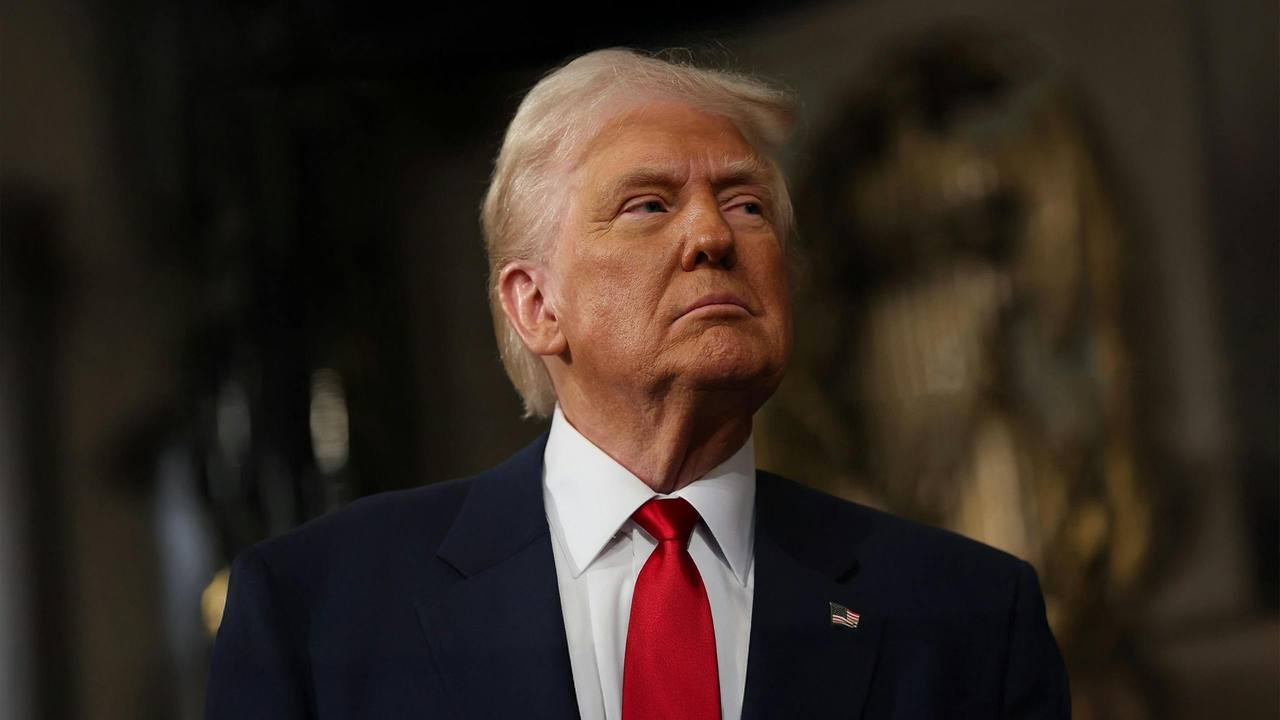
What will Powell do if Trump comes to power?
TechFlow Selected TechFlow Selected
What will Powell do if Trump comes to power?
Rate cuts may slow as "potential" Fed chair candidate calls for leadership neutrality.
 Navigating Web3 tides with focused insights
By Li Dan, Wall Street Insights
While Federal Reserve officials have long claimed their decisions are insulated from politics, for Fed Chair Jerome Powell, Donald Trump’s election victory brings new complications. Trump has a history of publicly criticizing the central bank and asserting presidential influence over monetary policy. Moreover, the economic agenda he championed during his campaign could reshape the U.S. economic outlook and force the Fed to rethink its policy path in the coming months.
Trump has pledged more aggressive tariffs on U.S. trading partners, mass deportation of undocumented immigrants, and an extension of the 2017 tax cuts. In October, 23 Nobel laureates in economics—including two this year’s winners—signed a joint letter endorsing Kamala Harris. Their primary concern was that Trump’s proposed policies on tariffs and tax cuts would drive up prices, widen government deficits, and deepen domestic inequality.
Derek Tang at LH Meyer/Monetary Policy Analytics believes Fed policymakers will be more cautious about the timing and pace of rate cuts as they assess how Trump’s economic plans might be implemented. Tang said:
“Marginally speaking, they (Fed policymakers) may view higher inflation risks in the coming years from tariffs or reduced immigration. Their mindset might be, ‘By slowing down rate cuts slightly, we can buy more time to observe actual inflation expectations and labor market conditions.’”
Merrill Lynch analysts said in a report on Tuesday that if Trump takes office and pursues fiscal expansion, the Fed could revise upward its estimate of the neutral interest rate. Additionally, if Trump significantly raises tariffs, the Fed might pause rate cuts due to concerns over inflation and economic growth.
Nick Timiraos, known as the “New Fed Whisperer,” wrote after Trump’s victory that the election outcome won’t immediately affect the Fed’s monetary stance unless the central bank gains a clearer understanding of Trump’s specific policies on taxation, tariffs, and immigration. If Republicans win both chambers of Congress, the Fed might “begin revising some core assumptions” at its December meeting.
Trump’s Public Criticism Could Fuel Doubts Over Fed Independence
In August, Trump said the U.S. president should have a voice in interest rates and monetary policy, criticizing the Fed for adjusting rates either “a little too early or a little too late.” He later suggested the Fed’s 50-basis-point rate cut in September was politically motivated. In October, he stated he shouldn’t dictate Fed actions but believed he had the right to comment on interest rate direction.
Bloomberg reports that Trump’s policy agenda could make the Fed’s job more difficult as it tries to bring inflation back to its 2% target while monitoring the labor market. At a delicate moment for achieving its goals, the Fed could be thrust into an uncomfortable political spotlight if Trump resumes his past practice of publicly attacking Powell.
Trump’s repeated remarks have sparked speculation that he might seek to curtail the Fed’s autonomy if re-elected. The report noted legal scholars have pointed out that during his first term, Trump considered firing Powell—an unprecedented move that would trigger significant legal controversy.
Sarah Binder, a political science professor at George Washington University, believes presidential criticism of the Fed could undermine public confidence. While the Fed is structurally independent, she said, “If people begin to doubt whether the Fed will act according to its stated principles, no amount of structural insulation can protect it.”
Former Trump Economic Advisor Hassett Could Be Next Fed Chair
Kevin Hassett, former chair of the White House Council of Economic Advisers under Trump, said skepticism about coordination between the Fed and the executive branch deserves attention, adding that “the next administration should select a neutral Fed leadership.”
Wall Street Insights previously noted that even as president, Trump has limited power to control the Fed. While the president can nominate a Fed chair, the Senate confirms the appointment. The Constitution grants the Fed high independence, meaning the president cannot remove the chair solely over policy disagreements. Firing a chair would likely require explicit court rulings.
The president can also shape monetary policy by nominating members to the Fed’s seven-person Board of Governors—the most direct way Trump could influence the Fed over the next few years. However, these nominations also require Senate confirmation, and the replacement process is intentionally slow.
Powell’s term as Fed chair ends in May 2026, while his seat on the Board expires in January 2028. Adriana Kugler’s term as a Fed governor ends in January 2026. Trump will have the opportunity over the next four years to appoint individuals to these positions.
Bloomberg reported that multiple sources close to Trump’s campaign team say Hassett could be Trump’s eventual pick for the next Fed chair.
Additionally, Vice Chair for Supervision Michael Barr’s term ends in July 2026. Barr’s initial proposal for stricter banking rules would require banks to increase capital by 16%, drawing strong opposition from the banking industry and Republicans.
Michael Feroli, JPMorgan Chase’s chief U.S. economist, noted in an October research note that if Barr follows precedent and resigns quickly after a president from the opposing party takes office, Trump could swiftly influence regulatory policy—even if he cannot directly control monetary policy.
Join TechFlow official community to stay tuned
Telegram:https://t.me/TechFlowDaily
X (Twitter):https://x.com/TechFlowPost
X (Twitter) EN:https://x.com/BlockFlow_News