Forbes Exclusive Interview with Blockstream Founder: Bitcoin's First Collaborator with Satoshi Reveals the Future of Bitcoin
TechFlow Selected TechFlow Selected
Forbes Exclusive Interview with Blockstream Founder: Bitcoin's First Collaborator with Satoshi Reveals the Future of Bitcoin
Adam Back has an ambitious plan: he wants the Bitcoin network to be more than just a store of value system.
 Navigating Web3 tides with focused insights
By Steven Ehrlich, Forbes
Translated by Luffy, Foresight News
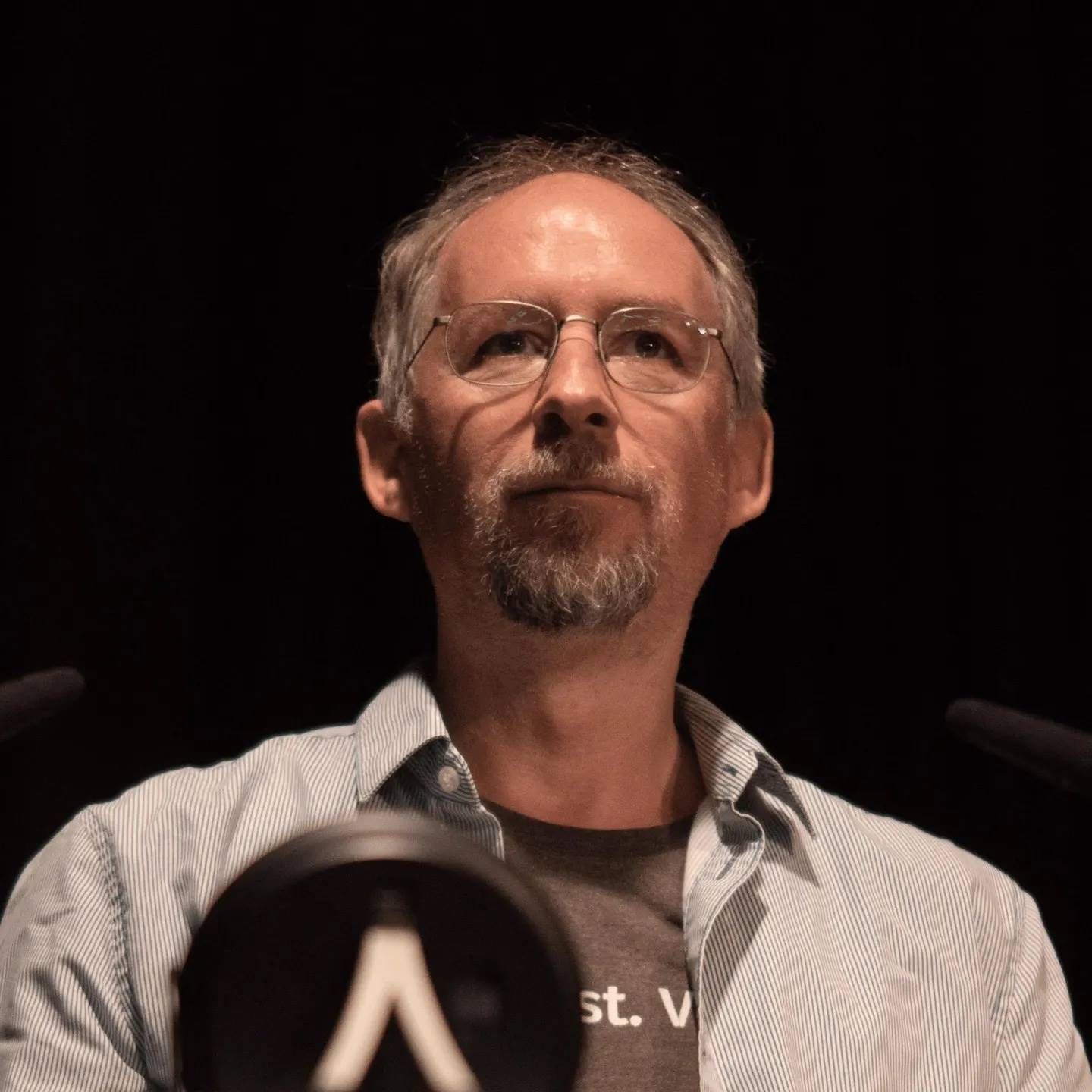
Dr. Adam Back, co-founder and CEO of Blockstream, is a British cryptographer and computer scientist best known for inventing Hashcash in 1997—an innovation that later became the foundation of Bitcoin's proof-of-work system.
As CEO of Blockstream, Back plays a central role in developing infrastructure and scaling solutions that are shaping the future of Bitcoin-based finance. Blockstream’s key innovations include the Liquid Network—the first sidechain for Bitcoin—designed to enable faster, more private transactions and seamless issuance of digital assets such as stablecoins and tokenized real-world assets (RWA). Back is well-known in the crypto community for having communicated with Satoshi Nakamoto, the anonymous creator of Bitcoin, prior to the publication of the seminal whitepaper in 2008.
In this interview, we briefly discussed some of Back’s early work related to Bitcoin, much of which ties into his current efforts at Blockstream. The company has just completed a $210 million convertible bond offering aimed at unlocking further functionality on Bitcoin.
Forbes: How did you initially start working with Satoshi Nakamoto?
Adam Back: I was the first person to receive an email from Satoshi Nakamoto before Bitcoin launched. That initial conversation wasn’t very detailed. I believe he had already developed the Bitcoin software, and what he did next was write the whitepaper to describe how it works. He asked me about the proper way to cite Hashcash. Later in our correspondence, he told me he had released the whitepaper and asked if I would be willing to download the source code for Bitcoin—around January 2009.
Forbes: Do you think it's important now to find out who Satoshi Nakamoto really is?
Back: I think it's becoming increasingly irrelevant because Bitcoin has been around for many years now and is a decentralized product. I view Bitcoin more as a discovery—because it's decentralized, there's no CEO or founder, unlike some other projects. Humanity discovered physical gold as excellent money, and now we've discovered something better: digital gold. We’ve gone through dramatic episodes like the block size wars, and ultimately the market prevailed. So even if Satoshi were to come back, it wouldn’t matter much. When you think about it, that’s actually a positive outcome—the market reflects users’ desires for electronic cash.
Forbes: Let’s talk about Blockstream. Bitcoin’s primary use case today is as a store of value. How do you reconcile that with the goal of making Bitcoin a widely used payment system?
Back: We’re pursuing both paths. We have one of the main implementations of Lightning, which is entirely focused on scalability and retail payments. Then we have Liquid, which focuses more on trustless trading, smart contracts, assets, stablecoins, and securities. Although I have a computer science background, in the mid-90s I was quite an active day trader and investor, and I’ve long been curious about what Bitcoin technology (blockchain) could do to improve trading infrastructure.
Events like the collapse of Mt. Gox showed us we need technology enabling atomic trades without custody. Right now, everyone hands over custody to exchanges, meaning you have to trust someone. Liquid is doing a lot here—it’s also being used for stablecoins and retail payments. A new development emerging now is cross-Lightning wallets; currently three or four teams are working on this. They look like Lightning wallets, but they're actually Liquid wallets that use trustless swaps to convert Liquid Bitcoin into Lightning Bitcoin when making a payment, and vice versa.
We’ve built a block explorer for Liquid, and an ecosystem has formed around it. A startup called SideSwap offers a trustless centralized order book where you can place limit orders. We’ve also developed our own hardware wallet to accelerate innovation—you can approve transactions directly on the device. This is highly innovative and exciting because you never give up custody.
Regarding the store-of-value aspect: since the pandemic, people have been thinking more about inflation. In the short term, cryptocurrency may feel unstable. But remember, about 50% of the global labor force operates in the informal economy—they’re paid in cash and lack government ID. These individuals have no direct access to the global financial system. It’s interesting because although Bitcoin is volatile, its volatility is less than that of certain emerging market currencies. So we see clear payment use cases for Bitcoin. Certainly, Bitcoin is also used in gray markets in the West, where industries might be legal but unsupported by banks—for example, cannabis sales in certain states and countries. Bitcoin does serve these purposes.
Forbes: I know usage of Lightning and Liquid platforms is growing, but in terms of Bitcoin transaction volume, the proportion remains relatively small. What’s your take on this? What measures could accelerate adoption across these networks? Also, I notice interest in stablecoins mirrors what you described in emerging markets. When trying to hedge against inflation risk, how do Bitcoin and stablecoins compare?
Back: In some ways, stablecoins are very convenient, while Bitcoin is somewhat unstable—a side effect of rapid adoption. For people with little savings who make weekly retail payments, this can create challenges. Stablecoins are very popular. There are several on Liquid, primarily USDT, plus newly issued ones pegged to the Mexican peso, euro, and yen. The yen stablecoin is somewhat special—it’s limited to over-the-counter trades only between yen and Bitcoin. So far, the market cap isn’t large—around $35 million. But this type of wallet is still in early stages. We’re working on projects that could achieve mass adoption and enhance retail payment utility.
We’ve seen other types of bonds issued on Liquid. One example is a $1.5 billion promissory note issued by Mifiel. Several large U.S. public companies funded the note, which then financed small business loans in Mexico. There were hundreds of loans, each ranging from $25,000 to $100,000 per company or individual. These activities used to be paper-based and error-prone. With this new funding mechanism, they’re using Liquid to track debt instruments that are tradable. When a lender issues a loan, they get a DocuSign; once linked to the borrower, another DocuSign is generated, and the issuer receives a transferable loan certificate, allowing them to resell it to other lenders.
Forbes: Let’s move on to your recent fundraising. How do you see companies centered on Bitcoin raising funds from investors differently from those raising capital via token offerings?
Back: I think the market has shifted. Trammell Venture Partners, a venture firm, published an annual report analyzing investment flows in the crypto market and Bitcoin allocations relative to other blockchains. Due to tokenization, VCs were previously heavily biased toward other networks—they didn’t need to build successful products that met market demand, as long as there was liquidity to sell tokens. But that began changing last year.
I also believe the altcoin market is saturated. There used to be 20,000 altcoins; now there are over 3 million, including memecoins. Another trend I’m seeing is rising interest in Bitcoin Layer 2s. We’re the oldest and largest company in this space. We also offer hardware and software wallets for consumers and conduct R&D in privacy technologies.
Now is a good time for us to scale this business. On Liquid, there’s also a properly regulated way to handle securities. Several different firms are doing this—one is Stockr, a Luxembourg-based fund manager specializing in securitization. We did something similar back in 2021: a Bitcoin mining note. We operated a mining facility hosting equipment for major companies like Fidelity, and we attracted significant retail interest. There’s even MicroStrategy (MSTR) stock available on Liquid now. You can trade it, and it has some interesting advantages compared to trading on Interactive Brokers—such as 24/7 trading.
Another novel aspect of our fundraising is that a significant portion of the funds paid by lead investors came in actual Bitcoin, which we will hold. We did this during our seed round back in 2021, when we raised $21 million. In a sense, we were early MicroStrategies, with Bitcoin on our balance sheet. Of course, many Bitcoin startups now do similar things, but we’ve been around longer than most—since 2014.
Forbes: What are the biggest risks facing Bitcoin or Blockstream?
Back: I think many of Bitcoin’s initial risks have subsided. Our original concern was whether a major country or economic region—like Europe, China, or the U.S.—would ban Bitcoin. That was highly uncertain and created significant perceived regulatory risk. But I believe Bitcoin is now sufficiently bootstrapped. Now, ETFs mean that financial institutions offering these products have a vested interest in expanding and maintaining them in the market. So I think banking and financial industry lobbying groups now support this. You also have allies such as sovereign wealth funds and nations buying Bitcoin or Bitcoin-related products and tools early on. So I believe many risks have diminished. Additionally, many technical risks have faded. Of course, blockchain scalability remains challenging, and there’s still room for innovation and improvement in how we achieve it. The Lightning Network is already very reliable for point-of-sale and peer-to-peer payments, but there’s still room to improve.
Join TechFlow official community to stay tuned
Telegram:https://t.me/TechFlowDaily
X (Twitter):https://x.com/TechFlowPost
X (Twitter) EN:https://x.com/BlockFlow_News
 Forbes