Token Launch at Peak, Delay Tactics, Exodus to Other Chains: Is the TON Ecosystem's Mini-Game Boom Fading?
TechFlow Selected TechFlow Selected
Token Launch at Peak, Delay Tactics, Exodus to Other Chains: Is the TON Ecosystem's Mini-Game Boom Fading?
It seems that the vast majority of mini apps are hard to avoid criticism from the community, as well as a fleeting, short-lived end.
 Navigating Web3 tides with focused insights
By Zen, PANews
Mini gaming apps within the TON ecosystem have been an inescapable topic in the crypto industry this year. With click-to-earn games like Notcoin and Hamster Kombat gaining popularity one after another, the TON ecosystem has experienced unprecedented growth. Particularly with Telegram-based game tokens such as Hamster Kombat launching on the TON network, the number of TON holder addresses has surged from just 4.3 million at the beginning of the year to surpassing the 100 million mark.
Yet beneath the apparent promise of mass adoption lies growing unease within the TON ecosystem. Not only are phenomenon-level projects like Hamster Kombat surrounded by controversy, but their successors have repeatedly disappointed players and users. It seems that most mini-apps inevitably face community backlash and short-lived exits.
Market Cap Below $40 Million: X Empire Falls Victim to Airdrop Curse
Last week, X Empire, a Musk-themed Telegram click-to-earn game, launched its X token on the TON blockchain. Previously hyped as having 50 million players, the small game secured support from major exchanges including OKX, Bybit, Bitget, KuCoin, Gate.io, and MEXC. However, despite massive marketing and hype, the token failed to deliver strong price performance—instead triggering widespread criticism and complaints from the community.
Community frustration erupted after X Empire revealed its X token distribution on October 18, particularly among players who were excluded from the airdrop for unclear reasons. Notably, X Empire had announced on October 8 that its player base had surpassed 50 million, yet only 6 million users qualified for the airdrop.

Founder Alex Falcon argued that "active friends" was one of the key criteria for airdrop eligibility, alongside hourly earnings and task completion rates. He stated: "Everyone who truly spent time in X Empire has a chance to receive this reward." Earlier, however, X Empire told players they needed to pay a 0.5 TON transaction fee to claim the airdrop, only to later clarify in an announcement that payment was not required.
This inconsistency infuriated the X Empire community. Some users even directly complained to Elon Musk on X, calling it “a complete scam, totally unfair” and demanding he investigate the project. Although Musk himself has no connection to X Empire, the project heavily leveraged his name and image—from initially using the title “Musk Empire,” to making him a central theme, to featuring cartoon depictions of Musk in every official post—clearly riding on his fame for traffic.
Additionally, while the average pre-launch trading price of the X token was $0.0002, its actual opening price was about half that. Since launch, the token’s value has mostly trended downward. On social media, many players reported losing money, with most earning less than $10 worth of tokens. As of October 25, the X token traded around $0.000054, with a fully diluted market cap nearing $37 million.
Other “Hit” Apps’ Strategies: Switching Blockchains and Delaying Tactics
Following X Empire, MemeFi and Tomarket—two Telegram mini-apps each claiming over 40 million users—have become the next focus, with both expected to launch their tokens soon.
In a previous PANews article titled Multiple Projects Delay Airdrops: Are Top Click-to-Earn Games’ TGE Plans Falling Apart?, we briefly introduced MemeFi. Uniquely, instead of launching on the TON network, MemeFi chose Ethereum Layer 2 solution Linea. However, shortly before its planned November 12 token launch, MemeFi suddenly announced it would move its token issuance to Sui, currently one of the hottest networks. The team said it had partnered with Mysten Labs, Sui’s creator, to develop strategic initiatives around the launch, including marketing efforts and plans to showcase the broader Sui ecosystem.
As of now, MemeFi plans to take a final activity snapshot on November 6 to determine airdrop allocations, with developers expected to release detailed token distribution information on November 8. Originally set for October 9, the token launch was delayed due to the team reevaluating its strategy. Given MemeFi’s repeated postponements, the news of launching on Sui did not excite the community. Under the official announcement post, multiple users criticized MemeFi’s history of migration and expressed skepticism about its future.
Meanwhile, Tomarket—which is expected to conduct its TGE on October 31—is equally disappointing to its community. As of October 30, just days before token issuance, Tomarket still hasn’t disclosed its tokenomics or distribution plan. The highly anticipated exchange listing remains unaddressed. According to Tomarket’s roadmap, $TOMA was supposed to be issued and listed in October, yet the team has only discussed TGE while remaining silent on listings—naturally sparking significant community anger. Moreover, Tomarket is employing tactics similar to X Empire, telling users that Step 4 of the TGE process involves an optional “TOMARKET Senior Badge,” which requires paying 1 TON to purchase.
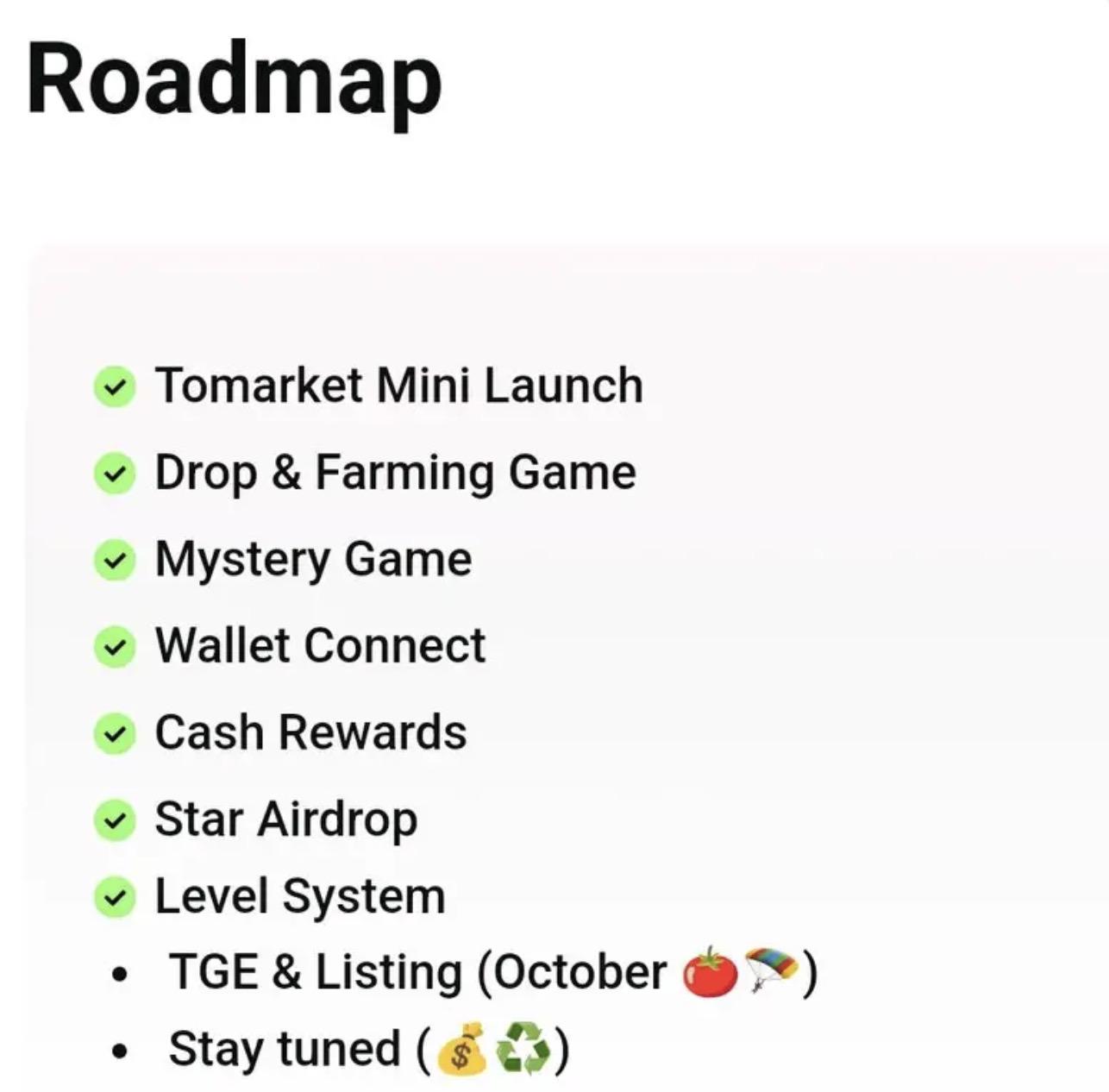
On October 28, Tomarket founder Oliver Tomassi tweeted that users would be able to determine their $TOMA allocation starting November 1, adding that part of the $TOMA tokens had already been allocated to eligible participants, though exact amounts were undetermined. Later, he posted on X: “Say no to hackers, scammers, and bots.” On October 29, Tomassi tweeted again promoting “only two days left until TGE,” saying “listing is coming—things need to happen step by step (sweating bean).”
Although MemeFi and Tomarket have yet to officially launch their tokens or list on exchanges, given current sentiment and the precedents set by Hamster Kombat and X Empire, it will be difficult for these projects to turn things around.
Popular Games Lose Steam: TON Ecosystem Active Addresses Plummet
Data from analytics firm IntoTheBlock shows that as of October 28, active addresses in the TON ecosystem dropped to 1.18 million—down sharply from a peak of 5.16 million a month earlier. Additionally, the proportion of active addresses, which hit a high of 6.52% at the end of September, has continued to decline and now averages just 1.76% over the past 30 days.
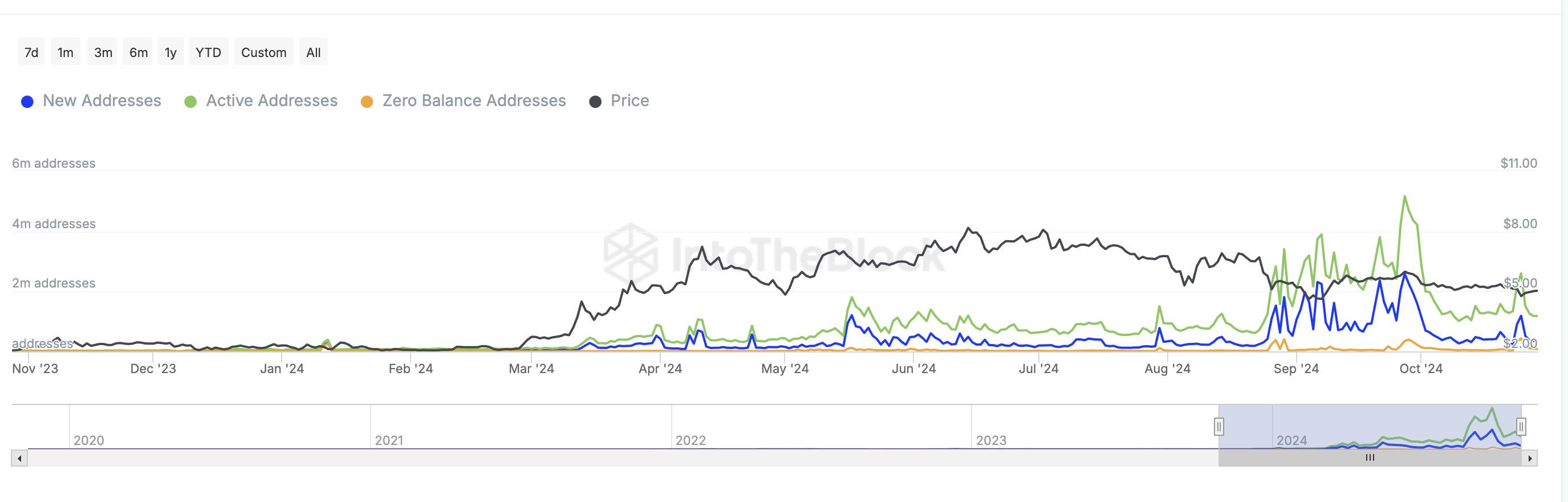
It's clear that despite controversies, Hamster Kombat genuinely brought massive user growth and traffic to the TON ecosystem, driving data peaks at the end of September. Related reading: Historic Airdrop Earns Users Average of Just $3: Who Really Won in Hamster Kombat?
Now that Hamster Kombat’s mega airdrop has concluded, its token HMSTR has been steadily declining in price. Its YouTube channel’s video views have dropped from tens of millions per video to around two million. According to CoinMarketCap, as of October 30, HMSTR trades at approximately $0.0028, with a fully diluted market cap of about $286 million—more than 67% lower than its initial price. For many Hamster Kombat players, receiving the airdrop and immediately selling it is the only way to justify months of effort.
Why Can’t TON’s Popular Games Sustain Momentum?
Perhaps when discussing mass adoption, we should remember that the true purpose of blockchain and Web3 technology is to benefit more people. If a mini-app boasting tens of millions of users fails to bring joy, convenience, or financial gain—and instead delivers deception, manipulation, and losses—it simply cannot last. Such projects are destined to be abandoned and swept into the dustbin of the industry after their TGE and exchange listings.
Join TechFlow official community to stay tuned
Telegram:https://t.me/TechFlowDaily
X (Twitter):https://x.com/TechFlowPost
X (Twitter) EN:https://x.com/BlockFlow_News
 PANews